 HOME
HOME




Life Limiting – Spares
Operating former airliner types that are now in a second career has its challenges. Although airframe life is a factor, spares availability and overhaul, along with engine overhauls become an issue as aircraft age.
“It's not the airframes that are an issue, it’s the obsolescence of parts that really become more of the sticking point,” said Nic Lynn, Neptune Aviation’s vice president of Operations. “We have a running list of items that are starting to get a little harder to find, and we’re staying on top of that and researching replacement options, manufacturing new, and we stay in constant communication with the vendors that we work with as to what their projected continued capability for repair of parts will be.
“Taking a step back, we operated the Lockheed P2V Neptune for a lot of years, which was a very out-of-service, unsupported aircraft built
in the late 1950s and early ’60s. We built a very robust in-house capability for the manufacturing of parts, the repair of components,
starters, generators, that kind of stuff. And we’ve slowly been stepping into those components with the 146 over the last several years and
we anticipate that in-house capability continuing to grow to support the fleet. With the P2V, the list of components we didn’t overhaul
internally was much shorter than the list of stuff we did. We’ve taken that same methodology with operating the 146s.
“When we started into the 146s, the only facility in the world that did repairs on the engines was in the United Kingdom and component
overhaul turn-around times were not ideal. So, we stood up a pretty robust in-house capability on the engines. There are still components
within the engines that we send out for repair, but we do full tear-downs, replacements, repairs, reassembly, and run them on our test
stands. We're kind of used to that operating legacy aircraft.”
In Recommendation 14 of the “Aerial Equipment Strategy Report,” it set forth that “Department of Defense surplus equipment and parts should be made more readily available to state and local wildfire agencies and the private contractor wildland fire community.” To the end, the U.S. Air Force began drawing down its KC-10 tanker fleet, with forty-eight parked at the 309th Aerospace Maintenance and Regeneration Group’s storage facility adjacent to Davis-Monthan AFB, Tucson, Arizona, as of May 14, 2024. One of the lingering questions is whether or not the KC-10 fleet’s spares will be made available to the wildland firefighting community as recommended?
“The spare parts that should be coming out of the military are something we’re interested in. You bet we are,” said John Gould, president
of 10 Tanker Air Carrier, LLC of Albuquerque, New Mexico, which operates four DC-10-30 VLATs. “There are parts still out there and we have a
big warehouse full of them, but they're getting more and more expensive and scarcer as the years go by. At this point, I think that it's
just us (10 Tanker) and Omega Aerial Refueling Services that are probably the only companies that fly DC-10 nowadays. As the years go by
the market for spare parts, engines, brakes, and everything else we use, will dry up. We're hopeful that we'll be able to pick what we need
from the Air Force to get us through what we see as the life of our airplanes.”
Operating an air tanker platform based on a commercial airliner opens up a vast ecosystem of spare parts. McDonnell Douglas, and later
Boeing, built 1,191 MD-80 series of jetliners, of which a little more than 10 percent of the fleet’s jets are flying in 2024. Spare parts
inventories feed an aircraft’s maintenance cycles, and an air tanker’s standards of maintenance are, justifiably more intensive than that of
a standard airliner. Maintenance standards are set by the aircraft’s manufacturer, in this case Boeing, yet there are additional special
inspections that have to be done as well.
Matt Isley, general manager of MD-87 firebomber operator Erickson Aero Tanker of Hillsboro, Oregon, said, “As far as spares go, it’s one thing to convert an aircraft into an air tanker, it’s another thing to have spares. There's a lot of overlap for parts between all the MD-80 series jets (MD-81/82, MD-83/88, MD-87, and MD-90), so we actually have an extensive spare parts inventory and spare engines as well. With our spares inventory and maintenance program, as far as hours and cycles go, I don't see any reason why the MD-87 couldn't fly for another 20 years.”
Air Tanker Needs
On the U.S. West Coast, the states of Oregon and Washington contract for fixed- and rotary-wing air attack aircraft. California’s Cal Fire maintains more than 60 fixed- and rotary-wing aircraft, making it the world’s largest civilian-operated, aerial firefighting fleet. The agency’s primary fixed-wing air tankers are twenty-three turboprop Grumman Aerospace S-2Ts (ex-U.S. Navy S-2E/G) capable of carrying 1,000 to 1,200 gallons of water or retardant, stationed at thirteen air attack bases throughout the state.
In addition to its fleet of S-2Ts and Sikorsky S-70i Firehawk helicopters, the state contracts for additional aerial firefighting assets during its peak season. In 2023, that need called for an additional nineteen rotary-wing and five fixed-wing air tankers contracted for exclusive use by the state. In 2023, a relatively quiet year for fires in the state, Cal Fire fixed-wing aerial assets responded to 5,837 incidents across California’s more than 85 million acres of wildlands.
North of the U.S. border, provincial governments and aerial firefighting contractors operate a mix of fifty-five CL-215s and sixty-four
CL-415 water scoopers. Piston-powered CL-215s were built between 1969 and 1990, while the CL-415s were constructed from 1993 to 2015, which
puts the Canadian air tanker fleet on par with its American counterparts averaging around 33 years of age. Conair’s Dash 8-400AT, capable
of carrying 2,640 gallons (10,000 liters) of retardant, averages about 15 years of age, making great strides in reducing the overall fleet
age.
 New-Build
Scoopers
New-Build
Scoopers
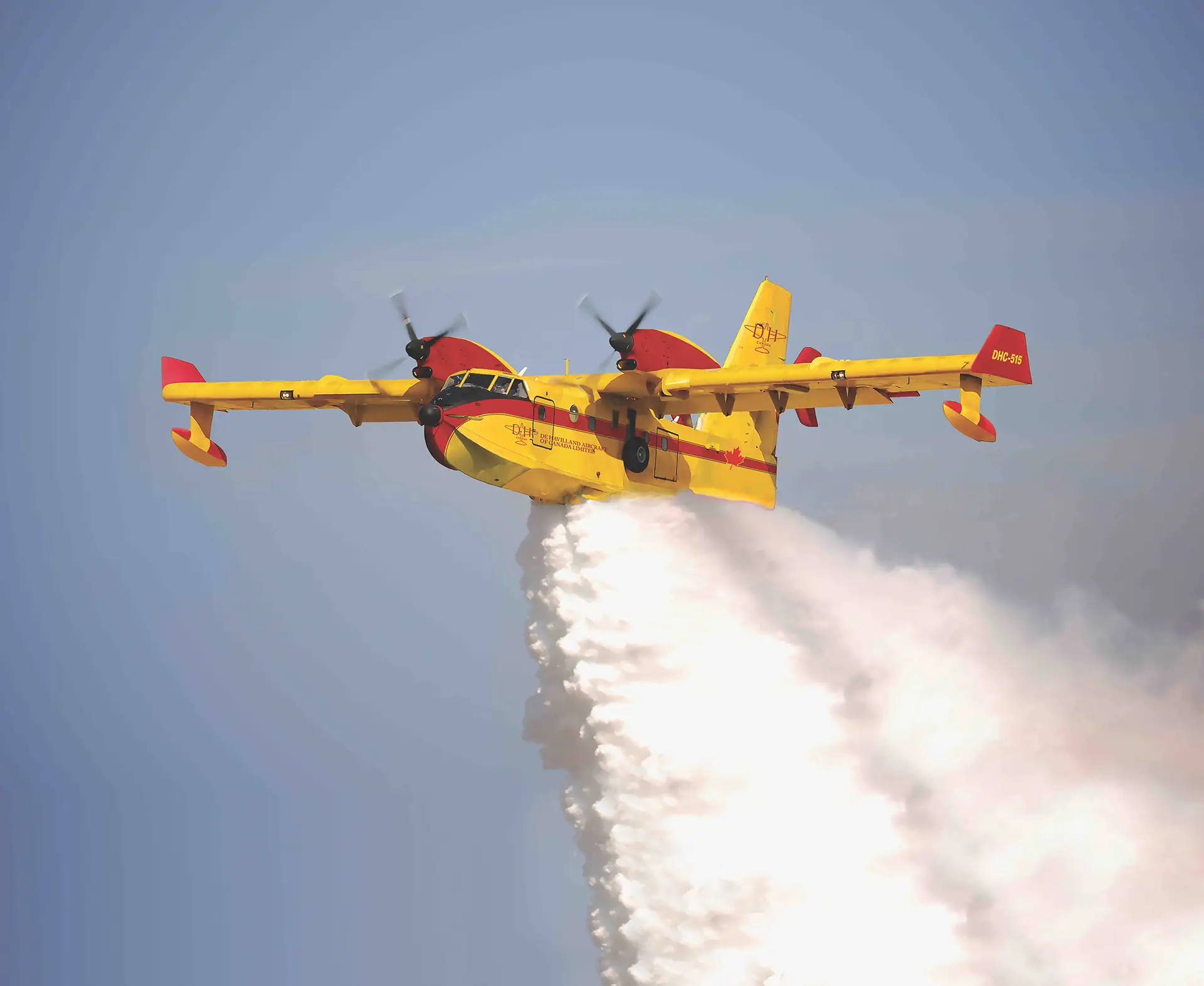
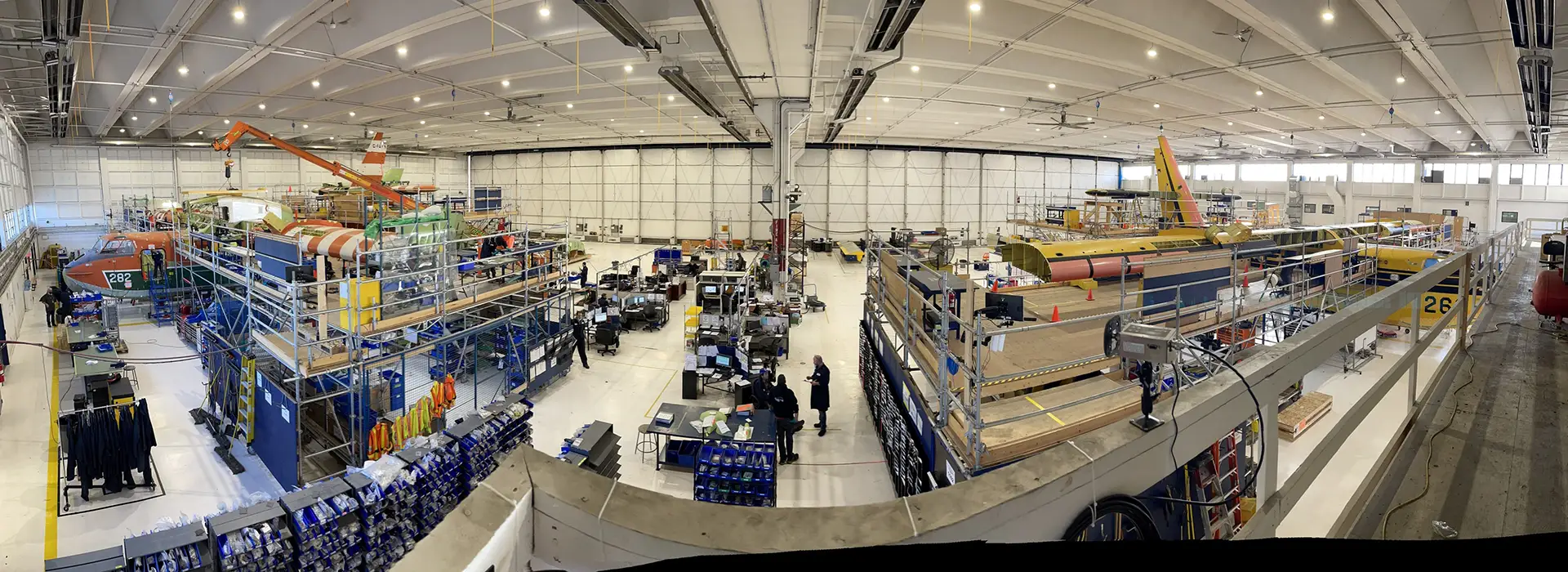
While Canada’s aging fleet of CL-215s, turboprop -215Ts, and -415s continue to carry the battle to wildland fires, three new-build scooper programs are under way. The farthest along is the modernized CL-415, known as the De Haviland Aircraft of Canada DHC-515 FireFighter, to be built in Calgary, Alberta. Currently there are 160 CL-215s and -415s in operation, and the market forecast calls for all of those aircraft to possibly be replaced by the DHC-515. Additional market share should be captured as the -515 comes on line.
The advantage of a scooper is that it can reload from a body of water located near a fire, whether fresh or salt water, as it skims the surface. The tanks can be refilled in about 12 seconds.
The Indonesian Ministry of Defense was the launch customer for the DHC-515 with an order for six aircraft, two specifically configured for aerial attack with the remaining four in a multi-mission version. Additional European Union customers have secured subsequent delivery positions; including aircraft to be delivered to Croatia (two), France (two), Greece (seven), Italy (two), Portugal (two), and Spain (two).
The DHC-515 features twin Pratt & Whitney Canada PW123AF turboprop engines, Universal Avionics’ InSight Display System, and an
increased water tank capacity of 1,850 gallons (7,000 liters). The first DHC-515s are expected to be delivered in late 2027, and production
is anticipated to ramp up from there.
In addition to the DHC-515, two new scooper designs are under development in Europe. The Hynaero, a French start-up company that has
received a second round of funding, is moving forward with its Fregate F100 design and, like the DHC-515, will be an amphibious, high wing,
turboprop-powered aircraft capable of delivering 10 tons of water (2,400 gallons/9,084 liters) to a fire. This scooper is anticipated to
cruise at 250 knots and have a four-hour flight range, which the company estimates as 2.5 hours of firefighting time 400 km from its base.
Belgium’s Roadfour was founded by Jean-François Gailly and Gaëtan Du Four (Ph.D.), both engineers and architects. They have put forth The Seagle. Built almost exclusively from composite materials, it will also be a fly-by-wire water scooper with an anticipated water load of 12 tons (approximately 3,300 gallons/12,500 liters).
The immediate market for the Fregate F100 and The Seagle are the twelve French-operated CL-415s that are now more than 24-years-old. Potential market share with other European countries is anticipated. The Seagle is anticipated to cost €60 million (US$64.3 million) per aircraft, much less than the $80 million price tag estimated for a new-built air tanker in the United States. Flight dates and production schedules for the Fregate F100 and The Seagle have not been released.
Is there a plan for the future?
As the wildland fire season ramps up, various operators are looking to the future to assess if technology or aircraft availability will
drive change in the next generation of air tankers. Will the U.S. Congress provide funding to the USFS to improve or expand the fixed-wing
air tanker fleet?
“I believe it comes down to funding,” said Neptune Aviation’s Nic Lynn. “It is very expensive to design, stand-up and manufacture, certify, and support a from-scratch, purpose-built aircraft. That’s a pretty big leap that I don't think the government is ready to do when they have very capable aircraft that vendors are modifying and converting into air tankers. While none of them are built in the 2020s, the current fleet is still very safe and has a lot of life left for the mission. I think you get some diversity with the capabilities between LATs and VLAs and by encouraging development in the private sector. That is a much more cost-effective path.”
In the conclusion of the Aerial Equipment Strategy Report, the commission cited “the need to develop an overarching, forward-looking aviation strategy that drives procurement, rather than letting aviation approaches become constrained by current practices” and “the need to invest in both technology and people to build an aviation fleet that meets long-term demand.” Some would say that the fourth generation of air tankers that are on line today and the companies that provide those services already meet the commission’s recommendations.
There is always room for improvement and growth within the air tanker business, and 10 Tanker’s John Gould philosophically summed up the current state of the industry, “I look at this fleet with the eyes of someone who's been in the business for all my working life. Sitting in my office, I can look across the runway and see an RJ, which is a great airplane, totally modern, and they've got plenty of years left, and right next to it, there's an Erickson MD-87, same thing, very capable, high-performance airplane. And I see that with the whole fleet, that I don't worry about the aging fleet today like I did 20 years ago, but I do know that all of my compatriots in the large air tanker business are thinking about it and they’re looking for new platforms. Having said that, I think that what we have now is a very solid fleet, and I don't think of it as aging in a way that is detrimental to the performance of the aircraft over fires or how they drop the retardant.
“Everything's getting older day-by-day, but I think we’ve got good, long life left on the fleet we have. That does not stop us from looking and trying to modernize our fleets and do something better for the firefighters on the ground, but I think we've got a really capable fleet as it stands today.”
Selected Fixed Wing Air Tanker Fleets
10 Tanker
DC-10-30 Fleet
Tanker Registration Age
910 N612AX 36.7 years
911 N17085 49.1 years
912 N522AX 36.4 years
914 N603AX 36.7 years
Cal Fire HC-130H Fleet
HC-130H Fleet
Tanker Coast Guard Registration USAF serial
116 CG 1708 N464DF
117 CG 1714 N465DF
118 CG 1721 N466DF
119 CG 1719 N468DF
120 CG 1709 -----
121 CG 1706 N460DF
122 CG 1713 N462DF
Conair Aerial Firefighting
RJ-85 Fleet
Tanker Registration Age
561 C-GVFH 29.6 years
564 C-GVFK 28.8 years
566 C-GVFT 29.5 years
DeHaviland Dash 8-400AT fleet
390 C-FFQE 14 years
540 C-FFQF 14.3 years
542 C-FFQG 16.3 years
543 C-FFQL 16.4 years
544 C-FFZJ 15.9 years
545 C-FFZY 16.3 years
546 C-FFZE 15.7 years
547 C-FFQV 16.8 years
548 C-FFZX 15.1 years
549 C-FFHP 18.3 years
550 C-FFOZ 18.1 years
551 C-FFQI 17.8 years
--- C-FFOZ Parked
--- C-FFQI Parked
--- C-FFYJ Parked
--- C-FFYZ Parked
Coulson Aviation
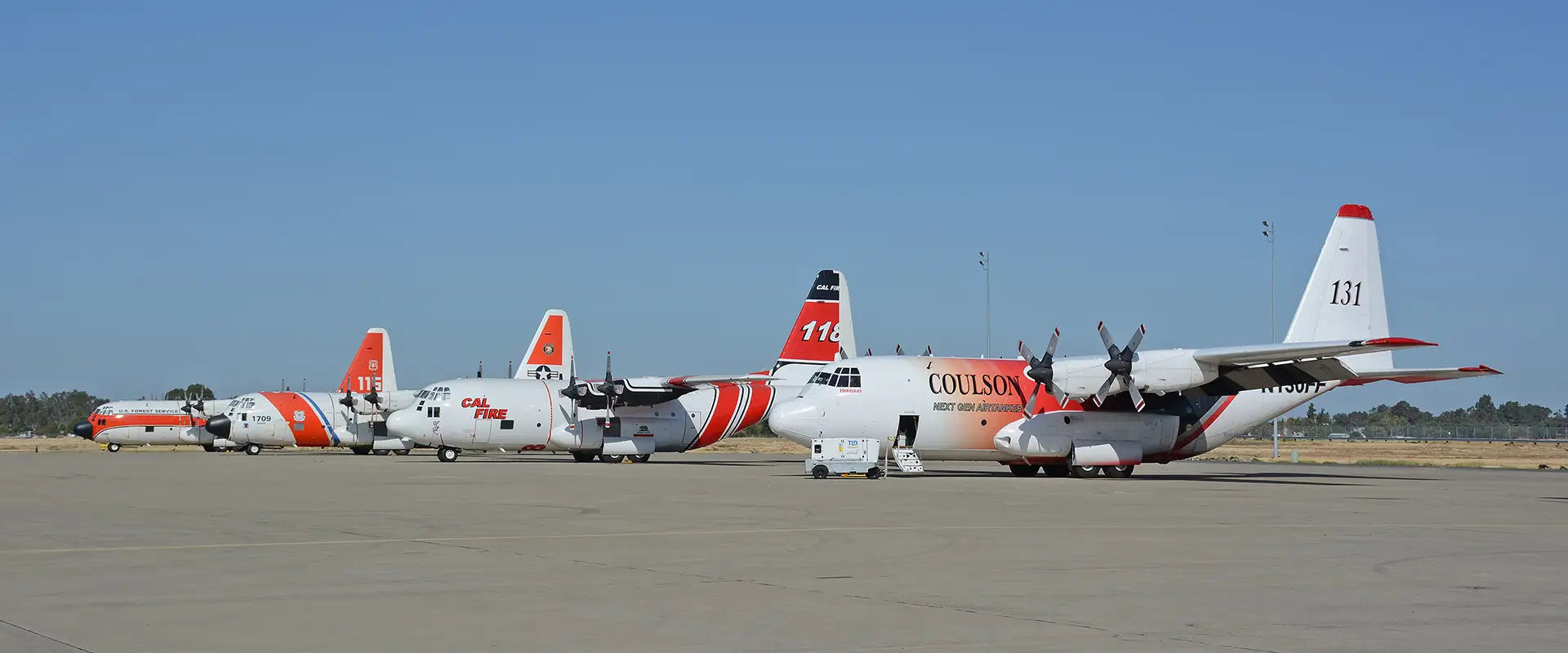
C-130 Fleet
Tanker Registration Navy serial Notes
EC-130Q
131 N131CG 161495 ex-NASA N427NA
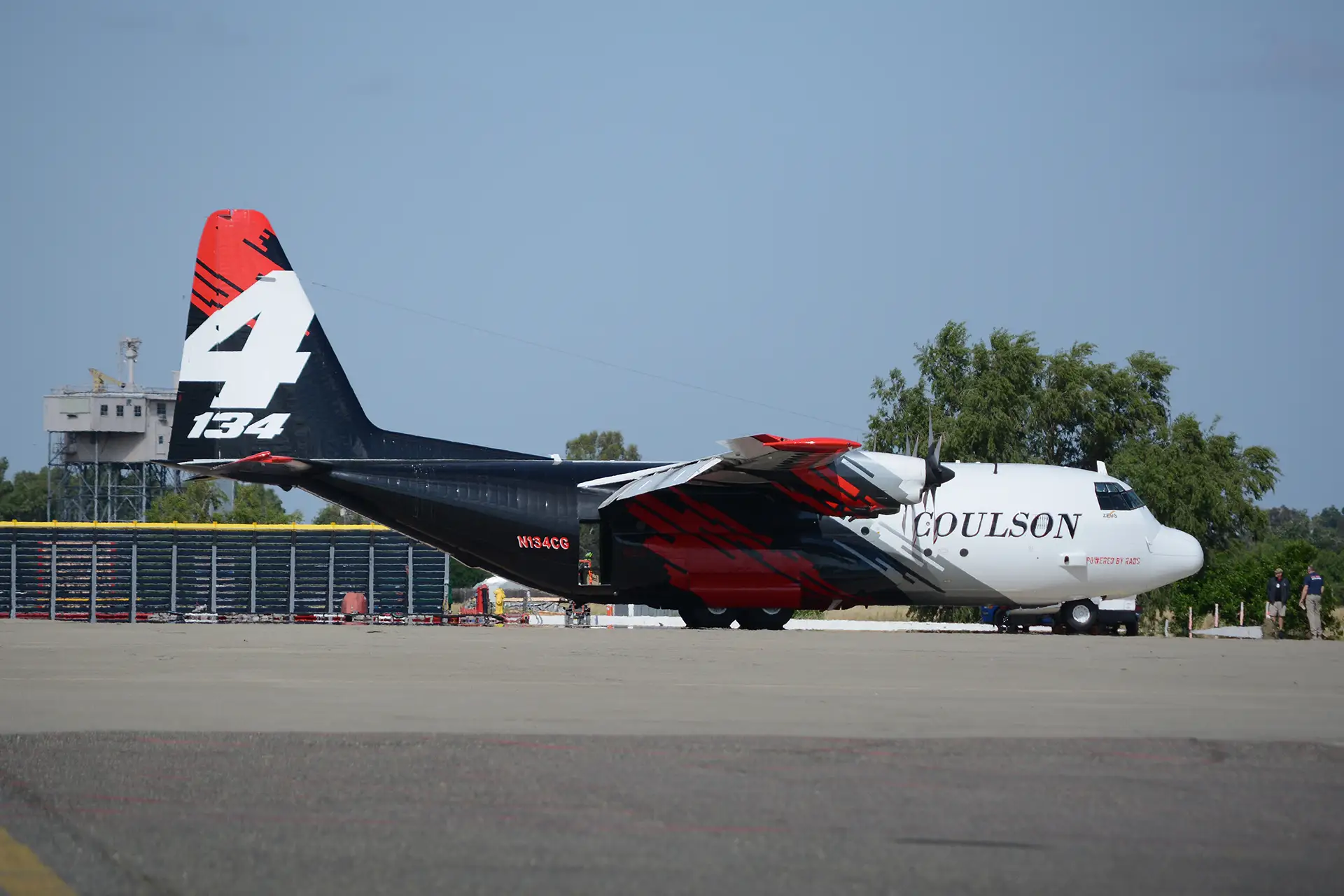
C-130H Fleet
Tanker Registration USAF serial Name
130 N130CG 68-10957 Brage
132 N132CG 68-10956 Ty
133 N140CG 68-10955 Froy
136 N136CG 68-10952 Odin
138 N382CG 68-10954 Balder
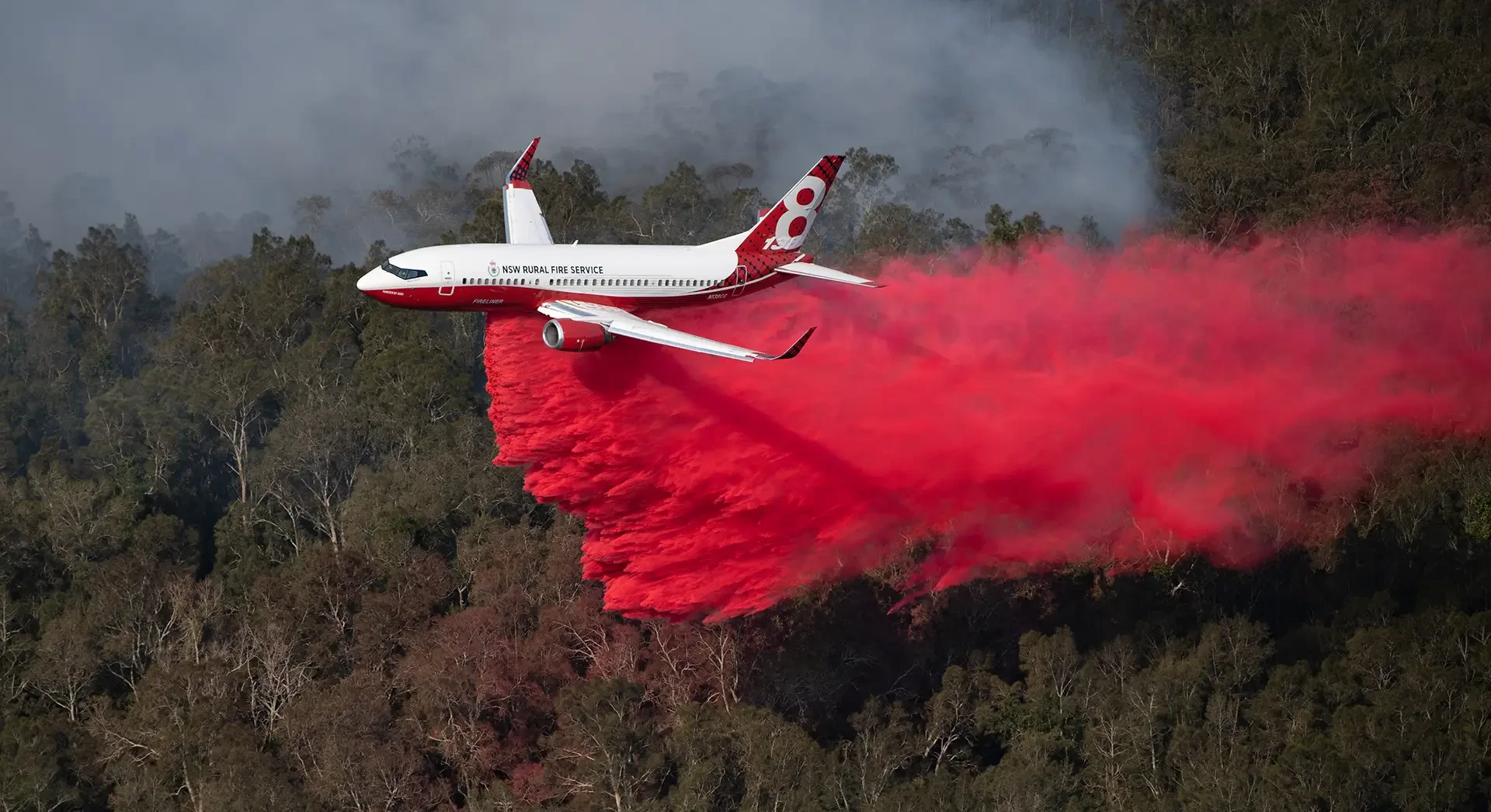
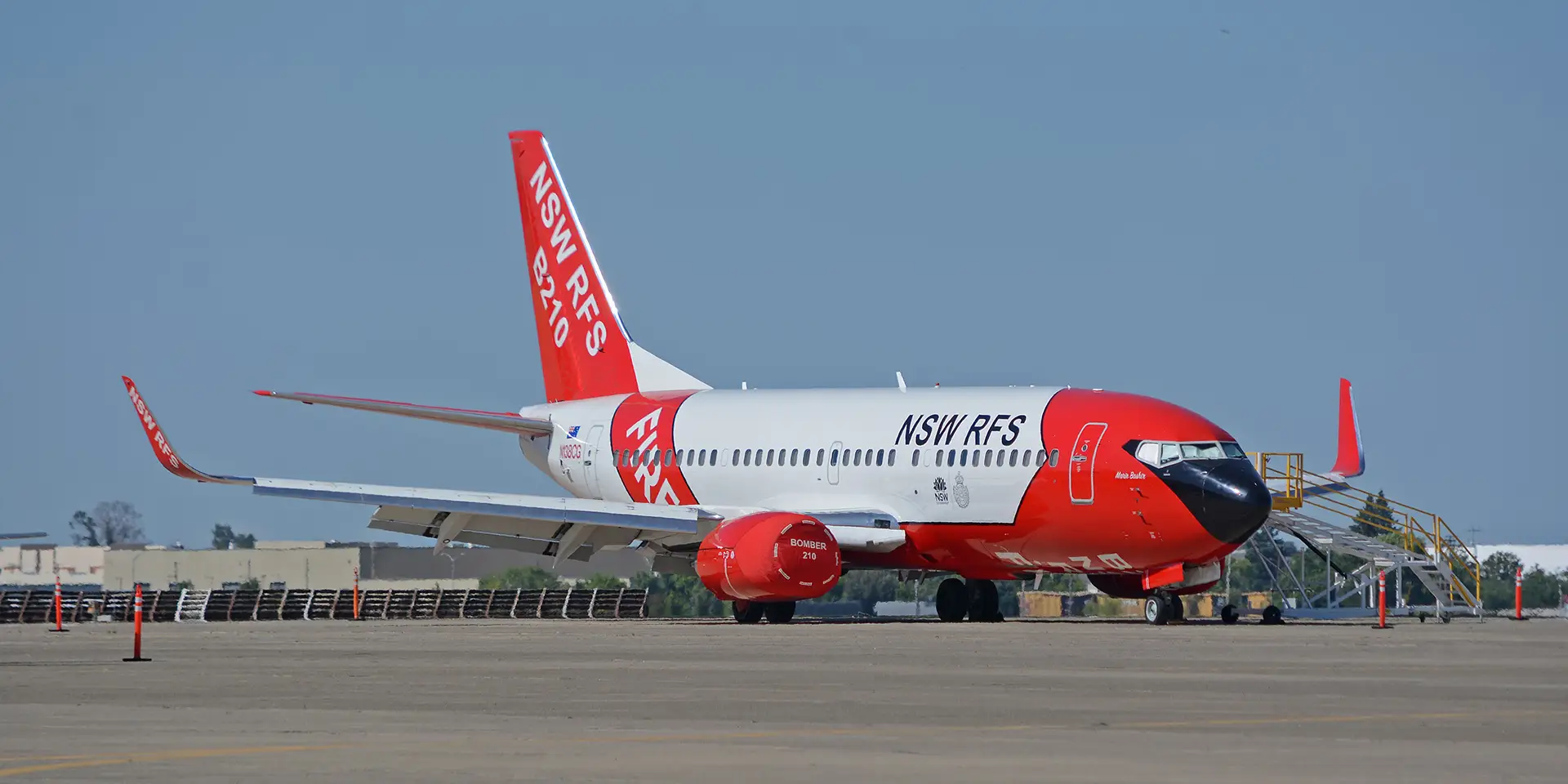
737 Fireliner Fleet*
Tanker Registration Model Age
137 N137CG -300 28.7 years
138 N138CG -300 28.9 years
-- N7841A -700 23.3 years
*Additional aircraft are slated for conversion.
Erickson Aero Tanker
McDonnell Douglas MD-80 fleet
101 N291EA 33.1 years
102 N292EA 33.1 years
103 N293EA 33.1 years
104 N294EA 33.1 years
105 N295EA 33 years
106 N296EA 33 years
107 N297EA 33 years
Neptune Aviation Services
British Aerospace 146-200 fleet
Tanker # Registration Age
01 N473NA 38.6 years
02 N474NA 36.7 years
03 N475NA 33.3 years
10 N472NA 34.9 years
12 N476NA 33.1 years
15 N477NA 36.1 years
16 N478NA 37.1 years
40 N470NA 38.2 years
41 N471NA 34.9 years
-- N480NA 38.1 years (parked at MSO)