 HOME
HOME




Alan Norris looks at the recent Airbus digitally enabled fire ground trial in the South of France and how this may impact aerial firefighting in the very near future.
Wildfires are becoming more frequent, more intense and more destructive. Climate change, prolonged droughts and expanding human activity in fire prone areas have created conditions that challenge even the most experienced firefighting organizations. In aerial firefighting, timing and precision are everything. The difference between containment and catastrophe is often measured in minutes and, increasingly, in data.
Traditional aerial firefighting methods, while effective, are often constrained by fragmented communication, limited situational awareness and delays in decision-making. Pilots frequently rely on visual cues and radio communication, which can be insufficient in rapidly evolving fire environments where seconds matter.
In the face of intensifying wildfire seasons across the globe, the need for faster, smarter and more coordinated firefighting solutions has never been more urgent. Against this backdrop, Airbus has taken a decisive step forward, unveiling a groundbreaking digital ecosystem designed to transform how aerial firefighting operations are conducted.
At a first of its kind live operational trial in Nîmes, Southern France, Airbus has demonstrated what may prove to be one of the most significant evolutions in aerial firefighting in decades: a fully connected, digitally enabled fire ground, where aircraft, rotorcraft, drones and ground crews operate as a single, data driven system.
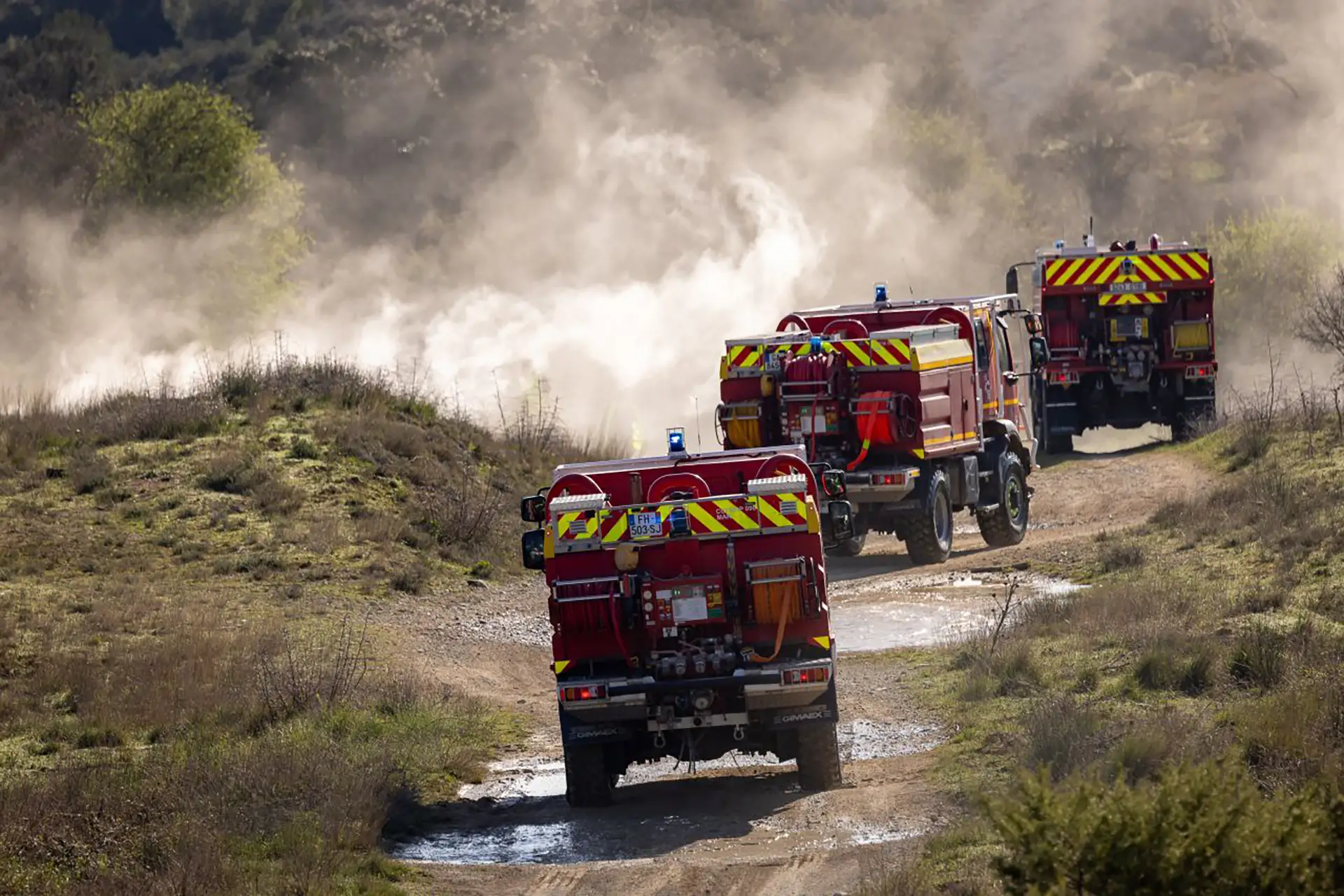
Conducted 26 March 2026 at the Garrigues military training area, the exercise showcased a networked mission architecture capable of compressing decision cycles, improving drop accuracy, and fundamentally reshaping how aerial assets are tasked and coordinated over a fire.
Aerial firefighting has historically been platform centric. Fixed-wing tankers, helicopters, and reconnaissance aircraft have operated as largely independent assets, coordinated by air attack supervisors and ground command through voice communications and visual cues.
While effective, this model has inherent limitation such as fragmented situational awareness, communication delays and a heavy reliance on human interpretation in dynamic and often degraded environments.
Airbus’s approach seeks to replace this with a system of systems, where every asset airborne or ground-based feeds into and draws from a shared operational picture in real time.
“We are moving from coordination by voice to coordination by data,” said an Airbus program lead involved in the trial. “The objective is to give every actor on the fire ground the same, continuously updated understanding of the situation and the tools to act on it immediately.”
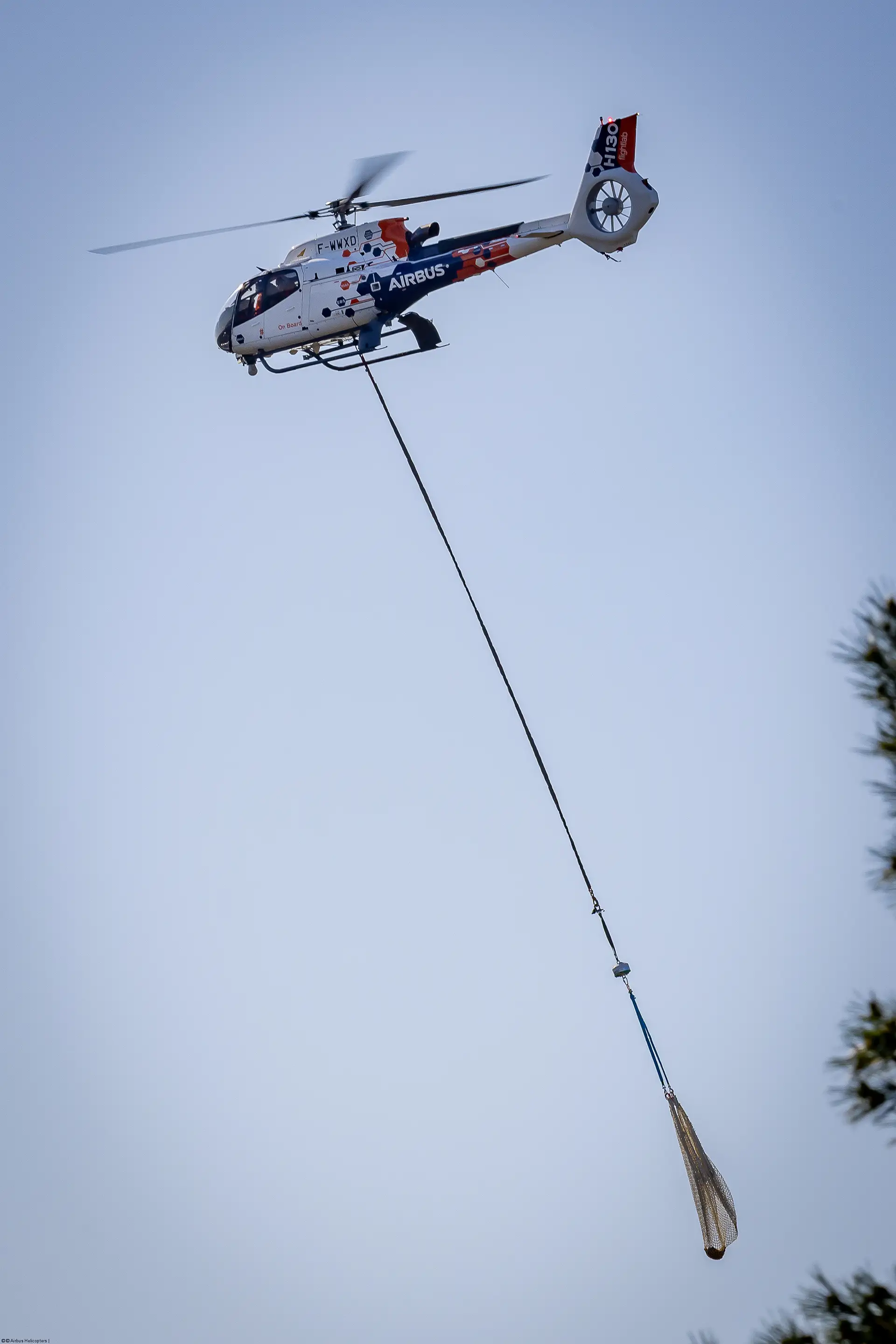
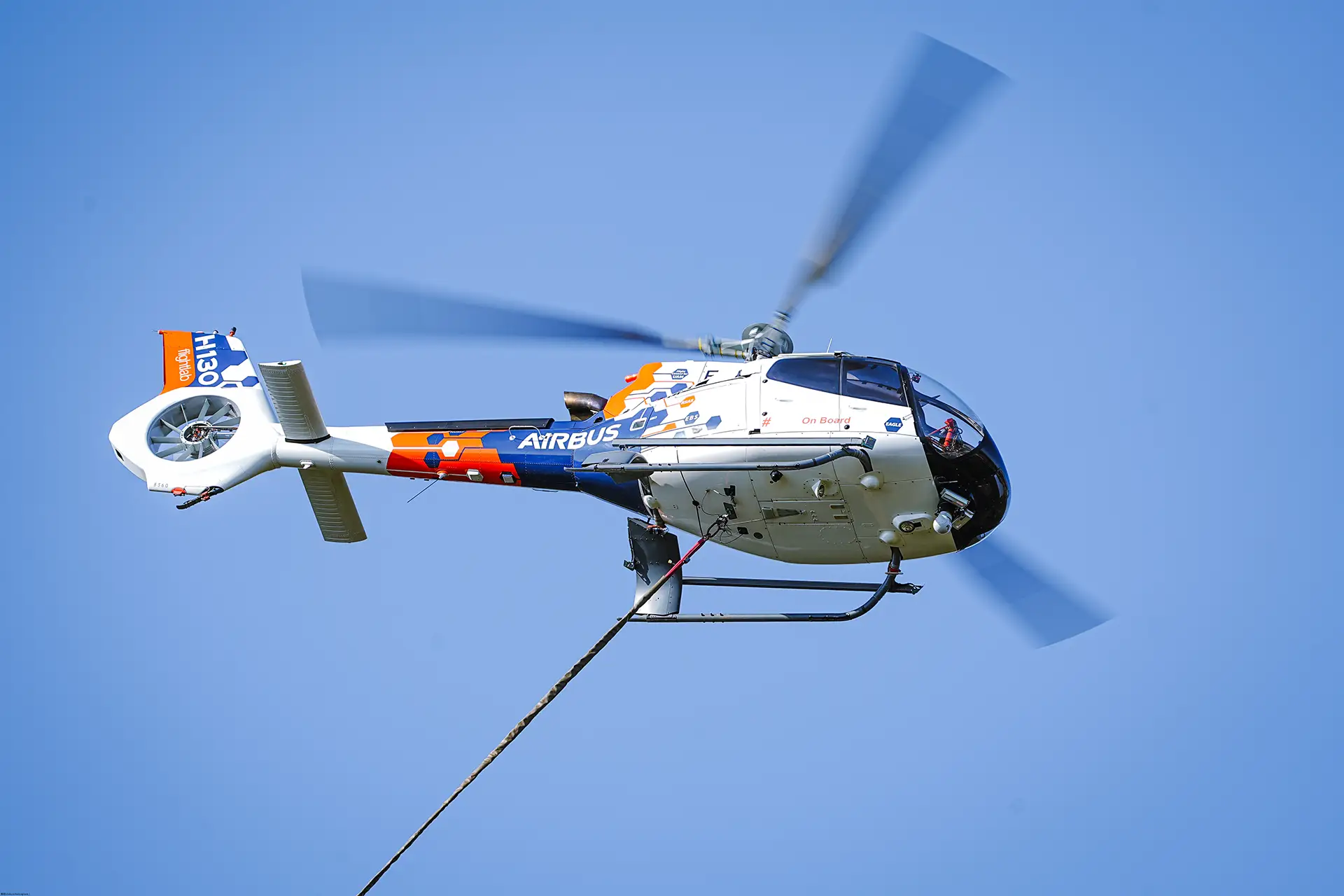
At the rotary wing core was the Airbus H130 FlightLab helicopter, a highly instrumented test bed used to validate new mission systems. The aircraft was equipped with a precision drop assistance suite and enhanced avionics interfaces designed to integrate real-time mission data into the cockpit.
Fixed-wing support included an ATR 72 configured to simulate a multi role water bomber and a Cirrus SR20 tasked with reconnaissance and wide-area imagery collection.
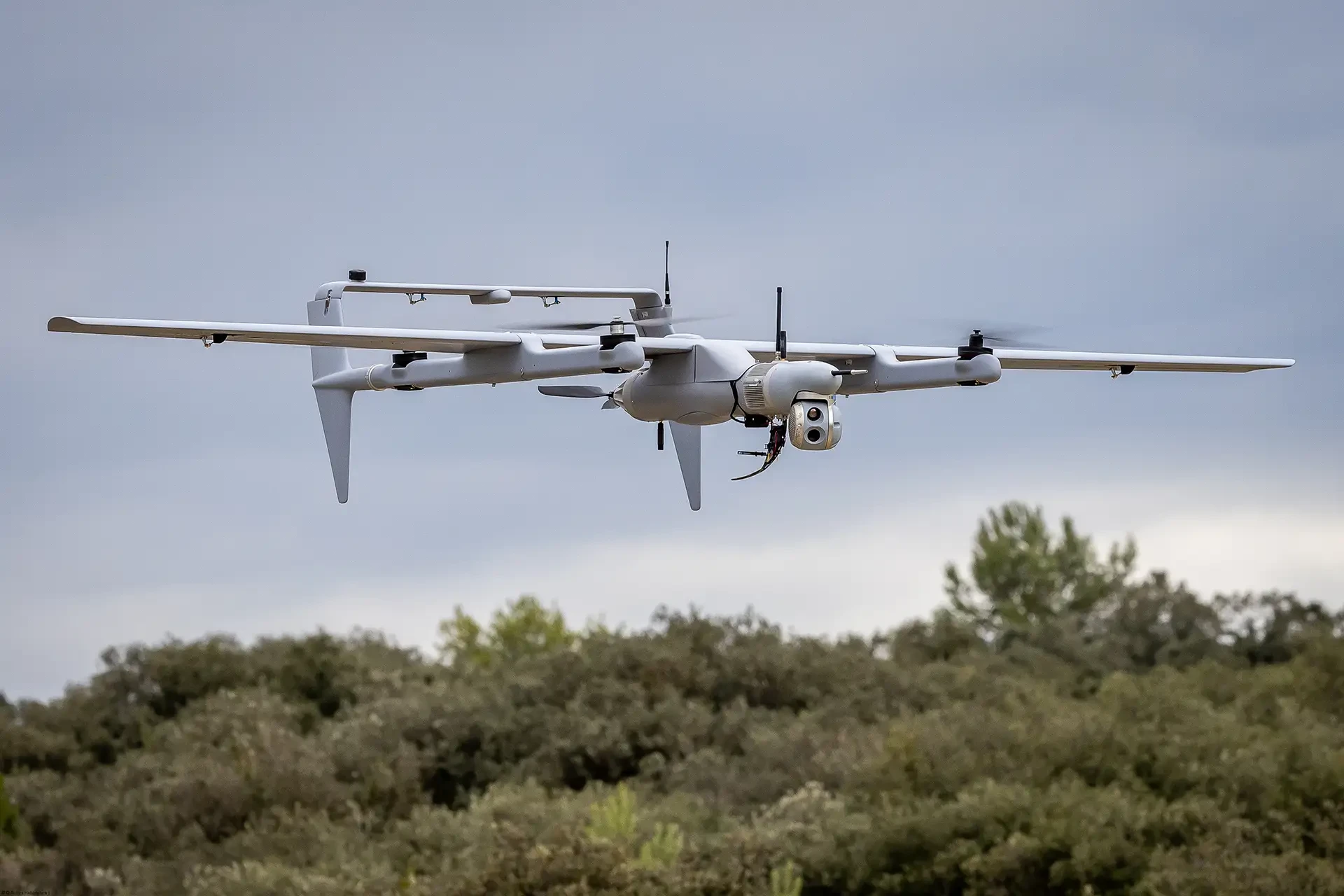
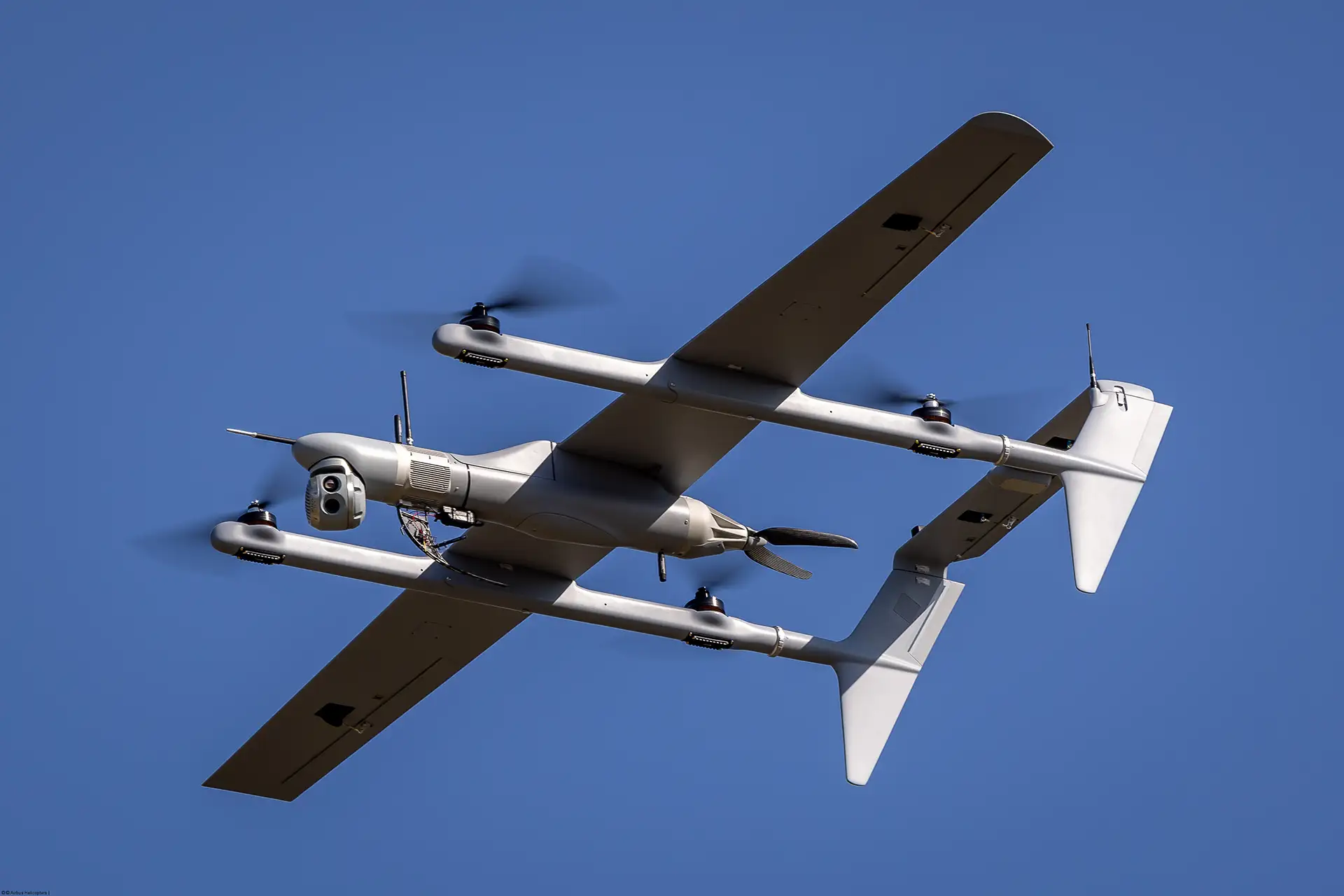
Uncrewed aircraft system (UAS) assets also played a central role, among them the Airbus Aliaca, a small Category 2 UAS system, provided continued Intelligence, Surveillance, Reconnaissance (ISR), alongside additional drones tasked with thermal mapping and atmospheric sensing.
On the ground, firefighting crews from the Fire and Rescue Service of the Gard (SDIS 30), who operated command vehicles and data processing nodes, formed the backbone of the mobile command and control architecture.
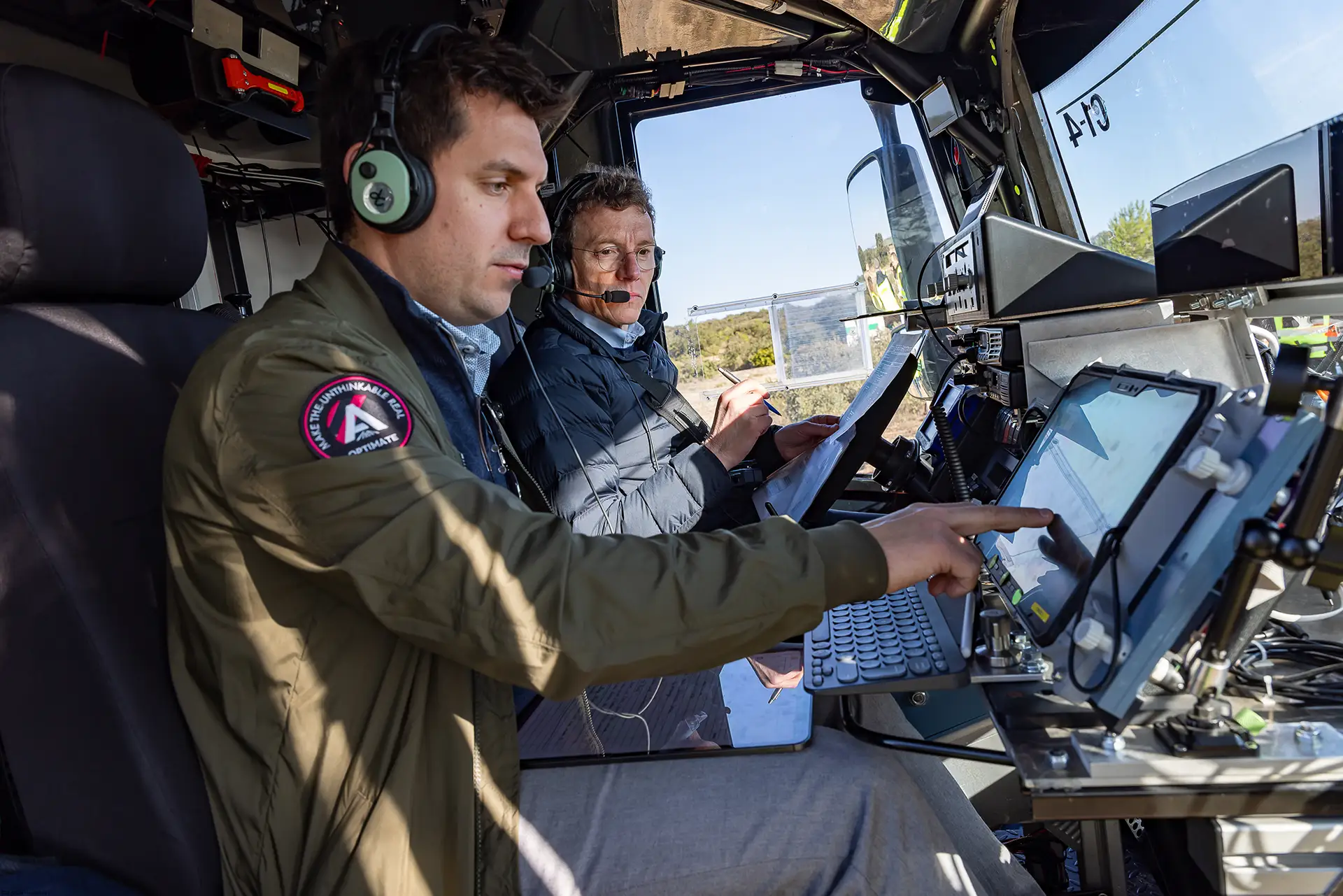
To enable seamless communication between all participants, Airbus deployed a private mobile network “bubble” over the operational area. This network was linked to a local private mobile network bubble in the area, connected to Agnet, the mission-critical communication solution developed by Airbus for security and emergency services. This infrastructure allowed real-time data sharing between airborne and ground units, effectively creating a unified operational picture.
The Digital Backbone
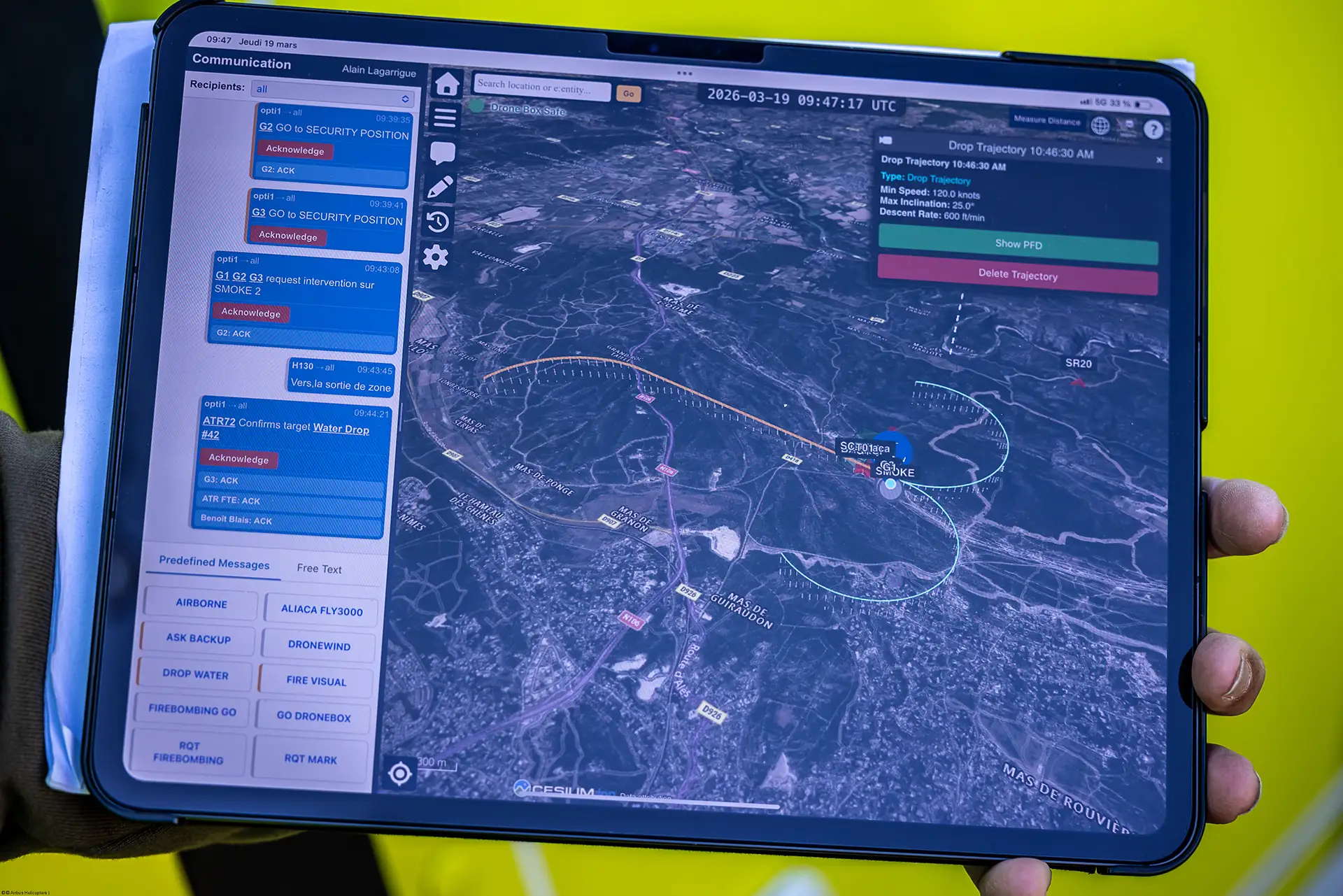
At the heart of the system lies a sophisticated data fusion engine with imagery collected by drones and the Cirrus SR20, including electro-optical and infrared feeds, was transmitted in real time to Airbus processing servers. This data was then fused with satellite imagery, digital terrain elevation models, meteorological inputs (including wind vectors measured in situ) and blue force tracking of firefighters on the ground. The result was a live, geospatially accurate common operating picture, accessible to both airborne crews and ground command.
Unlike traditional radio-based coordination this system provided commanders with a comprehensive and constantly updated view of the situation by integrating multiple data streams, satellite imagery, terrain mapping, wind speed and direction, plus the precise location of firefighters.
“Connectivity is the enabler,” noted Airbus. “Without a resilient network, you cannot achieve real-time collaboration at this level. What we’ve demonstrated here is effectively a deployable digital infrastructure for the fire ground.”
One of the most transformative elements of the trial was the use of Artificial Intelligence (AI) to process and interpret incoming data. AI algorithms analyzed imagery and environmental conditions to identify optimal flight paths and water drop points. These recommendations were then transmitted directly to pilots in both the helicopter and the simulated water bomber.
This capability represents a major leap forward. Traditionally, determining where and how to deploy water or retardant relies heavily on human judgment, which can be affected by visibility, fatigue, stress and incomplete information. By contrast, AI assisted decision making enabled greater precision in targeting fire hotspots, reduced waste of water and retardant, improved safety for flight crews and provided faster response times - provided, of course, that correct and sufficient data is available and inputted.
AI also optimized ingress and egress routes for aircraft along with recommended drop points based on fire intensity and spread, providing sequencing for multiple aerial assets, to avoid conflict and provide dynamic updates as conditions evolved. These outputs were transmitted directly to aircraft via onboard mission systems. Potentially, such a system will permit reduced separation (time and location) between air platforms, increasing the delivery rate.
Precision is critical in firefighting, misplaced drops can be ineffective or even dangerous, particularly in complex terrain or near ground crews. By improving accuracy, Airbus’s system not only enhances effectiveness but also reduces the number of sorties required, saving time, fuel and resources. In the Nîmes trial, this translated into highly accurate water drops and a more efficient overall operation, representing a shift from reactive to predictive firefighting.
From a technical perspective, one of the challenges lies in integrating these capabilities into existing avionics architectures. Airbus has approached this through modular mission systems that interface with cockpit displays and flight management systems including multi-function display integration of tactical overlays, data link connectivity for real time updates, synthetic vision enhancements for degraded visibility and alerting systems for airspace deconfliction.
The Human Machine Interface (HMI) has been designed to minimize cognitive load, presenting only the most relevant information in a clear, intuitive format.
The trial scenarios were developed in collaboration with SDIS 30 and Entente Valabre, a public body empowered by the French Ministry of the Interior to assess forest firefighting equipment, provide training for personnel in France which is recognized as an international authority.
These scenarios involved initial attack on a rapidly developing fire, the coordination of multiple aerial assets over complex terrain, the integration of ground crew movements into the aerial plan and dynamic re-tasking based on the changing behavior of a fire.
“Working with operational firefighters is essential,” said a representative from Entente Valabre. “Technology must adapt to the realities of the field not the other way around.”
The Nîmes demonstration is part of a broader Airbus strategy to develop an integrated firefighting ecosystem. This includes platforms such as the Airbus A400M, which can be equipped with a roll-on/roll-off firefighting kit capable of delivering large volumes of water or retardant.
In the rotary-wing domain, Airbus helicopters from light singles to heavy twins continue to play a central role in Helitack, bucket operations and aerial supervision.
With the addition of digital connectivity and mission systems the effectiveness of these platforms, without fundamentally altering their core roles, offer potential gains in efficiency and sustainability with improved drop accuracy reducing the volume of water or retardant required per mission, while optimized routing lowering fuel burn.
In an era where firefighting budgets are under pressure these efficiencies could translate into significant cost savings. Moreover, Airbus has aligned the initiative with its broader decarburization goals, positioning digital optimization as a means of reducing the environmental footprint of aerial operations.
The successful demonstration at Nîmes is likely to resonate across the aerial firefighting community, as agencies evaluate future procurement and capability development, the integration of digital systems is expected to become a key consideration.
This operational trial represents more than just a technological demonstration, it signals a paradigm shift in wildfire management, where digital connectivity and artificial intelligence become as critical as water and retardant in combating fires.
Future next steps include further operational trials with firefighting agencies, certification of mission systems for frontline use, expansion of interoperability standards across national and international fleets plus integration with satellite based early detection systems.
"The core of this innovation is transforming the helicopter from a standalone asset into a highly connected digital command hub. During these trials, we’ve demonstrated how helicopters can link with ground crews and drones via 4G/5G and satellite communication to create a unified tactical map. By integrating infrared imagery and data on wind speed directly into the cockpit, our pilots can identify hidden hotspots through dense smoke and anticipate fire evolution in real-time" said Dominik Chemnitz, Operational Marketing Firefighting at Airbus Helicopters
As wildfires continue to increase in regularity the evolution of aerial firefighting is entering a new phase, one defined not just by aircraft performance, but by information superiority.
By connecting platforms, integrating sensors and leveraging Artificial Intelligence, Airbus has demonstrated a model in which decisions are faster, drops are more precise and operations are more coordinated. For air attack supervisors, pilots and ground commanders alike, the implications are profound.
At the recent Aerial Fire Fighting Global Conference, in Rome, Ruben García Medina, Managing Director Iberia, Avincis, highlighted that year round readiness is no longer a luxury it is a strategic requirement, yet very few European countries have structured their aerial firefighting capacity with this in mind.
“There is no longer an off season, the wildfire period now runs from March to November and in some years every month. This is putting enormous stress on aircraft availability and crew training. What we are experiencing is not an anomaly, it is the new normal and the current European AFF strategy is designed for a climate that no longer exists. Europe is still spending far too much money reacting to fires, not preventing them, preparedness is no longer seasonal. It’s essential.”
Moving forward Chemnitz said: "This specific trial focused on water drop efficiency. We will continue to experiment with technologies for other operational scenarios under preparation. Meanwhile we will continue to engage with customers to build their own ecosystem based on their legacy systems with techno bricks from Airbus and partner companies."
In the years ahead the effectiveness of firefighting operations may depend as much on bandwidth and algorithms as on payload and power. If the Nîmes trial is any indication, the era of the connected fireground has already begun.