 HOME
HOME




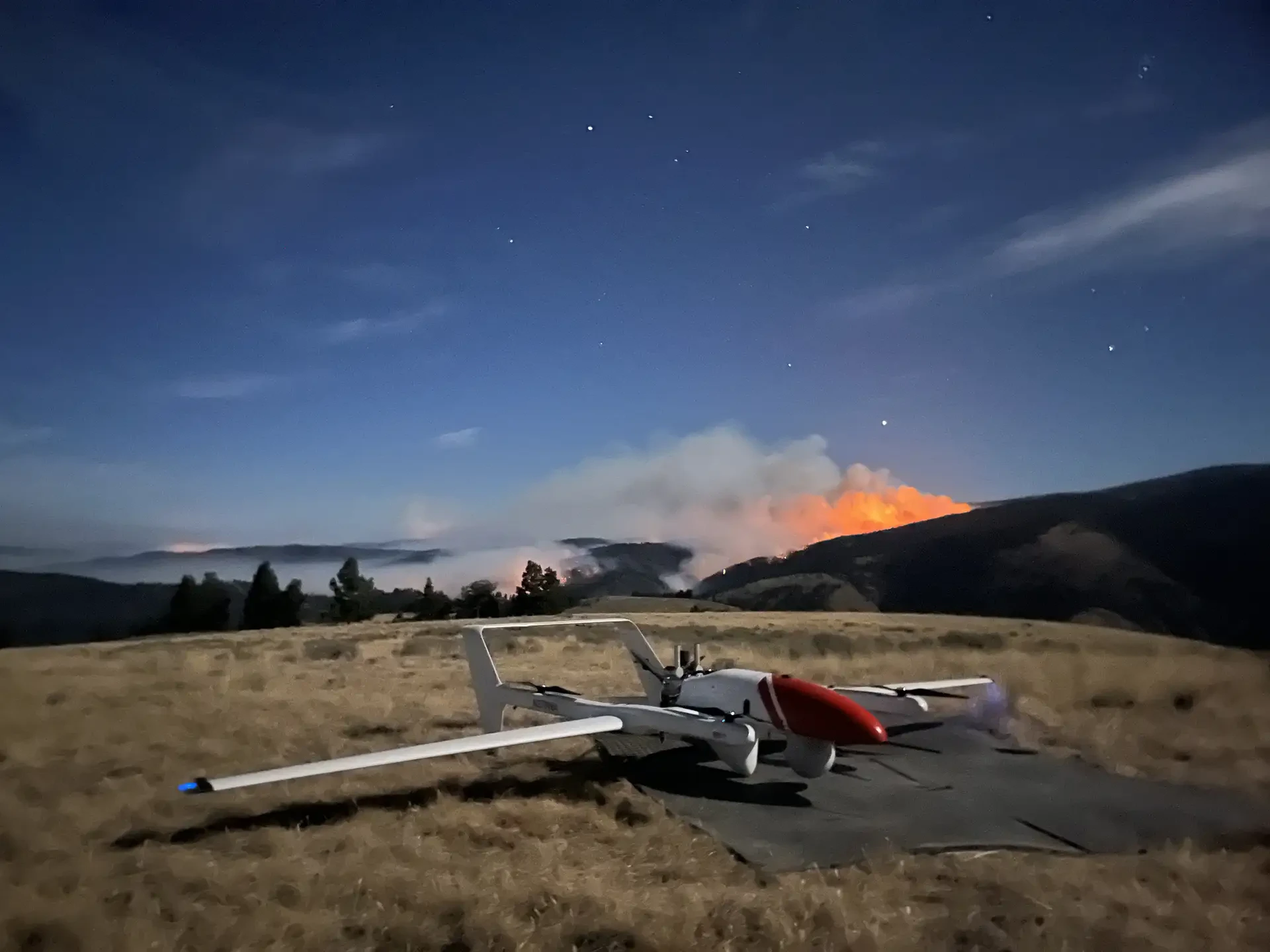
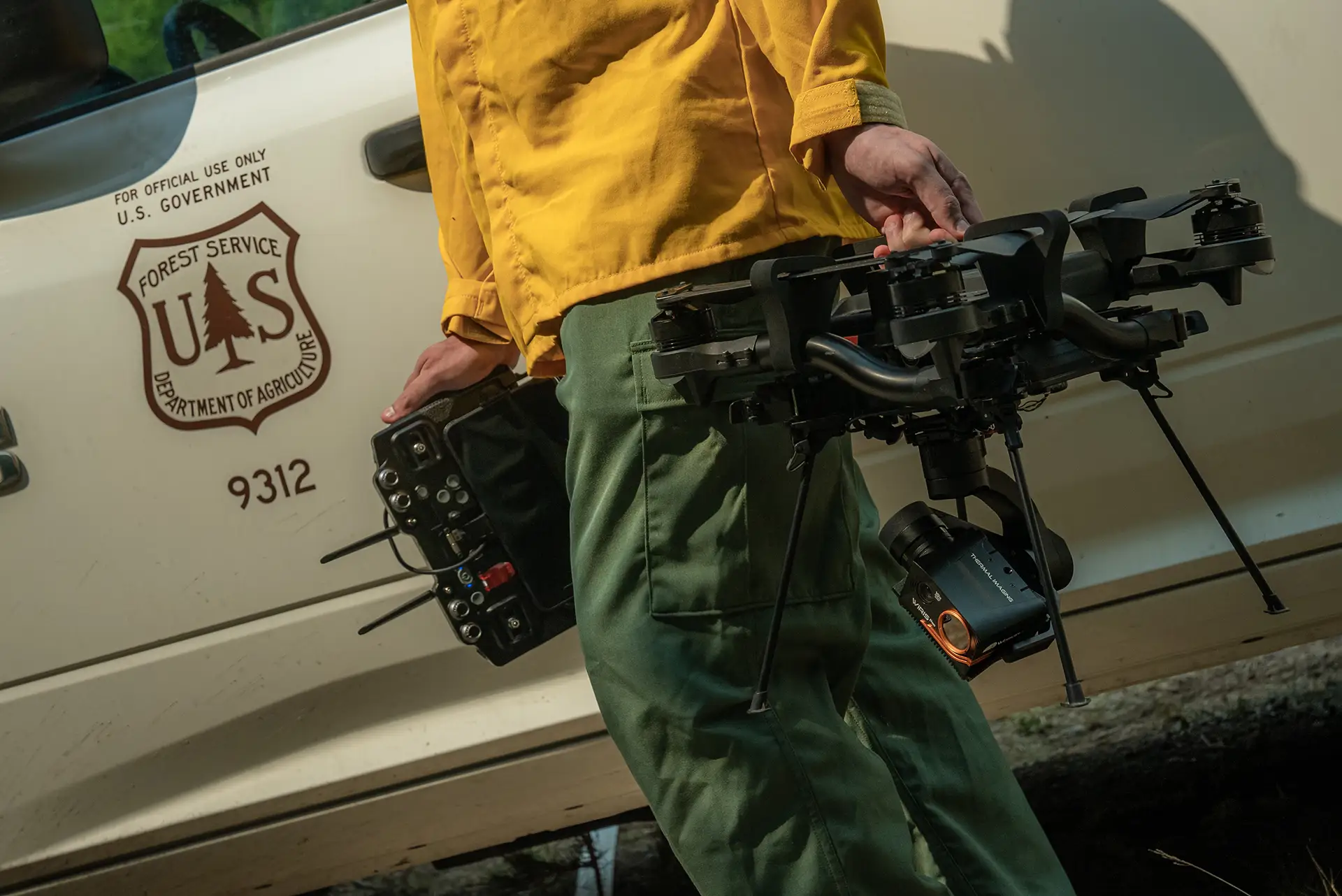
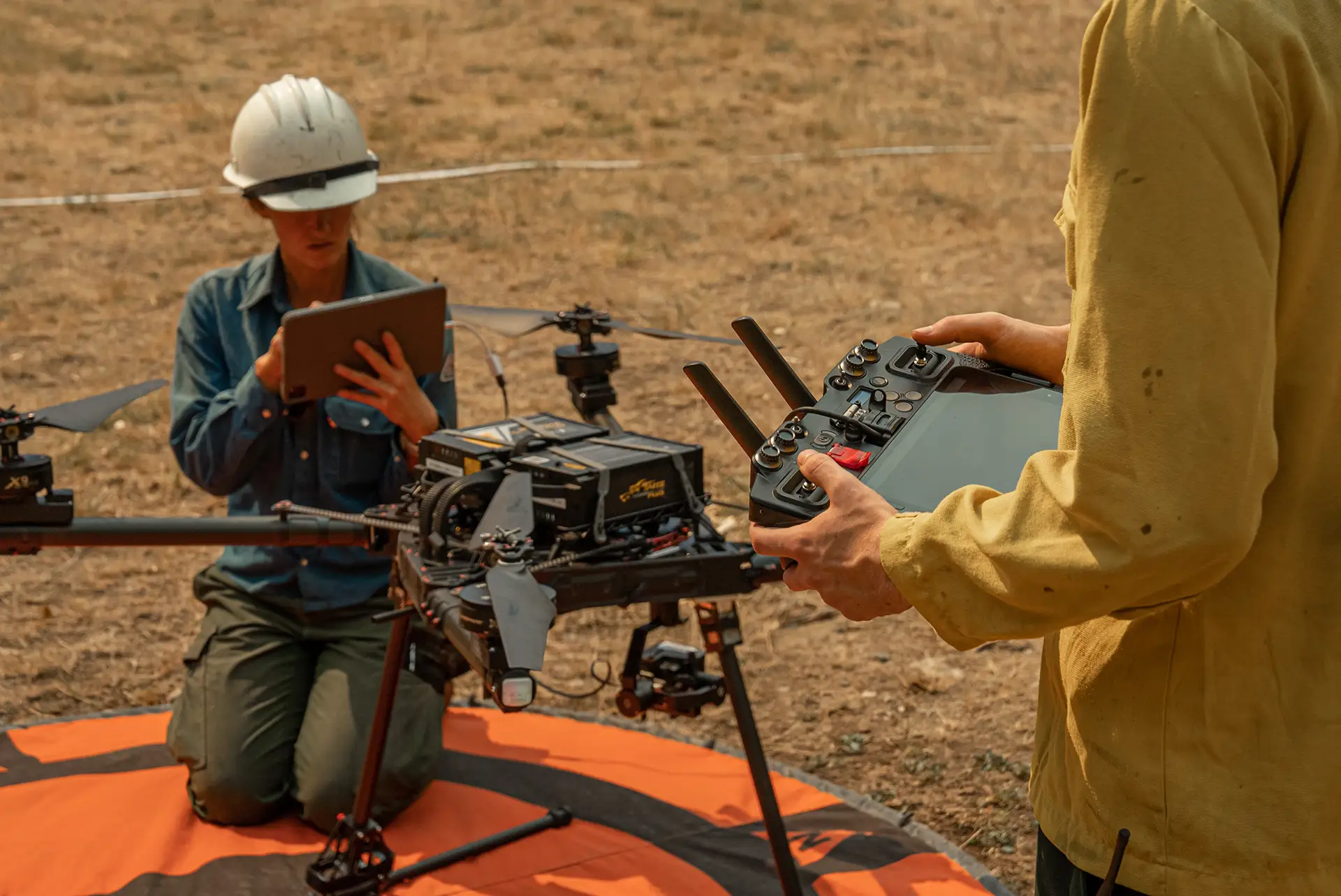
Throughout the United States, the US Forest Service (USFS) and California Department of Forestry (Cal Fire) are among the larger agencies embracing the use of UAS technology on wildland fires. In both instances, officials are using UAS aircraft to support traditional helicopter and ground operations. Dan Sweet reports.
Current Agency UAS Use of UAS
Both the U.S. Forest Service and CAL FIRE are increasing their use of UAS technology to improve wildfire management and have developed other uses as a result. According to Dirk Giles, National UAS Program Manager for the USFS, their efforts with small UAS have advanced significantly, with aerial ignition emerging as a game-changer. “We’ve pretty much perfected aerial ignition,” Giles notes, emphasizing its tactical applications and its role in lightening the load for firefighters.
Beyond fire, UAS is now a key tool for diverse tasks such as bridge inspections, hydrological surveys, and LiDAR data collection. “Fire is
definitely the driver,” he explains, “but everybody’s benefiting from that success.” The Forest Service has also achieved milestones in
airworthiness standards, adhering to ASTM International standards and logging over 10,000 operational hours. “I’m very proud of that,”
states Giles. “We’ve published our airworthiness standards and adhering to ASTM International (ASTM) standards.”
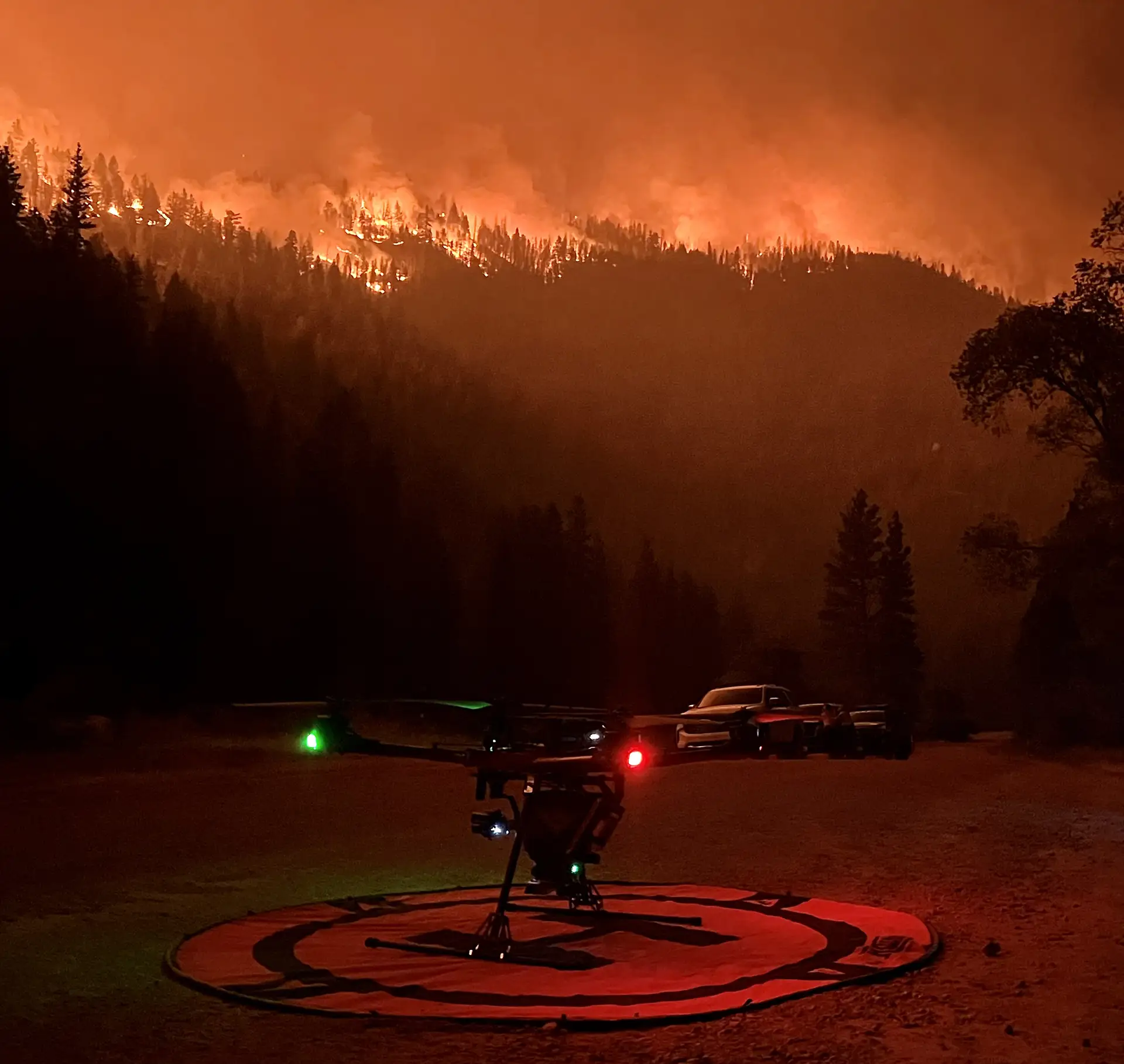
In routine use since 2021, CAL FIRE’s approach focuses on using UAS primarily for intelligence gathering. Peter York, Chief of UAS Operations, highlights their ability to provide live feeds to decision-makers during wildfires, as well as producing IR heat maps and performing aerial reconnaissance. While they’ve begun experimenting with light cargo delivery, their current focus remains manual operations.
York underscores the risk management benefits, noting that UAS reduces reliance on crewed aircraft for reconnaissance, thereby minimizing risks to personnel. Both agencies are demonstrating how UAS technology enhances safety, efficiency, and decision-making in wildfire management. “I doubt that this was part of original preparation, but I would imagine the cost for your Type 3 helicopters that might be doing the recon is going down because you're able to do some of that with the UAS aircraft.”
York also notes that UAS can sometimes fly when helicopters are down, particularly at night, helping to lower the cost of fighting fires
and the risk for flight crews. “You can also fly (UAS) 24 hours a day. I doubt that this was part of original preparation, but I
would imagine the cost for your Type 3 helicopters that might be doing the recon is going down because you're able to do some of that with
the UAS aircraft.”
Mitigating Risk in a Crowded Airspace
Aircraft remain a key tool for modern firefighting, whether they are used for reconnaissance, fire management, or direct attack. Depending on the size of the fire, this often means a fleet of planes and helicopters are already occupying most of the airspace, usually managed by an airborne coordinator. Adding UAS aircraft to this mix requires collaboration, standards, and trust.
According to Giles, the USFS manages their integration by adhering to established standards, particularly the PMS 515 document from the National Wildfire Coordinating Group. This document includes guidelines and standardized scripts to ensure seamless communication, coordination, and deconfliction between UAS and manned aircraft on the scene.
Training is a crucial element with the USFS, with UAS pilots and air attack personnel being integrated into each other's training programs to foster better collaboration and improve operations. For instance, air attack teams are now accustomed to receiving clearance requests from UAS operators, and UAS systems are equipped to identify nearby aircraft to enhance situational awareness.
However, challenges remain. While UAS technology provides significant benefits, such as increased awareness and safety measures, trust among
stakeholders is delicate. Giles emphasizes the need for ongoing collaboration, improved training, and adaptation to emerging issues, such as
public intrusion into airspace, which could jeopardize safety and trust. These challenges are not solely programmatic but also extend to
airspace management and safety culture.
Cal Fire operates their UAS in much the same way as the USFS. “They (fire management and other operators) consider us just another participating aircraft,” says York. “Depending on the operational tempo and what's going on, we may or may not be granted access to a particular work area depending on the operations when the crew does fire out. So, our crew assets are going to take priority over a lot of our own crew asset projects or tasks because we want to continue to fly water or retardant to the fire to slow it down so we can get drift on it.”
Off The Shelf and Ready to Work
Currently, the USFS and Cal Fire are using commercially available, off-the-shelf UAS for their firefighting efforts. The current models typically deliver high-resolution, full-color video of fires and crews, as well as infrared video. The infrared video, often obtained at night when helicopters aren’t flying, provides a view through the smoke that allows the fire management team the ability to pinpoint their attack plans.
While neither the USFS or Cal Fire share the manufacturer or models of the aircraft they currently operate, available professional or
“prosumer” models offer a range of camera systems or capabilities and tend to follow traditional drone designs feature multiple rotor
systems.
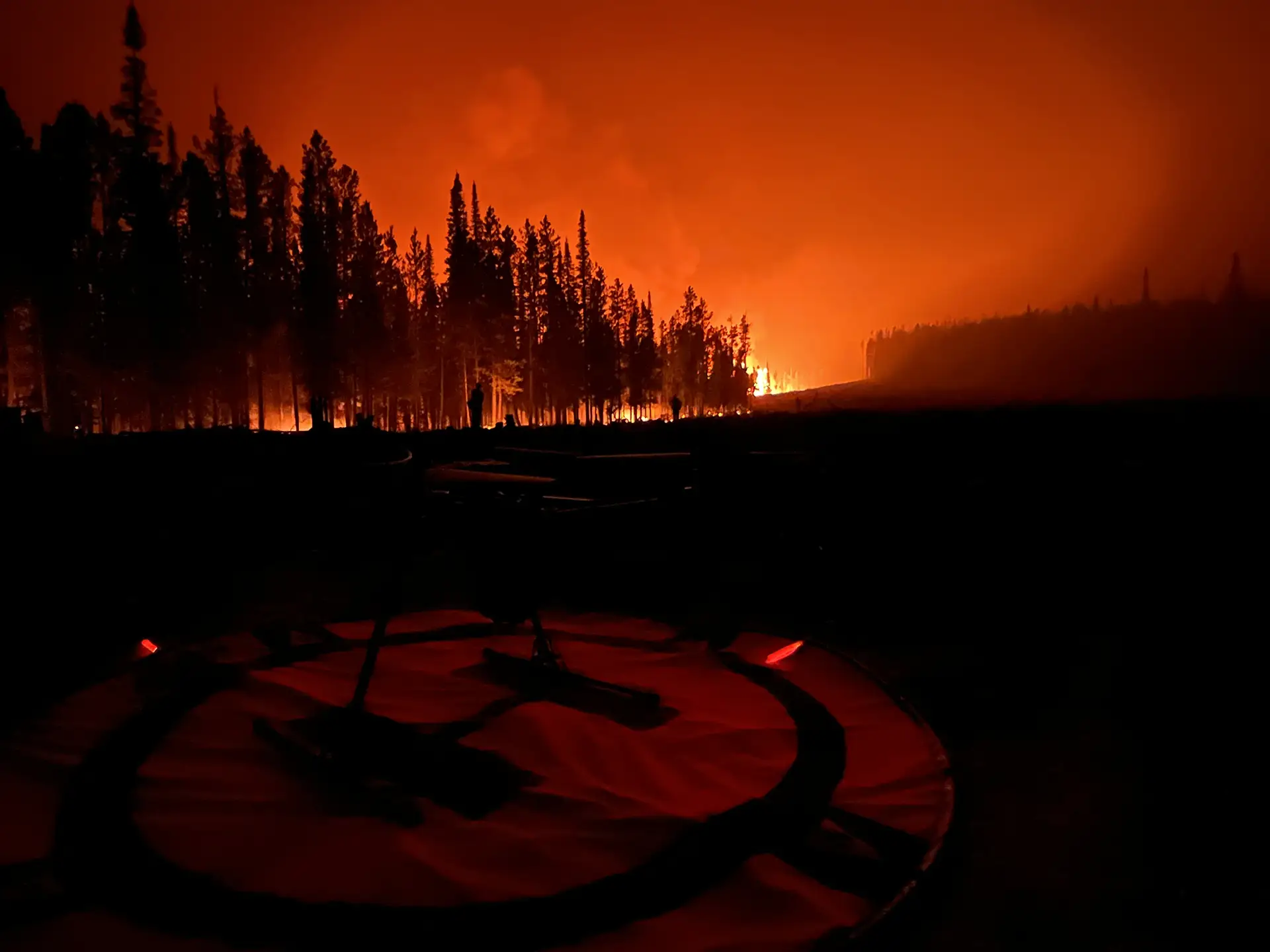
While UAS manufacturers continue to introduce a variety of traditional drone models, one company is taking a unique approach to the UAS market.
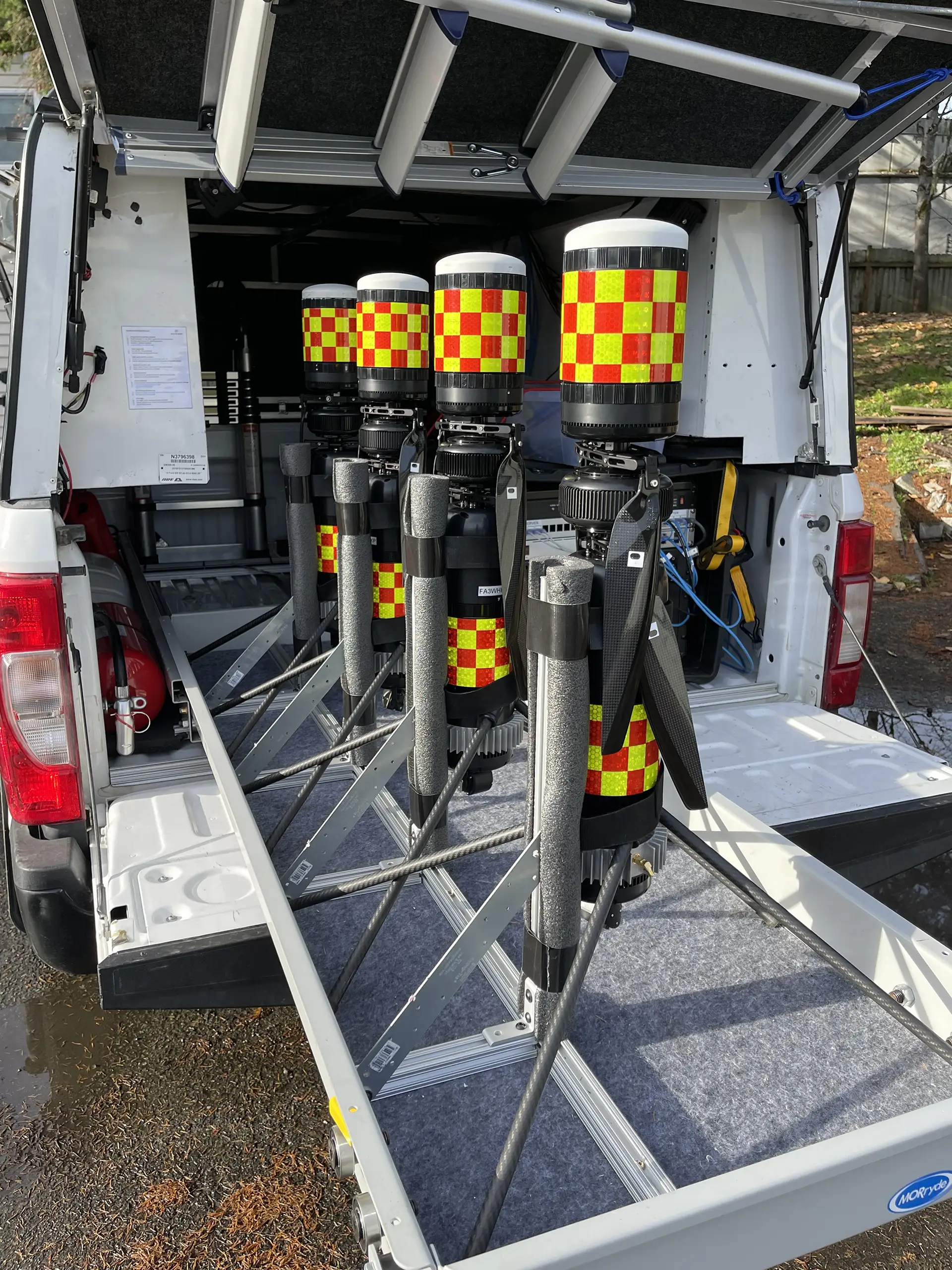
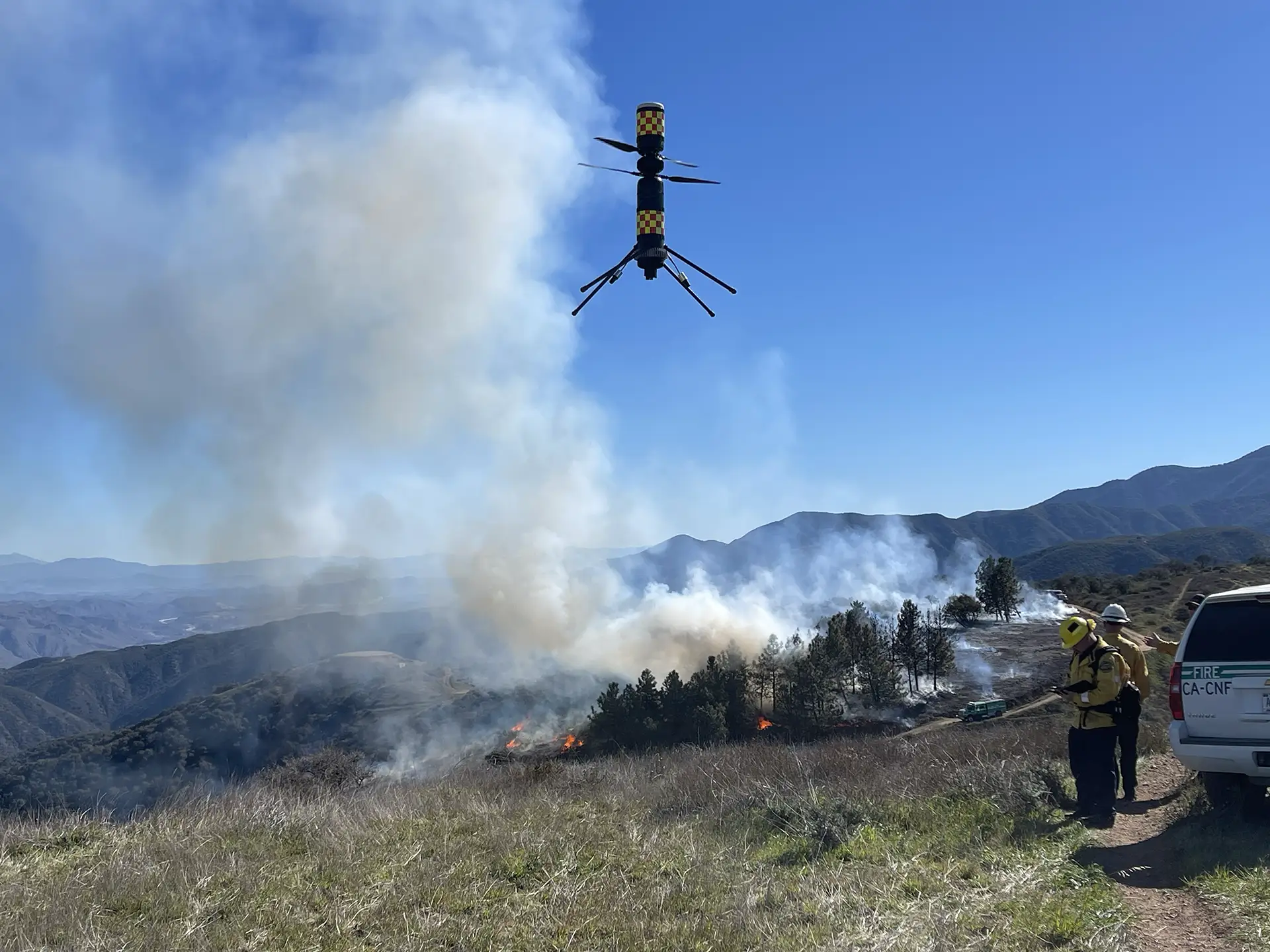
Spirit is a coaxial model from Ascent, which was recently acquired by Robinson Helicopter Company. The versatile design permit operators to swap components to best meet mission requirements. The aircraft features twin attachment points which enable operators to configure plug-and-play modules based on operational requirements. With a total capacity approaching 10-pounds, operators can extend flight times by adding extra batteries when using lighter payload modules.
Paul Fermo, Vice President of Business Development at Ascent AeroSystems, explains how their coaxial UAV design stands apart in the firefighting arena. “Our mission at Ascent AeroSystems isn’t just about being different—it’s about being better,” says Fermo.
Spirit, Ascent’s flagship UAV, features a cylindrical core and counterrotating coaxial rotors, delivering exceptional lift, flight stability, and power efficiency in a compact, rugged design. “With all critical components sealed within a waterproof core, Ascent platforms can operate in extreme conditions like high winds, heavy smoke, intense heat, or low visibility,” Fermo adds.
The Spirit’s coaxial design also offers advantages over traditional quadcopters in size, payload flexibility, and dispatch reliability.
“Firefighters need equipment that performs reliably in the worst conditions, and that’s where our design excels,” Fermo explains. The
Spirit’s modular open architecture allows users to customize battery and sensor configurations, ensuring optimal performance for each
mission.
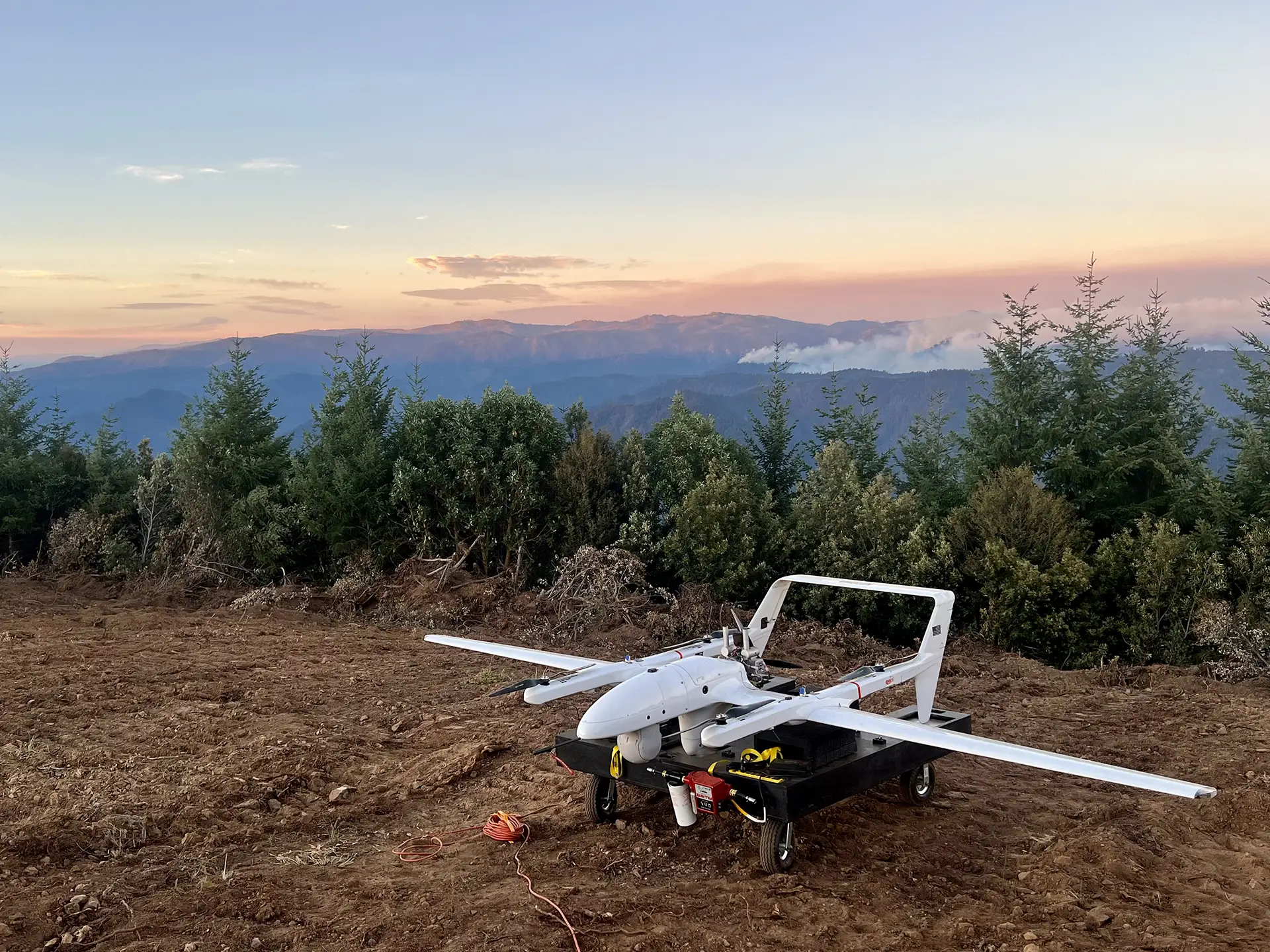
Furthermore, its robust construction—inspired by FAA-certified manufacturing processes—ensures durability and reliability even in austere environments. “We’re redefining how small UAVs are used, delivering superior performance in the most demanding operational environments,” Fermo added.
Coming Soon to a Fire Near You
Several companies are working on bringing large, water-dropping UAS aircraft online, and US agencies are working to develop inclusion plans
for these aircraft on fires. National Aeronautics and Space Administration’s (NASA’s) Ames Research Center is developing a plan to improve
coordination with drones on fires. The Advanced Capabilities for
Emergency Response Operations (ACERO)
hopes to alleviate concerns over UAS use and integration on fires. In turn, NASA is working with various agencies and companies to address
the issues in search of performance-based solutions.
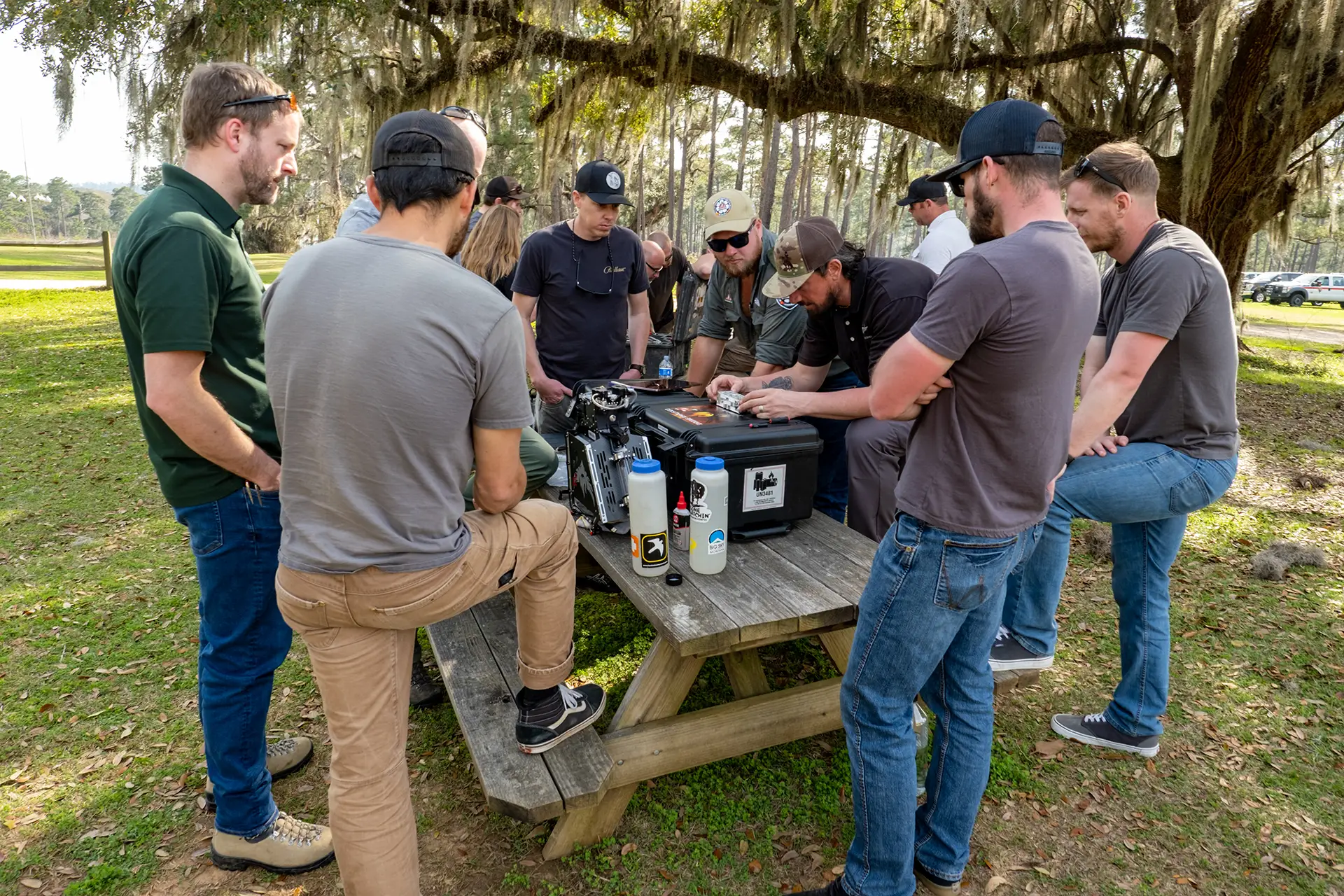
Among ACERO’s primary goals are to address challenges like over-the-horizon communication gaps and ensure precise delivery of cargo or water. Through this R&D-focused effort, NASA and the Forest Service aim to engage industry partners and drive innovation in UAS capabilities for fire management and beyond.
The USFS is one of the agencies collaborating with NASA’s Acero project to advance this UAS research and development. The partnership
provides a controlled environment for testing and evaluating new technologies before deploying them tactically on active fires. Giles
highlights the importance of this collaboration in defining standards and requirements, such as beyond visual line of sight (BVLOS)
operations, air traffic control integration, and redundant communication links for reliable operations. “What do those standards and
requirements need to be?” asks Giles. “Is it multiple in, multiple out? Is it a syllabus or persistent systems? Is it satellite link? So, I
think that that true R&D focused effort of Acero through the partnership, we can really define the requirements and then solicit
industry and say, ‘Hey, here's what we need.’”
While NASA and the firefighting agencies develop coordination standards, several companies are already well into the process of creating UAS aircraft technologies that will meet
Phenix Solutions is working towards certification of their Ultra 2XL, a large, coaxial, multi-use drone that customers could configure to carry a 150-gallon fire suppression tank. Powered by a 300-shp (at take-off) Rolls-Royce RR300 turbine engine, the Ultra 2XL is projected to have a 300-nautical mile range.
Then, there are companies like Rotor and Rain that are working on a significantly larger scale, working with traditional helicopter original equipment manufacturers (OEMs) to convert full-sized helicopters to fight fires remotely or autonomously.
New Hampshire-based Rotor is working with Robinson converting R-44 Raven II to the autonomous Rotor R500, available in two configurations. The Airtruck, with an external useful load of just over 1,100-pounds, is Rotors’ recommended platform for conducting firefighting operations. The Sprayhawk, equipped with a 110-gallon tank focuses primarily on agricultural application missions. Each aircraft is equipped with a variety of sensors, navigation gear, and communications equipment, and requires a flight crew of 2 or 3 people not including maintenance personnel.
Rain, based in California, is working with an even larger aircraft. Working with Sikorsky, a Lockheed
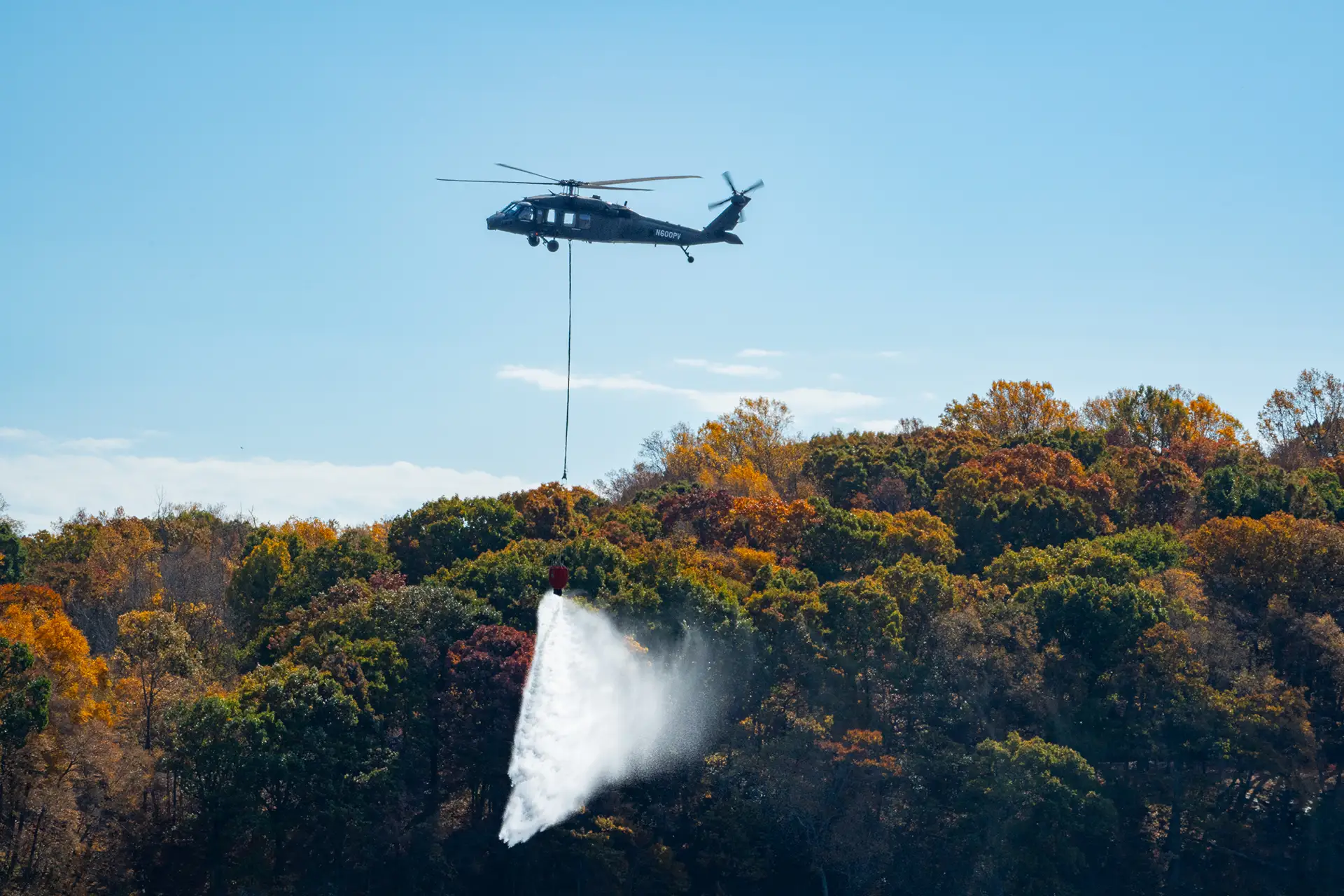
Martin company, the two companies have conducted multiple demonstration flights of an autonomous UH-60 Black Hawk helicopter equipped
with Rain’s Wildfire Mission Autonomy (WMA) software and the Sikorsky
MATRIX Mission Autonomy System.
Within this partnership, Sikorsky’s Matrix program controls the autonomous helicopter while Rain’s WMA directs the firefighting element.
Guests at the demonstration entered mission parameters through a computer tablet, including take-off, locating a fire, and dropping water from a Bambi Bucket using a 60-foot line. The aircraft, with safety pilots aboard but not touching controls, conducted three drops in 30 minutes. Despite an 8-to-10-knot crosswind, the system adjusted the flight path to ensure accurate drops.
“We’ve shown how this helicopter can rapidly respond to and suppress or manage incipient wildfires,” states Max Brodie, CEO of Rain. “And we've demonstrated this technology in operation on test fires several times in 2024 and 2023. And now we're ready to transition the technology into operational use with fire agency partners.”
The Black Hawk demonstrations have attracted the attention of a variety of interested government officials. Representatives from NASA and
the US Federal Emergency Management Agency (FEMA), joined with fire management officials from Los Angeles County Fire and longtime Rain
partner Orange County Fire Authority (OCFA) to view demonstrations in October 2024.
“I'd say there has been quite a sea change of interest among operators in this technology, particularly as operators start to understand how autonomy can assist existing crewed operations,” continues Brodie. “And so just like auto brake and lane keeping features in cars, autonomous systems can play an assistive role in reducing risk in wildfire response missions.”
Despite the deep interest in the joint-work with Sikorsky on the Black Hawk, Brodie advocates for a slow approach to introducing this technology to the fire lines. “So everything is part of a crawl, walk, run, build up process. And I think there's broad consensus within the industry and within operators and the fire community that the first place these large autonomous suppression aircraft will serve is at night and in particular on dedicated branches of mature fires. So flying missions where there is increased risk to flying in dedicated airspace and is another tool in the toolbox to get to incidents that otherwise may not receive support.”
Almost Ready for Duty
While no water-dropping UAS is either certificated or approved to officially fight fires, the demonstrations indicate that the technology is nearing the capabilities to serve as an asset to firefighters in the near future.
In early 2025, severe winds fanned massive conflagrations in Southern California, causing loss of life and billions of dollars in structural damage. While the high winds routinely grounded all aircraft, Brodie believes the joint-venture Blackhawk could have flown under any conditions where traditional helicopters were able to fly. “Our October demonstrations were conducted in unseasonably windy conditions. There was a red flag warning across the entire state (Connecticut), and the system successfully suppressed test ignition three out of three times.”
Rain has partnered with OCFA and Southern California Edison, and other fire agencies in Southern California, collaborating on a regional Quick Reaction Force that uses contracted air tankers to respond to fires across the region. Rain and Sikorsky are working to integrate the remotely piloted or MATRIX-equipped Blackhawk into the cooperative system.
Warnings to Civilian UAS Operators Around Wildfires
One of the largest – and growing - threats to firefighting with UAS or traditional aircraft are the members of the public who want to fly their drones around the fires to capture footage or survey damage. Despite FAA regulations, temporary flight restrictions (TFRs) over fires, and public service announcements, incursions into the airspace occur with alarming frequency.
“You know, one person sees a UAS, they feel like, oh, everyone can fly their UAS,” says York. When a private drone enters the fire air space, law enforcement is typically notified, but firefighting operations are temporarily halted until the drone leaves. “All aircraft, depending on the location and the operational tempo, are either moved out of the way or moved to a different part of the fire base,” York adds. “It's obviously affecting operations because we're having to divert aircraft away from the area until we confirm that the aircraft left the area.”“They're out there,” states Giles. “The trends within our safety reporting data is showing that it's getting worse and worse on an annual basis. The numbers are increasing. We really need the public to understand to stay out of these spaces, but that public outreach is only going so far.”
Giles notes that the “If you fly, we can’t” campaign turns 10-years old in 2025 but acknowledges that the message doesn’t seem to be getting through. “Unfortunately, it's a matter of time before an air-to-air impact happens, and it recently did. So, what can we do now? I think it's going to be a lot of collaboration between our law enforcement community, the regulators, and airspace and safety and aviation.
Giles is hopeful that technological advancements may eventually alleviate the issue but isn’t optimistic about the timing. “It would be really nice if we could just geofence these things off, but I just don't see that tech coming.”