 HOME
HOME



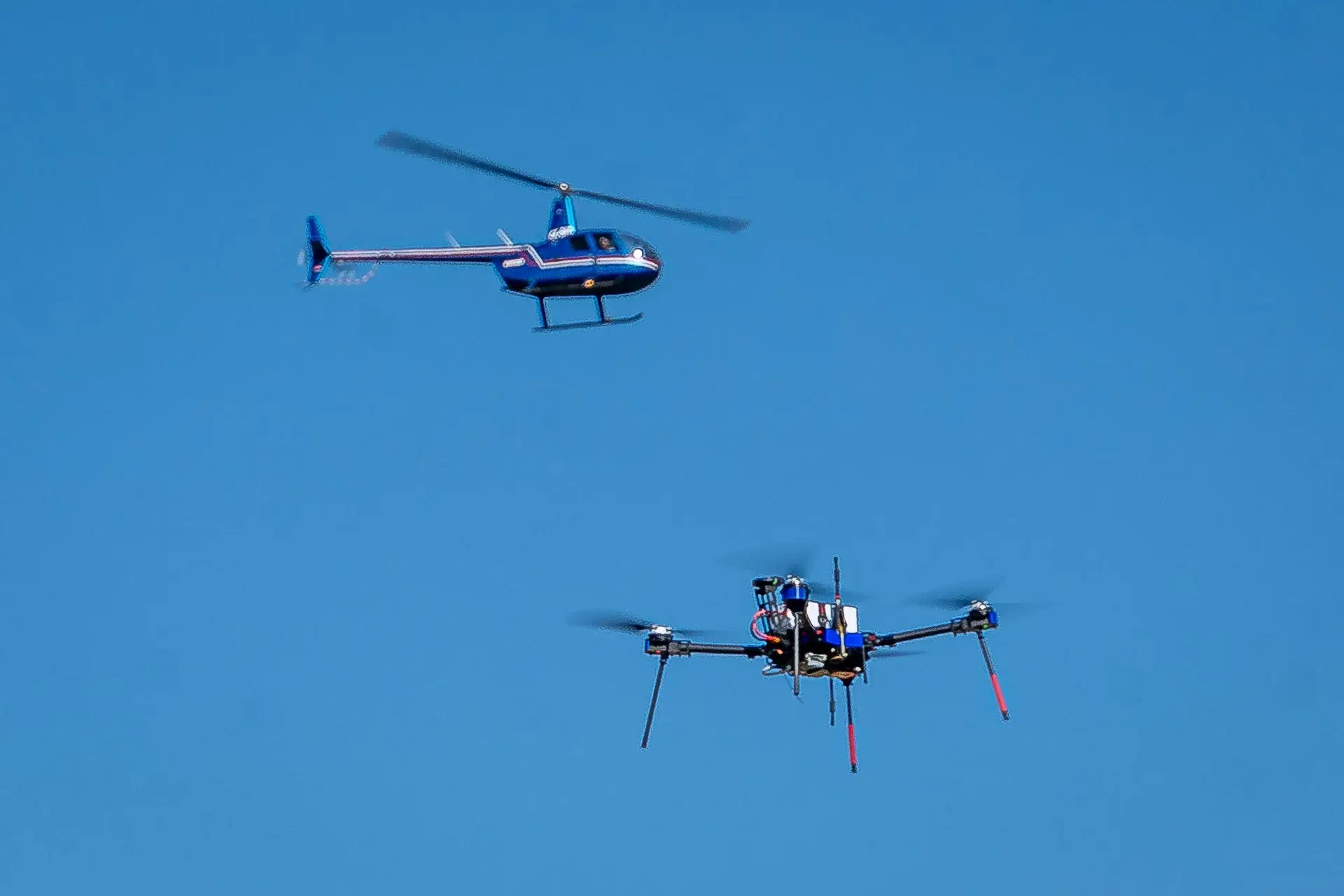
It seems you can't watch the news these days without Uncrewed Air Vehicles (UAVs / 'drones') appearing somewhere. From the battlefields of Ukraine and the Middle East, almost daily reports of drone attacks are pumped into our mainstream and social media feeds. Drones, however, are far more than a weapon of war; increasingly we seem them commercialised to move high value / low mass products, such as medicine or blood plasma, around congested city streets, as well as small parcels and - no doubt in time - the mundane such as a fresh pizza. There are also legitimate uses for drones to support science experiments, such as monitoring volcanos and other natural phenomena, as well as scouring beaches for encroaching hazards such as Sharks and Rays.
Some are still just bought and flown as toys.
Sadly, these 'toys' are often dangerously used by well-meaning individuals, often blissfully unaware of the rules of the air they are ignoring, or of the risk they are posing trying to get 'that shot' for a social media channel or livestream. In January this year, a resident of California, Peter Akemann, was found guilty of 'recklessly operating a drone' during the LA fires. Flying his DJI Mini 3 Pro beyond visual line of sight, Akemann was simply trying to get some imagery of the fires that were raging at the time. Unfortunately, his Mini 3 collided with the leading edge of a Canadair CL-415 conducting air attack missions, punching a large hole in the aircraft; requiring the aircraft to be withdrawn from service for repairs. Given the intensity of the Palisades fire at the time, the loss of one of the most flexible and capable assets on the fireground was a serious matter. Moreover, the damage could have been worse, potentially leading to the loss of the aircraft especially if it had, perhaps, punctured the windscreen and incapacitated the crew or, simply, distracted the pilots by appearing in their field of regard at a critical phase of flight. Acting US Attorney McNally stated that;
“This defendant irresponsibly flew an aircraft into restricted airspace, endangering first responders who were risking their lives to protect people and property....Flying drones during times of emergency poses an extreme threat to personnel trying to help people and compromises the overall ability of police and fire to conduct operations."
The Californian Dept of Justice released pictures of the damage caused to the aircraft, and of the remains of the Mini 3 recovered from inside the wing, rapidly enabling Mr Akemann to be traced. His defence rested upon trying to shift the blame onto DJI for not providing adequate 'geo-fencing', preventing him from being able to fly the drone into an area under a temporary FAA flight restriction. At the time of the impact, the DJI was over 1.5nm from Mr Akemann's location - breaking the limitations of Visual Line of Sight (VLOS) operations. Ultimately, he pleaded guilty, offering to pay the $65k cost to repair the Canadair's leading edge, and managed to avoid the maximum penalty of one year in jail by volunteering for 150 hours of community service.
Not ‘all bad’…
It's important to remember, however, that not all drones are 'bad'. Government services are also starting to exploit the utility of small - tactical sized UAVs in the coastguard, border patrol and law enforcement communities, and there is increasing interest in using drones for various tasks on the fireground. These include detecting early ignition locations that can be rapidly knocked down, providing enhanced Situational Awareness of the 'bigger picture' for firefighters on the ground and in the air fulfilling Command and Control (C2) roles, and even acting as autonomous air attack platforms themselves - capable of delivering suppressant 24/7. The latter role is seeing a number of companies, such as Rain Aero and Rotor Technologies, developing a succession of ever larger UAVs to deliver effect from the skies; Rain Aero's platforms now range from the Rain Mk1 small Rotary Wing UAS (RWUAS), to working with Lockheed Martin and XP Services to develop an autonomous UH-60 Black Hawk for firefighting, while Rotor Tech sit somewhere in the middle with their R550X, adapted from the popular Robinson R44 Raven II piston engined helicopter.
The increase in 'drones on the fireground', those both invited and those creating an unwelcome hazard, requires a high level of coordination and airmanship to avoid incident such as the damage to the CL-415 over LA earlier this year. Indeed, at the current rate of expansion for UAV use, it's inevitable that more 'near misses' and collisions will occur. Technology, so far, has proven - if your pardon the awful pun - a bit 'hit and miss'. However, the technology is slowly improving.
C&CAS
Ciconia's Coordination & Collision Avoidance System (C&CAS) is one such technology.
During my military days, I ran a series of Technology Demonstration Programs (TDPs) and flight trials looking at how the crewed Mid Air Collision (MAC) risk might be mitigated, and how similar technology could be exploited to enable UAVs to operate in the same airspace as manned platforms. In the UAV experiments we termed the needs as 'Detect to Avoid' (D2A) or 'Sense to Avoid' (S2A).
From our perspective, S2A was about equipping the UAV with active and passive sensors that could sense conflicting traffic; passive sensing
would include Low Light TV (LLTV), Optoelectronic (sometimes referred to as Electro-Optic), and thermal cameras, while active sensing could
be conducted over short ranges by LiDAR(Laser Radar) and over more representative distances, and in differing weather conditions, by
various frequency bands of radar. The problem with S2A was that the sensors themselves could be heavy, expensive and require both
electrical power and cooling. Adding expense to a UAV was unwelcome, eroding its cost advantage over a conventional, manned,
platform, while nearly all UAVs (until you get to Tactical and above, at least, equivalent to DoD Group 3/4 and NATO Class III) have severe
Space, Weight and Power (SWaP) challenges, not to mention the impact of a cooling system for a thermal camera.
Ciconia's C&CAS aims to avoid the worst of the SWaP issue by focussing on exploiting available electronic conspicuity and reference signals to not only detect the presence of conflicting traffic (crewed and uncrewed) but also provide conflict resolution via avoiding action.
Origins
I was fortunate to be able to sit down with Ciconia's CEO and Co-Founder, Moshe Cohen, a retired IAF Colonel who flew both the AH-1 Cobra and the AH-64 Apache, shortly after the Paris Air Show concluded. He explained that the origins for C&CAS was an Israeli Air Force requirement for a MAC Avoidance (MACA) system after the tragic collision between a pair of CH-53 Yasur helicopters, at night, over northern Israel in February 1997, killing 73 Israeli service personnel. The Israeli equivalent of DARPA, the Maf'at, spent over a decade experimenting with potential rotary wing MACA concepts before concluding that it was impossible due to the high False Alarm Rate (FAR) of ADS-B and TCAS systems at the time. A high FAR leads to increased cockpit workload, distraction and, in time, distrust of the system in a cockpit.
Ciconia' task was to develop a lightweight and affordable system that could be fitted to both crewed and uncrewed platforms and provide MACA protection between any combination of aircraft and UAV. At the heart of C&CAS is a combination of internal and external warning systems, and an ability to exploit signals not intended for MACA purposes, while also providing a cascading 'Level of Alert' (LoA) warning system and, ultimately, Resolution Advisory (RA) commands to a manned aircraft, much like those provided by the Traffic Alert and Collision Avoidance System (TCAS), to prevent the MAC from occurring. However, C&CAS also controls the UAV side of the RA, enabling it to work 'drone on drone' encounters as well as between any combination of UAVs and crewed platforms.
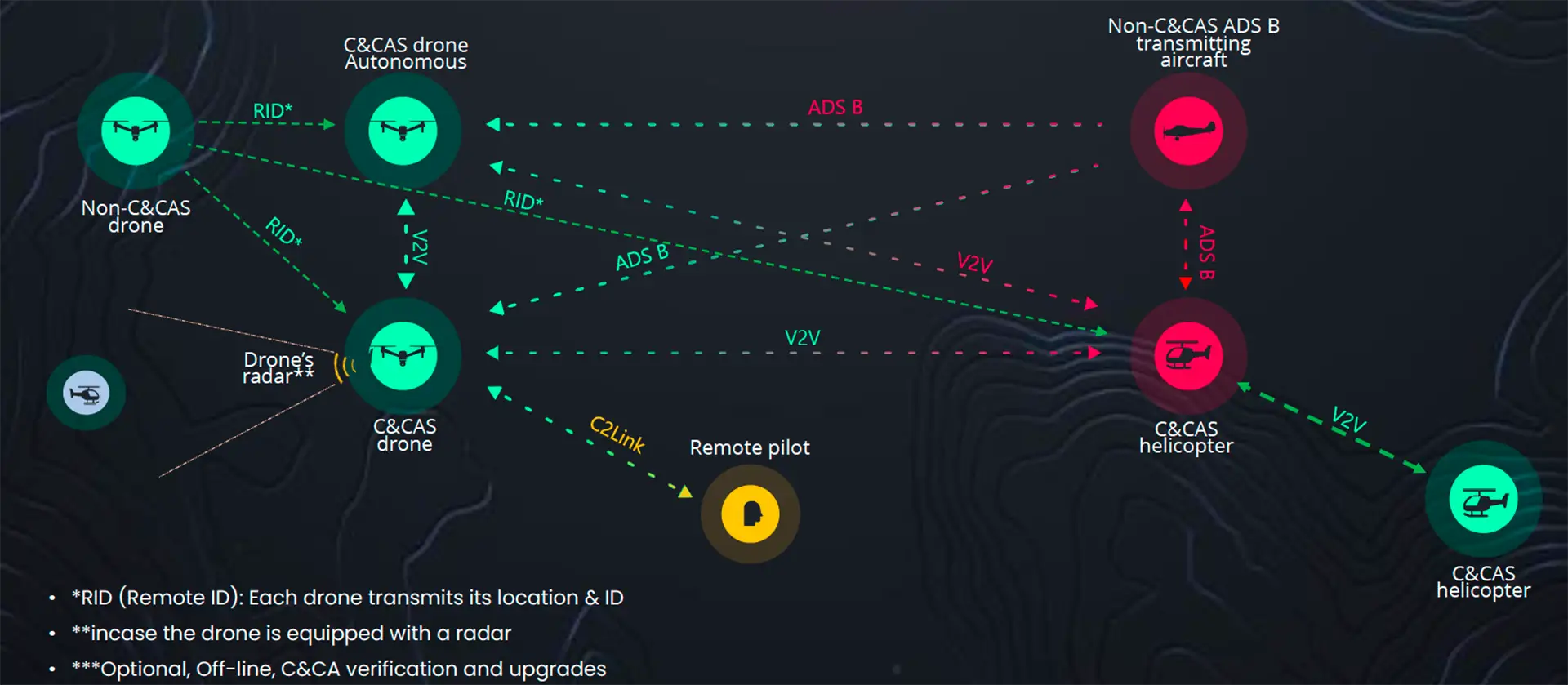
C&CAS itself has a Vehicle to Vehicle (V2V) network, that constantly updates a C&CAS equipped platform's location and vector and
transmits it much like Automatic Dependent Surveillance-Broadcast (ADS-B) system does in 'ADS-B Out' mode. Again, like ADS-B,
C&CAS also receives (ie 'ADS-B In') which is how the system provides spatial awareness of other users via the V2V network - but it's the
provision of RA that differentiates it from the ADS-B capability. Moreover, C&CAS can also monitor ADS-B 'Out' signals and
therefore provide alerts and RAs against any suitably equipped ADS-B platform - increasingly a 'mandatory' equipment item in airspace, and
especially in FAA restricted airspace around a scene of fire.
Apart from acting as a TCAS for RA, the 'added value' of C&CAS is the ability to also exploit other emissions to/from the drone to enhance the 'Detect' function. Prime amongst these is Remote ID (RID). RID is a US requirement for all drones to be capable of broadcasting their individual IDs, location and altitude to third parties. RID is either fitted to the UAV at the factory or aftermarket via a RID Module. RID broadcasts on WiFI and Bluetooth networks, hence why it is different to V2V or ADS-B. RID also broadcasts on take-off, informing third parties of the launch and recovery location, and where the Ground Control Station is situated, making it easier to trace negligent or nefarious operators. Under FAA regulations, drones without RID can only operate in FAA Recognized Identification Areas (FRIAs). In addition to RID, C&CAS can also detect the Command and Control (C2) link between the UAV and the GCS - offering yet another means of detecting the presence of a hazard.
How then, does C&CAS help out the Air Attack world?
Certainly, NASA think it can. In their March 2024 report on Wildland Aerial Firefighting, the Agency noted that;
"V2VI equipment should be mandated for all wildland firefighting aircraft. In the desired future state, development of the C&CAS capability supported by the V2VI communications system would include providing recommended course and/or altitude changes to operators."
The system evaluated by NASA had been through several iterations of equipment and Human Machine Interface (HMI). One of the issues that pilots proved reluctant to believe and slow to react to the C&CAS alerts. However, by 2021, the technology was maturing nicely and a collaborative trial between a Black Hawk and UAV was conducted. Initially evaluated as a military MACA aid, Ciconia quickly realised that the technology had applications for any increased volume of lower airspace traffic caused by eVTOL and delivery UAVs, and, indeed, the congested and often complex scene of fire C2 requirements.
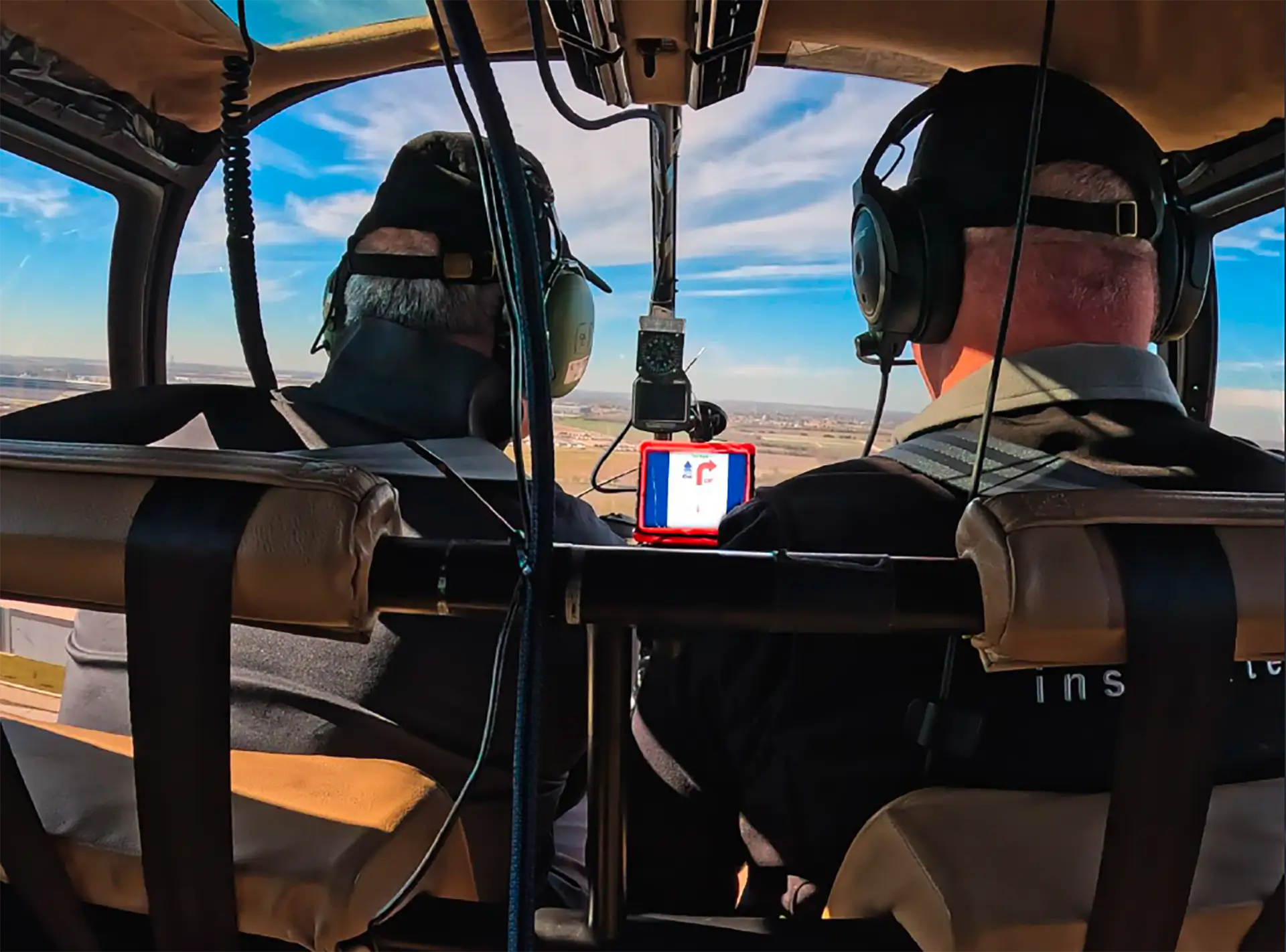
Key in my mind is the instant ability to know what aircraft and drones are 'inside' your circle of trust, and those that are not. This would enable firefighters on the ground to keep their smaller UAVs in the air for situational awareness and comms rebro even if crewed air attack platforms are operating. Likewise, C&CAS opens the door to a hybrid air attack capability, with crewed and uncrewed aircraft operating in tandem with safe separation maintained at all times. This would permit tactical sized UAVs to scout for hotspots and new ignition sites while the water drops are underway and would also permit the likes of the R550X and Rain Aero Black Hawk to operate in the same area as crewed air tankers. The SA enhancement afforded by C&CAS, plus the RA back up, would permit crews to work alongside UAVs and, with the feed in from ADS-B, RID and RF C2 detection, quickly become aware of 'strangers' both manned and uncrewed arriving inside the restricted area.
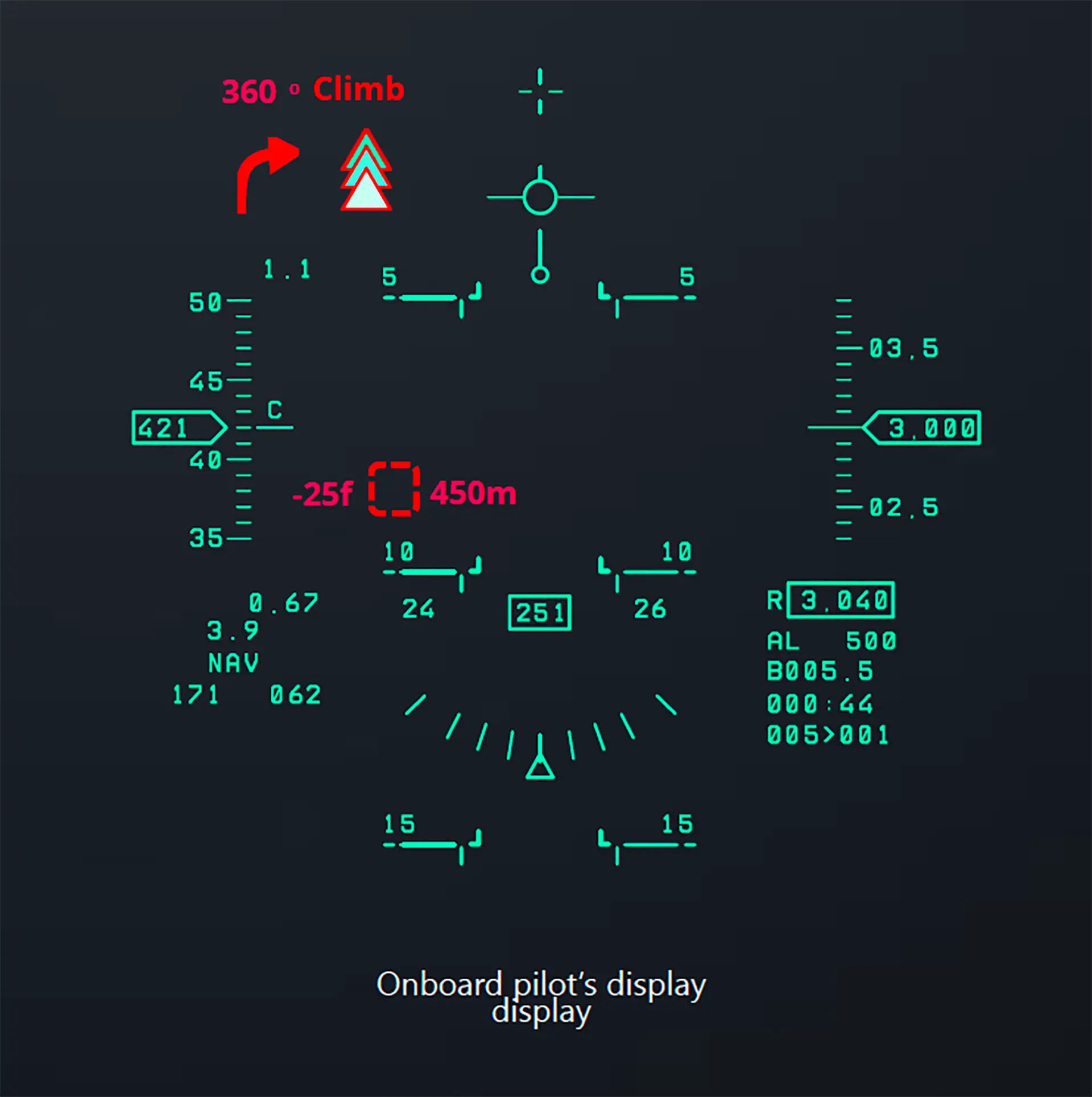
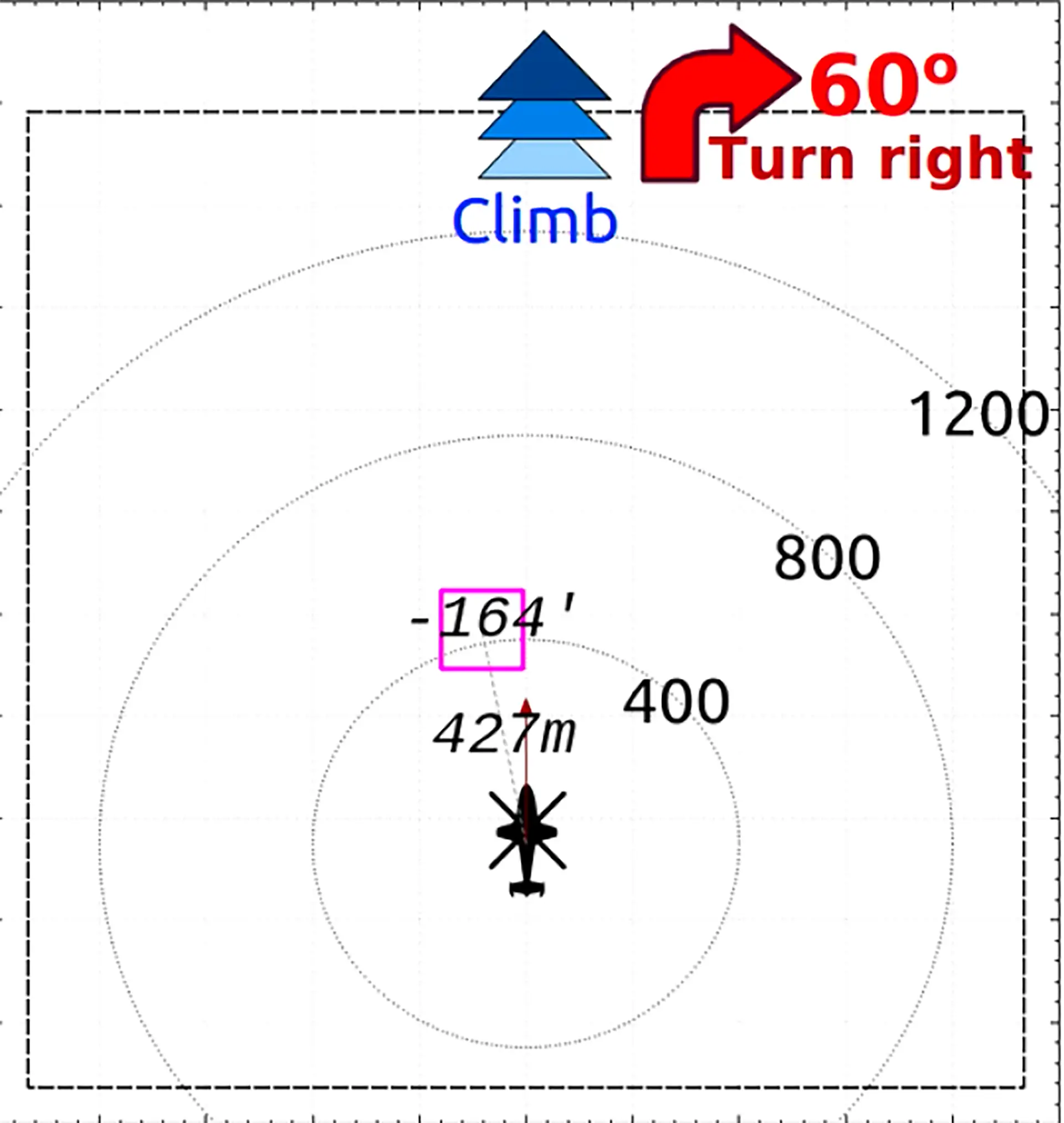
Conscious that air attack crews often lack the capacity to respond to each and every alerts, C&CAS has built into it five Levels of Alert (LoA) - as mentioned earlier - Levels 0-4. As the risk of a collision increases, the LoA steps up, giving the pilot and drone operator opportunities to take early avoiding action. The LoAs are as follows:
LoA 0 - There are no currently detected C&CAS risk, so the display remains blank.
LoA 1 - Location of a contact displayed - including Range and relative altitude.
LoA 2 - Drone pilot receives a steer command to affect a safe resolution (crewed aircraft not alerted).
LoA 3 - Manned platform gets a red highlight on the display, C&CAS takes control of the drone from the operator and steers it away to provide RA.
LoA 4 - If the collision risk is a 'pop up' threat, the drone lacks the manoeuvre potential to conduct an escape manoeuvre, or it would be more effective for the aircraft to complete the RA action, the drone is 'frozen' and steer commands provided to the crewed aircraft pilot.
Testing
The system is currently undergoing testing in representative Air Attack scenarios. In April of 2025, C&CAS was installed on an
Air Tractor and UAV to test how the system functioned under field conditions. C&CAS demonstrated its ability to detect a small UAV and
ramp up to LoA 4 by giving safe and achievable RA commands to the Air Tractor pilot. 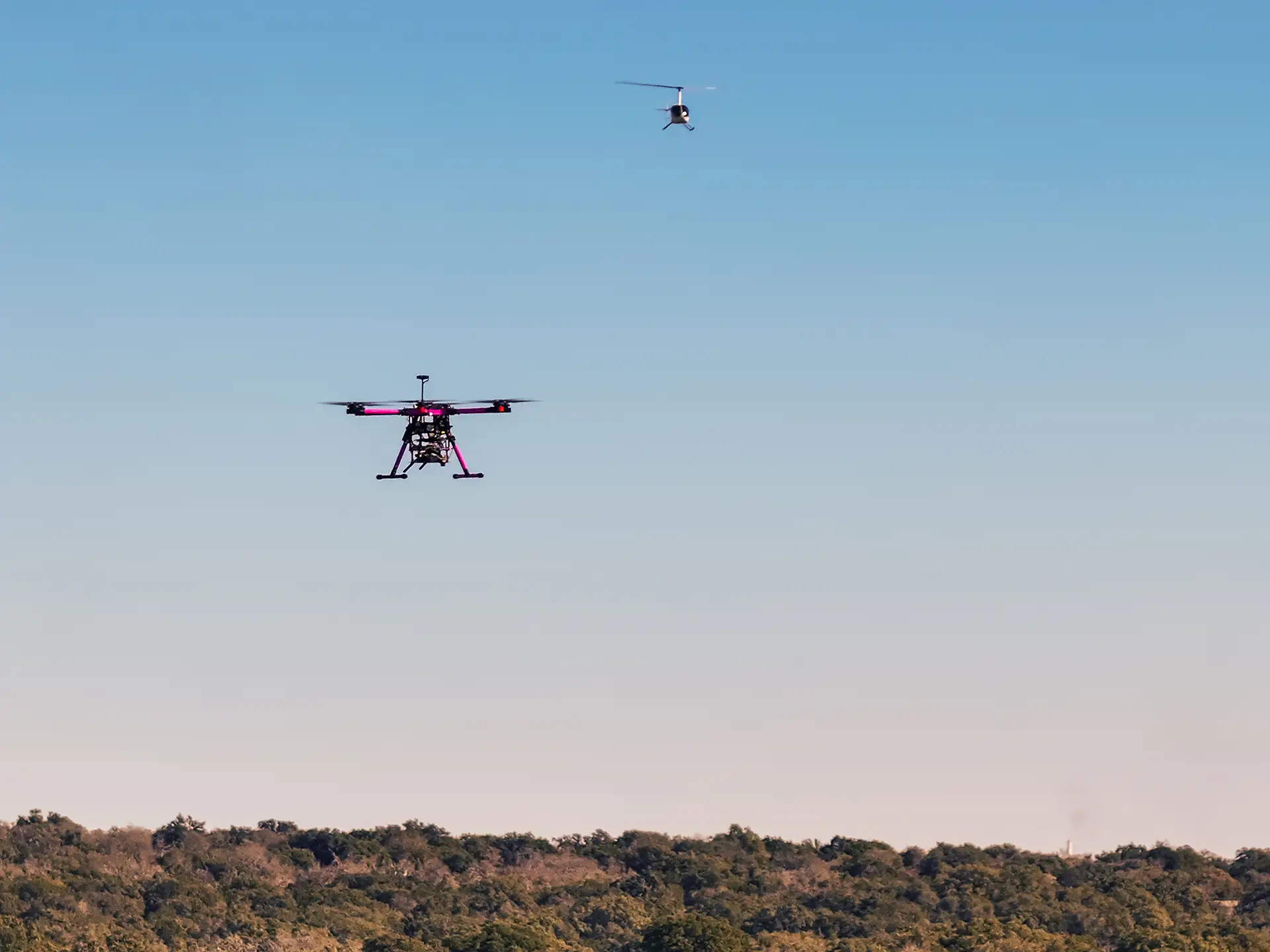
To encourage more users to fit C&CAS to their platforms, it has to be light, not require extensive modifications and, with not draw significant power from the host airframe. The current system weighs 120g, with the intent to make it lighter still. Battery use is low, and the system's algorithm adapts to the environment - scaling its duty cycle to match the traffic density it senses.
Intentional drone use on the fireground could be a gamechanger. The ability to have 'water mules' dropping 24/7, just stopping for a suck of gas when required, could help contain larger fires between manned aircraft drops, and smaller UAVs out scouting for the next flare up and assisting the larger SA of the 'fight' can be invaluable. At the moment that C2 is over-reliant on crews executing 'see and avoid' in an already busy, often obscured, low level environment; plus they cannot discriminate between 'friendly' drones that are part of the same team, and those that are being flown for less altruistic reasons.
I look forward to seeing the system continue to mature, and, hopefully, appear on the fireground in greater numbers.