 HOME
HOME




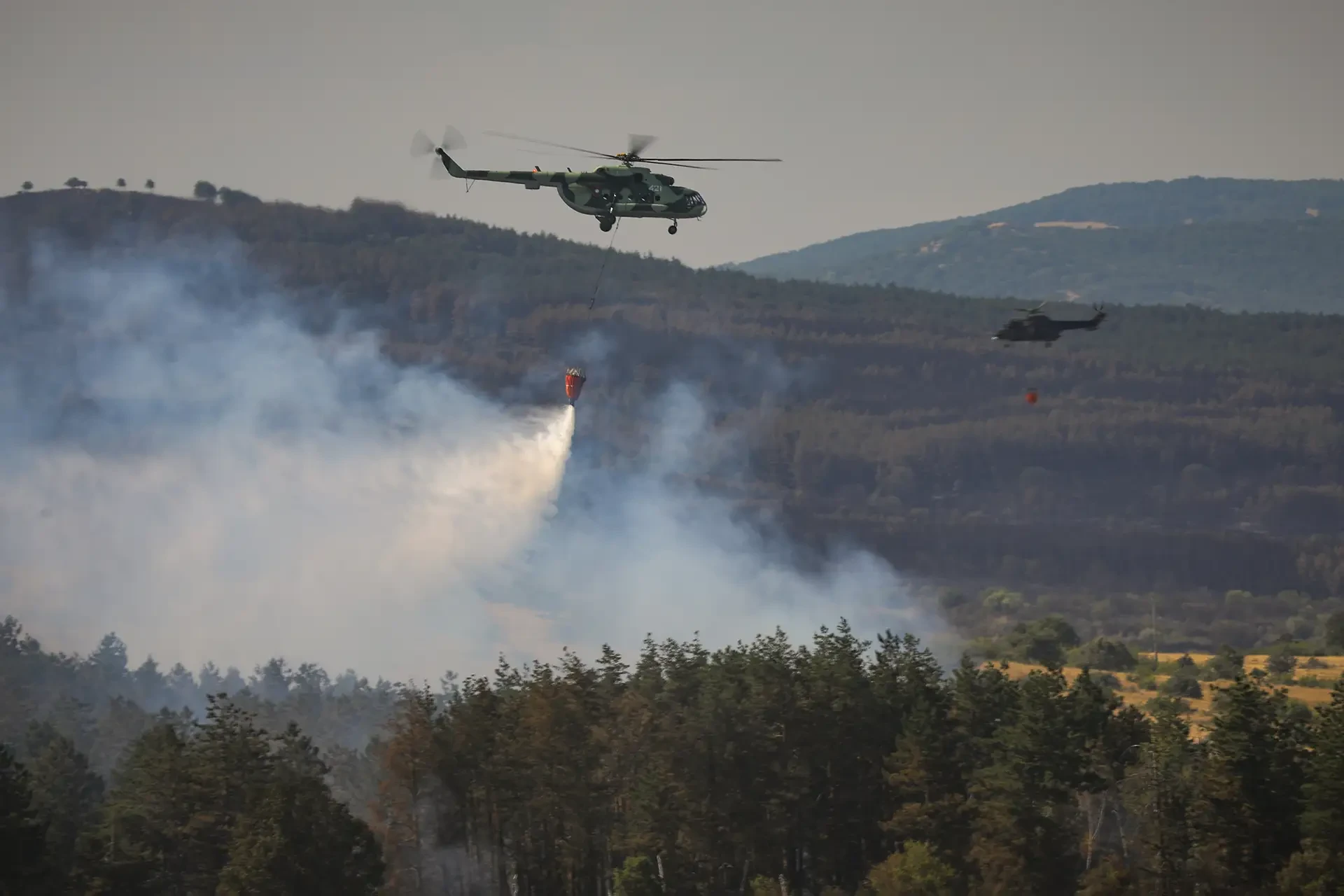
According to Reuters, the hottest day recorded globally since records have been kept, was reported on July 21. 2024 is on track to become a record itself on the same measure. This has led to a severe drought in Bulgaria as some areas have not had a drop of rain for months. The situation became literally explosive when on 12 July the first significant fire broke out. It happened in a pine forest in a hard-to-reach area in Sredna Gora mountain. Soon after, a Bulgarian Air Force’s AS-532AL Cougar and a Mi-17 were called out to fight the fire.
Bulgaria does not own special aerial firefighting aircraft. It has only two Bambi-buckets, with a maximum capacity of three ton each, for
the national fleet. Looking back, Bambi-bucket firefighting was a relatively new method for Bulgaria, with their utilization beginning in
late 2010. Prior to the use of the bucket, around the turn of the century, Bulgaria used helicopters with a three-ton fuel tank
inside the helicopter fuselage. Unfortunately, it turned out that this variant had one serious drawback resulting in prolonged emergency
water discharge, i.e. well above five seconds. This was to blame in an accident 24 of July 2003. An Mi-17P, on its entry into smoke from
the forest fire in Pirin mountain, was too heavy to for single engine flight and an engine lost power and the helicopter crashed from about
70m. If they had been using a Bambi-bucket system, the crew could have made an emergency drop. All four people on board unfortunately lost
their lives. This case is also a reminder of how hard, difficult and risky the work of fighting fires from the air is. And it could not be
otherwise when most of the time it is flown at the limits of the machines’ capabilities at a marginally low altitude while in a dangerous
environment, and with a task requiring continuous full concentration.
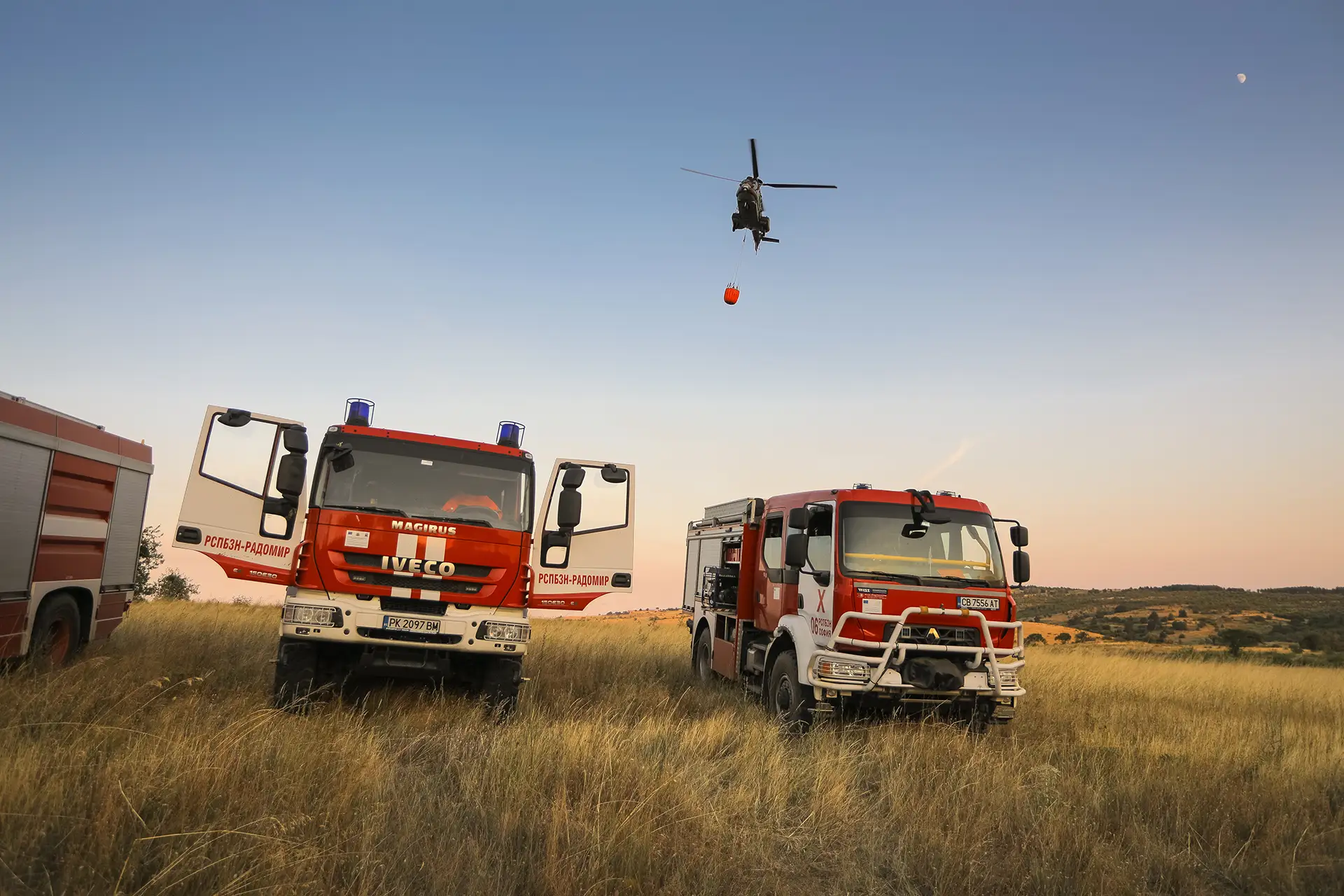
Back to present times, two firefighting helicopters AS-532AL Cougar and Mi-17 for a period of 11 days – from 12 to 22 July, assisted in
extinguishing more than 1,420 fires raging across southeastern Bulgaria. Although these fires were only at low altitude, ambient
temperatures were reaching over 40oC, forcing crews to reduce the volume of the Bambi-buckets to two ton for the Mi-17 and to one
and half ton for the Cougar. Squeezing all the power out of their machines, the crews did not use the helicopters’ air-conditioning systems
and the cabin conditions were at times exceeding 65oC.
With the exception of the first two days, the pilots spent an average of over nine daily flight hours in this environment. These risky
flights could not be performed by other than the more experienced pilots and there aren't many of them, which burdened the available crews.
During this period, these two machines made 1,181 water-drops, nearly 2,075 tons of water, in the Strandzha, Sredna Gora and Rhodope
Mountains. Even this proved insufficient when foreign firefighting parties joined in. These were: a Slovak Blackhawk helicopter, a Czech
Bell-412 and two Spanish Canadair CL-415s. Finally rescue came with a cold front bringing rain to dampen the flames. These fires demanded
the efforts of over 1,400 military personnel, hundreds of volunteers and countless locals from the affected areas.
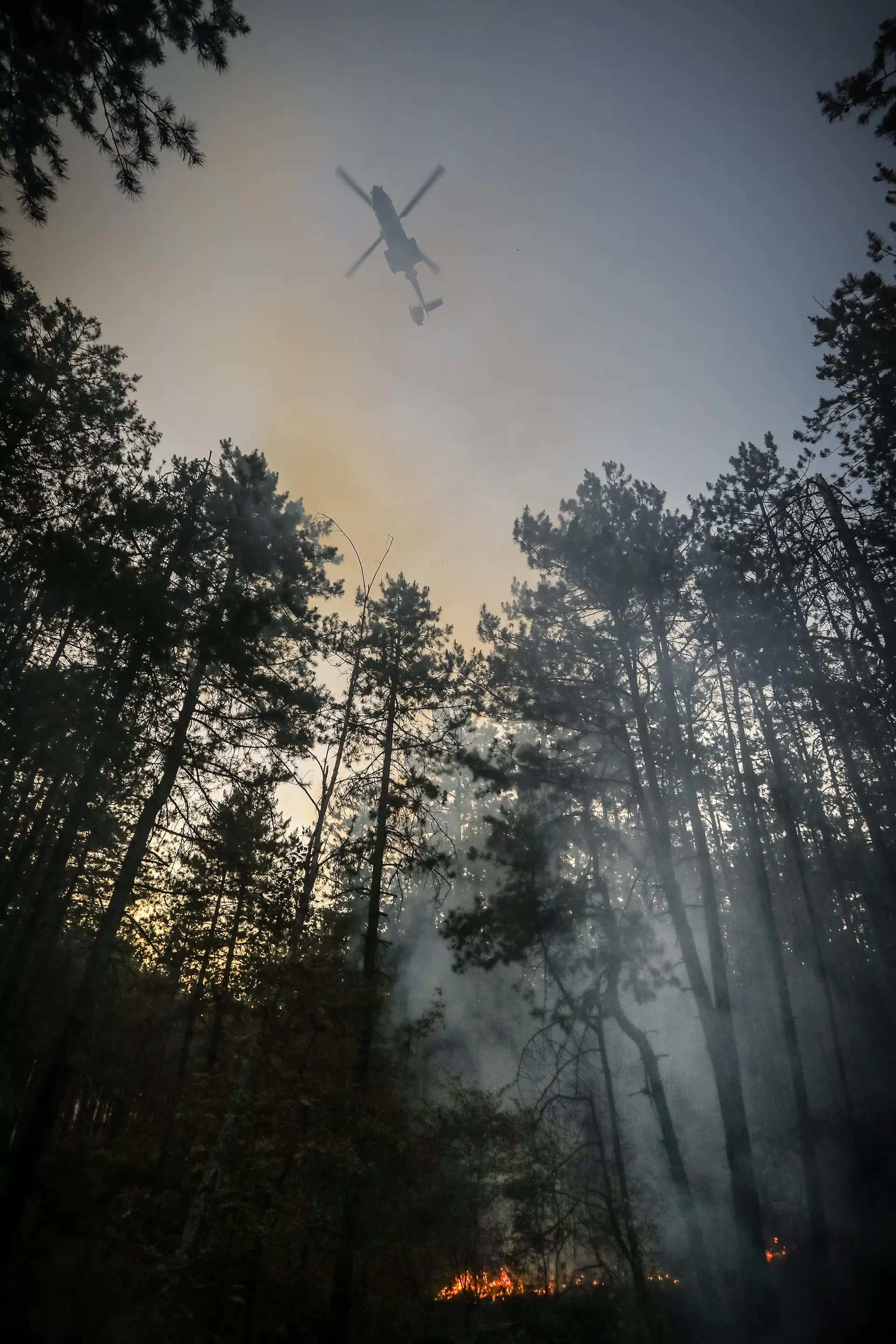
The July fires threatened the lives of many while burning more than 110,000 hectares, including forests, fields, fields and parts of
villages. They prompted a parliamentary decision to allocate 130,000 Euro for the urgent purchase of 2 additional bambi-buckets. This will
enable two more helicopters to be involved in future crises.
Unfortunately, this measure is already belated - a new fire has been raging for days in southern Bulgaria, across the border with Greece, and our country will again rely on foreign air support to control the fire.