 HOME
HOME




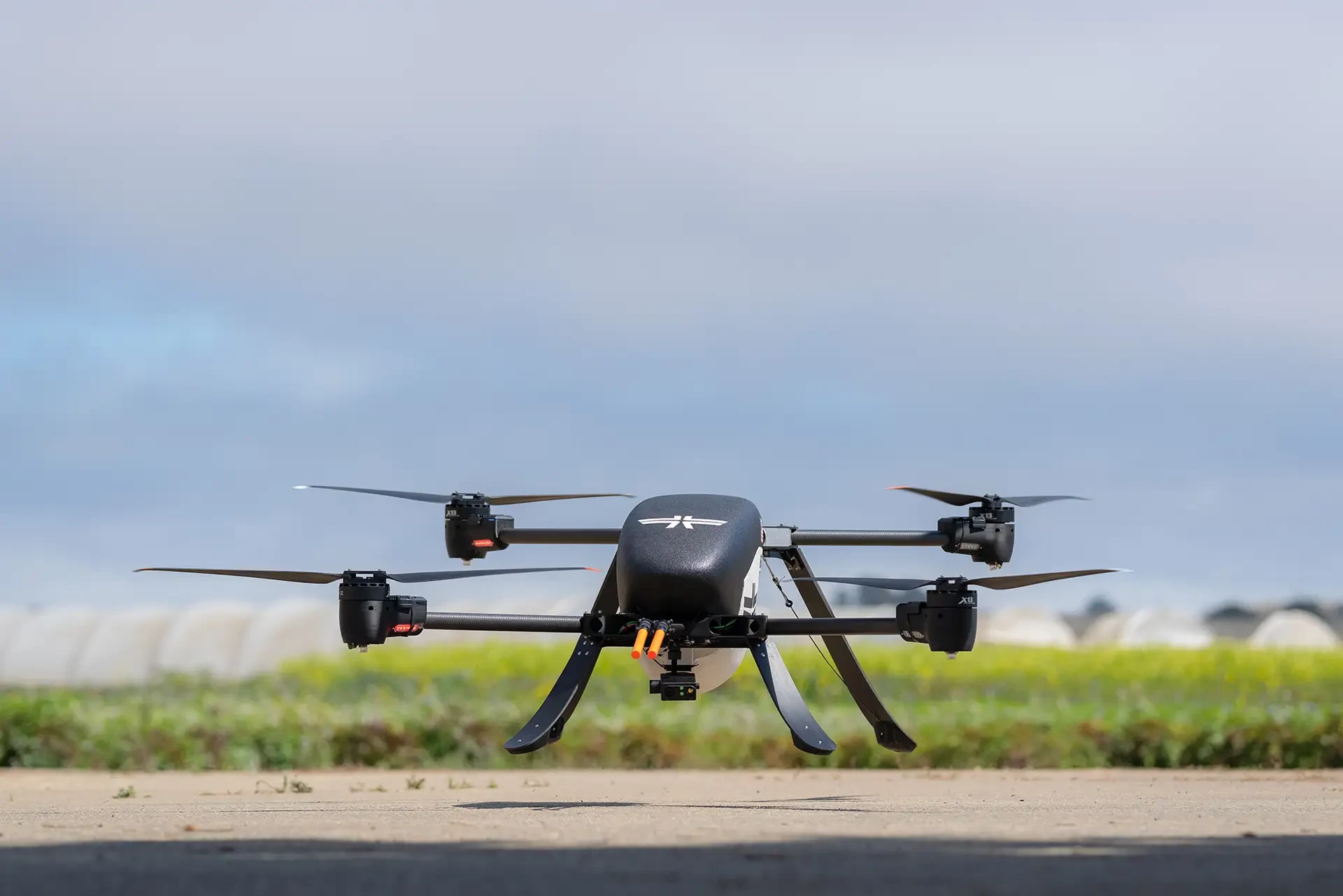
How much would the wildland firefighting landscape change if the next generation of UAS systems could provide initial attack capabilities, deploying autonomously and delivering water or retardant on during the earliest stages of a fire? An advanced drone system capable of attacking a fire will launch during the 2026 fire season, and is the vision of Stuart Landesberg, Nick Foley, Bill Clerico, and Adrian Aoun, co-founders of Seneca, a San Francisco, California-based technology company.
The evolution of uninhabited aerial systems, or drones, in wildland firefighting has progressed from real-time fire surveillance to mapping to hot-spot detection. These eyes in the sky are a force multiplier for firefighters on the ground. How much would the wildland firefighting landscape change if the next generation of UAS systems could provide initial attack capabilities, deploying autonomously and delivering water or retardant during the earliest stages of a fire?
An advanced drone system capable of attacking a fire will launch during the 2026 fire season, and is the vision of Stuart Landesberg, Nick Foley, Bill Clerico, and Adrian Aoun, co-founders of Seneca, a Marin County, California-based technology company.
“I've always felt a connection to the fire service after firefighters saved my father-in-law's house in Sonoma County during the Tubbs Fire (Northern California, October 2017). After that, I started learning more and more,” said Stuart Landesberg, CEO of Seneca. “After spending time with the head chiefs or the Air Ops chiefs, it just became clear that the most important thing in wildland fire is early response. And the technology for early response really doesn't exist outside of helicopters, which are too expensive and too manual to be true initial attack.”
“There's no physics reason why we can’t build an initial attack system, given where we are in terms of battery chemistry and the overall
autonomous aviation stack. Then you add in the sort of transformer models that allow you to train the onboard computer, in a way where it
can operate much more independently. Once I was convinced that the laws of physics and economics say this is possible, the question just
becomes how do we build it and how do we build it in the United States in a way that fits into the cost envelope that is going to work for
stakeholders. Over the last two years, we have done the ride-alongs, sat in the briefing rooms, and interviewed chiefs from the federal,
state, municipal, local, and volunteer fire departments. We’ve done all the research to really understand what is the missing link in the
chain.”
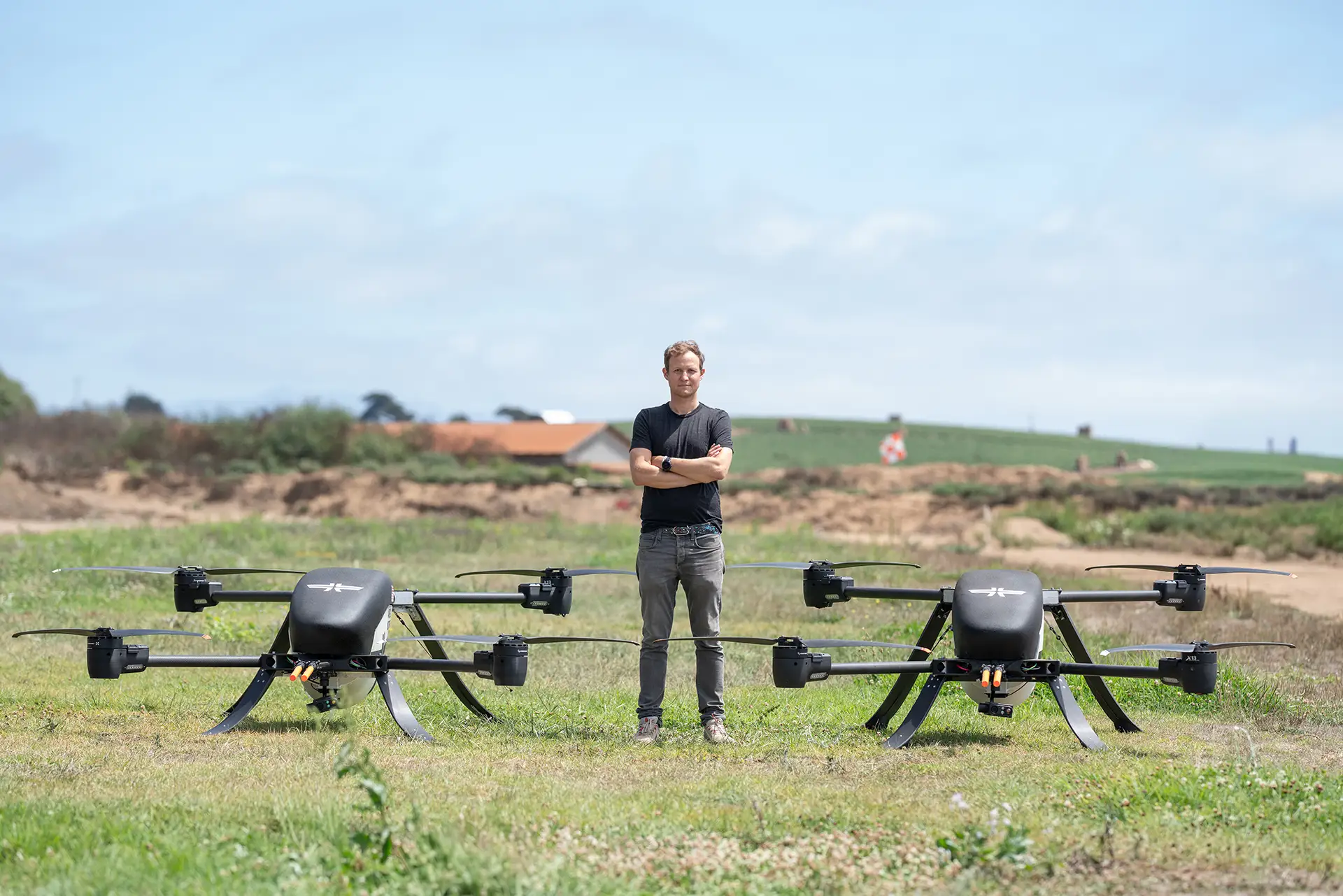
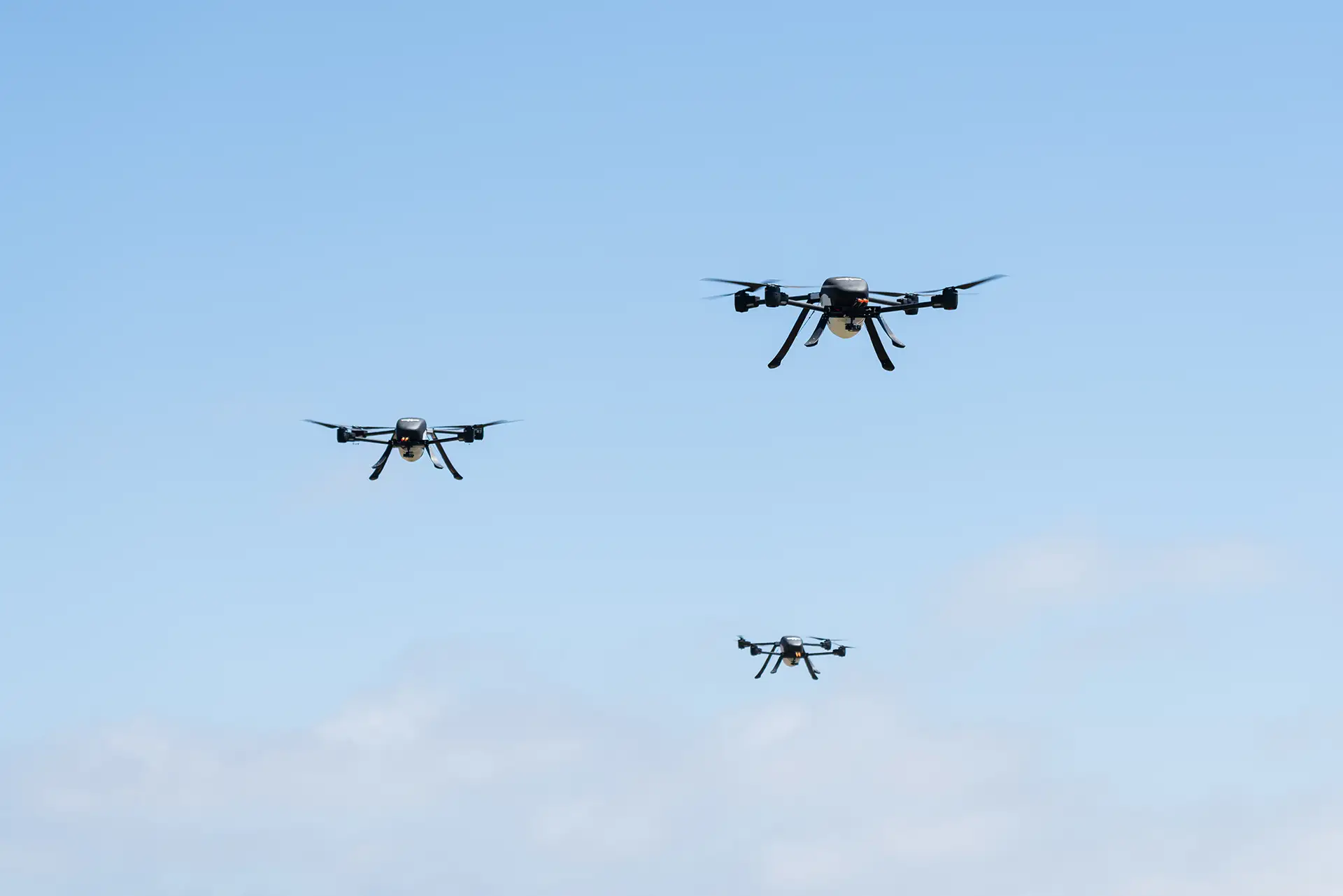
Seneca believes the missing link can be addressed with its new UAS strike team system that operates with five water or retardant spraying
drones that provide initial attack capabilities.
The wildland/urban interface is the ideal operating area for Seneca’s drone system. Houses set in steep canyons and backing up to open space areas are particularly vulnerable to fast-moving fires when the conditions are right. Vast stretches of grassland are also a prime operating area for Seneca’s system. When conditions warrant, a drone strike team can be pre-positioned in high fire danger areas, either on a towed, launch/recovery/service trailer-mounted platform, or in the parking area of a fire station.
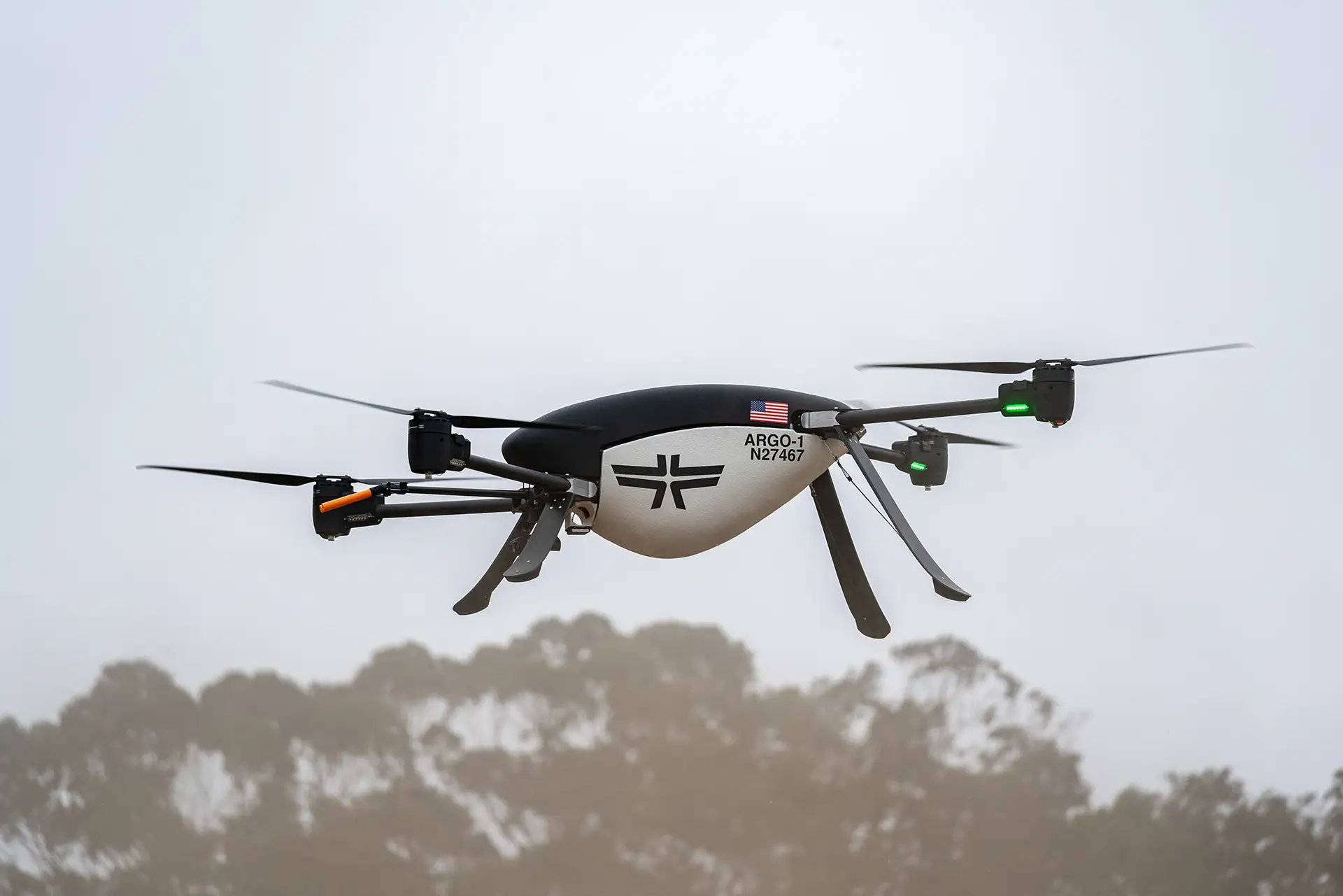
When a fire is detected by cameras, lookout sensors, or reported by a 911 caller, a GPS end-waypoint is uploaded to the drones. The GPS waypoint determines the strike team’s path of flight, which is high enough to avoid ground obstacles but low enough to be deconflicted from air traffic in the area. (The Argo-1 drones are equipped with Automatic Dependent Surveillance-Broadcast, known as ADS-B-satellite-based location transmitters.) When alerted, the strike team lifts off and flies to the GPS waypoint area of the fire at about 35 mph.
Upon arrival, the drones use onboard systems to identify the heat signature of the fire. Once the heat source is detected, the drones descend to 15 to 25 feet above the ground. The altitude is determined by onboard sensors that account for wind speed and direction. Hovering at the optimal altitude, the first drone in the strike team begins to attack the fire. Once it has dispensed its retardant load at 100 psi, the second drone moves into position, followed consecutively until all five have exhausted their payloads. While the drones are in action, this enables wildland firefighters, engines, and pumper trucks to navigate city streets and access roads to get to the fire’s point of origin. Here, firefighters on the ground can assess the situation as to whether the drones need to return to attack other areas of the fire or if the equipment on hand can control the situation.
“The critical moment, the golden hour if you will, is in the first five- to 15-minutes after a fire starts, or five- to 10-minutes after
detection, when it is still small enough that the primary mission can be suppression rather than containment or knockdown,” said
Landesberg. “We asked ourselves ‘what needs to be true to take down a top five percent risk fire?’ We did our own fire modeling and
determined that we need to get to the fire five- to 10-minutes after detection to get enough knockdown that the fire stops advancing. The
top few percent fires get started in light, flashy fuel, and are going to move more quickly. In that circumstance, our drones should get
enough knockdown that when the cavalry shows up, the situation is under control.
“After we did the math, our team determined we needed to develop an initial attack system in the least expensive way possible, while taking
into account a number of other constraints. What we ended-up with was a five-aircraft system where each aircraft holds about a hundred
pounds of retardant, in practice. We also tested a Class A foam concentrate and a mixing pump system (both proprietary to Seneca), that
enables fire departments to be prescriptive about the mix of concentrate and water that’s best for their fire fuel situation. We blast out
our foam out at over one hundred psi. We end up getting probably north of five, but less than a 15-to-one expansion ratio.
“Our testing has shown that our retardant dispersal ends up being enough to knock down a top five percent risk fire. The goal was really to build a five aircraft system that can be deployed in high-risk places, or it can be pulled behind a utility vehicle in what we call a mobile launch trailer. We wanted a system that can make a difference if a fire is inaccessible or, if they're remotely deployed and autonomously launched, can get there quickly and with enough payload that you're going to see some very risky fires stopped.”
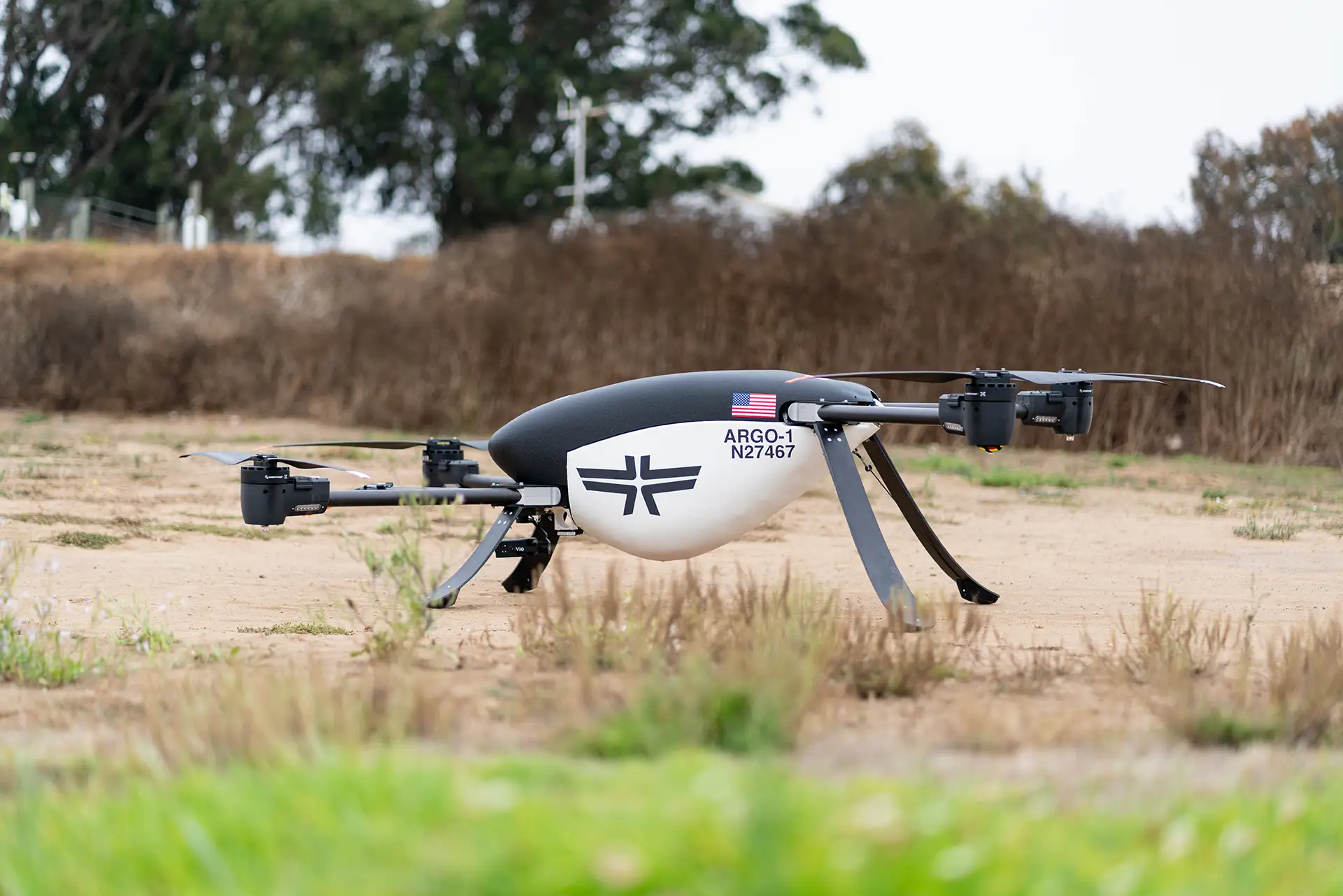
While working to develop the firefighting statistics, Seneca’s engineers designed the drone’s disbursal pump, which is the highest PSI pump by weight. The pump is driven by an electric motor, pushing water or foam over 80 feet. As in all of aviation, the lighter the pump and other drone components are, the more payload can be carried. When empty, two people can lift one of the Argo-1 drones, eliminating the need for special handling equipment. Typically, Seneca’s Argo-1 drone will launch with 100 pounds of water or retardant and be able to travel up to 10 miles, round trip, at an average speed of 30 mph. If the fire is closer, the endurance is greater, up to about 20 minutes.
Once the drones return from an initial attack mission, each UAS can be serviced by a single operator in less than five minutes per craft.
The goal is to enable a firefighter to refill the drone, swap out the batteries, and have the craft ready to fly in two minutes. While the
drones are away, batteries are charging for the next mission. All the spare parts needed for continuous drone operation are stocked on the
landing trailers, eliminating downtime due to a lack of spares.
System Oversight
Once the fire or emergency dispatcher has generated a waypoint and uploaded it to the drone strike team, the craft can be launched. They then fly to the designated waypoint and begin to search for the fire. Because the drones are launched from an app, the dispatcher or other operator can monitor the drone strike team’s flight path or abort the mission for any reason.
Operators can pre-program “no fly zones,” ensuring the strike team’s flight path avoids sensitive structures on the ground, whether it be
schools that an operator might want to avoid, or electrical infrastructure, etc. They can also enter no-fly zones or geofences, and the
strike team will avoid those areas. The onboard computer will fly the drone to the waypoint, search for the fire, and use its pre-programmed
fire suppression strategy to attack it. However, having an experienced firefighter as its operator gives the flexibility to alter any number
of parameters depending upon the conditions at the fire.
Seneca’s Mission is a ‘Go’
The 2025 fire season in the United States was brutal. There were more than 15 mega fires–fires that consumed more than 100,000 acres–with some burning simultaneously. As of August 21, 2025, the most recent published statistics reported that 44,470 fires burned more than 3.997 million acres in the United States. Technology was a huge help in many areas of wildland firefighting, and Seneca hosted some of the most important fire leaders from across the country, from agencies in California including Cal Fire and San Bernardino, Colorado, Montana, and Utah. Each is an early adopter of UAS technology and has been instrumental in Seneca’s real-world testing of its autonomous suppression drones.
In fall 2025, Seneca reached a funding milestone when the company announced it has raised $60 million in seed money and a Series A solicitation. This ranks as the largest venture capital investment in a wildland firefighting company. The funds will be used to scale production and for the integration testing during the upcoming fire season in North America.