 HOME
HOME




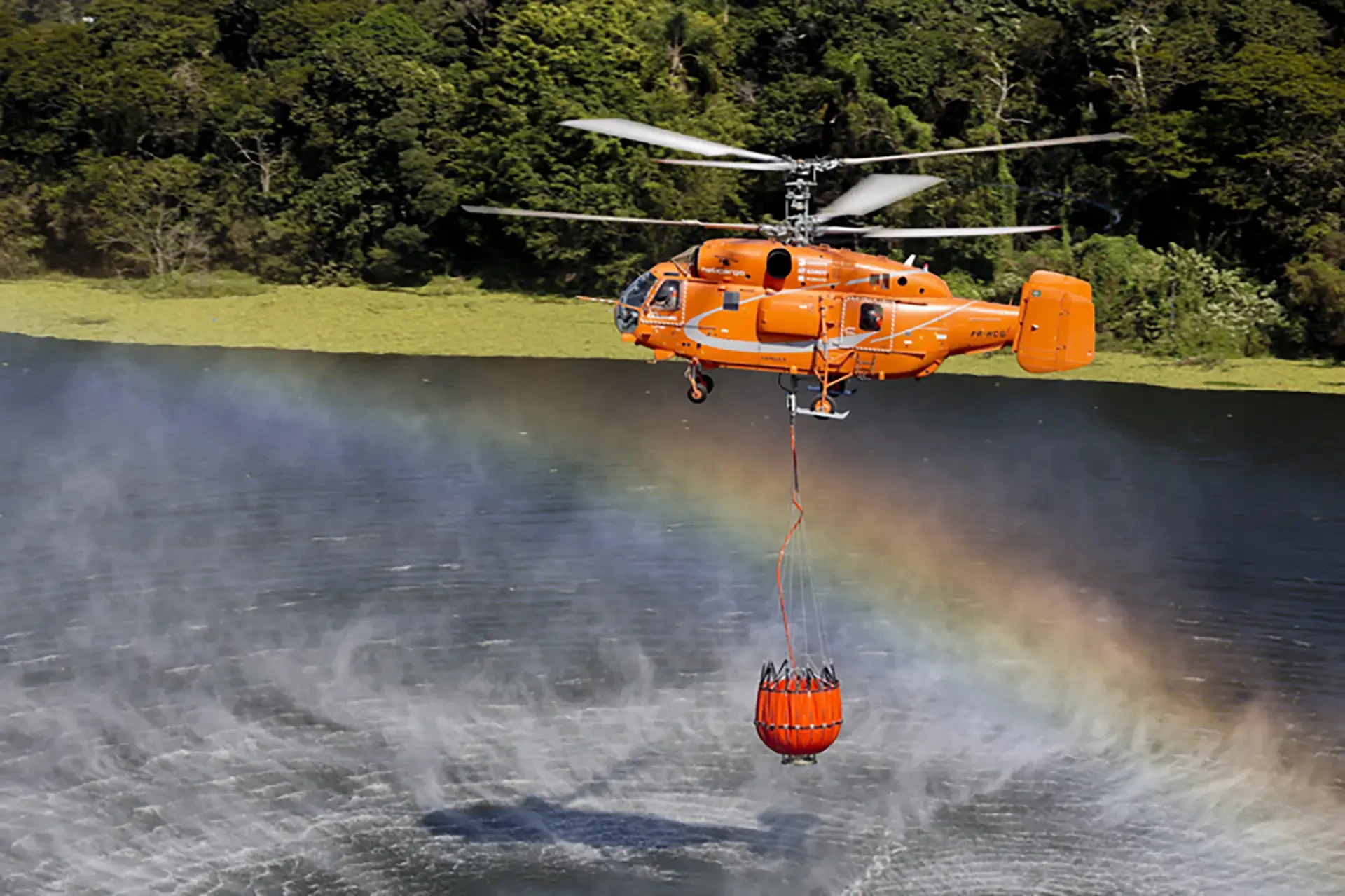
With its coaxial rotor system, a robust airframe, an effective water lifting capacity and ‘low’ Direct Operating Costs, the KA 32 seems to tick all the boxes as an effective firefighting helicopter. But its use has been complicated by the sanctions imposed against Russia for its invasion of Ukraine. Declan Daly provides an overview of the Kamov as it slowly disappears from Western European skies.
The Checklist
There are several items guaranteed to be on any fire fighter’s checklist for a good air attack helicopter at the larger end of the scale. Manoeuvrability to operate safely at high weights in the low level, obstacle infested, environment, reliability to turn up every day when needed, a decent heavy lift capacity to make sure each bucket deployed matters, and finally, reasonable Direct Operating Costs (DOCs) to allow a season’s worth of flying without bankrupting the customer.
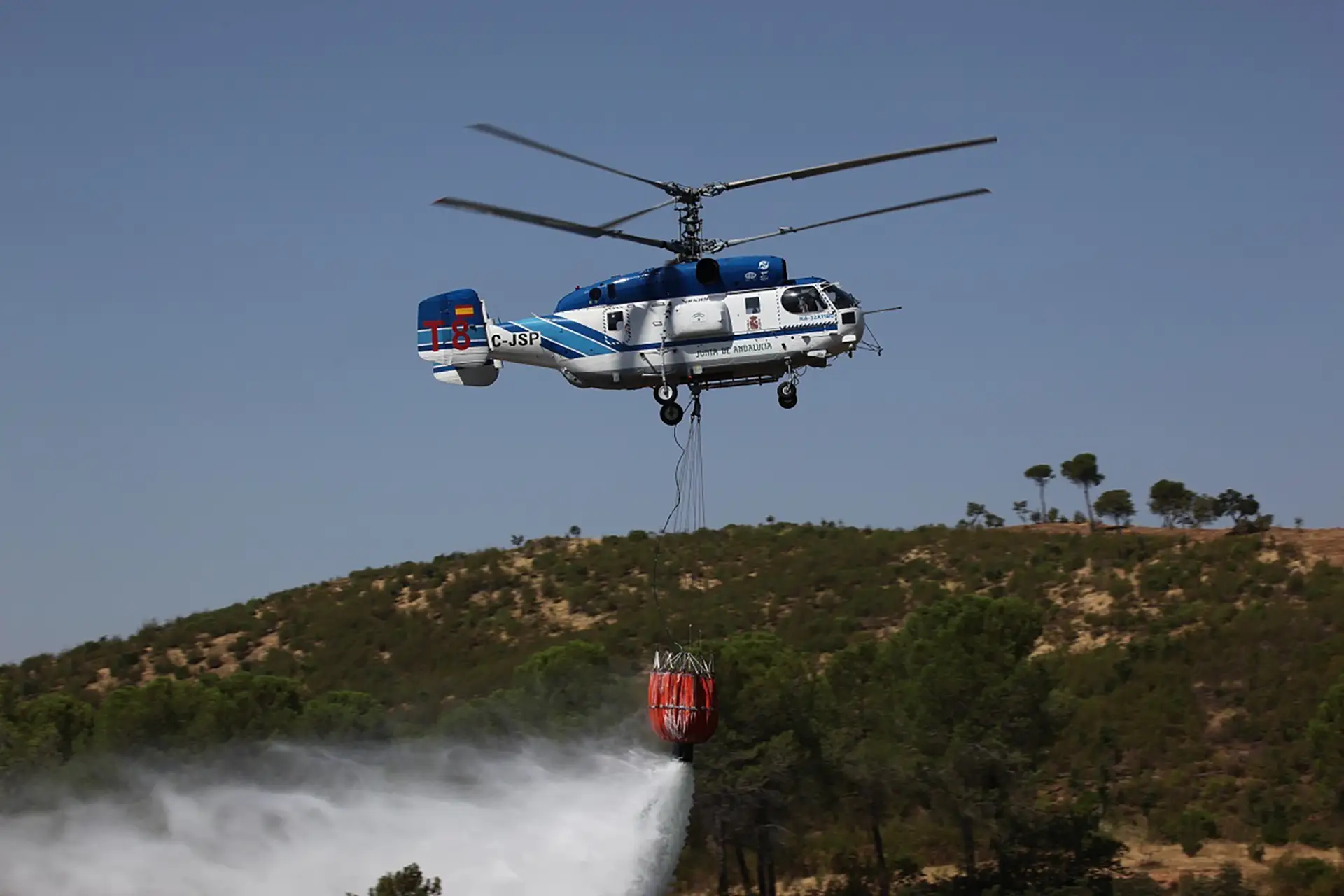
With its coaxial rotor system providing excellent controllability, a robust airframe allowing continued operations, a water lifting capacity in the region of 5 metric tons and DOCs of circa €3600 per hour, the KA 32 seems to tick all the boxes. Indeed, since it received EASA certification, the Russian utility helicopter has become a welcome workhorse in the European firefighting community, servicing fires from Spain to Cyprus. However, sanctions applied to Russia as a result of the invasion of Ukraine have made it difficult for operators to get OEM support for the aircraft. Additionally, in 2022 EASA suspended the aircraft's Type Certificate, making it effectively impossible to operate under EU jurisdiction. Unsurprisingly perhaps, looking around Europe, inside and outside the EU, we can see that the distinctive sight of the KA 32 has not vanished entirely, but is something of a fading star.
Military Heritage
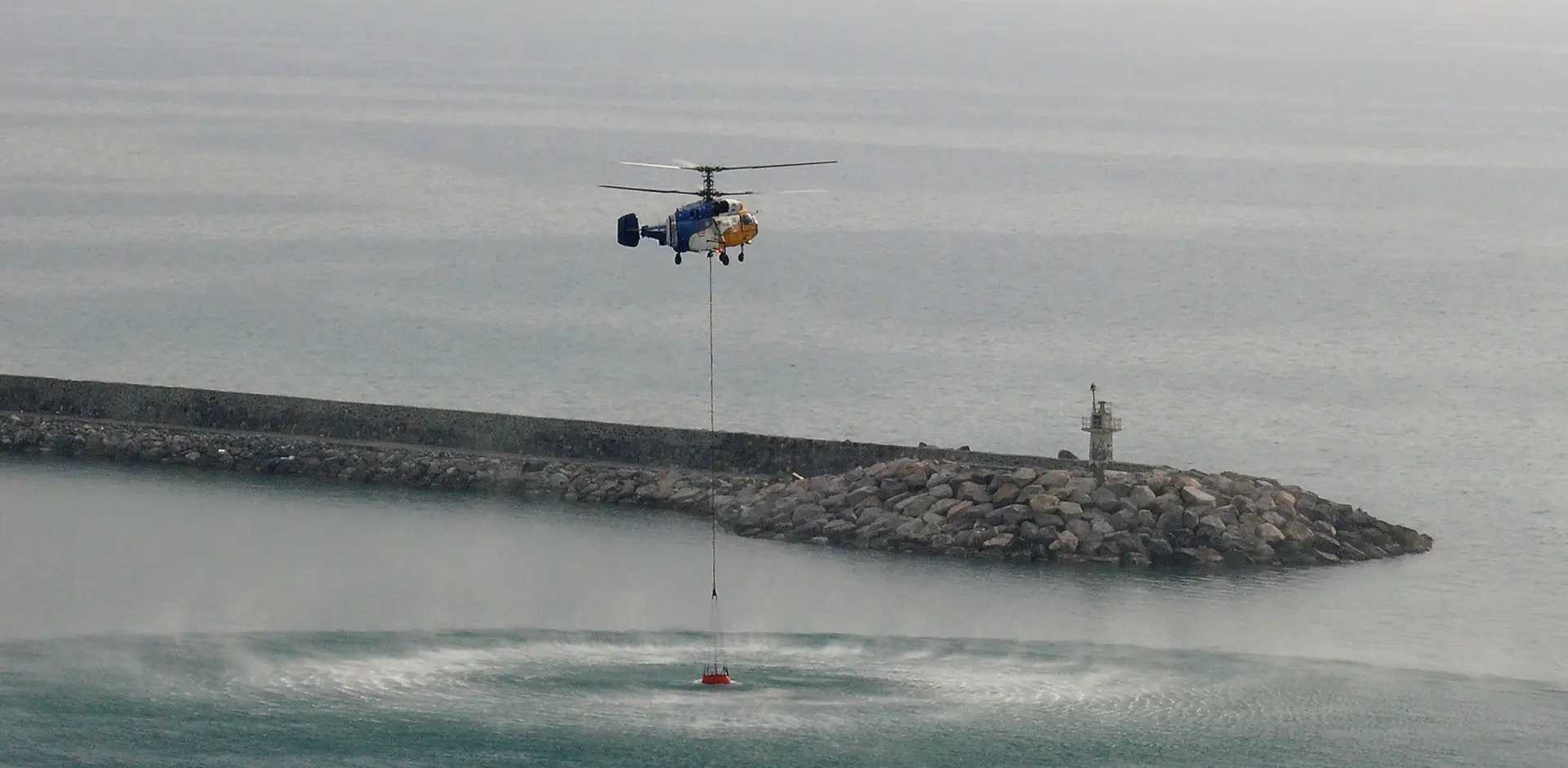
Derived from the soviet era anti-submarine warfare KA 27 which entered production in 1979, the KA 32 is the civilian version of the type, which utilises the advantages of the coaxial main rotor arrangement associated with Kamov to excel at utility and firefighting work. The two contrarotating main rotors, mounted one above the other, produce opposing torque values, offsetting each other and dispensing with the need for a tail rotor to provide directional stability and control in the yaw plane. This means that the weight and complexity associated with a tail boom and a drive train reaching back to a tail rotor gear box at the very rear of the aircraft is saved, along with the ‘loss’ of power required to drive it. It is used instead to increase payload over and above that seen in conventional aircraft of a similar size. Similarly, with yaw control being affected by the main rotors, a large amount of control authority is available to the pilot in crosswind conditions, with no allowances being necessary for
the sail effect of wind on the tail boom and vertical fin, or the size and power of a normal tail rotor. Coupled with the large windows and doors which provide excellent visibility, it is easy to see why the aircraft has become so popular for those whose work requires them to work up close and personal with terrain and obstacles - especially as, much like a tandem rotor, a coaxial design offers a very compact package.
European Status
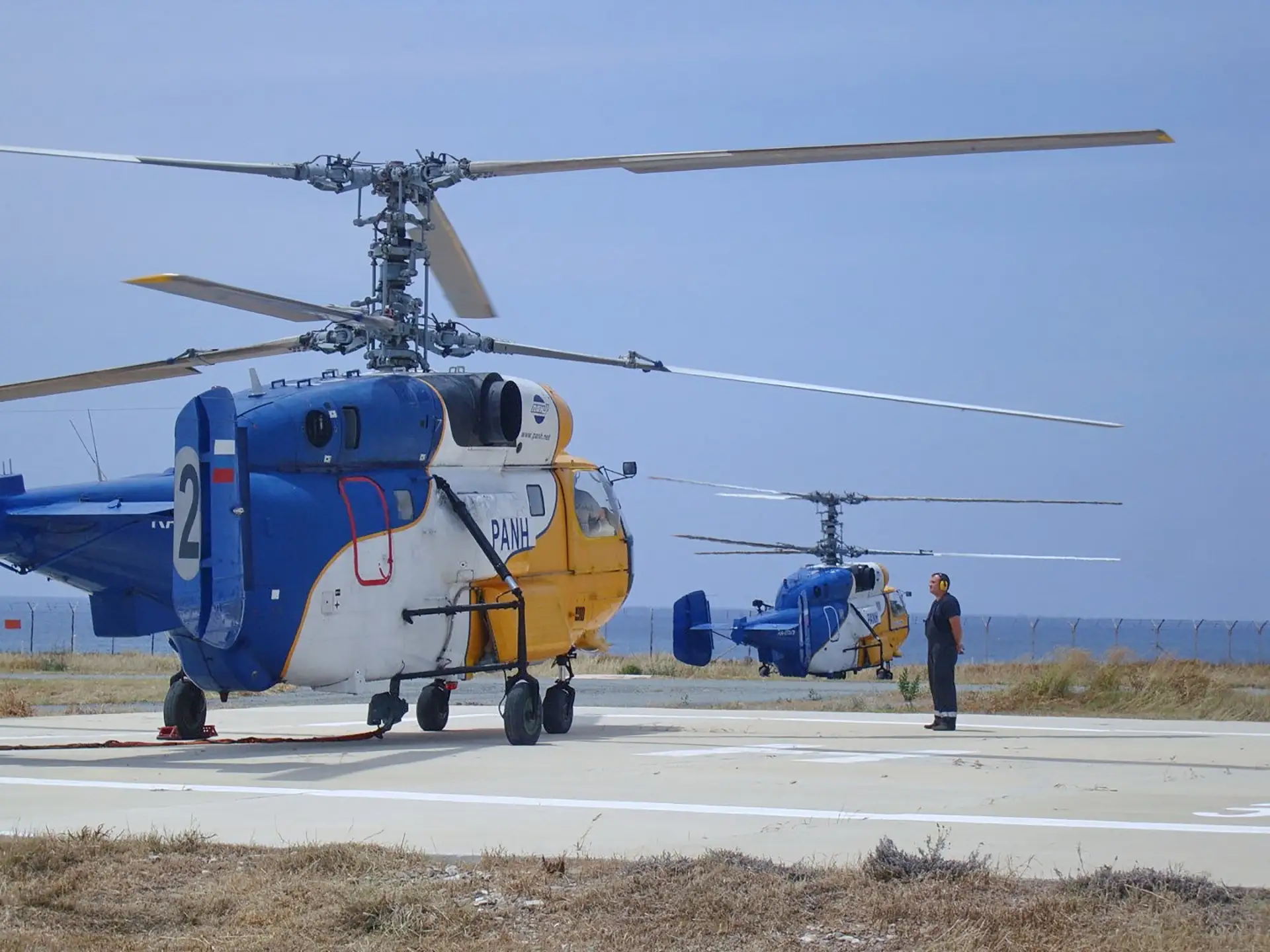
Amongst those in Europe who have demonstrated an appreciation of the Russian machines’ capabilities is Cyprus. For over twenty years,
Cypriot forest fires have been dealt with by KA 32s of differing variants. For the majority of this time, they have been supported by
Russian company, PANH Helicopters, who have maintained a small fleet in country with daily availability between May and November, covering
the main parts of the fire season with a daytime only service.
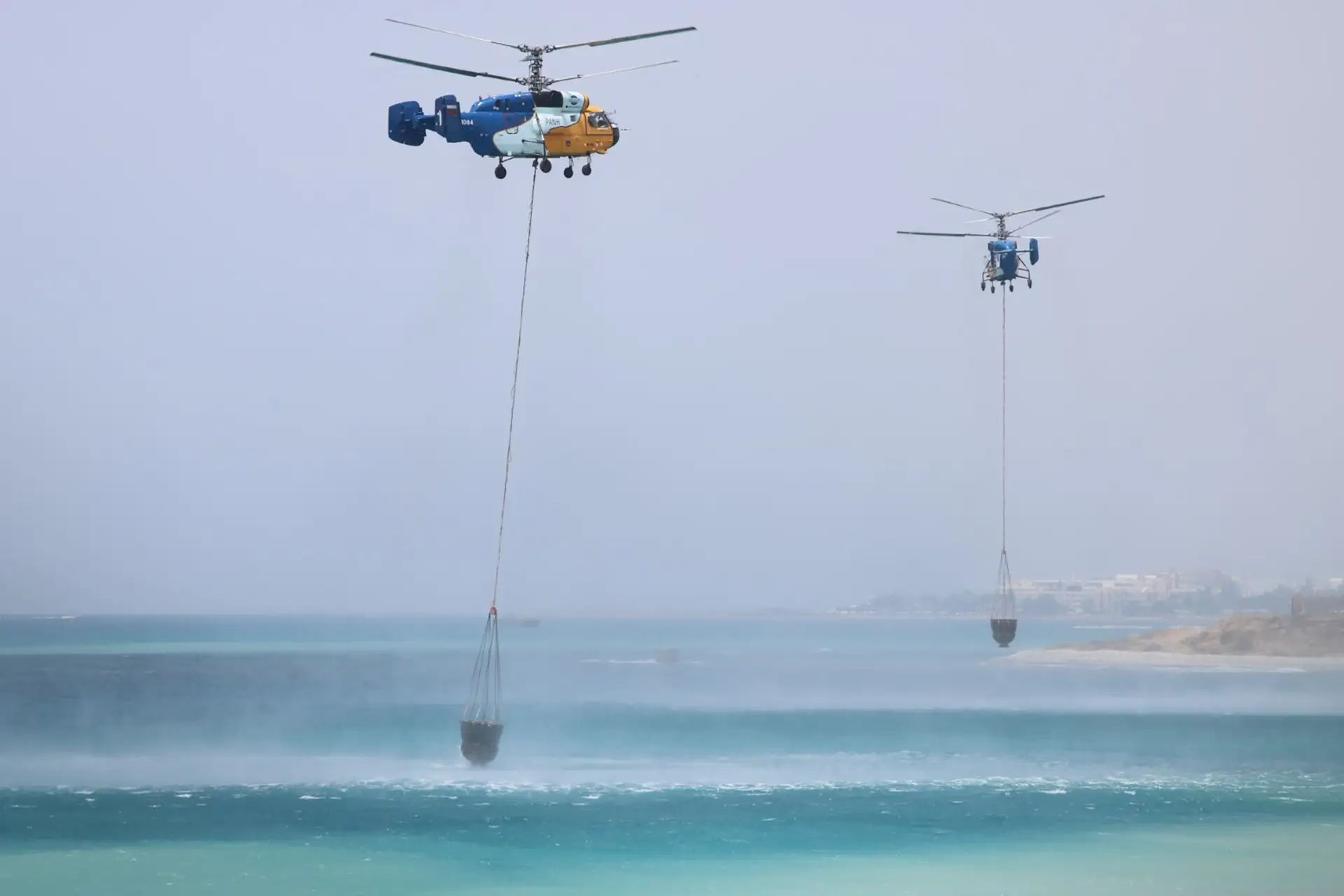
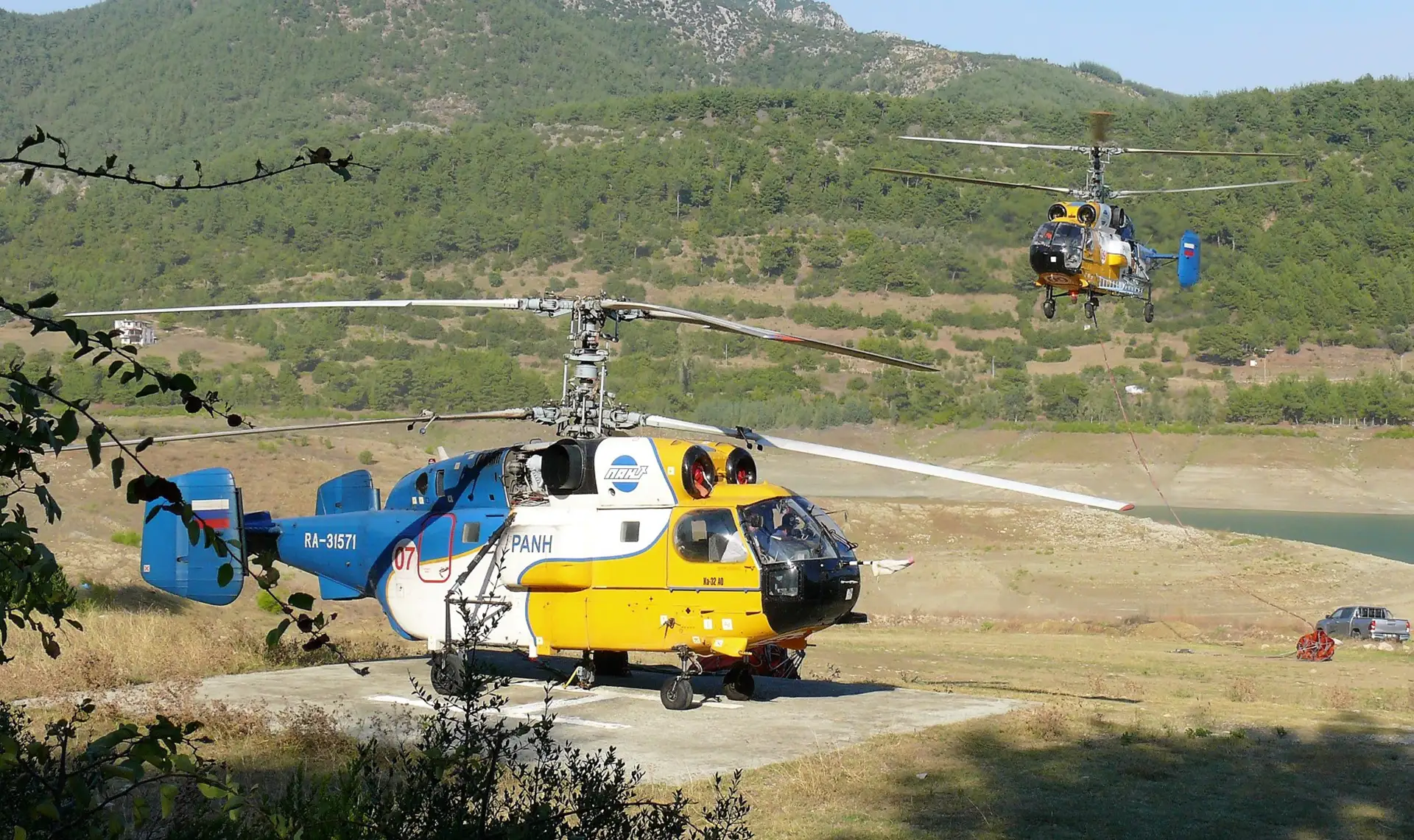
So happy were the Cypriot government with PANH that, when sanctions were applied to Russia at an EU level, they applied for an exemption to continue operations. When this was found to be unacceptable, several attempts were made to maintain the same level of service for the same price before, eventually, a replacement was found. This replacement was, in fact, another KA 32 – this time operated by Swiss based Arctic Group SA, using helicopters registered in Ukraine and thereby avoiding the legal difficulties of their predecessors.
Cyprus have solved their problem, but at a cost, both financial and in payload – the KA 32 models on the new contract can only lift four tonnes of water versus the previous models five, although this is still ‘heavy’ compared to the available competing helicopter types in class.
Remaining in Europe, but outside the EU, Serbia have fared better. Operated by the Ministry of the Interior, Serbian helicopters dropped over 2,000 tonnes of water over the course of more than four hundred flying hours in July and August of 2024. This impressive feat speaks to a serviceability rate amongst the Kamovs, the first of which was delivered in Sept 2022, which not only showcases the aircrafts’ reliability, but also suggests that OEM support is still in full flow. Not being subject to maintaining an EU position on Russia has left the country with an advantage in maintaining their fleet, with a suggestion that they may even increase from two aircraft to four, despite the sanctions imposed elsewhere.
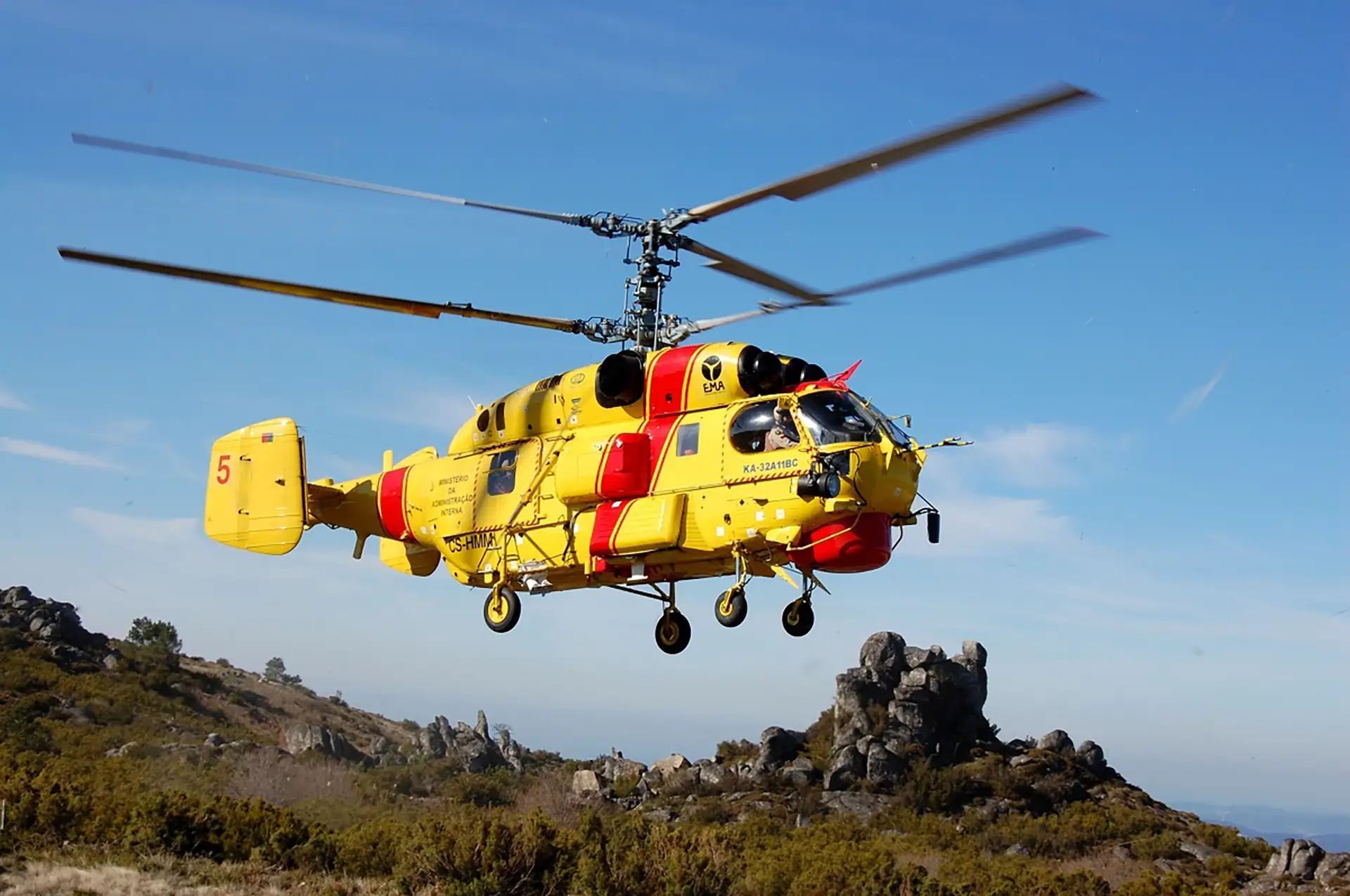
Portugal’s experience is probably more representative, and more indicative of the future of the Kamov fleet in Europe. Originally purchased
in 2006 and delivered in 2007, Portugal’s fleet suffered from serviceability issues throughout their service, with no aircraft available
for operations at all from spring of 2022 onwards. As the war in Ukraine progressed during that year, Portugal expelled the Russian support
team, and further maintenance in country became impossible.
As early as October 2022, there were public indications that the aircraft, including one that had been damaged in a crash, would end up in Ukraine. Ukraines’ own ability to maintain their fleet had obviously been compromised by a lack of OEM back up from a now hostile Russia, and the Portuguese Kamovs were an attractive proposition, even if taken on ‘as seen’ with a gap in the normal paperwork. Nevertheless, despite this early enthusiasm, the aircraft were only delivered, by truck, as recently as September of 2024, with the announcement of the delivery in October 2024. Portuguese authorities have said that the aircraft will need repair, but it is also likely that they may serve as a welcome source of spares for more airworthy Ukrainian helicopters - or, indeed be operated 'as is' given the exigencies of Ukraine’s position.
Poor Outlook
A look at the progressive difficulties faced by Portugal in operating, maintaining and even offloading its fleet does not bode well for the
future of the KA 32 in the EU. Only recently one of the ‘in demand’ helicopter types, the bottom line is that its’ EASA Type Certificate
Data Sheet now has ‘Suspended’ printed across every page in big red letters. This is unlikely to change in the medium to long term which
means that the ability of operators to fly the aircraft in the EU will be become more difficult as time goes on, regardless of the
workarounds identified by the Cypriots, and that the big coax’s days are ultimately numbered as regenerating the TC and support
infrastructure will become increasingly hard - especially if alternative platforms have already been sourced. In firefighting in particular,
the ability to provide a safe and reliable service is prized, and you can’t do that if there’s a question mark over your aircrafts OEM
support, or where you otherwise get your parts from. The question then becomes ‘What next?’.
What Next?
One part of the solution will come from RescEU who have recently signed contracts to began production of new fixed wing aircraft to form part of a dedicated EU fire fighting fleet. First deliveries are due in 2027, and these will be available to attend to the heavy water bomber part of the problem. Even so, at both a national and regional level, there will remain an ongoing need to provide helicopter support to firefighting agencies. Operators and leasers are moving to fill the gap with existing types, but the fact remains that the KA 32 was able to deliver more water per drop than all but the largest of its competitors, and at a sustainable price.
One aircraft that stands out as an obvious replacement is the Columbia 107. Formerly the Vertol 107 in civilian service and better known as the CH 46 Sea Knight in US Marine Corps service. Columbia has secured both the type and production certificates for the twin rotor aircraft, ensuring future viability and support. One example has already been delivered to Heliswiss International for heavy lift and firefighting duties. Already Columbia have transformed the aircraft so that is no longer your grandfather's Sea Knight, and substantial improvements to the helicopters Automatic Flight Control System (AFCS), engines and transmission are either approved or in progress. With its tandem rotor arrangement, it benefits from many of the advantages enjoyed by the KA 32 in terms of performance, manoeuvrability, compactness, and lift capacity as a result of also not needing an anti-torque tail rotor. If put back into limited production by Columbia, it would represent an ideal type to meet European heavy lift firefighting needs.
According to Ray Touzeau, Senior Director, Flight Operations at Columbia:
"‘We are seeing growing demand for all our aircraft, including 107s, for firefighting. This year our fleet has been active from Oregon’s Pacific coast to Turkey on Europe’s eastern border, while we have also been having many conversations about the role new 107s and 234s alike will have in the global fight against wildfires for years to come.
The capacity, fill times and versatility mean that tandem rotors are becoming increasingly popular for fire suppression globally, and the desire to get the best, most robust aircraft is trumping all other concerns at a time of limited availability and supply chain constraints.’
RescEU to the Rescue?
Nevertheless, even with a preferred type identified, the follow up question of ‘Who will buy it?’ remains valid. Regardless of need, government agencies that fly their own aircraft at a national level may be wary of making the kind of purchase that would ignite a production line into full flow if they are one of the launch customers, and many others will be leasing in the service from commercial operators who would face the same problem. Much like the fixed wing purchase mentioned previously, the solution may well lie with RescEU. Spreading the perceived risk over multiple budgets at EU level makes the cost much more acceptable and would guarantee usage – if anything, RescEU are likely to be needed more often in the future than not.
If this solution was adopted, it would be fitting that the Kamovs coaxial rotor layout was replaced in EU skies by the equally distinct tandem arrangement of the 107. In any case, fire seasons are unlikely to wait and a capability to deal with those fires will still be needed across the EU. Identifying, and enacting a response to the Kamov problem is an immediate issue with long term implications for those operating the type.
The opportunity for new entrants in the heavy lift niche of the EU fire fighting market should not be overlooked. With civilian aircraft of similar lifting capacity (and with similar running costs) in short supply, it will be an interesting area to watch. EASA certification has ruled out the KA 32. If the Columbia 107s - or ex-military Black Hawks or Chinooks - do gain civilian certification here, they may well put the European manufacturers to the test in the same way that Canadair have with RescEUs fixed wing fleet.
For the fire fighters on the ground and in the air, the country of manufacture is likely to matter less than the capability. A speedy solution is required to ensure that capability is available around Europe in time to meet the coming wildfires of the future.