 HOME
HOME




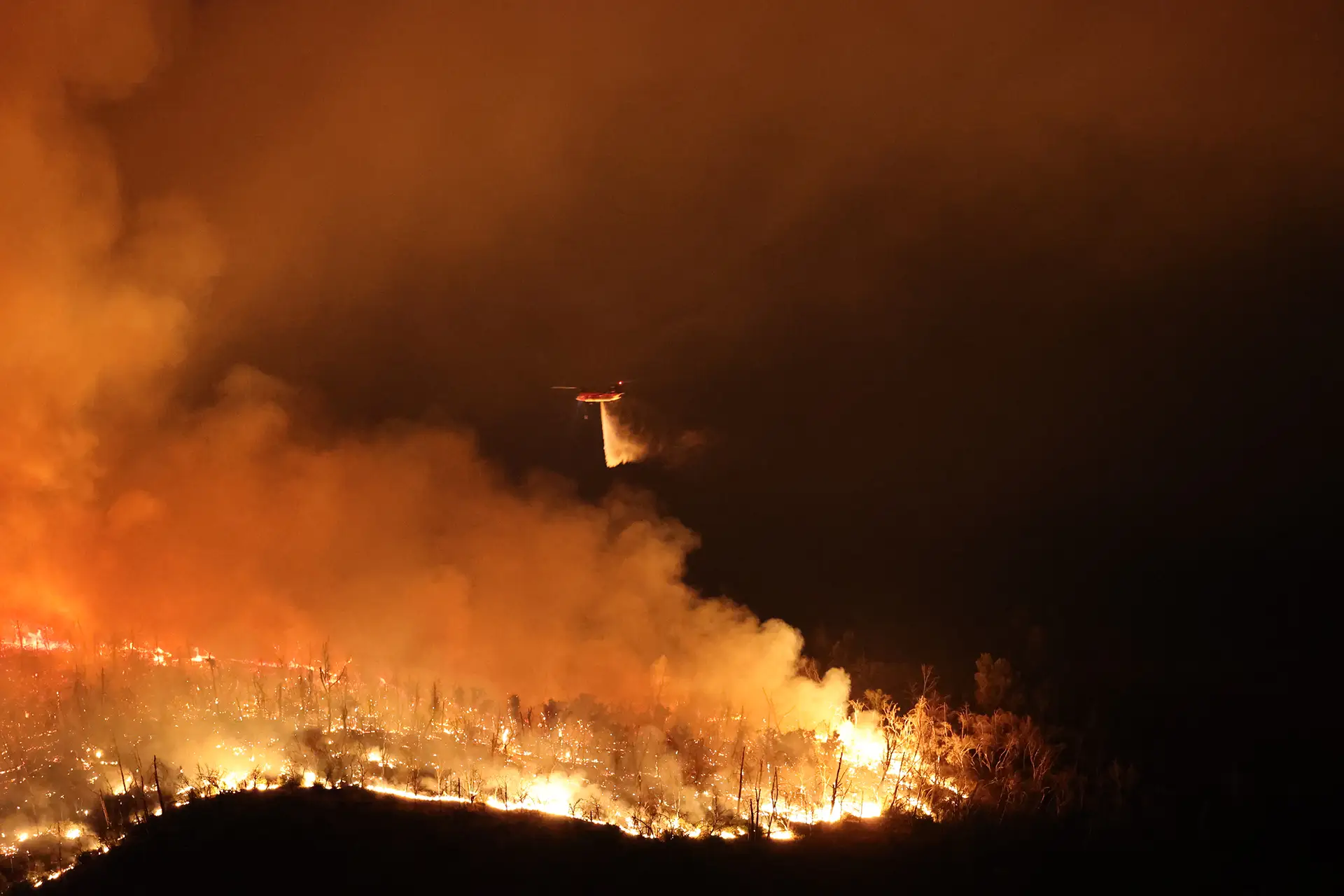
Each year, wildfires release more carbon than most nations, erasing decades of climate progress. Across the globe, fire agencies are discovering that rapid initial air attack is not just a firefighting tactic… it is one of the most powerful climate-mitigation tools we have.
The Unseen Climate Fight Above the Flames
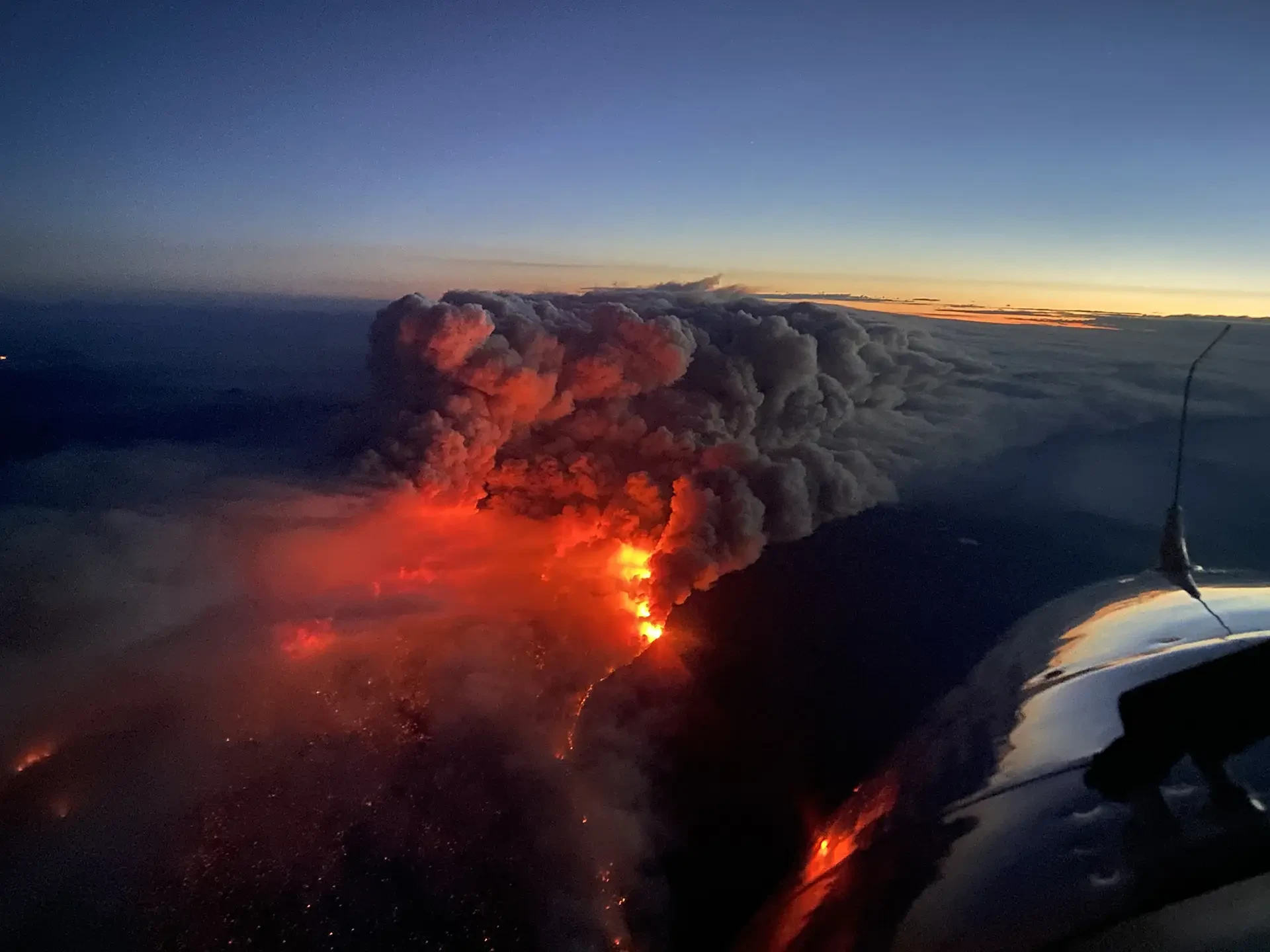
As global wildfires grow larger and more frequent, aerial firefighting leaders warn that their climate-related costs are being vastly underestimated. Each extreme fire season now releases billions of tons of CO₂, erasing decades of global mitigation gains and inflicting hundreds of billions of dollars in climate damages. “In 2023, global wildfires emitted roughly 8.6 gigatons of CO₂…more than three times the scale of all current carbon-removal efforts,” notes Wayne Coulson, CEO of Coulson Aviation. “A single extreme fire season can erase decades of climate progress.” Climate researchers agree: the Copernicus Atmosphere Monitoring Service reported that 2023’s fires released more carbon than any year on record, rivalling global industrial output.
Even in an average year, wildfires release about 7.6 gigatons of CO₂, nearly matching the annual emissions of every vehicle, aircraft, ship, and train on Earth combined. Each season erases years of global climate mitigation work in a matter of months.
While the world focuses on reducing industrial emissions through renewables, electrification, and carbon capture, wildfire smoke has quietly become one of the planet’s most significant and least-measured sources of atmospheric carbon. In British Columbia, for example, the 2023 fire season released more CO₂ than Canada’s entire transportation sector, yet much of it went uncounted in official climate inventories.
If we tried to offset wildfire emissions in Canada and the United States with electric vehicles alone, the scale is staggering. Only about one percent of North America’s 303 million driving-age citizens currently drive EVs. Matching wildfire output would require an almost 10,000-percent increase; essentially one EV for every adult, and nearly double that in bad fire years.
From Firefighting to Climate Fighting
For decades, the mission of aerial firefighting has been summarized by a simple triad: protecting life, property, and the environment, which has traditionally meant safeguarding forests.
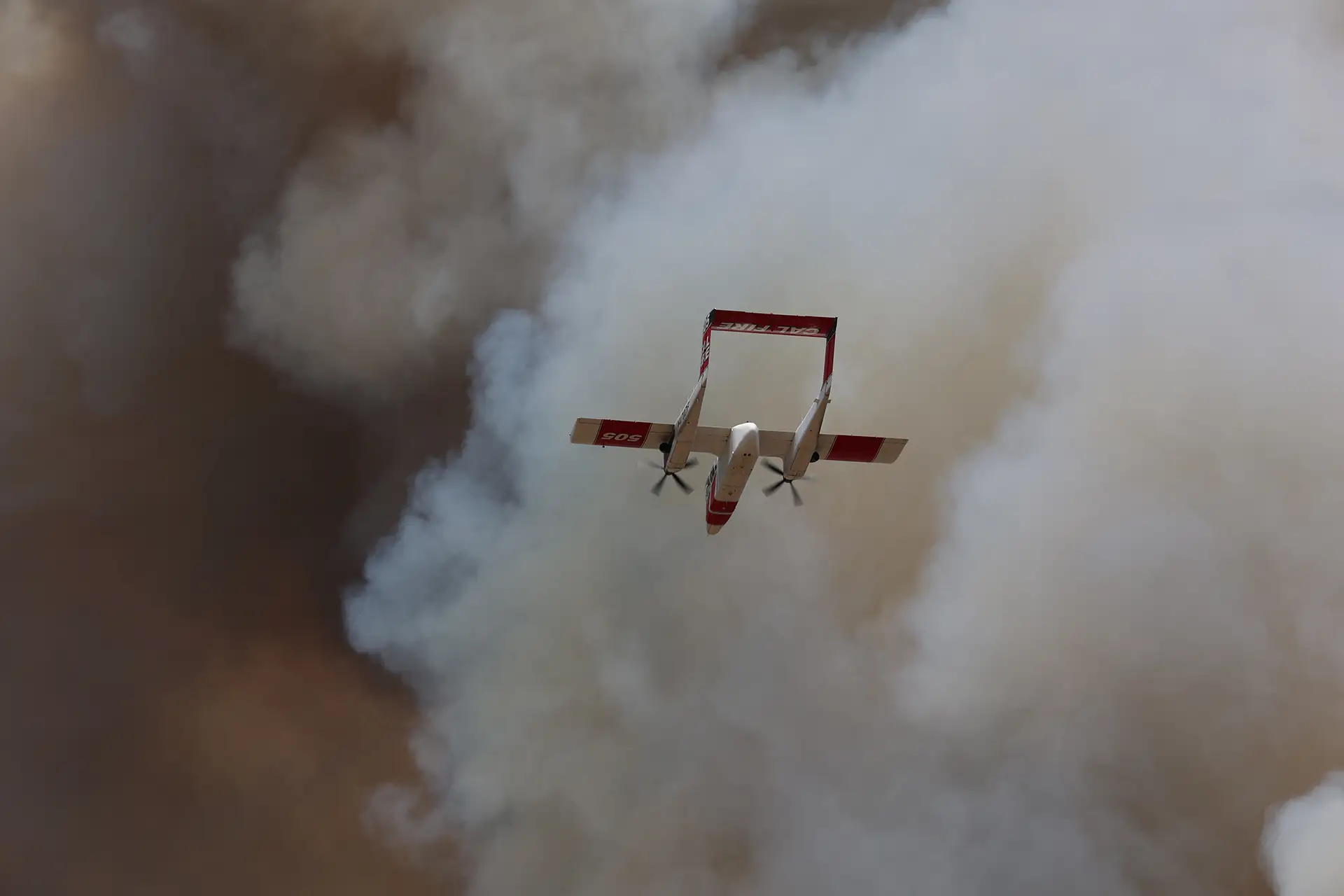
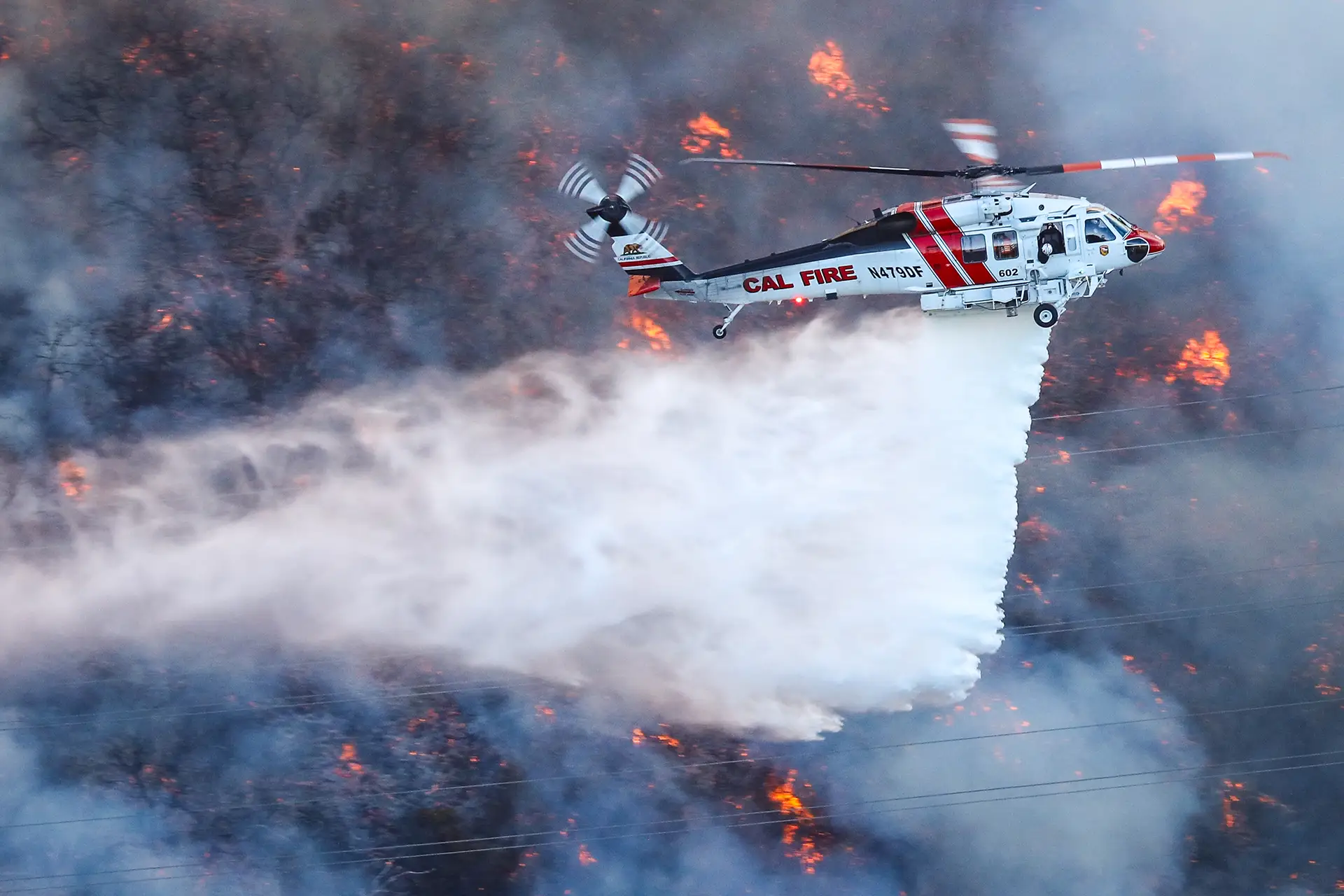
In California, that mission is codified in a remarkably clear goal: respond to every new fire within State Responsibility Area within 20 minutes, and keep 95% of them under 10 acres. That mandate drives CAL FIRE’s pre-positioning of 75 fixed- and rotary-wing aircraft across 26 bases statewide. The program’s speed and reach have made it the global benchmark for rapid initial attack; an approach that doubles as one of the most effective climate-damage prevention systems on Earth.
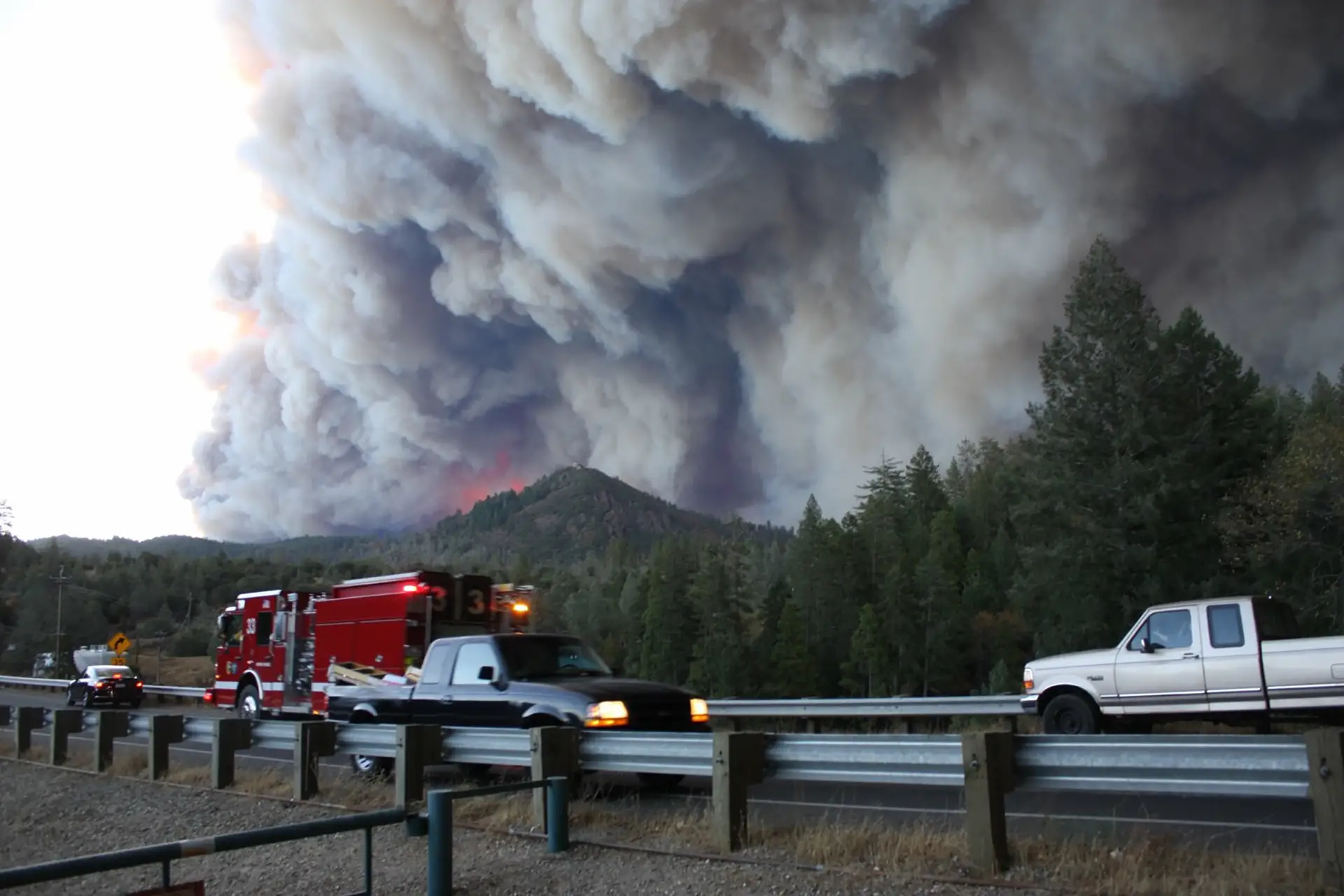
As former CAL FIRE Chief Deputy Director Chris Anthony puts it: “We are firefighters, but we are also climate fighters.”
A Century of Fire and Carbon
Author John Vaillant, in Fire Weather, describes our age as the Petrocene…a period defined by combustion. “While we have been burning through our vast and ancient fossil-fuel inheritance,” he writes, “we’ve also been borrowing against the planet’s ability to absorb its byproducts.” Humanity, he argues, has effectively mortgaged the atmosphere.
Vaillant also notes that the link between combustion and climate was recognized long before carbon markets or climate conferences. In 1959, physicist Edward Teller warned: “Carbon dioxide has a strange property, it transmits visible light but absorbs infrared radiation emitted from Earth. The result is that the Earth will continue to heat up until balance is re-established.”
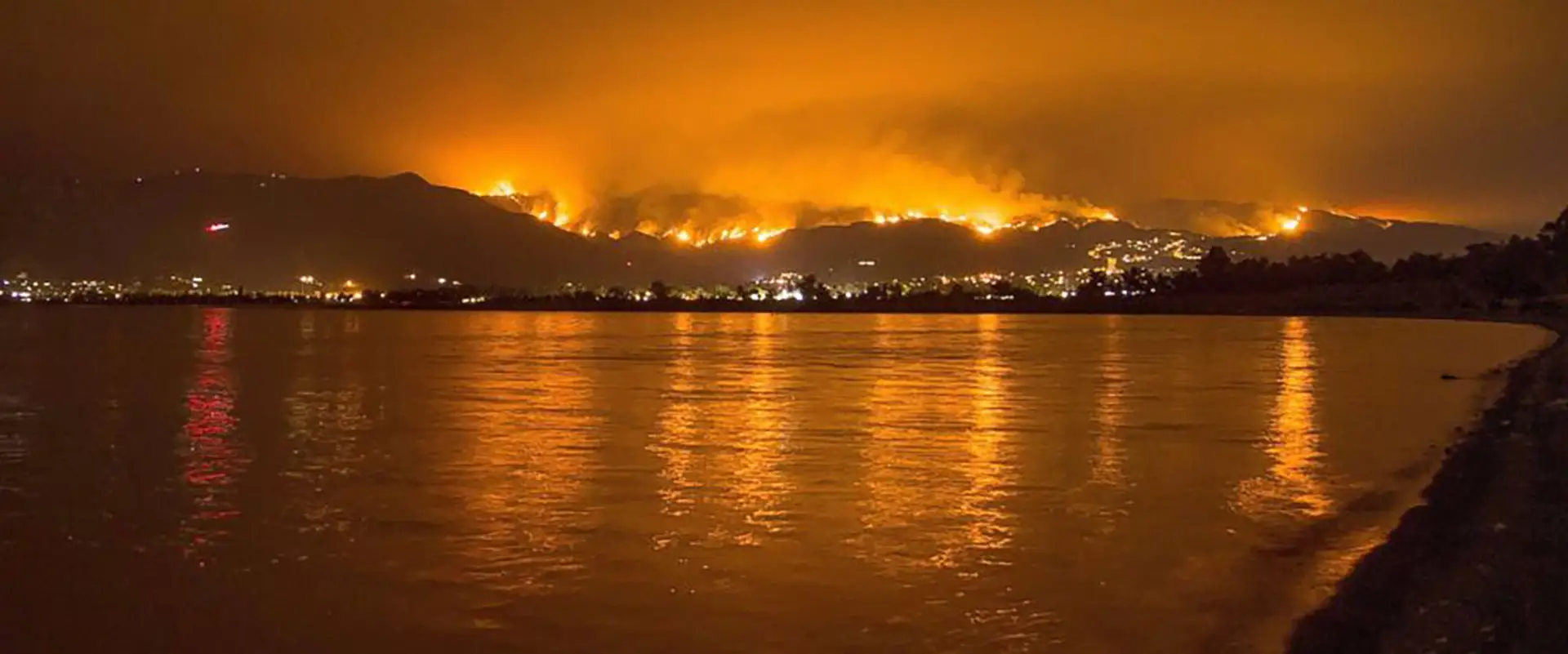
When wildfires enter that equation, especially modern urban conflagrations, where homes, vehicles, and synthetic materials burn alongside forests, the carbon impact extends far beyond the Fireline.
Why This Matters Now
Since the first World Climate Conference in 1979, nations agreed ‘to foresee and to prevent potential man-made changes in climate that might be adverse to the well-being of humanity.’ Yet wildfire emissions remain largely uncounted, excused as ‘natural disturbances.’
In reality, roughly 85% of wildfires are human-caused; ignited by power lines, vehicles, campfires, or arson. Their emissions are every bit as damaging as those from smokestacks or tailpipes.
As David LaGreca of Eco Engineers explains, “The impact on thermal absorption of energy by CO₂ in the atmosphere is equivalent between biogenic and fossil-originated CO₂.” In other words, carbon is carbon, regardless of its source.
The Carbon Primer
Atmospheric CO₂ now exceeds 420 parts per million, up from 315 ppm in 1958. Each additional molecule traps infrared radiation, heating the planet and driving feedback loops that dry soils, melt permafrost, and fuel even more fire.
When forests burn, stored carbon in wood, litter, soil, and peat converts almost instantly into CO₂, methane, and black-carbon aerosols. The cycle can become self-sustaining: climate change creates wildfires, and wildfires accelerate climate change.
Counting the Invisible Cost
Wildfire smoke now kills more Americans each year than car crashes (over 41,000 deaths annually), and that toll could reach 70,000 by 2050. Health and economic costs approach $30 billion annually, yet these losses are not directly linked with climate carbon accounting.
Using the U.S. EPA’s 2022 estimate for the Social Cost of Carbon (about $190 per ton of CO₂) each megaton released equates to roughly $190 million in global damages. A single megafire can therefore impose billions in hidden climate costs before the first house is even rebuilt.
Rapid Initial Air Attack: A Climate Mitigation Engine
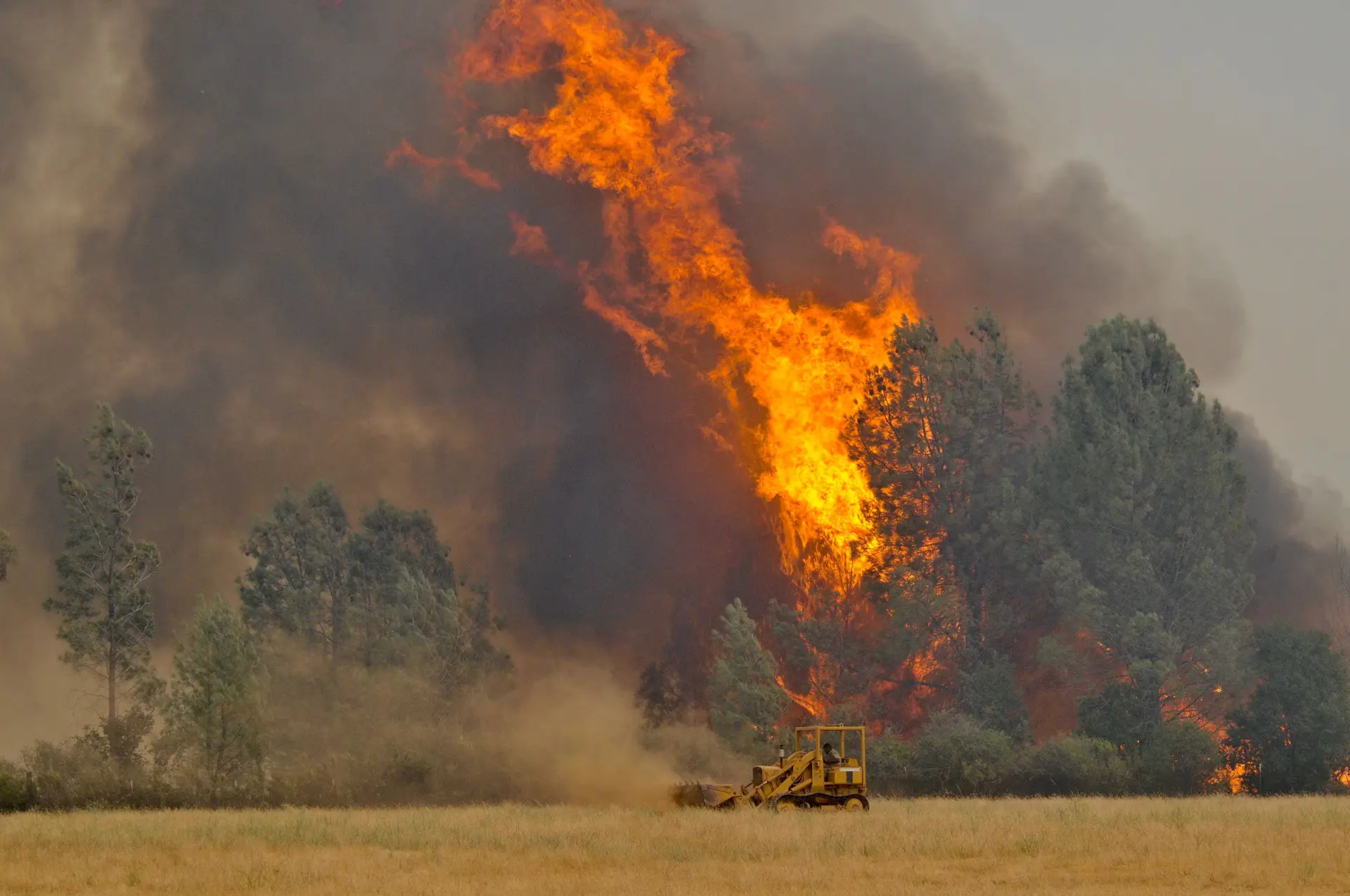
Every minute saved in wildfire response prevents exponential carbon release. The equation is no longer only about homes and forests…it’s about megaton-scale climate offset.
The California Example:
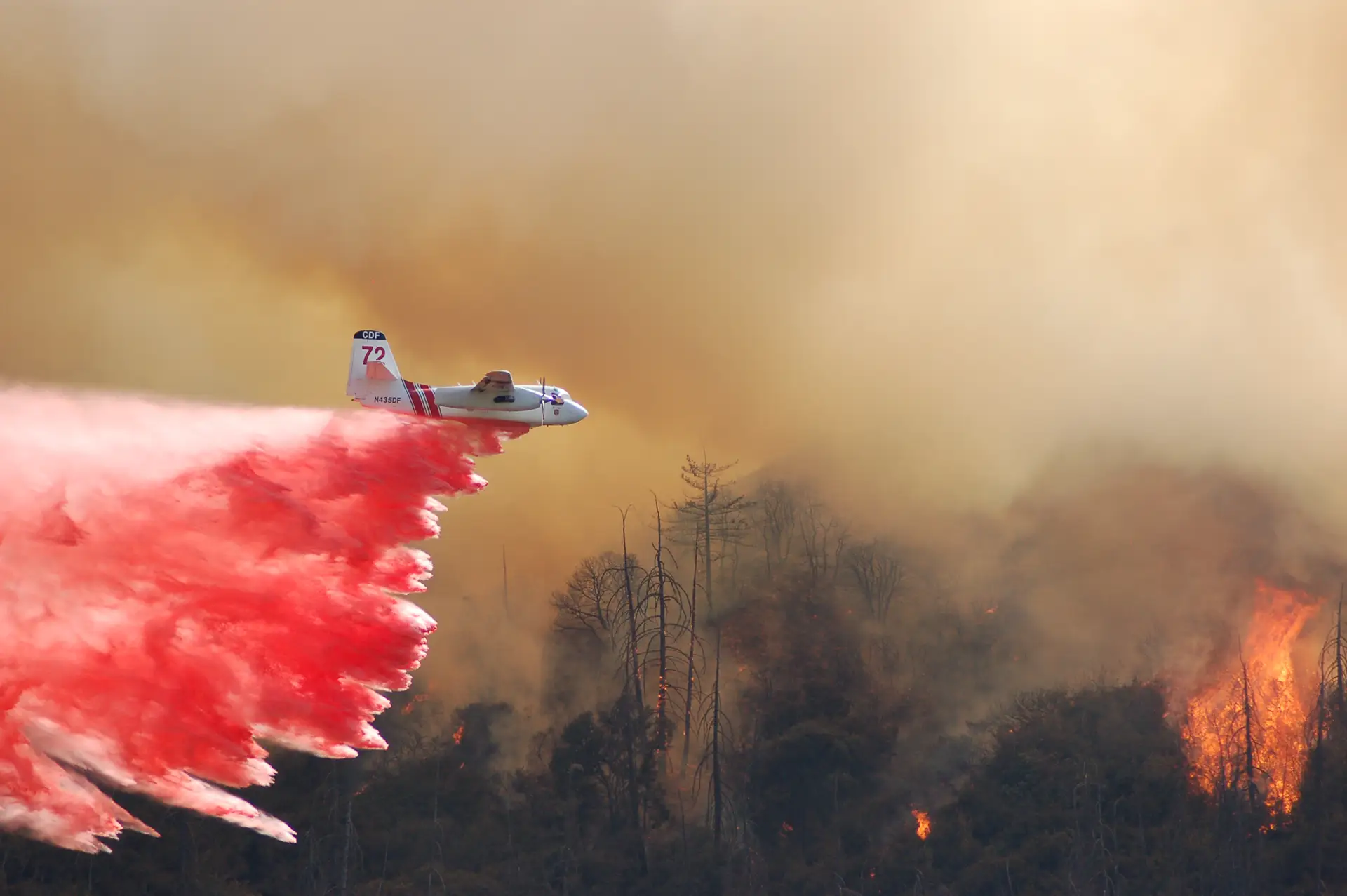
CAL FIRE’s 20-minute standard ensures aircraft can deliver retardant or water before a small ignition becomes a regional disaster. Those actions routinely stop 95% of new fires under ten acres, preventing millions of tons of CO₂ from entering the atmosphere each year.
The U.S. Forest Service:
Across the country, the U.S. Forest Service typically fields more than 150 pre-positioned, primarily contract aircraft (including air tankers, helicopters, smokejumper aircraft, lead and air-attack platforms, and intel ships), that form the backbone of the federal rapid initial attack program. While fleet size fluctuates each year, the philosophy mirrors CAL FIRE’s: keep aircraft ready and forward-deployed where new ignitions are most likely to occur, limiting fire growth and emissions before they escalate.
The Quick Reaction Force:
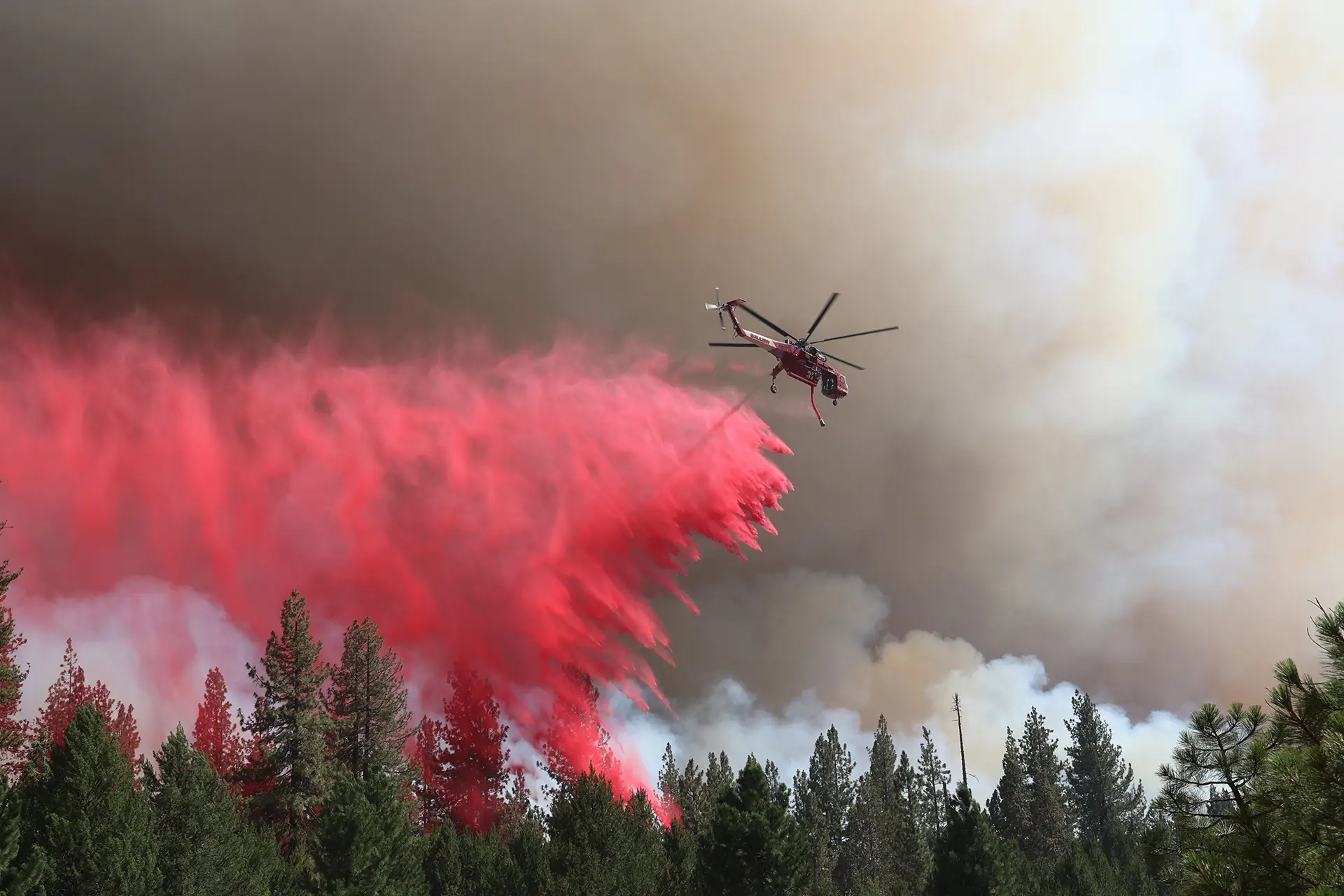
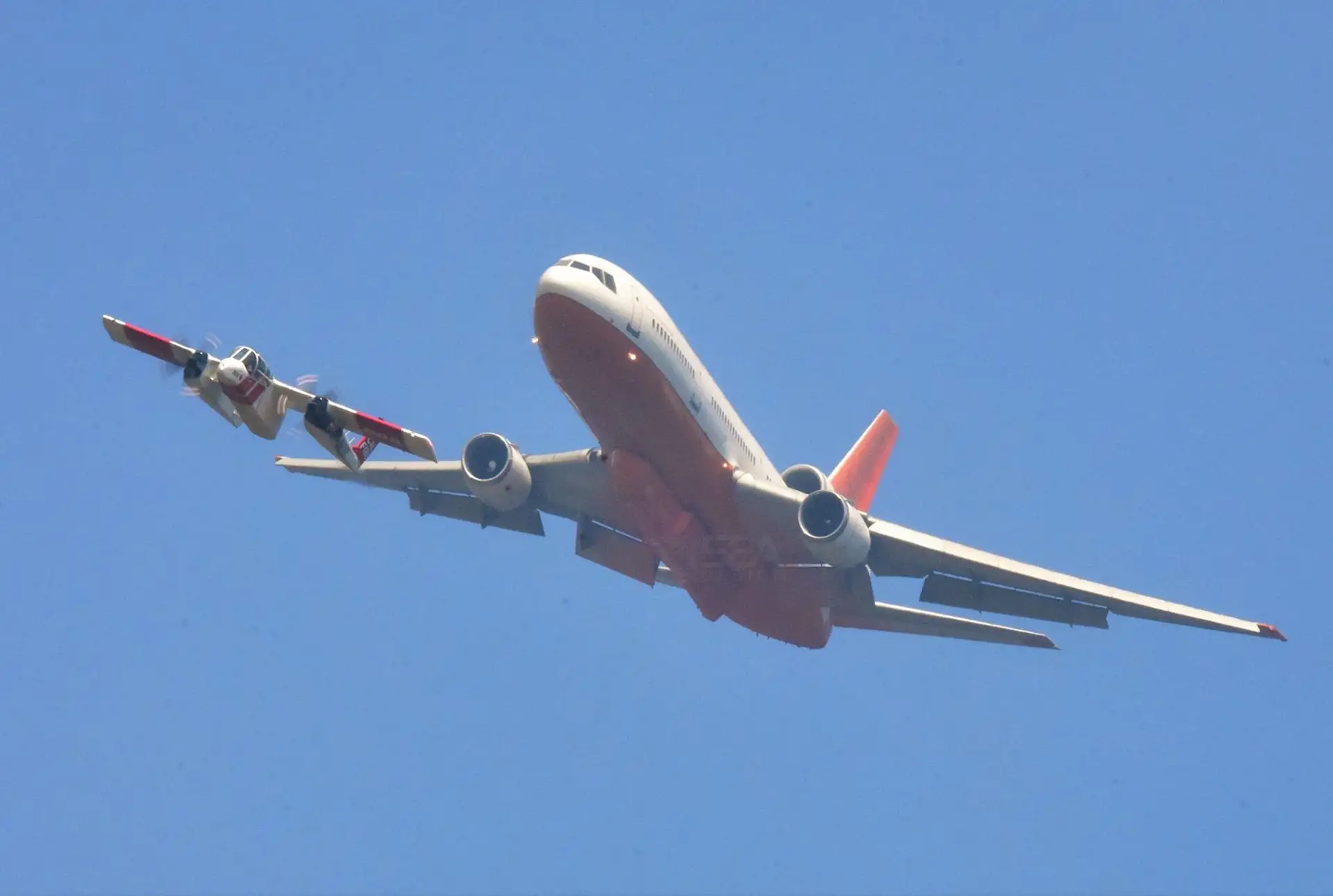
Southern California’s Quick Reaction Force (QRF), a partnership among the Los Angeles County Fire Department, Orange County Fire Authority, Ventura County Fire Department, and Southern California Edison, supported operationally by Coulson Aviation USA under a multi-agency contract, maintains an around-the-clock fleet that includes an S-76 intel and aerial supervision platform and three Type-1 helitankers capable of dropping a combined load equivalent to a DC-10 Very Large Airtanker, day or night. “When you have thousands of people in the path of a wind-driven fire,” says OCFA Chief Brian Fennessy, “your only chance at slowing or stopping it is with speed and force.
New South Wales Rural Fire Service (NSW RFS):
Following Australia’s devastating 2019–2020 “Black Summer” bushfires, which burned more than 5.5 million hectares (13.6 million acres) in New South Wales and released an estimated 715 million tonnes of CO₂, roughly twice the nation’s annual fossil-fuel emissions, the NSW Rural Fire Service, working with both national and contracted operators including Coulson Aviation Australia, and established a modern aerial firefighting program in just a few years. The RFS now operates a multi-mission fleet that includes a Boeing 737 Fireliner, CH-47 Chinook, five Bell 412s, two Cessna Citation 560s, a King Air 300, and soon, UH-60 Blackhawks, augmented by contract-based Pre-Determined Dispatch (PDD) aircraft stationed at 19 bases and supported by about 400 volunteer and salaried aircrew. Together, they provide a fast, cost-effective initial-attack capability designed to contain fires before they escalate. By comparison, CAL FIRE’s pioneering air program (established in 1958) has evolved over six decades, while the NSW model shows that with vision and urgency, a world-class air program can be built safely and effectively in a fraction of that time.
This model is not unique to California and Australia; it is part of a growing international trend toward rapid, pre-positioned aerial response as a frontline climate tool. Across the United States, states such as Washington, Oregon, Alaska, Colorado, Texas, and Florida now operate dedicated air programs that complement the U.S. Forest Service. Internationally, Australia, Canada, Chile, Turkey, South Korea, Greece, Spain, France, and Portugal have built or expanded their own suppression fleets, while the European Union’s new rescEU program coordinates shared aircraft across member nations, reflecting a worldwide recognition that speed in the air means carbon stability on the ground.
That combination of speed, force…and now nighttime reach…defines the next frontier of climate-aligned suppression. Night operations multiply the effectiveness of rapid initial attack by exploiting cooler, calmer conditions and extending the window of containment. As NSW Rural Fire Service Deputy Commissioner Ben Millington explains, building night-time aerial capability “allow[s] us to directly attack fires at times when weather conditions are typically more favourable”…expanding the window to contain new ignitions before they explode, with clear knock-on benefits for smoke, health, and carbon. When paired with real-time intelligence and precision drops, these operations can transform a single-shift response into a 24-hour climate-mitigation tool.
Speed, force…and increasingly…foresight.
Technology Takes the Controls
Technology is no longer a side tool; it’s the new air attack.
Early systems like BEHAVE and FARSITE pioneered fire-behaviour modelling, but the 2003 Cedar Fire in San Diego County, burning 273,000 acres, exposed how little real-time intelligence existed in the field. Among those fighting it was Brian Fennessy, then a San Diego Fire-Rescue battalion chief, whose experience inspired his later push for data-driven operations.
A decade later, Dr. Ilkay Altintas launched WIFIRE at UC San Diego’s Supercomputer Center, integrating weather, terrain, and satellite data into live predictive simulations. Partnering with LAFD Chief Ralph Terrazas, she brought modelling into frontline command decisions, while Fennessy (by then San Diego’s Fire Chief) helped merge aerial intelligence with these tools.
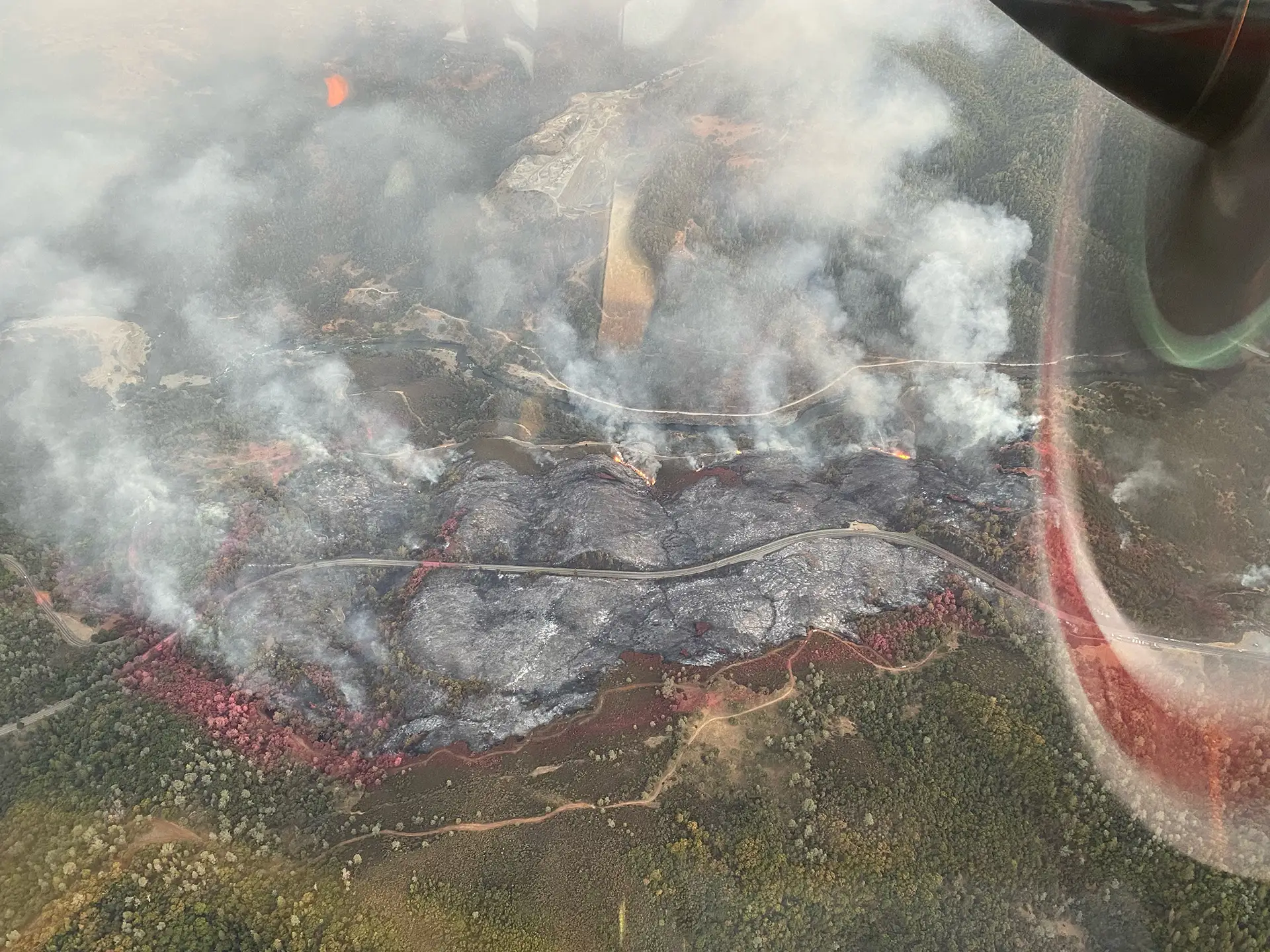
By 2018, those collaborations evolved into FIRIS (the Fire Integrated Real-time Intelligence System), a partnership among OCFA, LAFD, UCSD, and industry allies, including Caltech’s Jet Propulsion Laboratory, Courtney Aviation, and General Atomics. FIRIS delivers three-, eight-, and 12-hour growth models that let incident commanders anticipate a fire’s path and potential carbon impact before it occurs.
As Fennessy notes, this capability “put data behind the gut instinct every fire chief has felt for decades.” It quantified what aerial firefighters have long known but never proven: the measurable climate value of a fast stop.
Today, systems such as FIRIS and its integrated fusion center (now jointly managed by Cal OES and CAL FIRE) along with AlertCalifornia, FireSat, BurnPro3D, and the public app Watch Duty, collectively extend that capability statewide, transforming wildfire response from reactive to predictive.
From Acres Saved to Carbon Saved
If a fire is halted at 200 acres but would have grown to 8,000 acres without air support, the avoided 7,800 acres represent tens of thousands of tons of CO₂ kept out of the sky. Even accounting for aircraft emissions, the climate benefit is overwhelming. Each saved megaton equates to the estimated $190 million in avoided global damages…numbers that could someday justify carbon-credit valuation for suppression programs.
Global Perspective: A Common Carbon “Centerline”
Fire agencies worldwide operate within distinct cultures, mandates and operational procedures, yet all share one universal metric: CO₂. Establishing a carbon-based “centerline” would allow agencies to compare performance, justify investments in aerial capacity, and recognize wildfire prevention as legitimate climate mitigation. As former CAL FIRE Chief Ken Pimlott once observed years ago, “We can’t account for the fires that never happen.” With today’s modelling, we finally can.
Managed Fire: When Not Fighting Is Climate Action
The U.S. Forest Service’s “managed fire” philosophy adds nuance: sometimes the best suppression decision is restraint. Allowing certain unplanned fires to burn under supervision can restore ecological balance and reduce future fuel loads. As outlined in the 2022 Wildfire Crisis Strategy, this approach balances short-term emissions with long-term carbon stability. A single megafire can emit over 100 million tons of CO₂, while a prescribed or managed burn releases less than one-thousandth of that amount. EPA–USFS assessments confirm wildfires produce far more emissions per acre than prescribed burns. Roughly 99.84% of prescribed burns proceed as planned, underscoring their safety, while managed fires, though more variable, remain vital to long-term carbon stability.
In 2025, Governor Gavin Newsom announced sweeping reforms to California’s wildfire regulations, streamlining permits and expanding partnerships to accelerate safe, climate-aligned burns. The plan reduces 17 permitting steps to two…sometimes as little as 30 days…and aims for 500,000 acres of prescribed burning annually by 2025. CAL FIRE and UC Davis are also using predictive algorithms to guide controlled burns, signalling a clear shift: fire management is now climate management. As California State Fire Marshal Daniel Berlant states: “The truth is we’re not going to respond our way out of this crisis.”
While public agencies lead in suppression capability, private industry has become an essential innovation partner—extending government capacity rather than replacing it.
Private Sector and Policy Momentum
Governments are no longer alone in linking wildfire suppression to climate action. At Climate Week NYC 2025, Wayne Coulson joined Chris Anthony and OCFA Division Chief Kevin Fetterman to highlight wildfire’s overlooked carbon role…a theme echoed days later at the Canadian Wildfire Conference in Kelowna.
Other private operators and innovators…from established carriers such as Conair, Aero-Flite, Neptune Aviation, and PJ Helicopters to emerging startups like Rain Aero and Seneca…are also expanding climate-conscious aerial strategies, reflecting a broader global shift toward proactive, carbon-informed suppression. Utilities including Southern California Edison, San Diego Gas & Electric, and PG&E are likewise investing in early detection, aerial contracting, and rapid-response capabilities that align public safety with emissions reduction.
Venture firms such as Convective Capital in California and NorthX Climate Tech in Canada are backing startups that merge wildfire mitigation with carbon intelligence. Pano AI deploys 360° AI-enabled cameras for real-time smoke detection, while Vancouver-based SenseNet integrates ground sensors and satellites for minute-by-minute ignition alerts. OroraTech uses nanosatellites to track thermal anomalies worldwide, and Technosylva, a core analytics partner for CAL FIRE, applies AI and supercomputing to model fire behavior and quantify the carbon benefits of rapid suppression. Complementing these systems, Intterra is developing common operating platforms that unify data across agencies and operational tiers.
At the policy level, firms such as Eco Engineers advocate for wildfire emissions to be measured alongside fossil fuels, arguing that lasting climate progress requires a unified accounting of all carbon sources.
Accounting for Reality
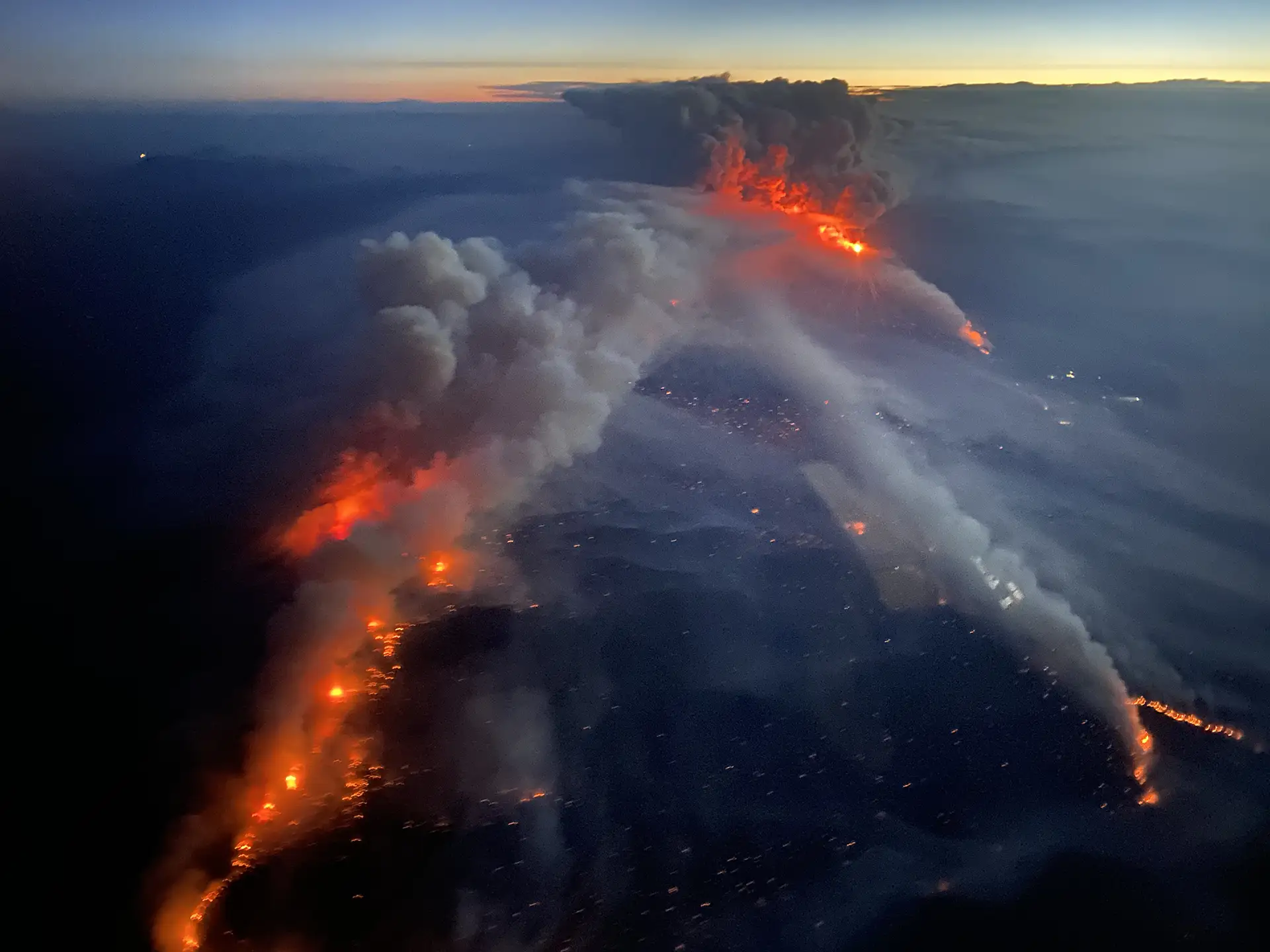
Under current UN and EPA reporting frameworks, wildfire emissions are typically classified as “natural disturbances.” Canada’s record-setting 2023 fires released an estimated 647 million tons of CO₂…more than many industrialized nations, but while such figures appear in official greenhouse gas inventories, they are listed separately and excluded from national accountability targets. This accounting gap conceals both the scale and the opportunity: a clearer understanding of wildfire-driven emissions (and their potential for reduction through rapid initial attack, detection, and vegetation management) could help reframe these investments as essential components of climate mitigation, not merely emergency response.
The Economics of Prevention
From a fiscal standpoint, the argument remains compelling, even using rough, illustrative estimates. Suppose suppression costs average about $1,000 per acre, while megafire losses can exceed $100,000 per acre when property, health, and infrastructure are included. Based on the U.S. EPA’s 2022 estimate of the Social Cost of Carbon, every megaton of CO₂ avoided represents roughly $190 million in societal savings. While these figures are not exact, the message is clear: cutting a fire’s growth rate in half delivers exponential economic and environmental returns. For agencies, insurers, and communities alike, that’s a balance sheet worth protecting.
Lessons from the Air
The red globe on the CAL FIRE patch isn’t symbolic by accident. It represents the agency’s global leadership and its ongoing fight against climate-driven fire. Each mission launched from a CAL FIRE air base now doubles as a carbon-reduction flight.
The same holds true for the NSW Rural Fire Service, the U.S. Forest Service, and emerging, more robust agency programs in Texas, Canada and beyond. Every base, sensor, or airtanker is more than firefighting infrastructure; it’s climate infrastructure.
Where We Go from Here
If nations and agencies expand how they apply carbon accounting…not by inventing a new metric, but by fully integrating wildfire impacts into existing ones…mitigation efforts can finally reflect the true scale of the challenge. Standardized data and predictive modelling can help quantify the cost-effectiveness and CO₂-offset power of pre-positioned aerial resources, while also revealing how fire affects health, ecosystems, and long-term carbon storage.
Raising awareness of wildfire emissions isn’t just about forest loss; it’s about understanding how each large burn weakens the planet’s ability to reabsorb carbon for decades to come. Forests take generations to rebuild their sequestration capacity, and every major fire delays that recovery.
“As a result of a changing climate and more destructive fires,” says Los Angeles County Fire Chief Tony Marrone, “there are a lot of people at risk. We need to protect them, and we need to protect their health.” Protecting health, homes, and climate are no longer separate missions…they are one and the same.
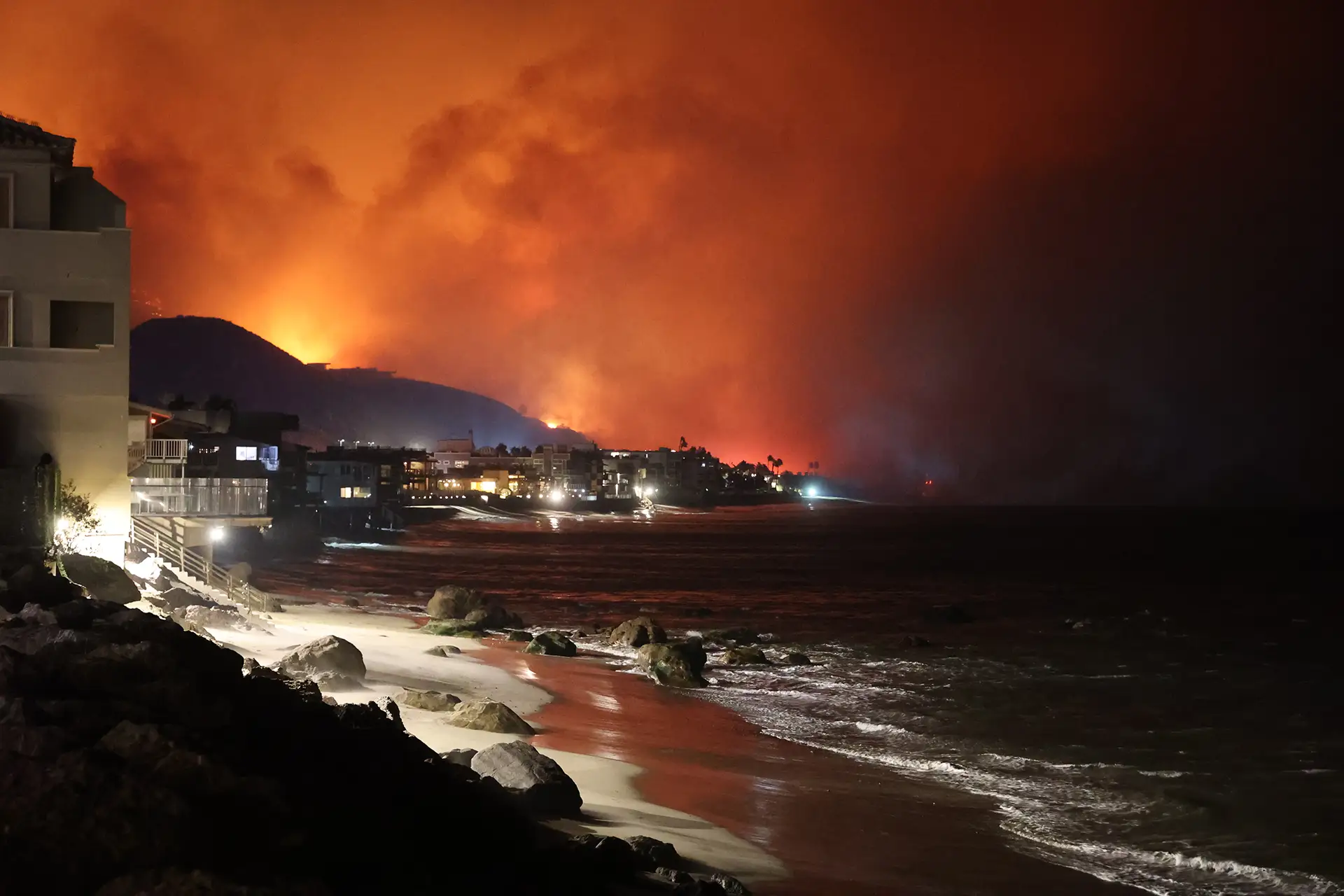
Conclusion: Aerial Firefighting as Climate Policy
When future historians trace the turning point in humanity’s response to climate-driven fire, they may look not to a conference hall or carbon market, but to the tarmac of an airtanker base or even to autonomous aircraft standing ready in low-coverage, high-value areas, launching within minutes to halt a new ignition.
Each of those flights prevents untold tons of carbon from entering the atmosphere, reinforces decades of global mitigation work, and proves a simple truth: keeping small fires small may be one of the most immediate and effective climate solutions we have.