 HOME
HOME




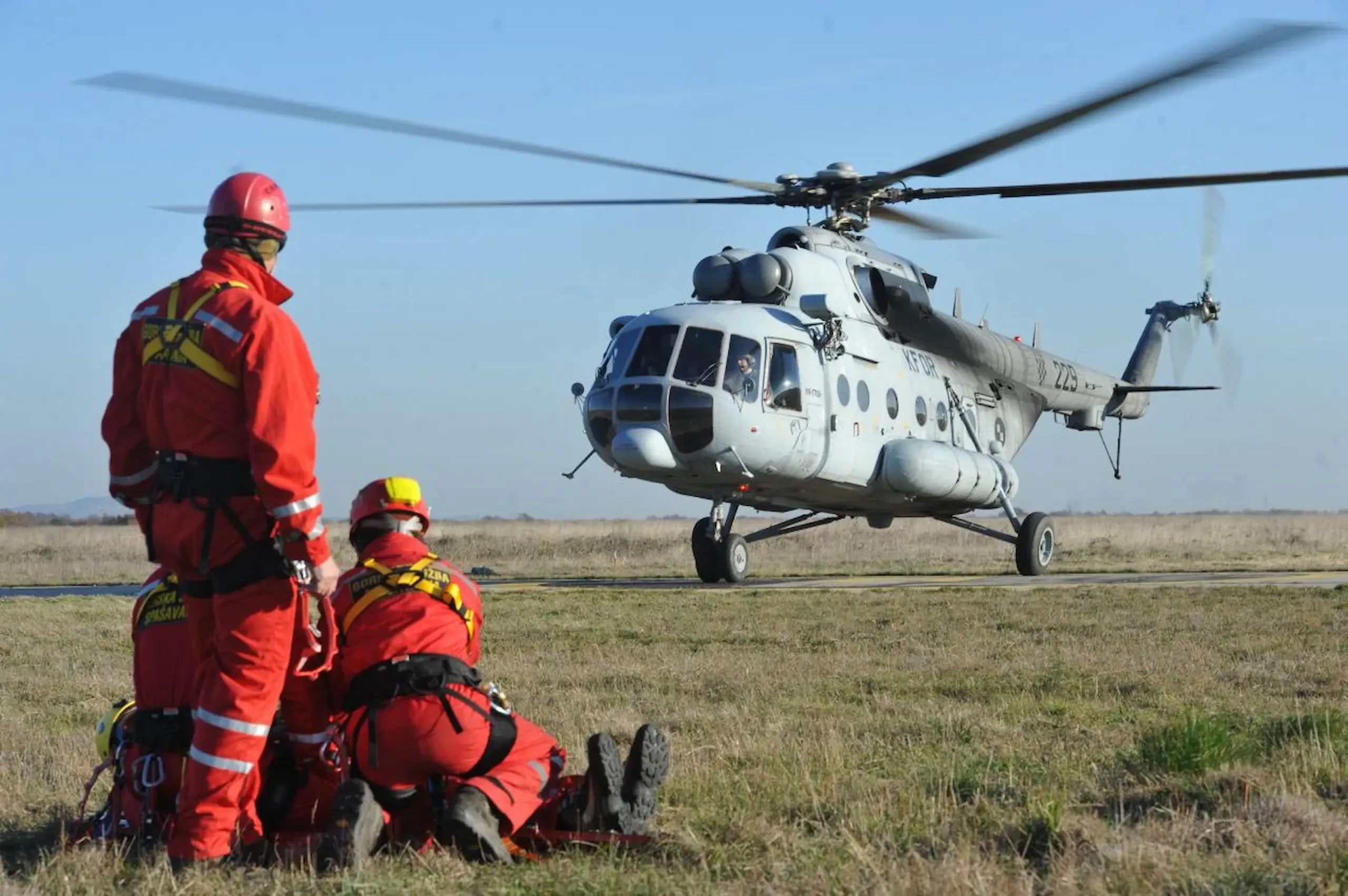
Alex Mladenov looks at the winding down operations of the Russian-made helicopters in Europe while also highlighting the new Ka-32 operators in the non-European Union’s corners of the continent which are using the type in the much-appreciated firefighting role
Capability Decline
Since the beginning of the war in Ukraine, Europe’s firefighting capabilities have reportedly declined since early 2022 when, almost overnight, the use of Russian-made helicopters was shut down. The European Union’s (EU) sanctions that were imposed on Russia immediately after its unprovoked full-scale invasion of Ukraine also drastically changed the market and destroyed the sales prospects of Russian-made helicopters, spare parts and technical services to the entire Western world. This situation looks set to continue for a very long time.
The sanctions against Russian Helicopters, the country’s umbrella holding controlling all design bureaus and production plants, resulted in a total ban on the sale, supply, transfer or export of equipment or technology (whether or not originating in the EU and USA). Russian Helicopters was added to the sanctions list in March 2022 as its subsidiaries supplied equipment widely used in the invasion of Ukraine, to the Russian military.
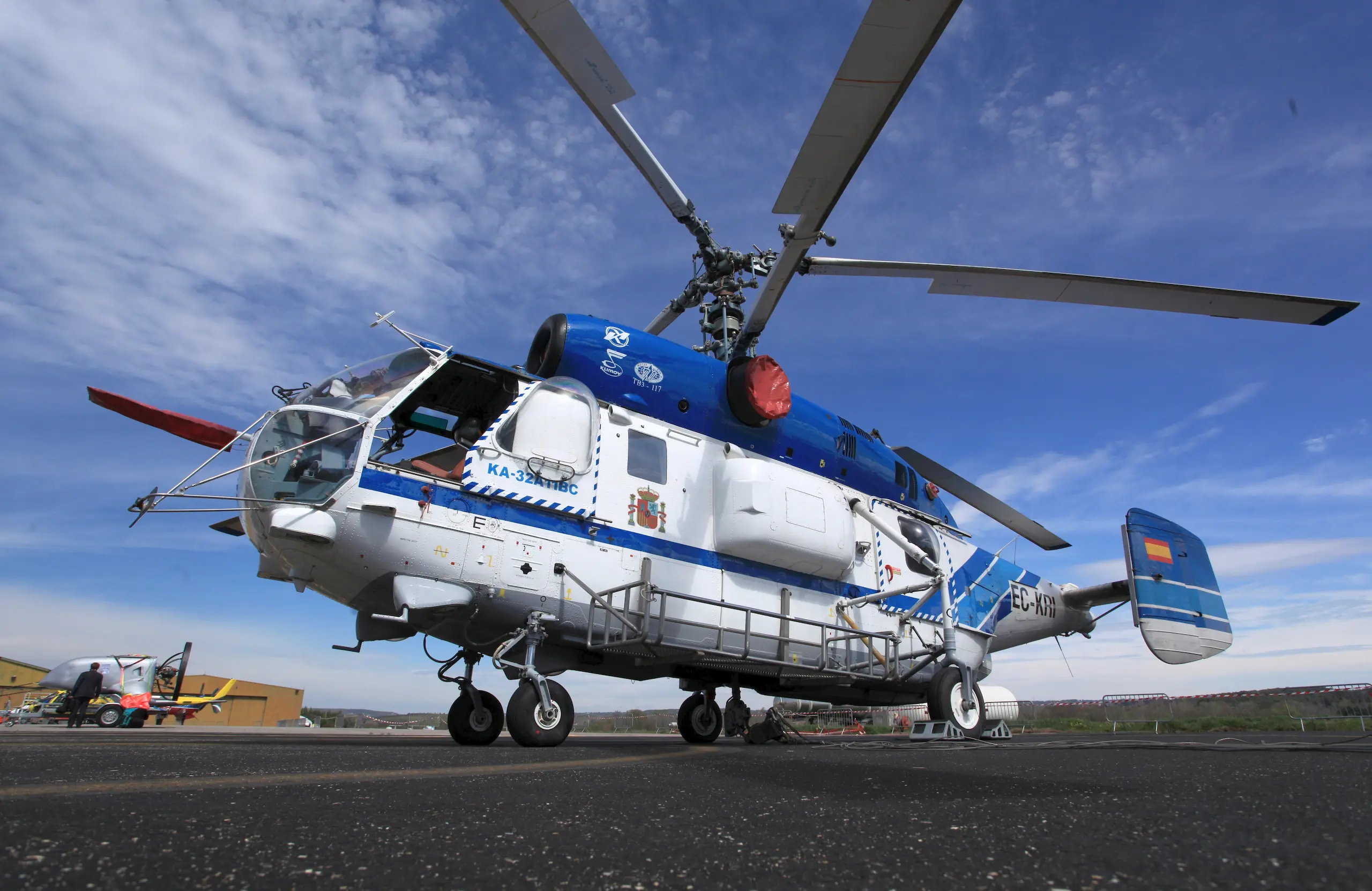
The Ka-32 fleet took the worst hit, as the heavy lift helicopter, previously widely used in Western Europe, was banned from operations. The European Aviation Safety Agency (EASA) suspended the Ka-32’s Type Certificate. These rugged and powerful co-axial rotor helicopters, used for load lifting and firefighting work in some EASA countries, with payloads of up to five tons, were operated by Portugal (six examples; at the time of imposing the ban, three of these were undergoing restoration of their airworthiness by a Russian technical team), Spain (as many as 13 examples) and Switzerland (two).
The EASA act covered suspending all the certificates the agency issued in the past for Russian aircraft, including certificates for
products, parts and appliances, as well as the certificates for organizations and flight simulation training devices, where the holder of
the certificate was located or residing in Russia, or otherwise subject to the sanctions. In addition, the agency’s act similarly put on
hold, until further notice, all investigations concerning pending certification applications from Russia related organizations and persons.
All third country operator authorizations EASA had issued under Regulation (EU) No 452/2014 to commercial air transport operators for which
Russia acts as the State of the Operator were also impacted. EASA advised that any existing wet lease or dry lease approvals or code-sharing
agreements with aircraft operators of Russia or concerning aircraft registered in Russia should be revoked or terminated, as applicable. The
agency prohibited EASA-type certificate holders and other design approval holders from providing continuing airworthiness support or any
other form of technical support to aircraft registered or designed in Russia or operated by an aircraft operator in respect of which Russia
acts as the state of the operator.
Impact on commercial operations
Spain
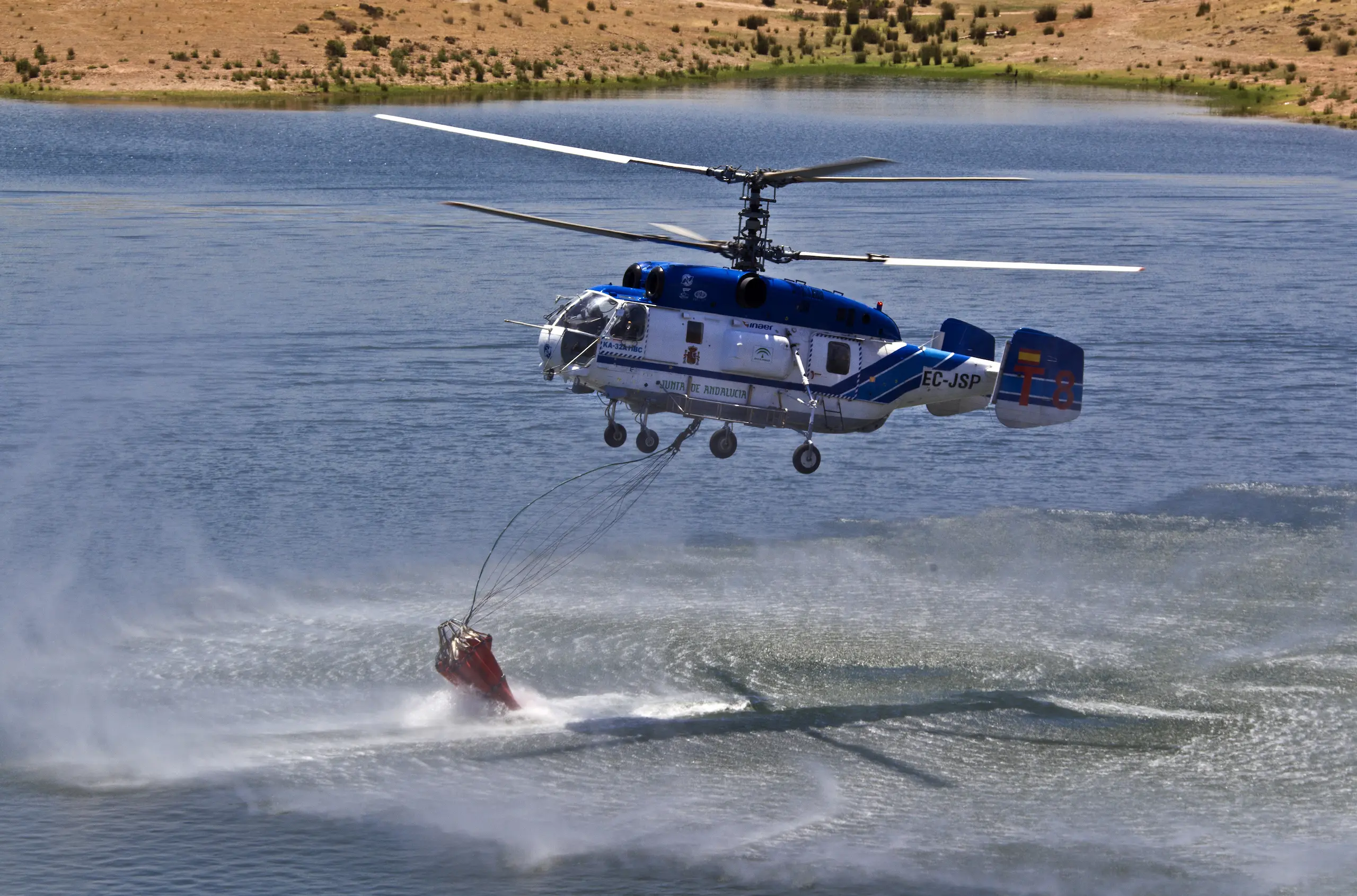
The commercial and government operators shall be reviewed separately when assessing the adverse impact of the current firefighting operations in Europe. The commercial operations suffered the most, but the overall effect on the firefighting sector was limited to one country - Spain, which had a significant fleet of commercially-operated Ka-32A11BC, operated by Avinics. The Spain-registered Kamov fleet managed to continue firefighting operations for some time after the EASA ban, but, ultimately, the lack of the much-needed Russian-provided technical support, including the supply of spare parts and MRO services, resulted in declining availability. In 2023, for example, only three out of eight Avinicis helicopters were available for firefighting operations, and in 2024, no Kamovs were available. Spain attempted to replace the Russian helicopters, but apparently, the effort failed.
In May 2024, the Spanish Sumar Parliamentary Group proposed a partial lifting of sanctions on Russia to enable the future use of the locally registered Ka-32 fleet for fighting forest fires. “Neither its availability nor its effectiveness are rivals for the great anti-fire tool that the Kamovs represent,” claimed Sumar’s proposal regarding the ill-fated attempt to fully replace the controversial Kamovs with French-made Super Puma helicopters. Sumar asked the Government to adopt ‘timely’ measures within the EU framework to ‘partially’ lift the sanctions related to the maintenance and operation of the Kamovs. It also urged the search for alternatives to Kamov helicopters on the international market in the short, medium and long term. Another request was to consider the ‘necessary’ steps to end the external dependence on firefighting assets, especially during peak seasons.
Sumar asked the Madrid-based government “to grant an exemption for payments, certainly minor, to the Russian manufacturer of the Ka-32 so
that they can be operational this summer in our country and thus contribute to providing the means to preserve our natural heritage,
increasingly threatened by fires.”
As Spanish news outlet The Diplomat noted, in its response to Sumar’s June 2024proposal, the Spanish Government, acknowledged that
“the availability of Russian-made helicopters has been affected by Russia’s invasion of Ukraine and the economic sanctions imposed by the
European Union” and that, “due to the current sanctions”, the necessary spare parts for its maintenance cannot be acquired nor the Russian
mechanics and technicians authorized to carry out the necessary inspections sent to Europe, a task that, “by contract, must be carried out
by Russian personnel.”
“Regarding granting an exemption for payments, it should be noted that this exemption does not correspond to the government in Madrid but to the European Union,” warned the response letter, which also assured Sumar that the Ministry for the Ecological Transition and the Democratic Challenge, in coordination with the autonomous communities, is “studying the availability in the international market of other aerial means that could replace the Kamov Ka32-11BC type heavy bomber helicopters.”
Portugal
By early 2022, Portugal was assessing the airworthiness of three of its Ka-32s, used by the Empresa de Meios Aéreos, S. A. (EMA) – the country’s civil protection authority. Immediately after the EU sanctions decision, Lisbon deported the Russian technicians and, not long after, announced that it would deliver all six Ka-32A11BCs to Ukraine. Transfer of the helicopters was completed in September 2024.
A clever way to retain Ka-32 doing its firefighting job
Cyprus is another European country that had relied on using Russian-supplied Ka-32s. Krasnodar, Russia-based commercial operator PANH Helicopter Services was the irreplaceable provider of Ka-32s between 2001 and 2021. However, following the imposition of the EU sanctions in 2022, the mildly-profitable business was ruined almost overnight. Indeed, in March-April that year, Cyprus tried to negotiate with the EU to secure an exemption from the sanctions to continue leasing Ka-32s from PANH in the firefighting role (the intense firefighting season lasts from May 1 to November 15 each year), but no positive result was achieved.
PANH was replaced not long after by a non-Russian company, the Swiss-based Artic Group SA, owned by Ukrainians and using
Ukrainian-registered Ka-32. The new contractor leased out two Ka-32s to the Forestry Department of the Cypriot Ministry of Agriculture for a
period of three years, with their operations commencing in August 2022. It remains to be seen if Artic Group or any other non-Russian
contractor will be able to supply airworthy Ka-32s for the firefighting job post-2025 due to expected issues with the heavy maintenance and
spare parts supply for the type, and the need to use Russian contractors for the overhaul of the main gearbox, rotor mast and other complex
systems of the helicopter.
Government operations
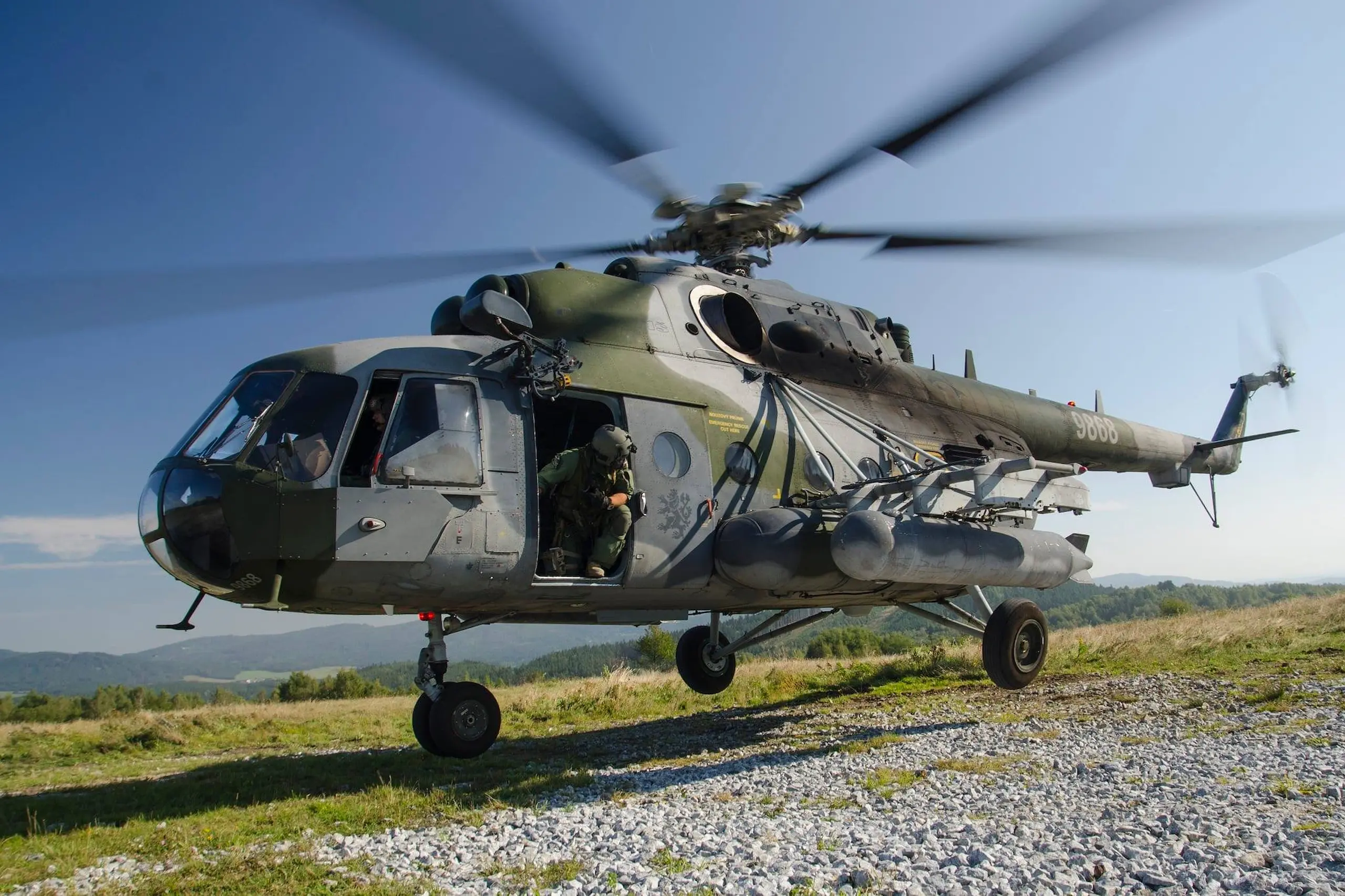
Bulgaria, Hungary, Croatia and the Czech Republic are the four EU member states that still retain their Mi-17/171 fleets in regular military operations and are trying to provide as much local support for the fleet. Both countries have used their Mil fleets in firefighting campaigns in the summer months, equipped with Bambi Buckets.
Bulgaria has three Mi-17s, delivered in the late 1980s, which are still maintained in airworthy condition thanks to the local MRO industry, but their long-term future is under question. The helicopters have provided effective firefighting capability, with Bambi Buckets delivering 3.5 tons of water, but in the busy summer months of 2024, the payload was restricted to 3 tons due to the need to maintain safe power margins.
The Czech Republic uses its 20-plus Mi-171Shs and Mi-17s for firefighting and various civilian protection missions. The Mi-171Shs use Bambi Buckets, capable of delivering up to 3.5 tons of retardant, while the Mi-17 is usually limited to 2.7 tons. The fleet is still in good shape thanks to the support for overhauls of the airframe and engines provided by the local MRO industry, but it will face serious issues in the medium term due to the impossibility of sourcing vital spare parts from Russia.
The Croatian Air Force is another European military operator, occasionally using its ten-strong fleet of Mi-171Shs for firefighting, equipped with locally designed FLORY 2600 buckets, accommodating 2.2 tons of water.
The Hungarian Air Force and Slovak Police also use Mi-17s for firefighting missions. The Hungarians use Bambi Buckets, most recently used
in an international firefighting operation in Macedonia in August 2024, providing two helicopters for this job.
Serbia and Turkey expanding their Russian-operated fleets
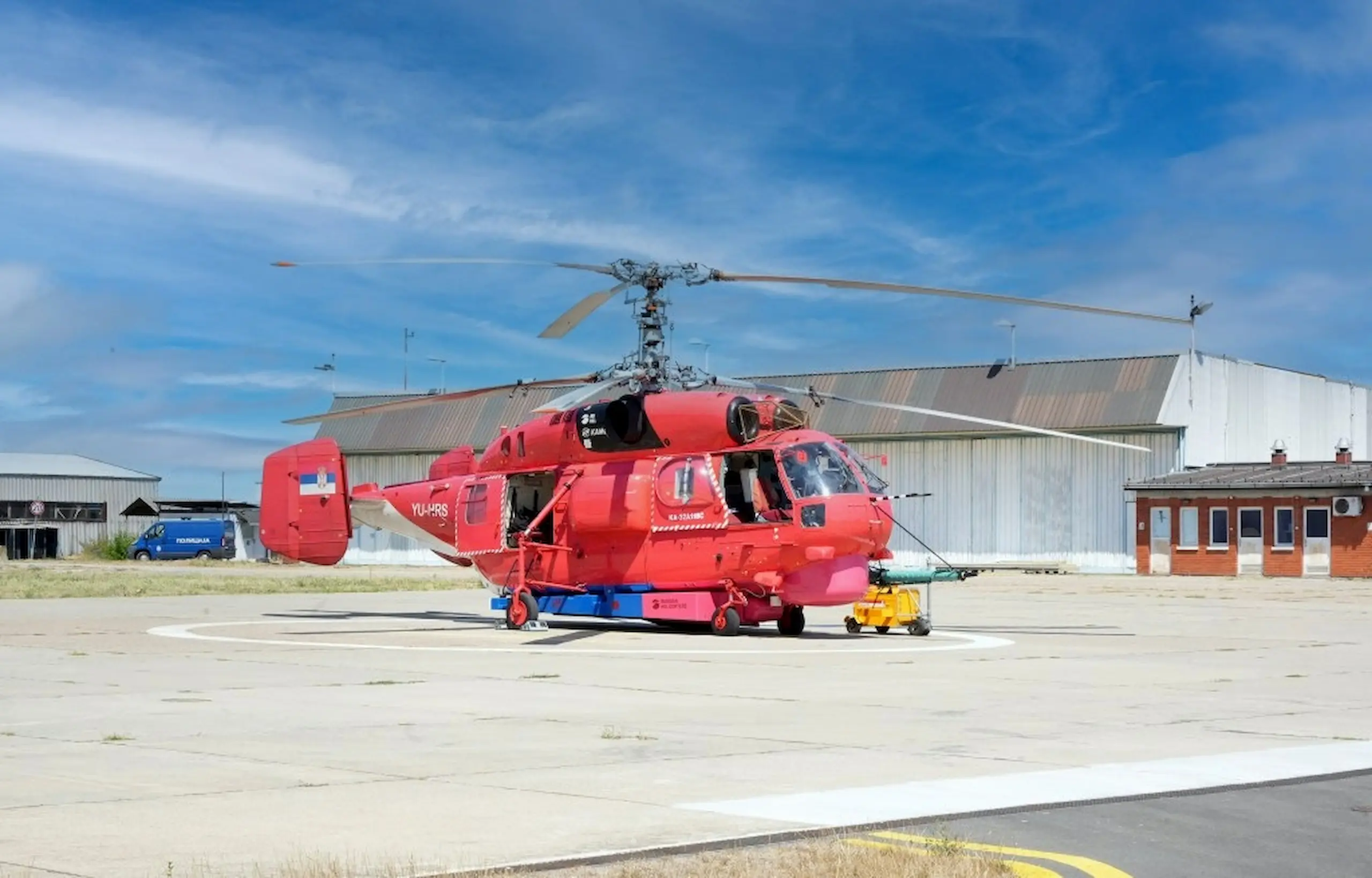
The rugged Ka-32 is still operating in two areas in Europe, remaining well outside the reach of the EU-imposed sanctions. It was Serbia that ordered a pair of brand-new Ka-32A11BCs in 2021, with their delivery reported in September 2022 and September 2023, respectively, operated by the Helicopter Unit of the Ministry of Internal Affairs. The country is historically friendly to Russia and elected to invest in the aircraft, but questions remain about the long-term support of the Kamovs. Known as a maintenance-intensive helicopter, it is still yet to be seen how Russia, heavily involved in the war operations against Ukraine, will provide spare parts and services for export customers, considering the country’s existing maintenance commitment to supporting the military-operated Kamov fleets (such as the Ka-27, Ka-29, Ka-31 and Ka-52).
One of the Ka-32 helicopters, belonging to the Hungarian Air Force, was engaged today at a fire site in North Macedonia in the Novo Selo region, located near the border with Bulgaria. The helicopter flew 10 hours in support, delivering about 70 tons of water onto the fire. Serbia assisted its neighbor to the south after the North Macedonia government asked for assistance.
Turkey is another country in the broad region operating new Ka-32A11BCs, with the EU-imposed ban not affecting local Kamov operations.
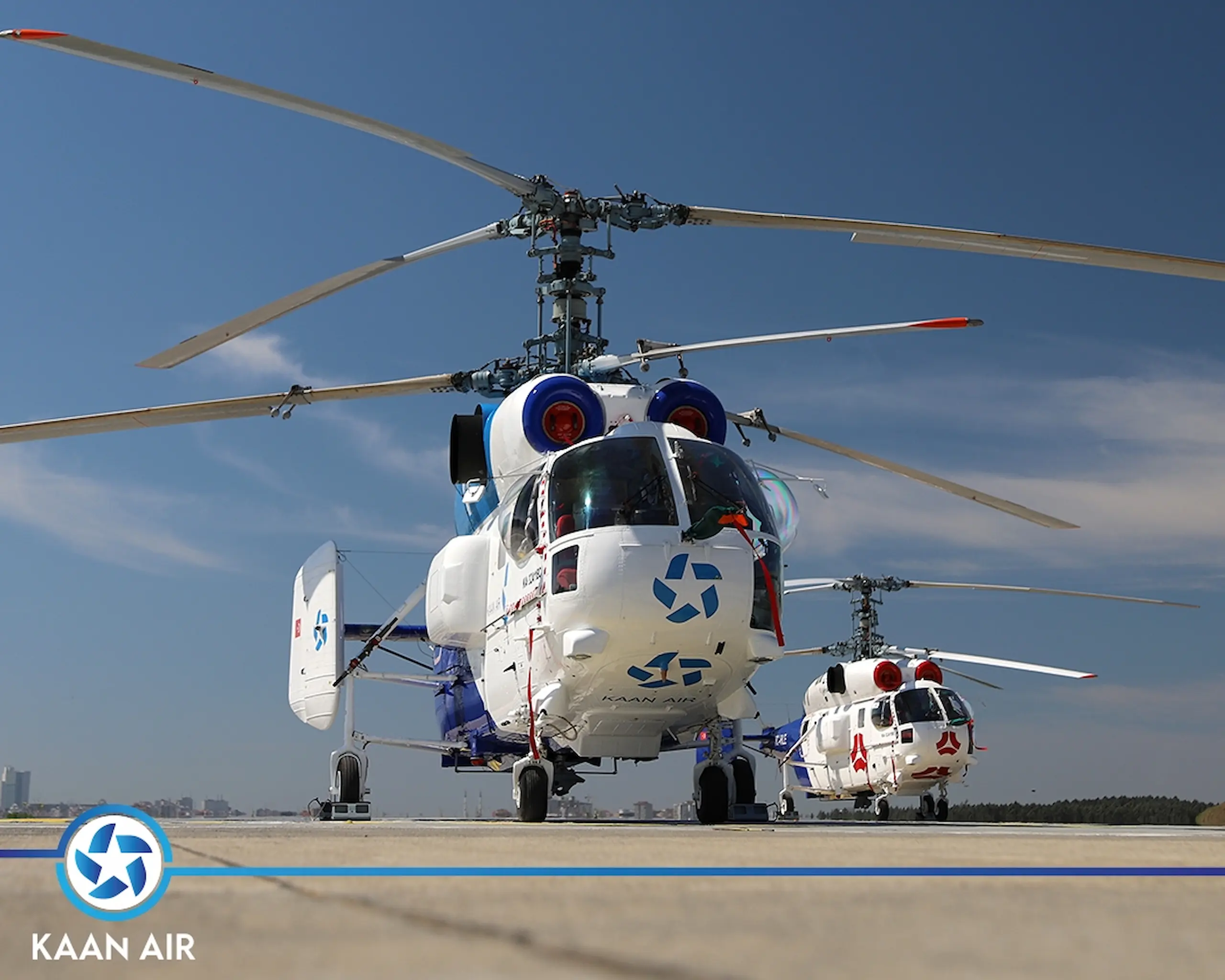
Turkish commercial air operator Kaan Air, based at Istanbul Heliport, took delivery of three brand-new Kamovs equipped for firefighting
missions in 2019. The fast sale became possible thanks to the vastly improved diplomatic and defense industry relations between Ankara and
Moscow, which also included purchasing the S-400 surface-to-air missile system.
The principal business activity of Kann Air is delivery and after-sales support of Western-manufactured helicopters, as well as a wide range of transportation services from air taxi and VIP transport to environmental monitoring and fire extinguishing. Since 2015, Kaan Air has been a dedicated participant in aerial firefighting missions for the Turkey Ministry of Forestry, using leased Ka-32s provided by Russian operator Avialift Vladivostok. As the company claimed regarding its new acquisition: “The Ka-32 firefighting helicopters played a big role in the success of operations with effective and successful maintenance support and refueling, delivered from land to fire zones when necessary.”