 HOME
HOME




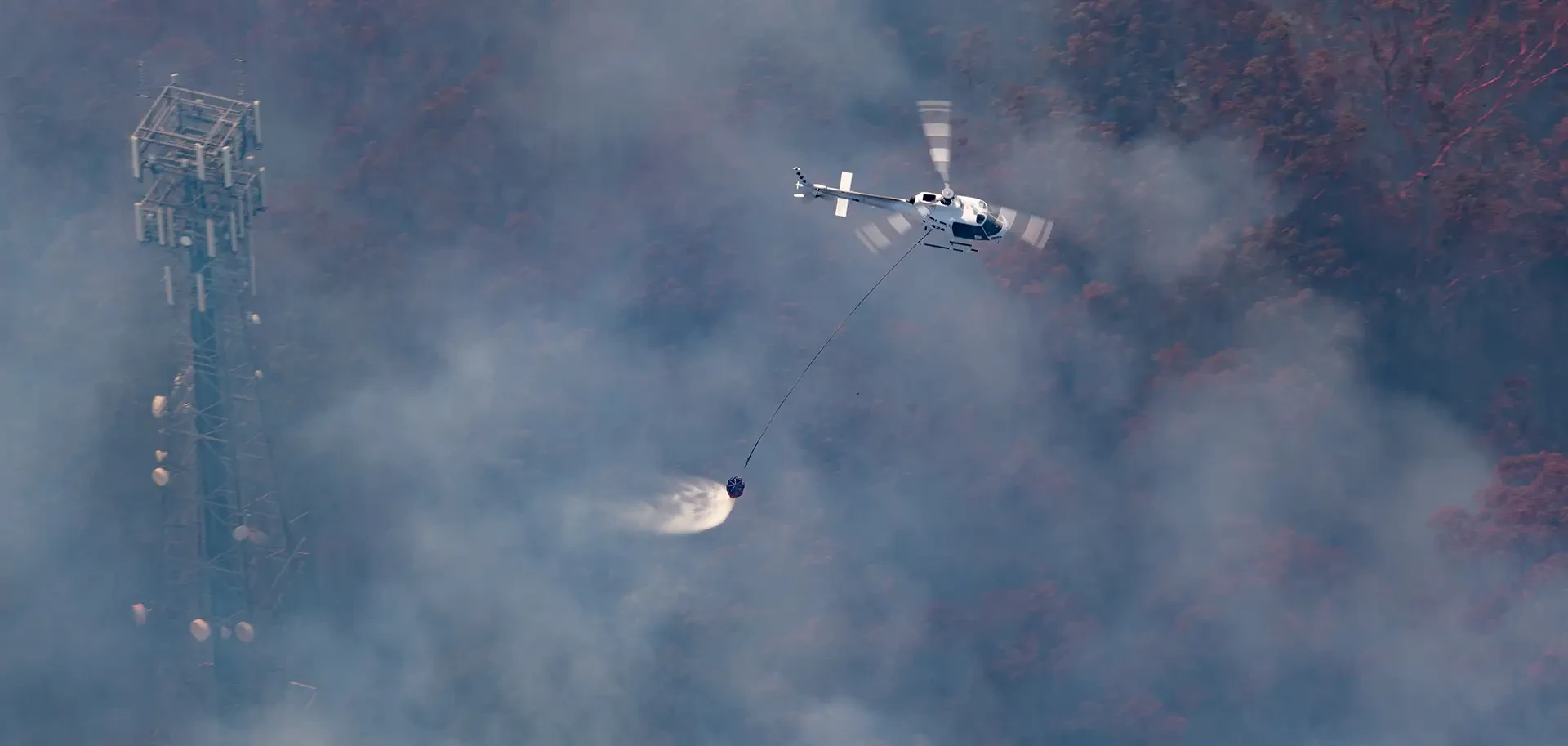
The Air Attack industry has seen relentless growth in platform size and capabilities over the past three to four decades. The light helicopter has played an important role in air attack, but what of its likely future? Paul Kennard examines the practicality and utility of the light helicopter in the years ahead.
Where once war-weary B17s and Privateers crisscrossed the hills and valleys of the major fire risk areas, dispensing water and retardant as they went, the scene today is very different. The advent of the Very Large Air Tanker (VLAT) program has seen many faster, more reliable and vastly more capable tankers join the fray. As they have approached the end of their viable commercial lives, aircraft such as the DC-10, 747, and RJ85/BAe 146 have all been modified to deliver large quantities of water and retardant, to supplement the venerable C130s and P3s. The purpose-built Canadair family of amphibious water bombers have also become a common sight in North America, as well as in Europe - their highly recognisable and vivid yellow paint scheme contrasting against the green hillsides as they make their drop runs, as well as cutting a dash across the lakes and rivers of the world as they reload.
In the helicopter world, the trend also appears to be 'bigger is better'. The release by the US Army of several hundred surplus UH-60 Black Hawk helicopters onto the civil market via the Black Hawk Exchange and Sales Team (BEST) program has seen many taken on by Air Attack companies keen to exploit the aircraft's low acquisition cost, prodigious lifting capability and 'military-grade' robustness. There are also thousands of Black Hawk qualified pilots, crew chiefs and maintainers leaving the US military every year - many looking for a similarly challenging role in civilian life.
More recently, the US Army has also released a few dozen CH-47D Chinooks into the hands of industry. Where once Columbia Helicopters
stood alone as a civil Chinook operator, exploiting its small, niche, fleet of BV-234 civil certified and manufactured airframes for
utility and firefighting roles, others have now adopted and adapted Boeing's battlefield workhorse. The Chinook's huge lift
potential, especially when stripped of all unnecessary military equipment, marks it out on the fire ground - vying with the
Sikorsky/Erickson S-64 Skycrane as the 'big lifter' in the industry. The likes of Coulson, Billings and Rotak now all have Chinooks
in their fleets, and a significant support industry for the air attack mission has emerged, including bespoke water tanks and other
equipment. Such is the increased demand for Chinooks in the industry that as the outflow of CH-47Ds out of the US Army via the CHAPS
(Cargo Helicopter Airframe Procurement Support) initiative has reduced to a trickle, that Billings has been forced to look elsewhere to
grow their fleet and have secured a batch of former Dutch Air Force aircraft, with a unique Honeywell digital cockpit. The latest
revelation in the world of surplus CH-47Ds is the announcement by Columbia and Boeing that they are teaming up to offer a 'BV-234SP', in
effect taking an ex-military CH-47D airframe and putting it through a modification program to produce a Type Certified aircraft that can
carry a handful of passengers, not just the operating crew.
 Bigger
the Better?
Bigger
the Better?
But is 'big' always 'best' when it comes to aerial firefighting?
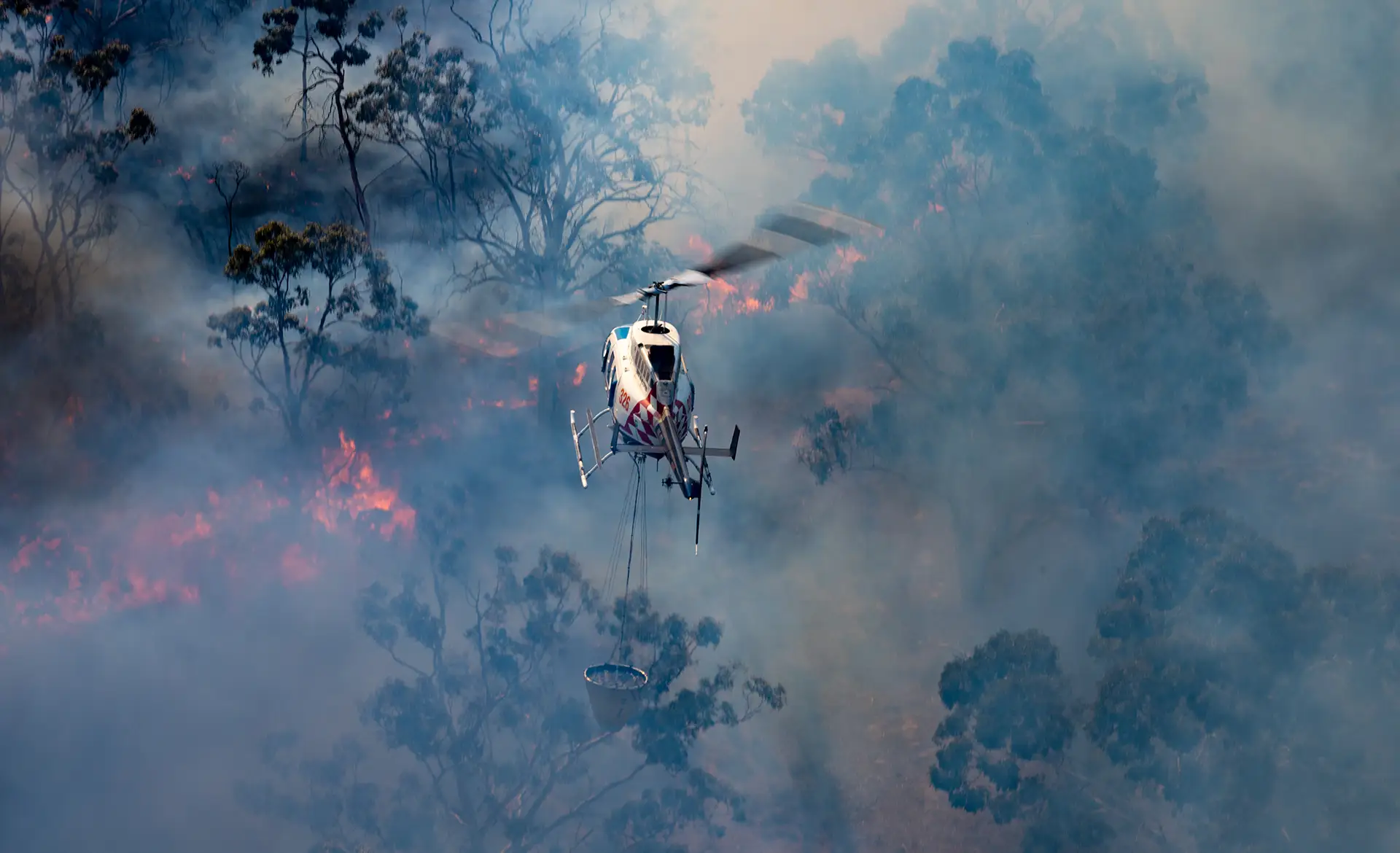
Smaller helicopters have long been a staple of the fire ground. The obvious advantage of light-medium helicopters is their purchase and operating costs. At this price point smaller operators can enter the market, and given the seasonal nature of firefighting, switch the aircraft to other roles to continue to attract revenue for the remainder of the year. Depending on location, the platform, and the operator's certification status, these other roles could include Part 135 charter, heli-skiing, light utility work or agricultural support flying, including crop spraying. The plethora of alternate civil roles are more accessible to smaller helicopters as, unlike the 'demobbed' UH-60 Black Hawks and CH-47 Chinooks, the majority are civil designed and certified machines. They have naturally filled-in niche roles, such as moving cargo, equipment and small numbers of fire fighters and other passengers when needed - the latter a role that traditionally the 'Restricted-Utility' category ex-military aircraft have not been certified to fulfil. However, when the BV-234 SP Chinook arrives, it may well take some of that market too. Small Airbus/Eurocopter types such as the AS350 A-Star, MD500/530s and several smaller Bell machines remain capable and cost-effective aircraft and are widely available to purchase and support for smaller scale operators.
Making a Difference
However, can these affordable and plentiful smaller helicopters make a real difference in the air attack environment?
Firstly, 'quantity has a quality all of itself'. Being able to bring effect at scale is possible with many smaller machines. Against
smaller fires, a rotation of smaller helicopters may well prove effective in containing or knocking down the threat. In cost terms,
especially on a 'call when needed' basis, the lower operating costs inherent with single engine and light twin aircraft make the 'bill' more
affordable for the likes of the United States Forest Service (USFS). Using multiple small helicopters may well prove more
cost-effective than calling in a Black Hawk, Chinook or Skycrane, which all have significant 'fixed costs' including, unsurprisingly, much
higher Direct Operating Costs (DOCs) such as fuel, lubricants, spares, maintenance and parts. Aircrew training and currency are
clearly more expensive in the larger aircraft, but so are some of the intangibles. Larger aircraft tend to use more sophisticated role
equipment - and not just systems directly related to dropping water, for example, Night Vision Goggles (NVGs). Therefore, in the
calculus that the hirer makes, they need to weigh whether the extra capabilities that the larger helicopters bring to the 'fight' are worth
the additional overheads. At some point, however, there is a crossover. Multiple smaller helicopters will also require more
crews and maintainers, inevitably resulting in a situation where it's more economical to hire a handful of bigger platforms over a fleet of
lighter aircraft.
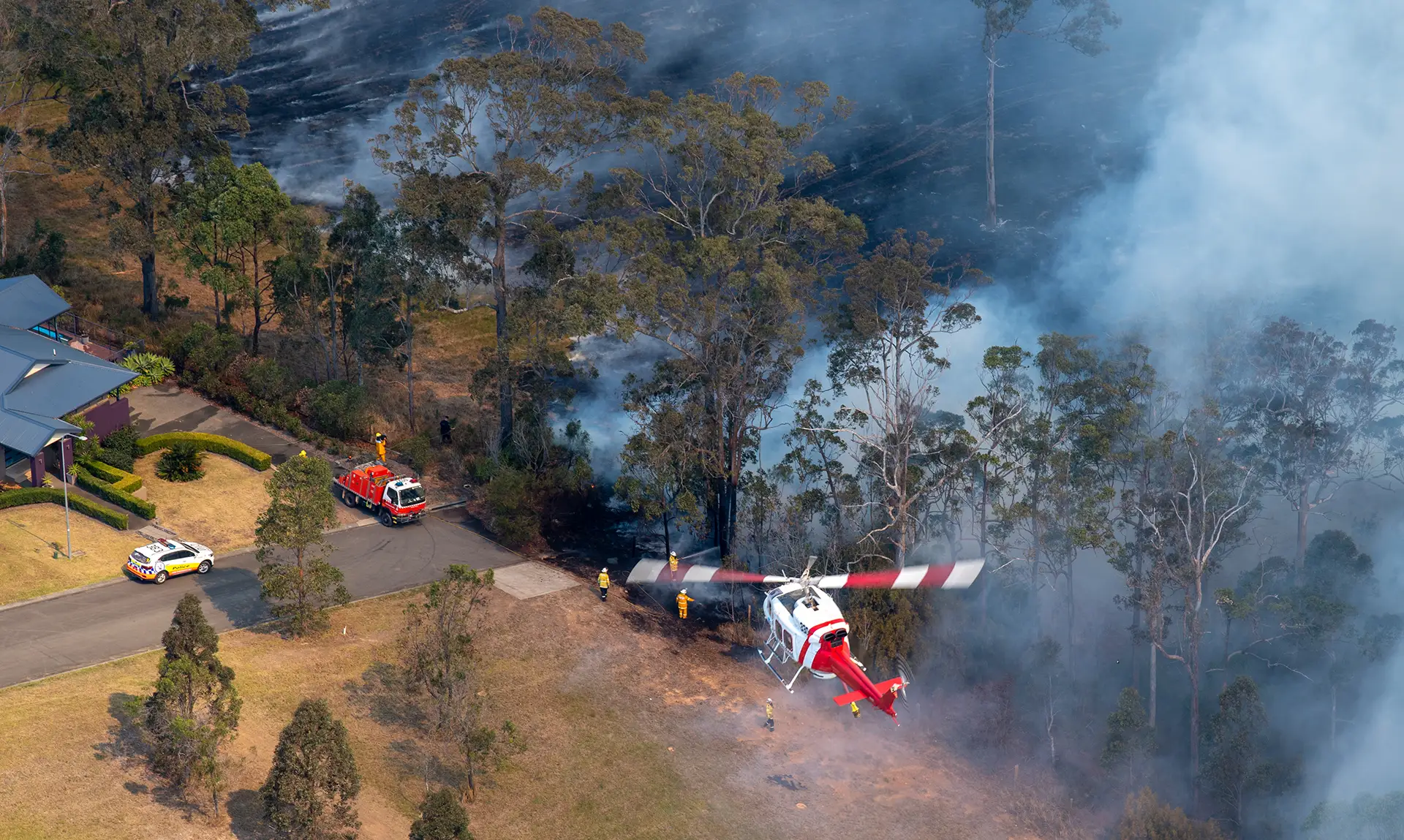
Secondly, and pretty obviously, you can fly a Jet Ranger or A-Star into locations that will not fit a Chinook or Skycrane. It's
not just a factor of physical size but also of the severity of the downwash generated by the larger machines. As an ex-Chinook pilot,
I was always very aware of the impact my near hurricane-force downwash had on my surroundings. On one occasion, while completing a
craning task in the Falkland Islands, my downwash got underneath some wooden pallets fixed to the grass as ersatz walkways. As the
pallets 'peeled' off the ground, I watched in horror as one was blown into a member of our ground support team - hitting her in the
head. Luckily, following our standing Health and Safety regulations, she was wearing a helmet and suffered only a mild
concussion. Another time, as I was just lowering the aircraft onto the ground at a small airport, my downwash caught the wing of a
light aircraft and spun it around. Heavy helicopter downwash can be deceptively powerful. On the fire ground, there is the
chance of fanning the flames (I've done that too, inadvertently, but that's a story best told over a beer...) and blowing debris into ground
personnel. Away from the scene of fire, perhaps while reloading with water, the risk to property and people not immediately threatened
needs to be considered. Size does help, however, with access to water sources. Smaller helicopters may well be able to use
private pools, small lakes and water courses that a Chinook or Black Hawk would struggle to exploit due to the proximity of trees, buildings
and other obstructions.
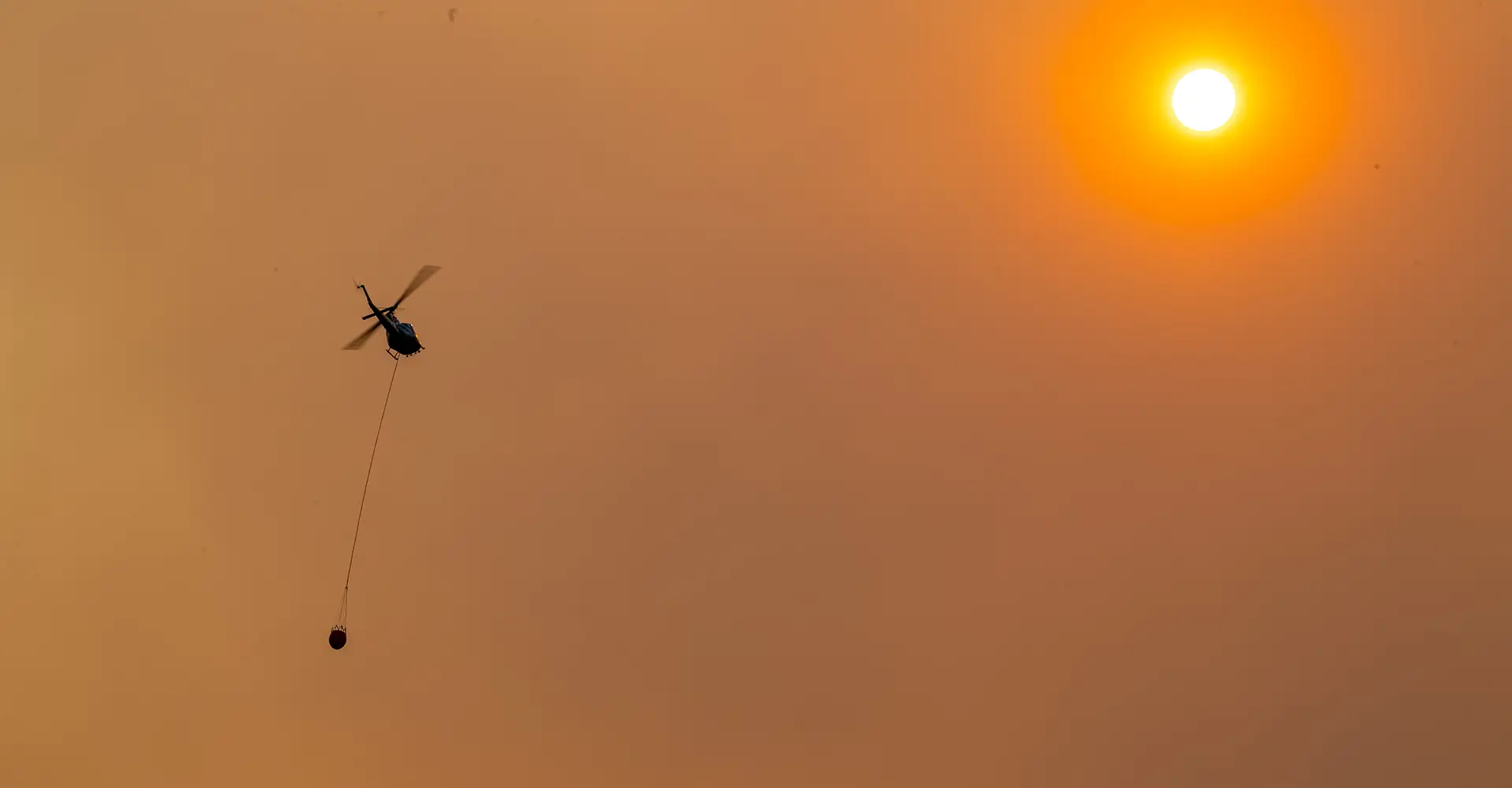
Smaller aircraft may also be able to access areas near the point of ignition and, therefore, knock down the fire early - in effect,
'heli-sniping' the fire rather than deluging it with a mass of water from multiple platforms. The sheer number of smaller aircraft
could play a role here, with a more 'local' MD500, for example, being able to affect a fire before a less common Black Hawk or Chinook could
be launched or transit to the scene. The numbers game with any fire is to detect and, if possible, knock it down quickly to prevent it
from growing into a more major conflagration. If it cannot be doused completely, the value of an air asset, particularly in remote and
hard-to-access areas, is the ability to ideally contain the fire or limit its spread until ground units can reach it in sufficient
numbers. As is often the case, 'a Battalion today is worth more than a Brigade tomorrow'.
But…
However, many are sceptical about the actual utility of light helicopters in the air attack role.
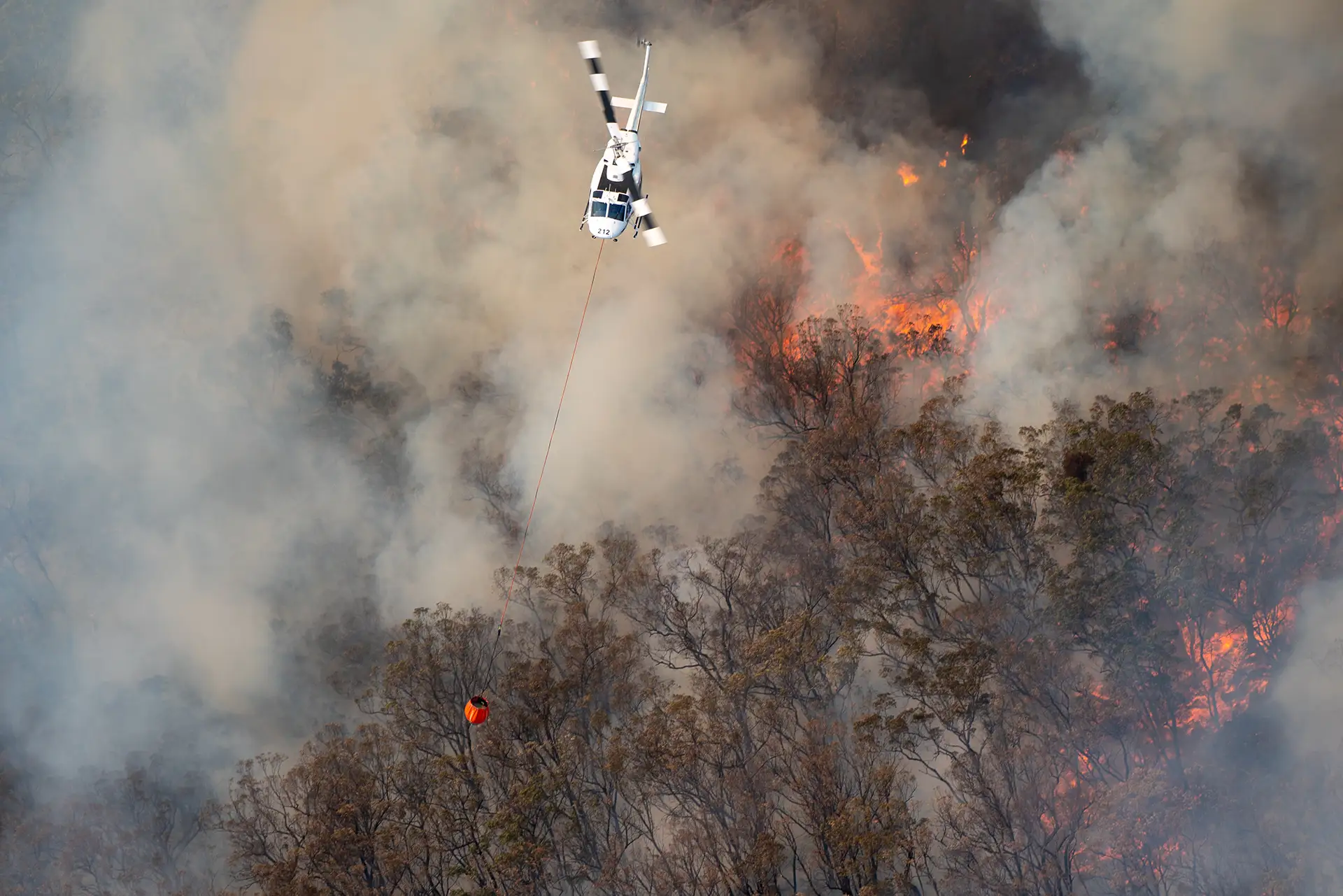
The relatively small volume of water that a light helicopter can drop on a fire is the main criticism. For example, an AS350 A-Star has a sling load capacity of just over 1000kg, while a CH-47 can carry almost twelve times that - on the centre hook alone. On a 'bucket by bucket basis’, the bigger machine will deploy significantly more water on a single pass. Operators of the larger hardware will often cynically refer to a small bucket-carrying helicopter as ‘CNN Droppers', invariably observed in the background working hard and dropping water during a TV news report. They contend that the drops often have little real impact on the fire and are, instead, mainly intended to reassure the public that the authorities are working as hard as possible and deploying all the assets at their disposal to fight the fire. Smaller helicopters have less percentage of disposable payload to mass, and therefore, even the 1000Kg+ sling load capability of the A-Star can be rapidly eroded by fuel and crew, especially in hot and high locations (e.g. the mountains of California in Summer...). Larger rotorcraft tend to have better ratios, so their disposable payload is often not as severely impacted by having to conduct operations at range or high in the mountains.
And that's before you consider the method of water delivery.
There is no escaping the fact that most light helicopters on the fire ground employ buckets. Regular readers may recall a 'bucket vs
tanks' article I drafted in a recent issue, where I used data obtained by Sikorsky to look at the advantages and disadvantages of a bucket
system over a more integrated tank system, such as those available from Helitak. While the company does produce fixed tanks for the
smaller end of the market, such as the A350 and Bell 407, the true advantage of the parasitic weight vs drag argument of the tanks really
starts to show at the medium (Black Hawk / EC235) and Heavy (Chinook) end of the market. The bucket will always win 'points' for its
simplicity, both in installation and operation - and for a small organisation that may need to rapidly re-role their aircraft between
revenue-earning sorties and keep pilot training and maintenance overheads to a minimum, the cost savings can be appreciable. However,
the bucket does provide a significant speed disadvantage, both to and especially from the drop site (full buckets, being heavier, tend to
have less of a trail angle, enabling a higher speed). Sikorsky's study looked at the 'water cycle' times between a bucket and tank.
It concluded that for an operator that used the Black Hawk purely in the Air Attack role, a conformal or concertina tank was a better
option - and that advantage only increased with the range between the water source and the scene of fire.
However, at the smaller end of the market, especially for single-engined machines or those twins with only marginal One Engine Inoperative
(OEI) performance, the bucket also provides a greater margin for safety. Most installations can be jettisoned in the event of a power
loss or will hit the ground comfortably before the aircraft while a tank rides the airframe down to the ground.
Rise of the Drone
In many situations, a light helicopter with a simple bucket can be gainfully employed on the fire ground, deploying its modest payload to good effect - especially if they are there before the 'big boys' arrive. The future is, perhaps, less certain. Several companies are now deep into the development cycle of Unmanned Air Vehicles (UAVs), which, they claim, will enable a more rapid initial attack than even a locally based helicopter. The concepts range from 'drones in a box' positioned in the areas of most likely ignition points and cued to launch 24/7 by lightning strike data or thermal cameras through several Optionally Manned versions of production helicopters. The viability of remote and autonomous operations of aircraft up to the size of the Black Hawk has already been successfully trialled. Removing the pilot from an aircraft at the lighter end of the scale offers an appreciable increase in performance and more disposable payload. Multiple 'Drones in a Box' can be monitored by a single operator at a location far removed from the fire ground - and that operator may not need to be a qualified, certified or current helicopter pilot. It's a role that could be filled by 'time-expired' or medically downgraded aviators, enabling their expertise to be retained past a point where they are grounded and look for work in other sectors. It's inevitable that the 24/7 availability of unmanned systems, allied to lower DOCs and acquisition costs, will take a sizeable chunk out of the Air Attack market - and likely disproportionately so at the smaller and lighter end.
Until that point, the utility and ubiquity of a small helicopter accurately dropping its 'thimble of water' on the fire ground will remain a credible asset to the USFS and other large organisations in the US and around the globe. However, the inexorable rise of firefighting drones and the increasing availability of large ex-military platforms such as the Black Hawk and Chinook, especially as their operating costs moderate as fleet sizes grow and support arrangements bed in, will inevitably put pressure on those platforms with more modest payloads. The cheap, available and accurate 'heli snipers' may well have a role for several years yet.