 HOME
HOME




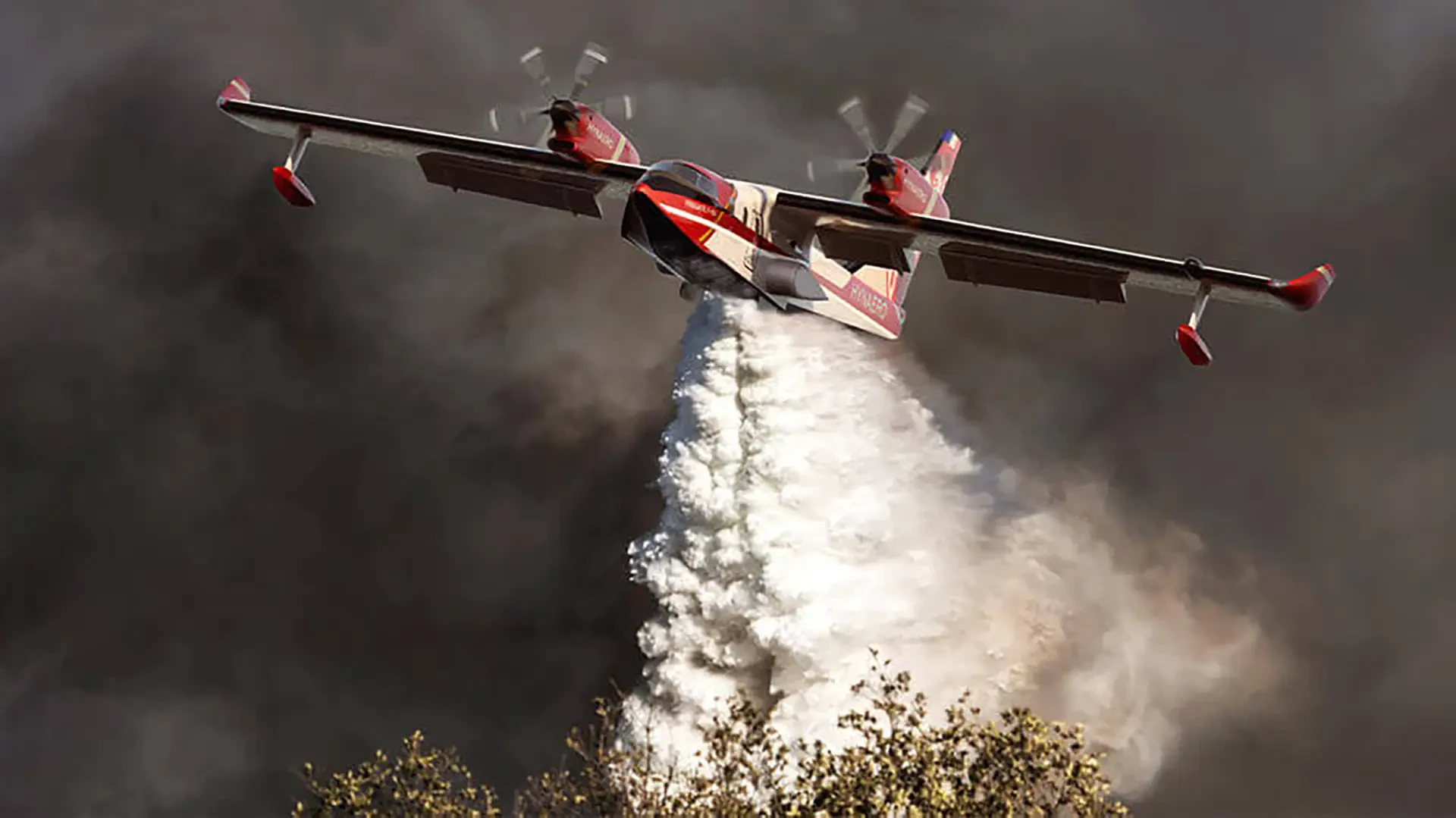
Dick Downs explores where the industry goes in replacing the specialist CL-415. The -515 is not the only answer, and Dick examines the FF72.
Iconic, adjective – “widely known and acknowledged especially for distinctive excellence”. For sports car aficionados, it must be the Porsche 911, often imitated, never replaced. The design has evolved, some say at a glacial pace, to maintain its position as the de facto choice as the pinnacle of its class. In researching this piece, that’s what came to mind when considering the Canadair CL-415, the de facto large amphibious water bomber. Its single-minded purpose in design is obvious, and its evolution from the CL-215 reflects that of the iconic German car. So, what do you do when it’s time to upgrade?
”There is no substitute” Evolved, Re-Imagined or Re-invented?
Some specialised aircraft, like certain sports cars, are so good at what they do that they enjoy long service lives, often resisting attempts to replace them. A ‘rightness’ of design makes them indispensable, with only incremental development needed to keep them relevant. However, as core technologies in the original design become outdated, even ‘benchmark’ aircraft reach the end of their lives, but, if you’re going to replace one, you really need to understand what made it special in the first place and where the (inevitably cost-driven, in this day and age) ‘sweet spot’ lies…..
From an aeronautical perspective, there’s nothing quite like a ‘purpose-design’ - an aircraft with a narrow remit, every aspect of its design bent towards a single mission. We revere aircraft like the A-10 for its battle damage resistance and heavy firepower, and the F-22 for its stealth and agility, characteristics that make both masters of their domains. Historically, the list of such aircraft is long, although mainly in the military domain, where the largesse required for the implied much larger combat fleet resides. Nowadays, cost constraints have driven the replacement of multiple specialised types by a single platform fulfilling multiple missions; one large production run of a single type is much less costly than multiple short runs of different aircraft. If we can squeeze ‘enough’ capability from the multi-role platform and be careful as to what ‘enough’ really means, then we can be successful, to a point. The resultant so-called “jack of all trades”, which, as a phrase, usually comes with “master of none”, can sometimes mean a (sometimes high) proportion of overall operational capability sacrificed on the altar of cost efficiency. The key to success, I believe, is not being too greedy with the boundaries of ‘multi-role’. The basic platform should have core capability in the first place; putting missiles on an airliner, a fighter does not make! I’ll get back to this point later.
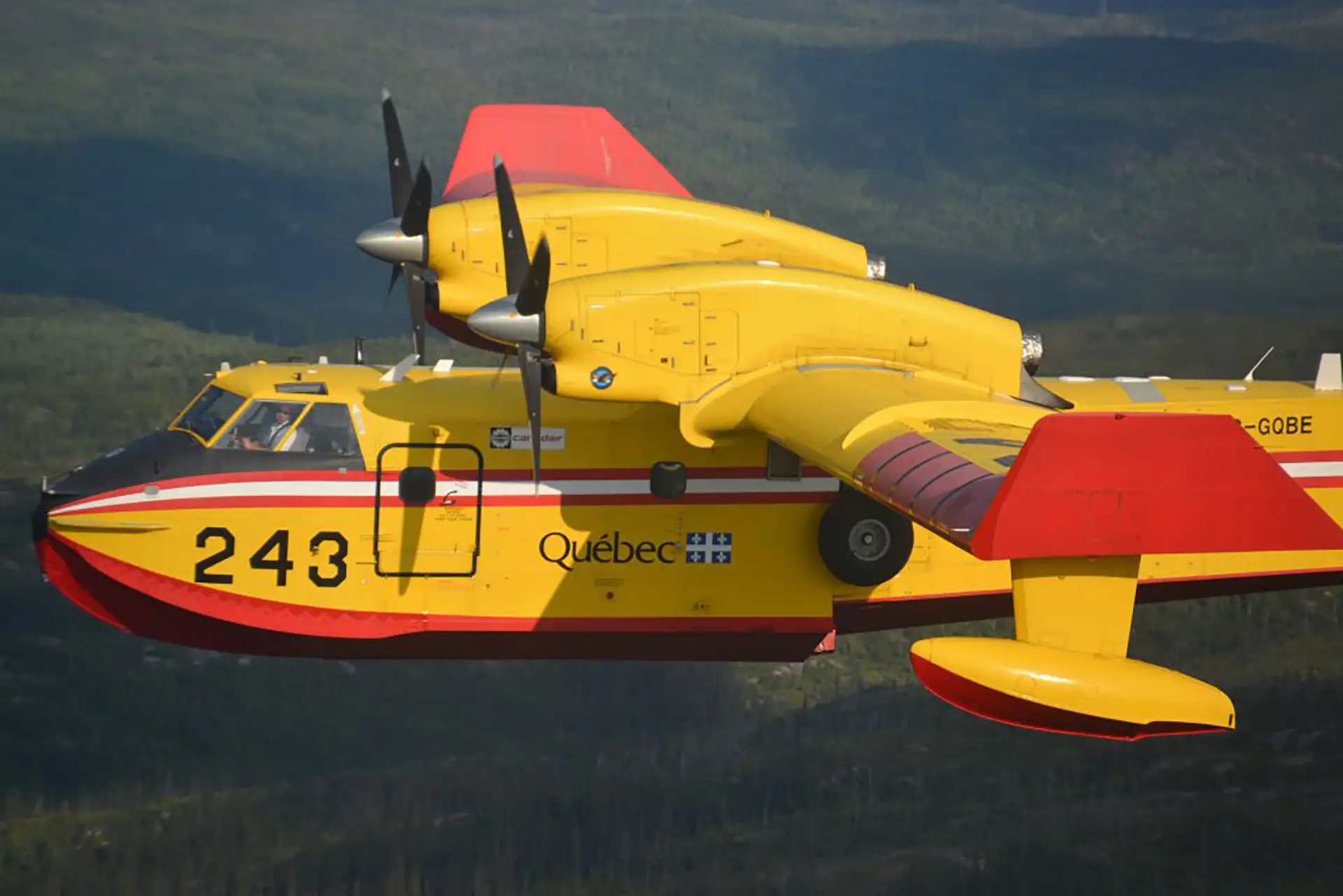
Back to our narrow remit, the civilian side of the house has its analogues; aircraft designs driven by a highly specific set of requirements and driven by a critical role. A notable example is the Canadair CL-415/Bombardier 415 water bomber, which for many years, has been the default choice for a large water bomber.
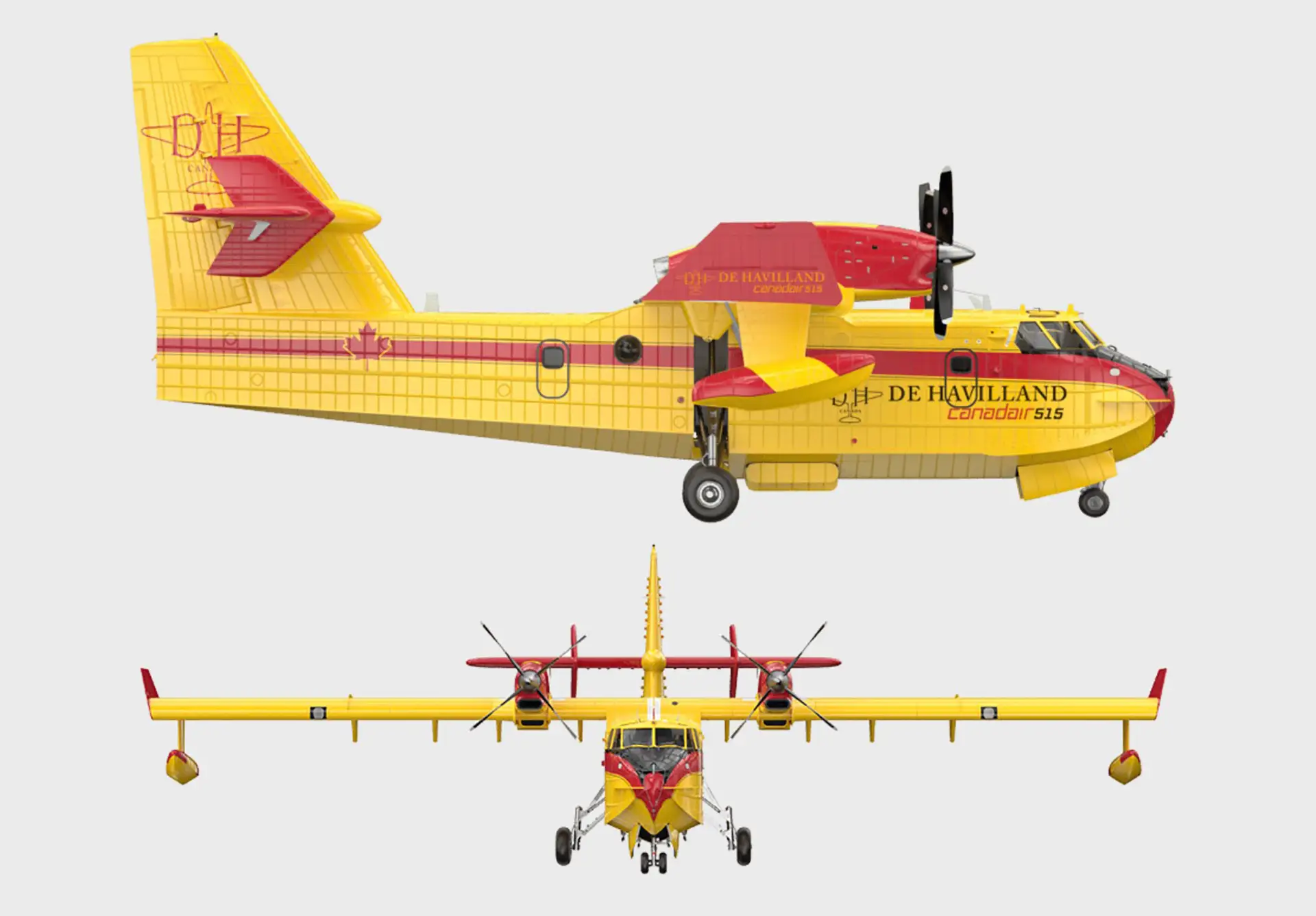
Evolved from the Canadair CL-215, the CL-415 is a twin-turboprop amphibian, able to gather a full water load in a reported 12 seconds via two (amazingly small) scoops, facilitating a fast cycle of collection/drop, even with relatively shallow constrained available stretches of water. In considering the demands of this mission, and distilling into a set of notional core technical requirements for a successor, the resulting list would be extremely challenging, from aero performance/Handling Qualities (HQ) (slow/manoeuvre) to mission performance (payload, time-on-station, airfield performance), structural (transmitted loads, weight and balance changes) to configuration/avionic systems (transparencies/visibility, navigation/terrain avoidance). That the CL-415 fulfils all of these requirements is testament to its success; however, many of its distinguishing features are an inevitable design trade-off, which brings limitations. For example, a key characteristic is its high-mounted straight wing - festooned with winglets, fences and outboard floats and featuring a large area, moderate aspect ratio, with a high thickness to chord (t/c) ratio. With top-mounted engines, the combination provides for structural strength, excellent low-speed manoeuvrability and gentle stall behaviour. For precise water bombing at ultra-low-level in rough terrain, these are surely Key User Requirements (KURs)?
Drawbacks to the Current Design?
So what are the drawbacks? The wing is less efficient (more drag) than a similar-span high aspect ratio/thinner wing. Cruise efficiency is significantly affected, and thus, range. The CL-415 wing is starkly different to other turboprops of similar size. These, mostly air transport aircraft, feature a clean, high aspect, thinner wing, bestowing greater cruise efficiency through lower drag, at the expense of inferior low-speed handling and significantly higher stall speed. I’ll come back to this important point (and User Requirements) in the context of the water bombing mission later.
The optimisation of the wing to low-speed manoeuvrability is but one part of the CL-415 design. The hull, including scoop/drop hatch, provides for safe and predictable handling on water (reported to be able to scoop in a turn), and the central drop hatch minimises handling issues when releasing its water load. Add a rugged and corrosion-resistant airframe design, and over 6,000 litre capacity, and you can see why the CL-415 is highly regarded in the role, with reportedly well over 100 aircraft in service, mainly in North America and Europe.
So, what happens when an aircraft like the ‘Super Scooper’ goes out of production, as happened to the then Bombardier 415 in 2015? At the time, cited dwindling orders in a saturated market and a shift of focus at Bombardier (towards their regional jet offerings) was blamed; but that’s when the clock started ticking towards a requirement for fleet renewal, and with no new designs on the table at the time. Today, with wildfires reportedly on the increase worldwide, both in terms of frequency and severity, the need is not just fleet renewal, but also increased aerial firefighting fleet size, so what are the options for replacing and augmenting existing fleets of these highly specialised aircraft?
Evolution?
Arguably, the obvious answer lies with De Havilland Canada (DHC), which provides parts and technical support for the CL-215, CL-215T, CL-415 and CL-415EAF. In addition to keeping the legacy aircraft operating, they are offering the DHC-515 Firefighter, a modernised CL-415, with glass cockpit, Head Up Display (HUD), including terrain awareness/Synthetic Vision, Flight Management System (FMS) and enhanced NAV/COM. In addition, airframe upgrades include a strengthened airframe and anti-corrosion treatment, improved scooping and easier maintenance. The airframe is exactly the same as the -415.
For existing CL-415 operators, the -515 is surely an attractive option, but the same operators will be acutely aware of the drawbacks and issues associated with the design and operation of the CL-415, so may be keen to explore alternatives and/or supplement existing fleets with a different, but operationally synergistic design?
Considering potential issues, and very much with an eye on the evolution of the CL-215-CL-415-DHC-515, we should examine the ‘hard to resolve’ design fundamentals, in this case, exemplified by the less efficient wing. While providing great manoeuvrability, it does limit speed and range; stated cruise speeds for the -515 are 140 kts for Long Range Cruise (LRC), and 180 kts normal cruise. Clearly, these numbers extend initial intervention and drop cycle times, which might be critical to certain scenarios. In Canada, for instance, it’s fair to say there’s usually significant water adjacent to a wildfire, but a lengthy transit from a suitable airfield. In California, however, there might be a significant distance between the fire and a suitable water source, despite a closer suitable base of operations. For firefighting operations, the bottom line is time; time to deploy (cruise speed), time on station (efficiency) and time to deliver water (payload vs replenishment cycle). Depending on the distance between the water source and the fire, the time between drops may be critically extended and overall time on station reduced, especially if the base of operations is also distant.
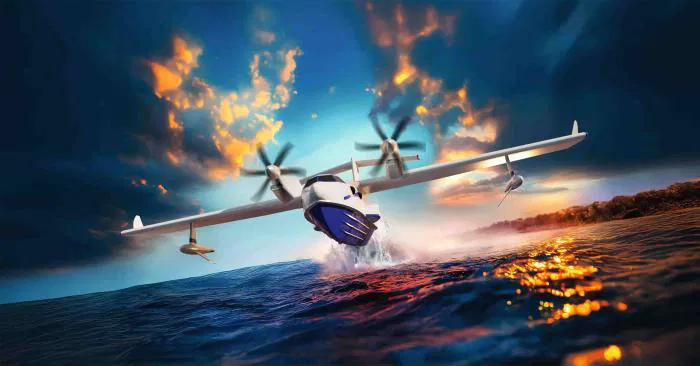
Cruise efficiency is one of many fundamental design trades for an amphibious water bomber where mission-specific solutions generally spawn limitations elsewhere. Other important aspects include structural strength, corrosion resistance, serviceability and (austere) support. Regional operators will undoubtedly have all of the data they need to devise User Requirements (URs) for their particular mission parameters, so there is an opportunity to understand the cost/benefit of addressing shortcomings of the in-service CL-415 and potential for carrying those deficiencies forward in the CL-515.
Before looking at alternatives, it’s important to acknowledge arguably the dominant aspect for commercial aerial firefighting – cost. While governments insist on contracting out these services, the development of new aircraft designs will always be primarily driven by this, no matter the lofty discussions regarding pure performance and technical excellence! For a relatively low production, specialised aircraft, a large aerial firefighter is an expensive beast. Estimates, based on various contracts and published information, suggest a base price of over 34 million USD for a CL-415 in its most developed guise, and over 50 million for a CL-515 when it enters service. As with all fleet acquisitions, associated spares and support can muddy the waters, but these broad estimates should inform any effort to supplant the reigning DHC dynasty…
Likely reflecting perceived opportunity in the market, a search for alternative aerial firefighting platforms in the same class as the Super Scooper reveals quite a few candidates. These include modified air transports and entirely clean-sheet designs. Ultimately, there seems to be more competitors than the current market can sustain, so the stakes are high. Amongst the competing designs, is there a new solution that can fill the (large) boots of the CL-415, whilst improving on deficiencies, and deliver in a more cost-effective package vs. simply buying the new improved version?
Clean-sheet?
There are a few clean-sheet designs being proposed, including the Roadfour Seagle, 19-01 WF-X Waterfall and Hynaero Fregate-F100, all, interestingly, European designs. With no published cost information for any of these, the first question must be “surely expensive?” Of course they will be, likely well in excess of the 50-55 million USD for the CL-515, which gets us straight to the point: Given comparatively low production numbers, what design characteristics would a new design need to be successful? In this respect, the evidence is clear in all three.
Unsurprisingly, given the success of the CL-415, all look strikingly similar to it and to each other; all are monohulls with a straight, high wing and high-mounted turboprop engines. However, closer inspection reveals significantly enhanced mission capability over a CL-515. Notably, all identify the need to get to the fire more quickly, with 250 kt (F100) or more (WF-X claims 320 kt) facilitating faster intervention, and longer range, which allows for fleet rationalisation over wide coverage areas. This cruise efficiency is primarily evidenced by higher aspect ratio wing designs for all, closer to traditional air transport aircraft of the same class, but what of the much-vaunted low speed handling and gentle stall characteristics, are these lost? Well, a little, insomuch as stall speeds are inevitably higher, but all of these feature large area trailing flaps for basic low speed capability and Fly By Wire (FBW), allowing for more carefree handling at the limit; as an Airbus FBW pilot, I can attest to the confidence of being able to stir the stick around at 1.3 Vs (stall speed) that Airbus are partnering with Hynaero is surely a feather in the cap for that program! It’s also worth noting that the WF-X features Boundary Layer Control (BLC) – not a new idea (The Blackburn Buccaneer jet used it to facilitate the necessary low-speed handling for carrier ops), but effective when integrated into the wing design from the outset.
So, the new designs all get to the fire faster; they are all bigger, with longer range and increased payload capacity and drop; the WF-X claims 12T of water in 3 seconds; Seagle also claims a 12T load, with the F100 at 10T. In determining whether the increased purchase price over a CL-515 (assuming an operator can wait until the 2030-31 timeframe for these new designs), the rate of water delivery vs. legacy can easily be calculated for a typical scenario. While this metric is likely to be considered directly with cost at a first pass (no pun), other design characteristics, including rough water/high sea performance and enhanced maintenance, will have a direct effect on the operational bottom line. Other design features touted by these companies in their respective presentations might be viewed as window dressing, including the seemingly inevitable unmanned/teaming and AI capabilities (no information as to how this might be achieved where a wild fire really doesn’t care about airspace regulation) and ‘night vision’ (as opposed to clearly useful augmented/virtual displays) where I’m not sure the automatic gain circuitry would be helpful as I close to a large fire in clouds of smoke….
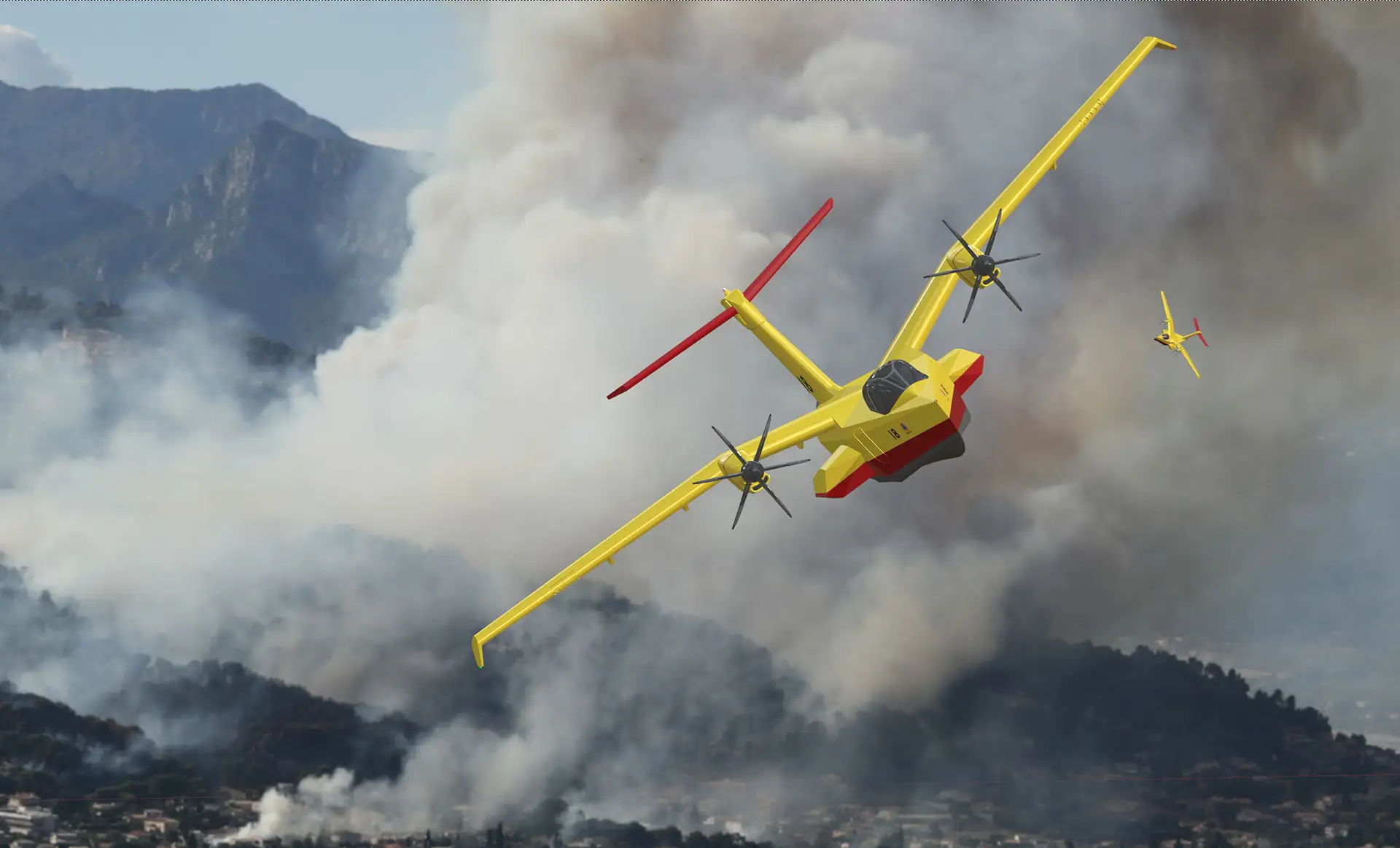
Lastly, most of these new designs acknowledge the need for a larger production run, so they incorporate some level of multi-role ability, including maritime patrol, a clearly close relative in terms of mission, which is interesting for a number of reasons to nations like the UK, where the increased speed/range makes a compelling case for an amphibious MPA.
At mission level, and with pretty clear metrics, if these new designs can put tangible distance between themselves and the baseline CL-425/515, without sacrificing ‘point of drop’ capability, and bring multi-role capability, then they will be able to justify the price. This quick canter through some of the important design areas also serves to illustrate it would be no mean feat to try and modify a standard AT aircraft for amphibious aerial firefighting:
Restomod?
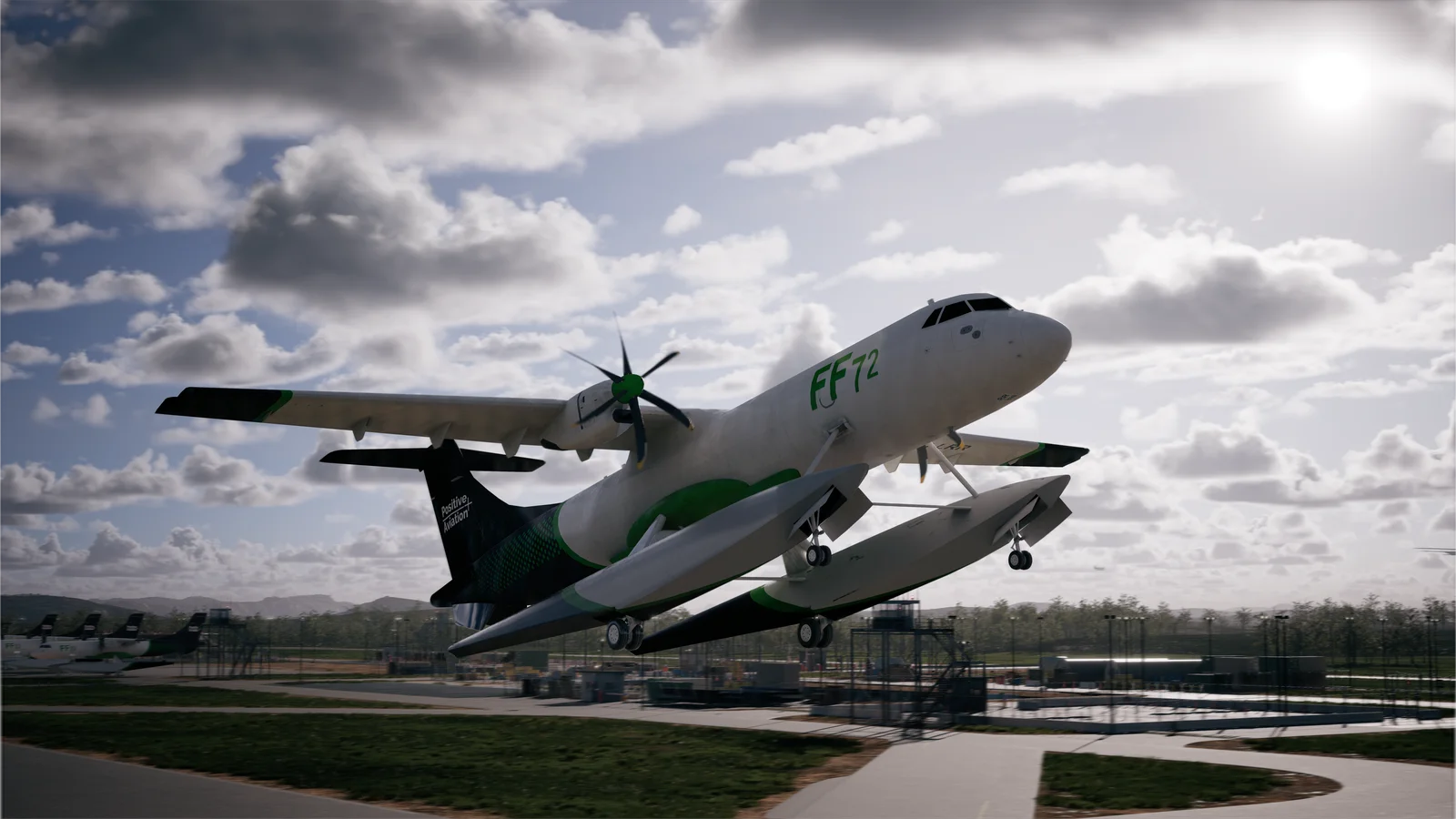
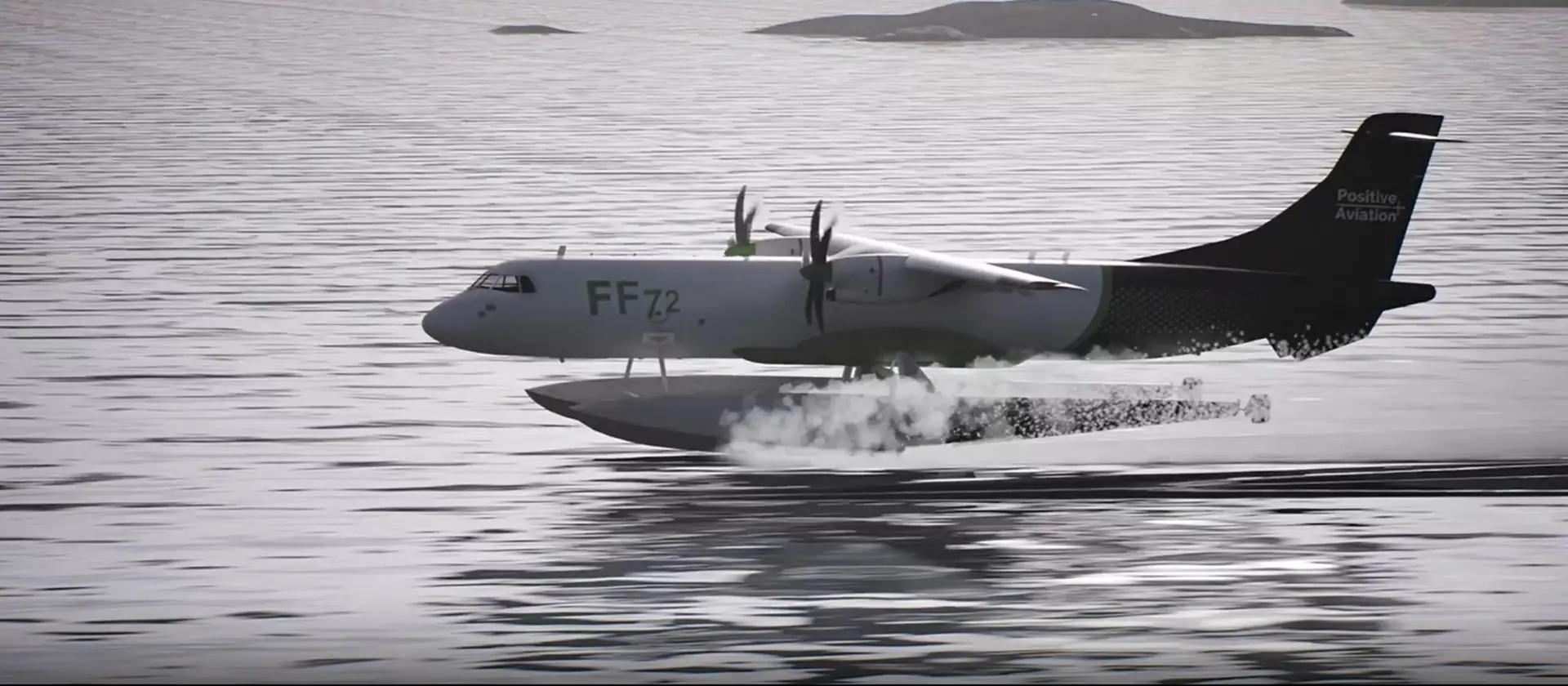
In an effort to reduce acquisition costs, Positive Aviation, another French Company, based in Toulouse Blagnac and partnered with Airbus, has proposed its FF72, based on Airbus’ ATR-72 commuter turboprop. The company is planning its first flight in 2026 and certification by 2028, so the FF72 would potentially beat the clean sheet designs into service by some margin. Positive Aviation has a MoU with US operator Bridger Aerospace, an existing operator of the CL-415, for 10 aircraft plus 10 options. Basing the design on the existing ATR-72 is claimed to bring considerable cost savings, of the order of 50% compared to a clean sheet design. With a basic price for a new ATR-72 estimated around the 30 million USD, that implies a deal of headroom before we get near the price of a clean-sheet competitor, but the performance compromises need to be addressed to assess the cost advantage needed to make this option palatable to operators. The broad numbers are competitive, including range (1,600 nm), cruise speed (260 kt) and payload (8T, drop in 1.2 sec); on the downside, assuming no changes to the wing, the approach speed of 98 kt means low-speed handling quality is per the basic turboprop. Also, with no changes to the Flight Control System, there is no FBW, although the avionics are to be modified for firefighting. The airframe receives ventral strakes and anti-corrosion measures, including the engines.
The issue for me is contending that adding a pair of floats to a turboprop commuter is a relatively insignificant design problem compared to a clean sheet one, resulting in massive cost savings? I’m afraid I can’t buy that in this case, with some experience of adding unreasonable additions to air transport aircraft, I can attest to the almost inevitable Pandora’s Box of interrelated problems which can cascade into a veritable Gothic nightmare of which Fuseli and the Borg Collective would be proud! The basic aircraft, aside from its size and engines, has little to offer in terms of the intended role – it is not amphibious, but is designed for airport operations, and efficient cruise at high level, carrying passengers only. To make it into an amphibian, means a massive aerostructures effort, and thank goodness the OEM is on board for this. Given the illustrated float mounts for the FF-72, and their attachment to the frame, unless the applied tolerances are enormous, I fear the loads/profile may potentially rule out the conversion of used aircraft, which, as far as I am aware, employ usage-based fatigue monitoring only, so baselining may be too difficult?
As for cost? Well I’d certainly agree that the unit cost of the clean sheet designs will be very high, but it should be noted that these designs, by their very nature, will avoid (through good design, hopefully) the conflictions and cascading compliance issues that making a huge modification to an existing aircraft intrinsically difficult – in this respect, I hope Positive Aviation receives all the support Airbus can provide as the OEM to keep Pandora’s Box only partially open! There will be much to play for when defining the Acceptable Means of Compliance (AMC) for the STC vs the baseline CS-25 for the airframe, and Part-SPO (I assume in Europe) operations.
All that said, and noting Bridger Aerospace are on board, if the aircraft can be brought in at 50% of the cost of a clean sheet design and deliver at least 60% of the platform capability, then, and particularly as part of a fleet mix with existing (slower, less payload but more precise) CL-415 aircraft, the mission metrics might be favourable in terms of overall cost/(payload x time), with a larger FF-72 overall fleet size having a positive effect where wild fire frequency and size seems to be increasing.
So, potentially choices for future operations – evolution in the CL-515, a trio of clean sheet designs, or a left-field alternative offering a much lower acquisition cost. It’s good to have choices, but my caveat regarding multi-role stands, I’m afraid, so I’ll just go and get some missiles for my A350 and pick a fight with Maverick.