 HOME
HOME




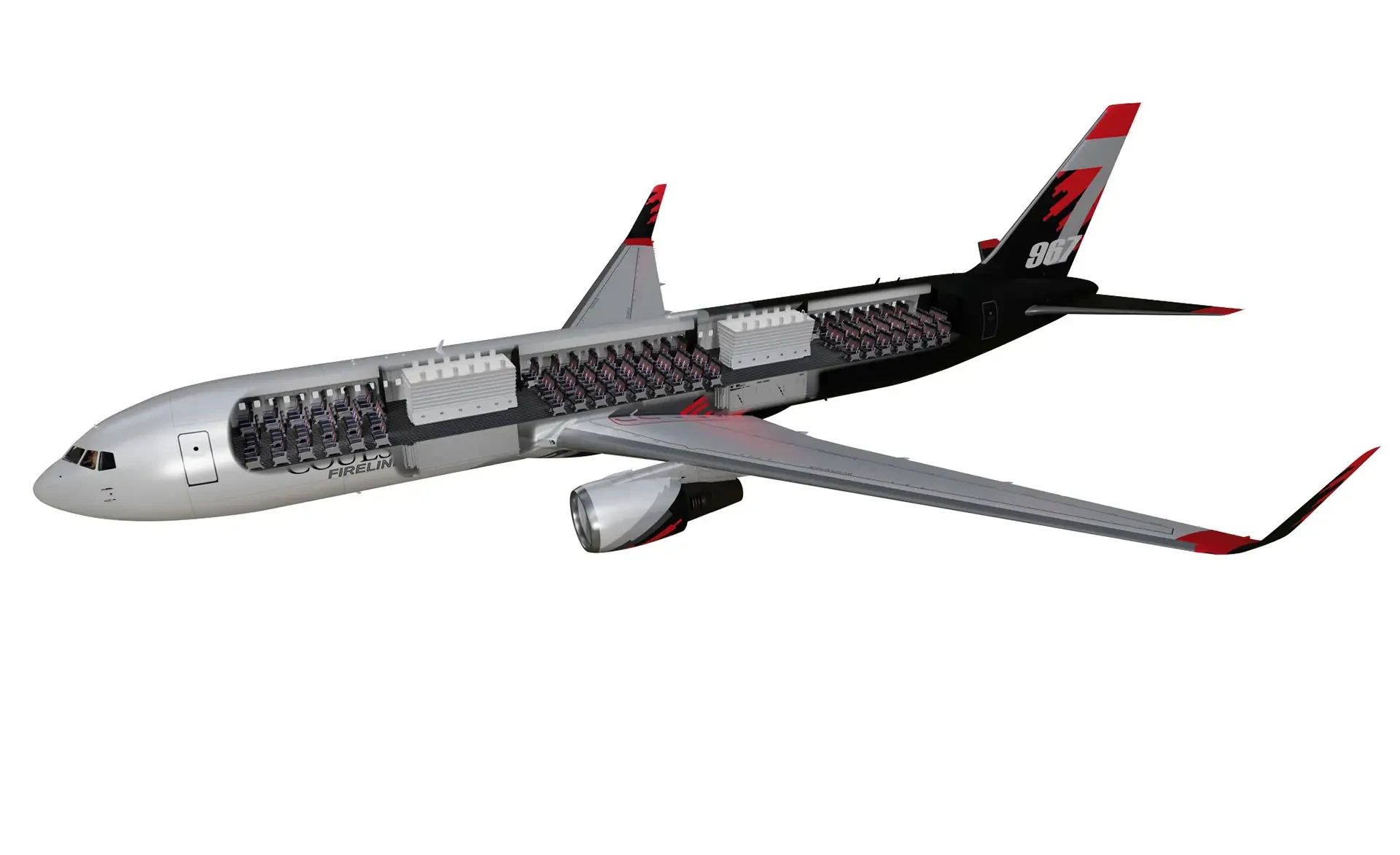
UPS’ announcement of the retirement from service of its fleet of MD-11F freighters, in their end-of-year filings for 2025, also included mention of accelerating the introduction of ‘newer’ types, including the Boeing 767. This raises an interesting parallel for VLAT evolution, given that the situation for 10 Tanker’s still grounded DC-10-30 looks bleak, and Coulson Aviation recently announcing the development of a B767-based aerial tanker.
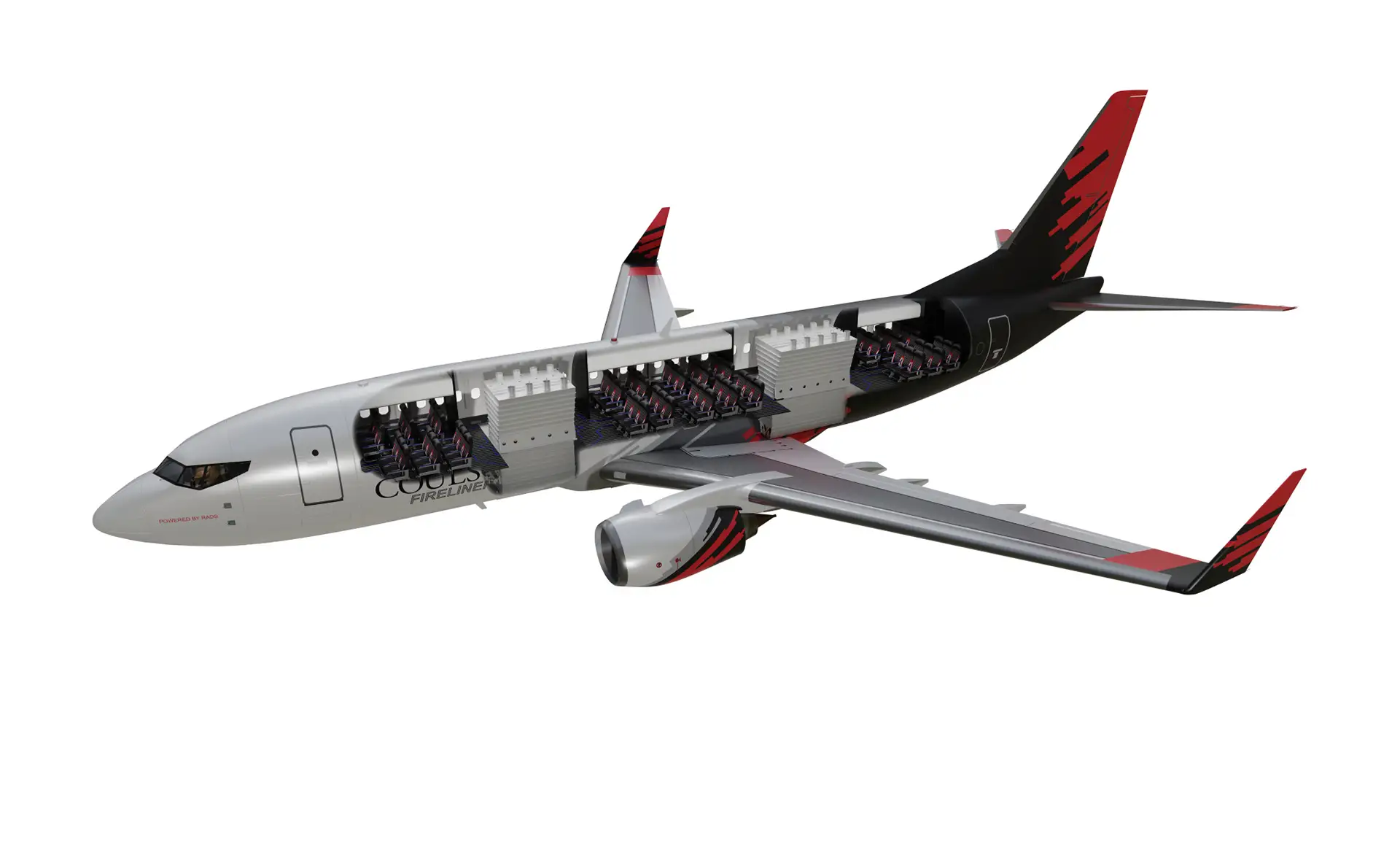
Given their experience with a range of aerial firefighting aircraft, not least their B737-300 based Fireliner, Coulson are well-placed to take the plunge with a significantly bigger aircraft. So what are the challenges? In discussion with Britt Coulson, President and COO of Coulson Aviation, I had the opportunity to get into some of the detail of the project.
New VLAT
Considering the Company’s experience and technical expertise with Boeing aircraft, basing their new VLAT design on the B767, in this case a passenger variant B767, makes a deal of sense. It will certainly provide headroom in addressing the challenges of moving up a weight class. The B767 is a true ‘widebody’, much larger than the B737-300. A few comparisons, the significance of which I’ll explain later, serve to illustrate: The 767 has a Maximum Take Off Weight (MTOW) over two and a half times that of the 737-300, a wingspan over 1.5 times and a wing area well over double the smaller aircraft. Admittedly, the later 737 variants, including Coulson’s newer 737-700-based Fireliner, narrow those margins somewhat, but the ‘big handfuls’ remain – the 767 is a whole different ballgame in terms of size, with the reward of a much larger payload. Coulson’s plan is to scale their Retardant Aerial Delivery System (RADS), as installed in the B737 Fireliner, so, from a design and engineering point of view, the Boeing lineage really matters. This point was reinforced by my first question to Britt regarding the choice of the new airframe. Notwithstanding the core requirement for a large payload, ‘in-service’ (with the freighter variant, also ‘in production’), ‘ubiquitous’ and ‘reliable’ were other considerations for Coulson in choosing the B767. The 767 fulfils all of these, and the large worldwide fleet should somewhat insulate against a similarly drawn-out saga as has seemingly befallen the MD-11F/DC-10-30.
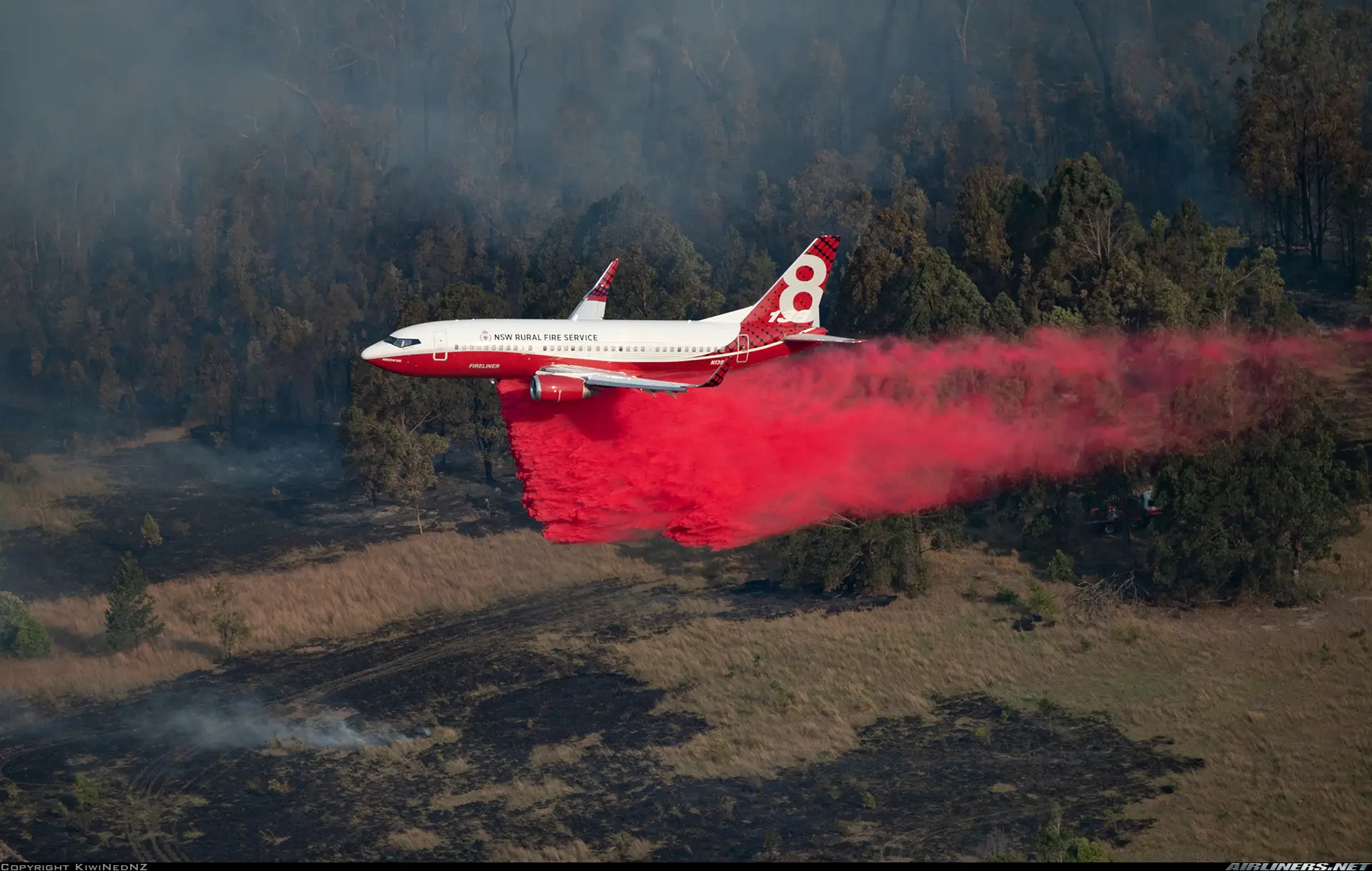
To fully appreciate why the engineering lineage matters in scaling the 737 RADS installation for a 767 application, it’s important to consider the extent of the ‘burning hoops’ a prospective operator needs to jump through to gain operational approval. To achieve this, an operator is required to:
Establish the basis for the required modifications – Airworthiness
In the case of the 737 Fireliner, Coulson have maintained the host B737-300 airworthiness compliance with FAA Part-25 and integrated the RADS under an approved Supplementary Type Certificate (STC) ST04050NY.
Hold an Air Operator’s Certificate (AOC) – Operational Approval
Having established basic airworthiness (and continuing airworthiness process), an operator also requires an Air Operator’s Certificate (AOC), which is ‘fit for purpose’. I say this because, especially in the murky waters of EASA (High Risk) Part-SPO (Specialised Operations), an operator’s operational approval must keep track with, and accurately describe an often rapidly evolving operational implementation. For Coulson Aviation, their well-established AOC includes Part 125, which enables the carriage of passengers, facilitating organic deployment and rotation of firefighting crews to/from often remote locations, an important part of any wildfire deployment and one of the reasons a passenger 737 and 767 were chosen for their Fireliners.
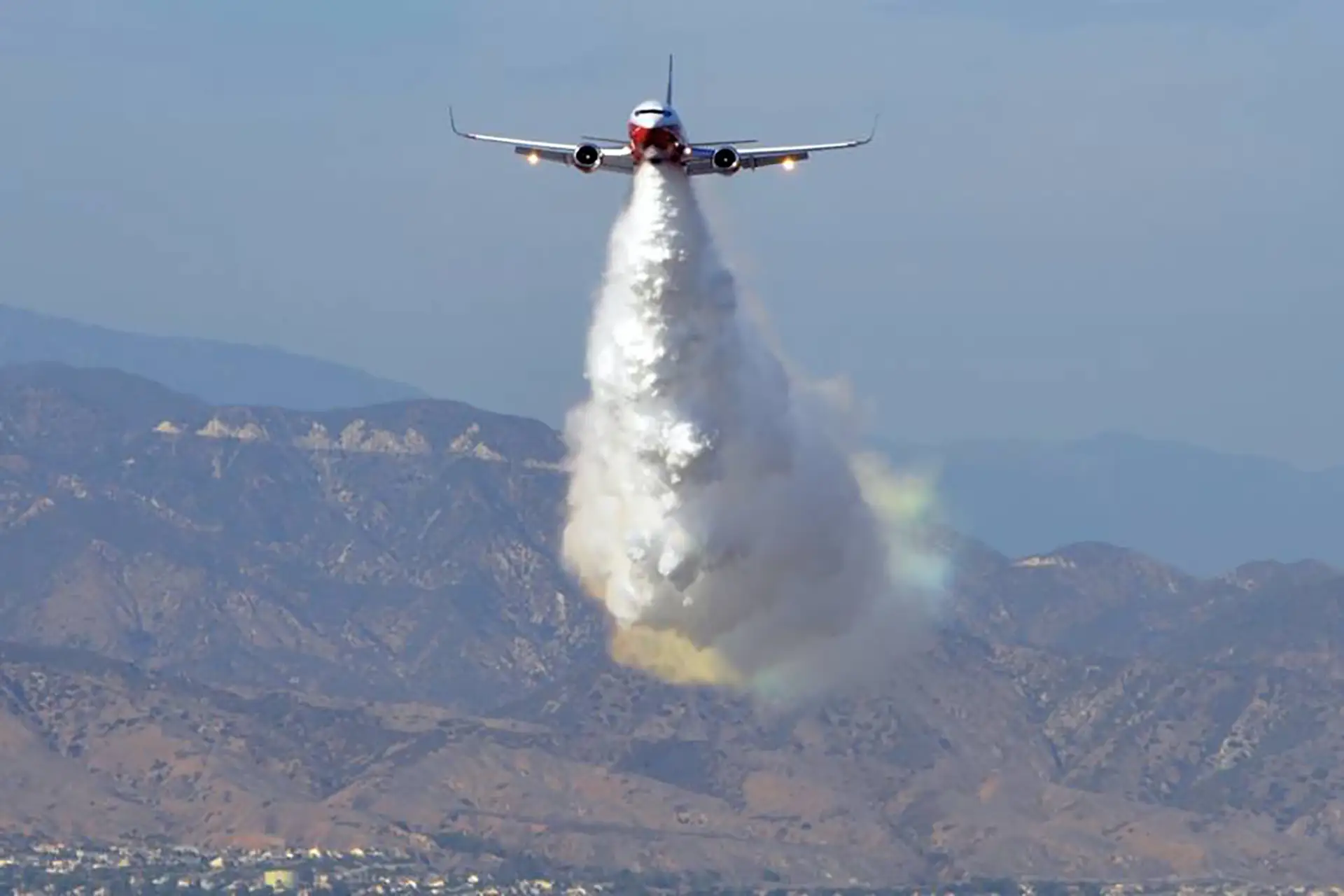
So, two things, airworthiness and operational approval; the former requires detailed design and engineering modifications and the latter an operational (and safety) process with suitably qualified flight and ground crews. Neither of these are a simple undertaking, so anywhere technical risk, which directly feeds into time and money, can be mitigated in establishing a similar capability is critical – enter the Boeing design lineage and Coulson’s engineering and operational experience with Boeing air transports….
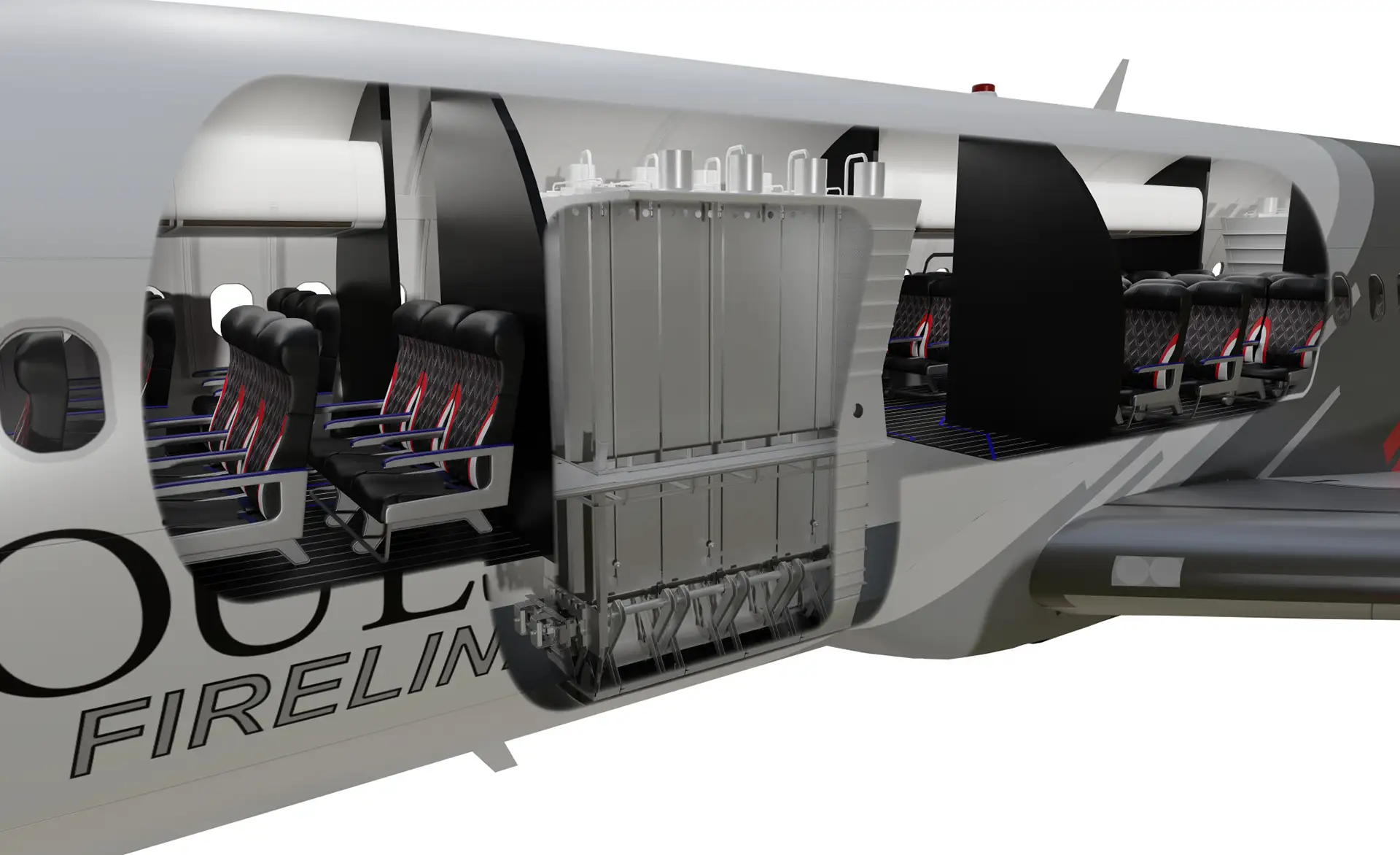
For the 767 RADS design, I asked Coulson about the target payload and tanks configuration. With the design in the early stages, particularly in terms of the overall weight of the scaled RADS installation, the total payload is not yet fully defined, but the Company is aiming for over 12,000 gallons of retardant, which would be comfortably in excess of 10 Tanker’s DC-10-30 (9,400 gallons maximum) and make the 767 Fireliner the largest current VLAT when it reaches service. The retardant payload will be split evenly between two tanks straddling the aircraft Centre of Gravity, (CG) for obvious benefits to aircraft handling during drop and especially in case of emergency jettison. Similarly to the 737 Fireliner, the tanks will take the shape of a stepped V, reflecting the need to deliver a coherent column of retardant, at high pressure under gravity, and alludes to the method of construction, where the tanks, far too large to fit through the aircraft doors, are fabricated inside the fuselage. The tanks will be linked, including drop door actuation, to assure even deployment between them, with powerful hydraulic actuators required to withstand the pressure on those doors. Just consider the total column of retardant, not far off the height of the fuselage section, pushing against the doors, and, with the tanks situated inside the pressure hull, we also need to add the contribution of the aircraft pressurization! This is just one of several engineering challenges the hard-won experience from the 737 RADS design helps to manage; as Coulson pointed out, the aircraft is merely a vehicle to get the required payload to the right point on the ground, in an effective pattern and state to support the firefighters on the ground.
‘Just Rock Up, Fly Like a God and Show that Fire Who’s Boss….’
Or so it might seem to those of us watching the exploits of aerial firefighting on the television. In reality, and as Coulson himself emphasised, there’s a whole lot of science behind ‘showing that fire who’s boss’! From constraining/forming the retardant payload in the tanks via baffles, to the shape and configuration of the drop doors, getting a viable volume of payload, be it notoriously difficult water, or somewhat easier retardant, onto the fire, is more of a challenge than it might seem. Before getting to the fire, the payload must survive the enormous shear as it exits the aircraft to then get into terrain and wind effects close the ground. From an engineering perspective, understanding what happens to the fluid on exit resulting from the forces exerted by the aircraft wake is vital, and affects aperture positioning, size/area and delivery rate. For the Fireliner, much of this detail strays into Coulson’s proprietary data, but he did give me an outline of the need to cut the aircraft keel in the 737, re-routing (significant) load paths, as well as electrics and hydraulics, to achieve an optimized exit for the fluid. The plan is that this approach will be repeated for the 767, but there is still work to be done with respect to optimum release to manage the potentially much larger drop and differing wake conditions. Be under no illusion, this is very, very serious engineering for a large aircraft, especially as the result is to be operated under stringent airworthiness requirements and having the 737 STC to draw on for the 767 is, cost and risk-wise, gold dust!
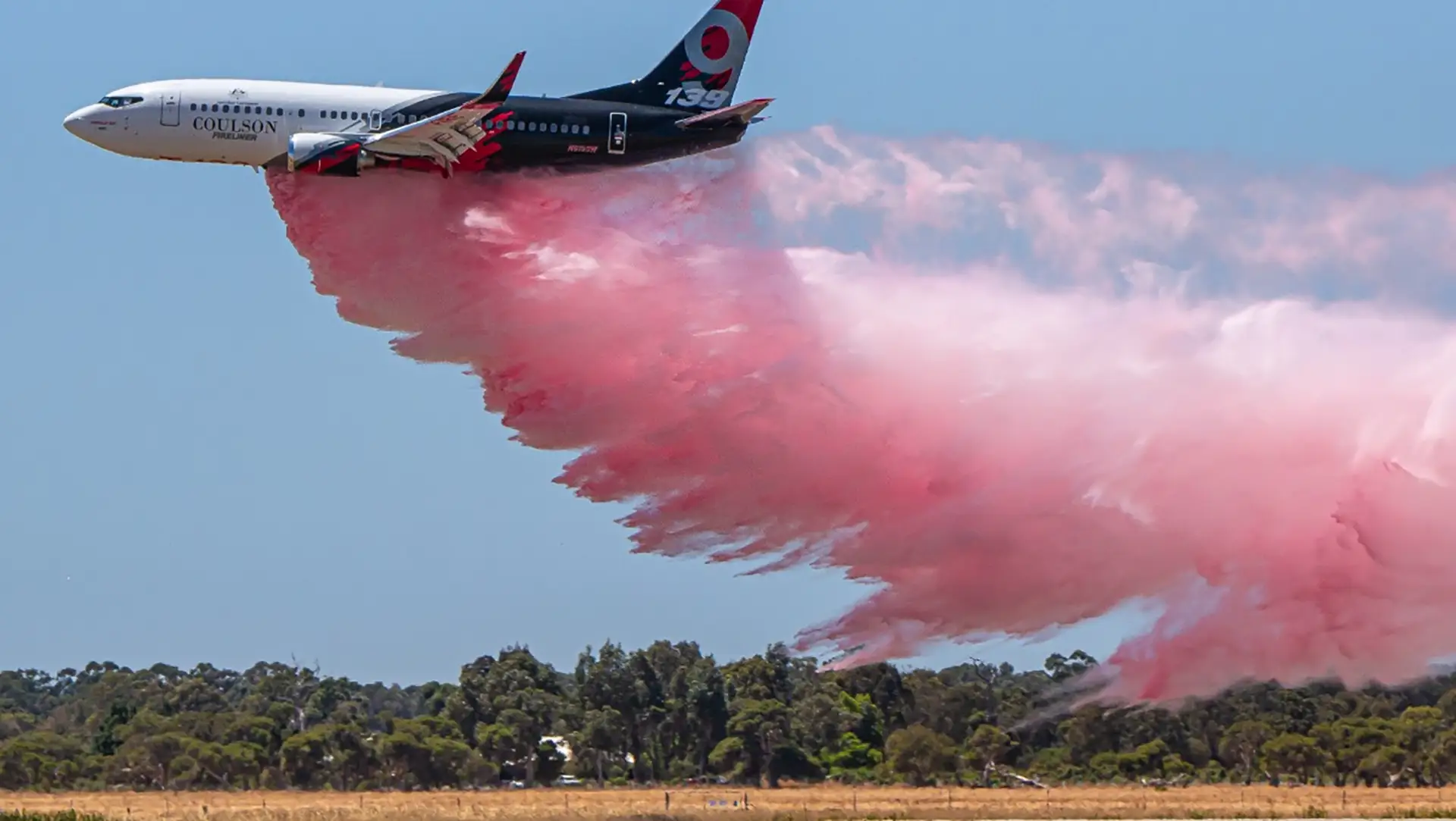
That said, and regarding my previous comments regarding the relative size of the 767 vs the 737, it will come as no surprise that the forces experienced by the fluid as it exits the larger aircraft are even more severe. As I mentioned, a much heavier aircraft, with a much larger wing area, and flying commensurately faster, results in a more hostile environment to the fluid column, so what are the considerations for the new widebody? In answering this question, and endeavoring not to get too much into fluid dynamics (not my forte by any means) there are a number of considerations affecting the optimum delivery of fluid that will influence the new design:
From the ground team’s perspective, they need a defined drop in terms of area (length x width of the ground pattern), with the optimum droplet size to survive the drop and be effective on the fire. A ‘cloud’ of atomized water, with the fluid column literally ripped apart by shear, is of little use in controlling a hot fire! Since there’s not a great deal that can be done to radically slow a jet aircraft, where accuracy/low level delivery is required, this is where helicopters can be more successful, although the lack of horizontal shear is just replaced by adverse rotor downwash; there is literally no ‘easy win’ to be had anywhere in aerial delivery. In this respect, and reflected by current delivery mechanisms and operational profiles, properly understanding aircraft shear, and terrain interaction, is key to an effective drop. Clearly, separating these effects is important, ensuring the aircraft effects have stabilized before encountering the terrain layer, which informs minimum release height.
So, what about aircraft shear? When I look at my air transport flight plan at the start of the day, it is annotated with shear values for each waypoint along my route, expressed as windspeed change in knots per thousand feet. This indicates a likelihood we might encounter turbulence at those points, although this is by no means certain. If I see a scale of 1-2, no big deal, 5-6 potentially seat belts, over 10, and pre-emptive sitting down of passengers and crew is wise. 5-6 can result in light turbulence, and higher numbers pushing into moderate and possibly severe turbulence. So, that’s something over 10 knots speed change across 1,000 ft altitude change. For comparison, consider a 767 VLAT, flying at, say, 1.3 times its stall speed (1.3VS), about 165 KIAS for a gear-up/mid flap configuration. The fluid exits at a relative speed (to the aircraft) of zero, vertical speed dependent on exit velocity, and then decelerates as it approaches the ground. By dimension, assuming a drop height of 500 ft, and assuming the fluid achieves a purely vertical path, this is -165 kts over 500 ft, so a shear scale of 330 – the water droplets in the fluid column definitely need seat belts!
Relative to a 737, which would be dropping at, say, 135 knots, that’s a lot faster; add in a very turbulent widebody wake with rotating vortices and severe shear rates (the reason we have increased lateral separation limits following wide body aircraft - you may have seen videos of wake turbulence testing, with light aircraft literally flipped over when following), and the environment is even more challenging. Getting a robust column of fluid out and away from the aircraft needs some careful engineering then, but what can the engineers control?
That part includes control of the flow and exit geometry/speed from the aircraft. Droplet size is important, since large droplets would be shredded by rapid shear. Making droplets smaller, enabling them to retain surface tension and thus integrity during airflow change during the initial drop, is therefore a vital aspect of the design. If these smaller droplets are part of a large, well-defined relatively tight volume of fluid resulting from a rapid outflow (note, this is a controlled flow, not a massive ‘blob’, see my previous re drop aperture and pressure at the drop doors), then we are doing our best to minimise the undesirable shear effects, from a firefighter’s POV, with initial high vertical velocity (the ‘gravity push’) helping to minimise wake effects.
Admittedly, this is a greatly simplified description of a very complex mechanism, but it’s still only half of the story. The next bit leans heavily on how the V/LAT is operated, and the difference between the 737 and 767 may be significant. Before moving on to the next phase, it’s worth mentioning that, so far, I’ve just referred to ‘the fluid’ – in terms of delivery from large jet aircraft, pure water is very much worst-case in terms of vulnerability to shear. The employment of additives or dropping purpose made retardant results in a much more resilient delivery in terms of break-up resistance and a tighter pattern resulting from higher viscosity. Add the modus operandi of VLATs as the heavy-hitters, corralling large-scale fires, then it is most likely that they will deliver retardant.
Retardant Column
So, having cleared the aircraft, the retardant column, hopefully dropped in smooth air and still intact in terms of droplets and in a tight formation, is now faced with getting onto the target. Setting aside the actual issue of aiming in the presence of wind, the retardant needs to transit the next area of shear, induced by the terrain, which has a significant effect on the geometry of the final pattern over the ground. This also includes fire plume effects, which amplifies shear at the temperature boundary. Intuitively, dropping over smooth terrain featuring a compliant boundary layer with little convection, no terrain rotors and away from the plume edges, must be the most benign condition, however unlikely that may be in the real world. As we introduce more disruptive factors into a drop, particularly terrain effects, then the vertical shear structure becomes more important, including height above terrain and dispersion effects on the fluid volume, and the need to ensure the aircraft shear and terrain shear zones do not interact becomes critical to ensuring an effective drop. These terrain considerations, in fairness, are well known to experienced operators, so the main piece of the 767 Fireliner puzzle will be tuning the release. I expect it will be higher in all cases, so there will be some adjustment required by crews used to flying the 737.
Big Aircraft Challenges
This neatly brings to the operational aspects of operating a significantly larger aircraft and the realities of ‘nailing’ the required parameters to make an effective pass. Part of these leans on choice of platform and the associated flightdeck, where Coulson described the effort required to integrate VLAT functionality into the flightdeck, including emergency dump (of the payload) without interfering with the extant certification and approvals. Again, lessons from the 737 Fireliner will be applied to the 767, but the result will still be ‘light touch’.
On a related point, my discussion with Coulson did touch on Airbus types which he did consider, but rejected, not just for the massive advantage of the Boeing lineage between 737 and 767 but also for Airbus’ integrated Fly-By-Wire/Flight Control System (FBW/FCS), which provides ultimate flight envelope protections, at the expense of pilots being able to ‘pull through’ in cases of extreme manoeuvre requirement. Having written previously about the challenges of operating a very large aircraft as a de facto low-level ground attack jet, I do have some thoughts on flight control and situational awareness, but I’ll leave that for another piece!
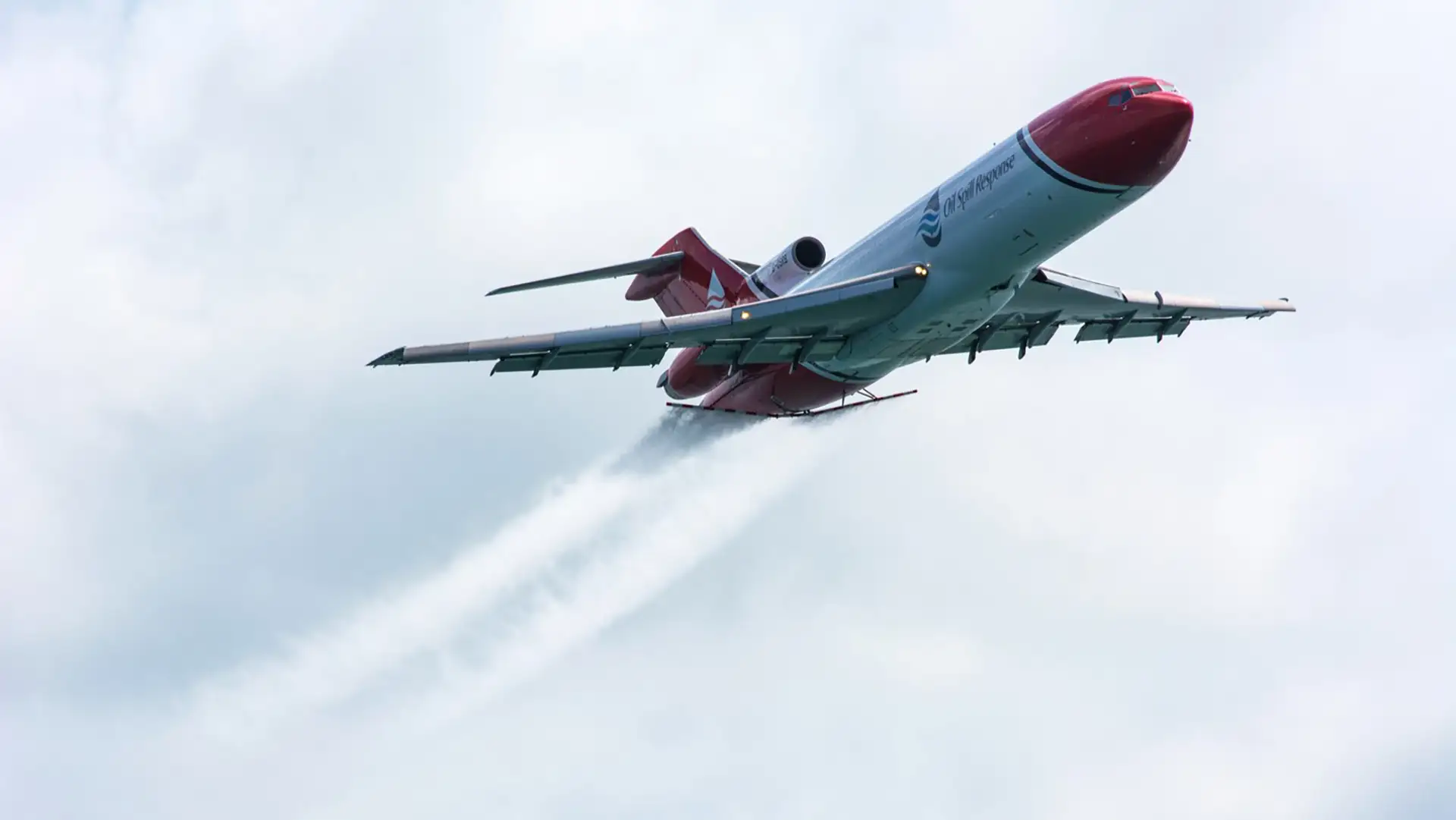
Coulson and his team are bringing a significant uplift in capability to aerial firefighting operations, especially in the face of the threat to 10 Tanker’s fleet, with the 767 Fireliner representing a considerable investment, so my final question centered on something I mentioned in a previous piece in Air Attack with regard to maximizing investment in these large aircraft. Then, I postulated on the similarities between aerial tanker operations and oil spill spray operations, with similar aircraft installation and operation. Wildfire Operations, by hemisphere, tend to be predictable, where oil spill is not – oil spill jets, like 2Excel Aviation’s B727-200F aircraft sit for very long periods ‘on call’, so surely there must be room for dual use, providing a back-up/surge capability?
Good Oil
Unsurprisingly, Coulson had already thought of this; indeed, he described having provided both Oil Spill Response Limited (OSRL) and Marine Spill Response Corporation (MSRC) with a robust proposal, including an engineering solution for tanks/pumps, spray boom and nozzles, but neither seemed interested, preferring it seems to have dedicated assets burning money on the ground.
With a veneer of experience of implementing a dedicated oil spill spray platform, I can attest to drawbacks of this approach, not least aircraft serviceability and crew currency/recency, so I must admit to being perplexed as to why OSRL/MSRC seem not to be interested. Multiple delivery platforms they could call on to bolster what in reality is not much better than a token dedicated fleet, especially if we consider the increased threat from the thousand plus ‘Shadow Fleet’ of tankers carrying Russian oil and the conflict in the Persian Gulf is surely appealing and well within the budgets of Oil Companies? The potential for a mutually beneficial increased total fleet size to counter these increasing threats on both sides of the house does really seem a ‘no brainer’!