 HOME
HOME




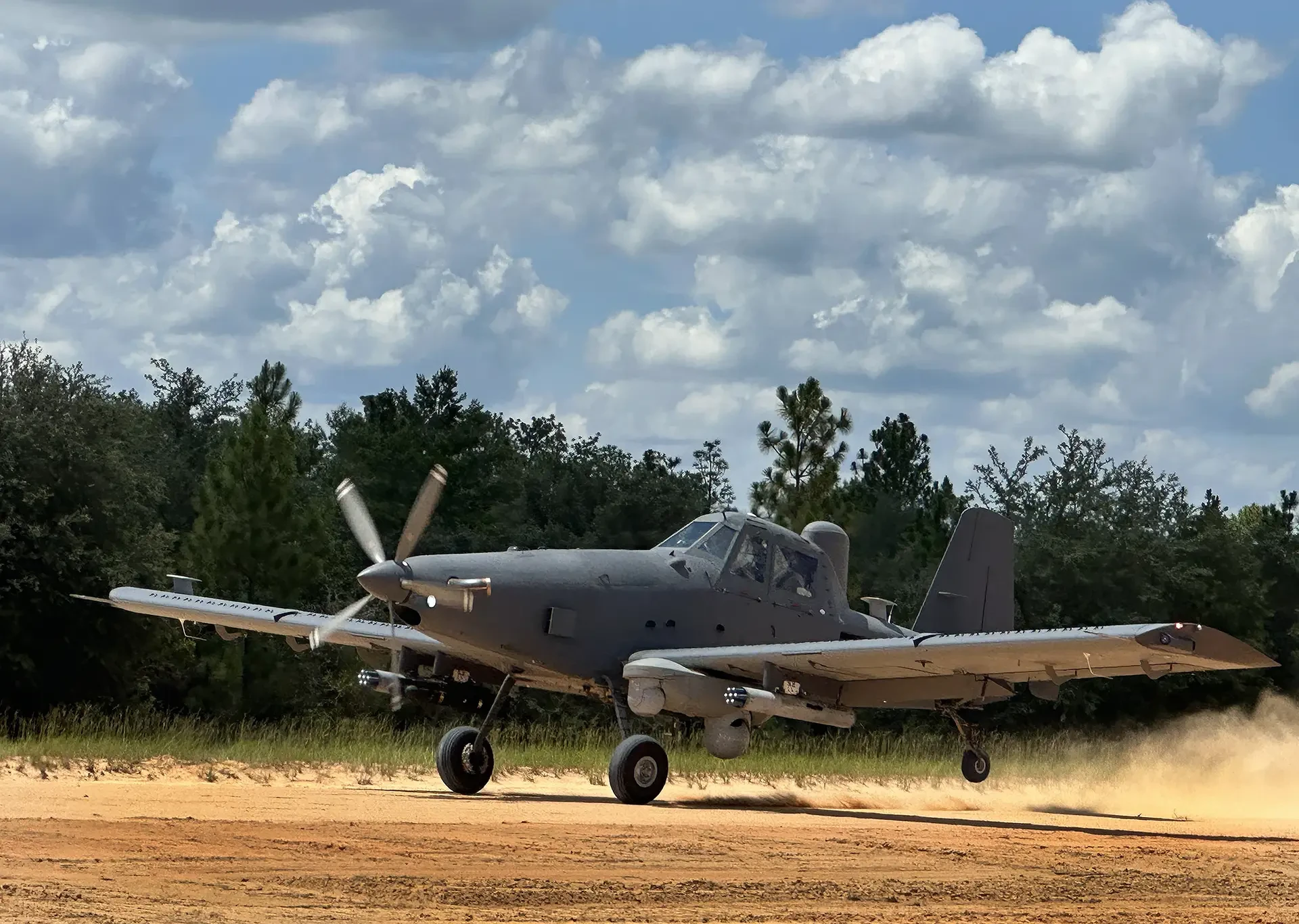
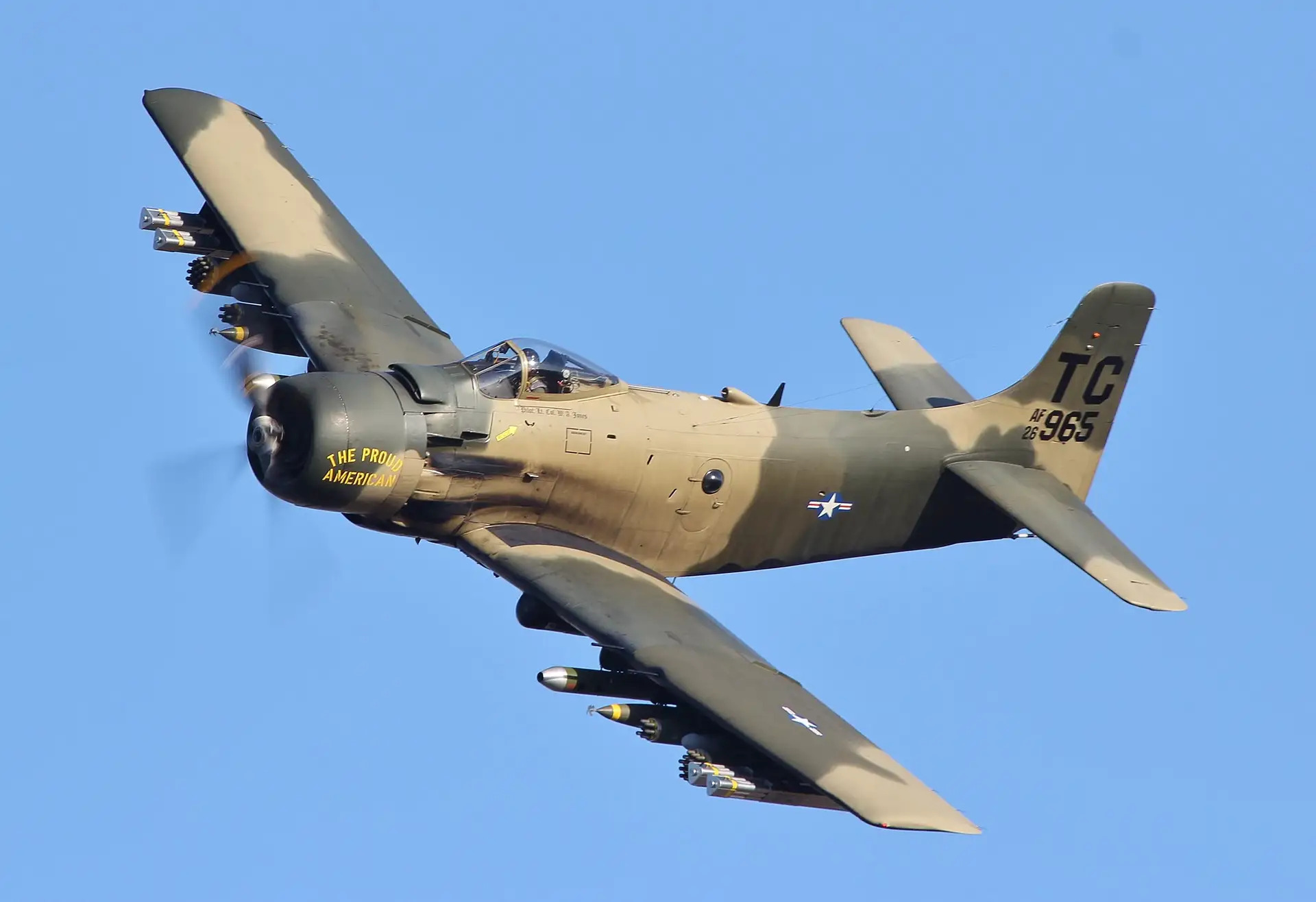
“I’d do it for you” ………no, not John Tavolta (shame on you!) …….but Willem Dafoe, in the classic motion picture ‘Flight of the Intruder’ - wounded, unable to move, calling in a strike on his own position near a ZSU-23/4 threatening the rescue of his shot-down comrades. Cue a couple of Douglas A-1 Skyraiders; big noise, big presence, big payload, ready to deal out copious amounts of bullets and napalm. Result? Viet Cong running in all directions, day saved, home for tea and medals…. This was my first thought when I was asked to ‘do a piece on the new OA-1K Skyraider II’. However, delving a little deeper into this interesting if not a little controversial addition to the US inventory reveals a very different reality to that of the original Skyraider, and its more modern day analogue, the A-10 Warthog, which, despite the best efforts of the US Air Force, still refuses to die.
Given the saga of USAF’s efforts to ditch the A-10, a dedicated Close Air Support (CAS) platform, it will come as no surprise that the odd eyebrow was raised at the announcement of the OA-1K….., a dedicated CAS platform, even if it was re-phrased as an ‘armed overwatch’, aircraft. Part of getting rid of the A-10, in addition to cost, was surely an argument about vulnerability in contested airspace? The clue to the driver for the armed overwatch requirement comes in the form of the US Air Force Special Operations Command (AFSOC), who took delivery of the first Skyraider II in April 2025, reflecting a growing emphasis within the US military on affordable, tailorable aircraft suited to permissive and, quote, “semi-contested” environments…….we’ll discuss what ‘semi-contested’ in due course.
A partnership between Air Tractor and L3 Harris, and derived from the AT-802 agricultural spray aircraft, the OA-1K (Company designation AT-802U Sky Warden) is a single turboprop, twin seat armed ISR aircraft – I have deliberately avoided the ‘COIN’ (Counter Insurgency) or’ light attack’ monikers for reasons I’ll explain later.
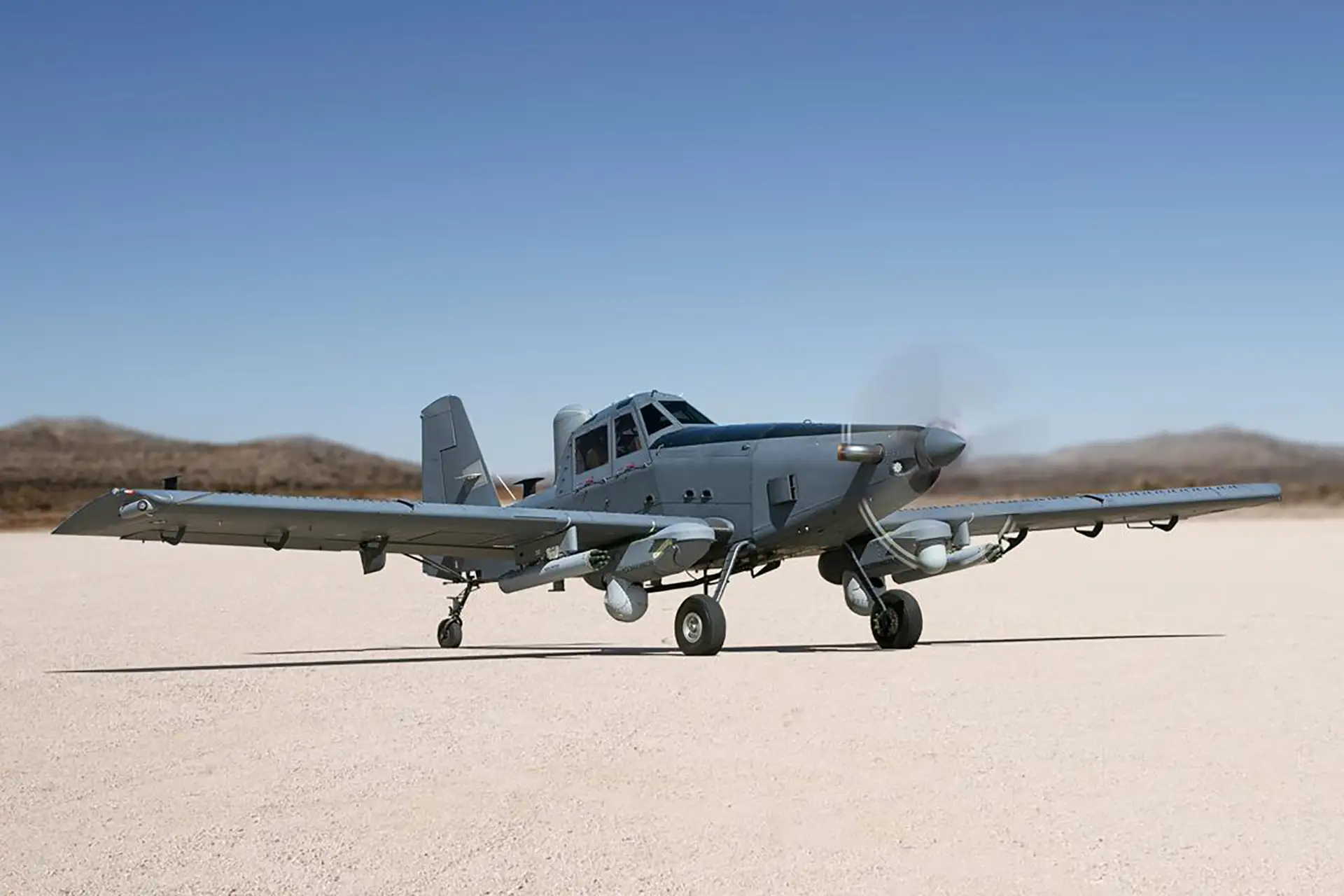
In essence, AT and L3 have taken the flying truck that is the AT-802 (named for its 800-gallon agricultural hopper, situated between the engine fire wall and the cockpit), and divided the hopper space between fuel (360 gallons) and avionics, thrown a heap of electronic displays into the cockpit and hung a load of cool stuff on the wings – hey presto!, well-armed and, well, pretty ugly…
What is undeniable though is a low operating cost (AT quotes less than 1,000 USD per hour for its AT-802U) and minimal maintenance footprint compared to traditional combat aircraft. A key capability for AFSOC is to be able to deploy rapidly to remote, austere, or improvised airfields.
While Special Operations Command (SOCOM) is buying the OA-1K, the planes will be in the Air Force’s inventory, so the use case battle will be ongoing. The original contract with L3Harris was worth up to $3 billion for the full fleet of 75 aircraft, but it didn’t take long for that to change. Almost exactly one year later, according to published budgetary documents, the acquisition is being scaled back to 53 aircraft in total. For 2027 in particular, SOCOM is proposing to buy just two OA-1Ks, down from six in 2026 and 12 in 2025. This announcement seems to coincide with plans to increase the capability of the MQ-9 Reaper UAS as part of SOCOM’s Adaptive Airborne Enterprise (A2E) effort, but maybe also reflects the rapid development of the low level battle space illustrated by the Ukraine conflict in particular and the potential effort required to achieve even a ‘semi permissive’ environment?
So, SOCOM is seemingly already thinking in terms a layered overwatch capability, which raises interesting questions for smaller partner nations who may be considering the Skyraider II. Namely, can it truly perform ‘armed overwatch’ or is there an implied requirement for support elements to fulfil the role in ‘semi-contested’ airspace?
Impressive Numbers
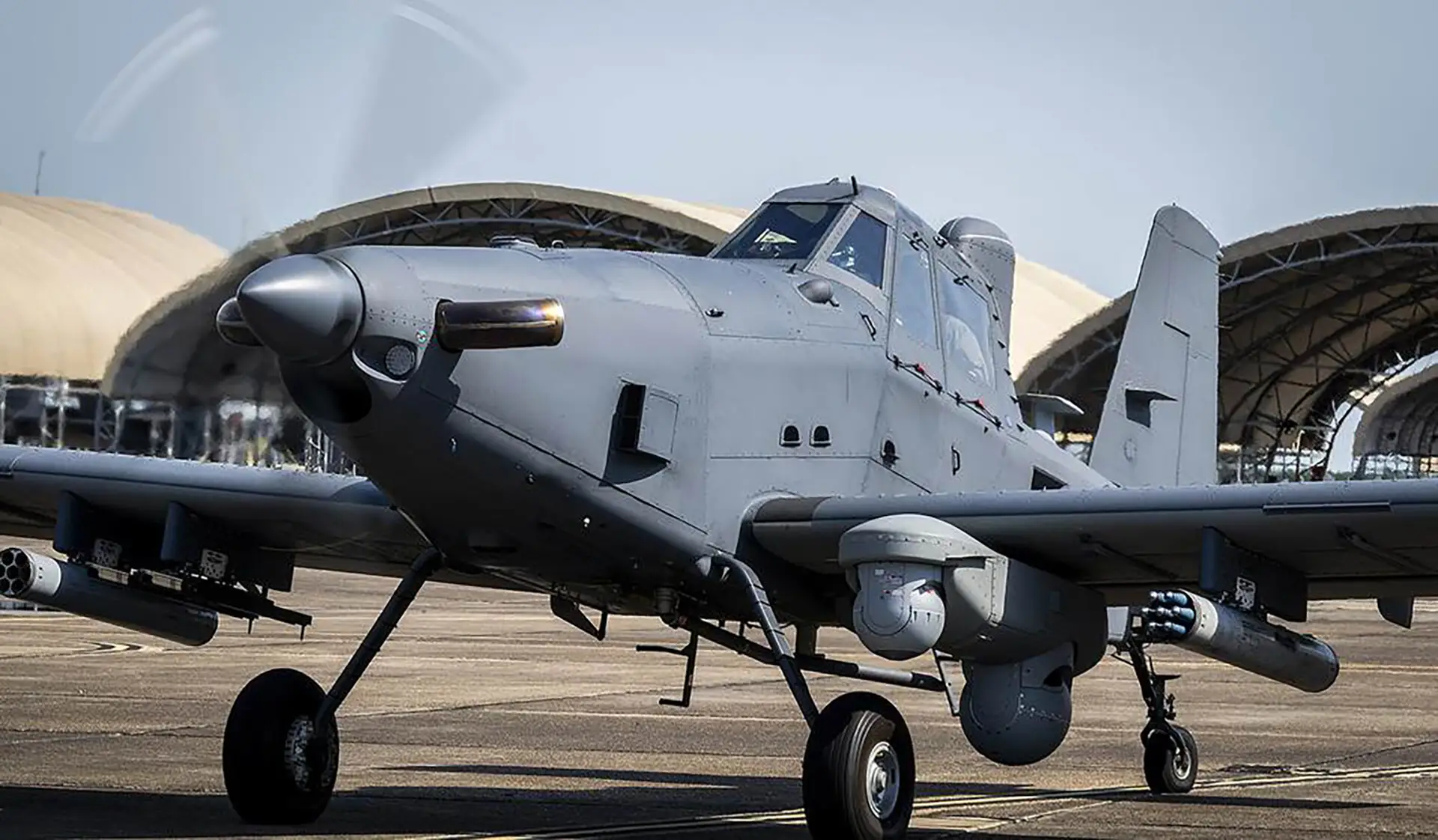
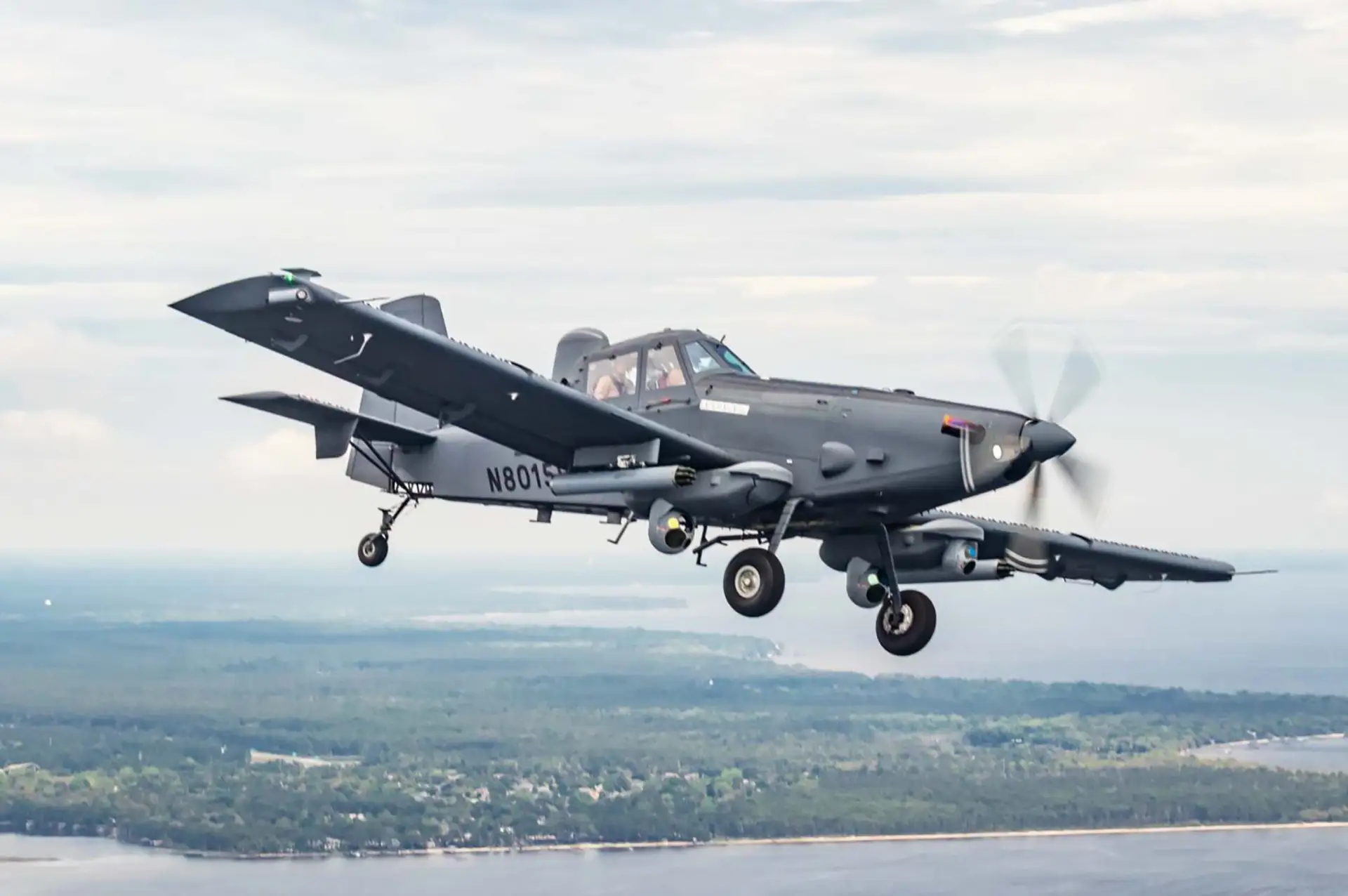
In the mould of its progenitors, the Skyraider II is tough and ugly - every element of the design is functional. Noting its roots, you’d expect a rugged and reliable platform, with excellent short/rough field capability and excellent payload/fuel burn numbers and, in all respects, you would not be disappointed. Powered by the ubiquitous Pratt and Whitney PT6A-67F, rated at 1,600 SHP, combined with five-blade titanium dome propeller, high reliability and easy maintenance is assured. The agricultural design (no insult intended) also means the Skyraider II's very strong, large span (59 ft, marginally more than an A-10), moderate camber and high thickness straight wing provides for internal fuel and four 500lb-class hardpoints on each side (plus two fuselage points) for a maximum load of over 8,000lb. For context, the maximum gross weight (notably for both takeoff and landing) is quoted as 16,000 lb; with a ‘full fuel’ weight of 10,000 lb, there may be some trade-off between payload and fuel at the highest mission loads, but certainly not the hidden deal breaker we see with some unmanned systems where you can have payload or endurance, but not both. The quoted Surveillance & Weapons weight of 14,500 lb implies a sweet spot well within the W&B envelope. I’ll get back to unmanned systems a little later.
So, what about those hardpoints and the associated mission systems? This is where a healthy dose of the latest in comms and sensors comes into its own. The Skyraider II’s mission suite is state of the art, with Ku-Band Satcom (the large hump behind the cockpit) multiple secure voice/data V/UHF radios, MX-15/MX-20 turrets (note, plural), including high-resolution EO/IR cameras and laser rangefinder/designator. Weapons include APKWS 2.75 inch rockets, AGM-114 Hellfire missiles and GBU-12 Laser Guided Bombs (LGBs).
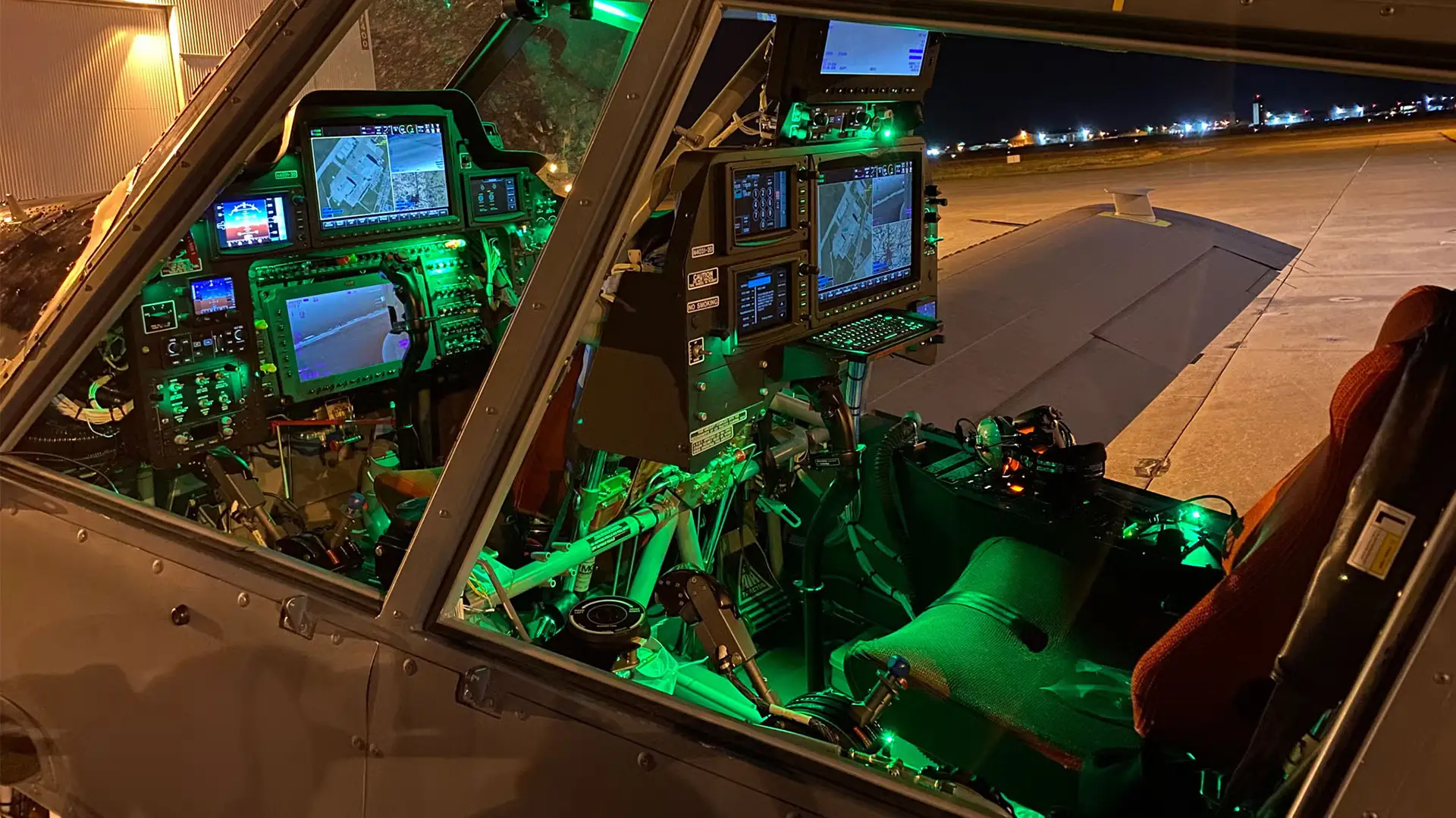
Backing up all of this is a tandem dual flight control equipped armoured cockpit featuring a suite of night vision compatible Multi-Function
Displays (MFDs). The cockpit architecture includes a full autopilot slaved to the Flight Management System (FMS), which enables both
pilots to be fully engaged in target tracking and coordination with ground troops without worrying about the core flying task.
Survivability? Well, given a loiter speed of the order of 180 kts and necessity for Line of Sight (LoS) communications, we’ll definitely need some of that! Expecting some hits, dual flight controls, albeit with limited rear seat instrumentation, allows for a 'get you home' capability if the front seater is incapacitated. A self-sealing fuel system (wing tanks, fuselage tanks and fuel hoses), combined with cockpit and engine armour (panels, glass, split doors and footwells) take care of ballistic protection, while AmSafe Inflatable restraints, (front and rear cockpit) will mitigate the obvious hazards associated with a stack of displays directly in front of the crew during a crash landing. Self-defence includes wingtip-mounted AN/AAR-47 Missile Warning System (MWS) and AN/ALE-47 Countermeasure Dispensing System (CMDS).
So far so good, so now we’re fully fuelled, hardpoints stuffed with sensors and weapons, what can we expect in terms of performance? As is obvious from the outset, the Skyraider is no sleek show pony, the entire design is driven by function and simplicity. The large span/high lift wing is optimised for low speed handling. Noticeably peppered with vortex generators, a claimed 70 kt stall speed at 12,500 lb, bestows confidence for short/rough field landings. No ejection seats, so if the aircraft is ‘shot up’ and the engine stops, it’s a forced landing – in this respect, excellent glide performance and short stopping capability helps the crew choose a landing site….with no option to ‘take the furniture’, the Skyraider pilot cadre will need to learn some new stuff, not least the art of the forced landing….’Wind (with that span let’s not have a crosswind..), Size, Shape, Slope, Surface, Surrounds, Sun’, have I missed anything? And we haven’t even got to ‘it’s a tail dragger’ yet!
Associated with austere operations, the Skyraider II is designed to be readily transportable via C-17A. The aircraft wings are removable and easily refitted with minimum complication; for example, witness the dual pitot probes at the tips, with their associated Air Data Computers (ADC) co-located, thus avoiding lengthy pressure tubes running along the wing. It is estimated the aircraft can be 'mission ready' in less than 24 hours.
The Practicalities
With some experience of two-crew ISR with multiple sensors (in my case turret and radar), I can attest to the intricacies of employing gimbals effectively. By that I mean maintaining the target view in the face of terrain/cultural interference, imaging requirements (and the explicit requirements for target ID vs. ROE) and in the face of efforts of said target to evade the icy stare of a Laser Designator. As an engagement develops, initially utilising the optics of the MX-20 to break out and ID the target, then, in turn, exploiting the MX-15 to establish and maintain the track (and depending on topography/weather) the result can be a fairly significant lookdown angle, meaning increased altitude or smaller slant range. All of this puts the sensor at risk to enemy ground fire, so setting up and modifying an offset surveillance orbit, anticipating target movement and changing optical conditions, will be no mean feat. For the crew, multiple turrets and multiple targets means even a two-man crew will be working hard managing both gimbals - reaching the gimbal limit of one of the turrets mere seconds before the LGB is due to arrive is manifestly not a recipe for tea and medals on RTB. In this respect, the crew has some help in the form of the Garmin 3000 navigation system, which can accept target coordinates from the crew and set up an autopilot-controlled orbit in a few button presses. This will help the tandem crew to control one gimbal each, although another noteworthy capability is the ability to sit on orbit while a ground team controls the turret(s) presumably by virtue of the installed L3 Harris Vortex transceiver. Updating a moving target position will then allow the orbit to translate with it, avoiding the OMG ‘on top’ moment, when the image topples….
All that said, the ability to employ multiple LoS, enabling wide angle surveillance to be maintained while selecting and prosecuting specific targets within that wide field is a critical capability for effective long endurance overwatch. Maintaining a detailed ground picture, including at the limits of the Area of Interest (AOI) is also key to avoiding the sudden appearance of a pop-up threat armed with a nasty present!
I’m deliberately concentrating on the surveillance and communications aspects here for two reasons. Firstly, and as I mention previously, the integration of state-of-the-art mission sensors and communications is the main story here and certainly differentiates the Skyraider II from similar platforms such as the A/OA-10 or the A-29 Super Tucano, which would both struggle to perform persistent overwatch duties in any similar way.
The second, and inviting comparison with the A-10 again, is weapons load, especially in the context of an overwatch mission - it really is the ‘light side of light’, maybe not by sheer number, but by hitting power. Anyone thinking A-10 levels of mayhem, think again. The A-10 carries the same Hellfire, GBU-12, APKWS/2.75 inch rockets of the Skyraider II, but there’s also the GAU-8 30mm cannon and 'bigger hitters' like the AGM-65 Maverick, and roughly double the total payload. Visualising the difference in hitting power, compare Maverick and Hellfire warheads – the former (across variants) of the order of 10x the weight of the latter; the Maverick packs a warhead of 57Kg (Shaped Charge) or 127Kg (HE/Frag), while the Hellfire is only around 8-9Kg. While the 500lb GBU-12 carries a decent punch, launching at 180 kts or so means the bomb will need a large amount of altitude to gain some momentum (exposing the aircraft to more threats), and even then the impact velocity, or lack thereof, would remain a key weapon to target matching consideration, so it's employment is restricted to soft targets only.
Kinematics matter.
As for the forward firing stuff, back to speed and soft targets again, and not just weapons effects, but also survivability - getting in and out quickly is always key, but especially when going toe-to-toe with ground targets that might suddenly produce a SA-18 from their pick-up truck! Given the sensors and comms, it seems peeling off a well-established orbit and trashing a well-developed sensor picture might be a poor option, especially if another asset could do the attacking? Probably obvious, but I sincerely doubt AFSOC envisage singleton Skyraider missions, rather multiple aircraft providing mutual support and operating as part of a package.
The Reality
A quick canter around the specifications of the OA-1K reveals a cheap and very capable platform, suitably rugged and readily deployable to support Special Operations Forces with long endurance armed overwatch, utilising cutting-edge comms and sensors, and potentially deploying Launched Effects. However, as described, the Skyraider II is no A-10; it’s lack of speed and firepower makes it vulnerable, a fact acknowledged in official descriptions describing the Skyraider's intended operating environment. ‘Permissive’ means exactly that, but as demonstrated in recent conflicts from the Ukraine to Iran, it’s difficult to imagine a scenario involving enemy ground forces that doesn’t include a portable SAM, or increasingly, a drone threat. So, back to ‘semi-contested’; if I’m tooling around in an orbit in the 5-10k block, fixated on my MX-15 picture, I’d really like some detail regarding what semi-contested really looks like on the day….back to the sensor fit, and CMDS load-out.
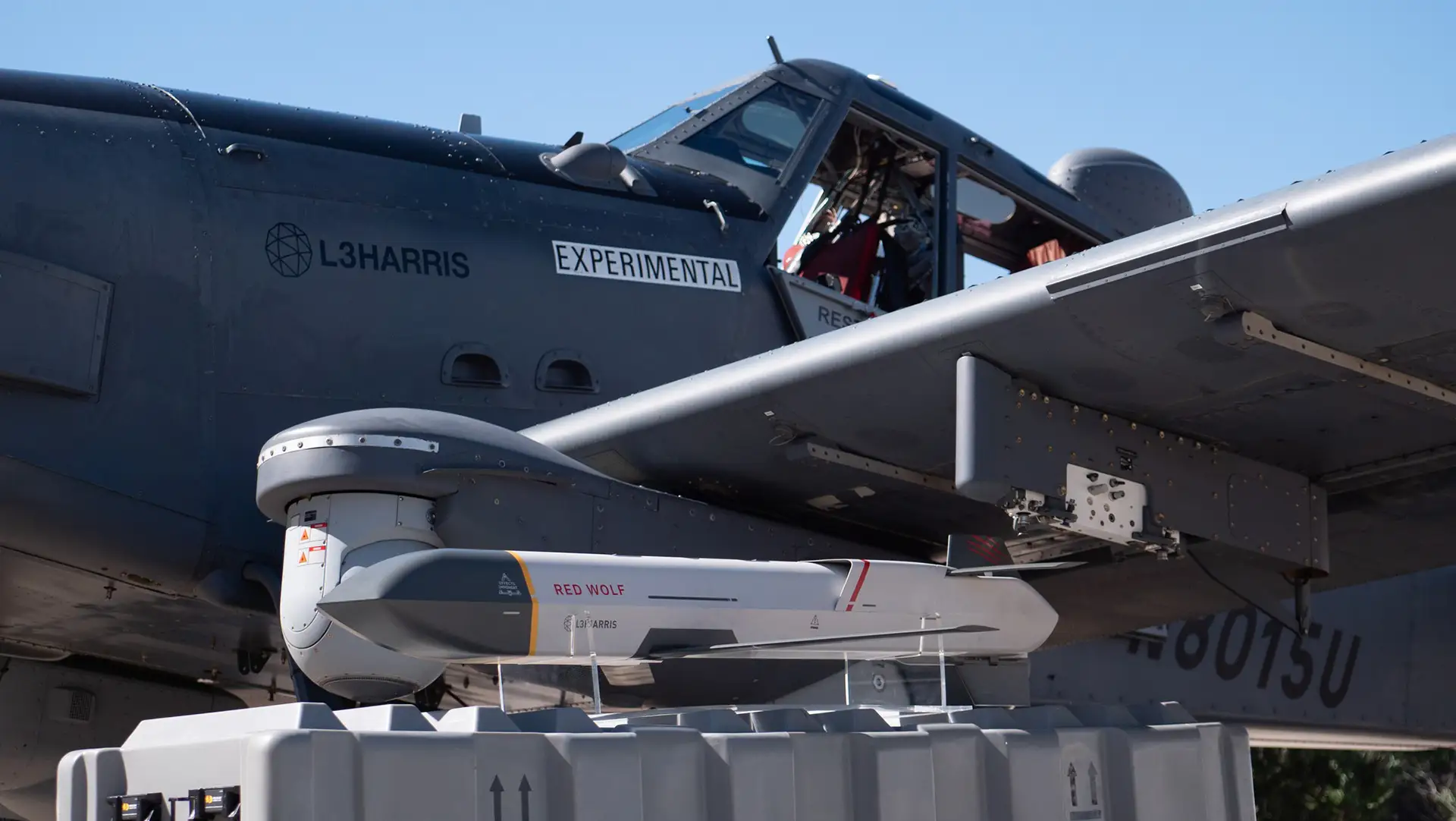
There are clearly niche scenarios where a SOF team and Skyraider combo will absolutely work. Africa, for instance, but even then, and in the US context, I would see there being MQ-9s involved, providing over-over watch from quite a few hours before the operation starts, and therein lies the rub for other countries looking at the Skyraider II. In the context of US SOF, CONOPS will surely involve other elements, in the first instance to achieve a permissive environment if it does not already exist. That may be the aforementioned MQ-9 (or potentially a 'semi-black' Low Observable drones such as the RQ-170 or 'RQ-180') performing high altitude ISR to establish the threat picture, and, the case of the Reaper, potentially performing a bit of early SEAD with its spookily similar Hellfire/GBU-12 loadout, or, indeed, a heavier 'conventional' fighter/missile strike to sanitise the area and set the conditions. Supporting the ground team, I’d expect a minimum formation of two Skyraiders, for mutual support, particularly in the armed over watch role armed overwatch in the semi-contested airspace – IMHO, utilising the superior optics of the MX-20 would provide some standoff from a ground threat, but I would not be very keen to poke my nose in (at under 200 kts) from my perch, which is likely to be visible anyway – better to maintain SA and call in the right effect, whether from the second Skyraider, or another platform – in this respect, expanding the weapon choices for the Skyraider must be a priority? Interestingly, L3 has already shown it’s Red Wolf/Green Wolf, a small air-launched effects drone/missile on the AT-802U. With a claimed range of 200 nm, one can readily imagine a mix of Hellfires, Red Wolf (kinetic) and Green Wolf (EW/Jammer) under the wings to facilitate a tag-team where the sensor and shooter alternate, with picture/target hand-off and keeping the enemy from fixing the position of the sensor platform in an overly persistent orbit.
If I am giving the impression that the Skyraider really needs to be thought of as part of a team to achieve its mission, and that team entails a minimum formation and UAS support in non-permissive scenarios, then we’re building the reality of the OA-1K’s utility – and a question potential customers really need to ask if the mission is to go beyond airborne policing.
This leaves a lingering question - ‘why not just use Reapers?’ – much longer endurance, carries Hellfire and GBU-12, an MTS-B and a radar in case the weather’s poor, and, importantly, no pilots to worry about dispatching over 150 aircraft to rescue if they get shot down? With a reported list price of 15-17M USD (hopefully including the expensive turrets and comms…), the Skyraider is about half the price of a Reaper, and as I’ve described, it’s multiple LoS sensors and LOS/BLOS comm suite offers far greater capability, so the choice here may well boil down to the mission and availability of supporting assets. For a large well equipped Air Force with established complementary capabilities, including SEAD and CSAR, ‘enough’ endurance, faster operational reactions and decision making (pilots ‘on the scene’ vs. in a box at Creech AFB), with the potential costs of downed pilots factored in, there is undoubtedly a place for the Skyraider. However, in isolation, and where ‘permissive’ enough can be a bit of a pipe dream, I’m not so sure.
As a final thought, I’ve written previously about ‘old school’ CAS, personified by the A-10 – in the enemy’s face, very personal, bringing high-order violence at every pass, vs. ‘new’ CAS, where the ground force simply calls for required effects, delivered via an F-35 from high altitude or long-range missiles/drones, delivering a more selective result.
The acquisition of the Skyraider II has more than a faint whiff of AFSOC’s desire for a more 'old school' capability….