 HOME
HOME




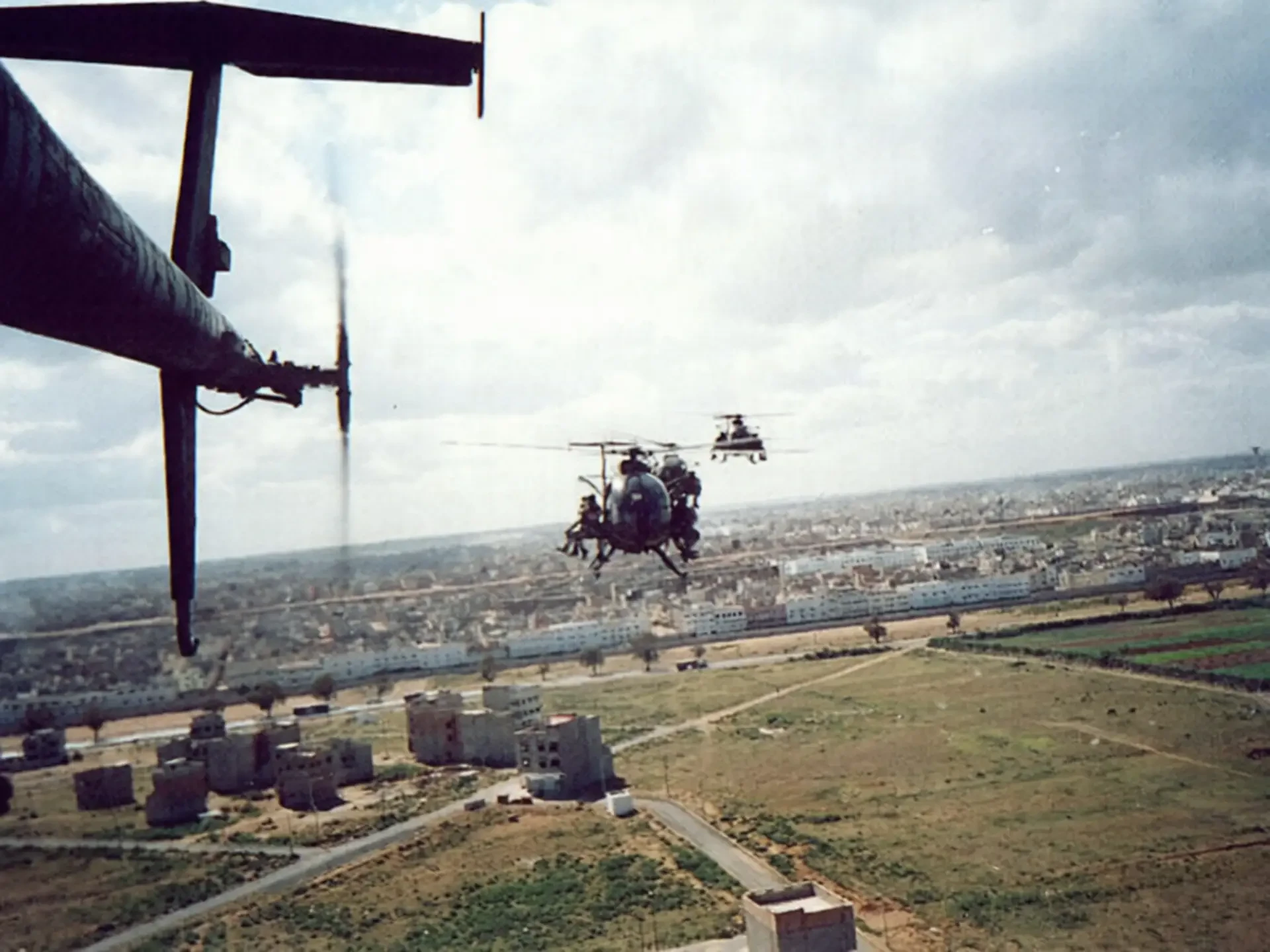
On the morning of 4 October 1993, a mechanic watched as his AH-6J light attack helicopter landed outside of the Task Force Ranger compound in Mogadishu, Somalia. Its two M-134 mini-guns and twin rocket pods were still warm and stained with the sooty patina of heavy use. Air whistled through bullet holes in three of its five rotor blades, and its chin bubble was opaque with dirt, sand, and the crusty traces of human remains. In the distance, acrid columns of black smoke clawed at the horizon, an offshore breeze extending their tops like the anvil of a dissipating storm cloud.
Urban Combat
The Battle of Mogadishu, occurring on 3-4 October 1993, was the most intense and sustained urban combat that American Forces had experienced since the Battle for Hue City during the Vietnam War. It is still studied at military institutions, and has become enshrined in American culture through books, documentaries, and popular media. The story that has never been told, however, is that of the four Task Force Ranger attack assets that participated in the battle.
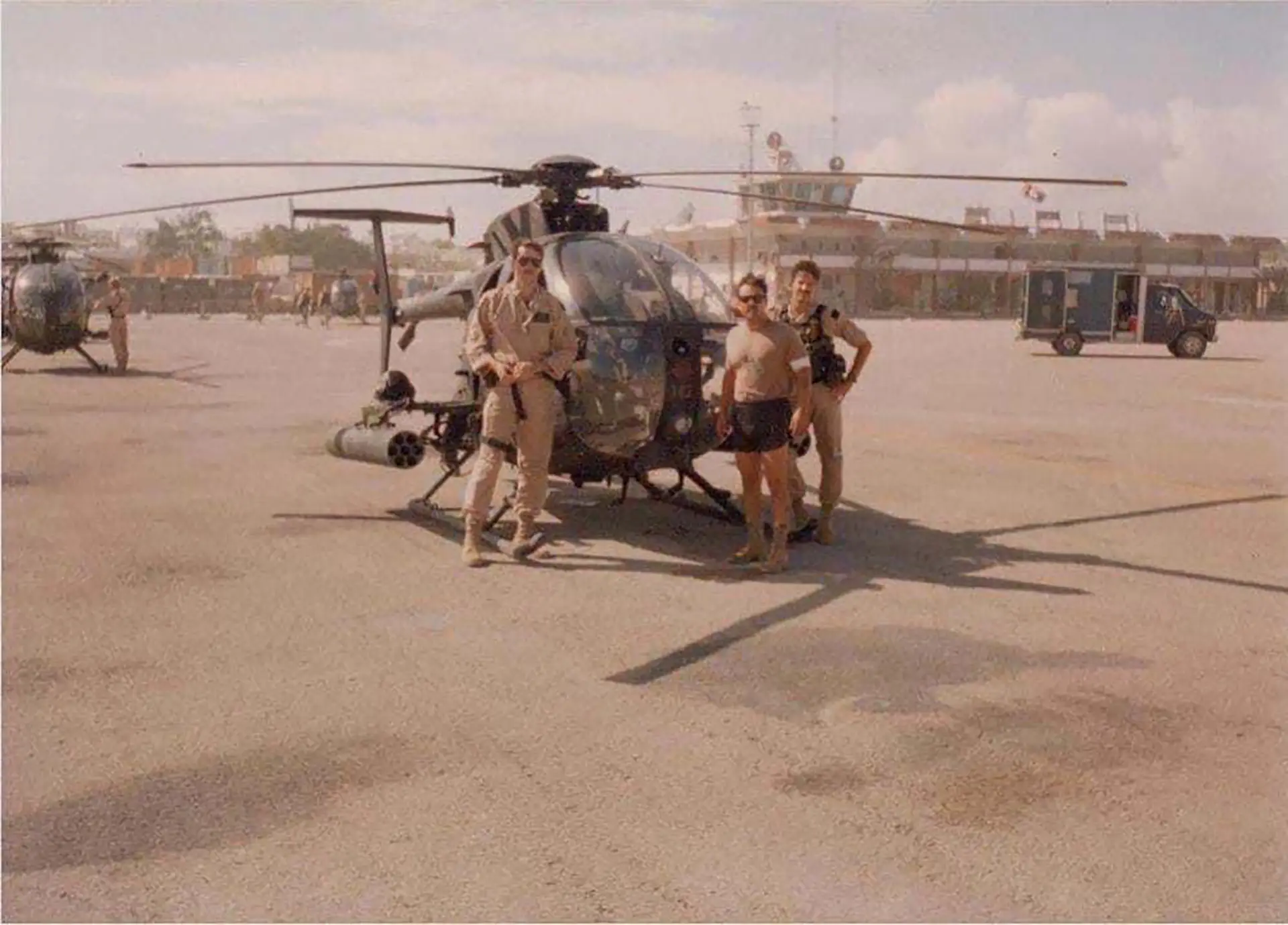
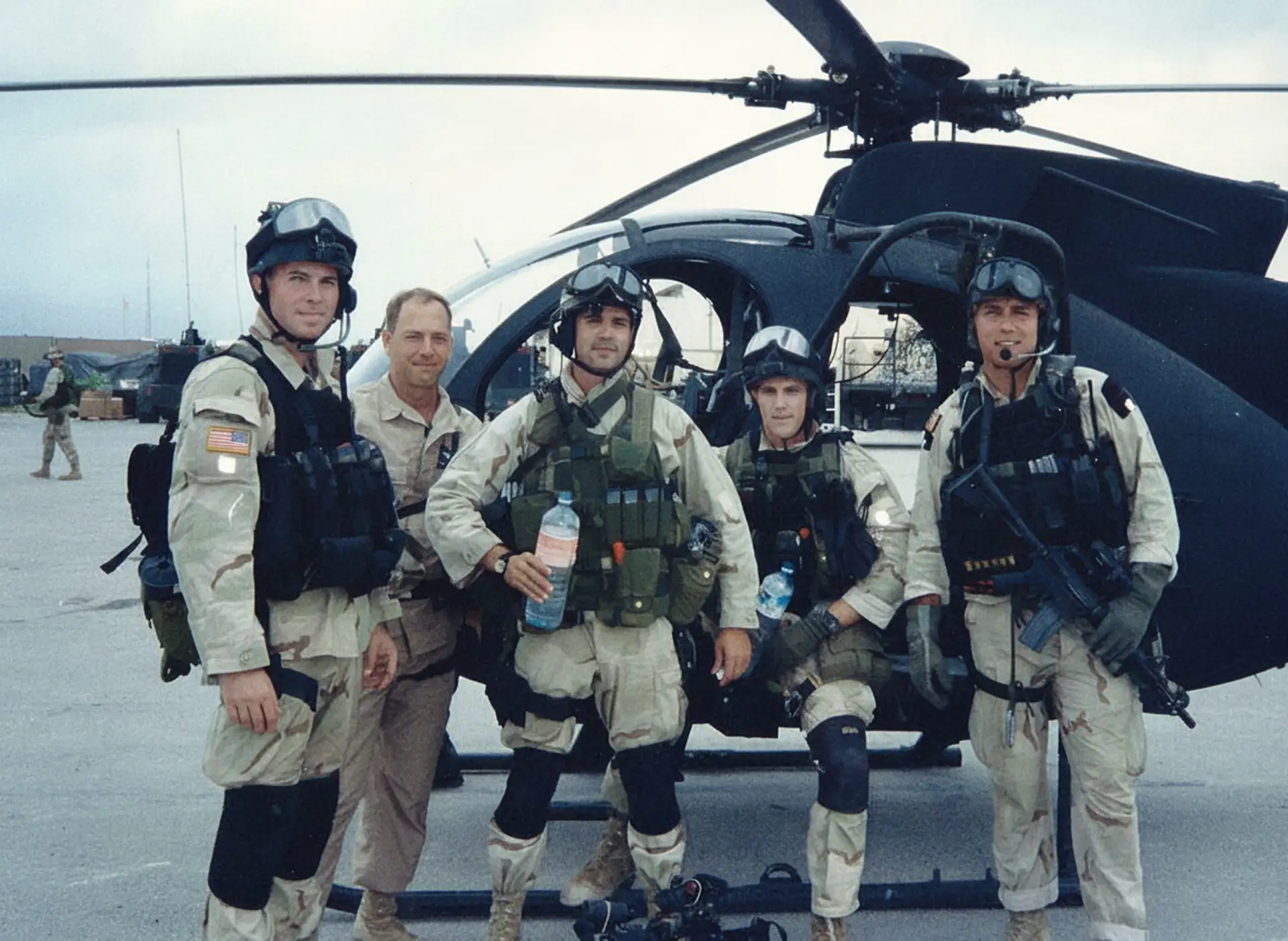
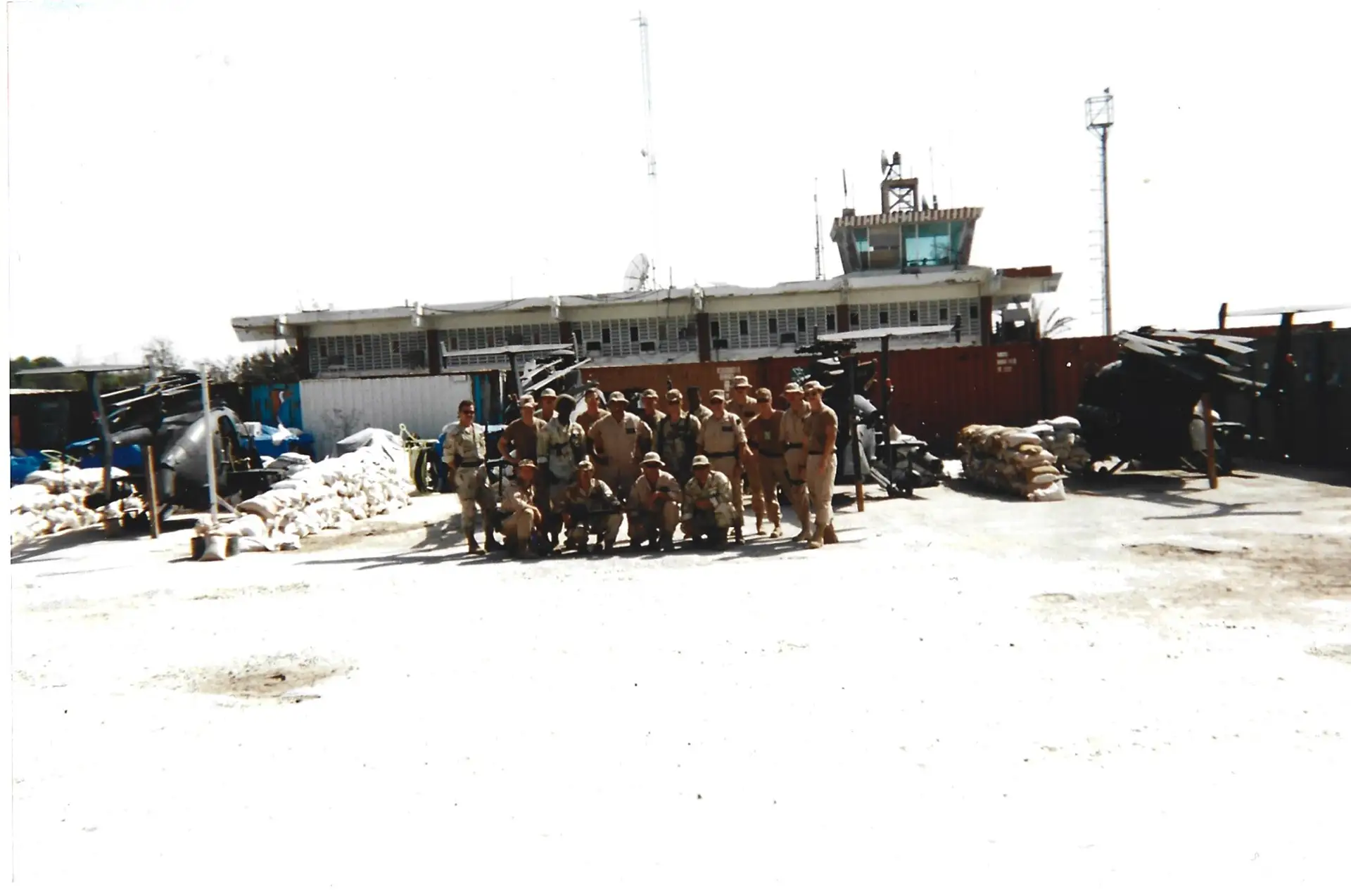
Those assets consisted of two teams of AH-6J light-attack helicopters from B Company, 1st Battalion, 160th Special Operations Aviation Regiment (Airborne). Each attack team was comprised of two aircraft and supported by a dedicated complement of mechanics and armament personnel.
Team One consisted of call signs Barber 51 and 52. Its primary role was to lead the 16-ship formation to the objective, service any immediate threats to the force, and remain on station to provide fire support. Team Two, consisting of call signs Barber 53 and 54, was tasked with escorting the Combat Search and Rescue (CSAR) aircraft and responding to fire support contingencies.
October 3
On the afternoon of 3 October, Task Force Ranger received reliable intelligence that key personalities designated for capture were meeting near the Olympic Hotel. Once confirmed, the Helicopter Assault Force (HAF) was alerted, hasty planning was conducted, and the launch order was issued at 1532 local time with the net radio call, “Irene.”
The flight to the objective was unremarkable, with the HAF forming up just off the coast and proceeding clockwise around the city to facilitate a southbound approach into the objective area. A previously launched reconnaissance aircraft was already overhead, assessing threats, directing the HAF, and broadcasting live video back to the Joint Operations Center (JOC).
Leading the formation, Team One (Barber 51 and 52) conducted an initial sweep of the objective. Observing no threat, they entered a left-hand orbit around the target building. Seconds behind them, the HAF flowed into the objective with four MH-6 Little Birds landing in the streets to infiltrate assaulters and four MH-60 Blackhawks dropping off a perimeter of blocking positions, via fast rope insertion, at pre-designated intersections.
The Fire Support Plan called for two concentric circles centered on the target building. The inner circle was occupied by two MH-60s, call signs Super 61 and 62. Equipped with door guns and manned with snipers. Their presence was largely driven by the Rules of Engagement (ROE) and the perceived need for precision fire in order to limit any potential civilian casualties. The outer ring was occupied by Barbers 51 and 52, whose job it was to provide early warning and engage threats approaching from outside the Ranger cordon.
As the HAF completed its infiltration and flushed to designated holding locations, the two MH-60 sniper platforms assumed their positions in the inner orbit, where they soon came under sporadic small arms fire.
In the outer circle, Barbers 51 and 52 were also encountering small arms fire and began responding to targets identified by the reconnaissance aircraft. Their first engagement was of a Rocket Propelled Grenade (RPG) gunner located southeast of the target, followed shortly thereafter by a group of Somali Militia who were firing on them from a building complex. Both of these threats were eliminated with fixed-forward M-134 miniguns and 2.75” rockets while utilizing diving-fire engagement profiles and team tactics.
Within moments, the ground force seized the objective, secured 24 prisoners, and transferred them to a convoy of trucks that had arrived to exfiltrate the entire force. Having already suffered one casualty, a small convoy of three HMMWV was splintered off to rush the wounded individual back to base. The command element, call sign Atom 51, located in the Command and Control (C2) aircraft, tasked Team Two (Barbers 53 and 54) with escorting the casualty convoy back to the airfield.
Team One remained over the objective, continuing to service targets, while Team Two flew low through the streets ahead of the casualty convoy, reconnoitering the route, identifying roadblocks, and attempting to disperse crowds until the convoy was safely inside the airfield perimeter. Just as the convoy entered that perimeter, Team Two heard on the radio that Super 61 had taken effective fire in the inner fire support orbit and was going down. Accelerating to best speed, Team Two sprinted back to rejoin the CSAR aircraft in holding north of the city.
Super 61 Down
Back at the objective, Team One had witnessed Super 61 take impact from an RPG and crash three blocks northeast of the target area. As elements of the ground force instinctively moved to secure the crash site, Team One and Super 62 expanded their fire support orbits to encompass both the objective and the crash site.
All three aircraft that remained in the fire support orbits were now coming under sustained ground fire from small arms and RPGs. Barbers 51 and 52 continued to engage targets of opportunity, as well as those identified by the reconnaissance aircraft, until they were 'Winchester' (out of ammunition). Team Two was then called forward to relieve Team One.
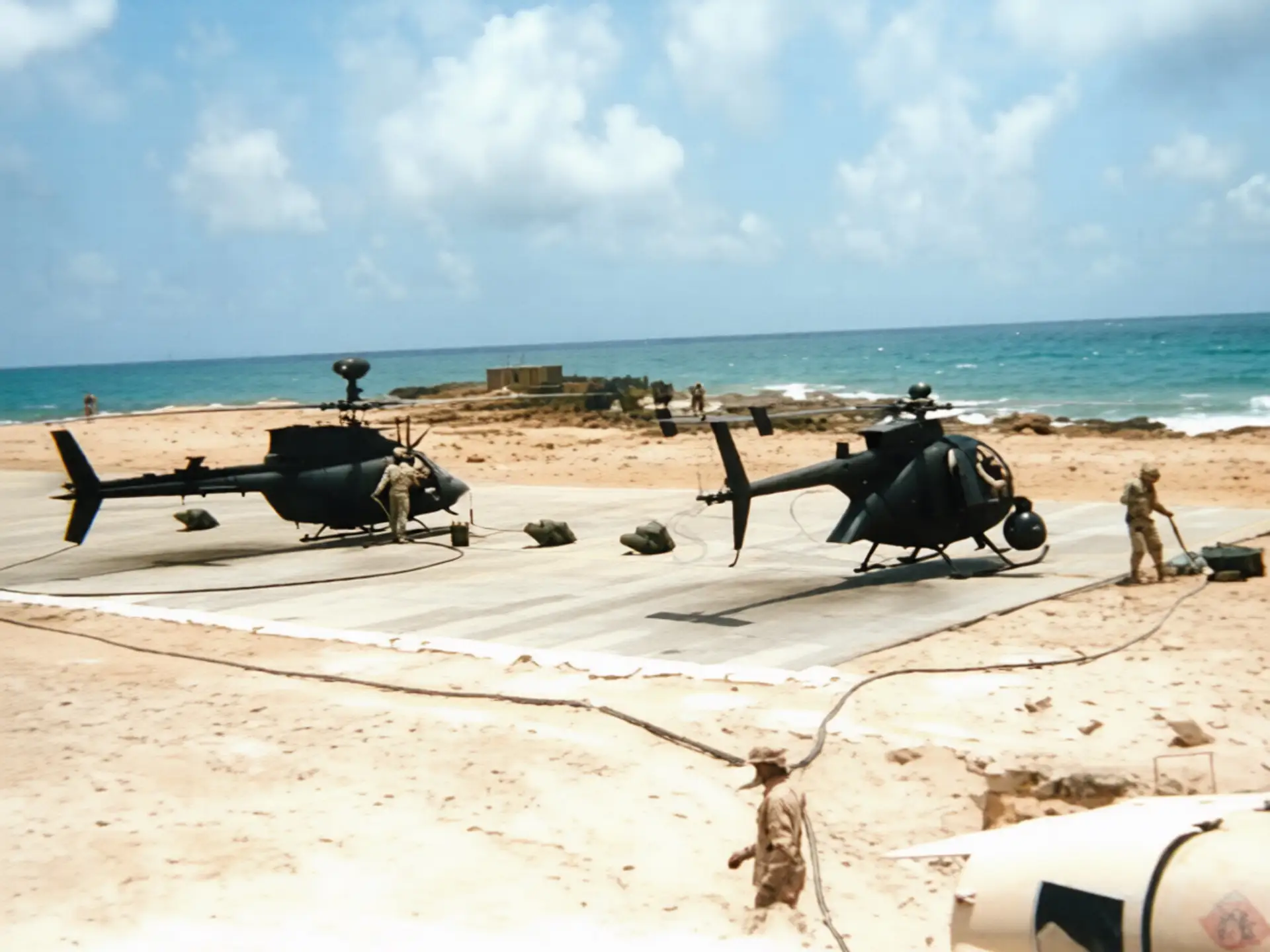
This was a standard battle rhythm for the attack assets. The goal was to keep one team in the fight while the other team cycled back to the Forward Arming & Refuel Point (FARP). Once a team was rearmed and refueled, it returned to a holding pattern just north of the city, where it waited to be called forward by the command element, which pushed it out to ground forces based on priority.
Now on station, Team Two received no immediate calls for fire from the ground force but did engage several targets of opportunity until Team One returned from the FARP and relieved them on station.
Recognizing the immediate need for reinforcement, Atom 51 activated the Combat Search and Rescue (CSAR) aircraft, call sign Super 68, and brought it forward. The CSAR aircraft successfully roped in its fifteen-man reaction force but took an RPG to its main rotor in the process, forcing it to return to the airfield, trailing a plume of smoke.
Super 64 Down
Team One and Super 62 were still engaging targets from the overhead when Atom 51 called Super 64 forward to fill the now-vacant position in the inner fire support orbit. Just moments after Super 64 arrived, an RPG impacted near its tail rotor, sending it spinning out of control. It crashed in a heavily populated area of shanties about seven blocks south of the target building. There were now two Blackhawks shot down in isolated parts of the city, Super 61 in the north and Super 64 in the south (now referred to as Crash Site One and Crash Site Two, respectively).
Team One immediately established a cap over Crash Site Two and brought Team Two forward from holding to cover both the objective and Crash Site One, where it immediately began engaging targets to the north, east, and west of that crash site. Here, it came under small arms fire on every pass. On one of those passes, a bullet passed through the cockpit of Barber 53, entering near the door post, exiting through the overhead canopy, and narrowly missing the pilot. Team Two continued to engage targets until it was out of ammunition, then returned to the FARP.
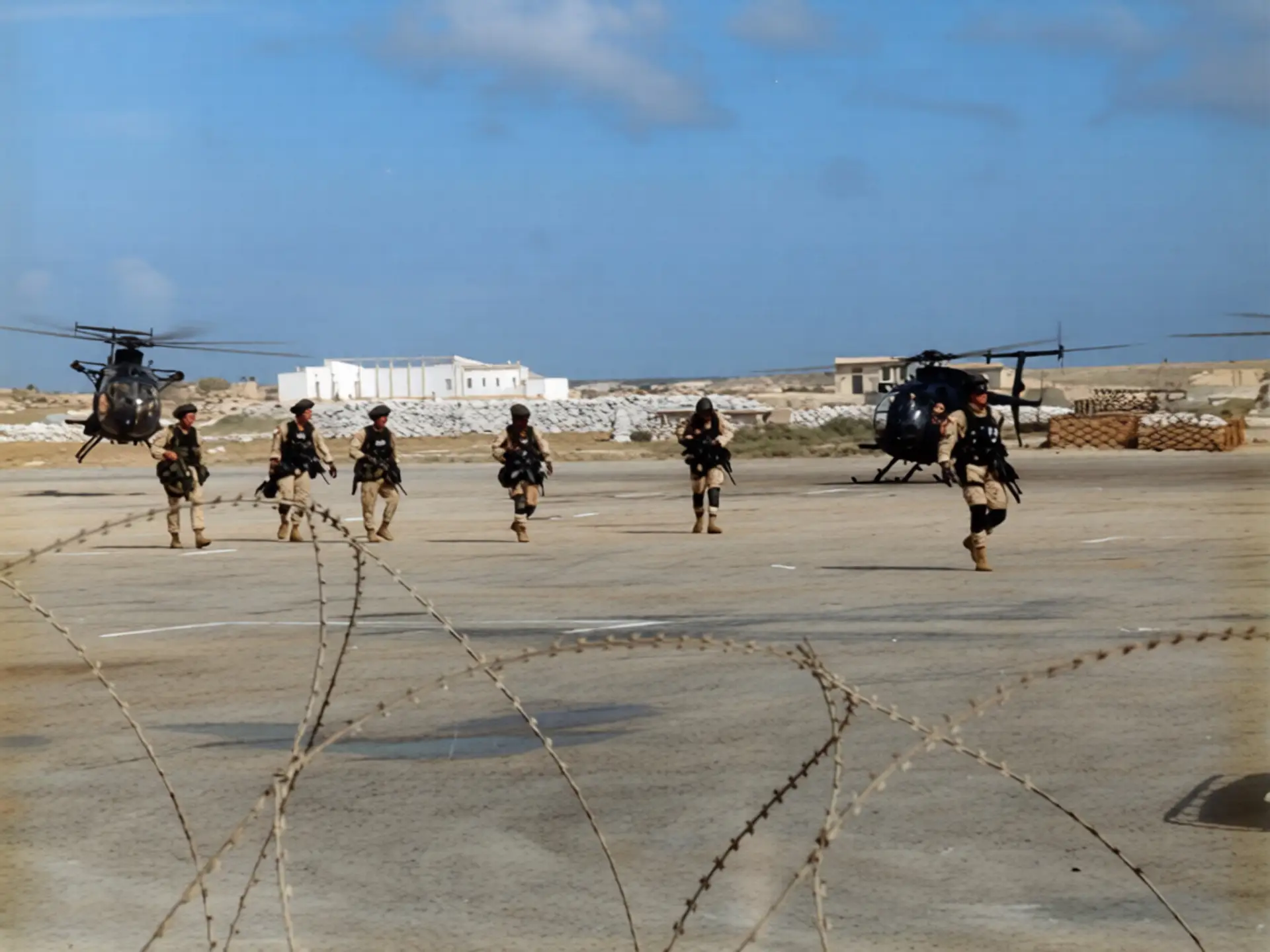
To the south, Barber 51 had resorted to using small arms, fired out of the door by the co-pilot, to engage armed targets interspersed among the large crowds of civilians that were now massing in the vicinity of Crash Site Two. In an effort to maintain coverage of both locations, Team One split with Barber 52 backfilling Team One to the north and Barber 51 remaining over Crash Site Two.
Around Crash Site Two, the crowds were growing larger, more hostile, and beginning to surround the downed aircraft. Barber 51 continued to engage armed combatants with personal weapons, killing at least three of them, and deployed flash-bang grenades in an effort to disperse the crowds or delay their advance.
Rescue Attempt
The crew of Super 64 needed reinforcements. With no ground elements proximate, snipers MSG Gary Gordon and SFC Randy Shughart, located overhead in Super 62, volunteered to be dropped in to secure the crash site. After numerous requests and denials, they finally received approval and were inserted at the closest available spot, approximately 200 meters away. From there, they fought their way to Crash Site Two and began defending it.
By now, Team Two had returned from the FARP and been pushed into holding north of the city and 21 October Road. The exfiltration convoy was now split, with part of it fighting its way back to base (the PC Convoy) and the other part trying in vain to reach Crash Site One (the Relief Convoy). From holding, Team Two maintained visual contact on the relief convoy and made several forays south in its defense, conducting numerous engagements against RPG gunners and groups of armed Somali militia advancing on it from adjacent streets and alleys.
Back at Crash Site Two, the situation continued to unravel. After inserting the two snipers, Super 62 was hit by a fusillade of small arms fire, followed shortly thereafter by an RPG that impacted the aircraft just beneath the right-side door gun. The resulting explosion rendered one of the pilots unconscious and all but severed the leg of the last remaining sniper on board. The one pilot who remained conscious pointed his aircraft south, flew as far as he dared, and executed a forced landing near the New Port area. Super 62 was now the fourth MH-60 to have been taken out of the fight by an RPG.
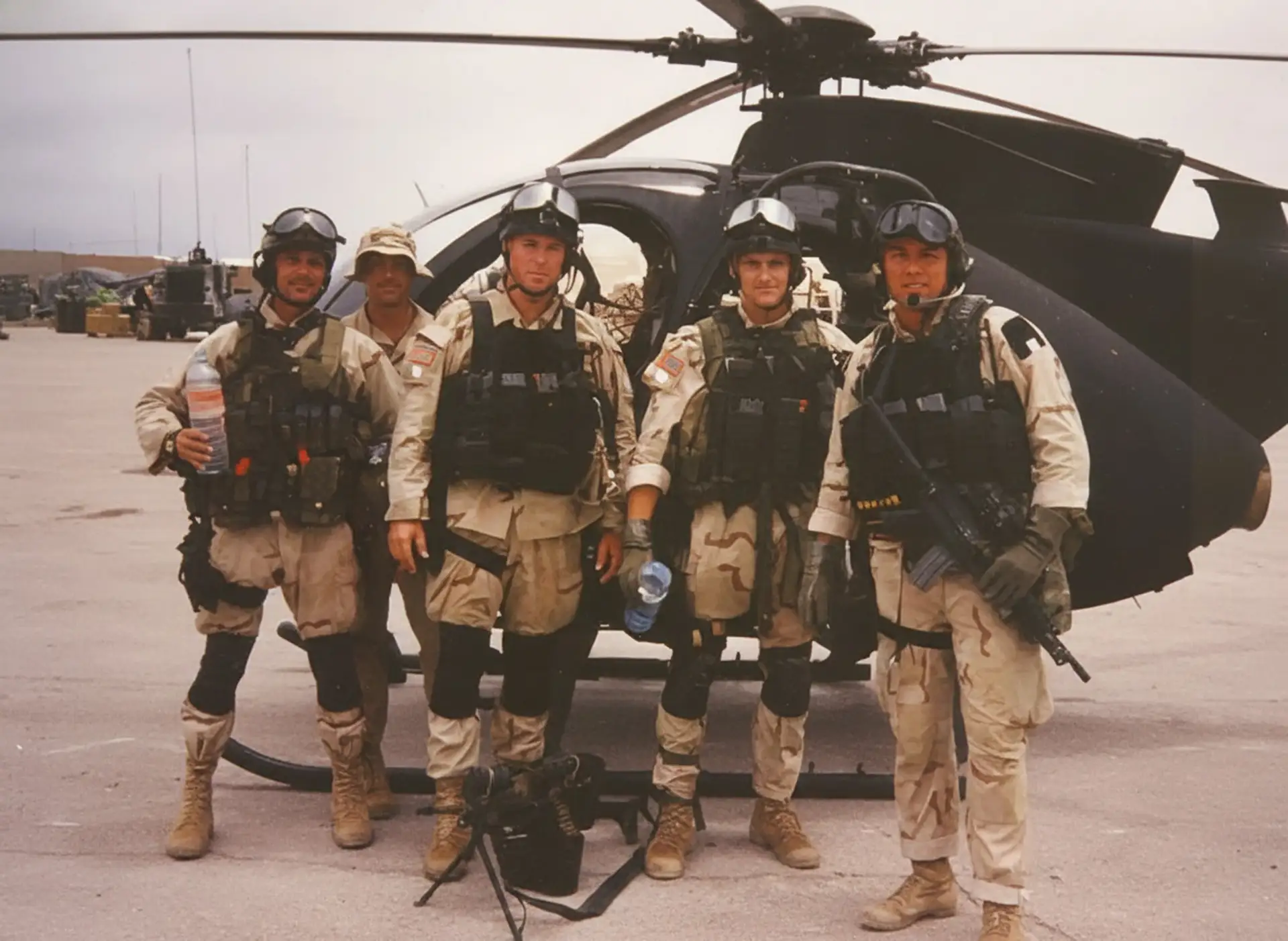
Team One continued split-team operations until Team Two was back on station, then reconstituted over Crash Site Two, where they expended what ammunition they had remaining against a mass of Somalis who had been shooting at them from a building near National Street. Low on fuel and out of ammunition, they broke station for the FARP.
Four Battles
At this juncture, there were essentially four battles occurring simultaneously. Two crash sites were isolated and at risk of being overrun, while two convoys were also cut off and at risk of being pinned down. The force had lost four Black Hawks in well under two hours, three of them in the city. Radios blared, call signs were mangled, and crash sites and convoys got confused. The demand for fire support was rapidly exceeding the number of assets available to provide it and the situation had become so fragmented and confused that it seemed to be overwhelming the command’s capacity to effectively triage it. The entire situation had cascaded into what professional military doctrine calls a fucking hot mess.
To the north, Team Two continued to provide effective support for Crash Site One and the Relief Convoy when not being pushed north of 21 October Road by a command element that had grown understandably reticent to commit air assets over a city that was swallowing them. While in holding, one of the snipers at Crash Site Two (probably Randy Shughart) came up on SAR Channel B of a PRC-112 radio requesting support. For whatever reason, the command element in the C2 aircraft did not seem to hear those calls. The calls were heard by ground forces and by the Air Mission Commander of the attack assets, located in Barber 53, who eventually relayed the request to Atom 51 on another radio. Atom 51 then directed Barber 51 to support, but by that time, Team One was already headed back to Crash Site Two.
When Team One arrived, there was no longer any sign of friendlies on the ground. Barber 51 made a low pass over the crash site while Barber 52 covered from above. Because nightfall was imminent, Barber 51 deployed an infrared strobe onto the wreckage of Super 64, then established an overhead orbit. No more calls were heard, no friendlies observed. The Flight Lead in Barber 51 then requested that the AH-6 co-pilots dismount to assist, but the request was denied. Crash Site Two had apparently been overrun, the status of six men completely unknown.
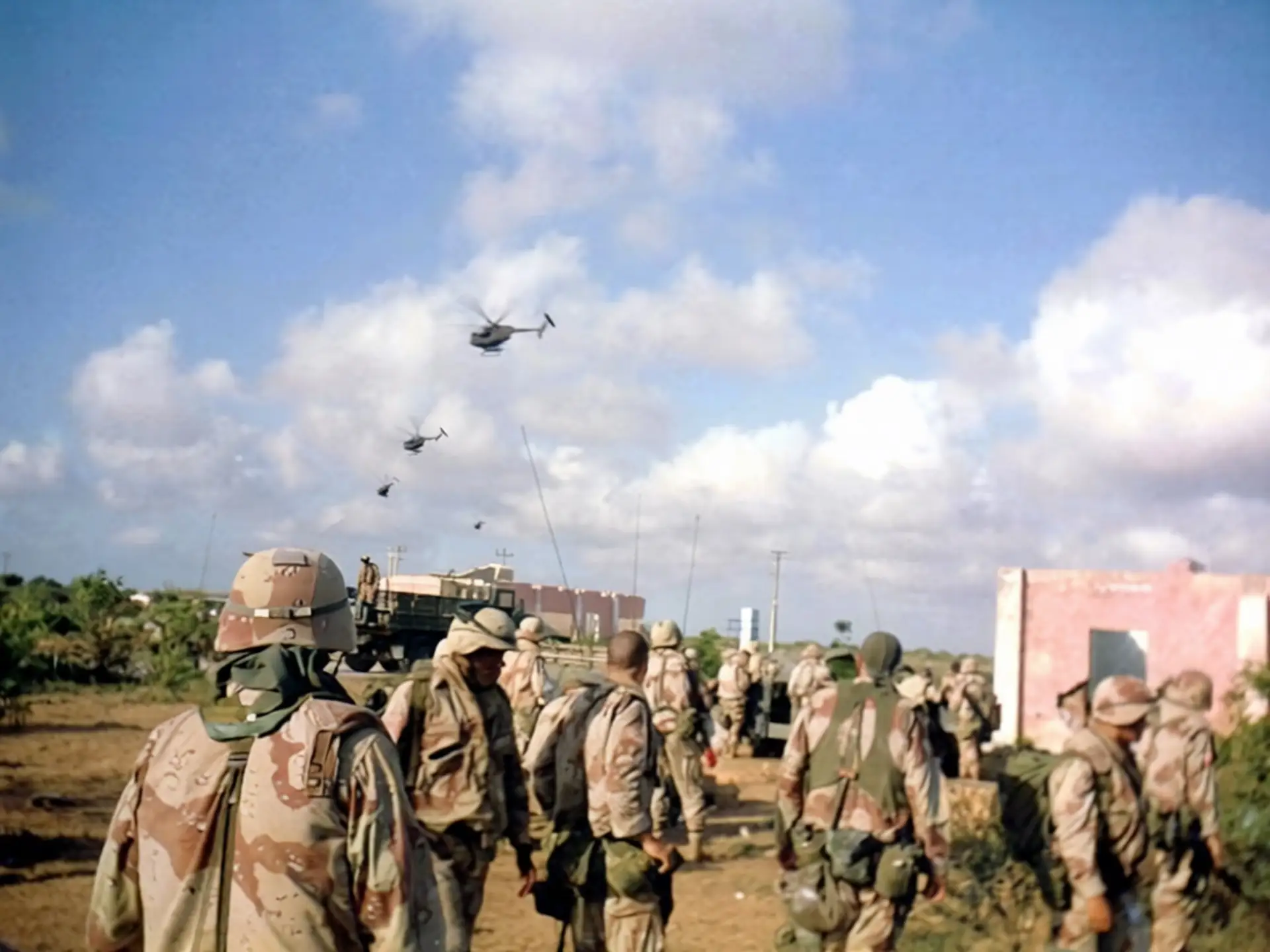
Team One continued to circle Crash Site Two, but only moments later, a convoy became pinned down by heavy fire near the K4 traffic. Atom 51 directed Team One to assist. Team One was successful in eliminating that threat and freeing up the convoy but then found itself having to quell a friendly-fire incident when elements at Sword Base (a joint U.S. and coalition logistics facility unaffiliated with Task Force Ranger) suddenly lit up the convoy like they were mad at it. It took several radio relays and low passes to finally make them stop.
From then on, the entire emphasis was on Crash Site One, where the ground force had consolidated and established a perimeter. The Relief Convoy originally dispatched to them from the objective had never arrived. Plagued by heavy casualties and damaged vehicles, it had returned to base to reconstitute.
It was now dark, with a nearly full moon, and the perimeter around Crash Site One had been defined by numerous infrared strobes placed on the rooftops of occupied buildings. Those strobes also defined the new, unspoken Rules of Engagement. Everything inside of that perimeter was off limits. Everything outside of it was fair game.
Both attack teams now began rotating over Crash Site One, where they massed fires to defend the perimeter. Orchestrated by an Air Force Combat Controller embedded within the ground force; all engagements were made utilizing diving-fire techniques and team tactics with no aiming device other than a grease pencil mark etched on the windscreen.
Danger Close
At times, these engagements were steep, danger-close profiles designed to concentrate dispersion in a small area. At others, they were shallow, low-level runs where the effects of two M-134 miniguns, firing at a rate of 4,000 rounds per minute, rabbited through streets and alleys for several blocks with devastating results. Rockets were especially effective for both their destructive power and shock value. On steep engagements, effects from their 17-pound warheads were channeled skyward by the urban terrain and, occasionally, into the flight path of the aircraft. On many occasions, aircrews breaking away after an engagement could hear the tink, tink, tink, of debris striking their fuselage and chin bubble.
Early in the period of darkness, Somalis probed the perimeter as single combatants or small groups, sometimes shooting around corners in an invitation for the ground force to fire back and give away their position. Later, they became more organized, trucking in forces from across the city and massing them at intersections a couple of blocks away. The ground force adapted to this by pushing the attack assets north of 21 October Road. They had discovered that the Somalis harbored poor noise discipline, and by moving the helicopters out of earshot, the ground force was better able to hear the enemy massing for an attack. This tactical patience allowed them to call in fire missions on larger clusters of combatants, killing more with far less ammunition.
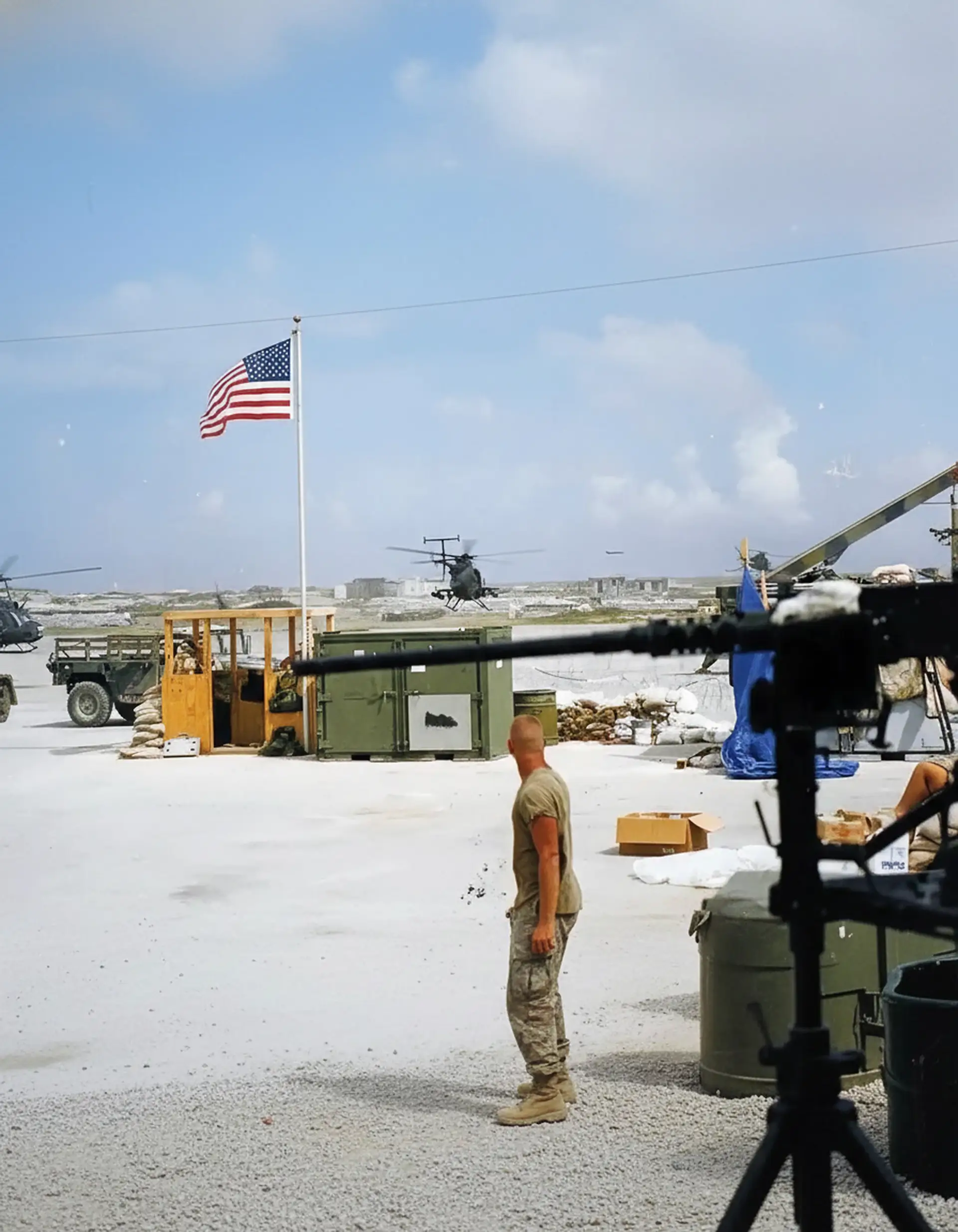
For the 12 hours of darkness that followed, both attack teams alternated between Crash Site One and the FARP where armament personnel descended upon them like a NASCAR pit crew. These personnel reloaded ammunition, resolved weapon malfunctions, and kept the aircraft and their crews in the fight with impressive levels of efficiency.
This battle rhythm continued until the long-awaited mechanized convoy arrived to manifest a breakout. After a significant delay in extracting the deceased aircrew from the wreckage, the wounded were loaded, and the force departed for the Pakistani Stadium, which was the closest sanctuary and located approximately one mile away. During this movement, both attack teams provided observation, crowd dispersion, and suppressive fire as needed along the column’s exposed flanks until it was safe inside the stadium's walls. From there, both teams were instructed to return to the FARP, posture for follow-on taskings, and remain running.
At approximately 0900, the command element directed the attack assets to return to base and stand down. The four AH-6 crews had flown for 17.6 hours straight. During that time, they had expended over 50,000 rounds of ammunition and more than five dozen rockets. All four aircraft had sustained battle damage.
Cost
Casualty figures for the battle of Mogadishu are staggering. Task Force Ranger suffered 18 killed in action, 84 wounded, and 1 captured. The QRF lost an additional 4 killed and 40 wounded during their attempt to reach Crash Site One. The most credible estimates seem to place the total number of Somalis killed at between 700 and 1,000 when counting both combatants and non-combatants, with up to twice that many wounded. A great number of those casualties must certainly have fallen under the guns of the AH-6 teams, though how many is impossible to tell.
The number of Somali non-combatants killed on 3-4 October is perhaps the biggest irony of the Battle of Mogadishu because it resulted from one of the very things designed to prevent it. The presence of two slow-moving Blackhawks in the inner ring of the fire support template was driven not just by concern for force protection but by an undue emphasis on precision fires designed to limit noncombatant casualties. That put Super 61 and 62 in the most vulnerable position imaginable on a daylight raid into the most threat-intensive neighborhood of Mogadishu. A helicopter, shot down, force-protects no one.
A collective After-Action Review (AAR) to address just this sort of issue was scheduled for the evening of 6 October, but it never occurred. Just as it was about to begin, a single mortar round struck near the hangar, killing one member of Task Force Ranger and wounding several others, including members of the command group. It was never rescheduled.
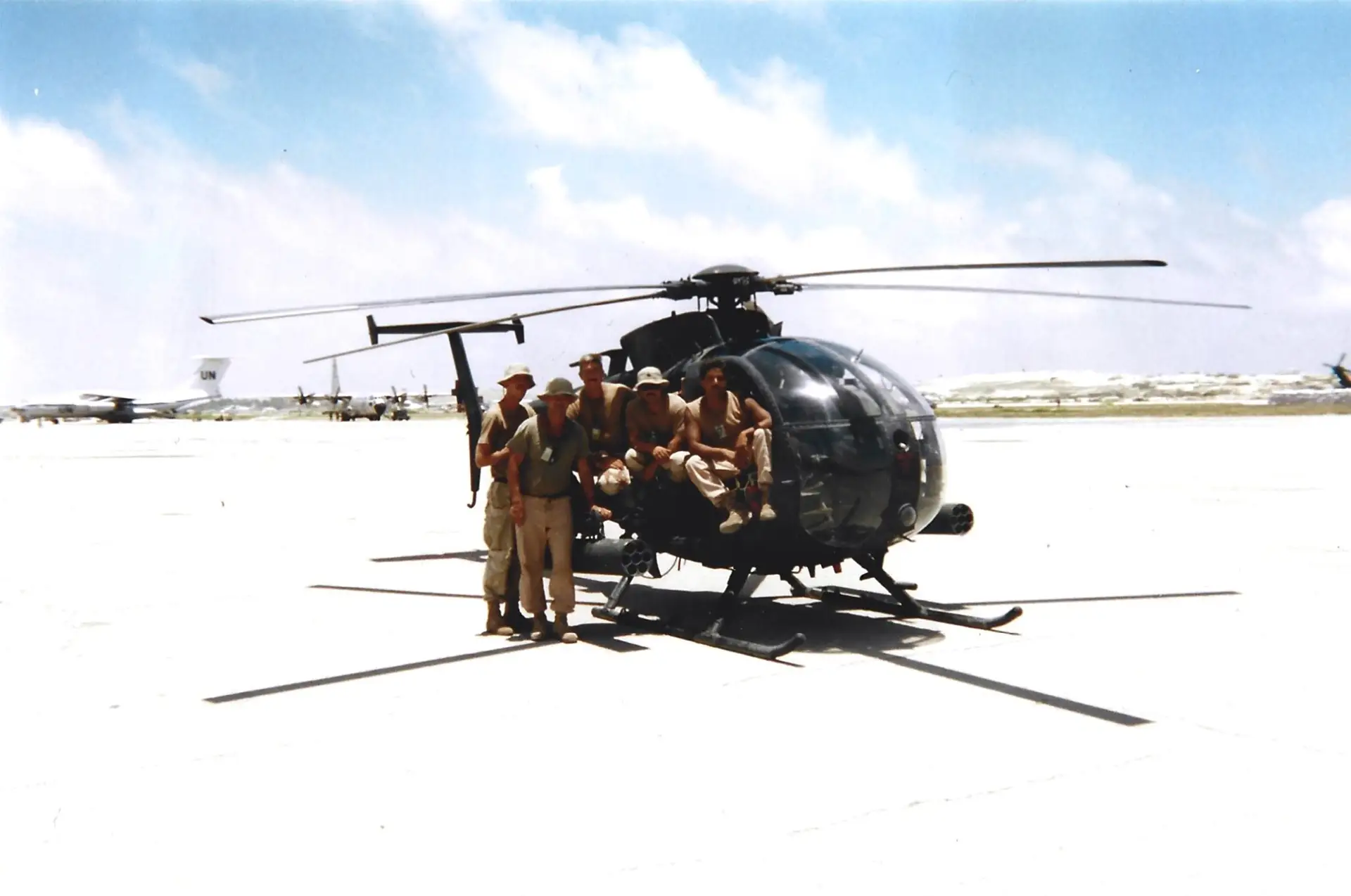
Had that AAR occurred, one of the main takeaways would have been that the Fire Support Template had long since outlived its utility. It had become habitual to the force and predictable to the enemy. It was so habitual, in fact, that when Super 61 was shot down, the command element seemed to automatically bring forward Super 64 without much consideration. Under the current realities, it would probably have been a much better play to vacate that inner orbit rather than fill it with another vulnerable MH-60, since the Barber element was still on station to provide fire support. The AH-6s were smaller, faster, and more maneuverable, and operated in mutually supportive teams that could mass fires. Simply put, they were harder to hit and, by extension, harder to kill.
Likewise, had that AAR occurred, the tragedy at Crash Site Two would have been a major subject of deep review and discussion. The Barber elements took the Super 64 overrunning particularly hard. They felt that both teams should have been prioritized and committed to that problem set earlier, even at the expense of other elements that were, by then, holding their own, at least somewhat. They also looked inward, wondering if there was anything they could have done better, any call they could have made, any initiative they could have taken. Of no solace at all was the uncomfortable reality that there was probably little they could have done to affect the final outcome. Even had they been able to get there from their current positions in the battle space, they could only hope to buy time, and there just wasn’t enough of that for sale. It had ultimately taken hours for a ground force to finally fight its way to Super 64. When that force finally arrived, it had found only the artifacts of a desperate struggle and the remnants of a heroic stand.
The AH-6 crews were not alone in this reflection and consternation. Virtually every air asset in Task Force Ranger thought that it should have been used in some way to do something on behalf of Crash Site Two. But after already losing four aircraft to that city, no more lift assets were going to be committed, especially in the daylight.
Change
Although these kinds of things were never officially addressed in a formal AAR, things did change. The HAF and fire support templates were immediately adjusted, and the mission now shifted from capturing Aidid to rescuing pilot Mike Durant, who was being held captive somewhere in the city. To that end, rehearsals were conducted in accordance with the new HAF template and fire support plan. By night, the Barber element continued to fly patrols over the city. They had been given a hard deck of 1,000’ but routinely ignored it, flying low in the hopes of drawing fire that would give them an excuse to return it.
While these rehearsals and patrols were being conducted, Ambassador Robert Oakly arrived to negotiate the release of Mike Durant and the repatriation of the deceased. Those negotiations, according to the Los Angeles Times, involved giving the Somalis a 48-hour window to return Durant and the bodies, or the bad men at the airfield would kill every living thing in that part of the city. This was a threat that Task Force Ranger would have been quite happy to make real, but on the 9th and 10th of October, the bodies were returned. Mike Durant was then released from captivity on the 14th of October after 11 days in captivity. Finally, every member of Task Force Ranger was accounted for.
Within a week, Operation Gothic Serpent was canceled, and the force was recalled.
Task Force Ranger departed Mogadishu on 20 October, 1993, leaving no man behind.