 HOME
HOME




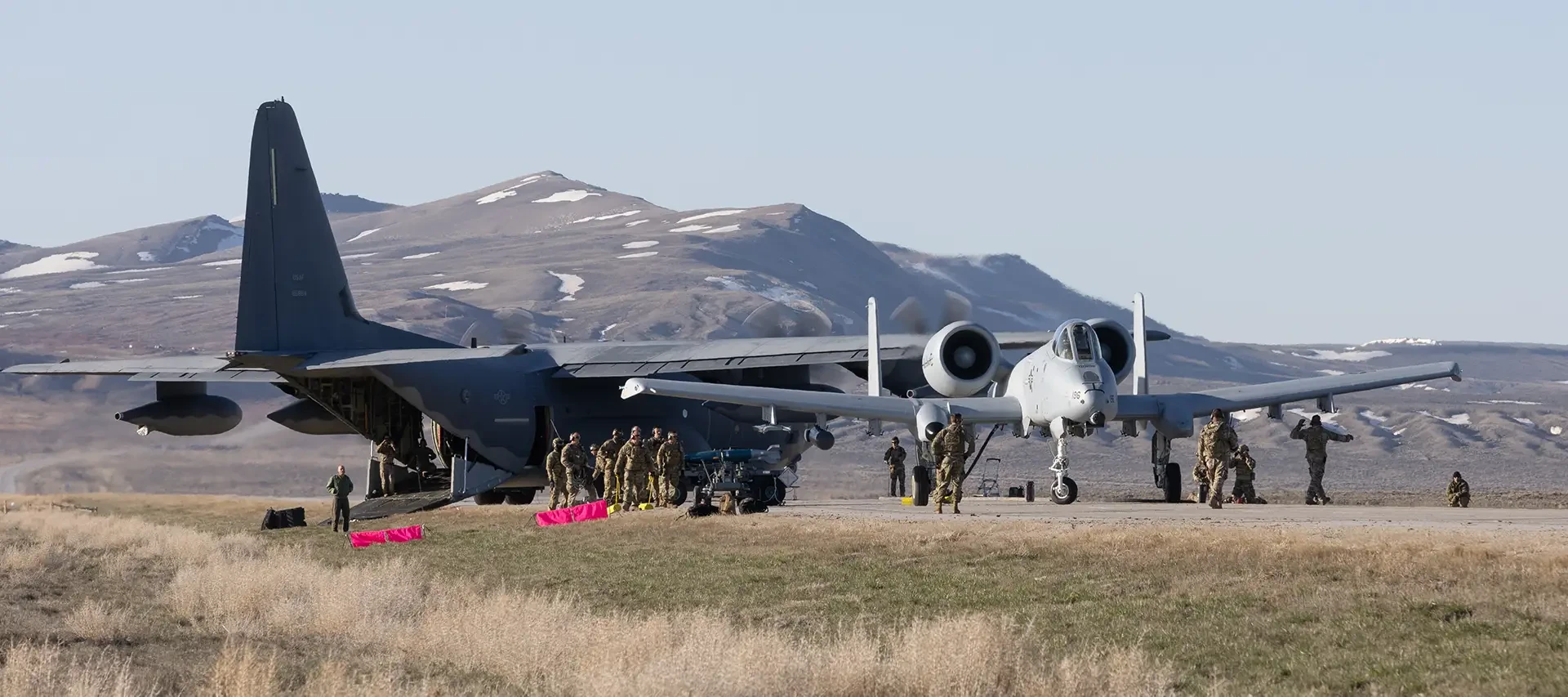
ACE (Agile Combat Employment) is a core priority construct for the US Air Force, with the aim of enhancing survivability by dispersing operations, while still generating combat capability. AFSOC’s recent ‘Agile Chariot’ exercise was a highly effective demonstration of this principle in practice.
Off Airfield Landings
In late April and early May 2023, USAF assets operated in conjunction with Total Force organizations to conduct off-airfield landings on Wyoming Highways 287 and 789, demonstrating capabilities that promise to greatly increase survivability and effectiveness of military assets. While landing military aircraft on public roads is not a new concept, the scale and scope of exercise Agile Chariot was unprecedented in the US military.
Major Matt Waggy from the USAF’s 15th Special Operations Squadron of the 1st Special Operations Wing, under Air Force Special
Operations Command (AFSOC), explained that a large part of the reasoning behind Exercise Agile Chariot was a recognition that with US
military involvement in conflicts around the globe lessening, AFSOC is considering how best to integrate SOF (special operations forces)
into multi-domain operations. “We need to establish how we can best help our conventional forces,” he noted. “As we were winding down in
Afghanistan, we were conducting a lot of FARP (Forward Arming and Refueling Point) operations and we saw a natural connection between what
we were doing there and how that could be applied to the next potential fight, in conjunction with what the Air Force was doing with ICT
(Integrated Combat Turns).”
Maj. Waggy related that when he was first approached with the suggestion to land an MC130J on a public highway, he retorted that although it was a nice idea, it was not likely to happen in the foreseeable future. After further consideration, however, his view changed. “I thought, why not? So, then I started to investigate and found that in the recent past military aircraft had indeed been landed on highways. They did a lot of hard work and laid the foundation for what we wanted to do but once we researched it all and had their data, I wanted to do more than had been done before,” He stated. Maj. Waggy had read a paper on highway landings by Lt. Col. Dave Meyer, who subsequently became Deputy Mission Commander for Agile Chariot. Waggy first approached Meyer to discuss the feasibility of a highway landing exercise. “While we were talking, the ideas started coming and we thought that instead of just landing and taking off, it would be great to set up a FARP to rearm and refuel aircraft. Then we thought, why not land some A10s as well? And why not do Integrated Combat Turns simultaneously?” Maj. Waggy recalled.
How About A Drone?
By about a month into discussions, the idea of including an MQ-9 drone arose and even the possibility of fifth-gen fighters was considered.
“They had other commitments, but their interest and excitement were certainly piqued at the idea. If we do this again next year though, we
hope to have them join us as well,” he added. Enthusiasm for the concept of landing an MQ-9 Reaper on the highway was immediate from 2nd
SOS when Maj. Waggy contacted them to invite their involvement. “They’re very ‘lean forward’ right now, with regard to pushing the
boundaries of UAV operations,” he commented.
“Something that Dave (Meyer) and I learned throughout this exercise is that there’s always a way to get to ‘yes’,” commented Maj. Waggy, continuing, “This was no easy feat. It took a lot of work and a lot of convincing the FAA to allow this, because the MQ-9 had to fly into controlled airspace from 18,000 feet above mean sea level, which it usually operates above, down to 3,000 feet above ground level. The FAA required that a chase plane remained in visual contact with the MQ-9 the whole way down.” A chase plane was sourced and Waggy expressed appreciation for its involvement, acknowledging that the drone segment of the operation could not have proceeded without it, as it was an integral part of the FAA approval. “It took around seven or eight months of discussion and online meetings to get it approved but the FAA were actually very helpful all the way through, as they obviously recognized the need to establish how to work through this and set up effective, workable processes for the future. They just needed to guarantee a safe way of managing a potentially risky activity.”
Pathfinding
Pathfinding efforts have a long history within AFSOC; recently highlighted with the Rapid Dragon program and Agile Combat Employment
initiatives. Although the exercise was never requested by Air Force or AFSOC leadership, Maj. Waggy reported that so much work had been
done, when it was presented and briefed to senior leadership, it took little persuasion to get approved. This was a crucial part of the
process, as at that decision point the senior officer in AFSOC A3 Operations Directorate could have elected to deny approval and all the
work would have been for naught. However, the exercise plan was sufficiently fine-tuned that risk mitigation was almost total, while the
demonstrable benefits were clearly significant and completely in line with the National Defense Strategy and current US military leadership
intent and aims, particularly the focus on demonstrating enhanced ACE capability. “We had designed a joint, inter-agency exercise plan to
demonstrate that this is what we do every day, this is what we expect special operations to be able to do on a consistent basis. I hope the
result looked seamless because by the time we got to execution it certainly felt seamless,” Maj. Waggy recounted.
Agile Chariot Happens
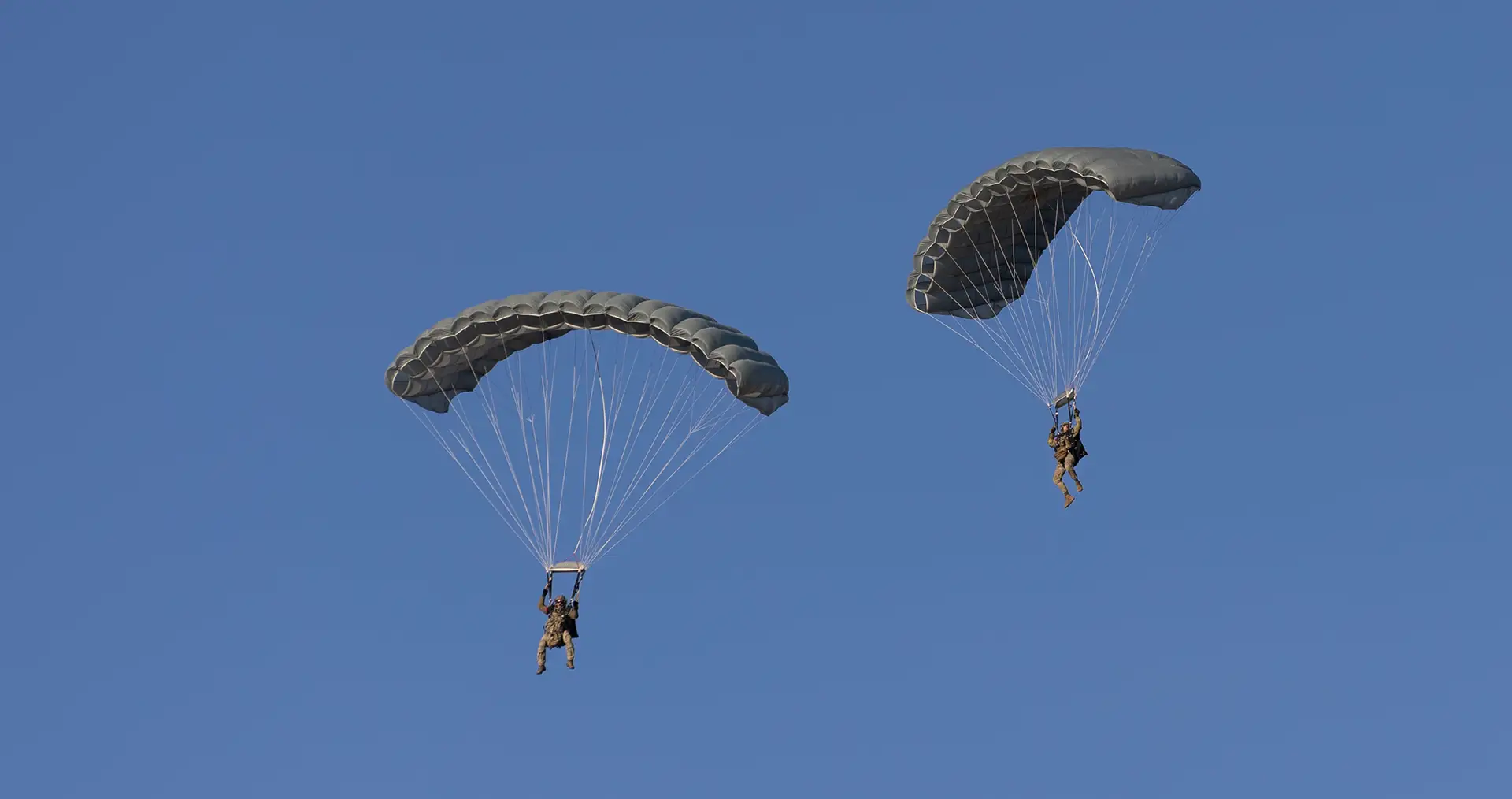
The first part of Agile Chariot was ‘Cowboy XL’ on 30 April, followed by objective ‘Speed Goat’ on 2 May, which included US Army 160th SOAR’s MH-6 Little Birds. Airmen from the 123rd Special Tactics Squadron of the Kentucky Air National Guard, familiar collaborators with the 15th SOS, parachuted from the MC-130J into the landing sites, securing the landing zones and operating the highways as usable runways during both of the exercise’s major events. The airdrop to secure the LZ was predicated by the assumption that the potentially hostile location was less than permissive, and we couldn’t drive in any of the material required for the Integrated Combat Turns. An important facet of the exercise was that the roads used were not purposely designed for landing aircraft, so successful completion would demonstrate the capability to utilize countless miles of public road networks for air-land operations if the need arises. A great deal of measuring and re-measuring confirmed that the highways selected were within the dimensional limits defined under the squadron’s operational rules and no obstacles would hinder maneuvering and three-point-turning the large MC130J with its massive wingspan.
The two-part nature of the exercise came about when, during an October 2022 pre-deployment site survey, two different local authorities both wanted the exercise conducted on their roads. “I wanted Agile Chariot to incorporate A10s, the MQ-9 and the MH-6 Little-Birds. All the equipment required for the various types wouldn’t fit in one MC-130J so splitting it into two parts made great sense for operational reasons, but also allowed us to partner with multiple counties and military units,” Maj. Waggy outlined. In an aside, he noted that subsequent to the thorough survey conducted for Cowboy XL, that section of Wyoming highway is now the world’s longest runway, at 30,000ft.
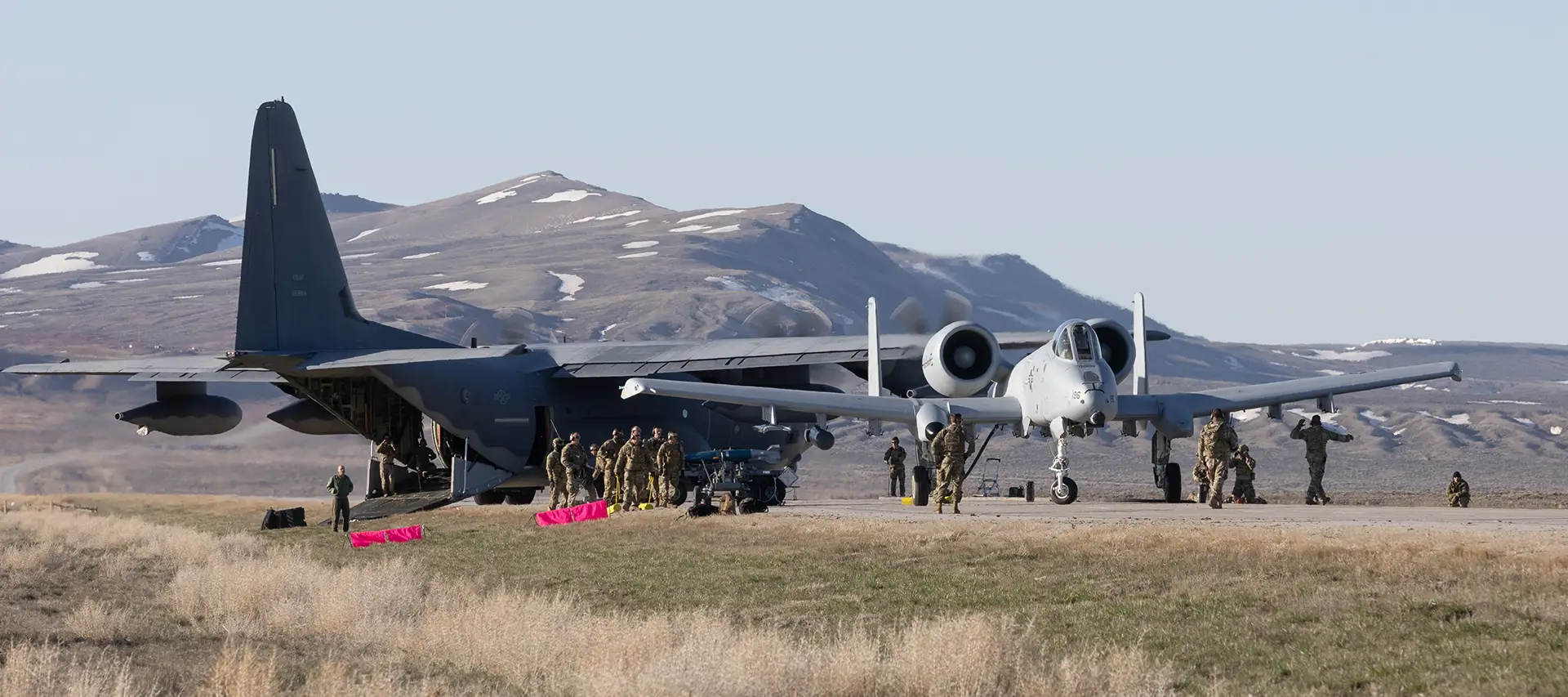
With Cowboy XL’s landing zone secured, the MC-130J Commando II from the 15th SOS landed, carrying all the necessary
equipment to establish a FARP site. “Why we went with a FARP site for Cowboy XL is that, due to simultaneous refueling and
re-arming, the ground scheme maneuver is the most complex. We knew that if we could do this, we could do virtually any kind of air-land
operation. What we wanted to demonstrate was how we believe special operations could support the ‘big’ Air Force and their large fixed-wing
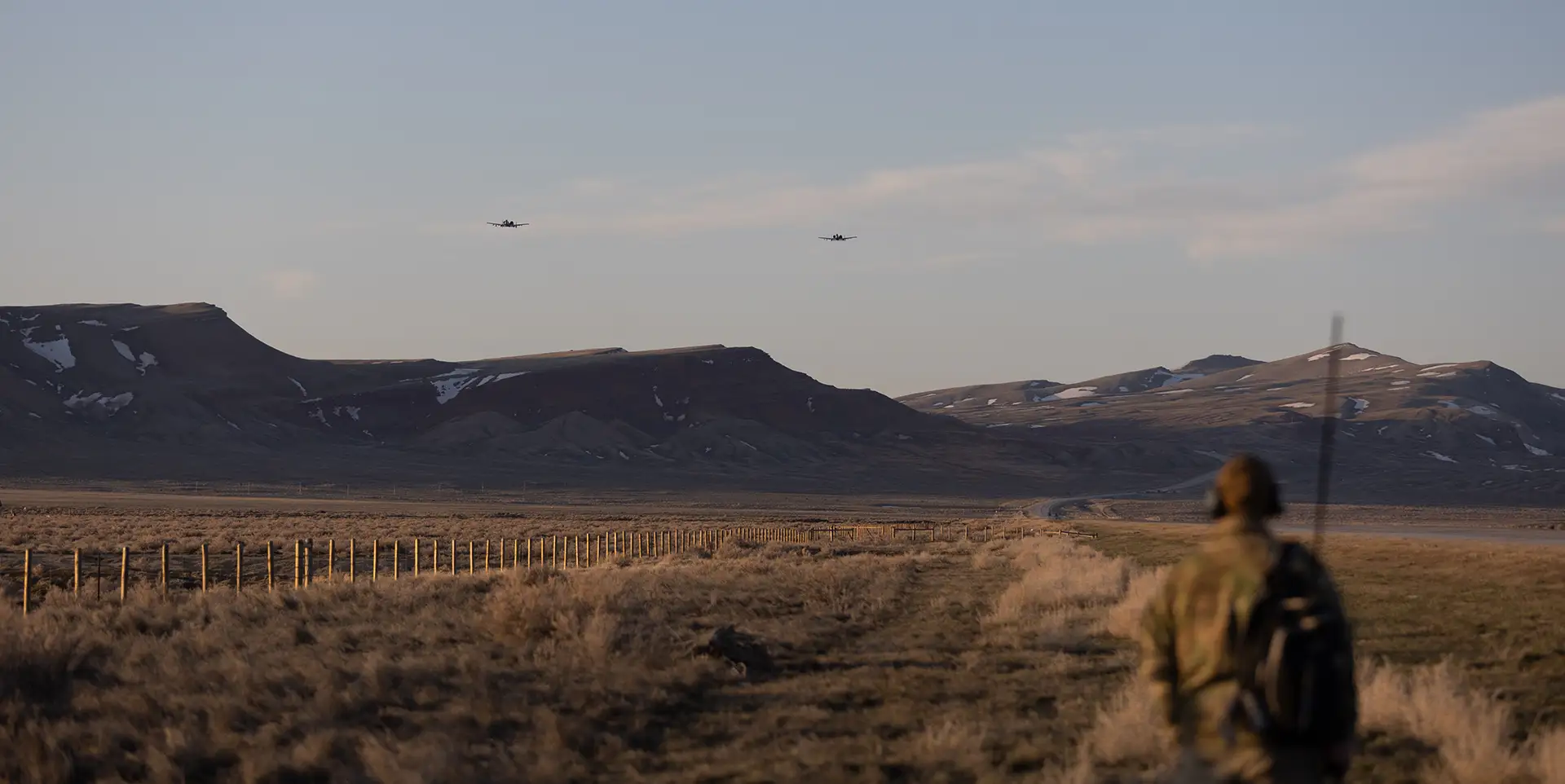
aircraft,” explained Maj. Waggy. When the FARP was established, two Michigan Air National Guard A-10s from the 127th Wing’s 107th Fighter squadron at Selfridge Air National Guard Base landed in turn to be refueled and re-armed. The choice of the 107th
aircraft was simple, as that unit had already conducted roadway landings in the past, so using those experienced pilots mitigated risk.
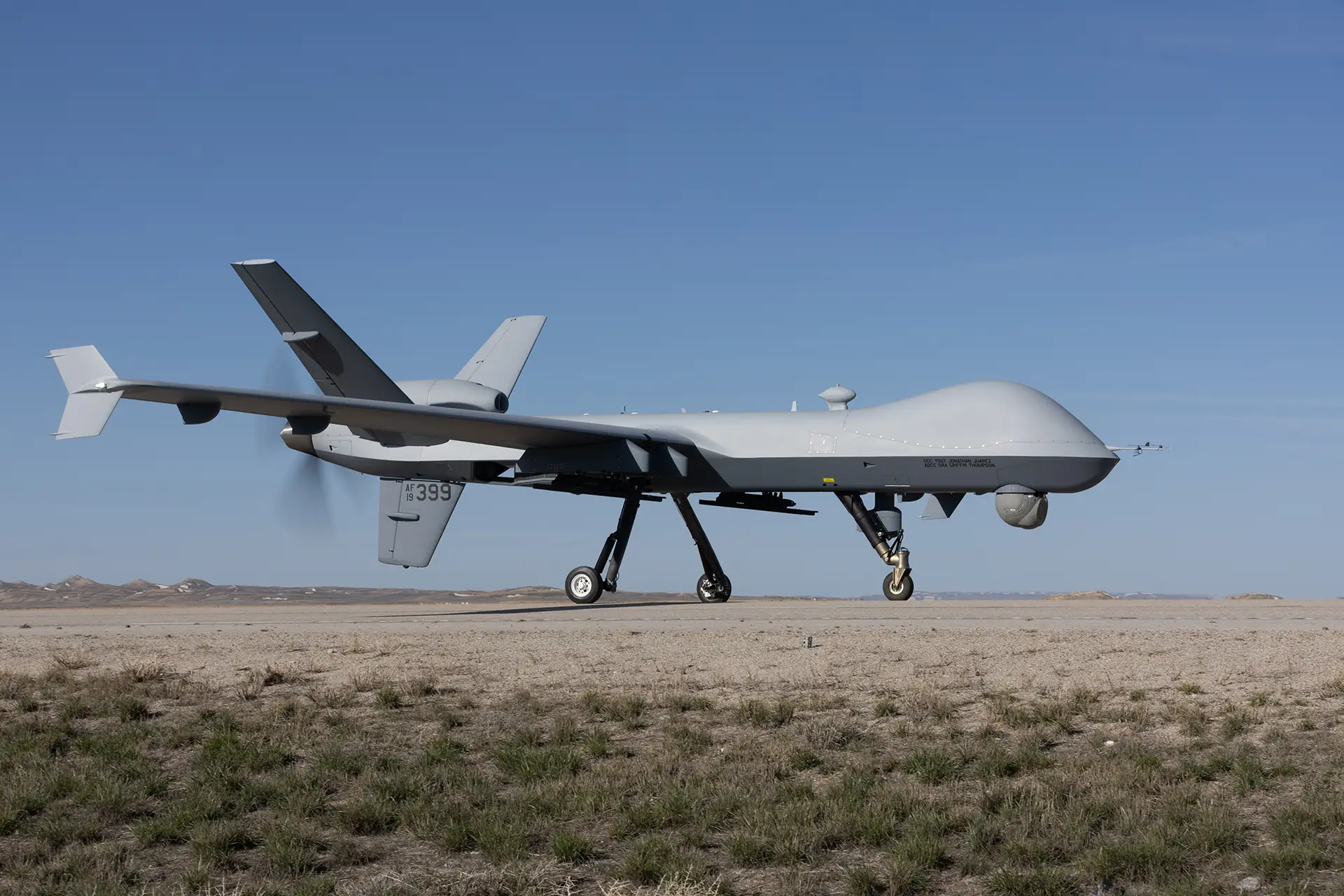
Maj. Waggy pointed out that the lack of any ramp, taxiway or pull-off area outside the highway boundaries necessitated extremely complex and intensive mission planning and rehearsals, commenting, “If we break an aircraft on a highway landing strip, there is nowhere to pull off. With the tanker positioned across the roadway there is no excess room to play with so every personnel movement and the position of every item of equipment had to be precisely planned and extensively rehearsed. We had to consider every possible scenario, how to mitigate the risks and how can we exfil’, but we did find some solid and repeatable answers about the geometry of how this had to go down. The A10s showed that they had plenty of performance and so we will be able to do this in tighter and tighter locations.” Lt. Col. Meyer added. Once the A10s had departed, the MQ-9 landed. The MC-130J also successfully demonstrated that it can three-point-turn inside the limits of a 62ft-wide highway with several feet to spare.
County officials played a huge part, coordinating law enforcement, organizing transportation, and organizing distinguished visitors. “Without them, this would not have been visible to our leadership and to the public. They really stepped up and helped out immensely, and that generated a lot more buy-in by the local public,” Lt. Col. Meyer remarked. The name ‘Agile Chariot Exercise’ was chosen to play on the acronym ACE that is the operation’s prime raison d’etre. While agile is self-explanatory, chariot is derived from the squadron’s nickname for the MC-130J – the ‘Chariot of Armageddon’. The two operational segments both carry names that recognize the exercise locale. Wyoming is home of the cowboy, and the original highway landing exercise was named ‘Cowboy’ by MSgt Scott Klobucher, so Waggy added the ‘XL’ to point out the more ambitious scope of this exercise, while small wild antelopes that are prevalent locally are colloquially known as speed goats. “We really wanted to recognize and give back to the local community, because the amount of support and resource they’ve given us has been overwhelming,” Maj. Waggy acknowledged, “and those names help us show the locals that we recognize and appreciate where this has taken place.”
Communication Key
For Agile Chariot, planning was crucial, but the most critical aspect was establishing contacts, building trust and credibility, and maintaining communication throughout the military network and with a wide range of federal, state and local agencies. Without cooperation from all concerned the exercise would have been impossible and Maj. Waggy stressed how appreciative his team was for every person and organization that participated or facilitated in its successful completion. Arranging the road closure for Cowboy XL was a good example of the compromises required, as the highway is heavily used by eighteen-wheelers. The initial request was for a six-hour closure but that was reduced to four hours and moved to early Sunday morning to minimize disruption to the public and industry and meet requirements of the Department of Transportation and the Governor of Wyoming. As Lt. Col. Meyer pointed out though, dealing with a political constraint in peacetime is little different from having to deal with an operational constraint in a conflict situation and although the restriction forced the team to adapt to the new limit, the exercise was still completed well inside the maximum permitted timeframe.
Firsts
The exercise racked up a number of firsts. It was the first time an MQ-9 has ever landed on a highway; the first time an MC-130J has landed
on a highway intended solely for public use; the first time other aircraft have been refueled and re-armed on a highway and, most
significantly, the entire operation was organically completed by a self-contained air package. “That self-containment and demonstrating the
agility it facilitates was the primary objective that we wanted to achieve. To cap it all off, once the exercise was over, the only sign we
had been there were the tire marks from the MC-130 landing on the highway,” noted Maj. Waggy. He and Lt. Col. Meyer both stressed that Agile
Chariot was not a stunt, but a successful demonstration of a support operation that can be normalized for both combat theatre and
humanitarian/disaster relief environments.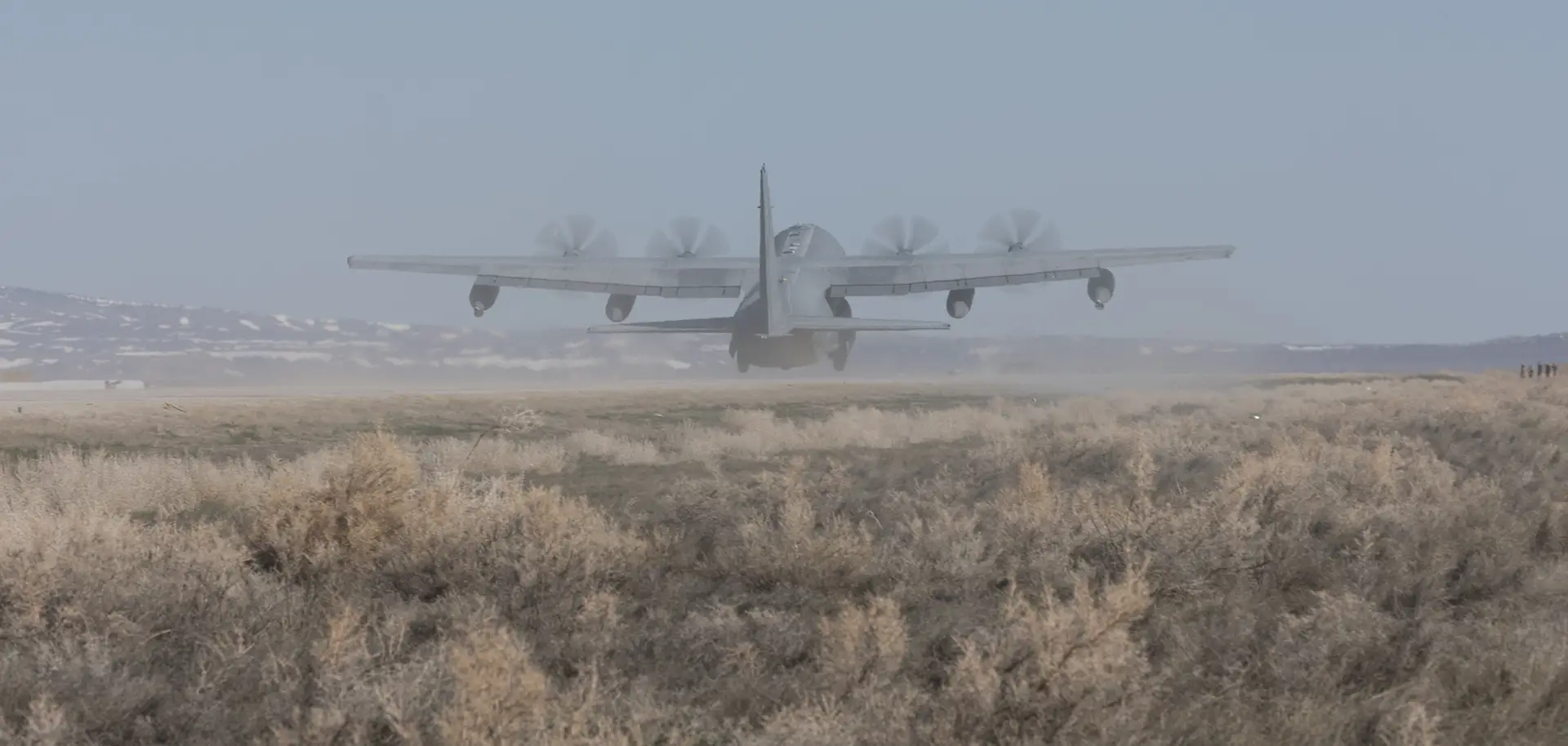
“Now we can look at how many doors this is unlocking for us, how we can apply the lessons, techniques and processes learned here to other operations and wider applications.” The next iteration of Agile Chariot is already in development and one thing is already certain. It will be larger, more complex and incorporate an even wider range of terrain, aircraft and participating military units.