 HOME
HOME




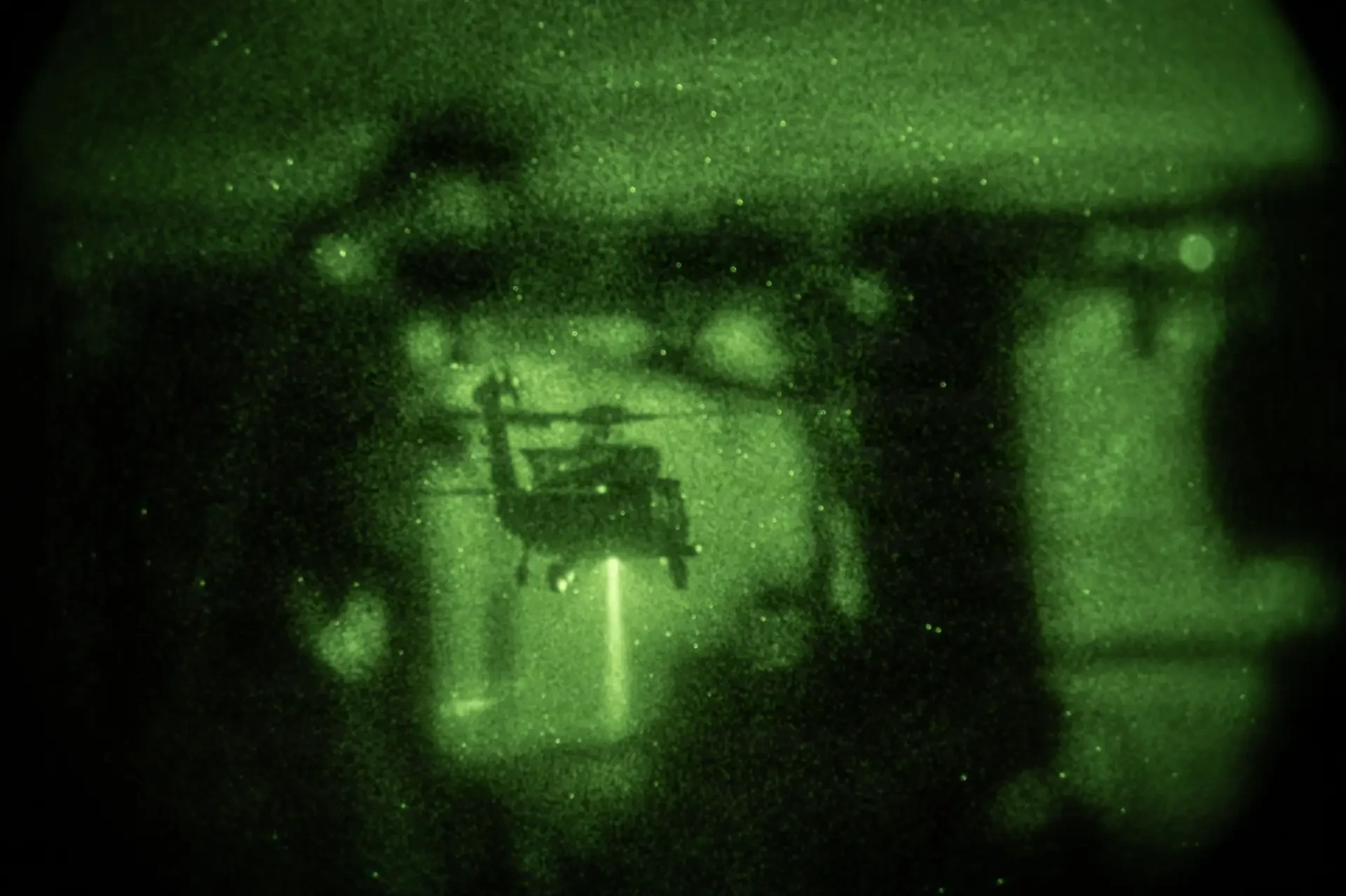
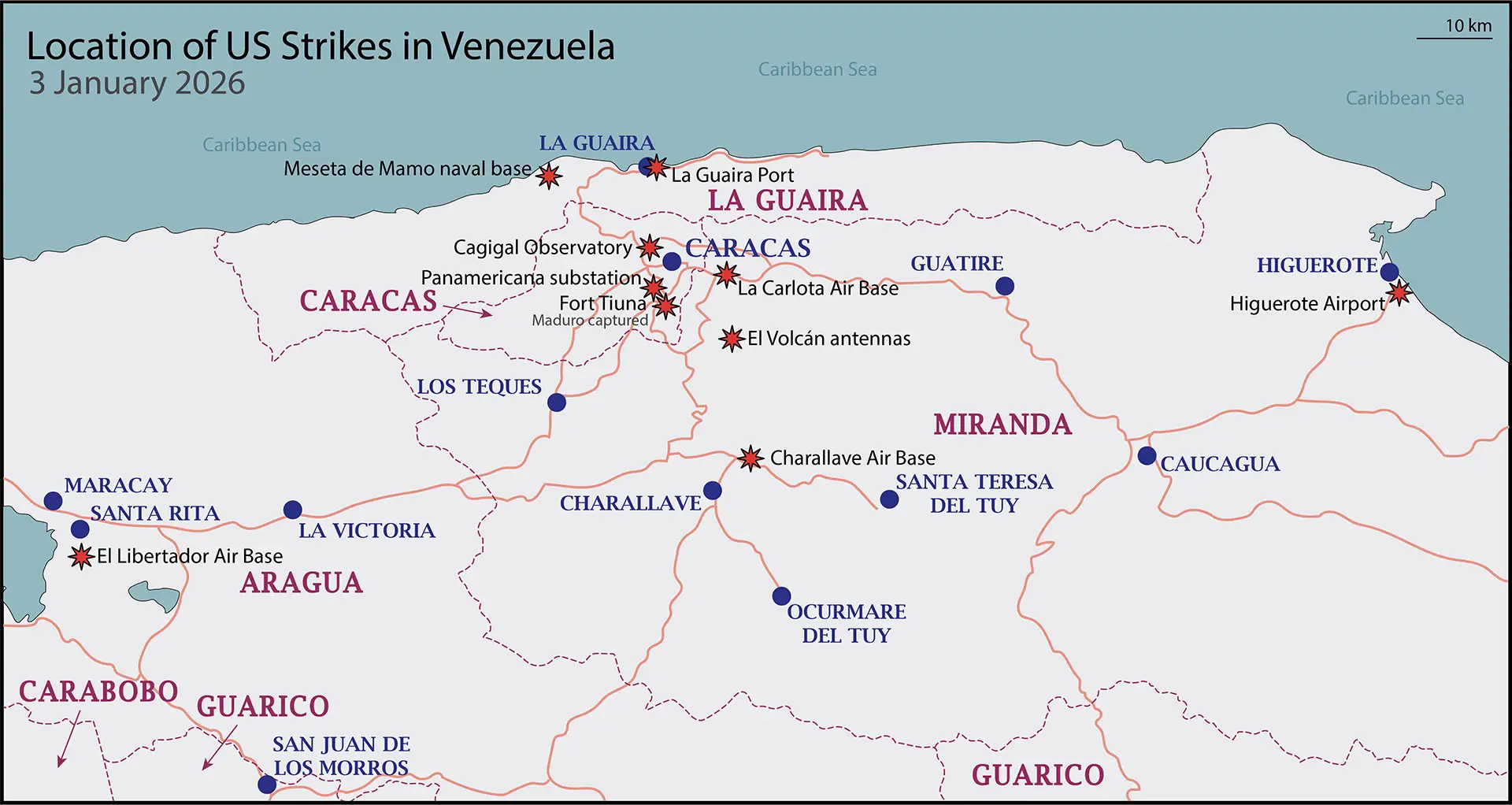
While the timing is (purely) coincidental, it was very accommodating of the US to launch Operation ABSOLUTE RESOLVE ('OAR') during the workup period for the inaugural issue of Carpe Noctem. It's given the publishing and editorial team plenty to ruminate over, offering an ideal vehicle for discussing many of the facets of the planning and execution, well, those that can be discussed in a public forum based upon open-source data at least. For this launch issue, it also provides a very neat 'bookend' to the 'origin story' of USSOCOM, the brave attempt but ultimately abject failure of Operation EAGLE CLAW, and the subject of another article in this expanded first issue.
The two operations could not be more different in how they were planned, trained, and executed, and OAR was well trialed for weeks, if not months, as tensions grew between the US and Venezuelan administrations. Unlike the 'bolt from the blue' audacity of EAGLE CLAW, attempted by a US military seemingly stuck in a period of introspection, navel gazing, and uncertainty after the end of the Vietnam War, OAR was executed by a military finely honed and certain of its mission and purpose.
How then was OAR such a success, while EAGLE CLAW was such a disaster?
Much of it stems back to the 'Holloway Report'. As discussed in the EAGLE CLAW article, the bitter and complete failure of the
operations led to a radical rethink of how SOF were organized, commanded, and funded. OAR was a true Joint Operation, demonstrating
that for major operations at scale, SOF still require the synchronized support, specialist skillsets, and combat power of the major
services. There was coherent C2 exercised by USSOCOM, with the supporting services acting as enablers in the joint effort, rather than
simply jockeying for position to claim post-mission credits and kudos. While the cutting edge of the mission itself, the extraction of
President Maduro, was apparently executed by elements of the US Army's 1st Special Forces Operational Detachment - Delta (1st SFOD-D) borne
by the helicopters of the 160th SOAR, closely coordinated support elements made it possible.
Unlike Iran in 1980, OAR Planners were able to call upon a veritable constellation (literally and figuratively) of ISR assets, both space-based and air-breathing. The US Army reportedly deployed some or all of its own organic 'collect' platforms, including the ARTEMIS (Aerial Reconnaissance and Target Exploitation Multi Mission Intelligence System), ARES (Airborne Reconnaissance and Electronic Warfare System) and the ATHENA (Army Theatre Level High Altitude Expeditionary Next Airborne ISR) to bases in the Caribbean to participate in Operation SOUTHERN SPEAR, the overall effort against Venezuela. All three aircraft are based on Bombardier business jets (Challenger 650 and Global 6500) and offer far more space, speed, altitude, mission power, and endurance than the previous-generation King Air-based MC-12 turboprops. The current plan is for the Army to replace these mixed-ownership platforms with a new common type. ARTEMIS and ARES are both contractor-owned and operated, while ATHENA is owned by the US Army and seen as a 'bridging platform' to the long-term fleet of HADES (High Accuracy Detection and Exploitation System) aircraft, also based on the Global 6500 jet. The step change from MC-12 to the Bombardiers is huge. The superior performance allows bigger sensors to be carried higher and remain on station for several hours. This enables the platforms to achieve their mission while remaining at a reasonably safe standoff distance from likely threats.
The 'semi-black' RQ-170 Sentinel was also used, according to its manufacturer Lockheed Martin. Unlike the US Army's ISR fleet, the RQ-170 is not designed to hang back and pry from afar; its purpose is to penetrate an opponent’s airspace, bypassing their Air Defenses, and then deliver high-quality ISR data from a variety of sensors. The Army's aircraft would have been used for weeks to build awareness of Venezuela's capabilities and Order of Battle, and to map the routine 'Patterns of Life' to inform decision-makers on mission planning requirements. Healthy target dossiers would have been developed and matured. The RQ-170, and possibly other platforms even more in the 'black world', would have been committed in direct support of the raid itself, providing up-to-the-minute, real-time information on threat systems and updates on the status of the main target.
There's also little doubt that HumInt was a key factor in the mission's success. Unlike in Iran, where in-country assets were scarce and difficult to access, Venezuela was closer and more porous, and the massive advances in communications technology since the 1980s made directing operations and receiving reports much easier. In time, we may well discover that SOF OPs were also in position in-country in the days leading up to OAR, adding their insight to the developing picture.
With large quantities of high-quality intelligence to draw upon, Mission Planners could devise a scheme of manoeuvre to achieve maximum
surprise at minimum risk. Much like the plan for EAGLE CLAW, the mission was scheduled to be executed at night and rely heavily on
helicopters.
This is where the similarities end, however.
The distances involved and the proximity of US bases and major warships capable of supporting the 160th's helicopters, including the aircraft carrier USS Gerald R. Ford, meant there was no need for a complex two-night plan. One Period of Darkness (PoD) would be sufficient to execute the mission, especially given the long range and endurance of the 160th's helicopters (in particular the 'fat tanked' MH-47Gs) and, unlike the 1980s, their ability to be Air to Air Refueled from USAF MC-130 and USMC KC-130 tankers.
No need for a 'Desert 1', no need for complexity.
The 160th SOAR's helicopters would have seemed like science fiction to the USMC pilots struggling with their RH-53D's through the sandstorms of the Iranian desert, and their crews' level of training and preparedness would seem scarcely believable. Unlike the USMC crews who had scant weeks to assimilate to flying a different version of their usual helicopter, learning how to operate safely at low level on NVGs and operate their helicopters in dusty conditions, the crews of the 160th will have accrued several thousand night hours flying using high-quality NVGs and benefitting from a complex set of low-light and bad weather sensors. The MH-47G has a combination of Low Probability of Detection (LPD) APQ-187 'Silent Knight' radar, capable of providing Terrain Following (TF) guidance as well as other modes (likely obstruction and wirestrike avoidance, maritime search, and an air-air mode for finding a tanker...), and the AN/ZSQ-2 Electro-Optical Sensor System (EOSS) consisting of a suite of thermal and low light cameras. With skills honed by years of training and frequent operational deployments, the night skies of Caracas would have seemed like a daylight training sortie in many respects; that's what thousands of flight hours and realistic training buys you, the 'luxury of ease'.
Such familiarity makes the mission management so much more effective. When combined with the simplification of operating and navigation tasks by digital flight control systems, modern glass cockpits, and advanced sensors, crew workload is significantly reduced, and mission capacity greatly increased, enabling crews to retain excellent Situational Awareness and make effective, rapid decisions when needed.
Sensors and skill only get you so far.
Ultimately, you need to enter and leave potentially hostile airspace to execute your mission, then get out afterwards.
Survivability is a complex topic. As a Qualified Helicopter Tactics Instructor (QHTI) and Electronic Warfare Instructor (EWI), I have the privilege, even a decade after leaving the service, of delivering briefs and presentations on survivability to military and defense organizations. It is a multi-faceted subject but can be divided into four main areas: Intelligence and Mission Planning, external support, onboard protection and, finally, crew training.
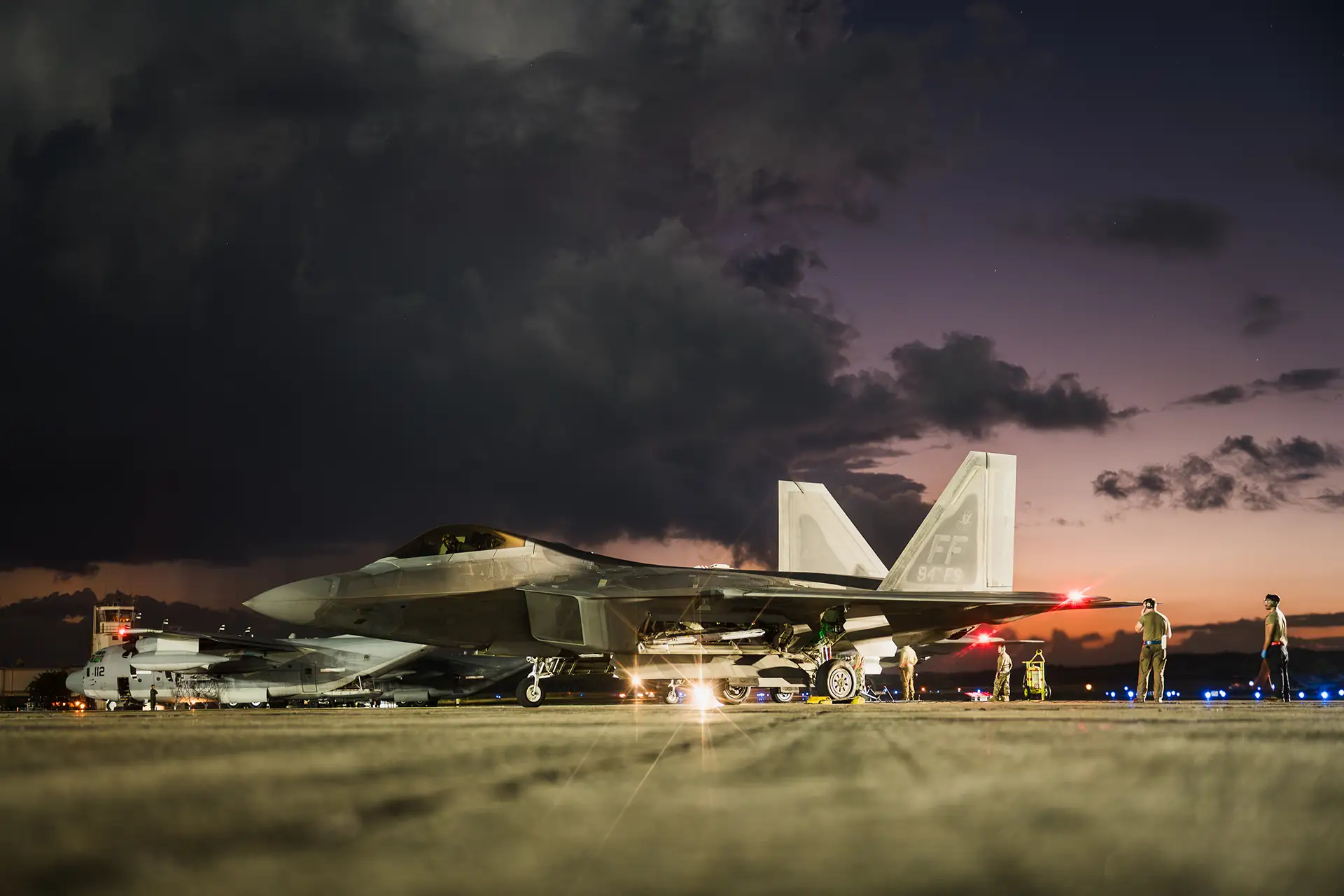
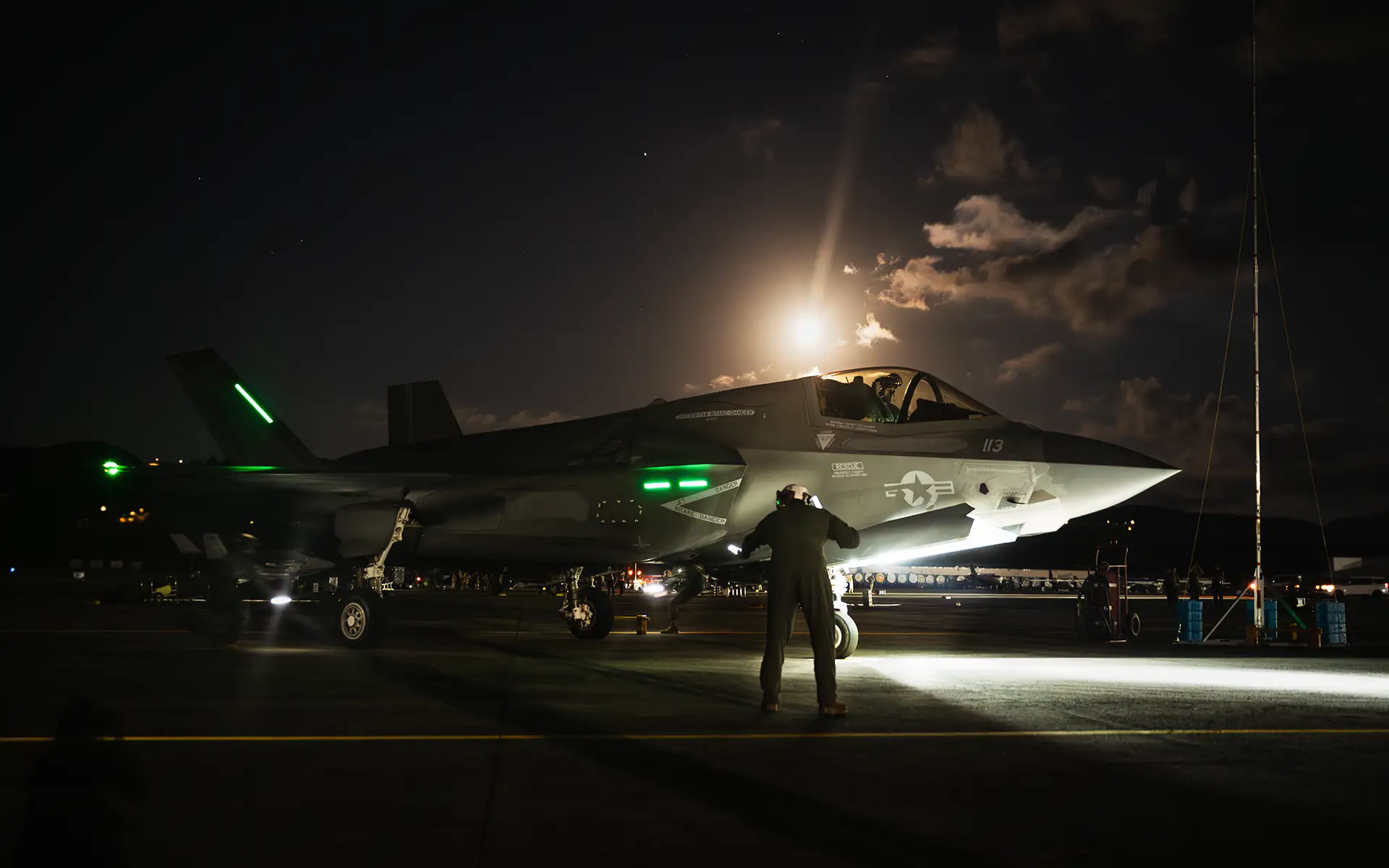
We've already discussed the importance of J2 and mission planning to SOF mission success. In terms of external support, the SOF helicopters tasked for OAR benefited from a comprehensive, hard-hitting force package. Using Composite Air Operation (COMAO) techniques, the support package would likely have planned around 'The Four Ts' of 'Task, Target, Threat, Tactics'. Their Task would have been to protect the helicopter package during ingress and egress, as well as while in the target area. The targets would primarily have been Air Defense nodes and Command and Control (C2) centers. Many nations that use Russian (and, to a lesser extent, Chinese) air defense equipment have adopted a similar, highly centralized and hierarchical C2 system; often, units at the tactical level need to seek permission from their chain of command to go 'weapons free'. By systematically attacking the C2 networks, either via kinetic, sabotage, electronic, or cyber means, a form of paralysis can be produced. Conversely, if denied access to any form of recognized picture or third-party cueing, individual air defense units may either switch off (in an act of self-preservation) or 'go active', adopting a 'use it or lose it' approach. Both 'hot' and 'cold' air defense units will be prime targets for the Suppression of Enemy Air Defense (SEAD) package; pictures from Venezuela the day after OAR suggest that at least three BUK-M2 (SA-17 Grizzly) firing units were destroyed, possibly more. Rumors persist that many components of the Venezuelan air defense system were either not connected to the C2 network or were powered down. For a one-off SOF mission, it's not at all inconceivable that agents of several clandestine agencies were operating in Venezuela in the days running up to AOR, seeking to bribe, cajole, or coerce commanders into not putting up much of a fight. In many cases, the suggestion that F-35 stealth aircraft and dedicated F-16CJ 'Wild Weasel' and EA-18 Growler SEAD/Jamming aircraft might be in the area may be enough to convince an air defense operator not to energize their radar, lest an AGM-88 HARM missile arrive with little to no warning...

However, no SEAD or jamming package can be 100% reliable against all RF threat systems, and several weapons rely on passive detection and tracking. Some highly mobile threats, such as the Pantsir S-1, were purpose-designed to protect point and high-value targets against air attack, including against helicopters and precision-guided munitions. Pantsir has its own onboard short-range radar but is ideally cued by a third-party radar. It can, however, also acquire and track targets passively using an Electro-Optic / Thermal Imaging system. Armament is a combination of radar-guided missiles and a 30mm cannon. In a passively acquired and tracked engagement, the first indication of a missile threat would likely be either a very quick burst of Fire Control Radar to confirm range and bearing or Missile Guidance, whereas a cannon shot may be entirely without warning. A SEAD escort package would offer little support against a 'pop up' threat like a Pantsir, so crews would need to rely on their own equipment and training to escape. Equipment for the 160th's aircraft includes the AN/ALQ-211 SIRFC (Suite of Integrated RF Countermeasures), which detects and then jams hostile radars, with crew training in RF tactics providing an additional barrier to a successful engagement.
MANPADS
To help prevent the EO/TI element of systems such as Pantsir from acquiring the helicopter, the 160th's aircraft are fitted with IR
Suppression Systems (IRSS). IRSS are a developed version of the diffuser technology that has been fitted to a number of fixed and
rotary wing aircraft for decades. The simplest diffusers fitted to helicopters merely bend the engine exhaust upward, shielding the
hottest exhaust gases from detection below the platform and mixing the hot gases with the colder ambient air generated by the rotor
downwash. More modern engine suppressors use a system of venturis to mix ambient air with the exhaust as it exits the engine -
effective, albeit usually at the expense of a small loss in engine performance. Diffusers therefore help to reduce the threat from
early generation MANPADS, those that rely on hot engine exhaust gases to acquire and home to, literally, 'heat seekers'. More modern
MANPADS such as the SA-24 'Grinch' (9K338 Igla-S), namechecked by President Maduro in a speech in 2025, where he claimed to have over 5000
of them, are more sophisticated, and the use of improved materials and cooling enables them to detect the hot metal generated by engine and
transmission casings. Therefore, to reduce the chances of successful engagement, IRSS also provide line of sight blockers for parts of
the engine cowlings and wrap the transmissions in thermal protection to minimize external heat emissions.
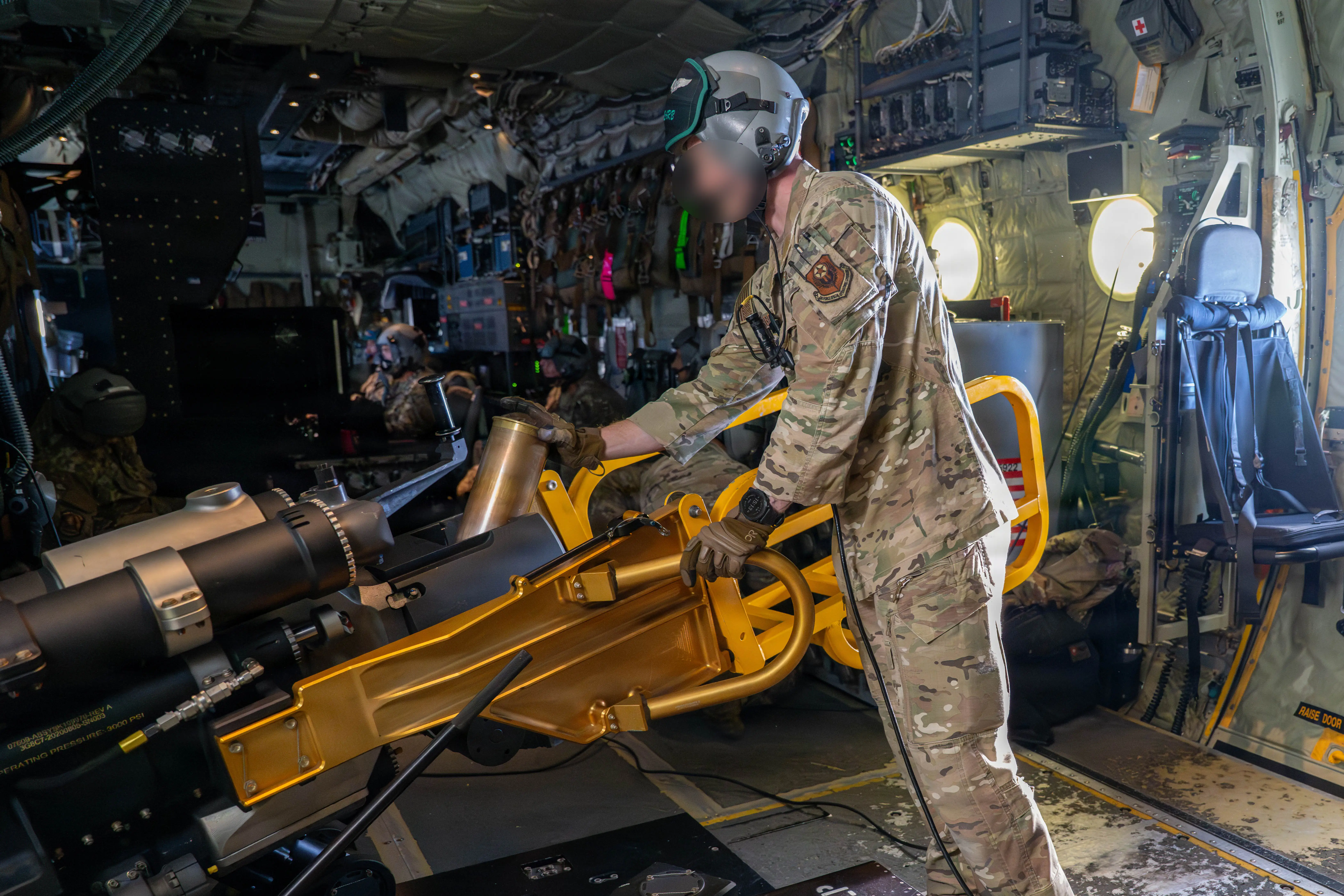
Much like all forms of stealth, nothing is ever 100% effective. The key is to reduce the effective detection and engagement range of threat systems, thereby increasing your chances of not being detected at all. If the IRSS fails to do its job, then Missile Warning Systems (MWS) and IR Countermeasures (IRCM) come into play. There's a decent amount of footage of the 160th's helicopters over Venezuela, and no sign of a successful MANPADS engagement. Directed IRCM (DIRCM) would be impossible to see in action, and given their almost exclusively night operations focus, it's a fair assumption that any decoy flares fitted as a last resort would be similar to the XM-216 SPARCS flares, or Special Material Decoy (SMD) produced by Chemring in the UK, where the effect is generated by materials reacting with oxygen in the atmosphere rather than igniting highly combustible substances such as Magnesium. The result are flares of much lower visual, but not spectral, intensity - working better with NVGs and not providing a very visible 'I'm over here!' signature.
Reports from OAR suggest that one of the pilots of one of the MH-47Gs was wounded by gunfire, hopefully not seriously and with luck they'll be back on active duty soon. Sadly, at some stage, to do your job, you just have to put the platform onto a 'two-way range'. Armor, both personal and cabin/cockpit, of course, helps, but you can't protect every part of an aircraft from every potential shot line without using up pretty much all of the platform's disposable payload. Shooting back also helps - suppressive and return fire may persuade the less courageous to cease firing and take cover, and it'll almost certainly cause a reduction in the accuracy of all but the bravest attackers.
Ultimately, OAR stunned many commentators and operators alike. The close coordination, the well-equipped platforms, and the superbly trained crews proved that, if well planned and properly supported, helicopters can still reach out and deliver strategic-level impact, regardless of the supposed 'lessons learned' in Ukraine. The US learned the hard lessons from EAGLE CLAW and has never rested on its laurels. The USAF developed the MH-53 Pave Low and then CV-22 Osprey to enable long-range SOCOM insertion. The 160th is now on their third generation of 'MH' Chinook, well, technically 'Gen 3.5' as the Block II MH-47G is now the production standard for the 160th and soon, for the UK's 7 Sqn. The Black Hawk remains the 'all-rounder' in the team, covering insertion, escort, and 'fires', while the MH-6 Little Bird has a niche role, especially in urban areas.

What’s Coming
The future is also approaching, and more rapidly than previously expected. The Bell MV-75 tiltrotor will bring CV-22-like speed and range to the 160th's inventory. Indeed, the Army’s acceleration of the program designates the 101st Airborne and the 160th as the 'early adopters'. Quite what roles and platforms the MV-75 adopts remains to be seen, but a 'Missionized' second generation tiltrotor with a cruise speed of over 250kts and a dash speed of, perhaps, in excess of 300kts, 'born digital' with the Modular Open Systems approach (MOSA) baked into the design, it promises to be a potent and highly adaptable platform.
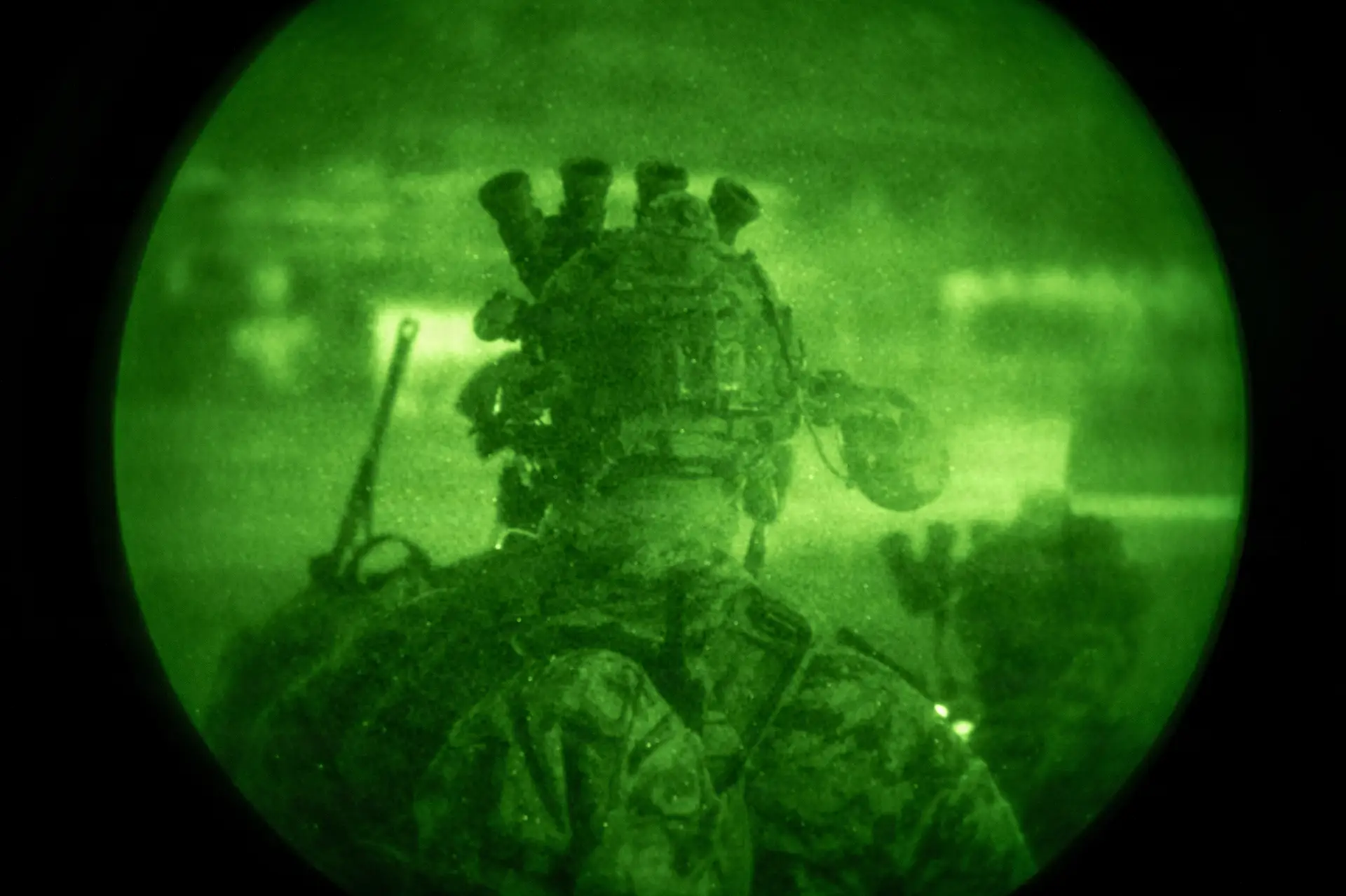
Operation ABSOLUTE RESOLVE gave the world a glimpse of what US SOF power can achieve when part of a skillfully planned joint operation. I'm sure the reverberations will continue to be felt around the world in the weeks and months ahead.