 HOME
HOME




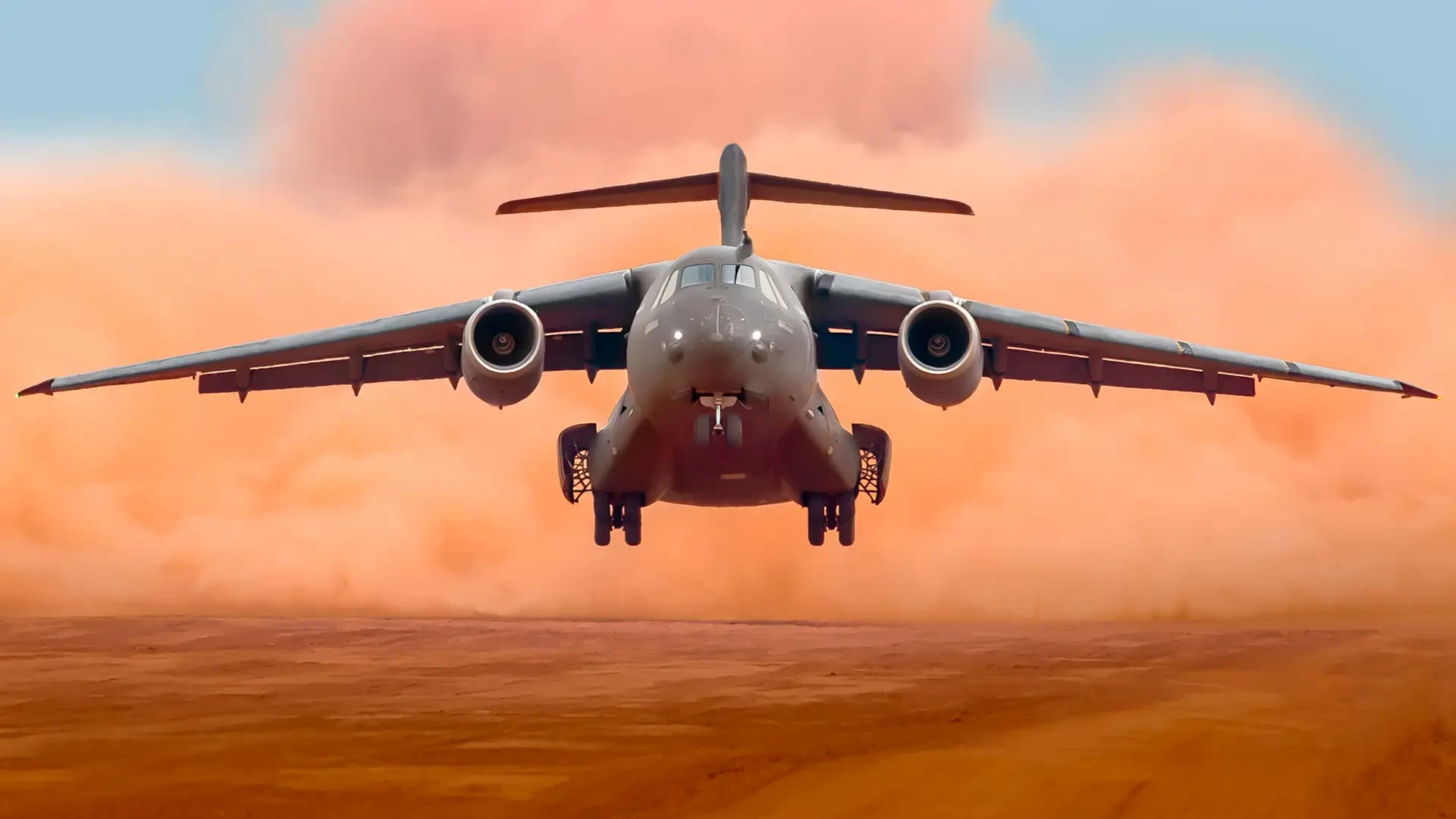
Some air platforms are just, it seems, part of the fabric of the SOF community.
There's also an old aphorism, coined by military theorist Sir Basil Liddell-Hart, that 'the only thing harder than getting a new idea into a military mind, is getting an old idea out."
This is exactly the challenge that Brazilian aircraft manufacturer Embraer faces as it markets its increasingly popular, high-performing, and multi-mission (K)C-390 Millennium Tactical Air Transport (Tac AT) platform to the global SOF community.
Favorites
But it's an SOF community with its long-established 'favorites'.
In rotorcraft terms, the Chinook, Black Hawk, and H225M family in a variety of guises and under different flags are seen as the consistent
benchmarks. Where the C-390 is seeking to compete, in the fixed-wing SOF Tac AT world, the situation is probably even clearer.
Lockheed Martin's workhorse C-130 seems to be the preferred platform of most SOF units and specialist enablers. In sophisticated
'Missionized' versions, such as the US Air Force Special Operations Command (AFSOC) MC-130J Combat Shadow II, the aircraft is used to
support SOF rotorcraft missions via Air to Air Refuelling (AAR) and establishing Forward Area Refuelling Points (FARPs), where the aircraft
lands on in often hostile territory using a beach, natural surface or austere airfield, and provides fuel for fixed and rotary wing aircraft
- the recent recovery of 'Dude 44B' from Iran being an obvious recent example, where the aircraft also carried the MH-6 Little Birds used to
extract the downed WSO to the search area. While on the ground, the Combat Shadow II can carry reloads and food/water for the crews
and troops, as well as a ground security party to seize and hold an appropriate perimeter. C-130s can also be used to insert,
resupply, and exfil SOF units, especially Mobility Troops with vehicles, deep inside an opponent’s airspace, or insert and support
operations from strategic distances - outside the range of even an AAR-capable helicopter or tilt rotor. To enable such high-risk
missions, MC-130Js are equipped with sophisticated pilotage, navigation, and self-protection systems and are flown by hand-picked and highly
trained crews. The USAF also flies the fearsome AC-130J 'Ghostrider' gunship, which (provided it's at night and the airspace has been
sanitized from enemy fighter aircraft and SAMs) can loiter for hours over a SOF operation, providing intimate fires, ISR support, C2, and
comms rebroadcast. While the USMC doesn't quite have the potency of the AC-130J, the 'Harvest HAWK' (Hercules Air Weapons Kit) package
enables their KC-130J support aircraft to bring ISR and weapons capabilities to the fight. Using the Target Sight Sensor (TSS) from
the AH-1Z Viper, the HAWK enables the crew to detect and select targets for underwing AGM-114 Hellfires or the smaller AGM-176 Griffin, ten
of which can be carried in a 'Gunslinger' launcher and deployed from the ramp. It goes without saying that all versions of the C-130
will be capable of delivering Launched Effects (i.e., small UAS).
Current Limitations
UK SOF also employed the faithful C-130; 47 Sqn RAF operated the analog C-130K and more digital C-130J for decades in the SOF support role. The work was dangerous, and airframes were lost in both accidents and to hostile fire. The RAF reluctantly withdrew its last dozen C-130J airframes in 2023, after a total of 56 years of K and J operations. The reason wasn't operational - the airframes still had plenty of service life left after relatively recent rework - but economic. Facing a widening gap between budget and ambition, the UK retired its C-130s, claiming that the newer, more sophisticated Airbus A400 Atlas could take on the role. Tellingly, the UK has managed to dispose of most of its retired C-130Js to new users with relative ease.
Without meaning to in any way diminish the efforts of the crews given the task of making the A400M a SOF platform, the basic 'ingredients'
are just not 'right' in my opinion. It's too big, too heavy, and just too expensive, both to purchase and operate - and in the UK's
case, only available in small numbers (22 airframes). SOF missions often carry an element of enhanced risk. The RAF lost a number of
C-130 on SF Ops in the Balkans, Iraq, and Afghanistan, and, more recently, the US had to destroy a pair of MC-130Js in the Iranian desert
after they got bogged down during the recent combat recovery mission, so any SOF mission needs to be very carefully considered, and the
risks weighed accordingly. Moreover, unlike the C-130 era, where 47 Sqn acted as a specialist SOF support unit (and having worked
with them on Operations, I've witnessed first-hand that they were a highly skilled organisation), the RAF now selects high performing crews
from the Atlas force and gives them additional training - it seems a bit like how the USMC declare certain crews 'Special Ops Capable'
(SOC) prior to a deployment. In my humble opinion, while worthy, it's just not quite the same thing. While I supported
numerous UK and foreign SOF Ops as a 'line' CH-47 pilot, there were a few specialist SOF skills that I simply hadn't been trained in.
It's why the RAF retains 7 Sqn as a dedicated unit - able to carefully train and retain crews with niche, highly perishable skills. In
the long term, the A400 line is rumored to be shuttering soon, so attrition replacement also needs to be a consideration. With the
C-17 line cold for over a decade, countries like the UK that move away from the venerable C-130 have to ensure they operate their Tac AT
and SOF support fleets responsibly or, perhaps, seek a fresher and more survivable alternative.
For decades, that responsibility has been accepted by leaning on Lockheed's endless production run of C-130s, of which at the time of
writing, nearly 3000 have been delivered. The perennial answer to the question 'what's the replacement for a C-130?' has invariably,
until now, been 'buy a newer C-130'.
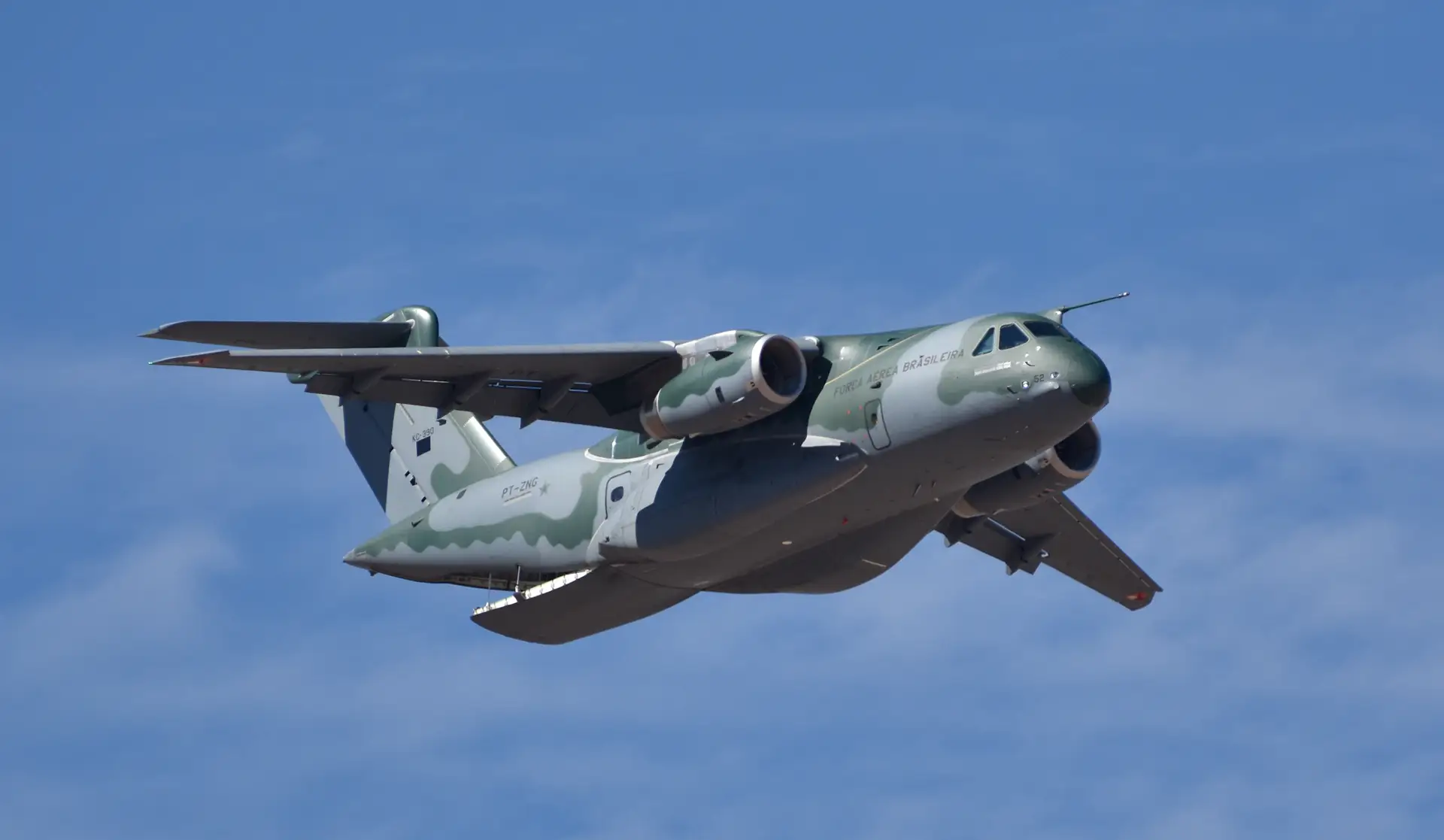
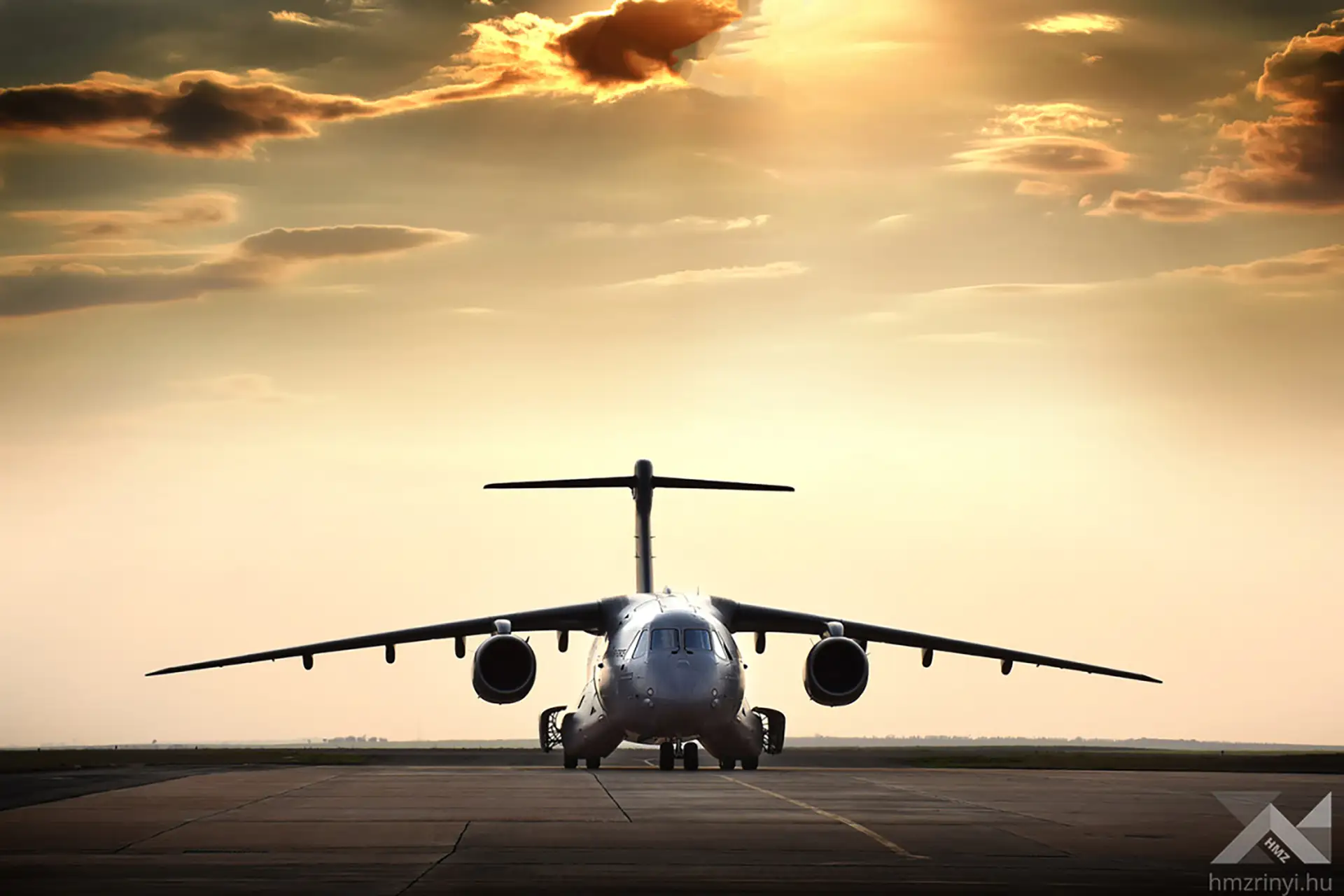
Now, to paraphrase Disney, for the first time in forever, there appears to be a genuine alternative to the 'Herk' in the form of the C-390, and it's a platform that's not just a C-130 replacement, but an aircraft that promises to significantly move the game on in several key areas.
Enter The Millennium
The Millenium has been quietly whipping up something of a storm in the Tac AT community, especially for nations that need the kind of 'Swiss Army Knife flexibility' that the C-130 has long provided, but want to have it with increased performance, entirely modern design logic, and, increasingly, a desire to move away from Operational dependence upon the USA. These include the restrictions imposed by the International Traffic in Arms Regulations (ITAR) and other export control mechanisms, as well as concerns that supplies of parts and other support may become more directly tied to US Foreign Policy aims in the future.
Wholly designed in this century, officially launched in 2009 and first flown in 2015, as the C-390 (the name 'Millenium' was added in
2019), the aircraft has proven to be highly attractive to a number of nations as exactly that high performing 'all-rounder' C-130
substitute or replacement. It really should be no surprise, as Embraer very much used the Hercules as the benchmark against which to
measure the aircraft's size and payload capacity, which NATO, amongst other organizations, also does.
According to the NATO Movements Coordination Centre Europe’s ATARES (Air Transport and AAR Exchange of Services) contract, where member nations buy, sell and trade transport and tanking 'credit hours', the C-390 clearly meets or exceeds the older aircraft's capabilities in some significant areas. The baseline trading credit is, naturally, a C-130 'hour', equivalent to 1.0 credits. In payload, the C-390 measures as 1.4 - i.e., capable of carrying 40% more payload than a standard C-130, with the same figure for speed. In broad terms, the C-130 cruises at around 300kts, whilst the Millenium cruises at circa 470kts (Mach 0.8). ATARES also publishes a Mission Capable Rate (MCR) of 93% and Completion Rate of 99% - approximately 30% above the C-130's 1.0 baseline figure.
According to the NATO figures and (unsurprisingly) Embraer’s own statistics, the C-390 is also cheaper to own and operate than a C-130. The headline figure is about 30-40% lower in terms of Direct Operating Costs (DOCs), largely because there are only two relatively economical IAE V2500 turbofans, compared with four turboprop engines and propellers. The IAE V2500 core engine is used in a number of airliner applications, including the 'small Airbus family' of A319, A320, and A321 as well as the MD-90. As a result, global spares and support are readily available, while fuel burn and maintenance costs are significantly lower than those of the C-130, helped by the fact that the C-390 can also regularly access the more efficient higher altitude blocks as it has the high cruise speed required by Air Traffic Control to fit in better with Commercial Air Traffic.
The performance and price point of the C-390 have toled it its sale around the globe. The Brazilian government was a key investor in the project, with the Brazilian Air Force originally ordering 28 airframes to replace the majority of its legacy Tac AT fleet, including several C-130s. Although an austerity package due to the economic impact of the Covid-19 Pandemic later reduced the buy to 22 airframes, Brazil has remained focused on extracting more capability from its C-390 fleet, including being the first adopter of the KC-390 subversion. The KC-390, as the 'K' prefix suggests, is capable of the AAR mission, with two Cobham 912E 'pods' mounted on the outer wings. All C-390 airframes have the provision for pylons on these stations - they are 'wet' for AAR pods, but also have power and databus connectivity, enabling them to be used for a variety of other applications - more of which later.
In the KC-390 role, the aircraft has a dedicated AAR Auxiliary Crew Member (ACM) control station in the cockpit - making coordination with the pilots easier. With day/night cameras to ensure safety, as well as observation windows for 'spotters'. The cabin can carry up to 12,000 kg of palletized fuel to add to the aircraft's own capacity (approximately 23,500 kg), and simultaneous refueling of two points is possible, with flow rates of up to 400 Gallons Per Minute (1215 kg / 2680lbs / 1515 liters). Of particular interest to the SOF community is that although the KC-390 is used to refuel tactical jet aircraft in the speed range of 180-300Kts, it also has a 'helicopter AAR' speed gate of 120-140Kts - well within the reach of modern SOF helicopters. The 120kt figure is especially important for the CH-47 family as, all things being equal, the trim system on the aircraft can hold a 'floor level' attitude up to 120Kts.
For really long-range insertions and SOF support, the KC-390 is equipped to be an AAR receiver. With ample space for fresh 'slip crews' onboard, SOF tasked units could top up from a non-tactical tanker (e.g. a KC-46, KC-135 or A330 MRTT) in friendly territory, before 'pushing' at tactical levels to RV with the SOF helos on the way 'in' and potentially repeating the service on the way out, with the KC-390 bouncing back to a larger aircraft to be replenished and ready to assist the recovery of SOF platforms. Needless to say, rapid global self-deployment can also be AAR-enabled. The speed and altitude differential over the C-130 airframe is a key factor here, and it's certainly safer than operating a non-tactical tanker 'up threat'. Recent footage of USAF KC-135s and RAF Voyagers (A330 MRTTs) conducting low-level operations is proof to me that a dedicated, jet-speed-capable tactical tanker has a place in many military inventories. While undeniably impressive, seeing a 60+ year old KC-135 'yanking and banking' while conducting valley flying in Wales does make me think about airframe stress and the otherwise utterly unprotected nature of an aircraft suddenly operating in the small arms, AAA, and MANPADS threat band....
The KC-390s systems can also be used as the basis of a FARP, landing onto refuel and rearm helicopters, tiltrotors, and fixed-wing aircraft at austere locations. Given the SOF community's renewed interest in platforms such as the L3 Harris OA-1K Skyraider II, a militarized version of the agricultural and airborne firefighting AT-802 aircraft, supporting such capabilities 'forward' becomes increasingly important. The OA-1K has good endurance, capable ISR sensors, and a prodigious weapons load - in many respects acting as a low and slow A10/AC-130 hybrid. It's designed to operate from exactly the sort of austere locations in semi-permissive environments that the C-390 can access. What it's manifestly not is fast - it's designed to base forward with the SOF 'customer' rather than fly in and out of the AoR. The Millenium could provide the lifeline of fuel, weapons, rations, tasking, maintenance and fresh crews to maintain a high operational tempo inside the AoR if needed. There are other platforms that perform a similar role to the OA-1K, including versions of Embraer's own Tucano family (such as the A-29), which although designed primarily as a trainer (indeed, I flew the Tucano in flying training) are now also marketed as light weapons/ISR platforms for COIN and other SOF-style missions, using unprepared or damaged airstrips, and even roads, if required.
In lower-threat environments, the C-390 itself can serve as a long-endurance overhead ISR and targeting asset. It has a dedicated under-fuselage pylon for mounting sensor pods, such as the Rafael Litening, enabling the aircraft to support both air and surface units with overwatch, target location, and laser target marking and designation. This designation could be used to support guided weapons deployed from the likes of the OA-1K and SOF helicopters, or, indeed, from the C-390 itself - weaponization using underwing hardpoints (similar to Harvest HAWK) is on the future roadmap for the aircraft, and guided weapons, loitering munitions, and Launched Effects (LEs) can all be rapidly configured for deployment from the cabin ramp and cargo doors.
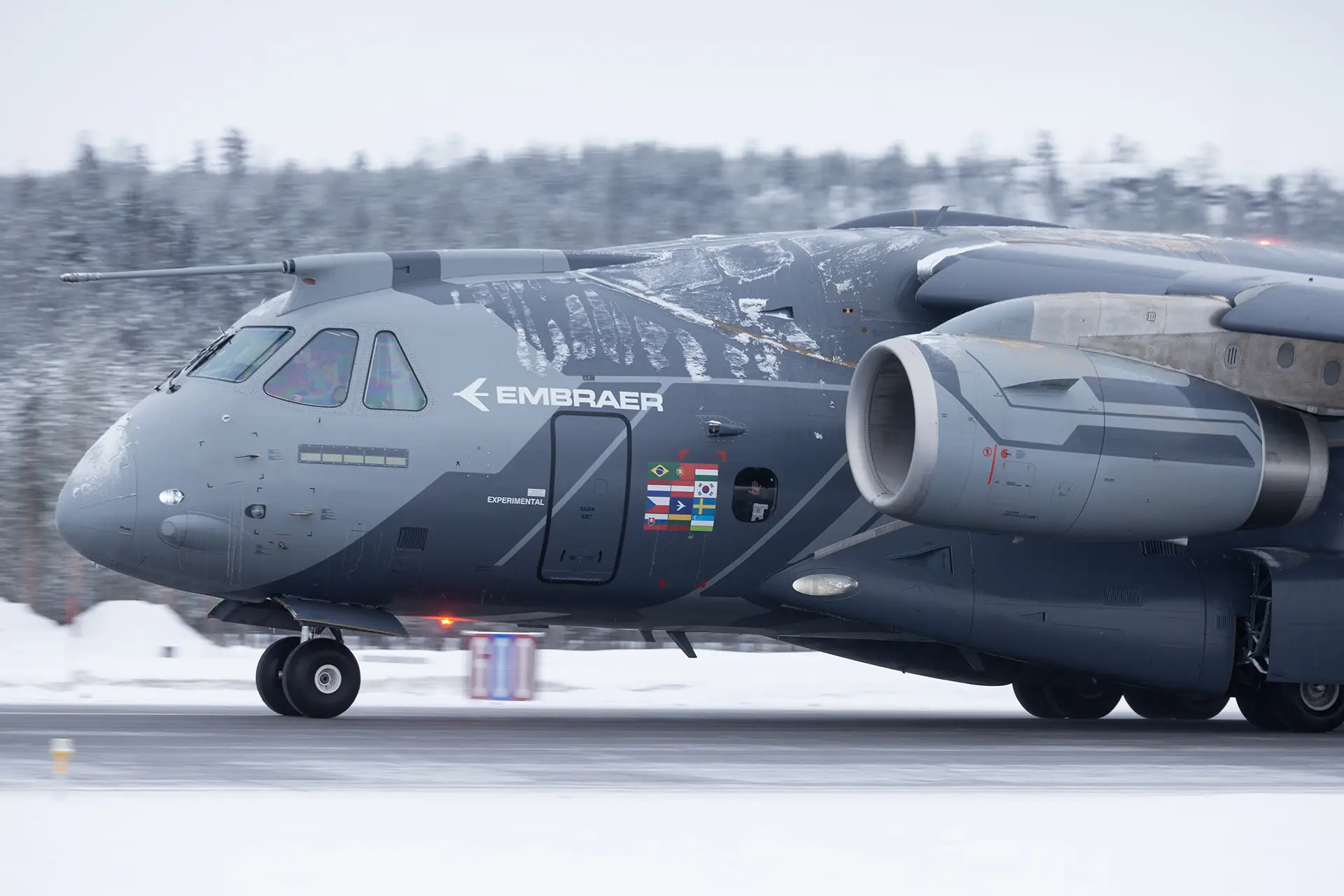
Embraer are also keen to posit how the C-390 can provide SOF support functions in this forward airspace. To survive in even the most semi-permissive environments, the aircraft will need protecting. Much like helicopters, at low level the credible threats to the C-390 will be the 'usual suspects' of IR guided MANPADS, small arms, AAA and RPGs.
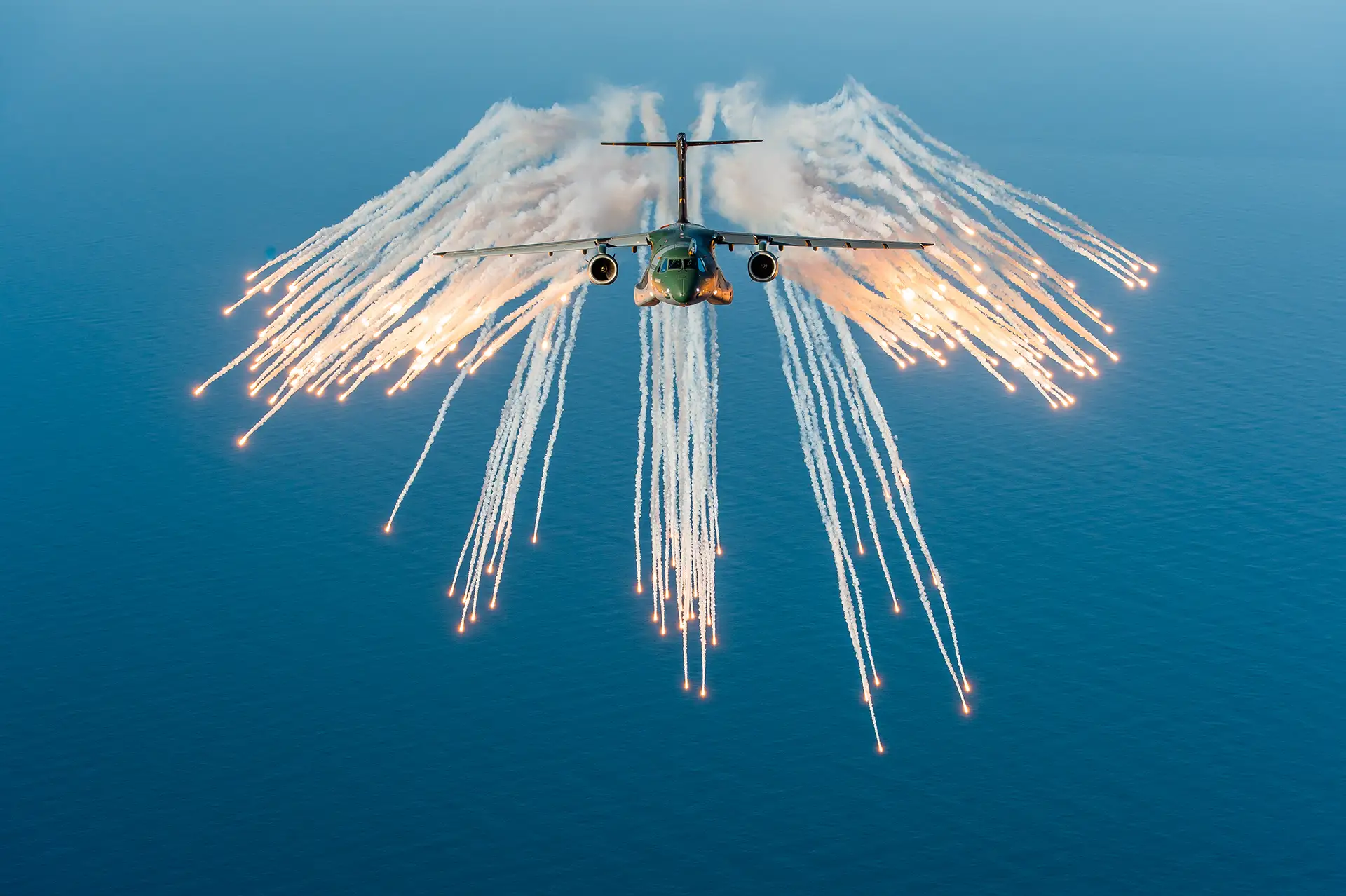
Against MANPADS, the C-390 can be equipped with a comprehensive Self Protection Suite, consisting of a Missile Warning System (MWS) and
Countermeasures Dispensing System (CMDS) able to deploy patterns of decoy flares tailored to defeat the specific threats expected. In
a SOF context, especially if night operations are being conducted, the flare 'cocktails' used would be likely to include 'Special Metal'
decoys which produce almost invisible light while still providing a seductive IR source for the MANPADS seeker head. Such flares help
the crew retain their night vision, both natural and NVG, as well as helping to maintain a low signature - reducing the likelihood of the
aircraft being detected by other threat systems. For more advanced IR threats, or to minimize signature, a Directional IR
Countermeasure (DIRCM) system can also be specified, with multiple turrets providing all-round coverage.
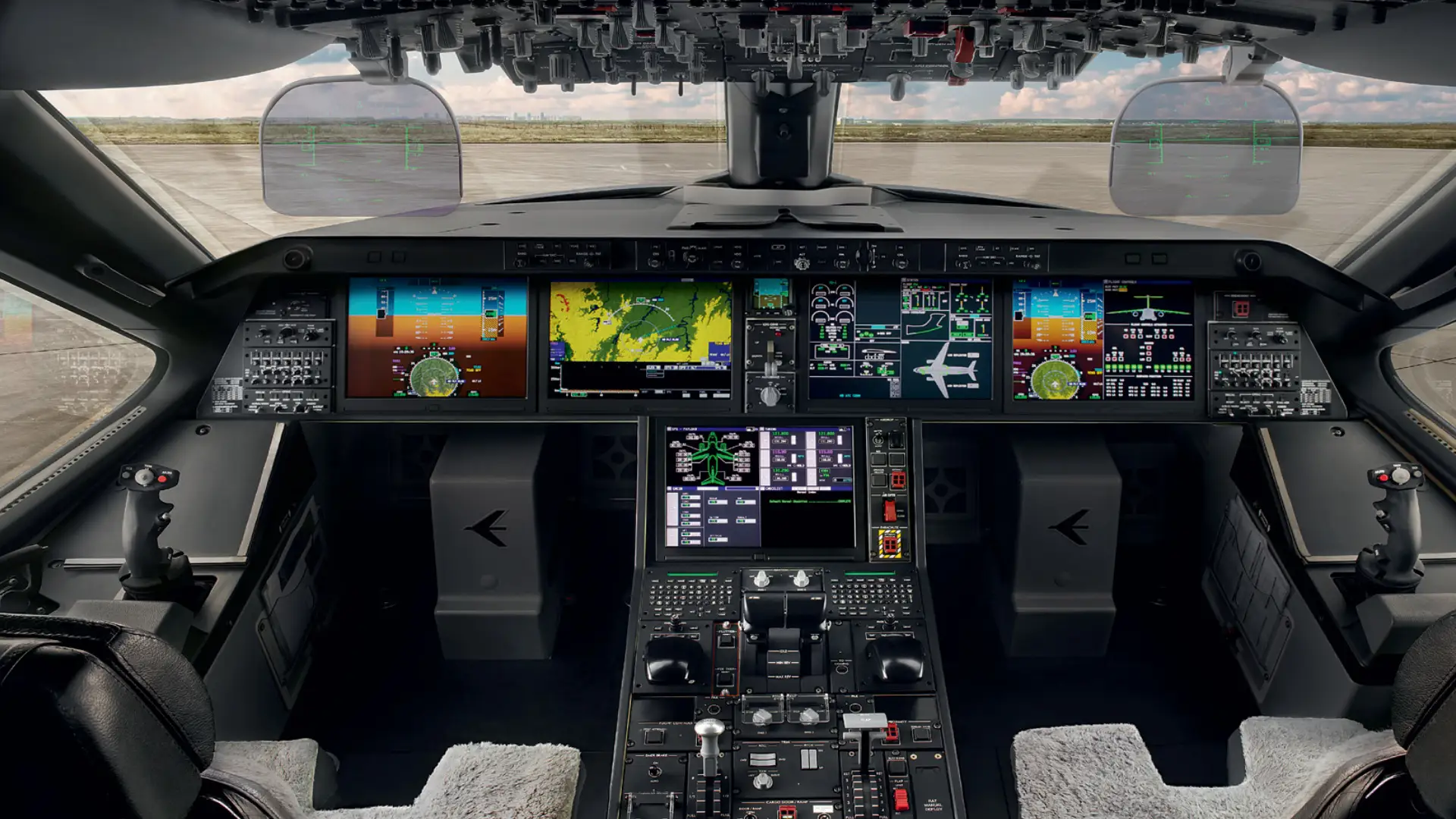
In terms of protection from ballistic threats, the aircraft can exploit its sophisticated flight and navigation systems (including NVG
compatible cockpit, tactical radar and OE/IR system) to fly at low level in bad weather - helping to shield it from optically laid systems,
while it's generous manoeuvre envelope permits relatively 'spirited' flying in a low level environment, and in response to an
engagement. If an opponent is able to accurately target the aircraft, then the Ballistic Protection system and redundant/resilient
design ethos work to prevent or mitigate any damage received, while the On-Board Inert Gas Generation System (OBIGGS) ensures that if rounds
hit partially full or empty fuel tanks, no explosive flash fire is triggered as the residual fuel vapor is replaced by an inert
Nitrogen-heavy gaseous mix to suppress any spark.
In higher-threat situations, the aircraft can also be fitted with a Radar Warning Receiver (RWR), with the CMDS carrying chaff cartridges and decoy flares. More modern defensive systems, designed to cope with advanced RF threat systems, such as Expendable Active Decoys (EADs) and onboard RF jammers, while the aircraft's ability to fly at low level confers an element of terrain masking.
Carry Stuff
Finally, the 'nuts and bolts' of what a SOF Tac AT aircraft must do - carry 'stuff'.
The C-390 has a large, unobstructed, continuous-width cargo cabin (of some 169 m3 capacity), capable of accommodating a wide variety of payloads. These can include a UH-60 Black Hawk, a 26 Ton combat vehicle, and palletized cargo - including up to 24 48x48 inch Container Delivery System (CDS) containers, which are air deliverable via the Low Velocity Air Drop System (LVADS) or using ground based 'combat offload' technique exploiting the built in Cargo Handling System to rapidly dispatch cargo in a concentrated manner while minimising time spent on the ground. To help with getting to the ground quickly, the C-390 can rapidly transit the MANPADS and AAA 'threat band' by exploiting its 'Combat Descent' profile of 12,000 ft per minute.
Alongside the ability to haul and deliver cargo and vehicles via a number of profiles, the C-390 can also carry and drop parachutists, with 64 troops, the usual 'Air Assault' static line fit. Smaller SOF units could be delivered over long ranges using HALO and other free-fall methods and could make their theatre entry alongside their usual light vehicles and mission supplies - and far quicker than via C-130 and in a smaller, more tactical platform to an A400 or C-17.
If it all goes wrong, the C-390 can also be configured as a casualty recovery platform.
The C-390 Millenium offers an intriguing glimpse into what the post C-130 world could look like. It's flexible, fast and modern, and can offer SOF units a true 'Swiss Army Knife' in terms of Theatre Entry options, resupply, ISR, FIRES and support to other SOF enablers such as helicopters and COIN aircraft. It can carry the usual range of SOF vehicles for mobility troops and still access the austere locations that SOF operations inevitably base from. The combination of relatively small size, high speed, long range, excellent systems, and good maneuverability makes it a genuine alternative to just ticking the 'New C-130' box when contemplating replacing aging fleets. In an ever more uncertain world, the simple fact that it's not made in the US, China, or Russia is, in itself, an attractive feature for many non-aligned nations.
For the US itself, there's nothing else readily available for SOCOM in this segment. The C-17 is too big with a cold line; the C-27J fell out of favor for not really being much more than a 'Small Herk'. I guess the questions for the US SOF community, given that only the C-130 has a warm line at the moment, and the C-17 replacement is decades away, do they think the C-130 will remain viable for another 20 years, and can they think beyond the C-130 in terms of platform requirements? Or, indeed, can the DoW think beyond the US industrial base in terms of acquisition policy?
I certainly think it's worth considering....