 HOME
HOME




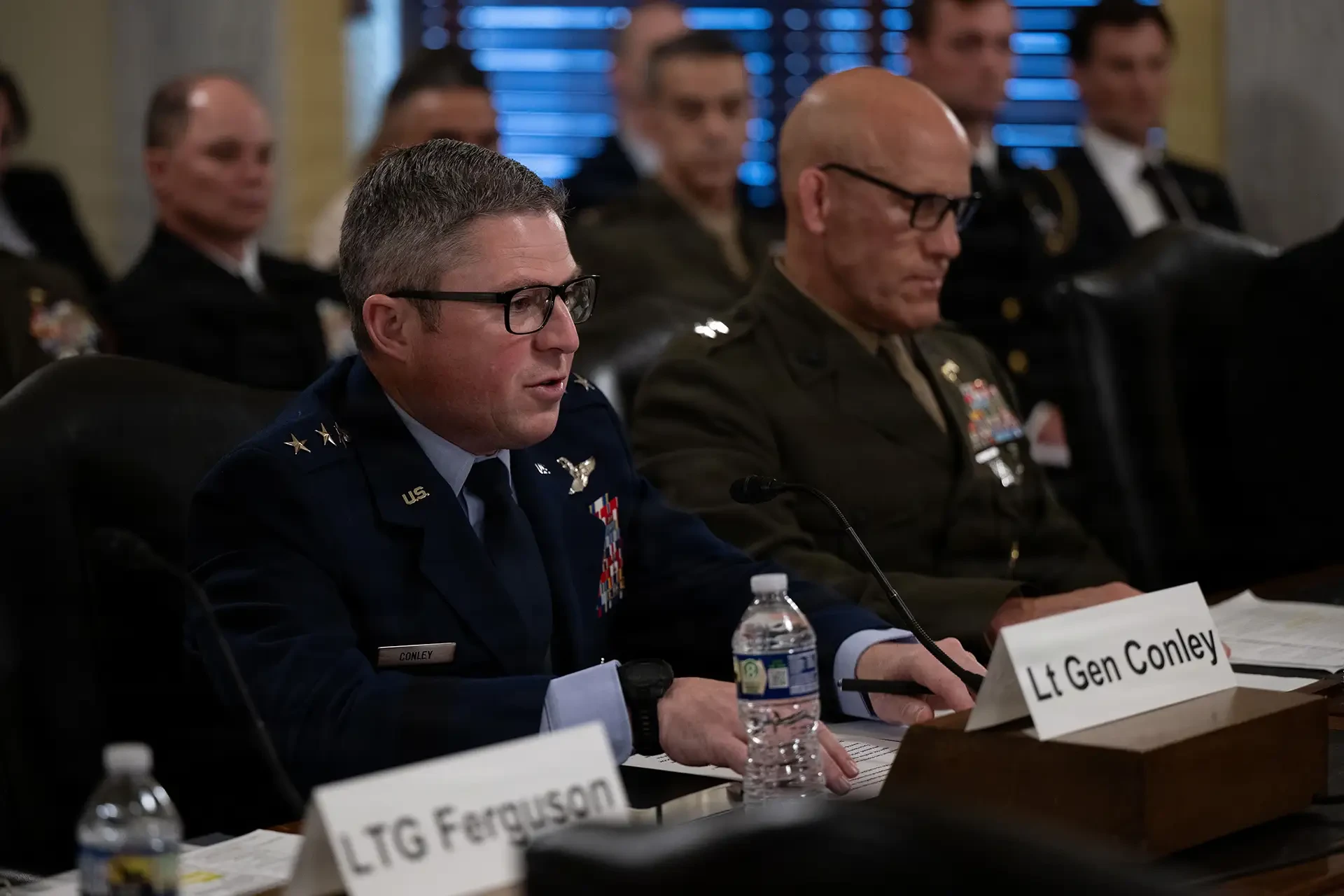
At a recent hearing before the US Senate Armed Services Subcommittee on Emerging Threats and Capabilities, Lt. Gen. Michael Conley, Commander, U.S. Air Force Special Operations Command has revealed that a collection of AI powered intelligence and transfer systems have been in use since the start of Operation Epic Fury to assist large attack drones and manned aircraft to avoid Iranian threats.
“On the first day, they realized that our MQ-9 Reaper drones and other aircraft were at risk in a very hostile environment, we were able to take some smart people and use artificial intelligence tools and put humans on the loop, instead of in the process the whole time and move Top Secret national level intelligence that would have taken human operators 20 to 30 minutes to get that intelligence to a crew, into a MQ-9 cockpit or a ground control station.”
He said nine crew members were able to use AI bots to convert data to a Secret clearance level and make it available in the aircraft, all within two to three seconds. “We have data that indicates that we’ve saved a lot of aircraft over the last 60 days using that tool, just to provide a better battlefield situational awareness.”
He also confirmed the USAF analysts were using AI powered exploitation and dissemination tools to help process huge amounts of complex data, including full-motion video.
“In a very heavy, human intensive process, they have been able to use AI again, just smart humans getting together, figuring out solutions in order to proliferate that information across the intelligence community in seconds, rather than what could take hours in normal processes. So we’re learning every day and we’re getting better every day.”
US Department of War figures show that the USAF has lost Twenty-four MQ-9 Reaper medium altitude, long endurance drones during combat operations related to Operation Epic Fury. These losses represent a significant portion of the USAF's Reaper fleet, which has reportedly dropped to roughly 135 aircraft from a previous total of over 180. The high rate of attrition has sparked discussions in the Pentagon about the need for a next generation replacement that is either more survivable or cheap enough to be lost without such a heavy financial burden. A MQ-9 Reaper drone typically costs between $16 million and $34 million per unit, depending on the configuration and year of purchase.
“Our MQ-9 enterprise proved that adaptive airmen can transform any platform and mission envelope, destroying hundreds of targets in contested operating areas. I believe recent operations have been the MQ-9 community’s finest hour.” Said Lt. Gen. Conley.
He also praised the work of AFSOC in rescuing two downed F-15 pilots during a joint operation, despite the loss of two MC-130 aircraft as well as four MH-6 Little Bird helicopters.