 HOME
HOME




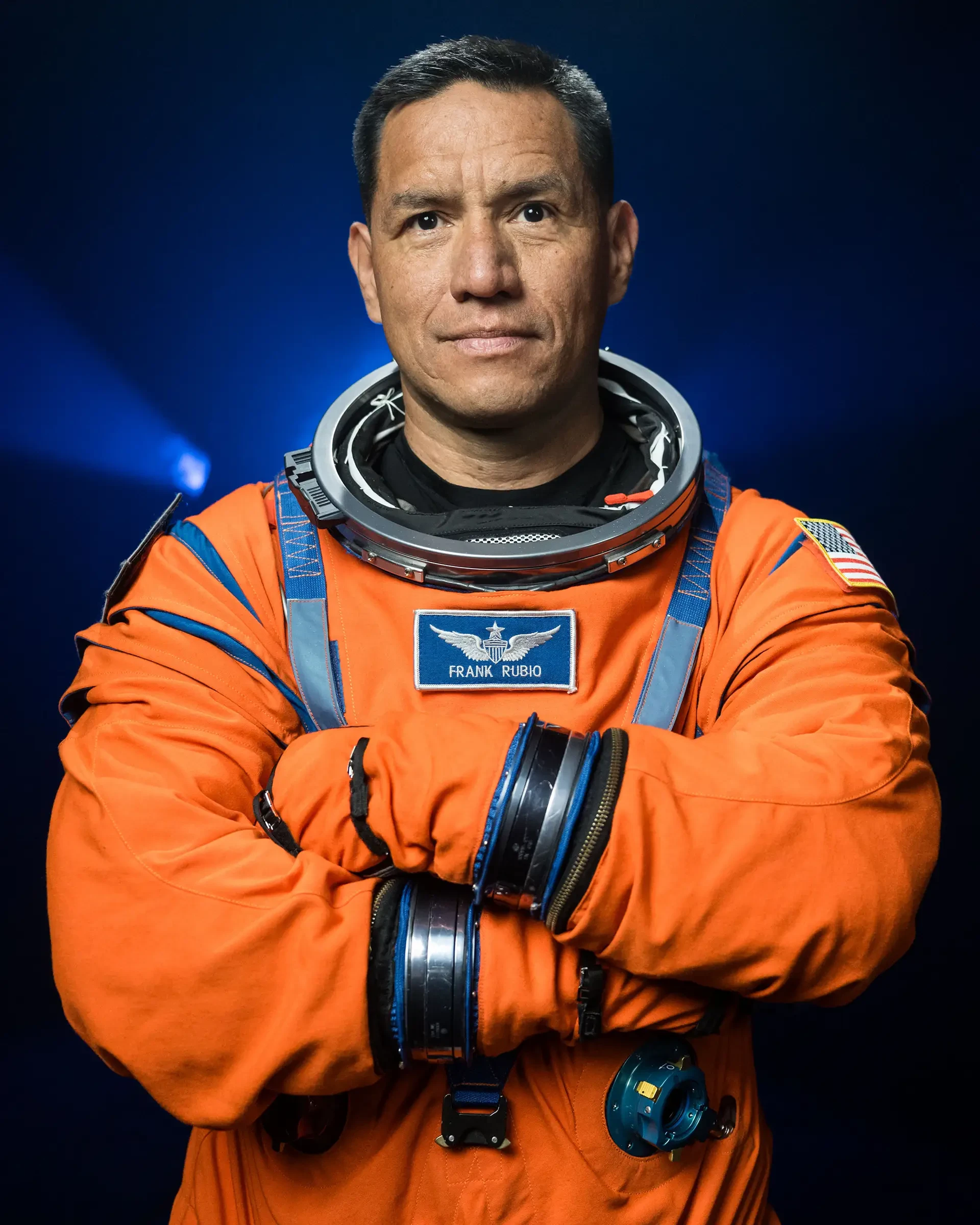
In a historic announcement that bridges the legacy of military service with the next phase of human space exploration, NASA has announced that former 10th SFG(A) Army Col. Frank Rubio will serve as a mission specialist on an upcoming Artemis III mission.
Rubio will join NASA astronauts Randy Bresnik and Andre Douglas, as well as European Space Agency astronaut Luca Parmitano, as they embark on a mission that will serve as a low-Earth orbit demonstration to test systems required for operations in the region between Earth and the moon's orbit.
Rubio's selection is a testament to his recognized leadership, broad career experience and the technical expertise that soldiers bring to the nation's human spaceflight program.
"I am deeply honored to be selected for Artemis III, a mission that continues to build upon the foundation for the day Americans return to the surface of the moon," Rubio said. "My Army training has been an integral part of the experiences that have enabled me to be ready for this mission. Serving taught me to lead under pressure, how to stay calm when the stakes are highest, and how to put the mission and the people beside you above yourself."
"To those who have served, and to every soldier and military family serving right now: you are the backbone of everything we do as a nation, including this," he continued. "I am honored to represent the Army on the highest ground."
Before his selection by NASA in 2017 as a member of Astronaut Class 22, Rubio served as an Army aviator, as a member of the Black Knights parachute team, and was the battalion surgeon for 3rd Battalion, 10th Special Forces Group. He served as a UH-60 Black Hawk pilot and accumulated more than 600 hours of combat time during deployments to Bosnia, Afghanistan, and Iraq.
Following his service in the aviation branch, Rubio earned his medical degree from the Uniformed Services University of the Health Sciences in 2010. As a board-certified family physician and flight surgeon, he completed his residency at Fort Benning, Georgia, and subsequently served as a clinic supervisor at Redstone Arsenal, Alabama. Rubio was stationed as a battalion surgeon assigned to the 3rd Battalion, 10th Special Forces Group at Fort Carson, Colorado, at the time of his astronaut selection.
Rubio's selection highlights the critical contributions of the U.S. Army Space and Missile Defense Command NASA Detachment, located at the Johnson Space Center. The detachment bolsters NASA's human spaceflight program by providing active-duty soldiers and space operations officers who deliver leadership, technical expertise and risk management skills.
Since 1978, a select group of 20 Army astronauts and payload specialists have served at NASA. These Army astronauts and space operations officers not only provide vital human-machine interface and engineering expertise to NASA's operations, but they also bring back invaluable experience and information from NASA and aerospace industry partners to the Army.
"Congratulations to Col. Frank Rubio on his selection for the Artemis III mission," said Army Lt. Gen. John Rafferty, commanding general of U.S. Army Space and Missile Defense Command. "His selection is a testament to his leadership, physical and mental toughness, and technical capability. The U.S. Army celebrates this milestone, and we at U.S. Army Space and Missile Defense Command are incredibly proud of him and the Army astronaut program."
According to NASA, Artemis III's primary objectives for its mid-2027 flight are to test and validate commercial human landing systems. The mission will focus on critical docking operations between the Orion spacecraft and these landing systems. It will also be an opportunity for NASA to conduct the first operational tests of new space suits in orbit.
NASA officials further stated Artemis III's flight will provide the flight experience and standardized vehicle configurations necessary to support subsequent operations. Data gathered from the orbit demonstration will directly clear the path for future crewed landings on the moon and eventual human missions to Mars.
Rubio is no stranger to making history in orbit. He holds the American record for the longest single spaceflight, having spent 371 consecutive days aboard the International Space Station during Expeditions 68 and 69 from September 2022 to September 2023.
During that unexpectedly extended spaceflight, Rubio completed 5,963 orbits of the Earth, traveled more than 157 million miles and conducted three spacewalks totaling 21 hours and 24 minutes. This extensive previous spaceflight experience, marked by deep resilience and adaptability, makes him uniquely qualified to serve under the demanding conditions that will be expected of him and the other Artemis III crewmembers.