 HOME





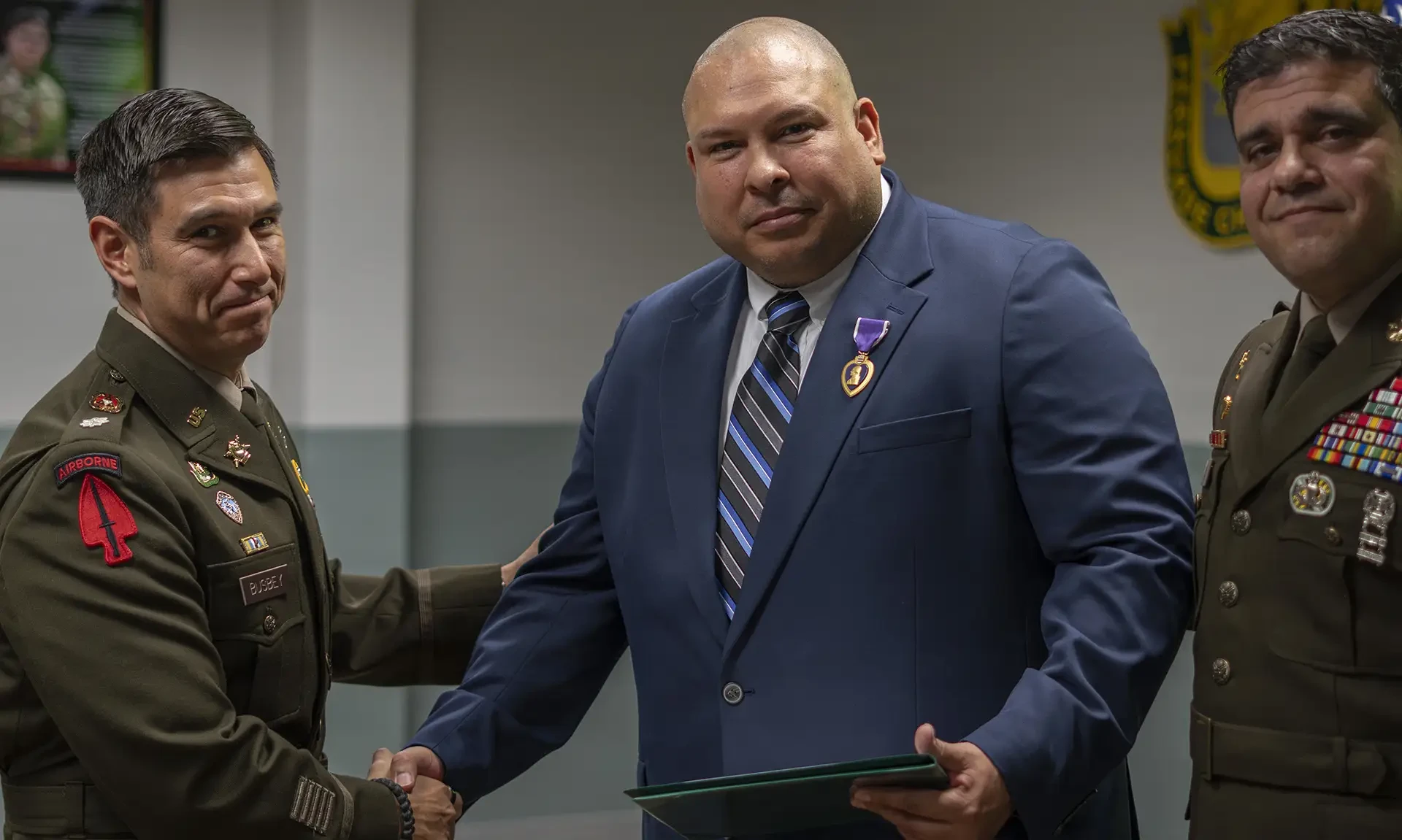
Nearly two decades after surviving relentless combat operations in the streets of Iraq, Master Sgt. (Ret.) Juan Brutsch received the Purple Heart during a ceremony at the 9th Psychological Operations Battalion headquarters, at Fort Bragg, North Carolina.
The long-awaited decoration formally recognizes Brutsch’s combat service and sacrifices during an intense deployment to Al Anbar province. Beyond honoring one Soldier's resilience, the award highlights the vital and often perilous role that Tactical Psychological Operations (PSYOP) Soldiers performed alongside front-line combat units during some of the fiercest fighting of the Iraq War.
Brutsch served with Charlie Company, 9th Psychological Operations Battalion (Airborne),
a unit that deployed expecting a standard six-to-eight-month rotation. Instead, escalating requirements on the ground extended their mission
into an extraordinary consecutive deployment of nearly two years. This deployment is remembered as one of the longest sustained deployments
in U.S. Army Special Operations Command (USASOC) history.
“We were all in the same type of situation. Our units, for the most part, that we were tied in with, they were resistant at first, then they would realize the value and then we became indispensable,” Brutsch said.
Operating in support of the 1/506th Infantry Regiment, 101st Airborne alongside a multi-company mechanized task force, Brutsch’s team (TPT 992) was conducting an influence operation designed to disrupt insurgents, by harassment to draw fighters in, using themselves, TPT 992 as the bait.
Despite the heroism displayed in pulling fellow Soldiers to safety and operating in a non-permissive environment, Brutsch remains deeply humble about his actions.
“We were not doing anything that everybody else was not doing,” Brutsch said, reflecting on the shared hazards faced by every Soldier, Marine, and Sailor operating in Al Anbar during the height of the insurgency.
For Brutsch, the Purple Heart is an honor rooted in shared sacrifice rather than individual achievement. Throughout his memories of combat, he holds tight to the legacy of his fellow Charlie Company Soldiers including those who gave their lives or suffered grievous wounds.
When asked what it means to finally receive the medal after 20 years, Brutsch admitted the emotion is difficult to summarize, “I don’t know,” Brutsch said. “My brothers then are still my brothers now and they will always be my brothers.”