 HOME
HOME





‘It’s the ones that no one sees. It’s the four-year-old that gets reversed over in a campsite; it’s the two-year-old that comes out of a paddling pool. It’s the eleven-year-old that gets hit by a car. This all started churning up….’
Flight Sergeant Diarmaid Corcoran (Retired)
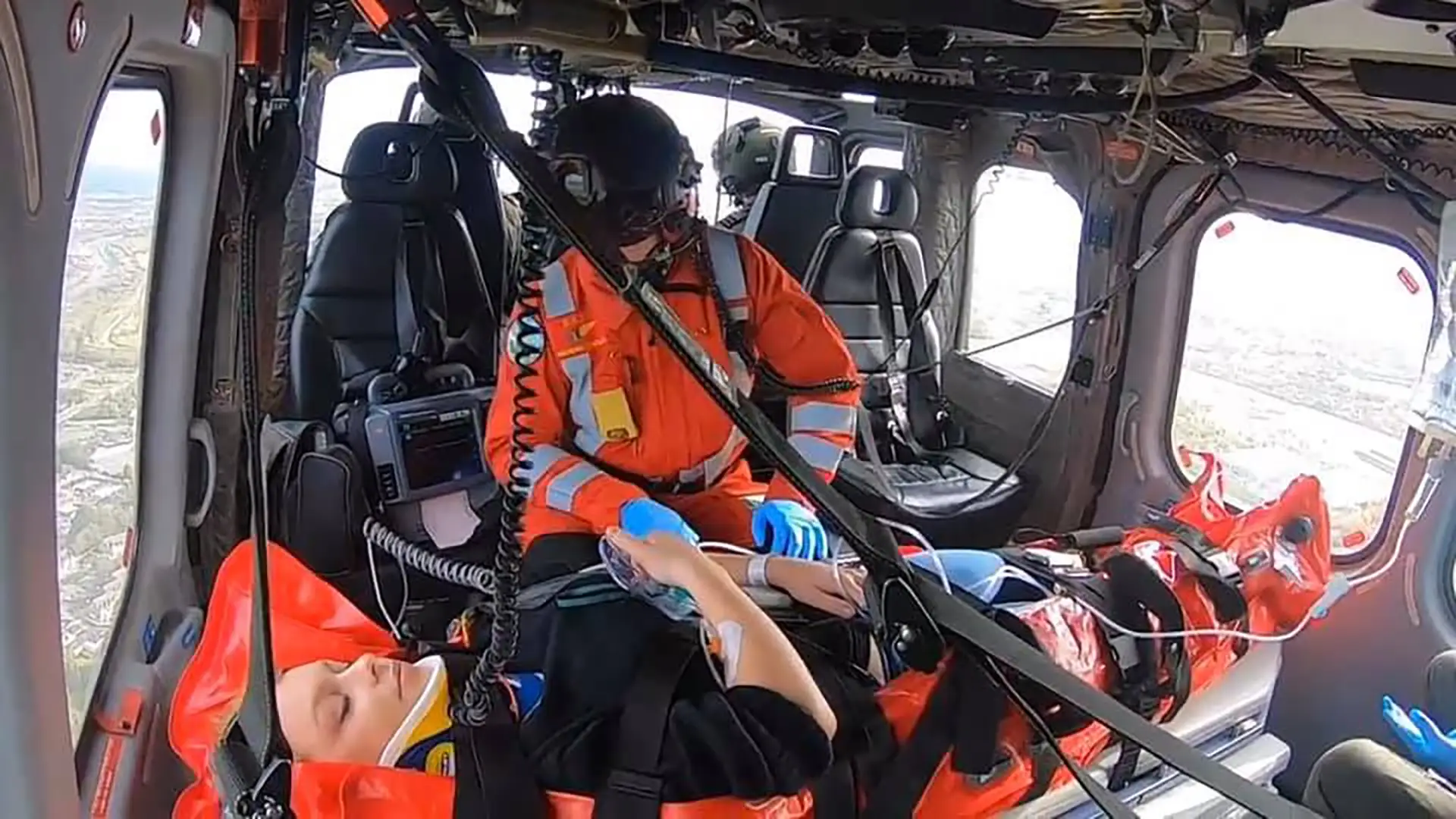
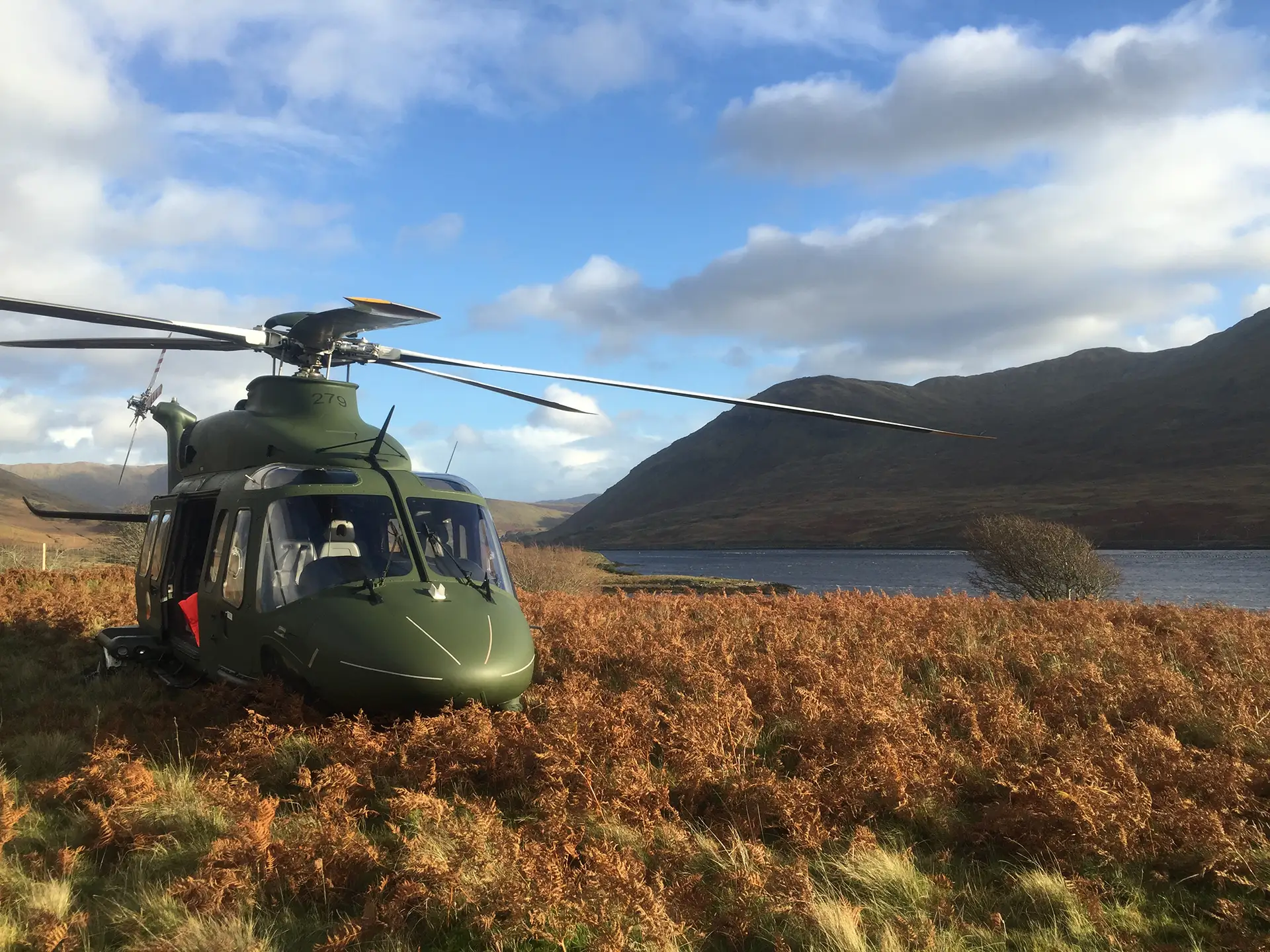
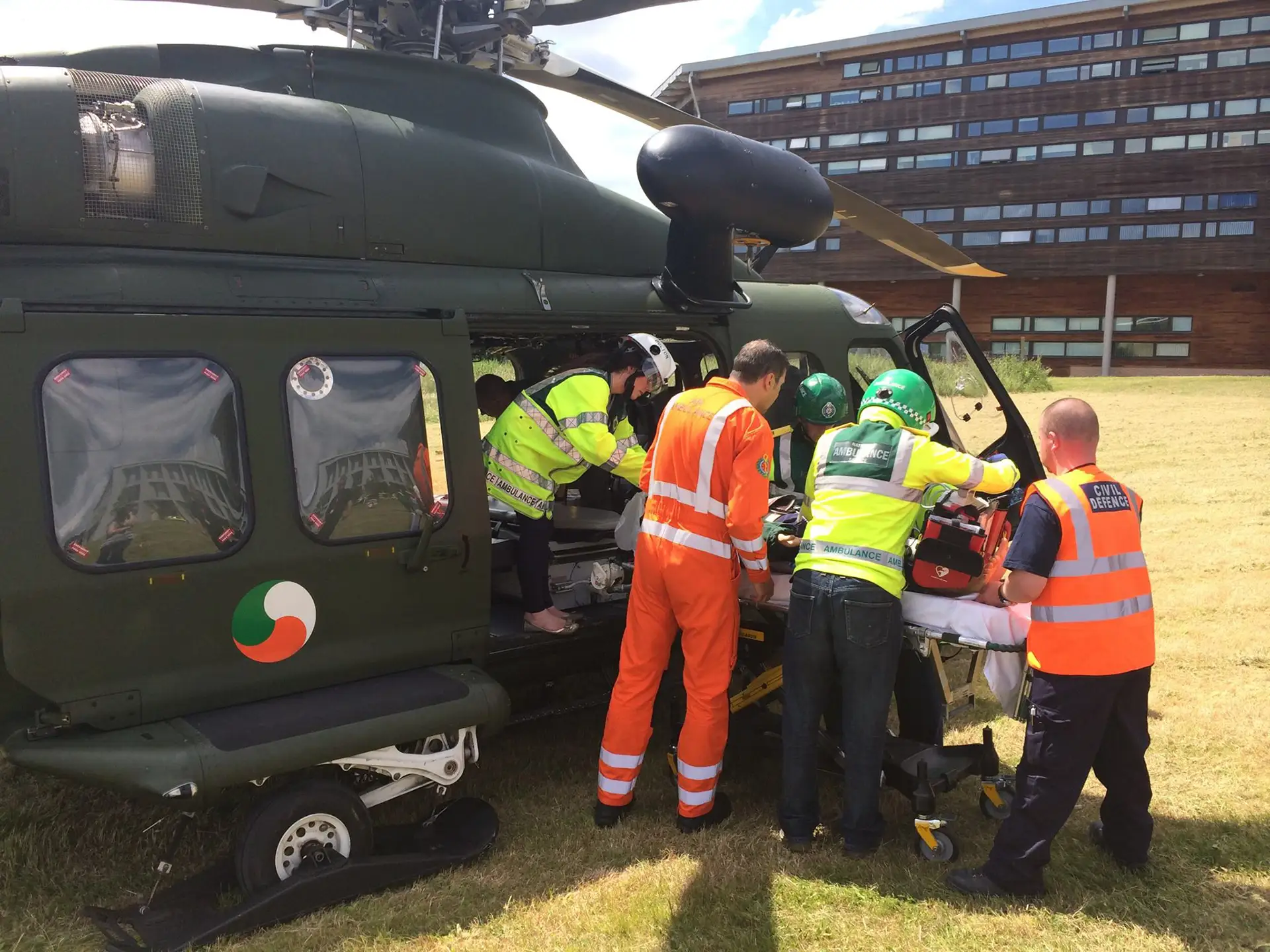
The Irish Air Corps occupies an unusual position in the world of Helicopter Emergency Medical Services (HEMS) in that, as a military, it is
there at all. In one form or another, since the introduction of the Alouette III in 1963, Air Corps crews from No 3 Ops Wing have worked to
the unit motto ‘Go Mairidís Beo’ – Irish for ‘That Others Might Live’. Decades of Search and Rescue (SAR), and then air ambulance duties,
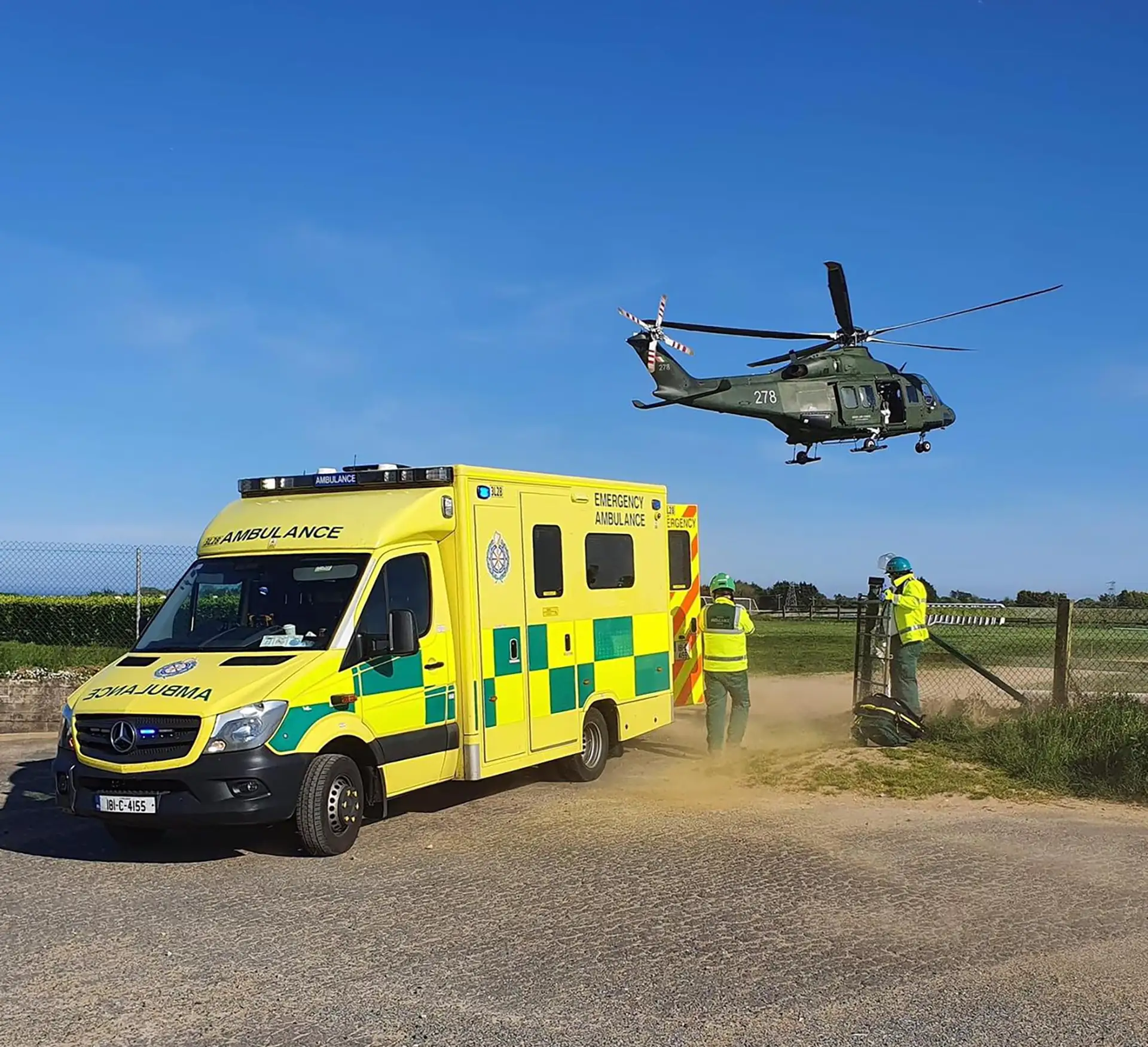
led to the introduction in 2012 of a joint civil/military HEMS operation in concert with the National Ambulance Service (NAS), with the
service officially being launched as the Emergency Aeromedical Service (EAS). Initially using an EC135P2, before quickly shifting to the
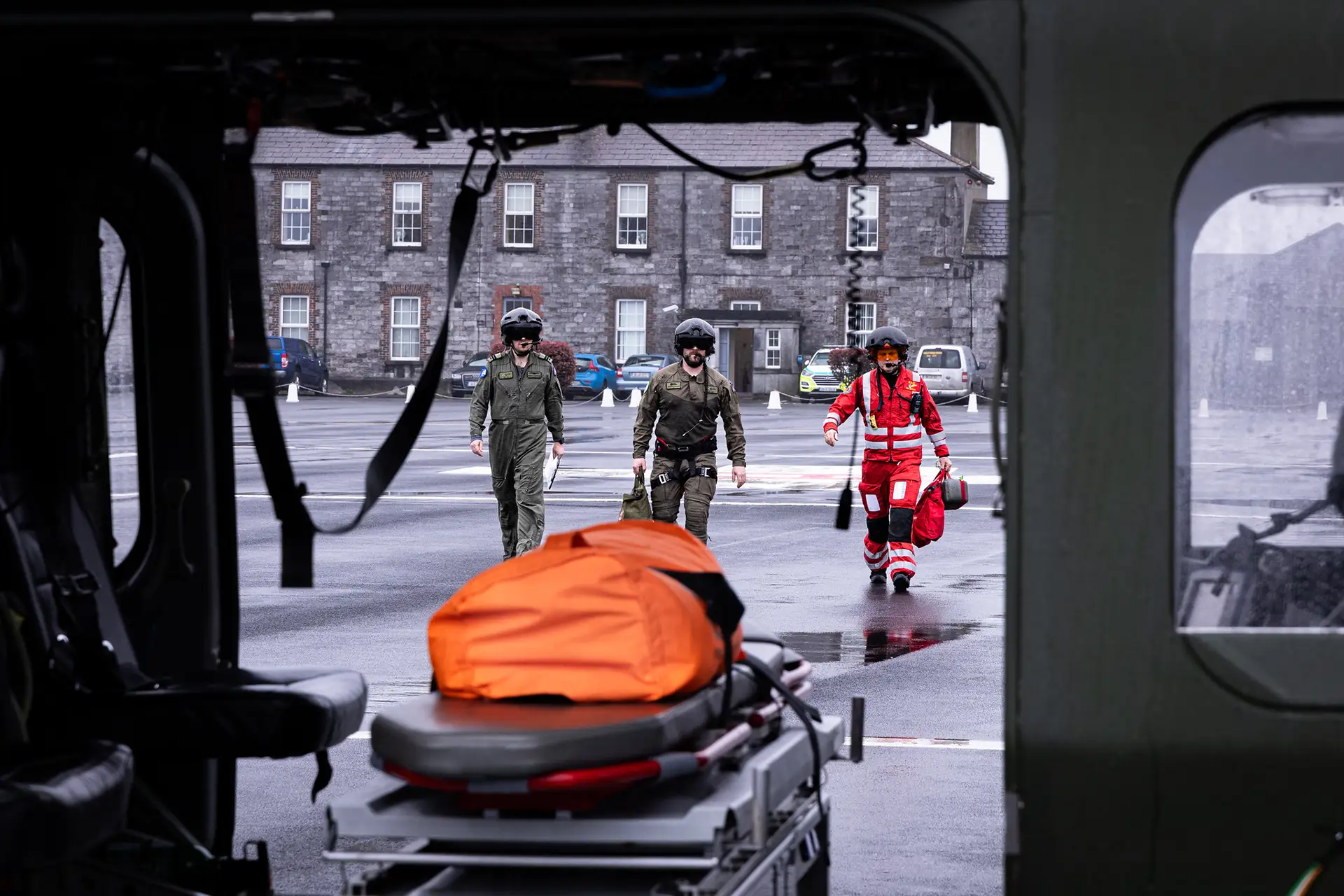
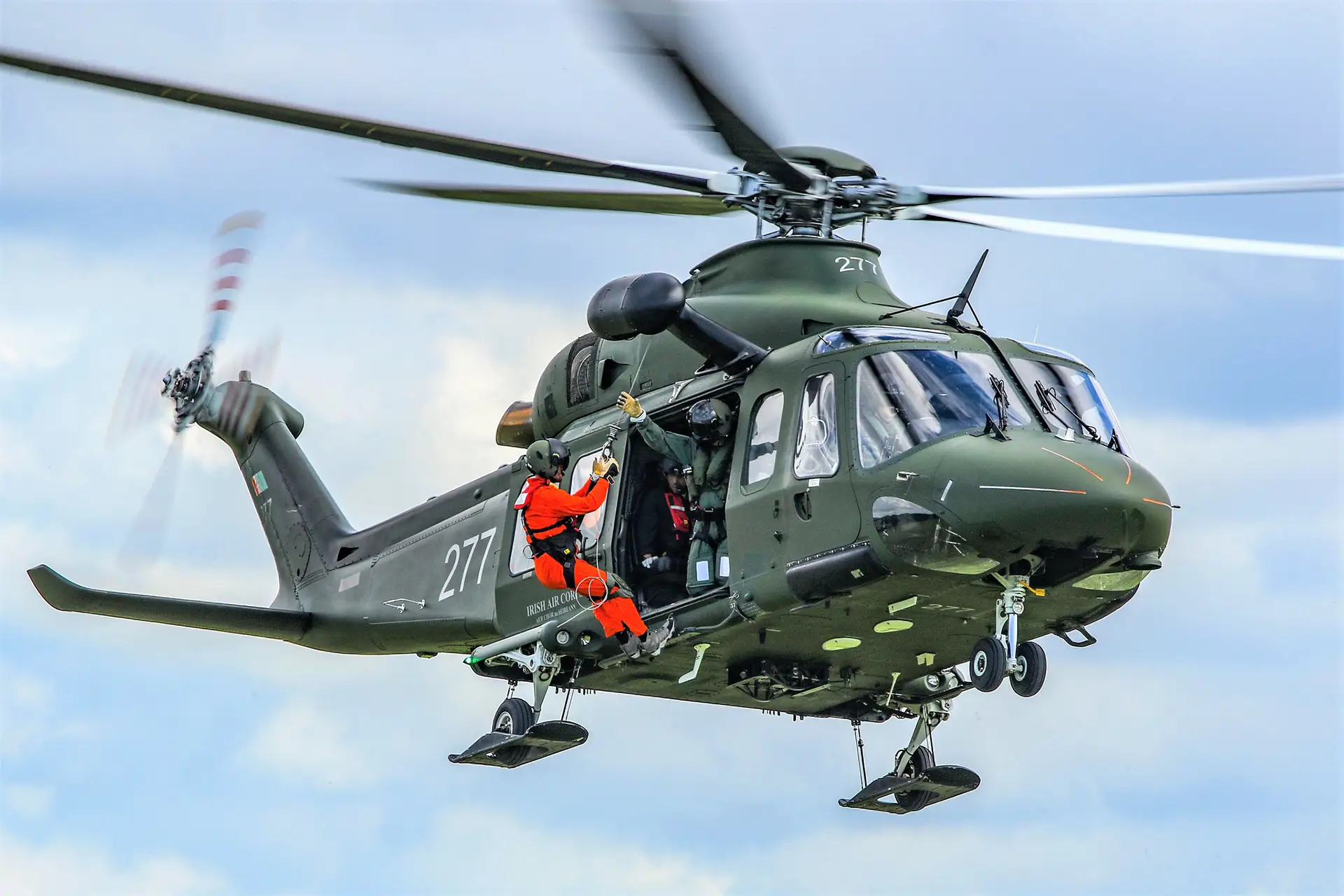
more capable AW139, the service is provided by military pilots, Emergency Medical Trained (EMT) qualified aircrew members, and technicians
operating a military helicopter from a military base. Meanwhile, the NAS provide an Advanced Paramedic (AP) to the crew and
prioritizes tasking through the National Aeromedical Coordination Centre (NACC). The NACC also tasks the dedicated civil operators and the
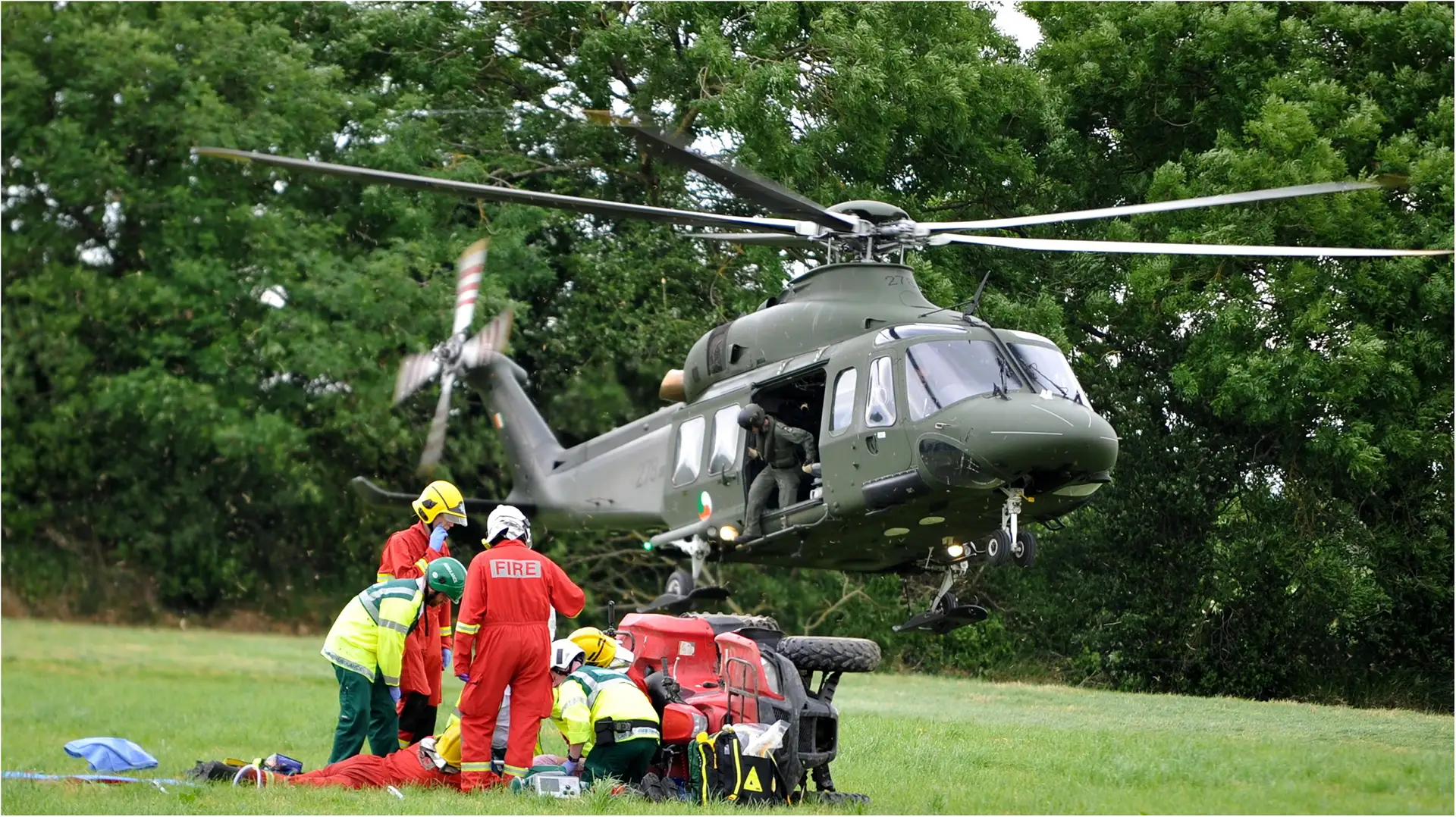
Irish Coast Guard when on HEMS, rather than SAR, taskings. Responding to the most acute cases in need of urgent care, EAS flies on average
2.2 missions a day. Needless to say, this average number hides the details and some tasking days can be quite intense with the upper limit
of eight hours flying per day being reached fairly often during summer months, as multiple 'shouts' are declared and crews bounce from one
incident to the next.
There is no doubt that the service has, at this point, saved many lives but those with a background in such operations will also recognise that providing such a critical response has costs beyond those of finance, hours worked and logistics. Stress, as we all know, is cumulative and subjectively experienced. An utterly routine day on HEMS can be the worst, or last, day of someone else’s life, and this eventually takes a toll on the crew due to frequent exposure and workload. Highly traumatic events, especially those involving children, may be enough to cut through whatever mental defences you’ve prepared for yourself. While these are thankfully less frequent, statistical probability doesn’t care about your mental health and a few of them coming up in quick succession can be disturbing for anyone regardless of background, role and ability.
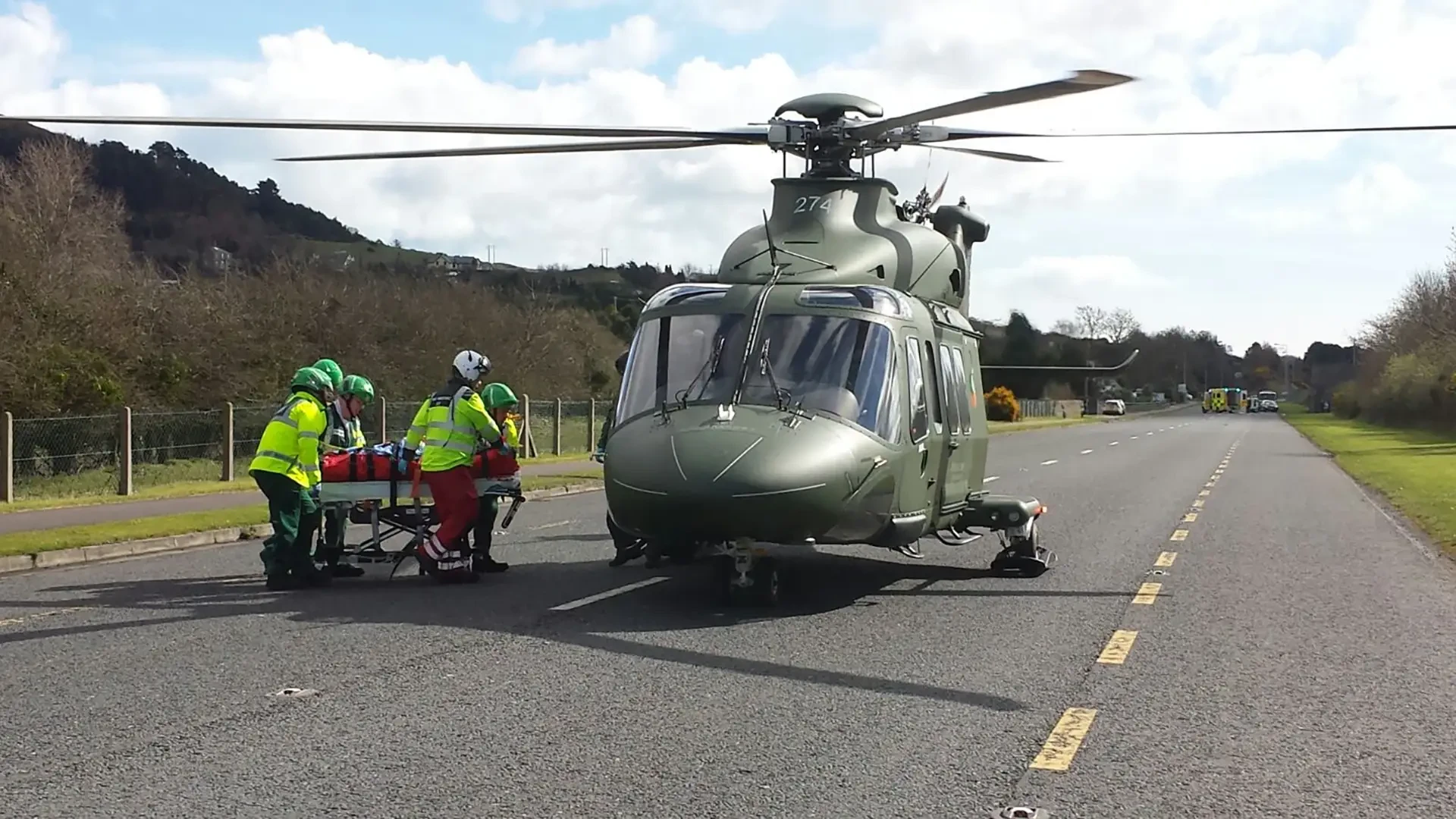
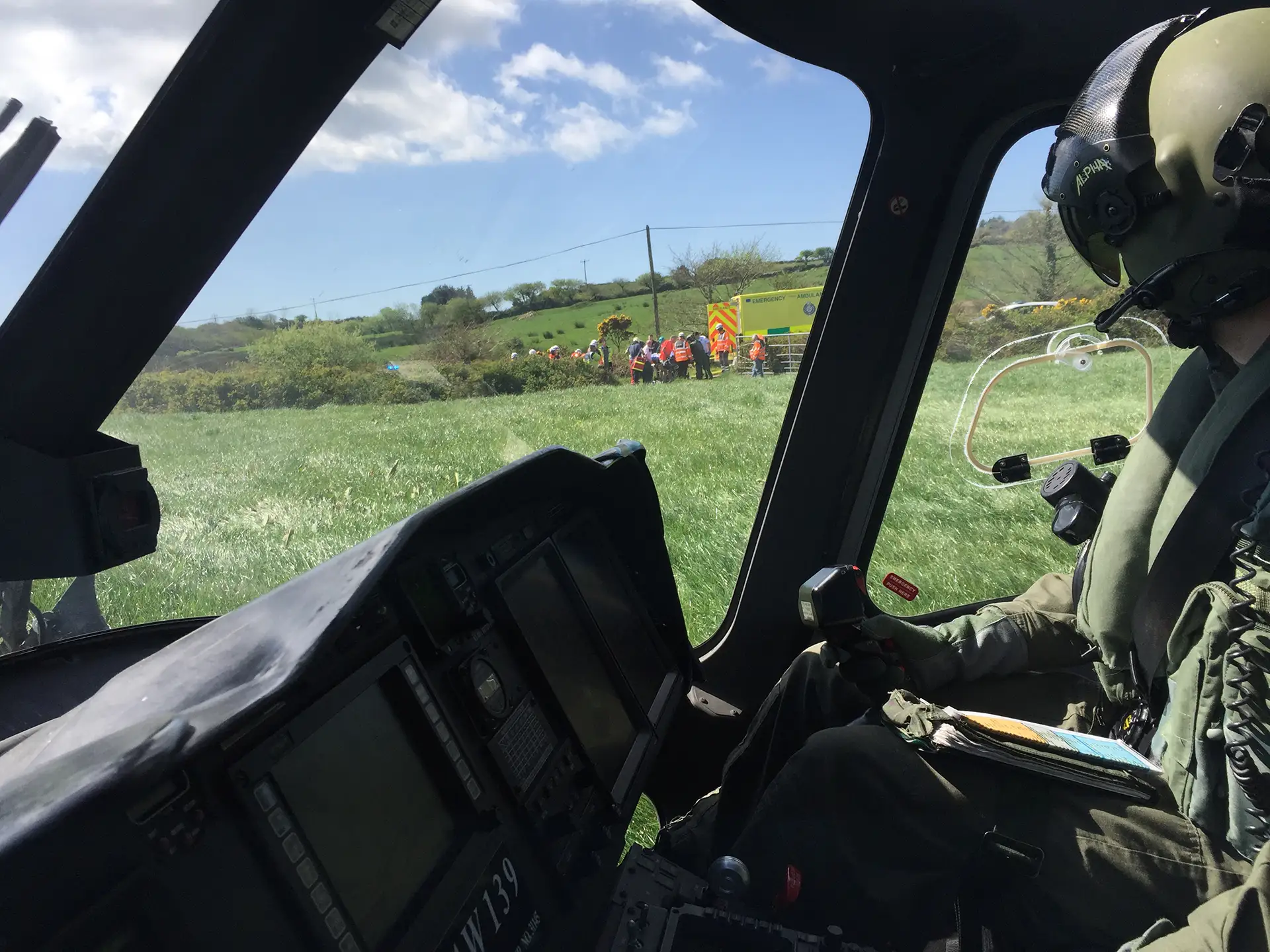
Flight Sergeant Diarmaid Corcoran was a crew member/EMT on the service, and one of the senior enlisted leaders in No 3 Ops Wing prior to leaving the military last year. He describes one job where a chaotic scene was evident even before landing, but which demonstrates the nature of the taskings frequently carried out by HEMS crews :
‘As we were doing the recce, there were firemen cutting ditches, there were gates being ripped out of it, armed detectives pulling the other ditch down. I could sense it before I landed… We landed in, the first thing I did was start giving people jobs, told the firemen to mind the gate, sent the (police) down to mind the other one, just to get a few people away. We were chatting away then, the other APs (Advanced Paramedics) got a ROSC (Return of Spontaneous Circulation – the patient’s heart is beating on its own). I said ‘I’ll bring mammy back to the aircraft’, and on the way back she grabbed me by the elbow, looked into my soul and said ‘Please tell me my little boy is not going to die’. And I froze. I froze for a second. The helicopter noise went. (I thought) ‘This is real’ and I snapped back into it and said what you can do for me is take a little drink of water, we’re going to load him into the aircraft and we’re going to get going.’
A normal day does not imply ‘easy’, and some days can make words like ‘horror’ and ‘loss’ seem small and trite.
To address this, the EAS crews have always had, as part of their line training for the role, a reminder of the services that have traditionally been available to them through the Defence Forces’ own Personnel Support Service (PSS). This one-day briefing session was, for a long time, focused on identifying the available services, likely symptoms of stress and building resilience. Like most other operators, there was a Critical Incident Stress Management (CISM) team available if requested, peer support contacts, and counselling if required. In many ways, this level of service mirrored that which is common in the civil HEMS industry; peer support and counselling on request, usually through a health insurance provider. It is a model that seems very much to be the standard throughout HEMS and SAR in Ireland, the UK, and beyond.
Mental health is a state of well-being in which an individual realizes their own abilities, can cope with the normal stresses in life, can work productively, engage in satisfying relationships and is able to make a contribution to their community.
In 2022, after a decade of service, it became apparent that all was not well in the EAS camp. Solid evidence emerged that some crews were being exposed to multiple traumatic events, leading to psychological injury, with anecdotal evidence that a greater number were also experiencing difficulties as a result of the nature of the job: ‘I noticed it in a few of the other lads, especially when you’re short of crews, you’re constantly exposed to it’. There was evidence that the PSS was being used by crews, but not to the extent that matched the reported level of the problem.
‘We all said, ‘that was a mad job’, but really well done in that everyone did their best, thought nothing of it, but as the weeks and months went on I started getting narky, getting irritable, started talking about the job, (my wife) could see it in me, during Covid because we were spending so much time together. Then one day, sitting at the kitchen table I just broke down in tears and I felt so guilty.’
Flight Sergeant (Retd.) Diarmaid Corcoran
Lt Col Dave Browne is the Officer Commanding No 3 Ops Wing, which encompasses EAS, and an AW139 pilot who has flown on the service. His background includes time spent as squadron commander of 301 Sqn (the ‘home’ AW139 unit) as well as overseas service in Chad, and flying experience reaching back to the Alouette III. He discussed the response that followed this realisation at an organisational level and the improvements that have been put in place since.
‘We weren’t looking to reinvent the wheel, but we found that there was nothing suitable out there.’
Lt Col Dave Browne
Browne described how limitations in the existing system, one that closely mirrored the other support systems in place throughout the industry, were presenting themselves as a barrier to people accessing mental health care. One of the principal barriers was that the system was passive, rather than active; the onus was on the crewmember to seek help. Even after decades of cultural change in the military and iterative improvements in PSS care delivery, there remained a reluctance in some cases to approach PSS. In analysing the problem, the most relevant barriers were identified and overtly stated:
Crew/Unit/Defence Forces collective norms or perceptions
Stigma
Fear of adverse career impact – what will management think?
Shame, guilt and anger
Internal comparison to others – embarrassment (peers), shame (subordinates)
Self-blame
Absence of compassion to self
The discussion on pilot mental health is growing within aviation, and the same reasons and worries that all crewmembers (not just
pilots) might have about seeking help were found to be mirrored here. Whether they are perceived or real doesn’t really matter; the effect
at the end of the day was that they prevented care access and delivery. When you consider the work carried out by the crews on EAS, it is
especially upsetting to see that self-blame and an absence of self-care featured on the list of barriers. The problem was eventually boiled
down to one question from which a start could be made:
‘How can we ensure we are providing professional and high-quality wellbeing support to all personnel involved in EAS, given the barriers that exist in ensuring access to such support?’
The solution was to establish a joint and collaborative approach called the EAS Wellbeing Support Programme, involving No 3 Ops Wing as the parent unit of the EAS (HEMS operation) and the PSS. An organizational structure was created in the form of a Joint Steering Group with regular meetings, where, according to Browne ‘We keep each other accountable.’ These regular meetings were often deliberately held in the HQ building of No 3 Ops Wing, where the squadron offices are also located, with the intent of making the social workers involved familiar faces. This was the first step in demystifying the people and processes.
The new program, which existed as a pilot project throughout 2023, was given regulatory weight and command approval through a Wing Flying Directive – this is the military equivalent of a supplementary regulation, typically later included in Ops manual revisions. The Wing Flying Directive set out the activities that would actually take place under the new system:
An Annual Mandatory Wellbeing Review was introduced, whereby each crewmember on EAS duties was assigned an Occupational Social Worker /Employee Assistance Programme (EAP) officer as a personal contact, with each social worker / EAP officer not having more than eight contacts. This served to establish a personal rapport between the crews and their social workers / military EAP. It also helps to eliminate some of the identified barriers, as when everyone knows everyone else is getting support, regardless of role or rank, then that perceived barrier to communication is removed. It was also the critical step in making it a truly active system rather than a passive one; the onus was no longer on the crews to approach others to seek help. Per Browne : “We want to ‘normalise’ our crews talking to mental health professionals, even when everything is ‘ok’.” In terms of tracking these events at a Wing level, it is recorded that crewmembers have attended ( it is, after all, mandatory), but obviously what is discussed by individuals is not notified to the unit at all, although emerging themes and trends are noted to be dealt with where possible. Acknowledging that not all sources of stress are a result of acute trauma, these themes ranged from roster issues to cold weather kit to facilities, with resolutions being found. Interestingly, the issues directly affecting only one cohort of crewmembers were as likely to be raised by others as themselves, reinforcing the team mentality.
Where crew members are experiencing stress or challenges, Additional Voluntary Crew Support Sessions are offered to provide targeted mental health and wellbeing support. These sessions are available for crew members to request as needed, or can be offered by the social worker / EAP if further support is deemed beneficial during the initial wellbeing review. These additional sessions are entirely anonymous, and the Wing is only notified that X% of the crew cohort have availed of extra sessions at Joint Steering Group meetings. The level of uptake so far has hovered around the 70% mark fairly consistently, showing that an underlying existing need was there that had not previously been met.
The final main structural element of the program is the Annual Wellbeing Seminar. This seminar, which all crews are encouraged to attend, functions not only as a means of delivering an annual report to all stakeholders, but also as a means of delivering education on the subject at hand. The 2024 seminar included lectures on Psychological Trauma, A Polyvagal Approach to Understanding & Navigating Stress and Trauma and moving Towards a Shame Sensitive Approach. This last lecture, interestingly, was delivered by both military and civilian personnel together, highlighting the joint approach between the operational and personnel support side of the house. Keynote speakers who have been all the way through the process of 'suffering to surviving' routinely finish the session, with the speaker for 2024 being Mr. Tomi Reichental, a Nazi concentration camp survivor who was held in Bergen-Belsen as a child.
In January of 2024, the pilot status of the program was removed, and it became a permanent system. It is also subject to ongoing internal review using data gained from the continuing interactions between crew and social workers, and also from crew surveys that are occasionally carried out to verify the validity and credibility of the programme. One change that has already been made is that at the outset of a four day shift ( EAS is a deployed role for the crews, who operate on a 4 x 12hr roster in the centre of the country, away from their main operating base) one crewmember will be nominated to contact PSS admin staff in the event of any tasking that is agreed to have had features to it that were more stressful than the norm. The admin staff will then notify the occupational social workers / MilitaryEAP assigned to each of that particular crew to make contact. In all senses, the goal has been to become as proactive as possible. Further from the traumatic element of things, the word mandatory is also being removed from the description of the Annual Wellbeing Review; it is simply becoming as much a part of doing business as your annual medical. Another potential future change being considered is to alternate the annual seminar with a more interactive workshop event.
One of the critical factors in the success of the program has been the fact that it emerged organically from within the various groups, with crews, management and PSS all coming to the conclusion that something better was needed, and all around the same time. An occupational social worker with the PSS discussed some of the evolution of the ideas behind the service. Their initial contact with the nature of some of the tasks undertaken by No 3 Ops Wing came not from EAS, but from talking with retired crewmembers of the units previous SAR service, who as members of the ONE (a veterans organisation for former Irish military personnel) were able to avail themselves of PSS care. With incidences of PTSD diagnoses apparent among the veterans of the unit, they found it concerning that they were not at that time hearing anything from EAS, which had similar operational characteristics. They were already approaching Air Corps Headquarters when F/Sgt Corcoran outlined concerns he had for other crewmembers he was responsible for. From there PSS personnel began to work with the unit as already detailed, and also began flying as observers with EAS and in other roles within the Wing.
The PSS highlighted this practice of immersing in the activities of the crewmembers as essential to gaining insight into not only the
physical environment they worked in, but also in gaining an understanding of the lexicon they use and culture they
inhabit. Understanding that this approach was important, the PSS tried to ensure that social
workers / military EAP’s applying for the role have an interest in flying, and this has borne fruit through making the world
of the crews much more synoptically visible to those supporting them. Like Lt Col Browne and F/Sgt Corcoran, the
PSS too went to great lengths to ensure that it was clear that the service in its current form was shaped by interaction with the
crews, and bounded by what they felt would be successful.
During the European Critical Incident Stress Management (CISM) Conference in March of 2024, the opportunity to explain the new wellbeing support service to commercial pilots, Air Force personnel and clinical psychologists presented itself with attendees notably impressed by the initiative. They praised it as providing something beyond what they had experienced. It does appear to be unique.
It is easy to be cynical or critical when it comes to the world of aviation, but recognising when things are done well is as important as highlighting flaws. A successful improvement in attending to the well-being and mental health of people performing a very challenging role is not only morally imperative, it also helps to get the best out of personnel, and perhaps allows them to remain in service longer, providing a greater return on the investment made in their training.
‘It’s had a huge impact, I know if I didn’t do it, I would’ve said ‘I’ve had enough of EAS and just walked away from it. You had crews coming back onto it, lads staying on it who weren’t saying ‘can I come off the roster for two weeks?’. So, at an individual level, we’re all benefiting, at a personal level, we’re all benefiting, the unit is benefiting, and the service is benefiting.
Flight Sergeant (Retd.) Diarmaid Corcoran
As a win-win, it is a worthy goal that anyone can recognize as relevant in today’s crew-strapped environment. The feedback from the pilots and aircrew it is targeted at has been very positive, and this is perhaps the greatest validation such a service can ask for. The unit motto ‘Go Mairidís Beo / ‘That Others Might Live’ has now turned to face inwards at the HEMS crews themselves. This is a welcome and justified improvement for the Irish Air Corps, and one that may well serve as an example to others of what can be achieved when crew wellbeing is tackled in a multidisciplinary way, where all involved have an intent to genuinely deliver on a duty of care.