 HOME
HOME





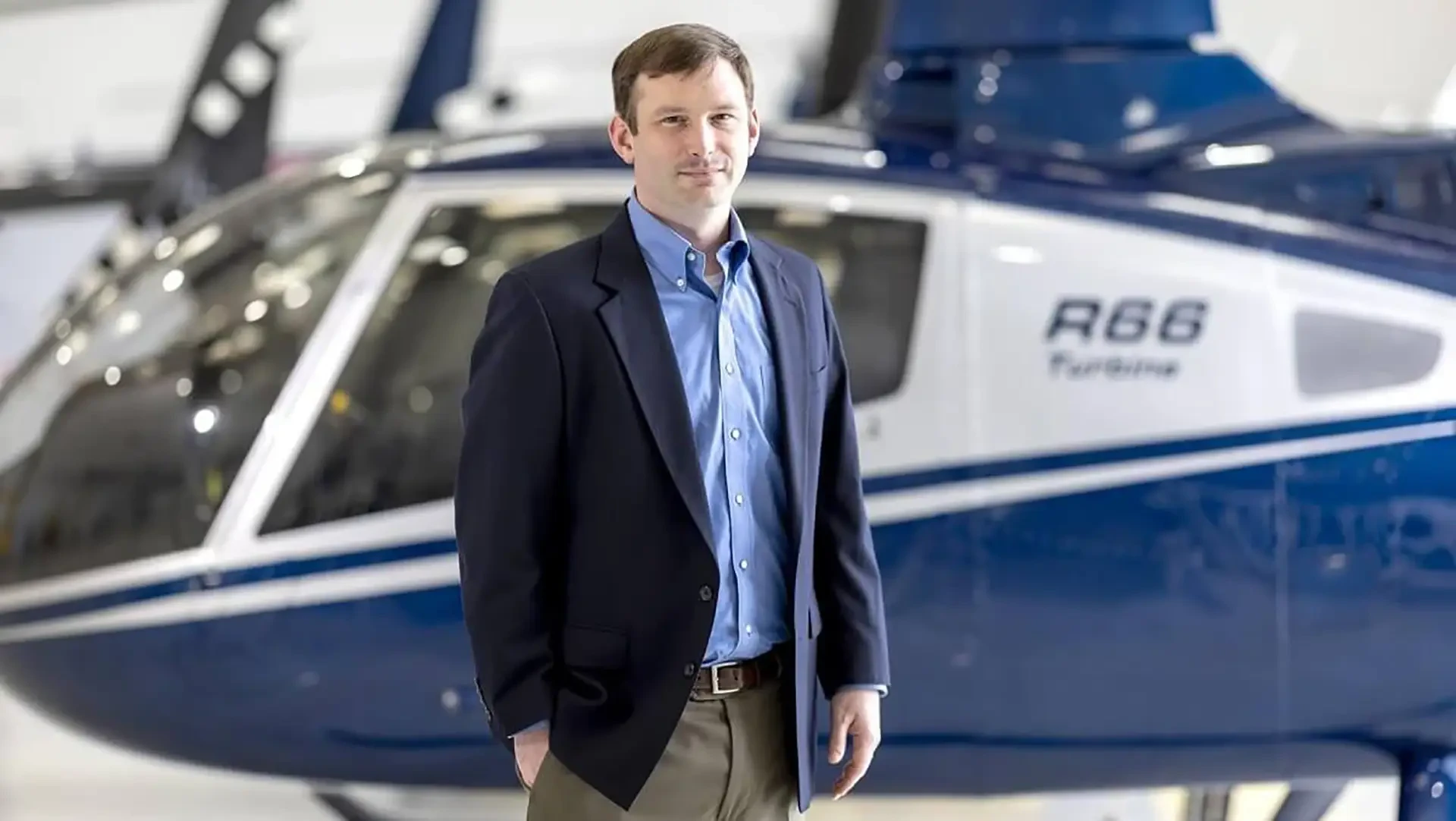
Robinson Helicopter Company is in the process of significant development and expansion, significantly expanding its product line and capabilities in line with what President and CEO David Smith refers to as its ‘roadmap’ for the future.
David Smith has been with Robinson Helicopter Company for a little over two years and was named as the President and CEO in February 2024. He outlined the company’s position to HeliOps publisher Ned Dawson in a recent interview, relating, “Several things have gone totally according to plan, in terms of new product launches and new product developments. When we set out, we did not intend to buy Ascent but that has gone well, and we’re excited about where that’s growing.”
Plans
Some things have not gone to plan however, and as the CEO explained, “We rolled out a back-end improvement that was partially to improve
the structure of accounting and inventory management so that eventually we can grow faster, better and stronger but that has been painful.
That has paced our ability to feed the factory and feed the fleet. We’re still producing huge quantities of parts, but we had a period from
late November to late January where we couldn’t really deliver much, where we had a problem getting through the learning curve and getting
things to properly exit. If you lose two months of time, you end up paying for that for a year.”
As a result of the deficit in Q1 shipments the company dock is full of parts that are for delivery or getting picked up by customers and there is a limit to how much the dock can hold. It turns into a game of catch-up and according to Smith, output has to quadruple to get the factory clean and back to putting parts on the shelf, instead of building and shipping them immediately. “What we’re trying to do right now is expand. We’ve almost finalized the lease on a new 70-80,000 square-foot building to expand here in Torrance and what I want is that helicopter support and services should be like Amazon, so you get notifications when something is shipping and when it’s being dropped off. You should get faster returns and response on warranty issues and core credits; all that stuff we should be really good at and the new facility will be our logistics hub with that in mind. I want to take control of shipping, dealing with two or three companies that we already use that will ship our product in a timely manner and not leave our dock cluttered up with parts that aren’t uplifted.”
Smith’s near-term plan is to open significantly more volume. “Right now, we have one dock outbound for everything in the customer service role. That’s crazy and we probably needed five docks ten years ago so the new building will have between 8 and 15 docks, able to process a lot more scale, a lot more planning and pre-positioning of inventory.” As an example, he pointed out that when customers order overhaul kits, every part is individually picked and packed. Eighty percent of the parts are common however, and he acknowledged that every dock should have a kit on hand, already pre-packed with all those common parts so filling and dispatching a kit should be same day.
Space – needed for growth
Space is currently a major issue and Smith observed that in that regard, Robinson has been a victim of its own success. “We’ve needed more
space for a long time. Our typical cadence has been an expansion about every ten to fifteen years and we are overdue for an expansion based
on our growth in fleet and deliveries. When we get this new building, it will also give us flexibility to do things that should always have
been considered, like the expansion to give us space to build R88 parts, the first of which are being built right now.” When full scale
production of the R88 kicks in, space in the existing factory facility will be required for that work, but now large areas of the facility
are taken up by parts storage. Those stored parts will move to the new building, freeing up the factory space for R88 production.
Because it was the last section added to the facility, the upholstery section is currently in the last existing building, furthest away from the final assembly line and Smith noted that the location didn’t make sense, as upholstery is only used during final assembly so it should be positioned much closer to the assembly area. “Those sorts of things will be able to be located much closer together so we won’t have to truck things between areas as we currently do,” he advised. The area where drones are built is adjacent to the repair station area and maintenance training is immediately alongside. “That is the most congested hangar we have so we need space and dedicated facilities for some of these critical divisions.” Robinson now has a research and development center at the headquarters of Ascent and Smith said the team is growing, with staffing having roughly tripled since Ascent was acquired. That team will remain there, but production will all be carried out at the existing Robinson facility.
Future Vehicles
Future electric-powered aircraft are among Smith’s forward-looking intentions, and he explained that the high power-demands of vertical
takeoff and hovering flight modes are extraordinarily hard on batteries. He believes that a hydrogen fuel-cell powered aircraft with a
battery to supplement short-term high-power needs is therefore the optimum solution to electric flight. “A.I. applications and data centers
have a massive demand for power generation so there is huge investment in generation technologies and we’re going to be able to ride on the
coattails of that investment. This could unlock local green hydrogen production that could sustain General Aviation needs”, he added.
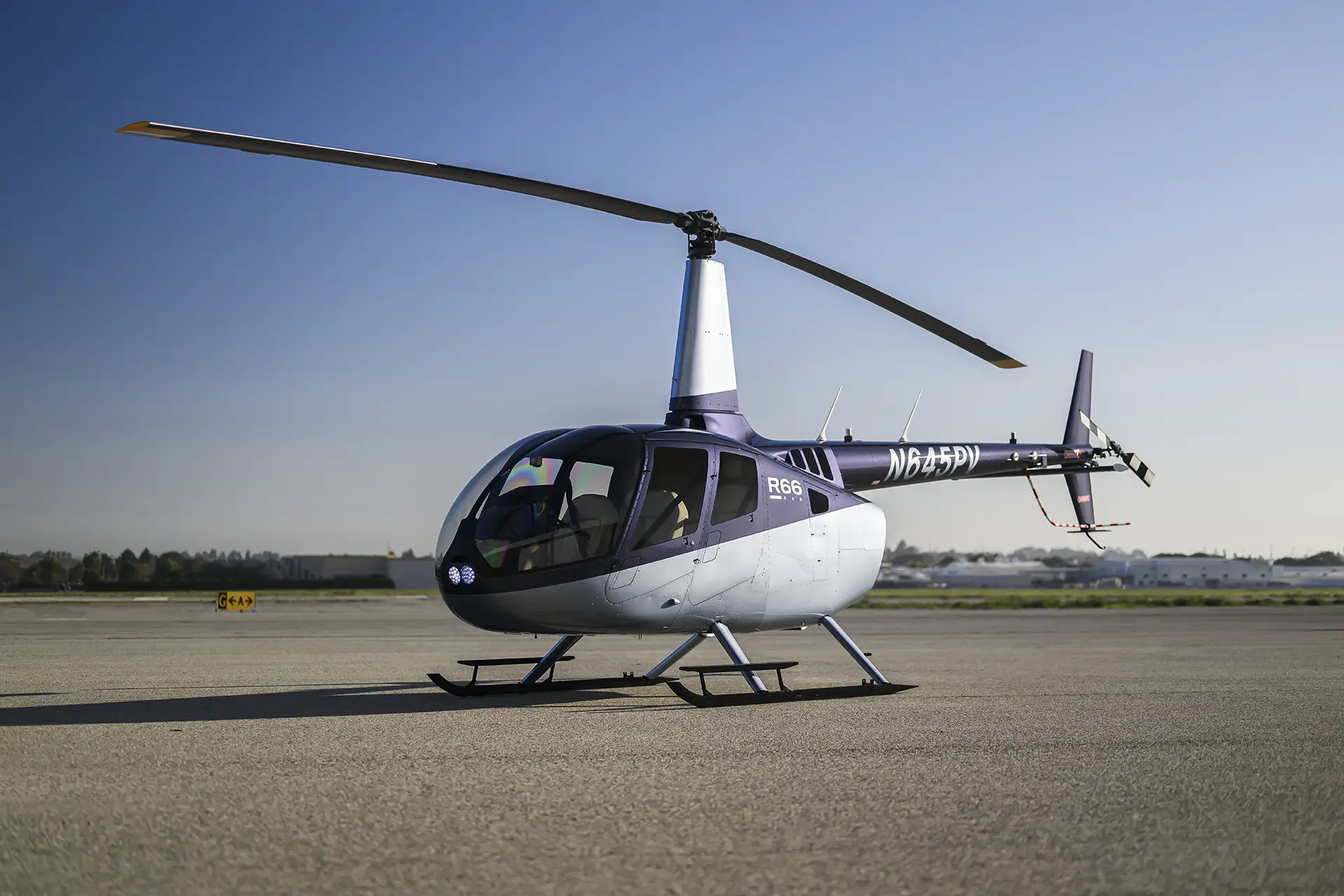
Electric R44 concept demonstrators have already flown and a joint program with United Therapeutics for a hydrogen fuel-cell and battery electric-powered aircraft based on the R66 platform is well advanced, currently working with Transport Canada in the certification formulation stage. Current technology is sufficiently advanced to build an effective flying aircraft with range and performance approaching that of the standard R66, but Smith commented that a step-change is necessary in power-generation technology to eliminate the extremely high cooling demands of existing electric powerplants.
For new R22 and R44 customers, the lead-time is just a creditable four months, with volume production able to meet demand at that level and
the company is encouraging owners of older models to trade in and upgrade to the newest variants to take advantage of the enhancements they
offer. Their trade-ins are then upgraded and sold as pre-owned. Between twenty and thirty new R22s are currently delivered annually, while
the target for R44s is five a week and R66 deliveries are down from four a week to two or three, due to engine supply delays. A significant
volume of the new product is going to the biggest market of Brazil. Also to India where the market is growing rapidly and safety standards
are rapidly improving, approaching the standards of the rest of the mature market. The company’s designer series NXG models are almost
ready to go on the market, fitted with upgraded interiors, full-glass avionics, standard air-con and new paint schemes. The critical link
to certification is the NXG cockpit, which is undergoing the process now and the first NXG deliveries are expected early next year.
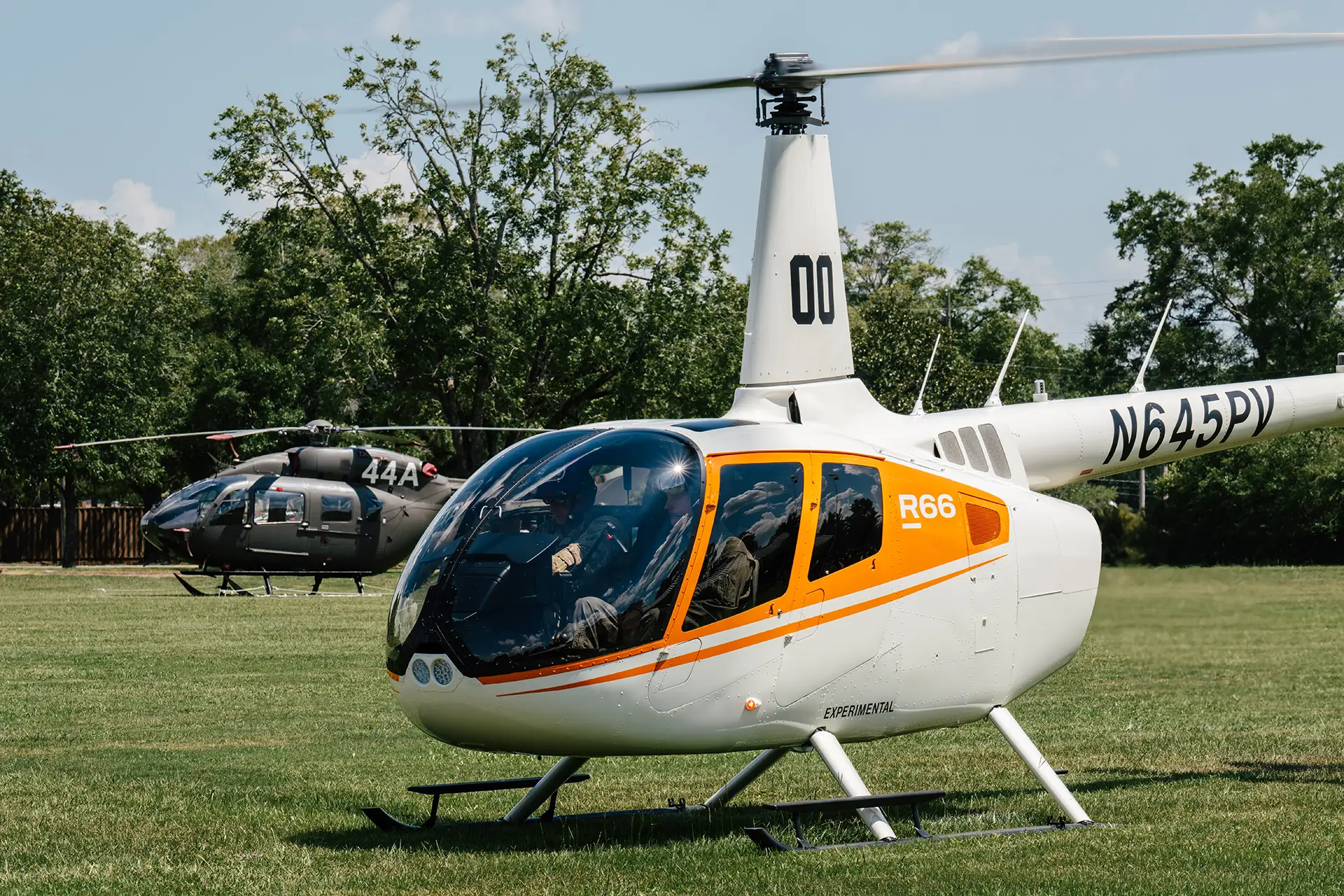
The US Army is a potentially significant future customer as Team CTI was awarded the U.S. Army FAA Part 141 Helicopter Flight School Pilot Program contract and utilizes four brand-new TH-66 Sage aircraft (the military training variant of the R66) from its Marianna, Florida base. This program has been highly successful, showcasing Robinson to the Army command. The company’s US manufacturing base, high volume production and parts holding, purchasing and operating cost effectiveness and ease of maintenance all put it in a good position to bid on future US Army helicopter contracts. One of the Sages is fitted with Robinson’s pressure refueling kit to enable safe hot-refueling and minimize downtime, something that was developed four or five years ago but is only now being marketed, primarily targeted at the agricultural sector.
According to Smith, his biggest challenge today is high-volume, affordable engines and the company is enduring a current backlog of 300 engines from Rolls Royce, just for the R66. The holdup on R66 engines is apparently due, primarily, to the engine manufacturer’s difficulties in machining the forged titanium impellers to the initial quality requirement so there is a lot of re-working needed. “I need partnerships with our current engine manufacturers to sustain supply and we’re working with Lycoming and Rolls Royce to ensure that they see the future the way we do, so we can get to a scale that supports the growth of both manned and unmanned aircraft. We believe that the capabilities of unmanned R44s and R66s are a major pillar of future defense and public safety.”
Unmanned Safety
He explained that there is a place for both autonomous and piloted unmanned aircraft and as an example, he cited controlled flight into
terrain, wire-strikes and pilot incapacitation as leading causes of fatalities in agricultural helicopter operations. Utilizing a remotely
piloted unmanned aircraft may not reduce the number of those accidents but it eliminates the possibility of pilot fatality in such events.
Smith sees missions such as survey, mapping or cargo as ideally suited in many instances for remote piloting, with a ground-based pilot
able to fly multiple missions in succession switching to each pre-positioned aircraft in turn. “That doesn’t cost any jobs, all it does is
increase safety and it would have saved maybe 100 lives in the last twenty years,” he stated. “This can be how manned and unmanned live in
the same universe and everybody’s happier.”
R88
The Robinson helicopter product line will be greatly enhanced by the addition of the new R88, a much larger offering than previous Robinson
designs, powered by a 1,000hp Safran Arriel 2W turbine engine and boasting the capacity for a pilot plus eight passengers. Smith explained,
“We’re making parts now for the flight vehicles, and our ‘iron bird’ and structural test vehicles are in production now as non-flight
assets. Key vendors are all selected and pretty much all parts are finalized, with the key components of the powertrain in production.
Development and production of the test stand is what’s pacing the program most right now, because we have to be able to test-run it before
it goes into the flight vehicles, and right behind that is the flight release of the engines.”
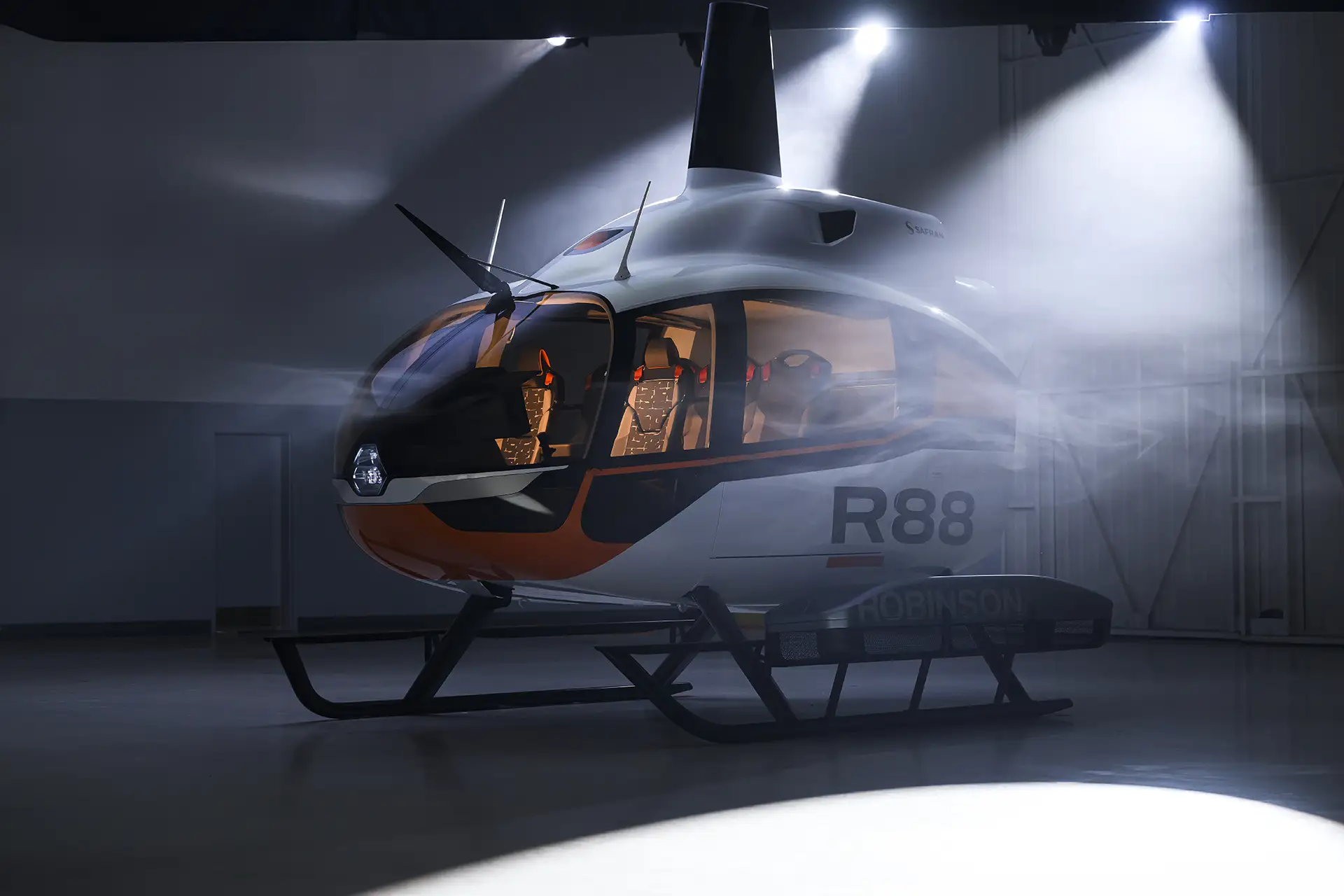
The first flying example that will look like the final R88 version may be flying as early as next year. “We’re building sheet-metal parts right now and a big part of this is ensuring that the parts are highly produceable to enable high-rate production,” Smith advised. “We can see that disaster relief requirements tell us that we have a need for larger aircraft that can provide more significant relief efforts. The R88 will be able to do hoisting for HEC work and have a cargo hook, and there is significant importance in having these larger aircraft with multi-mission capability. We aim to satisfy larger and larger segments of the industry.”
While the R88 is a new design, it retains some characteristics of Robinson’s smaller types, particularly the two-bladed rotor system. Smith
stated that a two-bladed rotor is more efficient than a multi-bladed system, easier to store in a hangar and that the concerns of many
about mast-bumping have been addressed by improved physics in the aircraft design. Further safety improvements include modern
full-authority autopilots that have greatly advanced capabilities that include effective low-G mitigation and Smith stressed, “We want to
be in a regular posture of rolling out new product and the R88 is going to prove that. Our goal by the end of this decade is to have the 88
in many peoples’ hands, flying and changing worlds.” That goal looks to be very realistic as Robinson already has more than 100 orders for
the R88, a remarkable achievement for a model not yet in full production.
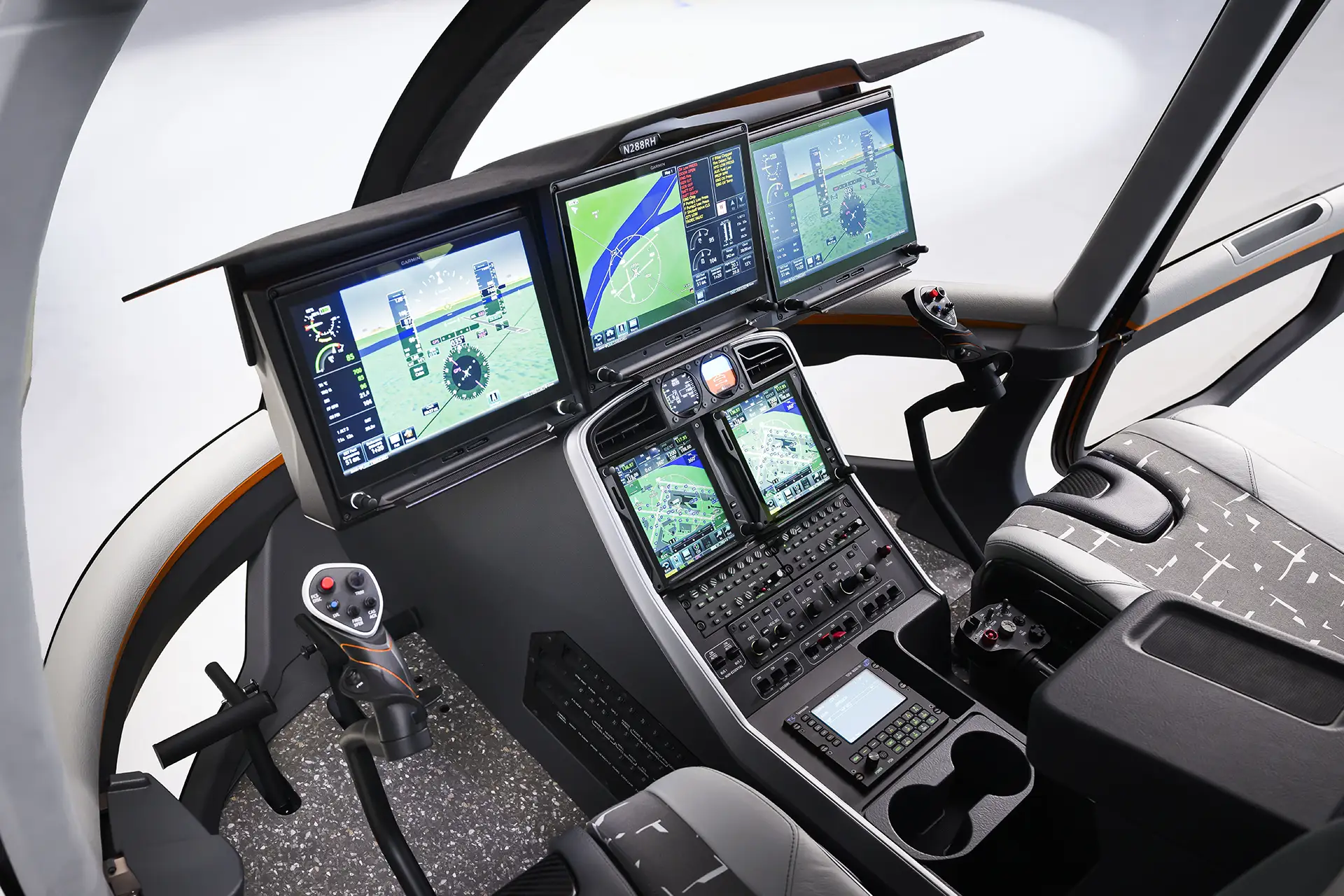
Smith compared the R88 to the Airbus H145, which is a robust, capable multi-mission aircraft with a large, unfettered cabin, reasonably accessible albeit with a long lead-time now. “If I can do it at roughly one-third the price though, less than the cost of the oldest used H145, why would anyone consider buying anything else? You get a brand-new aircraft with a four-axis autopilot, air conditioning as standard, that’s capable of lifting more people.” One of the few aspects of the R88 that is not yet finalized, is the way onboard software will be downloaded and integrated. Smith did comment though, that he foresees online downloads of updates and upgrades as the preferred system, making it rapid and simple to keep the aircraft up with the latest developments and improvements. Such processes also enable onboard alerting and monitoring systems to learn over time, continuously improving their effectiveness.
Single vs Twin – a different strategy
Smith has an interesting take on the single vs twin-engine debate. He notes that the advent of modern engines equipped with FADEC and HUMS
has dramatically improved the safety of single-engine operations, with effective monitoring of componentry that alerts of developing
problems or impending failures before they cause a catastrophic engine-out scenario. “We still need some mitigation of engine failures, and I
see the best way to do that is with a single primary engine, plus a boost-assist system with a battery or secondary motor that is not a full
engine and is available only in a contingent case when you need it. That’s more energy efficient and more resource efficient. I don’t want
to over-design or over-equip them because there are only so many resources on the planet and I want to make as many helicopters as
possible.”
Current Series Improvements
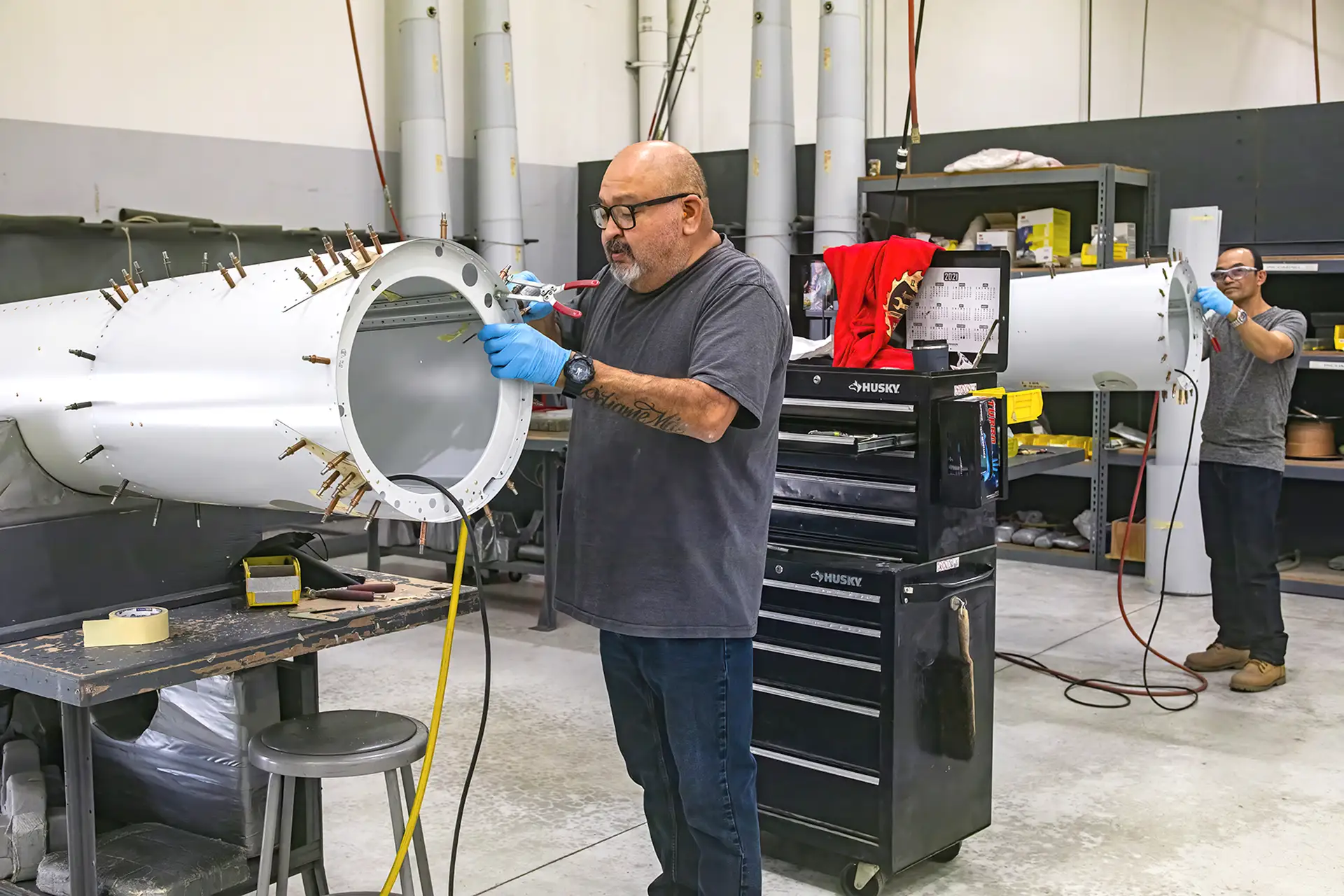
Robinson’s existing R22, R44 and R66 models are all improved when upgraded to the new stabilator that replaces the original single-sided design. Around 2,500 units have been ordered or installed to date and the Robinson flight test data starkly demonstrates the new version’s superior performance. Customers have also reported a dramatic improvement in flight stability and predictable handling, particularly in high winds. Most of those kits have been for the R44 and R66 models, with owners choosing to upgrade, while R22s tend to get the new version when they come up for overhaul.
The historical but ongoing spindle-bearing issue with R22s and 44s in particular was long thought by many to be due to rotor over-speeding.
That has subsequently proved to be a false assumption, with only a portion of failures due to over-speeds. Robinson has spent millions of
dollars of company money while working to establish the cause and although nothing definitive has yet been proved, Smith is confident that
their latest solution of match-grinding the spacers and spindle to make an assemble tuned for the correct preload will solve the problem.
In fact, he commented, that since instituting the fix, no further problems have been encountered anywhere in the world other than Australia
and plans are in place to visit Australian operators to see what is different and to enlist their assistance in properly implementing the
new solution. “The spindle-bearing problem has been ongoing for generations and we are going to solve it. We’ve solved it for ninety
percent of the world, we have our best team working on it and we’re sparing no expense to solve it for Australia,” he declared.
Ascent
When Smith talks about Ascent, he is referring to the recent acquisition of Massachusetts-based UAV manufacturer Ascent AeroSystems and he explained that the purchase was driven by two primary factors. “There is a desire for us to get more active in law enforcement and public safety applications. My original reason for engaging with Ascent was that I wanted payload for an enhanced law enforcement capability and we are going to do that.”
“In my view, public safety almost entirely uses aerial in support roles and we’re not able to directly drive tactical missions in a day-to-day sense.” The CEO commented that addressing a threat from directly above with aerial assets is frequently the optimum way to solve the situation, but the necessary toolset is not currently offered to public safety applications. “What I want is to provide border security, law enforcement, large public events with mass scale aerial assets. That is the ability for a helicopter to command, with limited workload, a fleet of drones that may have different equipment, deployable from the aircraft or from fixed infrastructure but commanded from the aircraft, that allows them to do things like stop car chases or alert and command through public address systems to direct people.” Smith noted that events such as mass shootings have been well documented as scenes of chaos, with many people hurt or killed in those minutes during which offender locations have been unknown. “Drones with helicopters can solve that and I think that an aerial commander with assets that can locate the shooter and alert, or direct people can dramatically enhance public safety.”
This year has seen demonstrations of air-launch, mass optic capabilities, personnel tracking, locating vehicles and finding missing persons. “Now all we’ve got to do is package it and show it and next year you’ll see the actual aircraft with all the equipment on it; the optics on the front and that can be deployed out the rear. We really want to disrupt law enforcement with all that capability because today, it’s all about a camera and maybe people coming out the back or being dropped off. That’s not enough and we should be doing more. We should be stopping car chases and that’s a universal good that no one has tackled.” He related that a Louisiana police officer was killed recently while setting out tire-deflation strips. “That happens too much so why are we doing it that way instead of stopping it from above with a tactical asset?”
The second driver in purchasing Ascent was that it provided an opportunity to both acquire a small helicopter-drone company and to leverage
Robinson’s production scale. “We got terms that were reasonable on valuation and although this was something that Robinson had never done,
it was the right kind of thing to do. When I started in the business, I knew I needed to address autonomy. Law enforcement divisions are
being pulled to spend money in either manned or unmanned but I think there’s a much better future for both.” For agencies like the LAPD that
have huge resources and are always in the air, Smith believed that their ability to handle large-scale events that are difficult to observe
and control would be greatly enhanced by augmenting the manned aircraft with unmanned assets. “I see that as the future and we’re going to
show that to people. It’s something that our competitors can’t touch, we want a force multiplier truly on the aircraft itself, not just an
independent asset.”
To Do
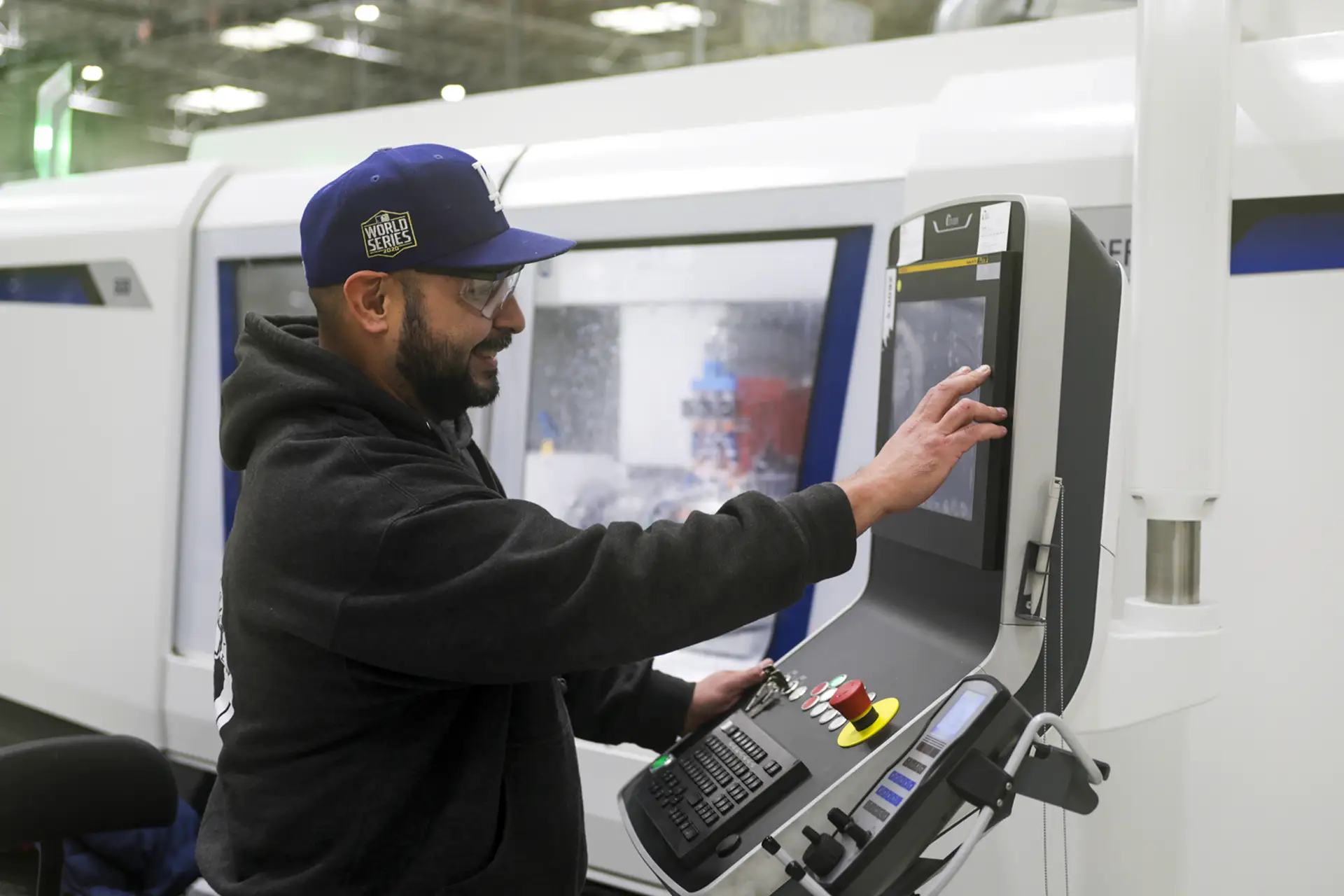
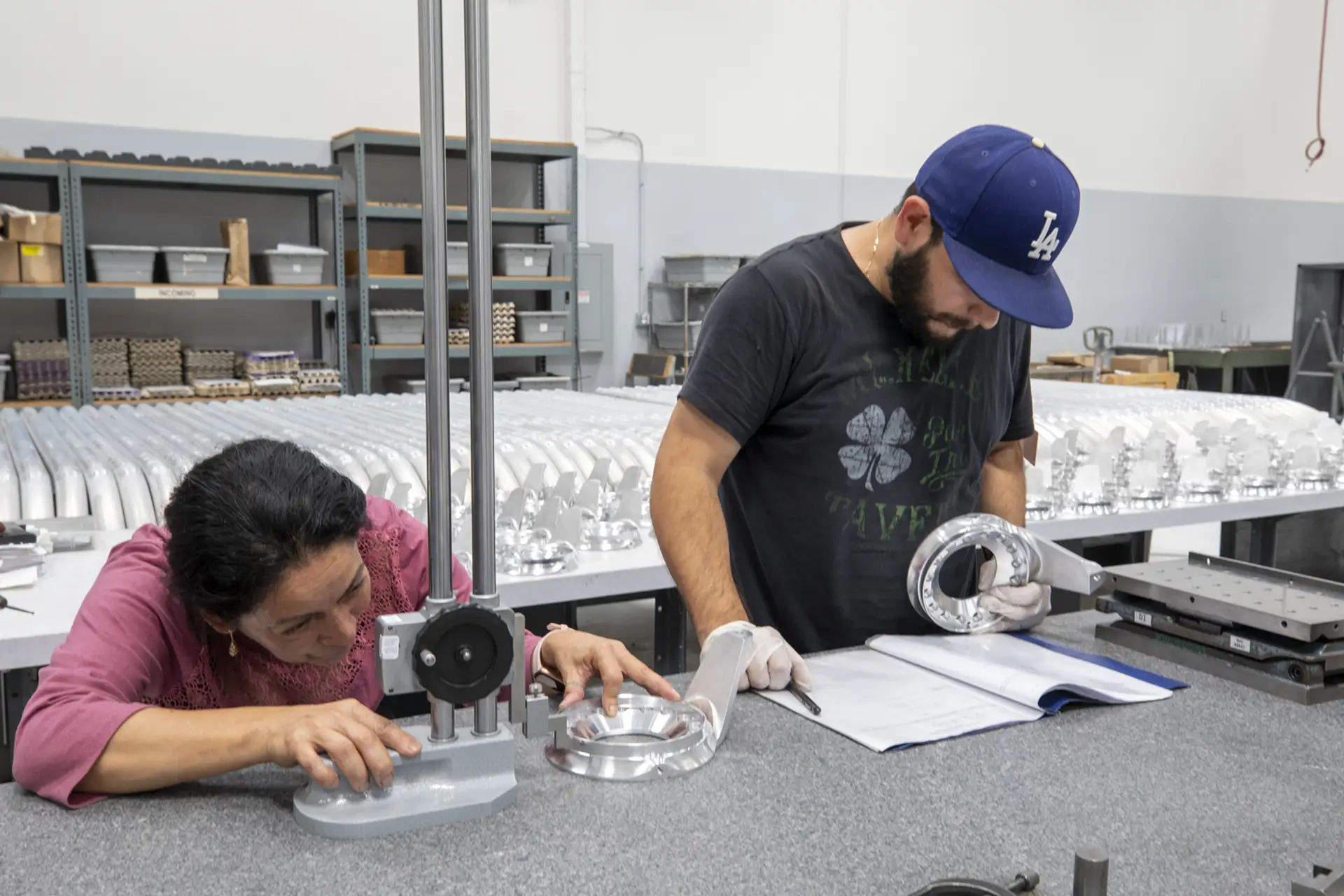
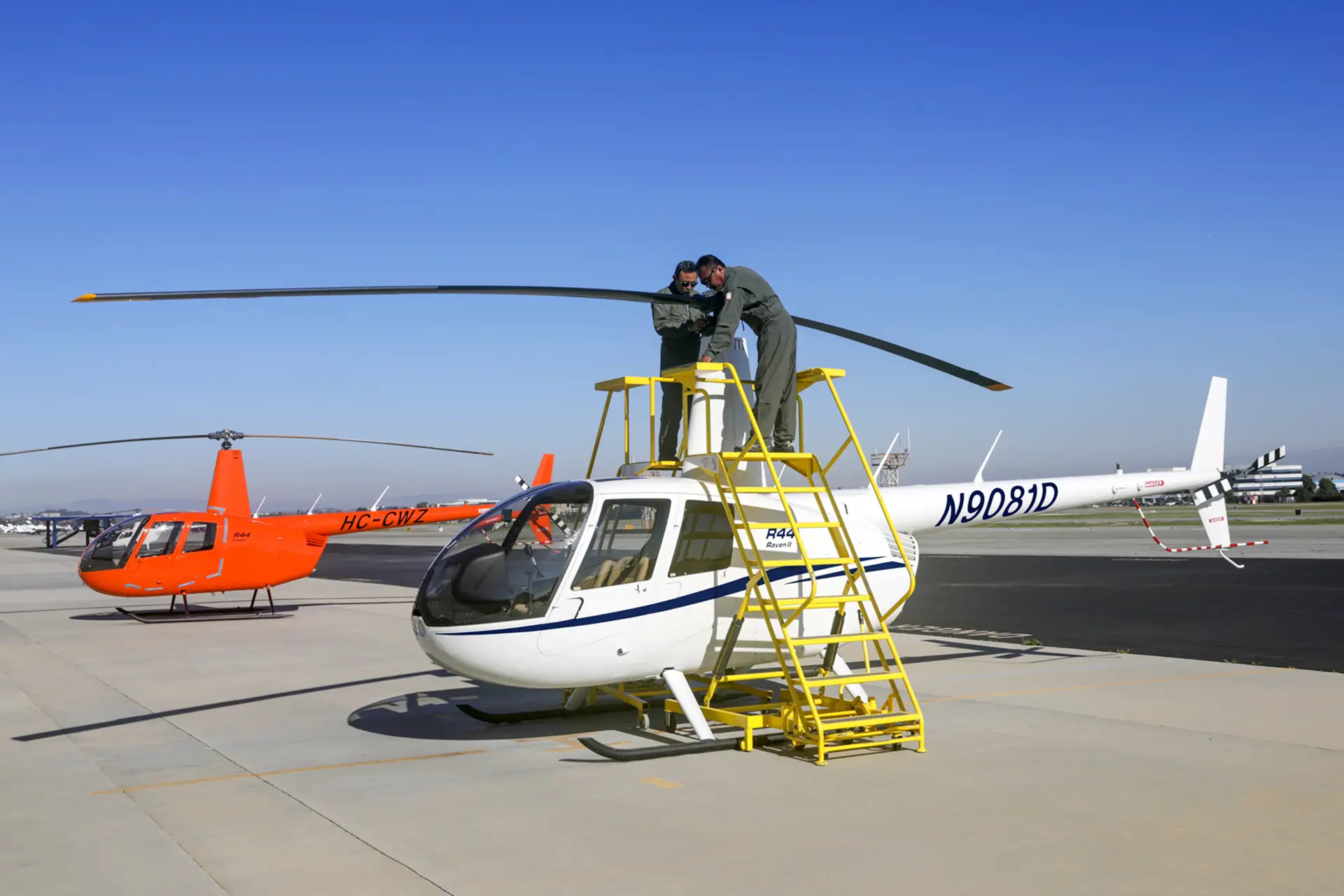
When asked to list the top five priorities on his ‘to-do’ list, Smith cited progressing the R88 and getting engine supply to the quantity and quality necessary to support customer needs as priorities one and two, logistics improvements to achieve faster parts supply at number three, while number four is all things related to getting Ascent’s production and supply rate vertically integrated, as there are parts sourced from elsewhere that could be manufactured in-house. "Number five is Factory safety and efficiency improvements like the deployment of an AI-enabled robotic blade-sanding cell to auto-sand multiple rotor blades, eliminating repetitive strain stress on human workers, and activation of a metalizing booth so the work can be done in-house instead of being sent out to a vendor."
Alongside its own growth, Robinson also funds a program in Australia to support engineer development, to help deal with the global shortage of qualified aircraft engineers. The airlines pay big money to capture all the promising new entrants into the industry, which leaves the helicopter industry wanting. Almost 14,000 Robinson helicopters have already been sold around the world with about 10,700 still active and flying.
The company’s expansion plans will pour many thousands more into the industry, inevitably changing the market in significant ways. Other major manufacturers may well have trouble maintaining their dominance in certain sectors as Robinson enters segments at hitherto unseen low pricing levels. As technology advances to match mission and safety requirements, unmanned aircraft will undoubtedly boost those numbers even further and with its acquisition of Ascent, Robinson Helicopter is ideally placed to take advantage of the huge market that will ensue.