 HOME
HOME





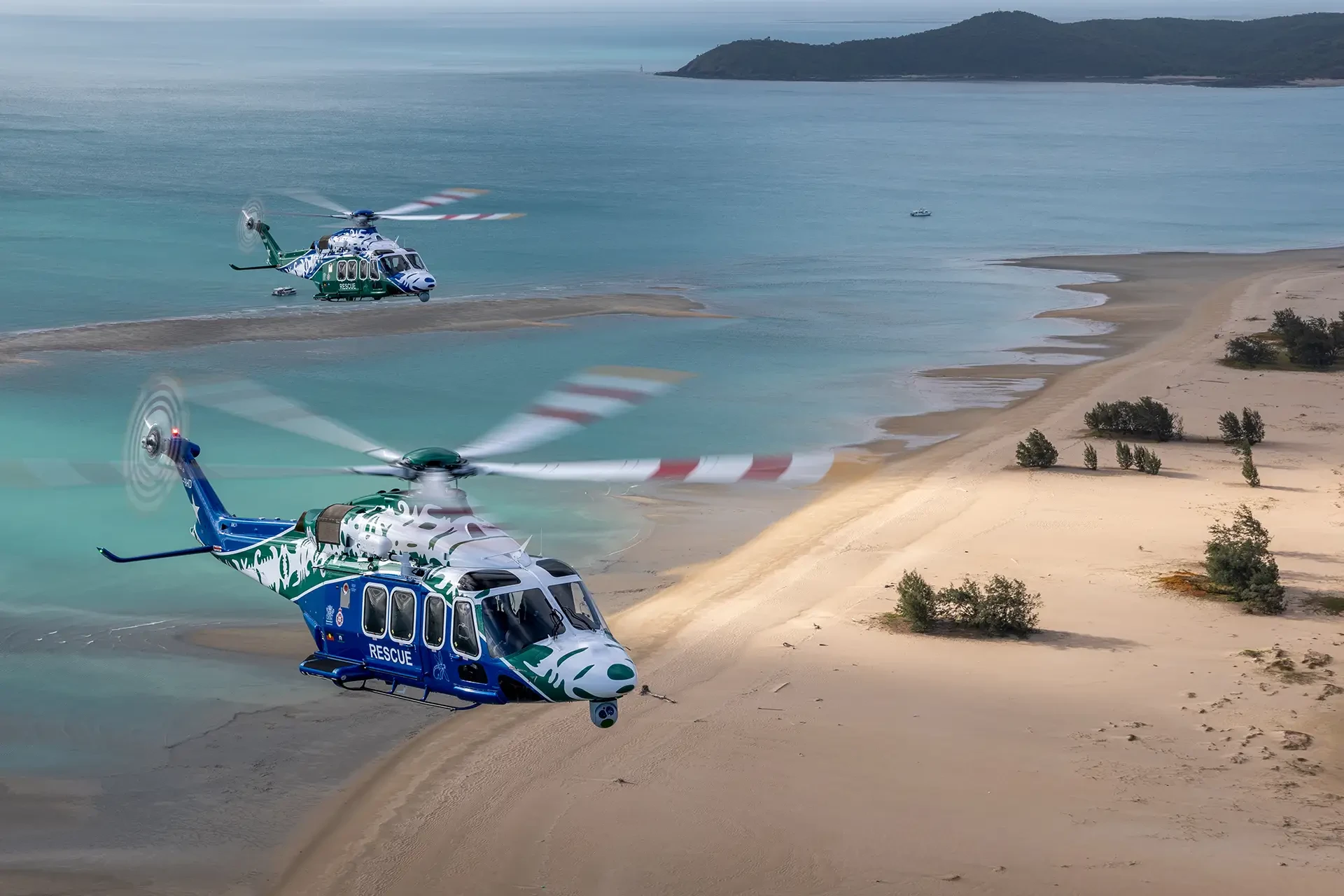
The Bell 412 has served admirably in utility and SAR operations for two decades or more, but newer types now offer greatly improved performance, range and capabilities, with technologically advanced systems. They can replace older types such as the Bells and significantly enhance operational capabilities, particularly in remote regions such as served by Babcock Australasia’s Horn Island Helibase.
Babcock has provided a search and rescue (SAR) operation (the ‘Rescue 700’ service) from its purpose-built Horn Island base since late 2007, operating Bell 412s on behalf of Queensland Health to provide aeromedical retrieval and SAR services to the Torres Strait community and the Northern Cape York Peninsula. A further 12-year contract awarded to Babcock in 2022 specified new aircraft, with the result that the company has now replaced the Horn Island 412s with a pair of new AW139s to continue the 24/7/365 service.
New Contract
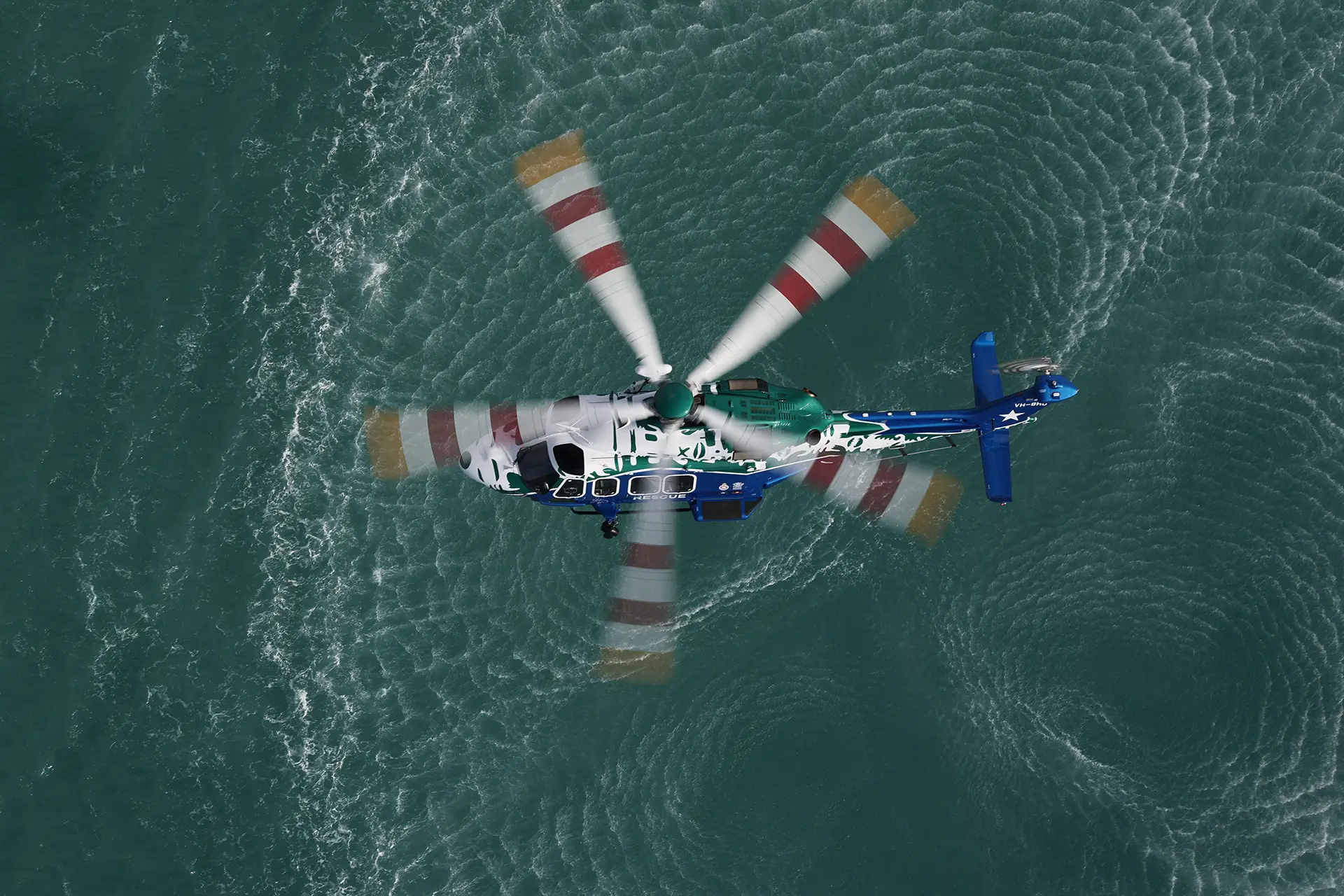
The new contract required a minimum number of AW139s, with floats and in a specific configuration that included the powered zero-lift stretcher-loading system to ensure commonality with the statewide ground ambulance fleet. This is in line with an upgrade of Queensland Health’s entire emergency helicopter network to AW139s and only a few aircraft within the state are still awaiting upgrades to the standard configuration. Another major contract change was the introduction of day and night shift Aircrew and Rescue Crew Officers. Under the old contract, the ACO and RCO were on duty for 24 hours at a time, which had made it far more difficult to manage availability and fatigue compared to the new arrangement.
From 1 July 2025, CASA’s new performance class regulations came into force where Category A helicopters became a requirement for all CASR Part-133 (air transport in rotorcraft) operations, which all medical transport operations (HEMS) fall under. Brett Shipp, a Babcock multi-engine pilot related, “For the state of Victoria, which we run as Babcock, the whole fleet was legacy Bell 412s and was upgraded to AW139s because they have that performance and longer range. They’re safer, faster and can lift more so the 139 has gradually been taking over.” AW139s have taken the mantle of the once ubiquitous B412s in Australia and are now the mainstay of aeromedical operations, with only a handful of other types remaining in service
The Service
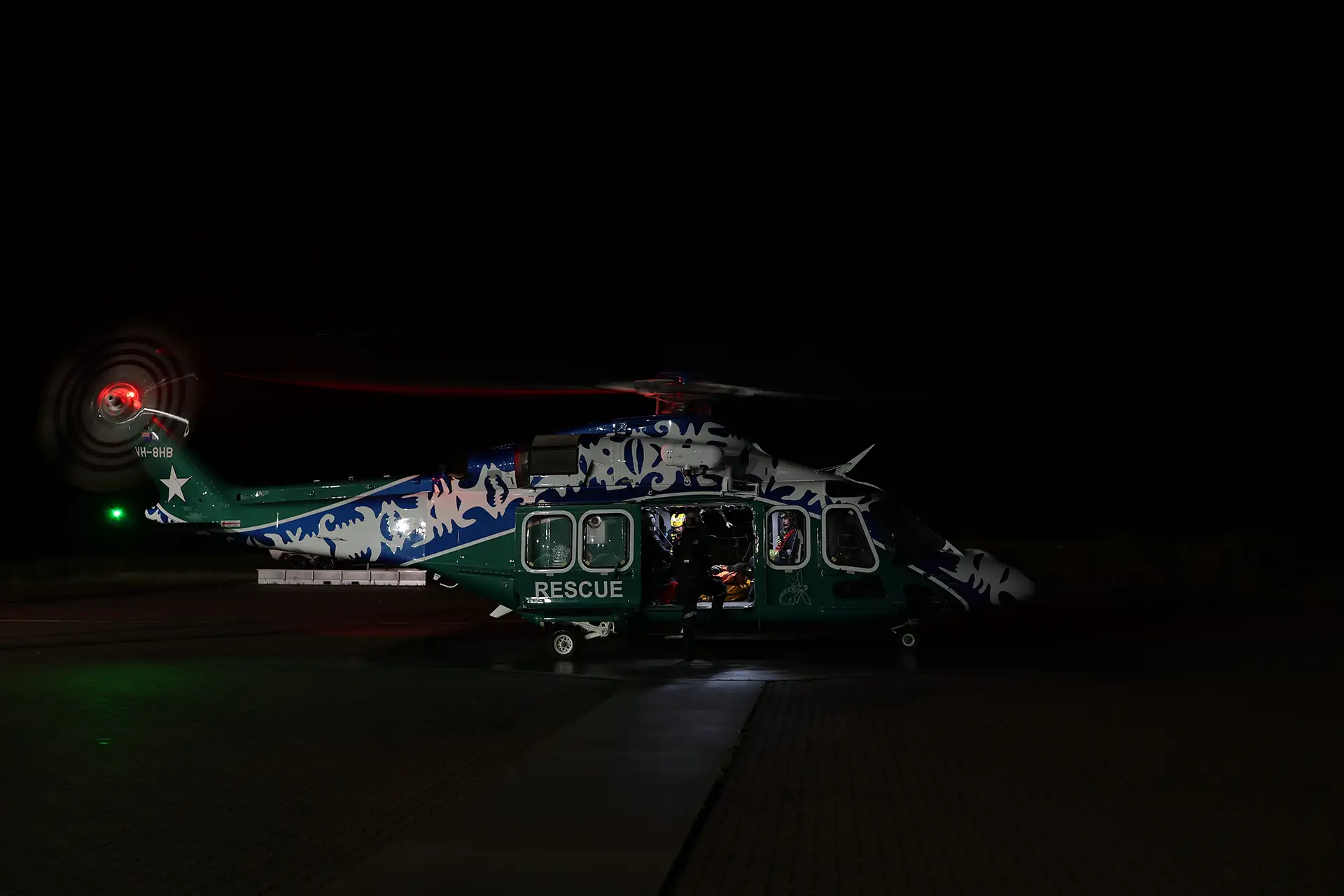
Flight training manager Mick Whitney explained that the new aircraft for Horn Island were painted in a unique, Torres Strait-inspired paint
scheme reflecting Queensland Health’s desire for the local communities to feel a sense of connection with the rescue service Torres
Islander artist Alick Tipoti was engaged to design the new livery, a twelve-month process that resulted in the final design approved by
Q-Health. The generous sponsorship of Babcock, Leonardo and leasing company LCI covered the painting costs of the striking - but
technically difficult to paint, livery. The first aircraft was delivered to Horn Island in March 2025 with the second arriving in
May.
The two new aircraft form the Lagaw (island) Kuyup (helicopter) Rescue Service, with Kuyup also being the Islander term for dragonfly. The
paint-scheme is unique, culturally significant and visually striking, incorporating a dragonfly motif on the underside of each aircraft
while the fuselages are emblazoned with a white indigenous pattern on a green background over blue on one machine, and a blue background
over green on the other. The dual color variation came about as Q-Health was indecisive about which of the two schemes was preferred and so
it was eventually decided that one would be painted in each. Tipoti collaborated with Q-Health on a booklet that is freely available and
explains the meaning and significance of each element of the paint scheme.
The colours and other details in the design represent the flow of the wind, waves and tidal currents, incorporating elements such as
migrating birds, sea spirits, reefs and lagoons. Green represents the islands throughout the Torres Strait; blue represents the sea and
waterways and the black outline on the five-pointed star on the vertical tail represents the Torres Strait Islander people. The star itself
represents the Torres Strait’s five provinces, so the entire aircraft is a flying indigenous artwork that is instantly recognizable and
means a great deal to the local peoples. In fact, the paint scheme has had such a profoundly positive reception from the local communities
that Q-Health has subsequently considered doing something similar with other platforms in areas elsewhere.
The most notable feature of the Horn Island operation is the remoteness of the operational area, as Whitney explained. “We are it for the Cape York and Torres Strait people. The next nearest helicopter is in Cairns.” Cairns is over 400nm from the islands. With at least 274 small islands in the Torres Strait archipelago, the only viable alternative to aerial transport is boat access and there are only a few airfields suitable for fixed-wing aircraft, so the helicopters are a vital link to healthcare and rescue services. “None of the runways that do exist are lit, so we’re the only ones who can do night operations,” added Matt Dobson, Chief Aircrew Officer. ANVIS-9 NVGs are used for night operations and he pointed out that the sparsely populated tropical region’s lack of ambient lighting and prevalence of cloud cover meant that it is one of the darkest areas he has ever flown in. Whitney commented, “When there’s no moon you often can’t even see a horizon.”
Less than five thousand people live on the various inhabited Torres Islands, but the service also covers the Cape York Peninsula region, with its remote northern areas and difficult terrain. While the relatively small populace might make two aircraft seem excessive on the face of it, Shipp explained that the Queensland HEMS network is set up such that each sector can overlap coverage with the adjacent sectors. Although Cairns is the next closest service to the south, Horn Island’s position as the northernmost service means that if an aircraft goes down or is out of service when operating to the north, there is no one else available for recovery or rescue and Shipp pointed out that the second aircraft enables self-recovery. “It also means we can maintain coverage when outages, maintenance or serviceability issues take an aircraft out of service,” he added.
139 Capability
Changing to the AW139 hasn’t changed the roles the operation undertakes; however, the new aircraft is notably faster so a trip that used to
take one hour-twenty can now be flown in around one hour, a 25% improvement. The 139s are equipped with air conditioning so comfort is
increased and fatigue reduced. The performance of its more sophisticated autopilot system and avionics suite enhances safety and redundancy
so the same missions can be conducted faster, safer and more efficiently than was possible with old Bell 412s.
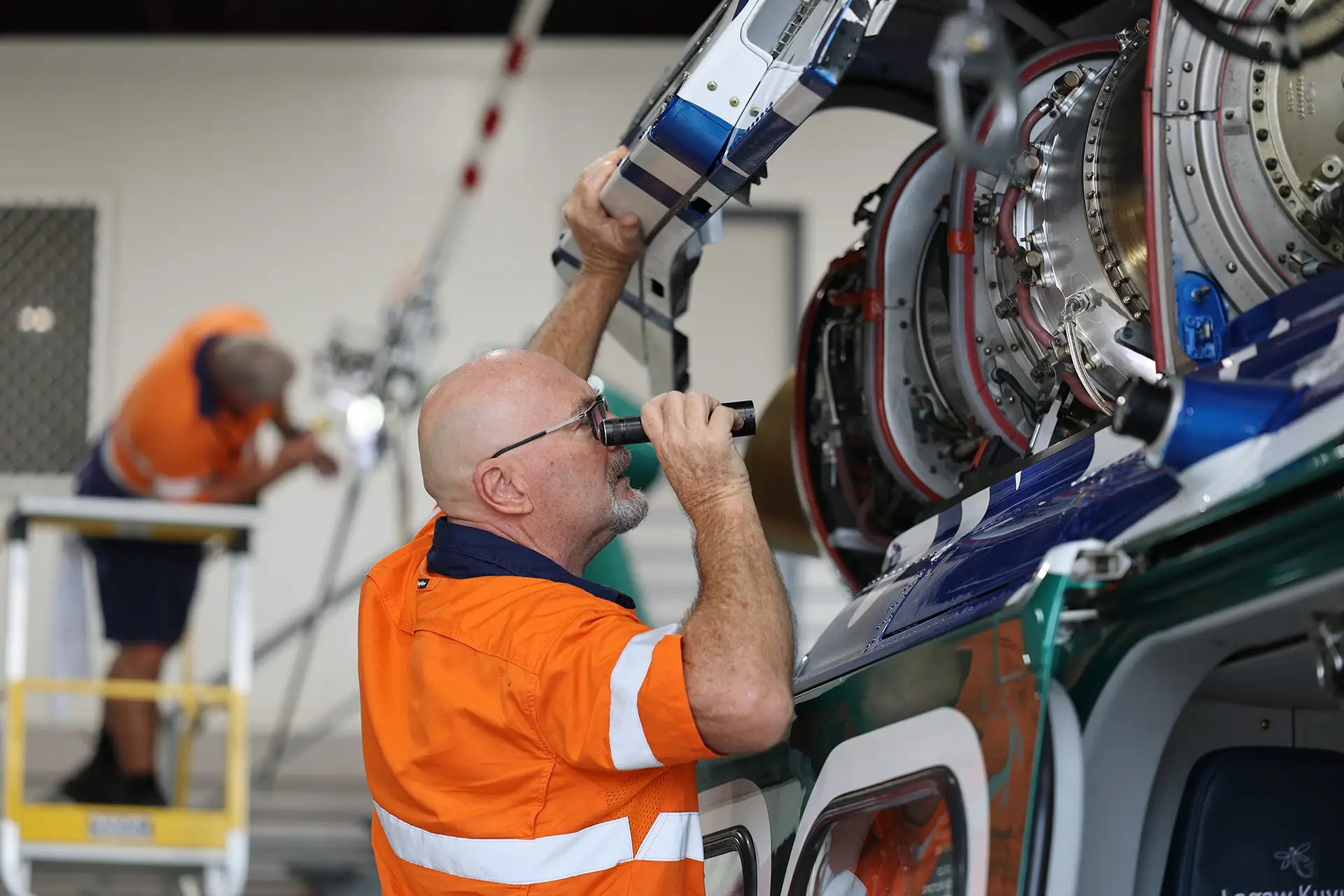
The cockpits and cabins of each of the now-replaced Bells had varied so switching between aircraft had posed familiarity challenges. So, the Babcock pilots, aircrew officers and rescue crew officers appreciate the identical cockpit, cabin and equipment configurations of the new machines. The AW139’s larger rear cabin permits carriage of a wider range of medical equipment and gives the paramedic or doctor more space to manage and care for the patient. It is also set up to allow relatively simple equipment reconfiguration to suit the wide variety of mission profiles.
Standard crewing minimum is for one pilot, one aircrew or rescue crew officer and a paramedic, with the paramedic supplemented or replaced
by a doctor as necessary, depending on the specific medical needs of the mission. Having a paramedic and ACO or RCO on board means that if
RSQ (Queensland’s medical coordination, tasking and telemedicine services) re-tasks the helicopter during a mission, it will usually be
able to translate into the new tasking with nothing more than a refuelling stop if necessary.
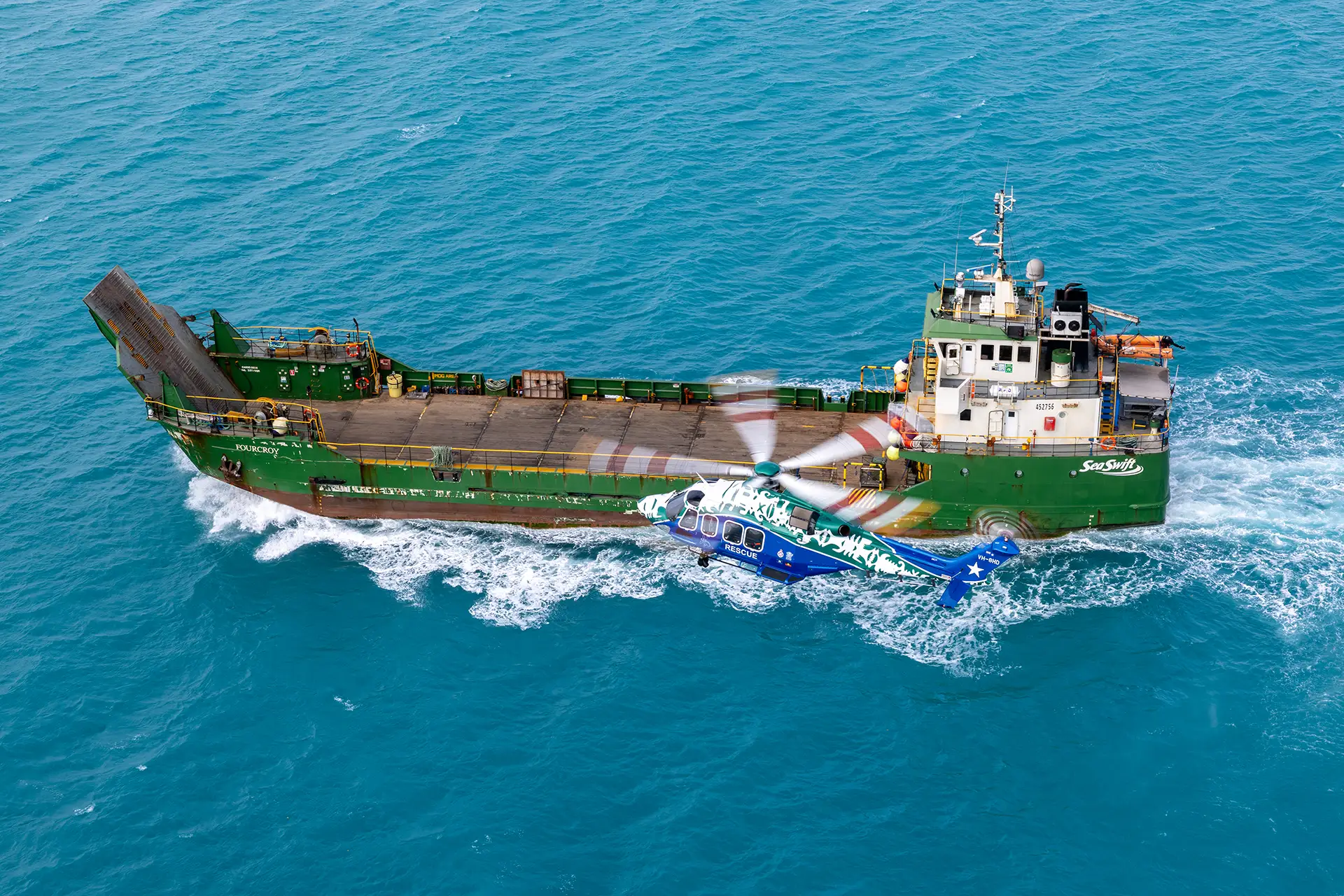
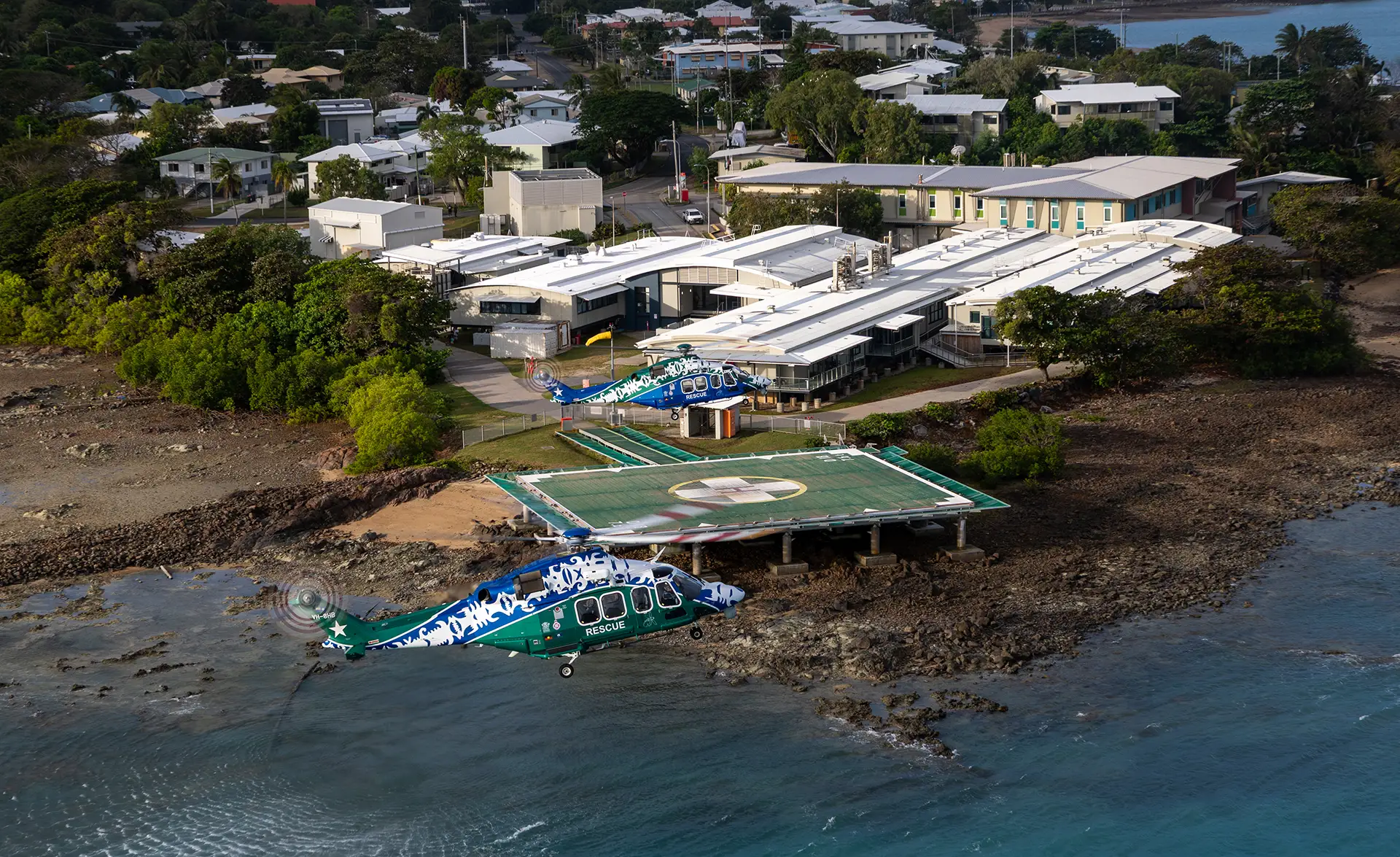
Although the aircraft are based on Horn Island, the paramedic and/or doctor work from the hospital on nearby Thursday Island (known locally
as simply ‘TI’) so each EMS or medical transfer mission commences with a flight to TI to uplift them, and missions for the police uplift
from the same hospital helipad. Horn Island is the busiest unmanned airport in Australia so the AW139’s TCAS, advanced 4-axis autopilot,
autohover and HTAWS systems, all add significantly to the safety of the operation. “We used to have to rely solely on the mark-one eyeball
for traffic avoidance but now the aircraft can also help to tell us where they are and if anyone gets too close,” commented Shipp.
Multi-Crew
Babcock integrates roles traditionally performed by rear crew into multi-crew operations by training Aircrew Officers and Rear Crew
Officers to reduce the workload of the single pilot. When not needed in the back for winch operations or conning the aircraft, aircrew sit
in the co-pilot seat and are trained to monitor the pilot during all phases of flight, including instrument flying. They assist by reading
checklists, entering data into the Flight Management System, monitoring aircraft systems and surrounding traffic, often coordinating
communication with medical and SAR agencies. This augmented model delivers many of the benefits of a two-pilot crew while avoiding the
weight penalty of an additional pilot, allowing more fuel to be carried and increasing operational flexibility.
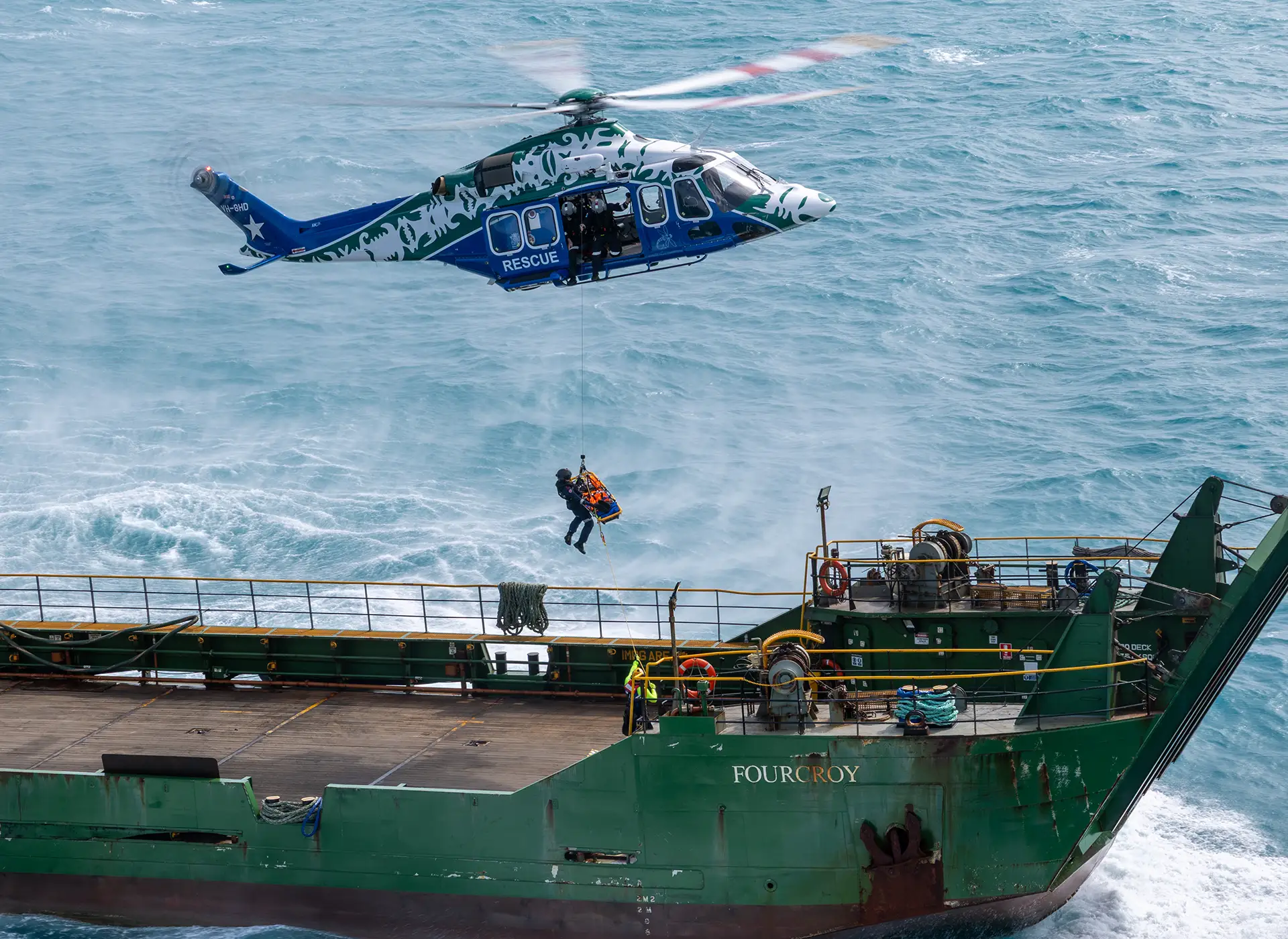
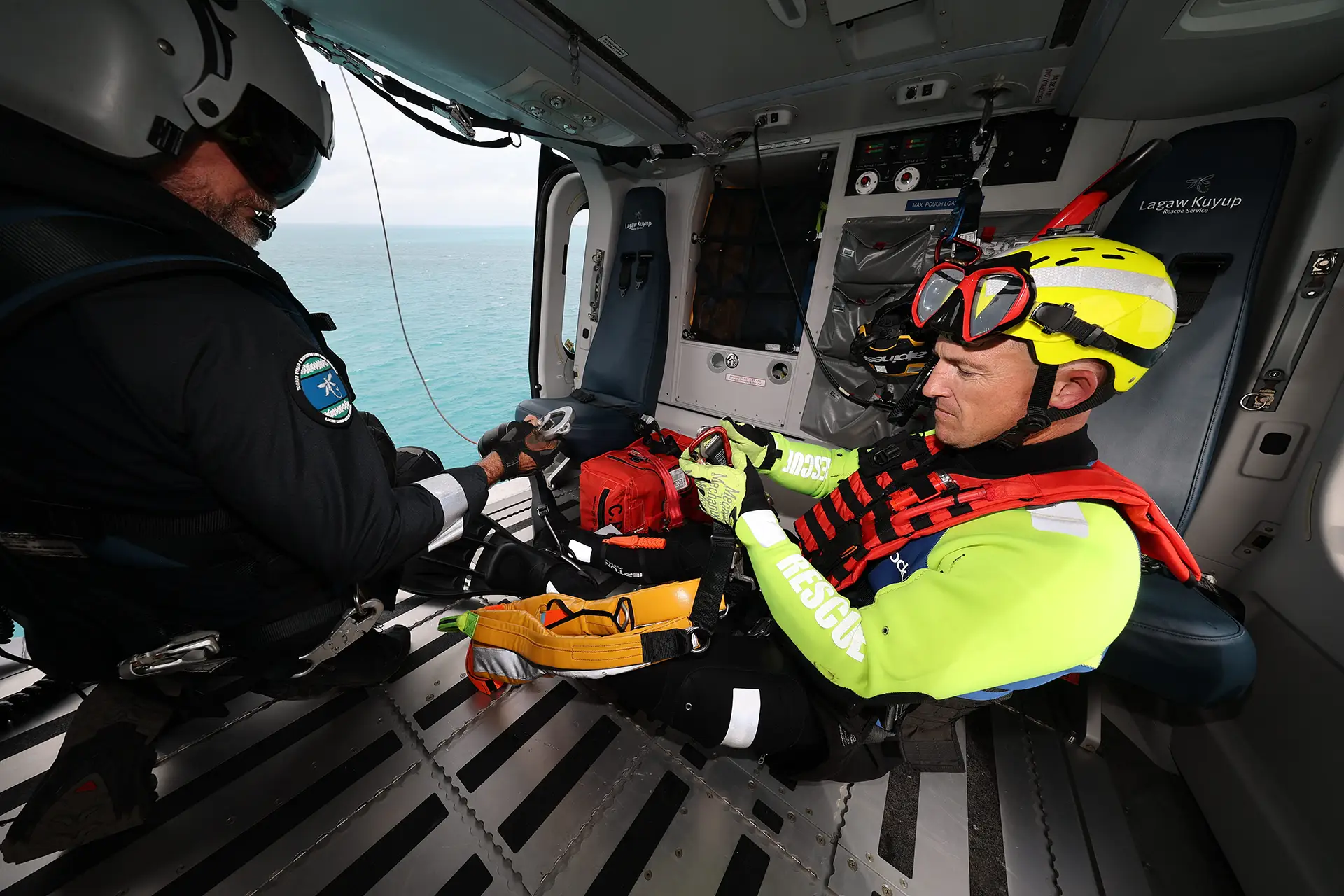
A significant benefit of operating with an RCO is that they have all the competencies required to operate safely on the winch line and on the ground, complete familiarity with the aircraft and its systems and the ability to maintain safety of the scene, aircraft and medical personnel, freeing the medics to concentrate purely on the care and treatment of the patient.
Babcock has an established policy of ongoing training to progress RCOs to qualify as Aircrew Officers and a background as an RCO also means that when they become an ACO, they bring with them a thorough understanding of operating at the bottom of the hoist and on-scene on the ground. The mandatory experience and training requirements for pilots and aircrew working in EMS means that these roles are usually filled by people already working in the industry. RCO is one of the only entry-level positions for people wanting to start their career in EMS.
Configuration
The new machines are the best-equipped and specified HEMS AW139s in Australian service. They are 7-tonne aircraft with phase-eight
software, FLIR and auxiliary fuel tanks. The shorter range of the Bell 412s meant that they had to refuel to complete jobs that, in many
cases, the AW139s can now complete on a single fuel load. Whitney reported that doctors who have flown with other HEMS operators have
commented that the new Babcock aircraft are the best-equipped aircraft that they have seen. One aircrew officer with around fourteen years
working for Babcock related that he had switched from 412s to earlier version AW139s at another location before coming to Horn Island, and
he said the shift to the new AW139s was as big a jump as the switch from the Bells to the older 139s.
The switch from manual stretchers to the Stryker XT-Pro powered stretcher adds to patient comfort but, more importantly from the crews’
point of view, makes loading and unloading patients vastly simpler and easier as the stretcher unit itself carries out all lifting and
lowering functions so a single crewmember or paramedic can manage to guide the stretcher in and out of the aircraft if necessary. The
Stryker is common to the ground ambulance fleet and some RFDS aircraft, so it is simply a matter of swapping over the stretcher ‘bridge’ and
exchanging stretchers when transferring a patient, eliminating the need to lift the patient off one stretcher and onto another.
Aircrew officer David Patterson recalled that the day before the first AW139 went operational, a crew on the 412 picked up a 160kg patient and required four people to lift the older manual stretcher onto the aircraft. “It’s a game-changer for the crews in the back. Rear crewmembers have always been prone to back injuries from manhandling the loaded stretchers but it’s now a one-handed operation for a paramedic to guide the stretcher into or out of the aircraft,” added check and training aircrew officer Corey Baker.
The Q-Health contract requires 24/7/365 availability for one aircraft so one is always kept ready to fly, freeing up the other for scheduled maintenance or to cover unscheduled outages. The Horn Island aircraft are tier-2 SAR assets with their primary role being EMS, but they are available to be dispatched on SAR calls, as well as aerial support for police operations so the flexibility in their equipment fitout is a major boon to their usefulness as a multi-role platform. “Having said that, there is no other aerial asset available for SAR in this area other than the fixed-wing Challenger coming out of Cairns and they can only fly over and drop; they can’t land so we are the only ones who can conduct a rescue,” Shipp noted.
According to Whitney, most of the work is inter-facility transport and medical transport from the outer islands but the Torres Strait waterways are busy with both commercial and recreational shipping/boating, so SAR/winching still comprises a significant amount of the annual workload. The demand can be highly variable, with bad weather or lack of incidents resulting in anything up to seven days without turning a blade. The next day, however, assisting police might entail four or five hours searching at low level before being interrupted by a call for a medical transfer, so managing duty time is always a consideration. Annually though, more than 600 hours are typically flown on around 450 missions and transits are commonly around two or three thousand feet, to avoid the smaller helicopter and fixed-wing traffic that tends to operate at 1,000ft or less around the islands. “We have the luxury of going IFR, avoiding them and having the extra safety and reporting that comes with it,” remarked Shipp.
Challenges
The most challenging aspect of the Cape York/Torres Strait operation is its remoteness and the variable, often extreme weather, with exceptionally strong winds and monsoon-type rain regularly making flights inadvisable or impossible. The pilots and crews reported, however, that Babcock’s strong and healthy safety culture stressed safety of the mission above all else, so they stand behind a crew’s decision 100 percent and there is never any backlash over a decision to decline or delay a flight. The crews discuss conditions and risks before departure on each mission and are empowered to take a no-go decision if there is unacceptable risk, or if a crewmember is unsafely fatigued. The medical specifics of a mission are intentionally not related to the crews before departure so that medical considerations do not interfere with that initial safety-related decision-making.
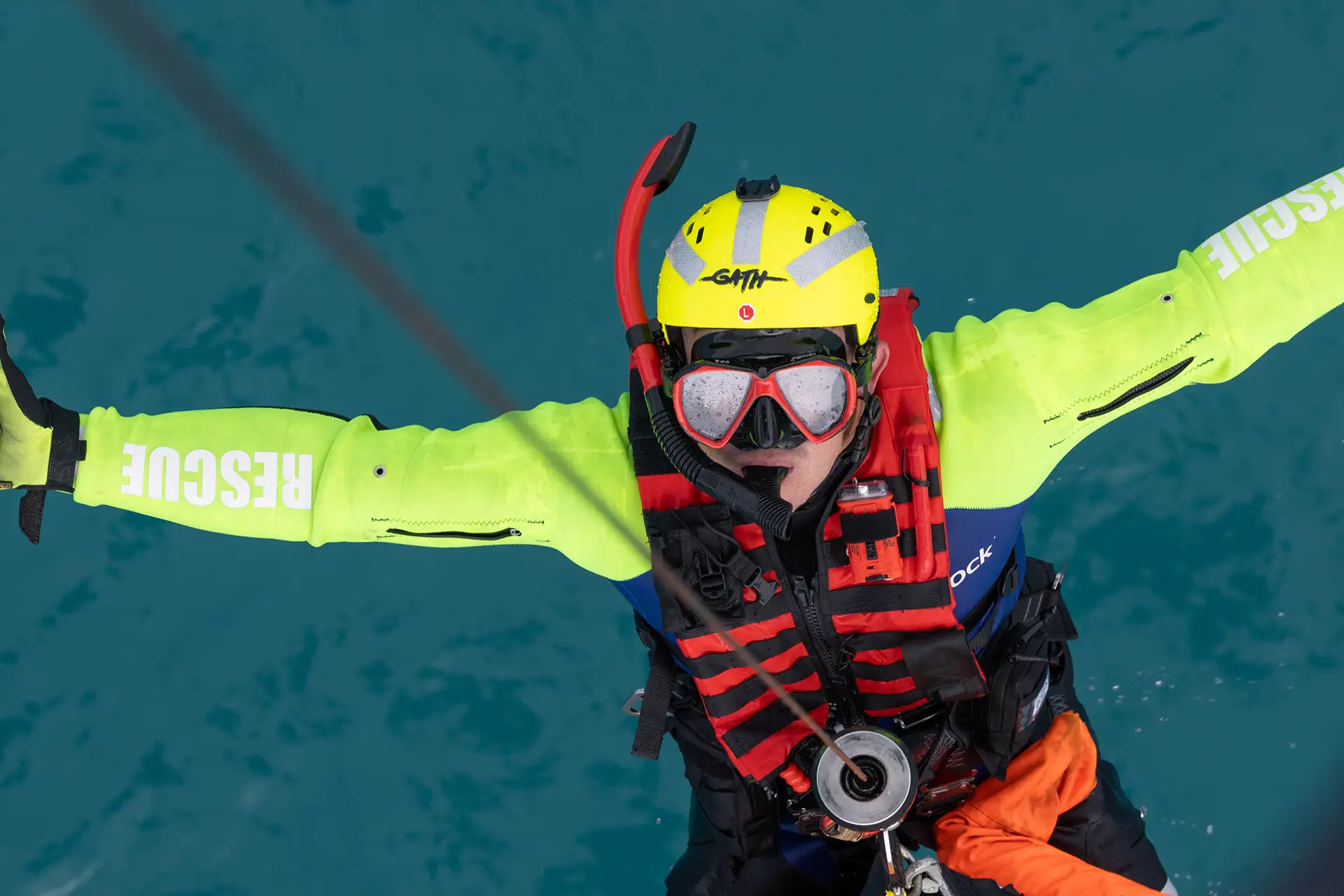
Even though the Lagaw Kuyup helicopters are fitted with winches, Babcock’s policy is that winching is always a last resort, not the default
option. Shipp explained, “A hover entry and exit is safer than a winching, a landing is safer than a hover entry/exit and not going in the
first place is safer than a landing somewhere unsafe. So, our first operational option is a safe landing. If we can’t land, our next option
is a hover entry/exit and if we can’t do that, then our last option is to winch. If it’s going to take twenty minutes to hoist them in
high-risk terrain and our next option is to carry them out eight hours to a safe landing area, if that person’s life is not in danger, then
they’re going to be carried for eight hours because it’s safer.”
The prevalence of sharks and salt-water crocodiles in many areas of the service’s coverage is another safety consideration, and the crews are all well-aware of the need to maintain a sharp lookout and keen awareness of the risk in those locations. Fortunately, the potentially dangerous sharks and crocodiles are usually scared away by the noise and vibration created in the water by a low-flying AW139, which they seem to find very disturbing. The region’s remoteness is exacerbated by a lack of good meteorological information and Whitney explained that it meant that flights generally need to begin and end at Horn Island because it is the only aerodrome that receives aviation forecasts that the pilots need for landing or taking off in low cloud, or in reduced visibility.
The touring nature of deployments to Horn Island mean that the crews typically live together two weeks at a time, without the pressures of getting home to families at certain times, or for specific events. The management team therefore, according to Baker, concentrated its recruitment efforts on finding applicants who can get on well with a small team in an enclosed environment for an extended period. “We’d rather have a gap than have the wrong person in the gap,” he stressed.
Babcock has an ongoing training regime that exceeds the Queensland Health Aeromedical Aviation Standard, and all pilots are instrument rated and NVG qualified, with IFR and NVG checks carried out every year, both in the simulator and in the aircraft. This prepares the Horn Island team to perform their critical work safely, saving lives in the beautiful, but challenging Torres Strait. “Even in an aircraft like this with all its capabilities, it really keeps you alert and on your toes. Flying isolated, remote uncontrolled airspace, over water in crappy conditions and changeable weather is the toughest flying you’ll find, and you must be thinking all the time,” acknowledged Dobson, while Whitney opined, “This is the most challenging flying I’ve experienced, anywhere in the world.”