 HOME
HOME





.webp)
Brazil’s Air Operations Division is one of the country’s most versatile public security aviation services, combining highly trained crews and modern equipment.
Throughout Brazil’s highways, from north to south, it is common to come across a Federal Highway Police (PRF) base or pass by one of its patrol vehicles during public security missions. Created in 1928 under the name “Highway Police” (renamed PRF in 1945) by then-president Washington Luís, it was intended to supervise and ensure the safety of roads expanding across the country, especially the Rio–Petrópolis, Rio–São Paulo, and União e Indústria highways.
This nearly centennial institution was a pioneer in introducing motorcycle patrols, using the legendary Harley-Davidsons as its first
vehicles.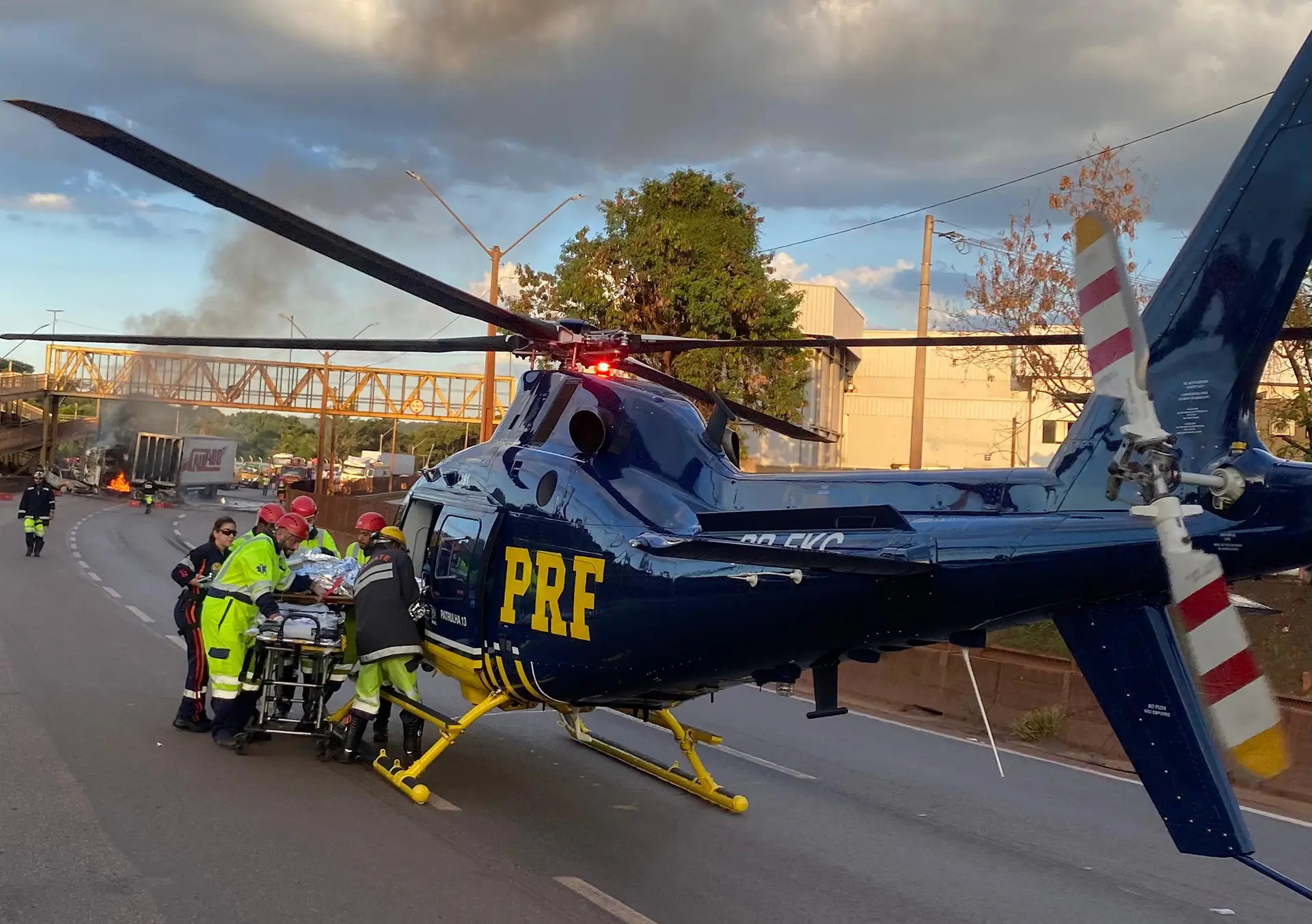
Over the following decades, this federal institution refined and modernized itself to remain at the technological forefront and meet the
challenges inherent in its activities. In the 1990s, as aviation was slowly expanding within police and fire departments in Brazil, already
consolidated in only a few states, the absence of aircraft in the PRF’s structure began to be questioned by some members.
“ In 1996, during a visit by the PRF’s Director-General to the superintendent office in Pernambuco, a police officer asked why we
didn’t have helicopters to support our mission. We were in an auditorium, and many began to smile and laugh at that question. But that
officer already knew about the use of helicopters by some public security agencies in Brazil and, above all, in the United States, and he
was aware of the benefits. It even became a joke.”
“But as it turned out, in 1998, we became the custodians of an Embraer 810D Seneca II (PT-RBR) that had been seized from criminal activity. The statement of that officer two years earlier probably wasn’t directly related to the arrival of that Seneca, but it’s important to think about how quickly things started to change,” recalls veteran Eder Rommel Andrade, who had joined the PRF at the time, serving in Pernambuco.
From that moment on, the first actions were taken. After the aircraft's arrival, its mission was to serve as a logistical transport platform to facilitate the movement of personnel for the PRF superintendent’s office in Pernambuco, to which the Seneca was assigned. According to Rommel, “the idea wasn’t to expand the service nationwide, but six police officers were trained to become Seneca II crew members. While our officers were undergoing pilot training, flights were carried out by two civilian pilots hired for that purpose. The PRF understood that it was necessary to invest in aviation, to build that aeronautical and operational culture.”
Following the Seneca came the Cessna 210L Centurion (PT-KDO), also seized from criminal activity and used for pilot training. The arrival of these aircraft at the PRF’s superintendent office in Pernambuco allowed the mission scope to expand, including the transport of sniffer dogs and operational teams. That initial activity led to the creation, through Ordinance No. 308 on 30 June 1999, of the Air Operations Division (DOA) and the Aircraft Operations Section, an organisation responsible for the planning, organisation, control, and operation of aircraft in federal highway patrol; transport of personnel and materials; development of regulations and doctrines for aerial operations on federal highways; establishment and operation of bases throughout the national territory; training and maintenance of pilots, mechanics, and tactical operators; and aircraft maintenance.
“The PRF was already flying and training pilots when the DOA was created. In 1999, we received another aircraft through seizure, the
Embraer 810D Seneca III (PP-FFZ), the first belonging to the DOA, which was christened ‘Patrol 1’ and stationed in Brasília. What had
initially been centralized in Pernambuco soon expanded, and to that end, the PRF held a tender that resulted in the purchase of six
brand-new Bell 407 helicopters. That was a very intense period. Six pilots who had been flying fixed-wing aircraft volunteered for
helicopter operations.”
“There was practically one pilot per aircraft, and flight activity was intense, with some colleagues surpassing one thousand flight
hours in a single year. The training of these helicopter pilots was carried out at EDRA Aeronáutica, in the countryside of São Paulo, but
the Brazilian Navy’s Naval Aviation also contributed by enhancing and promoting these professionals to the rank of captain,”
reveals Rommel. In 2003, four EC120B Colibri helicopters were received (PR-FPL “Patrulha 7”, PR-FPM “Patrulha 8”, PR-FPN “Patrulha 9”,
PR-FPO “Patrulha 10”), and by that time the DOA was already carrying out missions to combat crime, suppress illicit activities, support
police officers on the highways, and, above all, perform rescues and aeromedical transport. “People began to see the PRF differently;
that service brought a great deal of positive visibility. Rescuing and saving lives had a huge impact on the population, especially
considering that on a highway, one might be far from a hospital by land”.
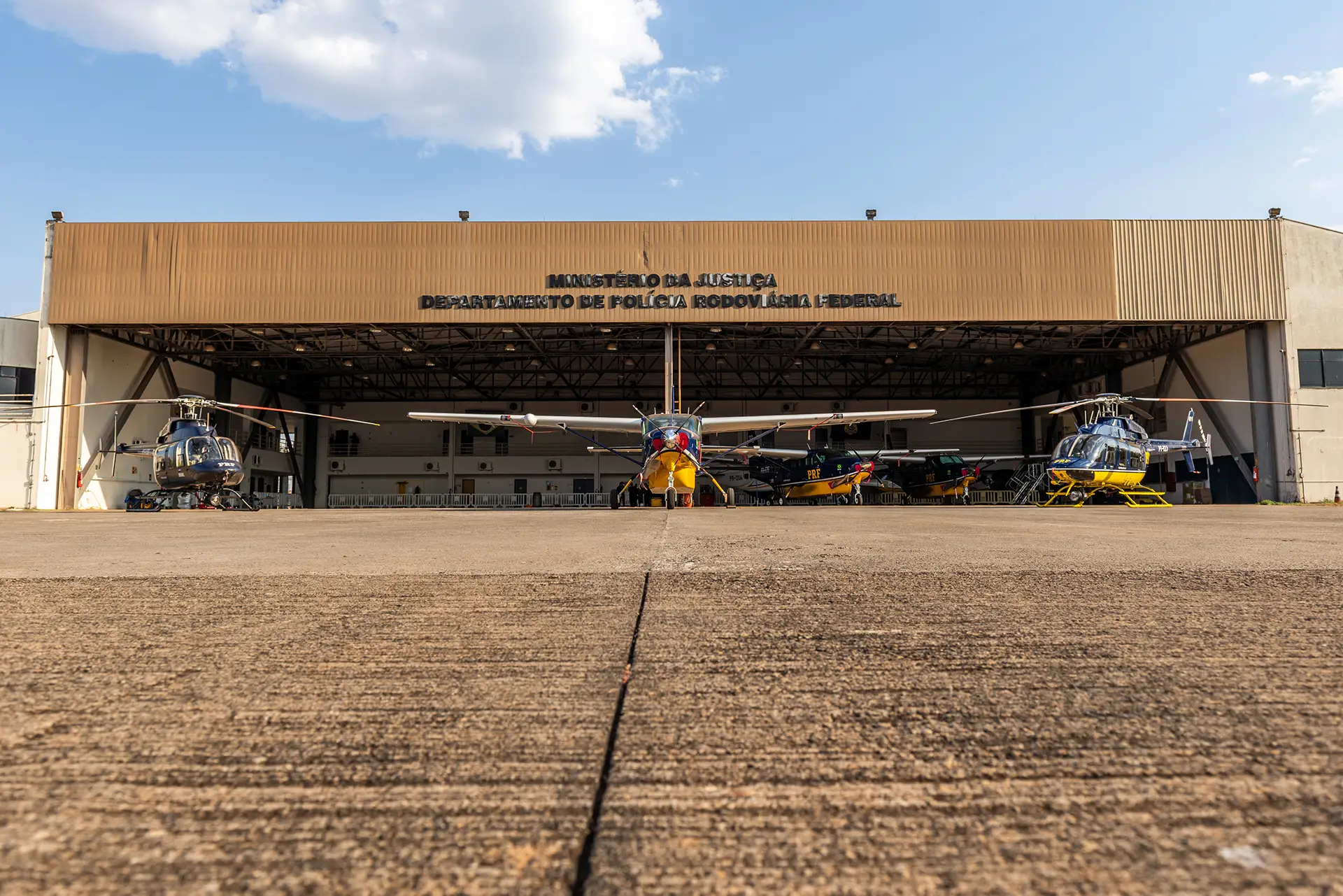
The first Cessna 208B Caravan arrived in 2013. In terms of rotary-wing aircraft, the PRF received a Bell 412 in 2010 and seven Leonardo AW119Kx helicopters starting in 2022. In 2024, four more Cessna 208EX Grand Caravans were added to the fleet.
Current structure, fleet and operations
The DOA has just over 100 personnel working in decentralized bases spread throughout the national territory. Brasília houses the
administrative and operational headquarters, including the most extensive and complex maintenance for helicopters such as the Bell 407, Bell
412, and Caravan. The Koala fleet, on the other hand, is supported by Leonardo’s maintenance center in Itapevi, in the state of São Paulo,
and by AEROMOT in Porto Alegre. The DOA has facilities in Atibaia, Belo Horizonte, Campo Grande, Curitiba, Porto Alegre, Recife, and Rio de
Janeiro. In 2024, new bases were opened in Boa Vista and Fortaleza, strengthening operations focused on aeromedical rescue.
“Through decentralized bases, we achieve territorial presence and quick response capability. Because we are based in Porto Alegre, our readiness for the 2024 flood rescue missions was immediate, for example. Moreover, having a permanent crew on-site allows them to gain knowledge of the region, access routes, obstacles, and facilities, increasing efficiency during real operations,” said Frederico de Melo Bertozo Corralo, head of the São Paulo Air Operations Unit (NOA-SP) in Atibaia.
“Despite our multi-mission character, made possible by the highly specialized training of our crews, the DOA’s work at each base
differs according to local demand. In Roraima, we carry out missions supporting indigenous healthcare, transporting medical teams to
various points in the jungle, and reducing travel time, which, by river, would take from seven to ten days depending on the location. We
also combat illegal mining through interagency operations involving planning and intelligence. In Pernambuco, the focus is on aeromedical
rescue, but we also support marijuana eradication and crime suppression operations. In Paraná and Minas Gerais, we are strong in
aeromedical rescues; in São Paulo, in crime-fighting, organ transport, and VIP escort; while in Rio Grande do Sul, the focus is on border
patrol and civil defense operations. In Rio de Janeiro, the emphasis is on combating organized crime, and Brasília is the center of aerial
operations, from where we can quickly reach several parts of Brazil. It is worth highlighting that at our bases we maintain full readiness,
with aircraft fueled and pre-flight completed, ready to take off immediately for any mission,”
explained Corralo.
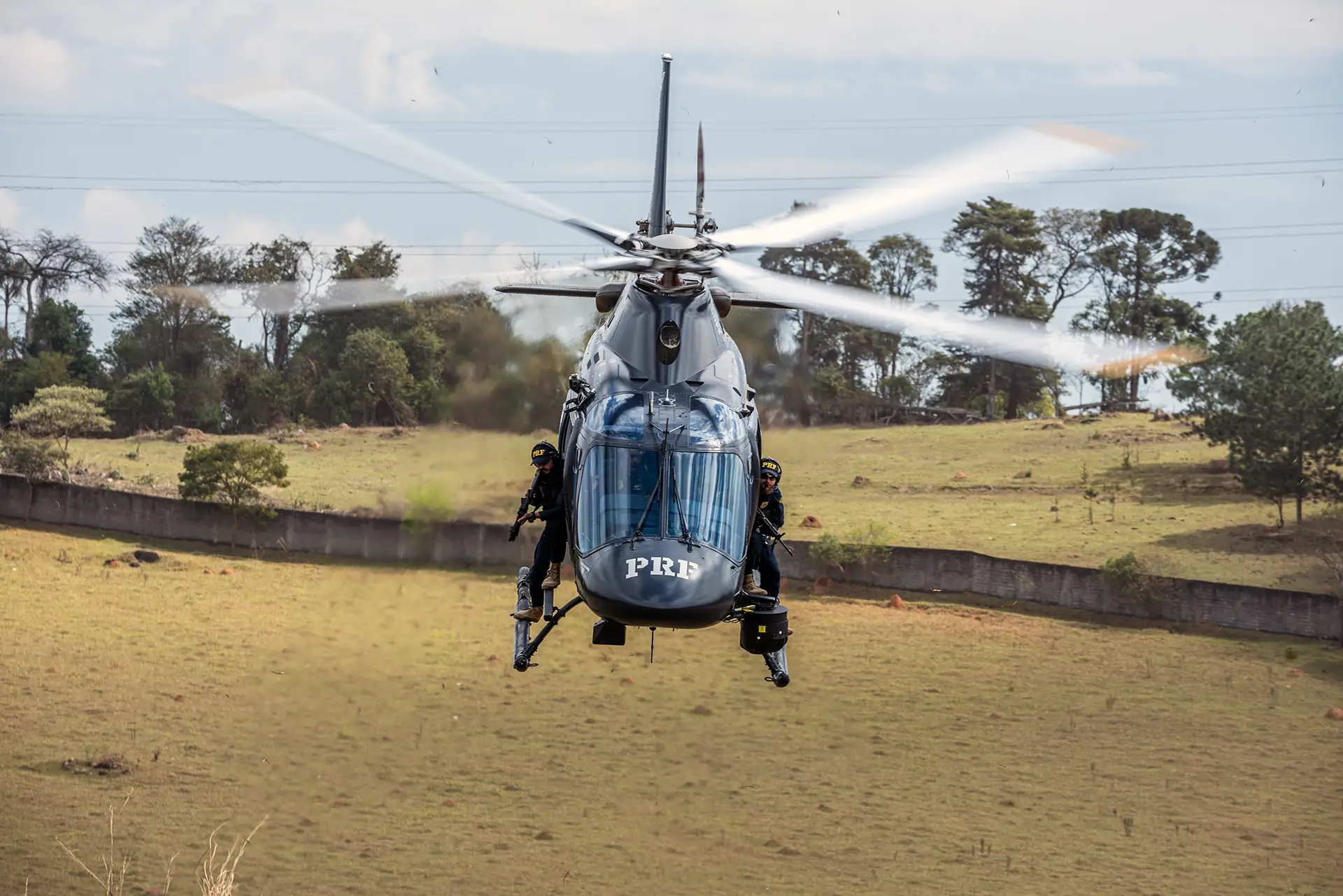
The DOA carries out a wide range of public security missions, including pre-hospital care, tactical interventions, water rescue, external load transport, close air support to ground officers, aeromedical transport, general logistical transport (people, detainees, and cargo), organ transport, firefighting, and support to other government agencies.
In the case of highways, the goal is to reduce response time, increasing victims’ chances of survival by providing immediate medical care and transferring them to hospitals with better treatment facilities.
“When we begin our shift at NOA-SP, we notify both our operations center and the organ transport coordination center that we are ready to perform this type of mission if called upon. We carry out many organ transport missions and take great pride in this activity.
For our base, we indicate the highways we will support, such as the Dutra, Fernão Dias, and Régis Bittencourt, and, if necessary, BR-153 in the Marília and São José do Rio Preto stretches, and BR-101 near Ubatuba—always taking weather conditions into account,” said Commander Juliano Kunen.
To meet this demand, aircraft must have multi-mission capability, and crews must be trained to operate anywhere, at any time, responding to every type of mission foreseen by the PRF through the DOA. The aircraft acquired are suitable for specialized aerial operations.
Starting with the helicopters, the force currently has four Bell 407s, another two were lost in accidents. Being the first rotary-wing model to equip the DOA, this helicopter came fitted with a Spectrolab Nightsun searchlight and wiring for life-support equipment.
The Bell 412, on the other hand, is the largest and only twin-engine helicopter in service, making it the ideal platform for operating in
hot, humid, high-altitude environments under adverse weather conditions, as well as for transporting large numbers of personnel and
equipment.
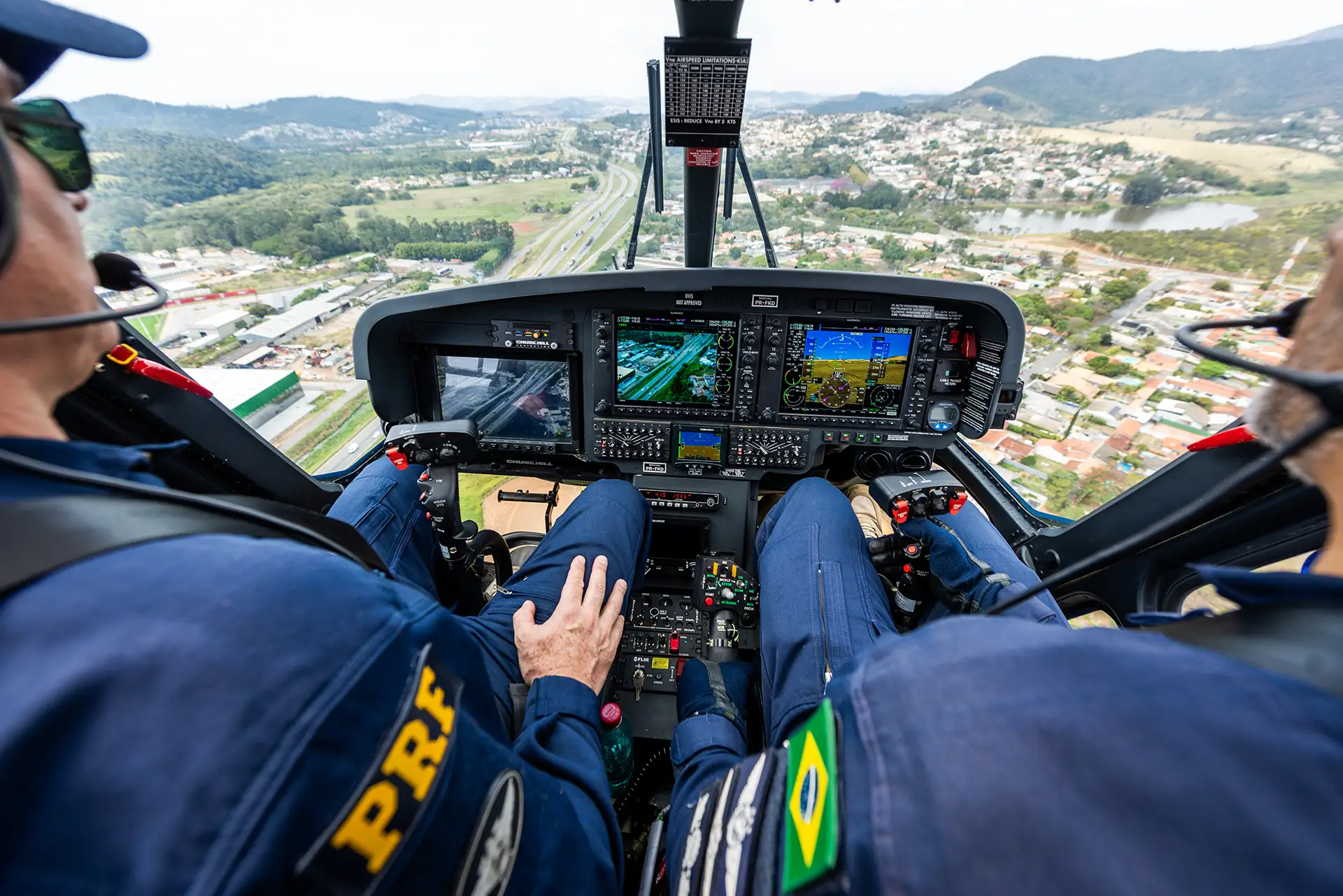
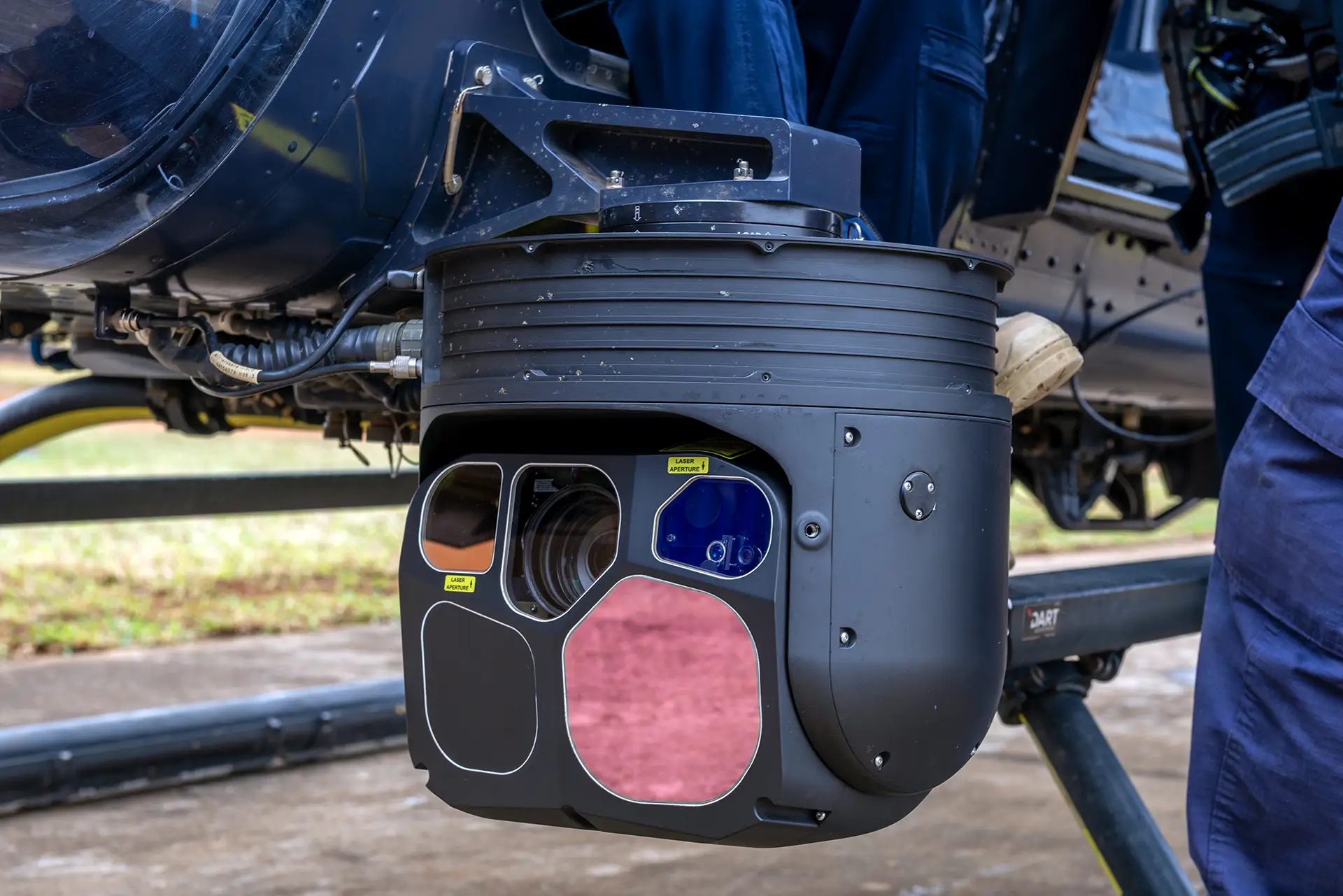
The AW119Kx, meanwhile, is a true multi-mission police platform. Received brand new from the factory, it features a Spectrolab SX-16 Nightsun searchlight, a FLIR Star Safire 380HDc electro-optical sensor, full provisions for life-support systems used in rescue missions, and its own aeromedical kit. It is also equipped with a rescue hoist.
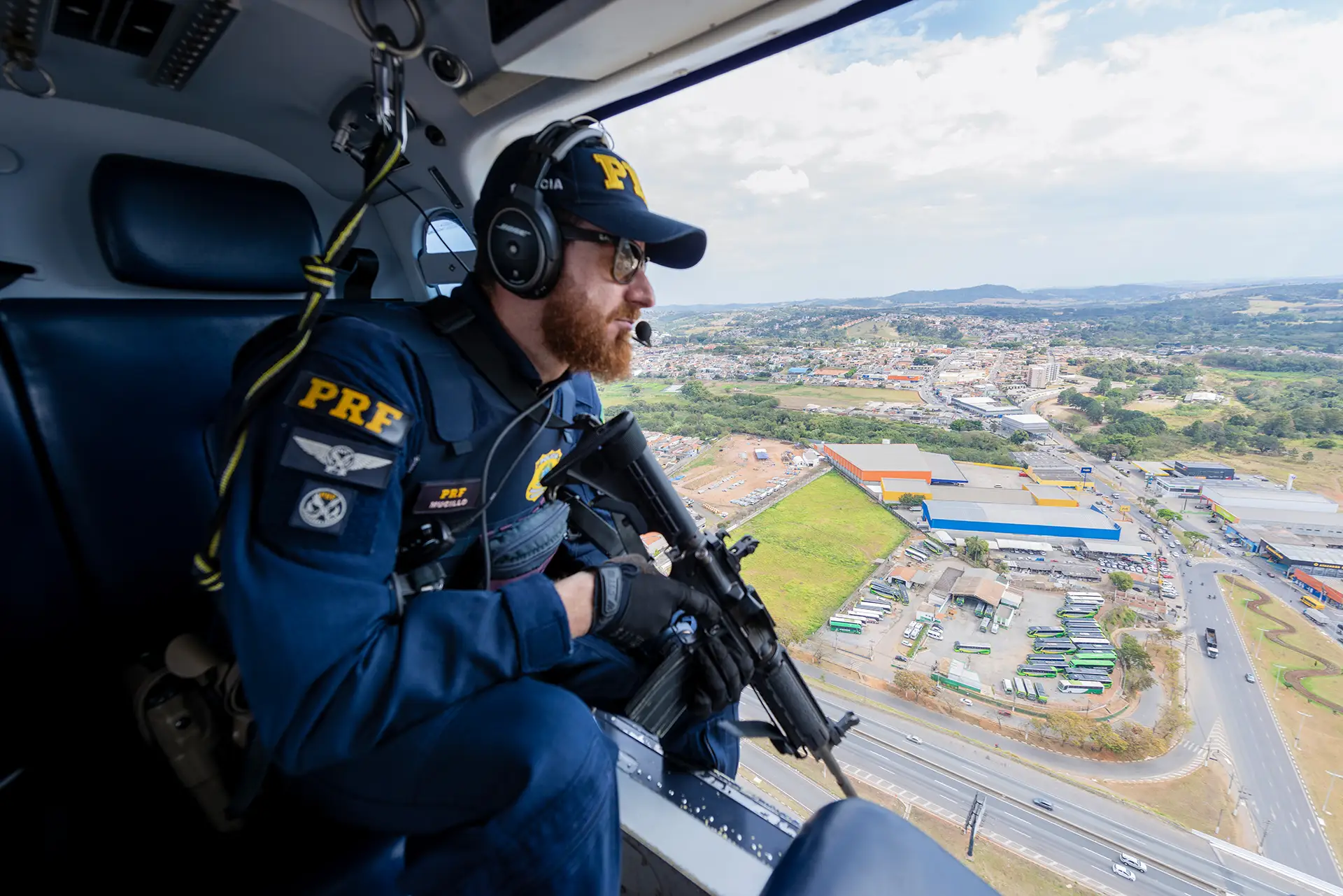
All the helicopters can be used for firefighting missions with a Bambi bucket. For the tactical flight operator, the armament includes the Armalite M15 rifle, in both 5.56 mm and 7.62 mm calibers, fitted with a holographic sight and cartridge collector to prevent shells from striking the aircraft’s structure.
“To configure the AW119Kx for an aeromedical rescue is extremely fast—we can do it in less than two minutes, simply by folding the seats and removing the seat cushions. The helicopter is then ready to accommodate the doctor, nurse, and patient on the stretcher, complete with its own life-support system,” explained Commander Rogério Oliveira de Andrade.
The equipment that takes the longest to install is the searchlight, which requires about 30 minutes, in addition to the FLIR system, which can be set up in less time. “However, the aircraft usually remains configured with these items, ready to respond to any occurrence—whether a crime-fighting, search, or rescue mission,” concluded Andrade.
The Caravan, the DOA’s only fixed-wing aircraft, serves as a platform for long-distance missions, transporting more people and cargo to move police teams, authorities, logistical support, and even prisoners. The aircraft can also be used for aeromedical flights departing from remote regions.
According to the DOA, the helicopter has a strong deterrent effect in PRF missions. In several incidents, the aerial presence deterred
ongoing robbery attempts, prompting criminals to abandon their attempts. Another relevant fact is the absence of criminal activity during
aerial patrols in areas with high rates of illicit activity.
Training
The training of the Tactical Flight Operator is conducted through a 45-day course, divided into theoretical and practical phases, a physical fitness test, and a specific skills test directed toward the activity the highway patrol officer will perform. “During the course, the future operator learns boarding and disembarking procedures, aerial shooting, knots and rope techniques, rescue, rappelling, flight phraseology—in short, the entire universe that surrounds our aviation,” explained Corralo.
For pilots, it is a prerequisite to have passed the theoretical examination of the National Civil Aviation Agency (ANAC). It is common for candidates to already hold fixed- or rotary-wing licenses for private or even commercial pilots, which facilitates their training in the Rotary-Wing Police Pilot Course provided by the DOA. Once approved, the pilot begins flying operations as second-in-command. It is worth noting that ANAC has certified the DOA for all its training activities. If the officer does not yet hold a pilot license, the initial flight training is completed at a civilian flight school and later supplemented with police-specific training within the unit.
Depending on the recruitment process, the officer may be required to have a minimum period of service in the force before being eligible for DOA duties. “Having previous field experience is essential so that the officer understands the realities of ground operations—the difficulties and perspective of the police on the ground—so that, once in the helicopter, they can provide the best possible aerial support,” commented Corralo.
“Moreover, there’s a strong sense of belonging, knowing that the officer is part of the PRF, a fellow guardian just like me. He’s on the ground and I’m in the air, but we are all the same,” said Andrade.
Assuming command of a PRF aircraft follows the standards established by the Brazilian Civil Aviation Regulation (RBAC 90) and resembles models adopted by other police air services. A pilot must have at least 500 flight hours (including at least 50 within the DOA), operational experience under supervision (as co-pilot), and must have completed the unit’s training program (initial, recurrent, upgrade, or transition training).
Future
With a consolidated structure and a highly professional and specialized team, the DOA is expected to continue expanding its flight hours and national presence, increasingly supporting society in both rescue operations and the suppression of crime and illicit activities.