 HOME
HOME





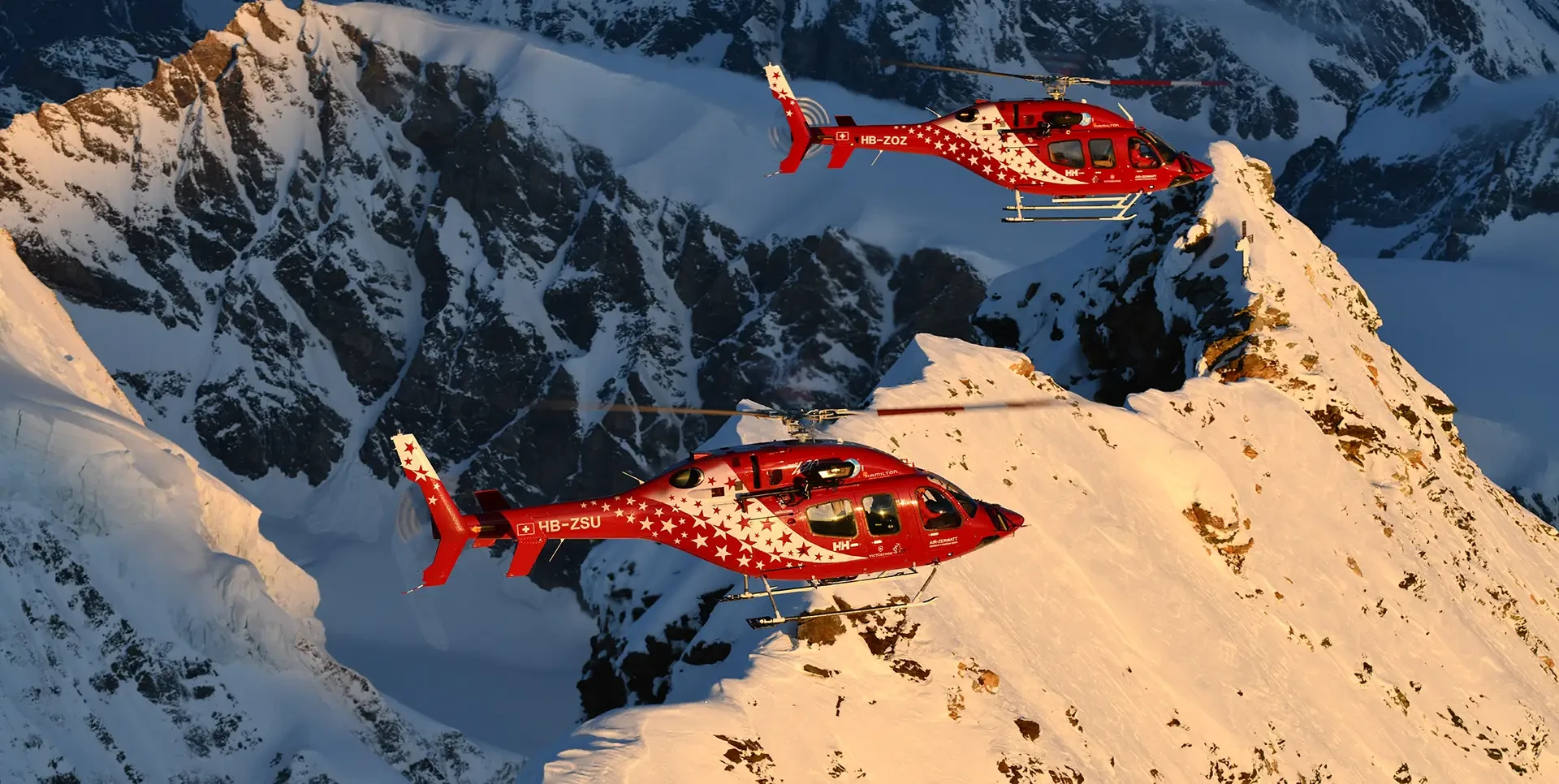
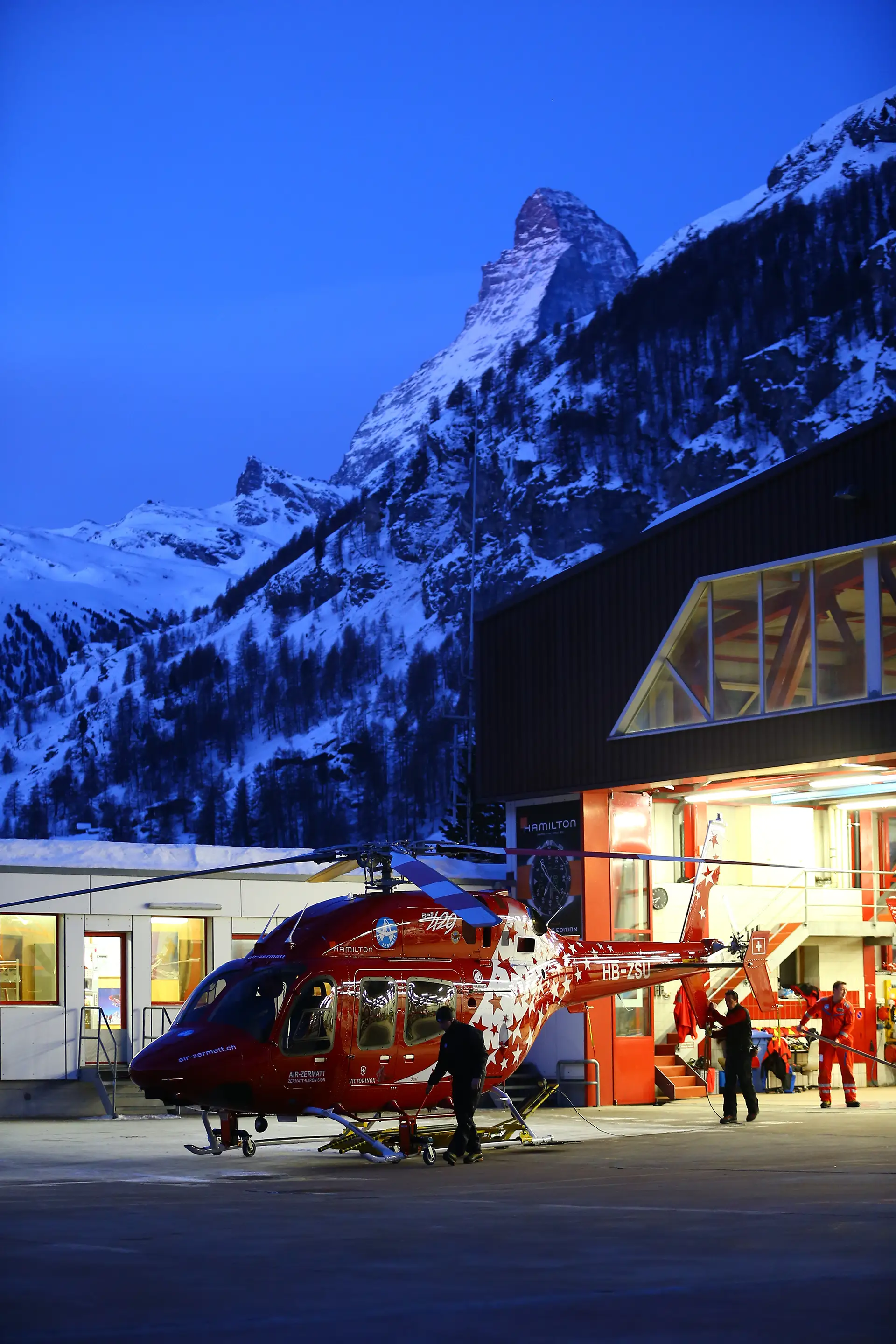
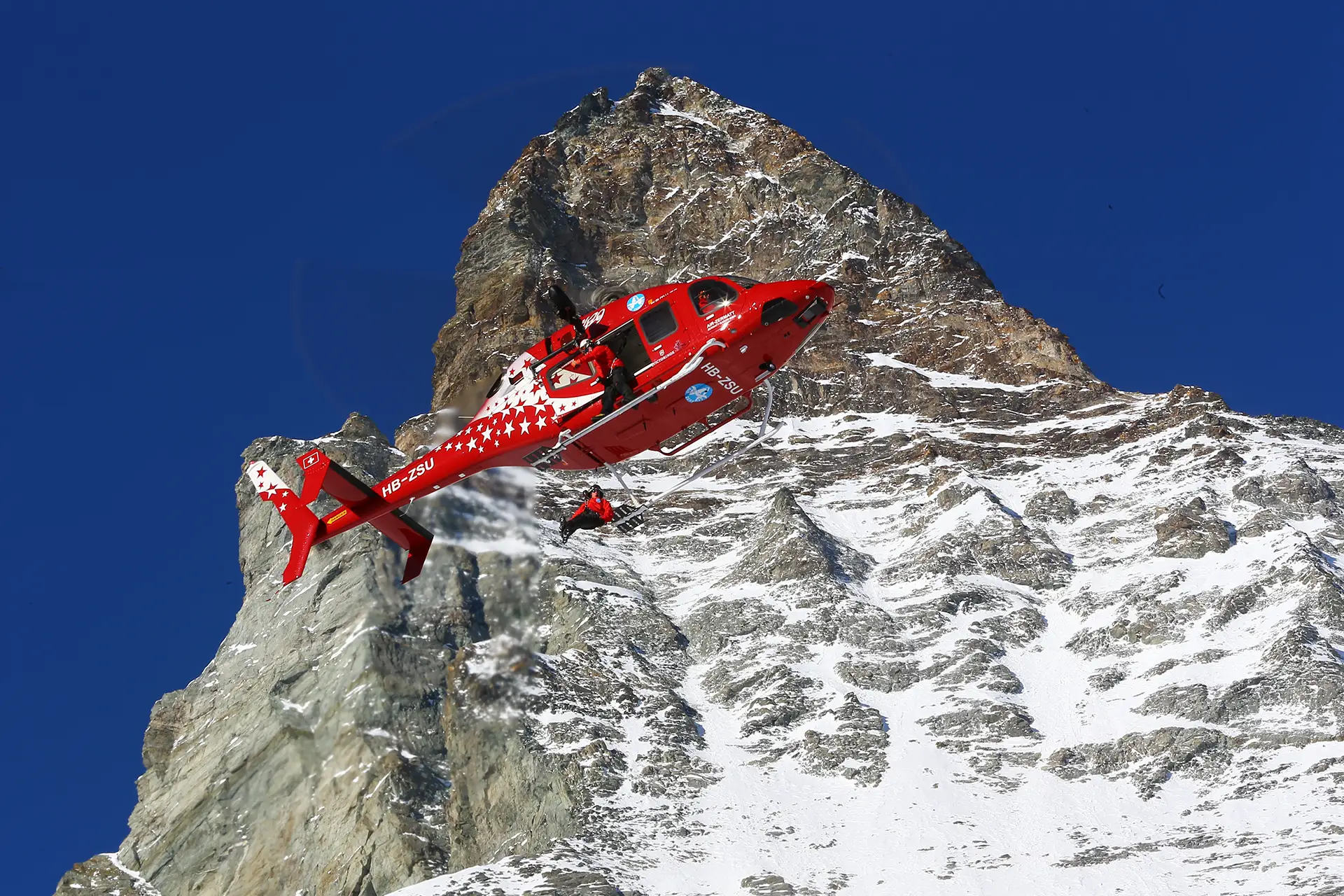
For decades, Air Zermatt has stood as one of the world’s more iconic helicopter operators. Based in the heart of the Swiss Alps, at the foot of the iconic Matterhorn, the company has built a reputation for not only its alpine rescues but also for pioneering advances in rotary aviation. No organization however, is immune to change. In an age of evolving technology, generational transition, and public scrutiny, even a mountain-hardened institution like Air Zermatt must adapt or risk stagnation. At the helm of this evolution is Daniel Aufdenblatten, a Zermatt native and veteran pilot who now leads the company as CEO.
From the Cockpit to the Corner Office
Daniel officially took over as CEO of Air Zermatt on January 1, 2024, following the retirement of longtime leader Gerold Biner. Having spent two decades with the company, Daniel was already deeply embedded in its culture, its rhythms, and its people. But stepping into the leadership role was no ceremonial affair. "This is my life here," he said. "Before, if you're not the boss, it's easy to complain about things. Now, I'm the one who has to make the changes."
His path to the role was shaped by a rare blend of continuity and renewal. During his last decade with Air Zermatt, Daniel also worked part-time with Air Sarina, operating a Falcon jet out of Sion. Despite his dual roles, when he was not flying customers to destinations like the Bahamas or Seychelles, he maintained a presence in Zermatt, returning often to fly and stay involved in helicopter operations. When the time came to consider new career moves, he reached out to Philipp Perren, whose family founded Air Zermatt, and expressed his interest in being considered for the role. What followed was a formal vetting process, including a CEO assessment in Zurich and board-level discussions.
"I had respect for the job. A lot of it. But I also had a clear picture of the company from both the inside and the outside. I knew I could help guide it forward."
Crisis Sparks Reflection
The transition year leading up to Daniel’s official appointment went relatively smoothly. 2023 brought with it a mix of anticipation and overlapping pressures as he began quietly preparing for the transition. While maintaining his role at Air Sarina and contributing to Air Zermatt’s operations, Daniel also found himself walking a careful line—not wanting to overshadow the outgoing CEO, but needing to stay engaged with the company’s future. "I didn’t want to be too present," Daniel reflected. "People started coming to me with questions that should have gone to Gerold. That wasn’t fair to him, and it wasn’t right for the company, so I tried to stay as removed as I was able to."
It was also a year marked by sheer volume. There had been an accident that shook the company, followed closely by a hard landing incident, both of which added emotional weight to an already packed schedule. To complicate matters, a documentary crew was on-site filming a series that,. "It was just one thing after another," he recalled. "We were busy, stretched thin, and constantly in the spotlight."
And then came the fire.
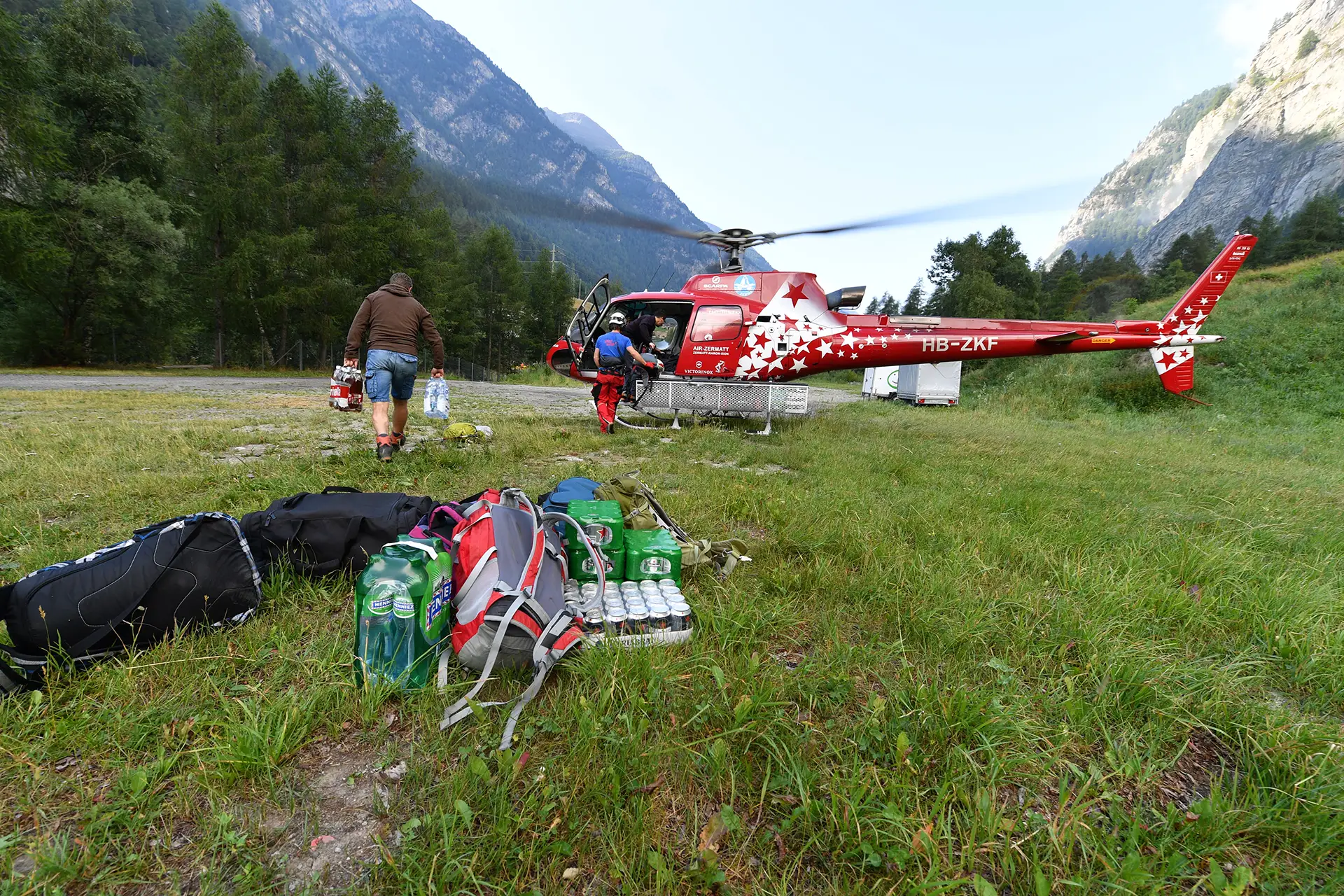
Only a few months into the transition of Daniel’s leadership, the company faced one of its biggest challenges in recent memory. During a forest fire operation, Air Zermatt found itself at the center of controversy, sparking nationwide backlash. Despite deploying multiple helicopters to assist, the public perception turned sour when it was falsely rumored that the company had prevented the Swiss military from supporting the mission.
"There was just bad communication," Daniel admitted. In truth, the airspace over the fire zone was already saturated with civilian helicopters, and the weather wasn’t helping.
"We were 50 years old as a company. We had no mission. No vision. No code of conduct. We had blogs, podcasts, magazines, but no structure, no coherence, no clear culture. I stopped everything and said, we start again."
Rebuilding from Within
In the wake of the 2023 fire and its aftermath, Dani launched a full-scale reevaluation of Air Zermatt’s internal and external identity.
Wanting to better understand how the public saw the company, and how the company saw itself. He initiated both a cultural audit and a brand
reconstruction effort with the help of a Zurich-based consultancy.
The external polling results surprised even him. Despite the recent controversy, 82% of respondents knew the brand, and over 85% viewed it
positively. People across the country associated Air Zermatt with mountain rescue, world-class pilots, and pioneering aviation.
For the internal side of the reevaluation, representatives from every department were brought together; pilots, mechanics, doctors,
paramedics, to workshop a new foundational framework for the company.
"We started with the basics: Why do you get up in the morning? Why do you want to work here? What is your idea of Air Zermatt?" These weren’t rhetorical questions; they became the pillars of a new internal compass.
One of the most resonant outcomes was a simple mission statement: We help where others can’t. Whether flying into a storm to rescue stranded climbers, executing night missions on treacherous peaks, or completing powerline repair jobs others decline, that ethos has defined Air Zermatt's most impactful work.
"It's not about the 95% of jobs every operator can do. It's about the 5% where only we go. That’s what makes us who we are."
The company further conducted a "limbic map" exercise, often used in automotive branding, to plot its identity. The team ultimately agreed Air Zermatt belonged in the "performance" segment—a space marked by precision, excellence, and professionalism.
"It was a moment of reflection. Where are we now? And where do we want to go?" From these exercises, one aligning purpose rose to the top - Mastery as a daily pursuit: not a destination but a way of life.
Modernizing from the inside out
Air Zermatt today spans three generations of employees, a blend of veterans who helped build the company’s reputation and younger
professionals eager to shape its future. The dynamic offers both challenges and opportunities. "It’s not always easy," Daniel
admitted. "We have people who’ve been here for decades and others just starting. But that diversity is also our strength. Experience
meets fresh perspective." Part of Daniel’s mission has been to bridge that generational divide, creating shared values and expectations
while honoring the legacy that brought Air Zermatt to where it is today.
Beyond culture and philosophy, Daniel also overhauled the company’s internal operations. One of his first steps was to flatten the leadership structure. He established clear lines of communication between departments and empowered team leaders with more responsibility and clarity. Rather than decision-making being siloed, Air Zermatt now operates with a more agile, collaborative model.
To further support this transformation, he introduced a company-wide internal app. The platform allows pilots, medics, and mechanics to coordinate schedules, access updated operational information and streamline communication across teams. "We used to rely on too many different tools, and deal with an email nightmare. Now we have one system, one interface," Daniel explained.
This digital modernization also includes smart scheduling and streamlined maintenance tracking. One practical benefit is the ability to notify crews immediately when new wires or hazards are identified in the field, directly through the app. Pilots and ground teams can receive real-time safety updates, helping avoid risk before it escalates. The same platform also allows staff to communicate with each other directly, or as a group and even submit suggestions or flag concerns anonymously, which Daniel sees as crucial. "Sometimes the best ideas come from the people who aren't comfortable speaking up in a meeting," he said.
The result? Fewer miscommunications, better team cohesion, and increased operational readiness; all without expanding staff numbers or burdening crews with extra administrative tasks.
Another significant shift in mindset comes from Daniel’s views on leadership. Since its foundation, the company has operated much like a family. Over the years, however, the Air Zermatt “family” has grown to nearly 100 employees. Daniel’s evolved vision combined the camaraderie of family, and performance required of a successful company. "This isn't a family, it's a sports team," he explained. "In a family, there are many things you are expected to tolerate. On a team, you support each other, but everyone has a role and must perform."
That shift meant setting clearer expectations and holding individuals and departments accountable for their contributions. While Air Zermatt has always operated with camaraderie, this new approach emphasizes excellence through structure and mutual responsibility. It is not about hierarchy, it's about function. "We all want to win, and that means showing up, being ready, and doing the job to the highest standard."
The change has helped cultivate a culture that’s simultaneously tight-knit and performance-driven, where trust is built on capability, and leadership is earned by doing, not just tenure.
Daniel says that he has also taken steps to ensure there are pathways for growth within the company. By delegating more operational
responsibility to department deputies, he’s creating leadership opportunities that didn’t previously exist. "It’s important that people
see a future for themselves here," he said. "That they know they can grow, develop, and take on more." This approach is not
only intended to build team strength, but also reinforcing a culture of initiative and accountability.
Expanding Training and Expertise
Beyond improving operational efficiencies and leading the charge in asking for sensible regulatory clarity, the Air Zermatt Training Center has intitiated a renewed emphasis on advanced training and knowledge sharing for the industry.
Air Zermatt offers a wide array of training opportunities not only for its own crews but for partners and professionals worldwide. From specialized mountain flying instruction to intensive mountain medicine programs, the goal is to ensure every member of the team, and even those beyond it, operates at the highest standard.
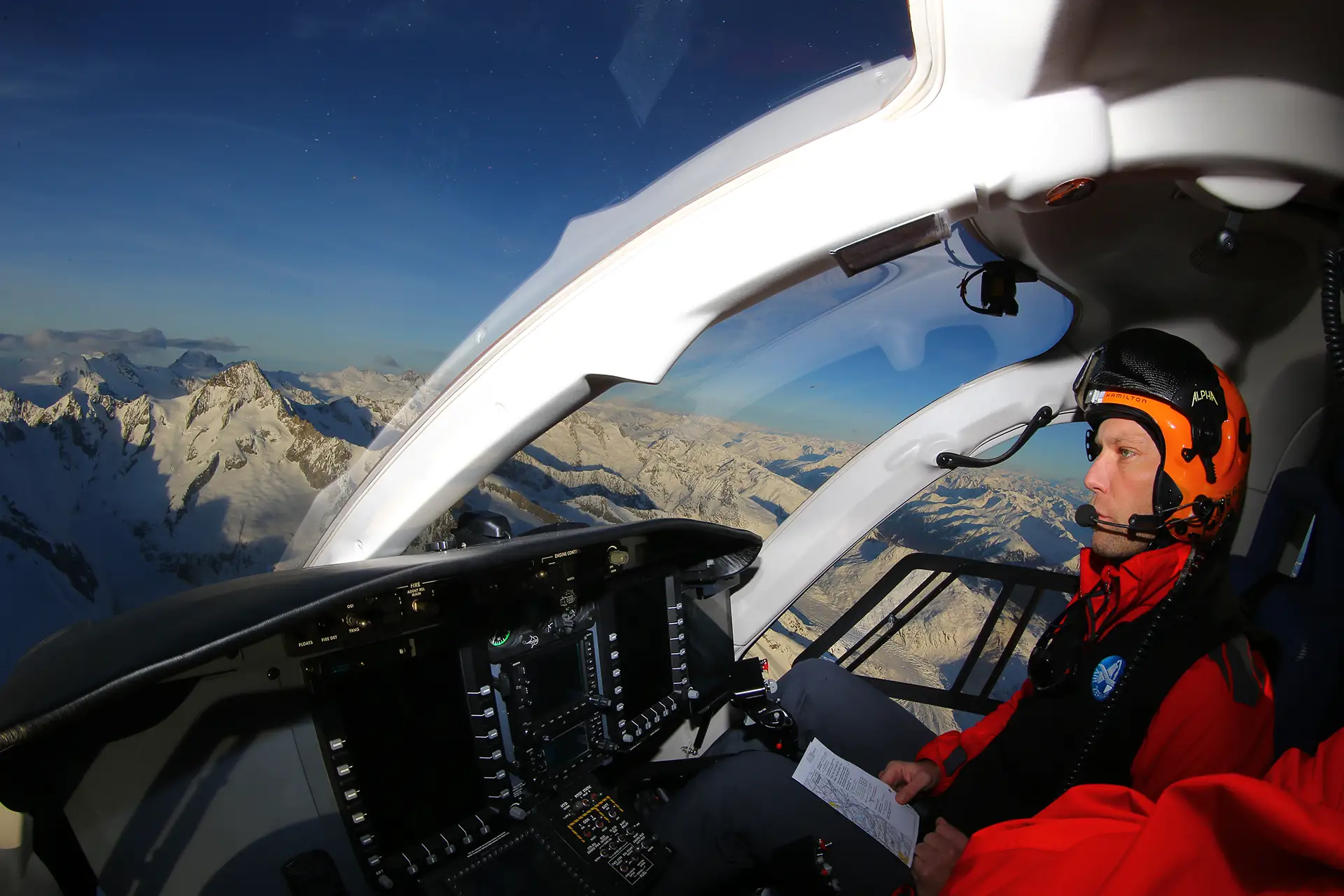
"We’ve invested in simulation capabilities, advanced check ride protocols, and collaborative partnerships that keep our people sharp," Daniel explained. An in-house simulator is a core component of both pilot, allowing realistic scenario-based practice in controlled environments.
Air Zermatt's commitment to sharing knowledge extends internationally across the industry as well. The company continues to host and support educational initiatives for mountain rescue, alpine emergency response, mountain medicine and specialized helicopter operations. These programs attract professionals from around the world, looking to learn from the decades of expertise forged in one of the most demanding environments on Earth.
Embracing New Technologies
Another key area of focus is drone integration. Air Zermatt is collaborating closely with Dufour Aerospace to explore the utility of unmanned systems in rescue and logistics. Veteran Air Zermatt pilot, Thomas Pfammatter, described by Daniel as "one of the top 15 drone experts worldwide," is a Co-Founder of Dufour and is leading the initiative internally.
"The drone isn’t a competitor to the helicopter," Daniel emphasized. "It’s an addition. A complement. A new tool for
missions we could not previously complete."
One example already seeing real-world impact is the use of drones equipped with cell signal locating systems like LifeSeeker. In rugged or
fog-obscured terrain, these drones can quickly sweep an area and pinpoint the location of a missing hiker’s phone, even when traditional
search methods struggle. It’s a powerful complement to helicopter teams and ground crews, improving response time and enhancing safety.
Infrastructure for the Future
While the philosophical reboot was vital, Daniel also has his sights set on physical renewal. The current headquarters had not grown with the organization. Containers served as overflow for mechanics, paramedics, and pilots. "We still have the same space we had 30 years ago, but double the staff," he noted.
A major renovation project is now underway. Plans include new hangar space, doubling office space, integrating departments that were once siloed to promote communication and collaboration. Despite some local regulatory delays, the goal remains clear: modern infrastructure that fosters unity, collaboration, and operational efficiency bringing Air Zermatt solidly into the 21st Century.
Strategic Shifts in Operations
As part of its reforging, the company has also reassessed its international commercial ventures. One such decision has involved winding down its personnel taking part in heli-skiing operations in India, an opportunity that has proved too logistically challenging to sustain. "India was a beautiful and adventurous idea but managing the complexities from afar have outweighed the benefits," Daniel noted.
The Path Forward
Nearly a year and a half into Daniel Aufdenblatten’s expected 10-year tenure, Air Zermatt is not simply surviving change—it's leveraging it. Under his leadership, the company is redefining itself without discarding its roots, remaining a symbol of alpine excellence, but one that is increasingly guided by strategic clarity, technical innovation, and an internal culture that values purpose and mastery.
"I still get goosebumps when I walk into the office and hear the B3 blades spinning," Daniel said. "That feeling will never change. But now it's about ensuring everyone here feels the same sense of pride—and giving them the tools to carry our legacy forward."