 HOME
HOME





Santa Maria, California is a major vegetable producing area that boasts a huge number of row-cropping farms so it is unsurprising that local company English Air Service LLC started off as an agricultural aviation operation. Although the business has since grown and expanded into multiple sectors, ag’ flying still comprises a significant portion of the company’s operation.
When Mark English first sought work in the agricultural aviation sector in 1985, he approached ag’ operator Jack Sinton from Paso Robles, California for a position as a loader driver. Before committing to employing him, Sinton sent English to see what work he could drum up in the Santa Maria area. As English recalled. “At that point I wasn’t flying and just starting from the ground. I went out and beat the bushes and found work with the parents or grandparents of families that are still our clients now. Jack brought his JetRanger and truck down, and he did all the flying while I did the loading.”
After three or four months, Sinton found that English was generating more Santa Maria workload than he liked, so he leased a Hiller 12E and
hired a pilot. All went well for about a year until the pilot seriously damaged the machine. So, Sinton returned to flying around Santa
Maria. In 1986 English, and wife Tracy, established English Air Service (EAS), bought a helicopter and hired a pilot, but a year later the
pilot destroyed that machine. “Jack told me, ‘You need to do this yourself because no one’s going to do it the way you will if you own it.
So I went out, purchased a Bell 47-G5, started doing it myself and I’ve been doing it that way ever since,” English related. Soon after, he
acquired a Mark 5 Tomcat as a backup machine and flew about 1,000 hours on that before buying a replacement. “My wife Tracy and I bought
replacement aircraft and overhauled the old ones as each wore out. By the time we maxed out on piston-powered Bell 47s, I think we had
seven of them, and it was just me and one other pilot flying them”.
Santa Maria Home
EAS has always been based in Santa Maria and English explained, “It’s a farming capital so why travel? I can work in this area and stay in my own bed every night. We typically don’t go more than a 25 or 30-mile radius from here. If we do go further out, say forty miles out to Cuyama, we’ll typically put the aircraft on a trailer and drive it up there rather than flying it. With the spray gear on you’re only going to get 60 or 65 mph out of it, and I’d much rather sit in the pickup and listen to the radio in a heated seat than sit in that rattletrap.” He commented that he still maintains a very good relationship with Sinton in Paso Robles and with Aspen Helicopters in Oxnard. “We don’t compete with each other, but we’ll help each other out. If they get in a pinch and need help, they can call me, and I’ll do the same thing.”
Bell 47
Expansion into LIDAR mapping in the early 2000s meant additional aircraft but involved work all around the country, which English and his
full-time pilot initially split between. Eventually though, enough staff were hired to work a rotation and free up English to go back to
his ag’ work. Although the EAS fleet now includes a variety of aircraft types, the Bell 47 series has always been - and still is - the
mainstay of the agricultural fleet. “Our application rate is typically 25 to 30 gallons per acre, and up to 75 gallons per acre on
avocados. You can’t do that with an electric system but the 47 will do that with a hydraulic system. Then we ended up converting the
aircraft to the Soloy turbines with the C20-Bs in them.” English explained that the turbine engine meant working the aircraft much less
than the piston engines necessitated. “You’re pulling everything that aircraft can with a piston. When you’re spreading 50 to 75 gallons an
hour on avocados, you’re flying at maybe seven to nine mph and in a downwind turn that thing’s going to settle on you. That’s setting
yourself up for failure but with the turbine, it just does it effortlessly.”
The Bell 47 has always been a great aircraft for agricultural work, but English acknowledges the greatest drawback of such an old design.
“It’s getting harder and harder to support as they quit making them in 1973. That means that even brand-new surplus parts were built in ’73
at the latest. A few companies make various specialist parts and Hiller bought the conversion rights from Soloy, but for airframe parts you
have to use what you’ve got because you just can’t get any new ones,” he advised. EAS does carry a substantial parts inventory to support
the 47s but not as large as they used to, because fleet expansion into other types has placed additional demand on the maintenance and
support infrastructure and budget. According to English, if the 47s do become too problematic to support effectively, he would probably look
at moving to Bell 206B-3 JetRangers or the Hughes/MD 500 series. “There are so many of them around that it just makes sense and spare parts
are not an issue.”
Spraying
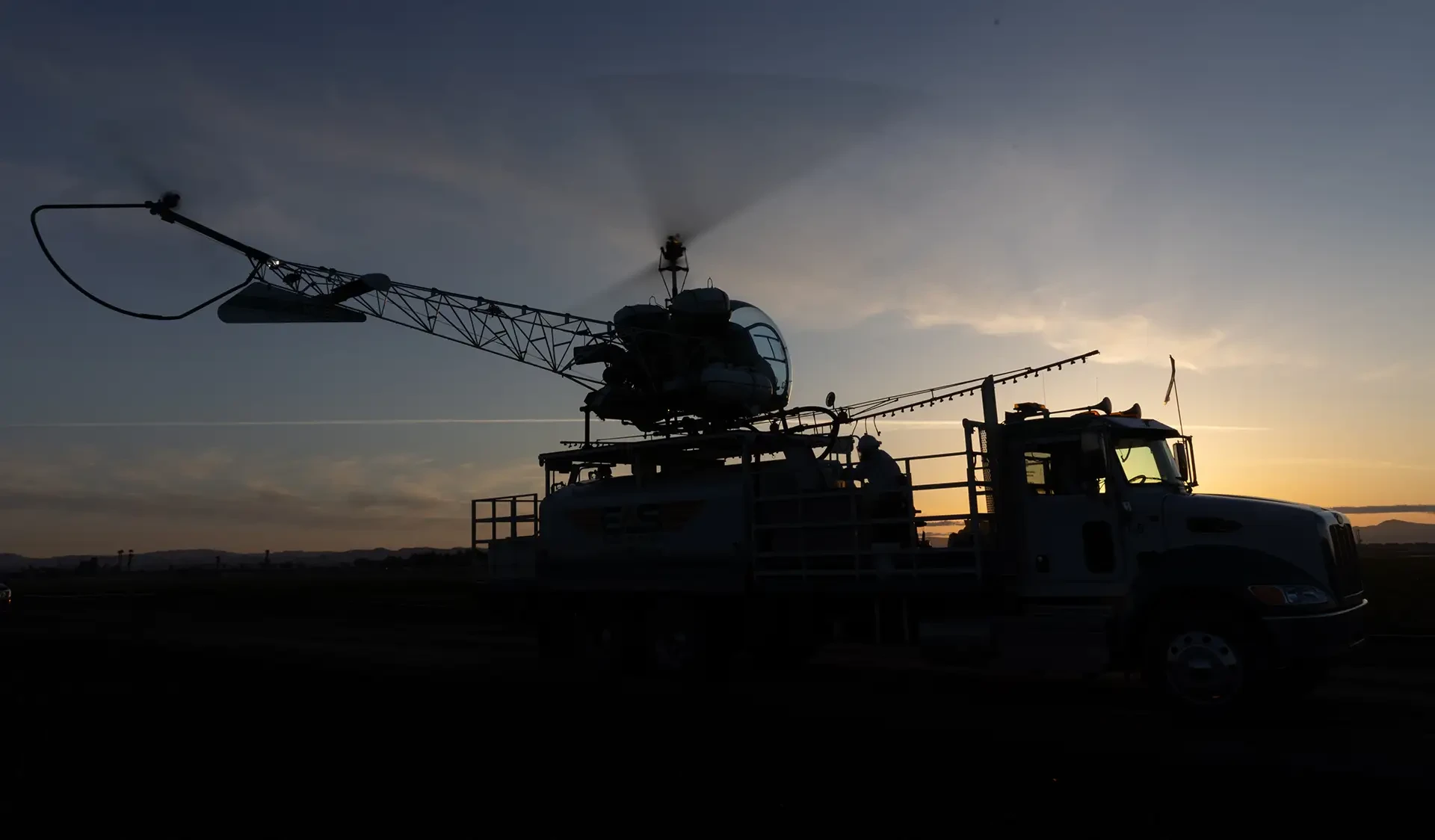
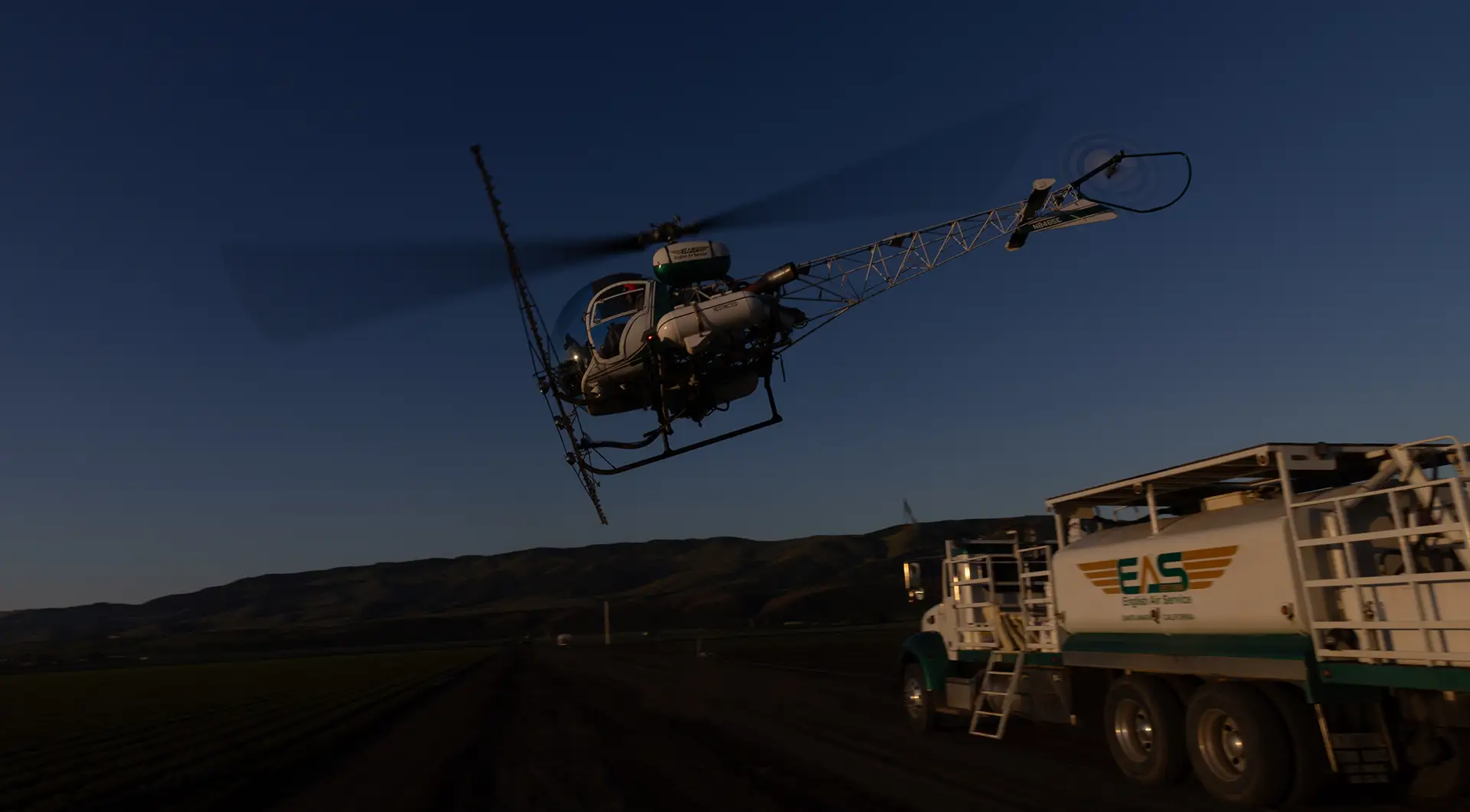
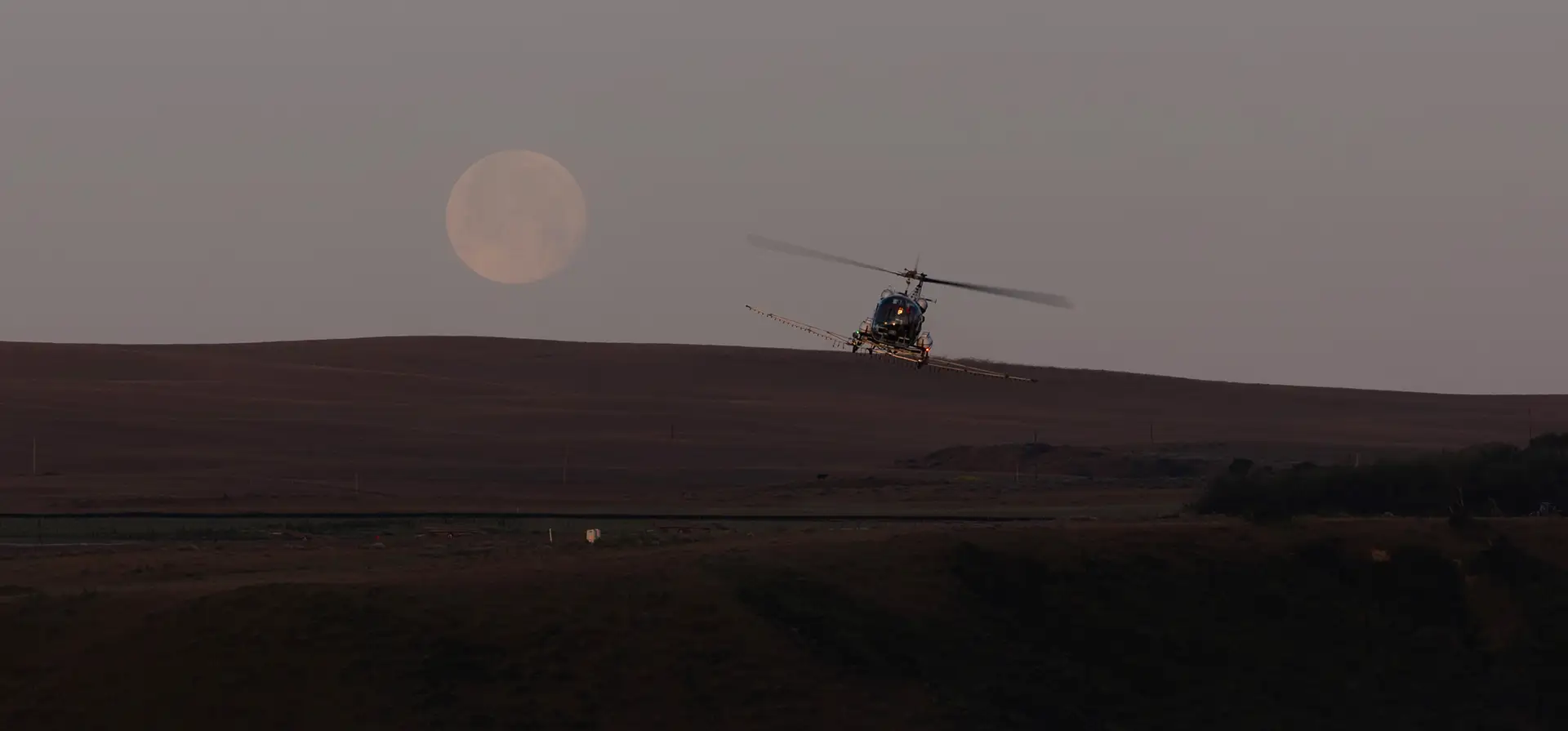
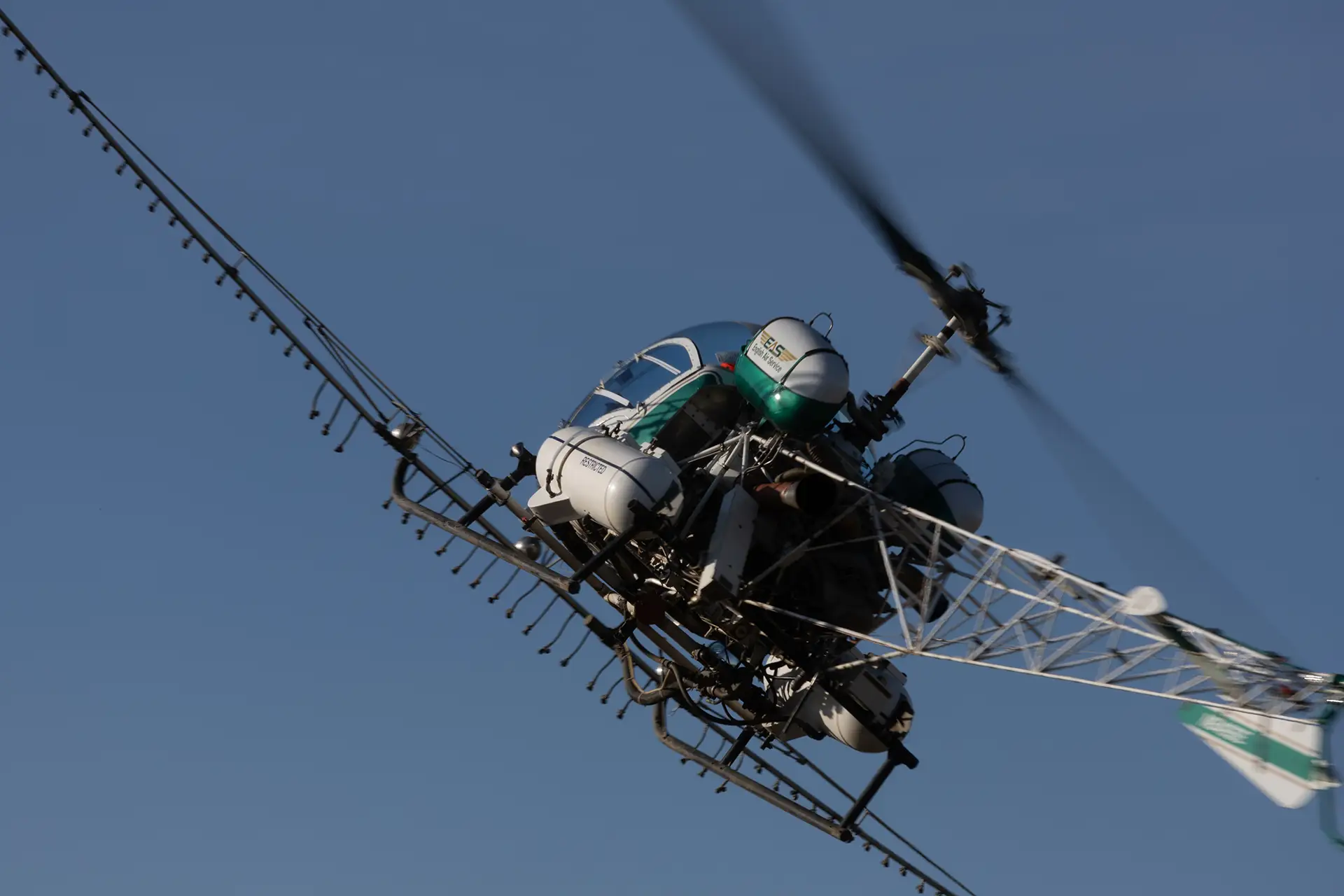
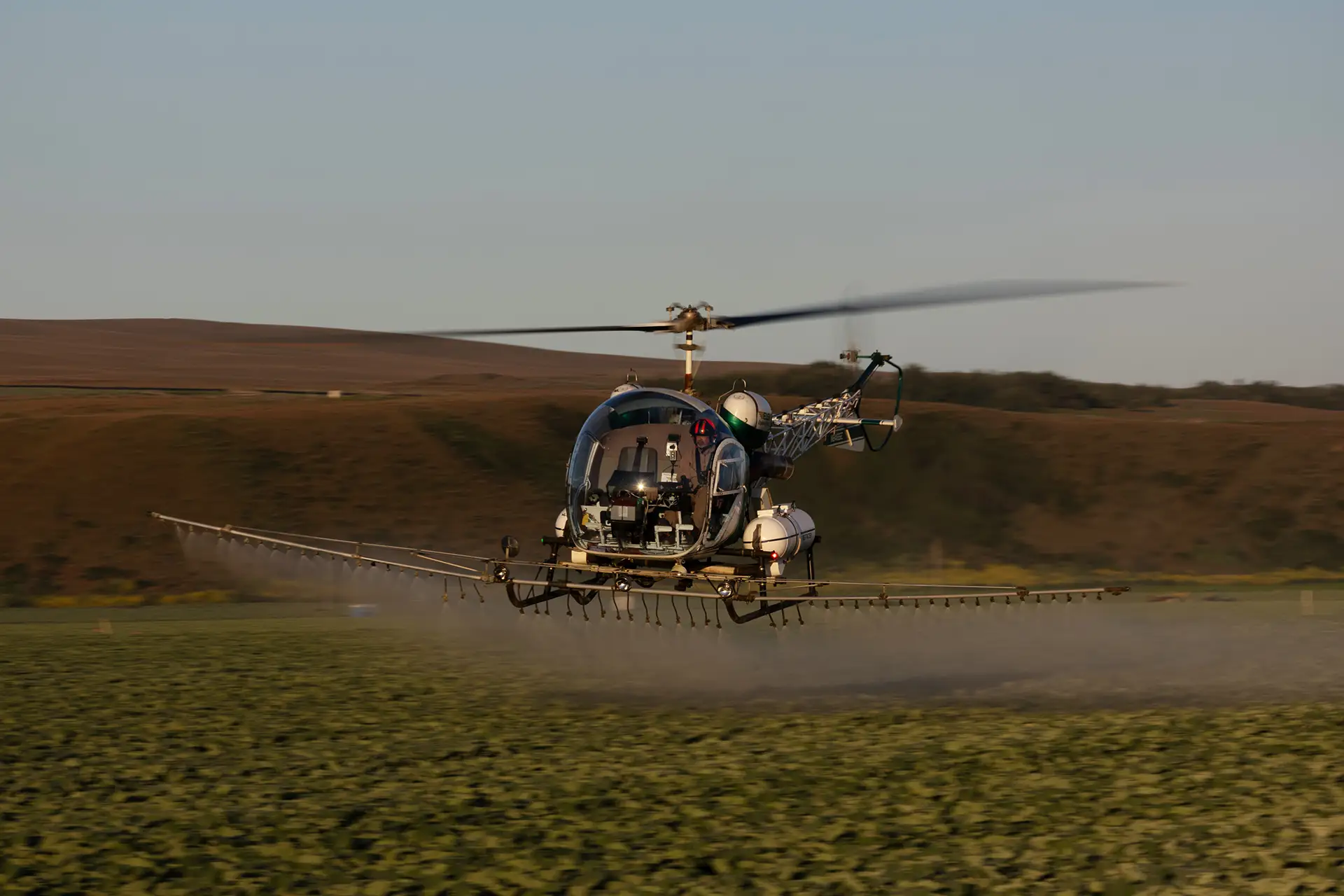
“We’ve had everything from a narrow-cabin G2 and G2A to the G3B. Everything we have now with the turbine conversion is a G3B-1, which has the wider cabin and hydraulic-boosted collective and cyclic. The G2A has non-weighted blades, the narrower cabin and non-boosted collective, and we have one Wasp, which is a single-place aircraft and still piston powered. I’ve flown the Soloys for so long now though that if I have to get back into a piston, I feel like a duck out of water,” English likes the wider cabin of the G3B-1, that bit of extra space making a big difference to comfort when having to take a grower out to plan a job, for example. He states that the 47 is a great-performing aircraft for ag’ work, safe and very dependable. Its high-inertia rotor system’s 37ft diameter is larger than the JetRanger’s, makes for very good autorotation characteristics and with a 32ft spray-boom, English’s 47s lay down a 35ft swathe from 63 conventional T-jet nozzles. “I think they do a better job and we use a slightly bigger droplet size to minimize drift. You’ve still got to be careful though. You could have the best nozzle in the world but if you spray in the wrong conditions, it’s going to drift.”
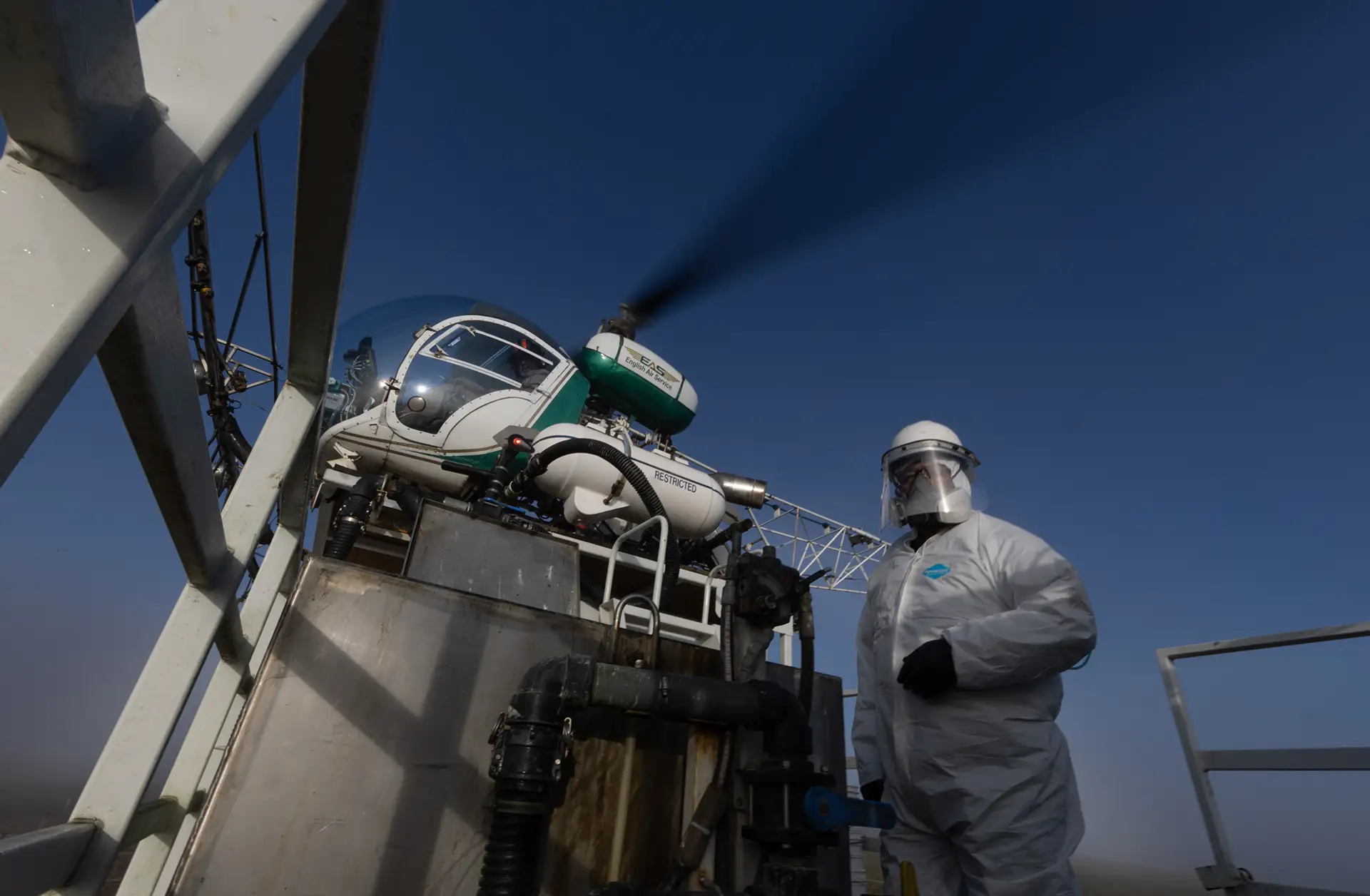
EAS’ spray equipment uses Isolair tanks with Kawak hydraulic spray systems and the typical spraying height is just two or three feet above
the crops. “You have to stay high enough that if there are sprinkler risers in there, you’re not going to hit them and knock your nozzles
off,” English commented. “You also have to do a comprehensive recon’ before you start to make sure there is no new, unexpected, or unmarked
obstacles that could pose a hazard to the operation.”

Wires are a challenge for any low-level operation, and he noted that the recon’ is important to locate any poles – which can often be hard
to spot in lines of trees – as they will give an indication of the location and direction of any wires. Where wires are present, English
uses the recon’ to establish if he can safely fly under them, as that makes for a better application and safer maneuvering. “Aside from the
wires and spray-drift, we have to contend with weather. We get a lot of marine layer here, a lot of fog, so we’re often flying in marginal
VFR conditions. We know our local area well though and have well-known, familiar routes that we don’t wander away from when it’s foggy,” he
noted.
Almost all the spraying work is on citrus or row-crop produce, such as lemons, broccoli, cabbage, cauliflower, lettuce, celery, avocado and strawberries; usually grown on family farms that have been in the same families for generations. “It’s been that way for a long time and there is a long history of family farming here. Although they do a bit in Florida and around Oxnard, this area and the Salinas Valley are probably the vegetable capital of the world,” English opined. English stated that he always flies a field starting from the downwind end and working upwind. “What I tend to do is fly every other pass and then come back and fill in, and using the GPS makes it so much easier. Before we got the GPS, we thought we were good but when we got that, we realized we really weren’t. A no-wind condition is the worst time to spray because the stuff just hangs there. Then you’re flying back through it and the window gets dirty and the aircraft gets dirty. If you skip that pass though, you’re always staying out of the drift.”
Although some operators will work all night, virtually all of EAS’ ag’ flying is done during the day, other than night-time frost
protection work. English advised that all the chemical labels specify application in not more than 10mph of wind, so the usual flying hours
are in the morning before the wind picks up above the application limit. “We’ll typically start around 5:00 or 5:30 in the morning –
depending on the time of year – and I’ll usually finish flying by 10:00 or 11:00. Then I’ll come back and do cleanup stuff or help them
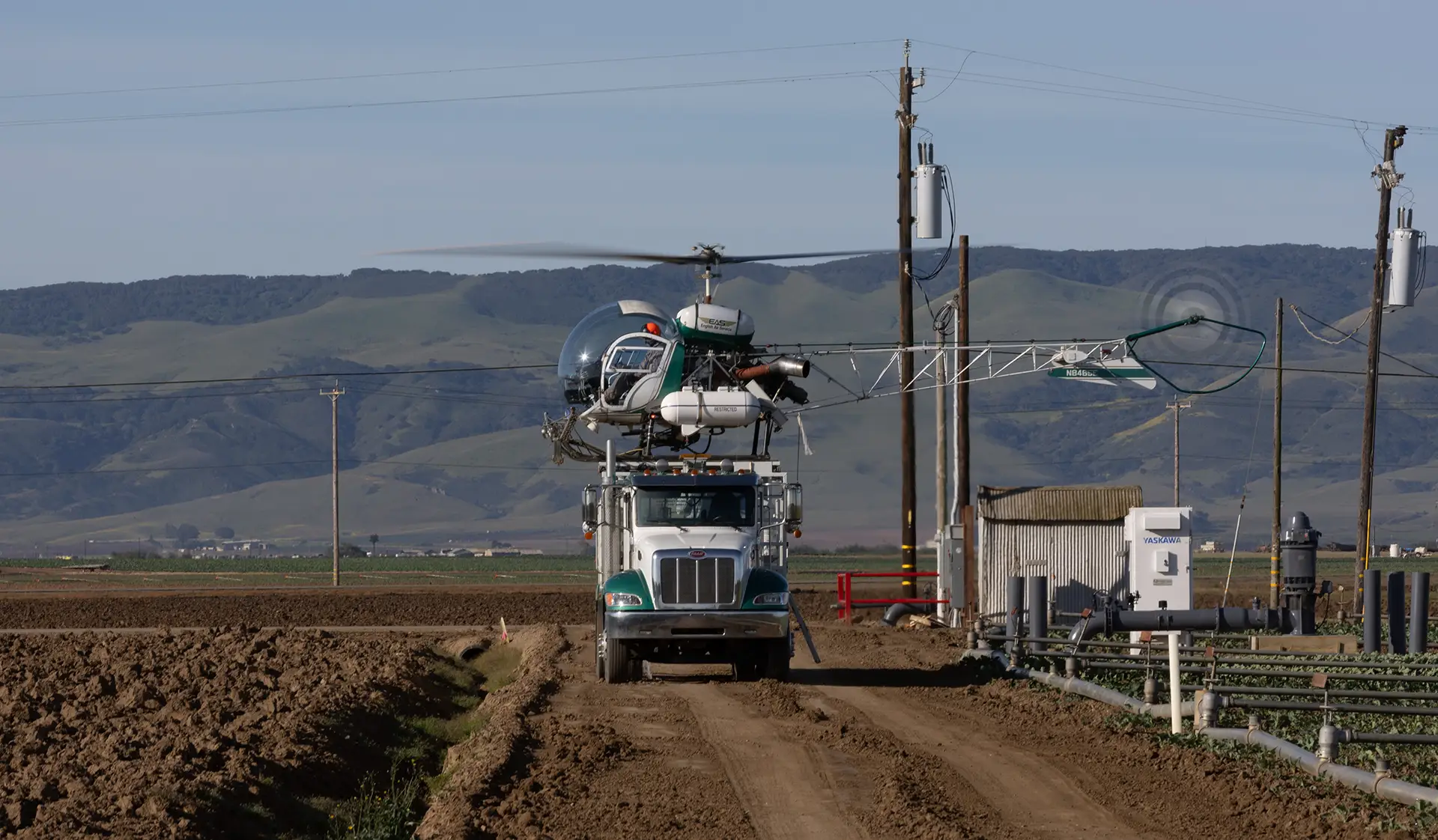
down in the shop. There’s always something to do but by noon or 1:00pm, we’re done.” He tries to run two nurse-trucks for each helicopter,
which allows for leapfrogging between jobs so the helicopter doesn’t have to wait unnecessarily for the truck to travel and meet it. As
spraying requires good conditions, any avoidable downtime is obviously anathema to a sensible ag’ operator. “By running two trucks, we get
almost fifty percent more work done than if we relied on a single truck,” he added. “When we’re doing avocados though, we’ll run two or
three helicopters off one truck and just have the other trucks bringing water to it.”
Each crop has differing requirements for chemical application and that is the facet of the job that is most likely to get an operator in
trouble, according to English. Every chemical is registered with the Department of Agriculture, only for certain crops and each with a
specified period that must elapse after spraying, before the crop can be harvested. “If you don’t rinse out when changing chemicals and/or
crops, you can end up with chemical residue on the crop when it’s harvested. Everything here is tested before it’s harvested and if they
find any residue, it can’t go to market. That means you need to know what materials you’re using, what crop you’re spraying, what the
adjacent crops are and what time-to-harvest the particular chemicals have,” English explained. He described how when spraying two different
chemicals on compatible crops, the one with the shortest time-to-harvest is sprayed first, so that any contamination into the next chemical
will not leave any problematic residue, due to the longer timeframe to harvest.
The applicator is responsible for what goes on the crops so if there’s a mistake, things can get messy fast. It has happened to English and
he recounted that years ago he put some fourteen-day material on a field that was supposed to be getting three-day material, due to a
communication breakdown between him and his loader at the time. “The first thing I did was to stop and call the grower, who was
understandably upset. They ended up holding onto the produce until it passed the tolerance test and, luckily, the price went up several
dollars per box during that delay so the grower actually benefitted from it,” he related.
Regulatory Considerations
Agricultural spraying operations are strictly regulated and closely monitored, so the administration required is extensive and
demanding. Growers usually work with pest control advisors from the chemical companies and those advisors determine what products should be
applied and in what amounts. They then send a requisition to EAS, who completes the chemical application. After application is completed a
completion report must be faxed to the chemical company and the grower within 24 hours. EAS must then complete a highly detailed and
comprehensive pesticide use report (PUR) and submit it to the grower, pesticide company and county authority within seven days, and the
county then forwards that report to the state authority. The requisition for a job only shows up at EAS around 4:00pm of the day before the
work is required, so there is no feasible way of long-term planning the work schedule.
Started by Mark and Tracy as a family business and run that way since 1986, EAS has seen a second generation of the family join the company.
Daughter Taylor commented that she was just six months old when her father first took her out in one of the helicopters and since 2013, she
has been Executive Administration Assistant and Sales Manager. Although EAS’ agricultural business is very strong, English acknowledges that
to rely on just one market segment will always be potentially problematic and the diversification into other market sectors provides a
stability that buffers the company against fluctuations in any individual sector. Around seven years ago, the English family sold financial
ownership of the company to an investment firm, but it still operates exactly as it always has, run, managed and worked by the family and
their employees.
English has amassed over 16,000 hours in almost forty years of flying and almost all of that has been on spraying. Despite this, he
considers that he is still learning and obviously has little time for pilots with the attitude that they know it all due to their years of
experience. Mark English and EAS are a renowned fixture within Santa Maria agricultural community and while the ag’ fleet comprises aged
Bell 47 airframes, the aircraft are well specified, modified and maintained so should still see years of continued spraying service.