 HOME
HOME





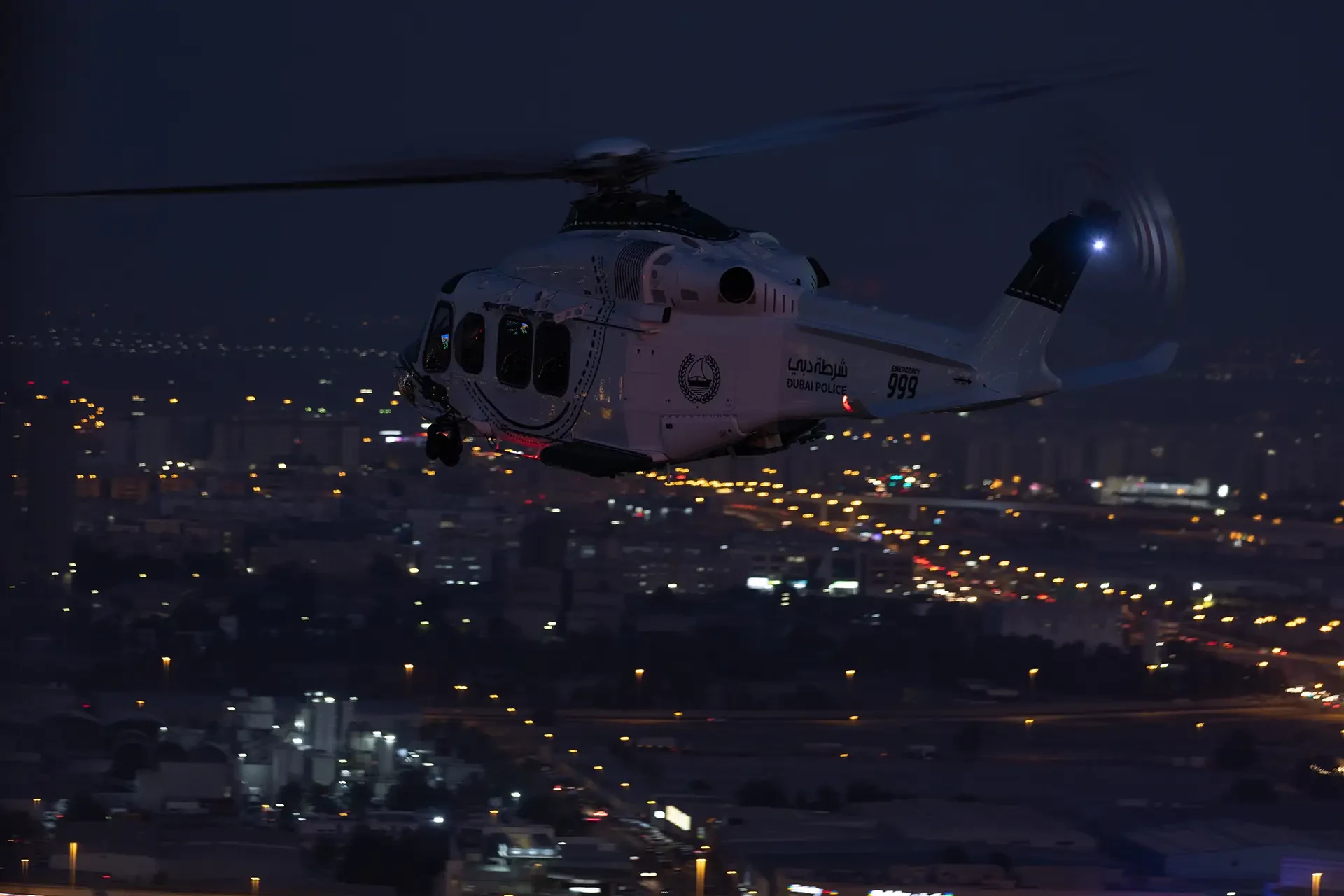
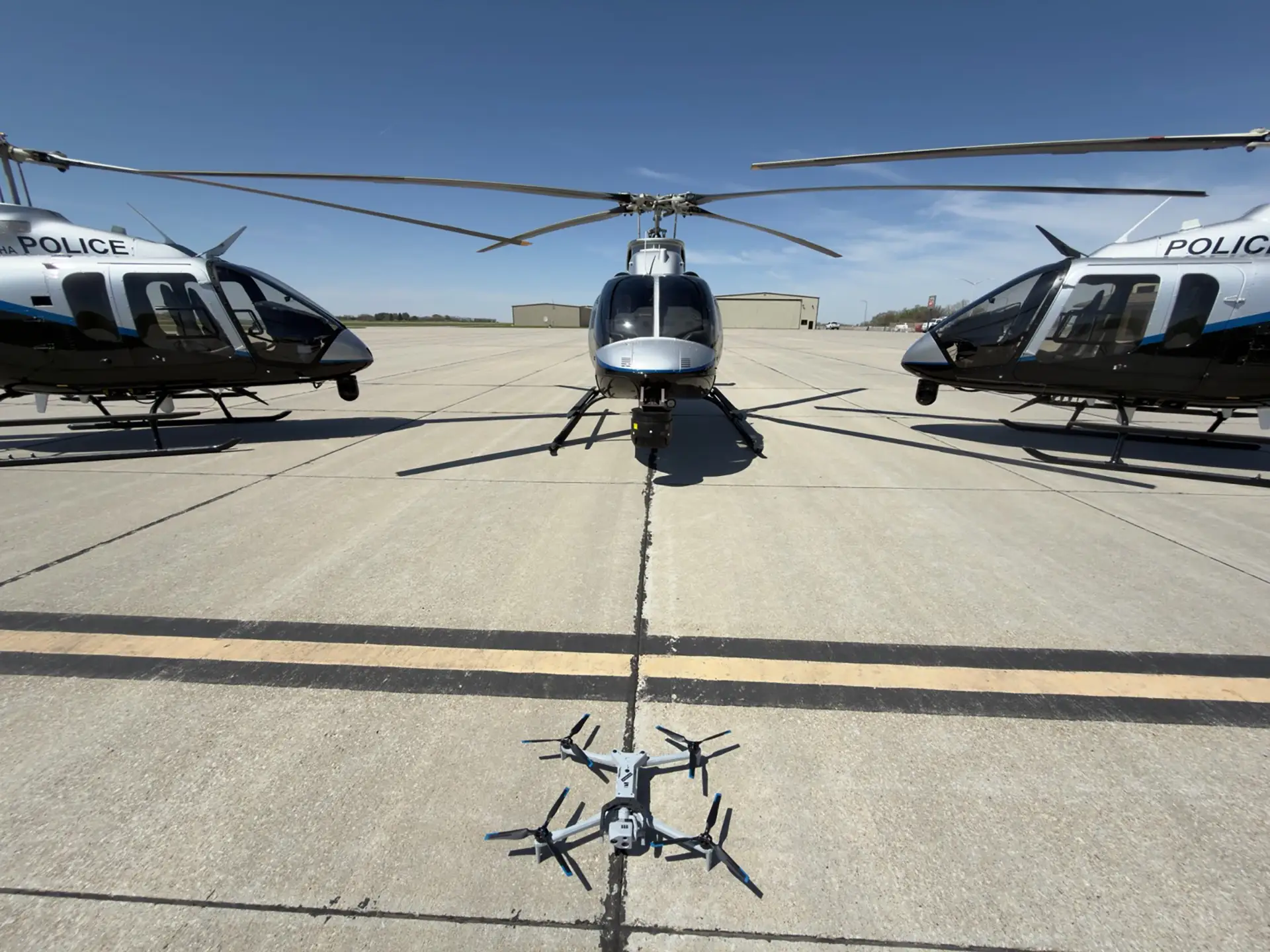
Unmanned Aerial Vehicles (UAVs, aka drones) represent the fastest-growing segment within the aviation industry. As of year-end 2025, there were over 850,000 UAVs registered in the U.S. alone, along with more than 400,000 certified UAV pilots. By comparison, there were just under 10,000 manned helicopters registered in the U.S., with just over 15,000 certified helicopter pilots. UAV adoption has quickly moved from a niche market to broad-based expansion across multiple industries, including public safety, and for good reason. These stats are perhaps not surprising given the new operational capabilities a UAV can provide, not to mention the entry-into-service costs. If a public safety agency is not utilizing UAVs today, it will likely do so soon. The number of police agencies obtaining UAV’s is impressive. Again, for good reason.
What is perhaps most interesting is that the utilization of manned police helicopters is also significantly expanding. This can be measured definitively by the number of aircraft in the global police helicopter fleet and the total hours flown, both of which have set new highs and are continuing to grow, especially in the United States. The most significant indicator of helicopter growth is the number of new start-up operations. As of year-end 2025, 19 known police and fire agencies were investing in new manned helicopter programs. These are agencies that historically have had no aviation program. This is an unprecedented growth rate for manned police aviation, and all at a time when there are open claims that UAVs are replacing helicopters in the public safety segment. Replacing helicopters? Admittedly, there is some merit to this type of claim in certain mission types. Undoubtedly, this will be more so in the future. But to so boldly claim that a UAV can replace a public safety helicopter today? To what extent are these claims supported by the current evidence? If UAVs are to replace manned helicopters, as many in the UAV industry claim, then why is the manned industry still growing at an unprecedented rate? This parallel growth in manned police aviation alongside UAVs begs the question: why?
It’s about public safety. It’s not about which is better. It’s not about an opinion or an emotion; it’s about the actual impact on public safety. Collectively both enhance public safety in an impressive way. Any manned police helicopter crew that tells you a UAV is not a valued public safety asset is wrong. UAVs are cable of performing critical airborne public safety mission tasks that manned helicopters simply cannot. At the same time, any UAV operator or salesman who tells you the UAV can replace the manned helicopter today is equally wrong. Like the UAV, a manned police helicopter can perform airborne public safety tasks that UAVs simply cannot. UAVs and manned helicopters complement each other and, together, broaden the force-multiplier aspect of public safety. Public safety is the clear winner. False claims, or a need for better understanding? To claim that one of the other should be eliminated and/or replaced is a serious claim and needs to be made on proper facts, not emotional or business-based biases. Anything less can be critically dangerous when public safety is the mission. Lives and property are at stake.
Public Safety Mission Performance Comparisons
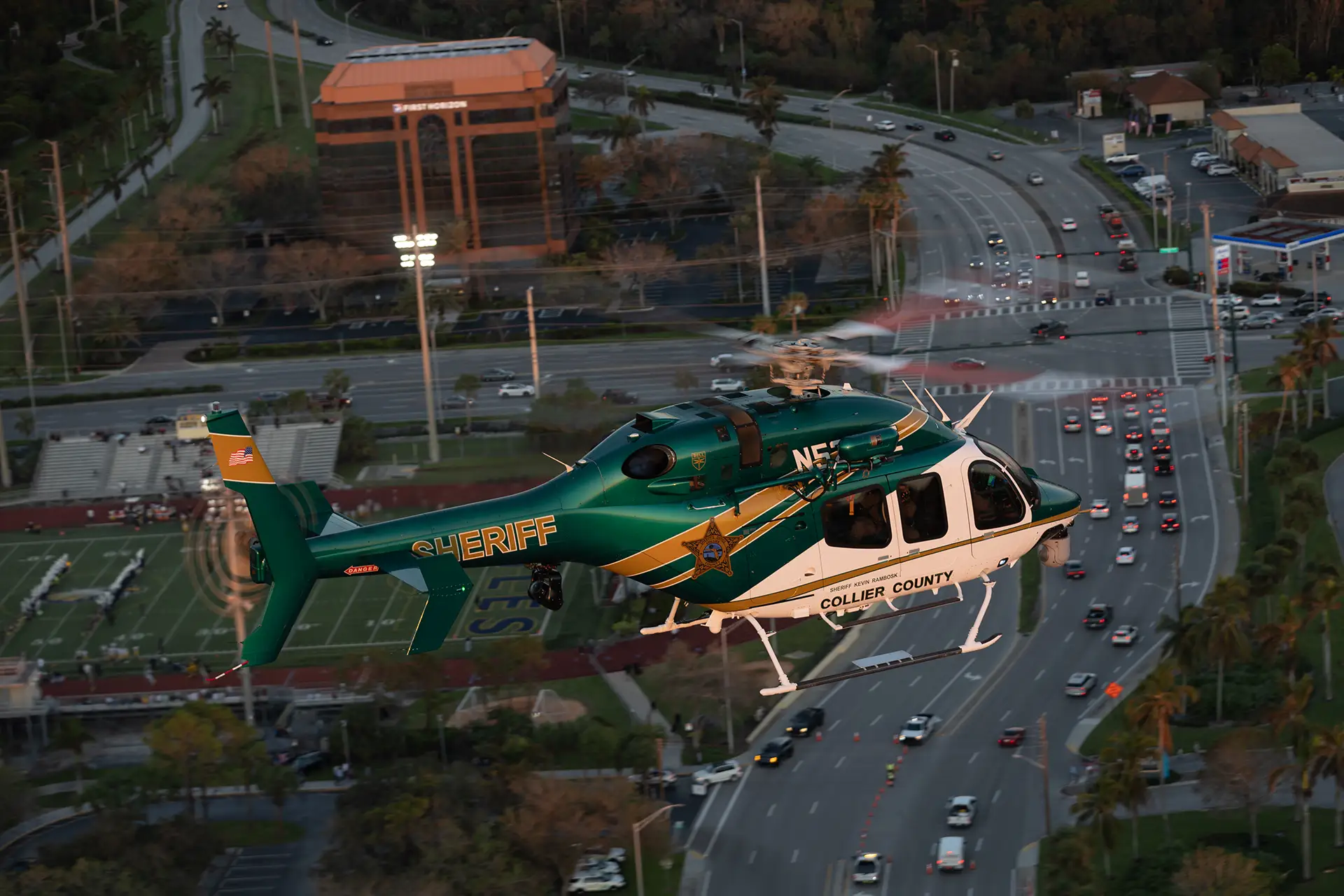
The primary justification for manned or unmanned programs is rooted in the aerial perspective. Both manned and unmanned programs offer a measurable advantage over ground-based solutions. For example, a ground officer can visualize at most two sides of a building at once. The aerial perspective can see all four sides of a building, plus the roof and around corners. This alone is a clear advantage of having an aerial perspective, whether manned or unmanned. That advantage is significantly amplified (or diminished) when aerial performance is factored in, including deployment availability, speed, endurance, and repositioning adjustment ability. Add to this the measured differences in mission equipment payloads, which become critical when comparing imaging optics or sensor packaging. Whether because of performance or mission equipment, there are significant and, in some cases, drastic operational deltas between manned and unmanned. This is especially the case compared to the small UAV category (less than 55 pounds), which is typically used by police operators.
Payload – Even the smallest of police helicopters typically have at least 1000 pounds of payload, with most well exceeding 2000 pounds of payload…as compared to a small UAV being in double-digit payload ability at best.
Range – The typical police helicopter has at least a 250 nm range with payload, some significantly more…as compared to the majority of UAVs being limited to lower double-digit range miles at best, or even line-of-sight operations.
Endurance – Again, lots of variables, but the typical police helicopter has at least 2.5+ hours of loiter, whereas the typical small UAV has 45 minutes or less.
Although these are simplistic comparisons (there are numerous others, to include operational weather restrictions), the resultant mission effectiveness is anything but. For example:
Basic Patrol and Recon – The operational deltas are perhaps most significant in the imaging capabilities of modern police cameras. There are incredible “find the subject” differences that can be measured between a 10- or 15-inch imaging optic typically associated with a manned helicopter, and a 1-2 inch optic associated with a small UAV. The larger multi-sensor optic will detect objects and subjects that a smaller optic quite frankly cannot find. Without this type of baseline technical understanding, the danger comes when we “think we are seeing” all that is to be seen, when in reality we are “not seeing what could be seen”. As a result, subjects may be left undetected, not because of ability, but because of an unknowing acceptance of our reduced performance ability.
Payload Based Deployments - Numerous examples present themselves when looking at payload deployments (SWAT, Diver, AUOF, K-9, casualty evac, etc.). Today’s small UAV options have a near-zero to zero ability in this regard.
Surveillance – The ability to track an unpredictable subject or contraband load is enhanced or deteriorated depending on aircraft performance. This is especially the case when it comes to the need for standoff ranges and the higher optical abilities. This can also be directly attributed to the inability to predict the movement direction, range or endurance of the surveillance target. Aircraft performance, whether manned or unmanned, is essential as a solution.
Pursuit Operations - The ability for a manned helicopter to deploy and conduct pursuit operations with unknown speed, distances and directions can make a significant difference in being able to conduct pursuit operations at all when faced with severely limited performance capabilities.
Police Presence – As crucial and impactful as “officer presence” is on the ground, it is even more so from the air. It should not be underestimated. The mere “police presence” perception difference between a small UAV and a police helicopter is significant when conducting crowd-control operations or general patrols. One is minimally visible at 55 pounds or less, whereas the other is substantially commanding at typically several tons.
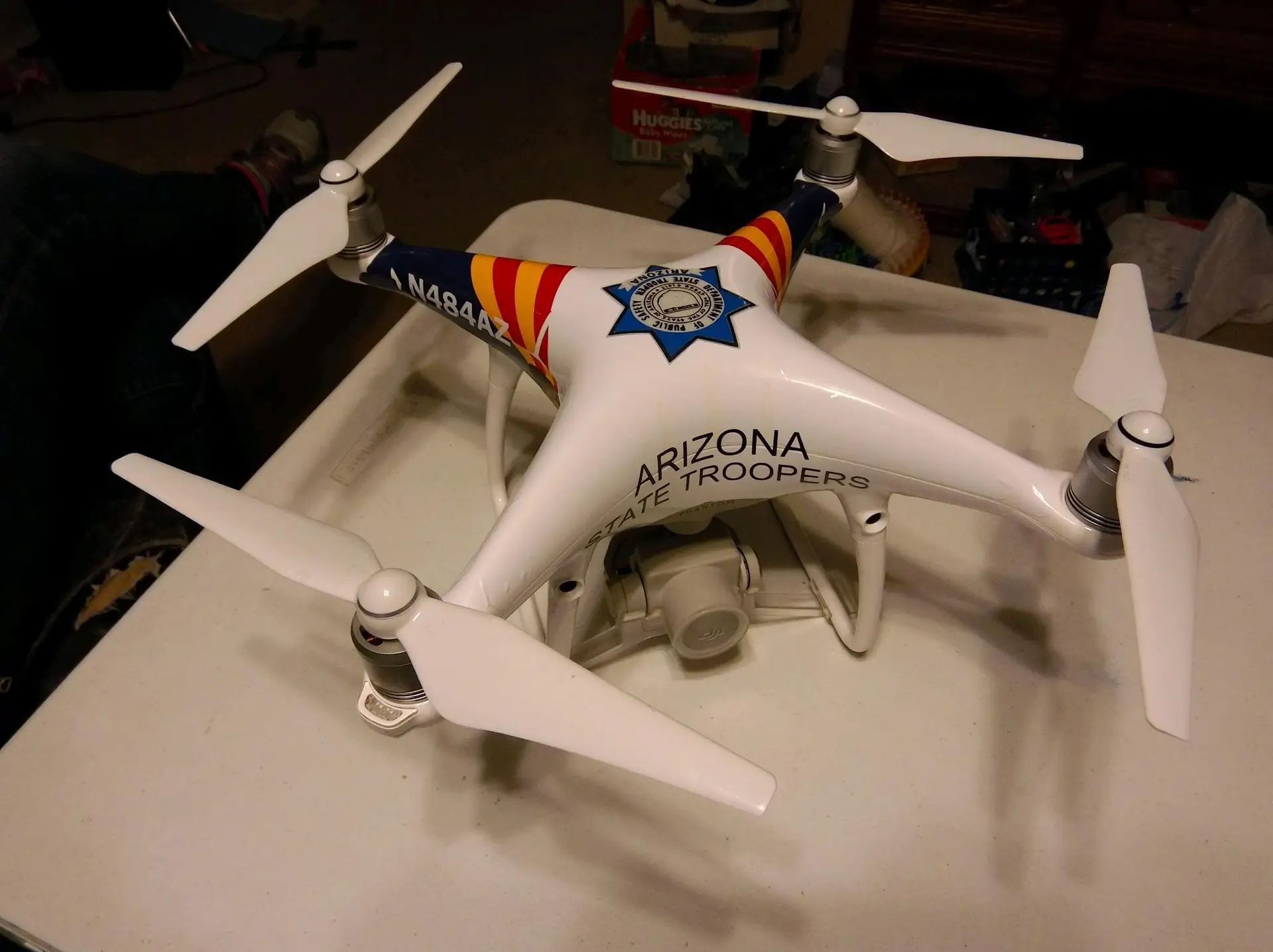
There are several functions that a small UAV can perform more efficiently than a manned police helicopter and, in some cases, not at all:
Photogrammetry Based Missions – Although photogrammetry is a long-time mainstay to police helicopter missions, UAV can be just as operationally efficient when the UAV aircraft are pre-positioned with the investigating officers of complex crime scenes and accident scenes. This assumes accessibility to the involved investigating officers and scene containment within line-of-sight targeting.
Tactical Operations – Any high-risk officer safety mission demands the benefit of aerial observation, whether as part of a pre-tactical deployment, SWAT entry, hostage standoff or other. Small UAVs represent a significantly expanded capability when co-located with tactical teams, and manned programs are unavailable.
Interior Operations – This is perhaps a stand-alone benefit of small UAVs. The ability of a properly equipped UAV to fly inside confined spaces, i.e., buildings, creates an incredible force multiplier for officer safety, public safety, and subject apprehension.
Technology Challenges
Why do today’s UAVs fall so short in these critical technical performance capabilities? At the forefront of the critical mission deltas is the challenge of battery technology. In a perhaps over-simplified explanation, the weight of the batteries consumes the bulk and, in some cases, all of the useful mission payload ability in UAVs. The challenge is real. Even when we scale the smaller class UAVs to larger ones, the now even heavier batteries take an even larger share. Regardless of the small-to-large UAV applications, the impact is a significant reduction in useful payload, range, endurance, and speed.
Think of it this way. There is a reason why today’s electric cars are the heaviest on the road when compared to traditional gas cars. They are substantially heavier because of the batteries and the lack of “lightweight” battery technology. Unlike electrically powered aircraft, electric cars are incredibly efficient and high-performing… for one simple reason: They don’t have to lift their entire vehicle and payload off the ground. They also don’t have the critical airborne aerial perspective that makes manned and unmanned aircraft so incredibly valuable to public safety.
In one presumably successful solution, the UAV battery challenge was overcome by replacing the batteries with a single lightweight turbine gas engine. This indirectly entailed replacing multiple UAV rotor systems with a single primary rotor system to avoid multiple engines. If this type of aerodynamic design sounds familiar, it’s because it should…we call it a helicopter. In this real-world example, the UAV was a small helicopter “look-alike” with a payload of less than 100 pounds. Ironically, the cost point of this actual UAV, quasi-helicopter, far exceeded today’s modern helicopter prices that have been well developed for decades now.
 Unbiased
Cost Comparisons
Unbiased
Cost Comparisons
True affordability. Whereas this might be perceived as a UAV advantage, it is at times also grossly misrepresented and misconceived. Typical cost comparisons are made between manned police helicopters (with all the associated mission performance parameters) and Part 107 small UAVs (with the drastically reduced mission performance parameters discussed above). The cost differences are vast…as are the mission performance parameters. When performance parameters are equated, which is typically done with a large UAV class, the acquisition and direct operating costs are again vast… but drastically in favor of the manned helicopter.
It is again important to point out that, although there are significant cost and operational differences between small UAVs, there is still a clear benefit to UAV utilization, especially when manned programs are unavailable. Limitations can be considered drastic with current small UAV technology alone, but when combined with manned technologies, significant operational advantages are derived
Can drones replace the police helicopter?
To claim that the modern drone can replace today’s police helicopter is baseless from a measured technology and operational effectiveness standpoint. Again, this is not to say that small UAVs do not have a place in policing; they very much do, and in a beneficial way. The reality is that they are distinct systems, each with distinct capabilities. As such, a small UAV cannot fully replace the mission of the manned police helicopter, any more than a police helicopter cannot fully perform all the functions of a UAV. In the future, we might very well get to the point where the UAV is fully capable of replacing the public safety helicopter. But are we there yet? Not even close. In the meantime, we cannot accept anything less than an unwavering commitment to public safety.