 HOME
HOME





Simulators and simulation have their genesis in efforts by the military to provide realistic and lower-cost training to its personnel. Technology has encouraged their development in the airline and general aviation worlds. In this two-part feature, Jonnie Rockingham-Smith explores the history of simulation in aviation.
“It’s not as pretty as DCS (Digital Combat Simulator - an online multiplayer game), is it?” was one of the early criticisms levelled by an end-user pilot in respect of the latest, cutting-edge synthetic facility being used by the UK Royal Air Force (RAF) to train its helicopter crews. And hand-on-heart, it wasn’t. So, is Defence procurement failing their aviators with multi-million-dollar bespoke facilities, when commercially available consumer-level products which are, out the (virtual) cockpit window at least, better, can be had at a fraction of the cost?
The development of flight simulators has been pivotal in revolutionising aviation training, research and even entertainment. Initially
conceived as a training tool for military pilots, flight simulators have evolved into incredibly complex and sophisticated systems proving
integral to both civil and military aviation sectors. More recently, computer and online gaming has brought breathtaking realism and deep
immersion to a worldwide audience at a fraction of the cost of certified commercial and military systems.
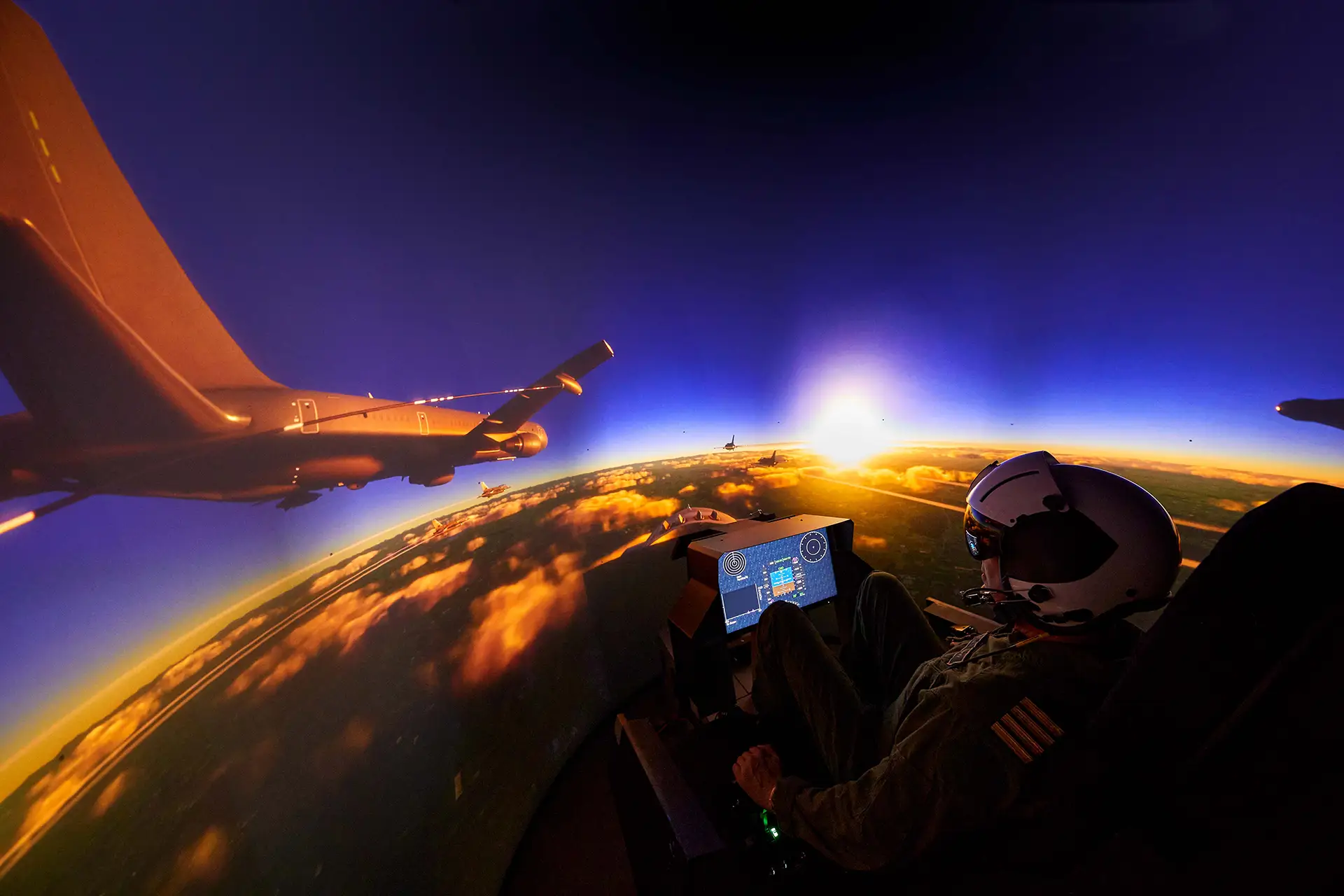
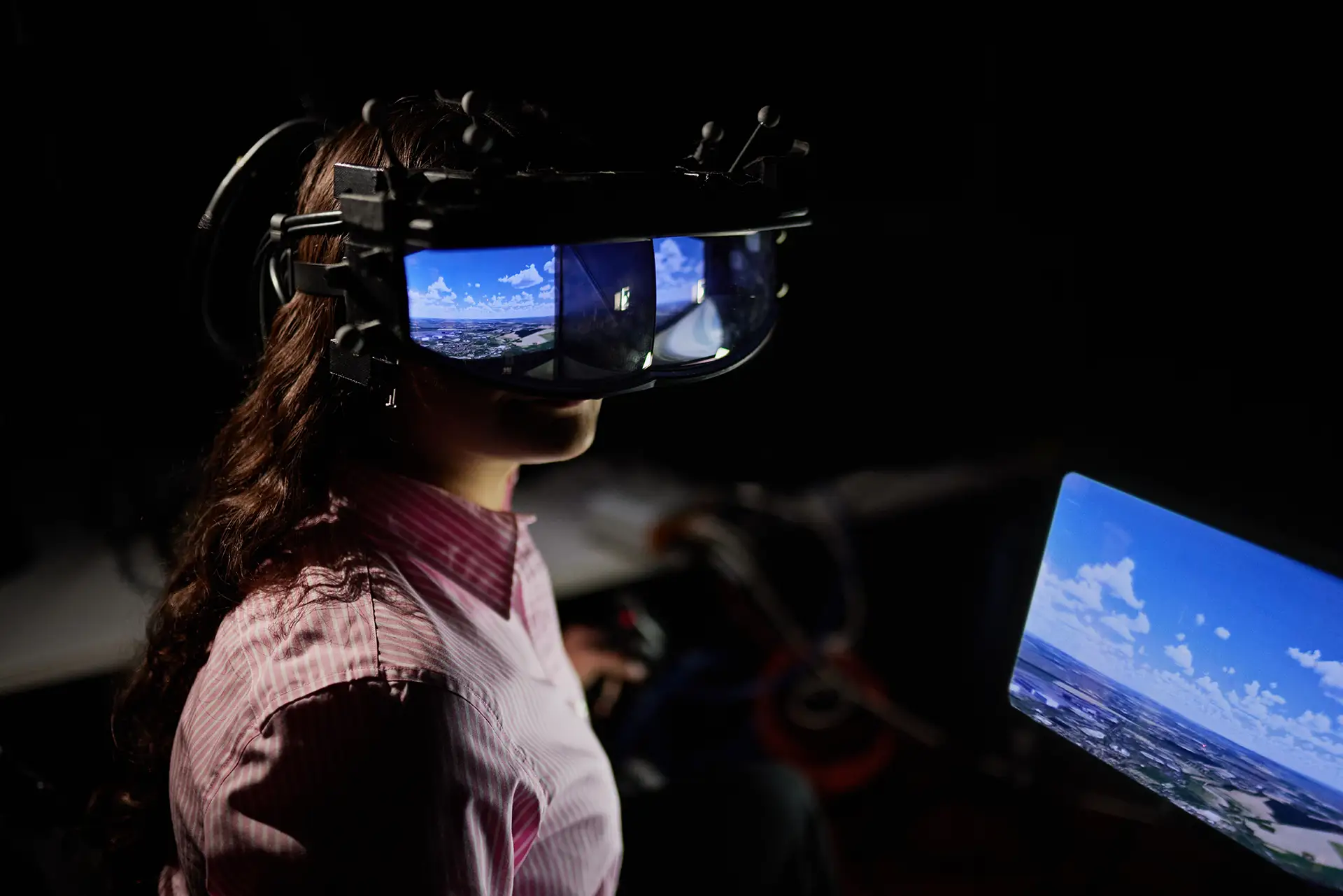
The history of flight simulators is marked by significant technological advancements, from early mechanical devices to modern-day virtual and immersive products. This article seeks to explore the history and development of flight simulators, focusing on their origins, technological progress, and their role in shaping the aviation industry. It also examines their application and crucially, value, for modern pilot training.
Early Days
Since the dawn of flight man has sought the collaboration and wisdom of others in their endeavours. British pioneer aviator Percy Pilcher - who designed the first, though unproven, triplane in the late 1890s - was mentored by German aviation expert Otto Lilienthal, who had made man’s first flight near Berlin in 1891. Sadly, both were killed in separate aviation accidents, respectively falling prey to structural failure and a stall. A line on Lilienthal’s headstone reads:
Opfer müssen gebracht werden!" ("Sacrifices must be made!”)
Although aviation was still in its infancy, it was readily apparent that there was going to be a need for effective training. The only
options for pilot training were on real aircraft and largely by trial-and-error, which posed very real risks in terms of cost and safety.
Even in those early years it was clear that flight was going to be an expensive and unforgiving endeavour.
As is so often the case, the crucible of war forged many technological advances, and the First World War was no exception. By the time the
Royal Air Force was formed on 1 April 1918, dozens of manufacturers across the globe were building hundreds of different types, ranging from
fighters to seaplanes, bombers to trainers and it was these aircraft, many in the hands of WWI veterans, that launched an international
fascination and obsession with flight. The British government had begun to realise that a population familiar with and skilled in flying was
generally desirable. In 1925 the government funded the creation of ten flying clubs around the UK, subsidising lessons and the cost of a
commercial licence.
However, by 1927 only 500 men had qualified, and women were only just being permitted to hold a licence and to fly for a living. That said, there was an enduring popularity for aviation, and superstars such as Sir Alan Cobham and his world-famous “Flying Circus” had seen over three million people buy tickets for his show. One way to further engage with the public at his exhibitions was with a device designed to test the reflexes. The Reid Pilot Indicator at the 1929 International Aero Exhibition at Olympia in London was so popular, and the queue so predominantly female, that special time had to be set aside for women to test their skills. The prize was for a free course of flying instruction for the two best candidates - it was eventually given to a man and a woman, although the hot rumour was that the top six female finalists outscored all the men!
It was in this world of optimism and excitement for aviation that a young American, Edwin Link, had decided to forge a career as a pilot.
Born in 1904, he had his first flying lesson at the age of 16 and in 1927 took delivery of his first aircraft - a Cessna. He scratched a
living barnstorming, charter flying and giving flying lessons. In an effort to advertise his services and attract more attention, he built a
large model aircraft for use at country shows and fairs, using parts from his father’s automated piano and organ company. Link’s device
used the piano's rudimentary automation technology to display scrolling advertising messages across the wings. He even added some organ
pipes to sound a tune when the control column was moved around! This led to the formation of the Link Aeronautical Corporation in 1929,
with a view to supply and build trainers, although the first customers were fairgrounds and amusement parks rather than militaries and
flight schools.
The United States Army Air Corps (USAAC) had been given the responsibility of running the US Airmail service in 1934, following issues of
fraud in what became known as ‘the Airmail Scandal’. USAAC pilots struggled in poor weather and at night, leading to a series of
high-profile crashes involving mail aircraft; in 1934 Link secured a contract for the supply of six of his training devices to the air
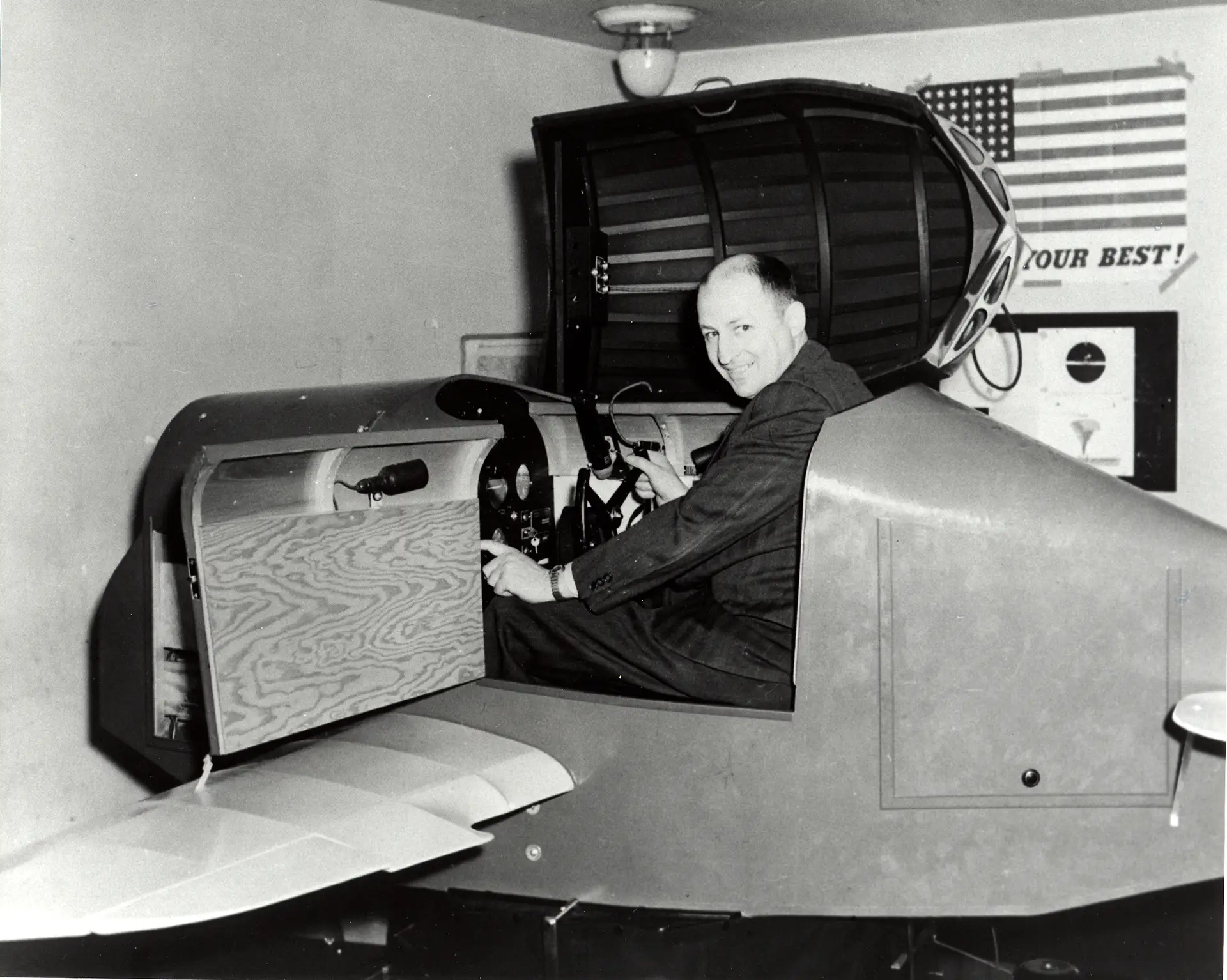
corps. The Link Trainer, or ‘blue box’ as it became known, went on to sell in vast numbers, at its wartime peak factories were producing
over 80 units a week. Over 10,000 were supplied to Allied forces throughout World War Two, with many Link trainers now surviving as museum
pieces across the globe. (Editor’s note, many an Air Training Corps (ATC) unit acquired Link trainers after WW2, and I certainly spent
many teenage hours in 'the blue box' trying to instrument fly!)
Once again, warfare played a crucial role in advancing technology. As WWII increased the demand for trained pilots, flight simulators became an essential tool in preparing aircrew for combat and their success spurred further research in to more sophisticated simulation systems. One of the problems with the Link Trainer was its generic nature, so the military began to develop simulators for specific aircraft types, with the goal of training pilots on more complex and dangerous manoeuvres. The introduction of more advanced mechanical simulators, such as those designed to replicate the flight characteristics of bombers, fighters and other military aircraft, signified a new era in flight training technology. Aircrew on No 6 Operational Training Unit at RAF Silloth, in Northern England, were trained using the ‘Silloth Trainer,’ a device developed by Wing Commander Isles at RAF Silloth, built from the fuselage of a Halifax bomber. All the engine, electrical and hydraulic systems were emulated, with a separate console for the instructor. The trainer was used to teach drills, the handling of malfunctions and basic flying skills. A further device, based on a Wellington bomber, was built at RAF St Athan in South Wales. In addition, the war effort led to the development of more sophisticated flight instruments, which would later become integral to modern flight simulators. These included radars, advanced avionics, and communication equipment, all of which would be incorporated into post-war flight simulators.
Going Digital
During WWII, the US Navy had approached the Massachusetts Institute of Technology (MIT) seeking a computer to help run more sophisticated simulators to train bomber crews, with more representative aerodynamic modelling and an ability to train on different aircraft types utilising the same simulator. Project Whirlwind led to the development of some of the first digital computers.
Until this point, computers had been designed and built to solve individual questions. What was now needed was a system that could operate
continually and with ever-changing inputs. Perry Crawford, a genius computer engineer and visionary at MIT, anticipated the design of the
digital computer using strips of punched tape to input data. He surmised that adding code, as opposed to building more mechanical parts to
the machine, was the answer. As long as the machine was fast enough, there was no theoretical limit to the complexity of the simulation.
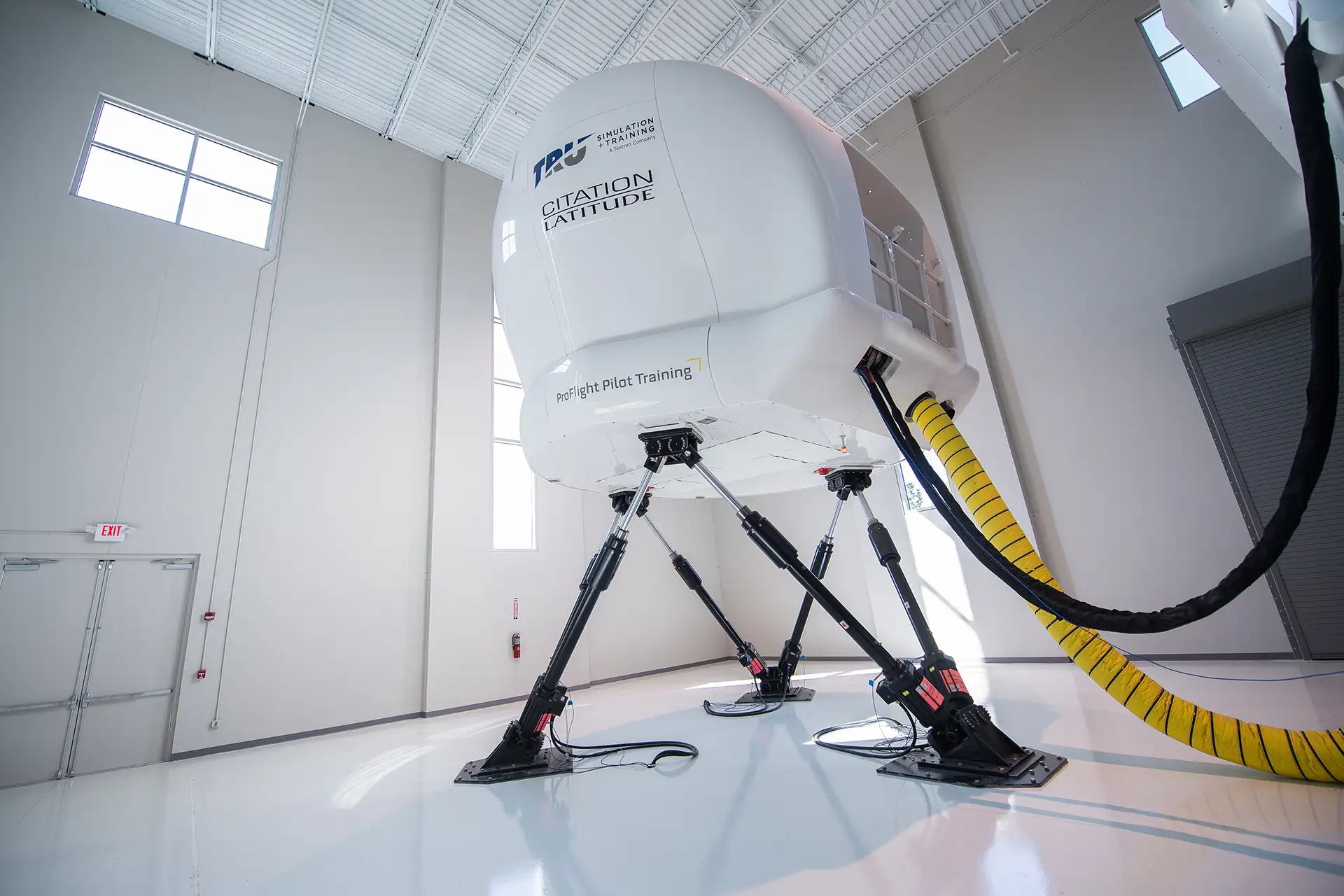
After WWII, Canadian Aviation Electronics (CAE) was starting out with founder Ken Patrick, a former Royal Canadian Air Force (RCAF) pilot, wanting to take advantage of the experience and knowledge of "a war-trained team that was extremely innovative and very technology-intensive.” In 1952 CAE received its first contract, an order from the RCAF to develop and build a flight simulator for the CF-100 Canuck. The contract served as a test bed for new techniques and methods, which eventually netted the company an extension and in 1955 CAE designed and build the first DC-6 flight simulator for Canadian Pacific Airlines. Where Link’s original blue box had used bellows, levers and pulleys to generate movement, now large and complex hydraulic systems, coupled with computers to generate instrument displays, were becoming the industry standard.
Commercial air travel was booming, and in the early 1960s, companies such as PanAm and Trans World Airlines were heavily investing in Boeing’s 707. In partnership with NASA, Boeing developed a flight simulator for the 707 that could replicate the aircraft's flight dynamics, including its control systems, engine performance, and instrument displays. The success of the Boeing 707 simulator marked a turning point in flight training, as it demonstrated the effectiveness of digital simulators in training commercial pilots. By the late 1960s, airlines began to adopt flight simulators for their pilot training programmes. Work by American Airlines and TWA saw wholesale rule changes by the Federal Aviation Administration in early 1970, permitting an increase in the use of simulators for transition, checking and upgrade training for fleet aircrews. These rule changes were coincident with the arrival of the 747 – the majority of air carriers introducing the 747 relied extensively on simulation to improve efficiency, safety and cut costs. It also allowed for more consistent and standardised training procedures to be implemented.
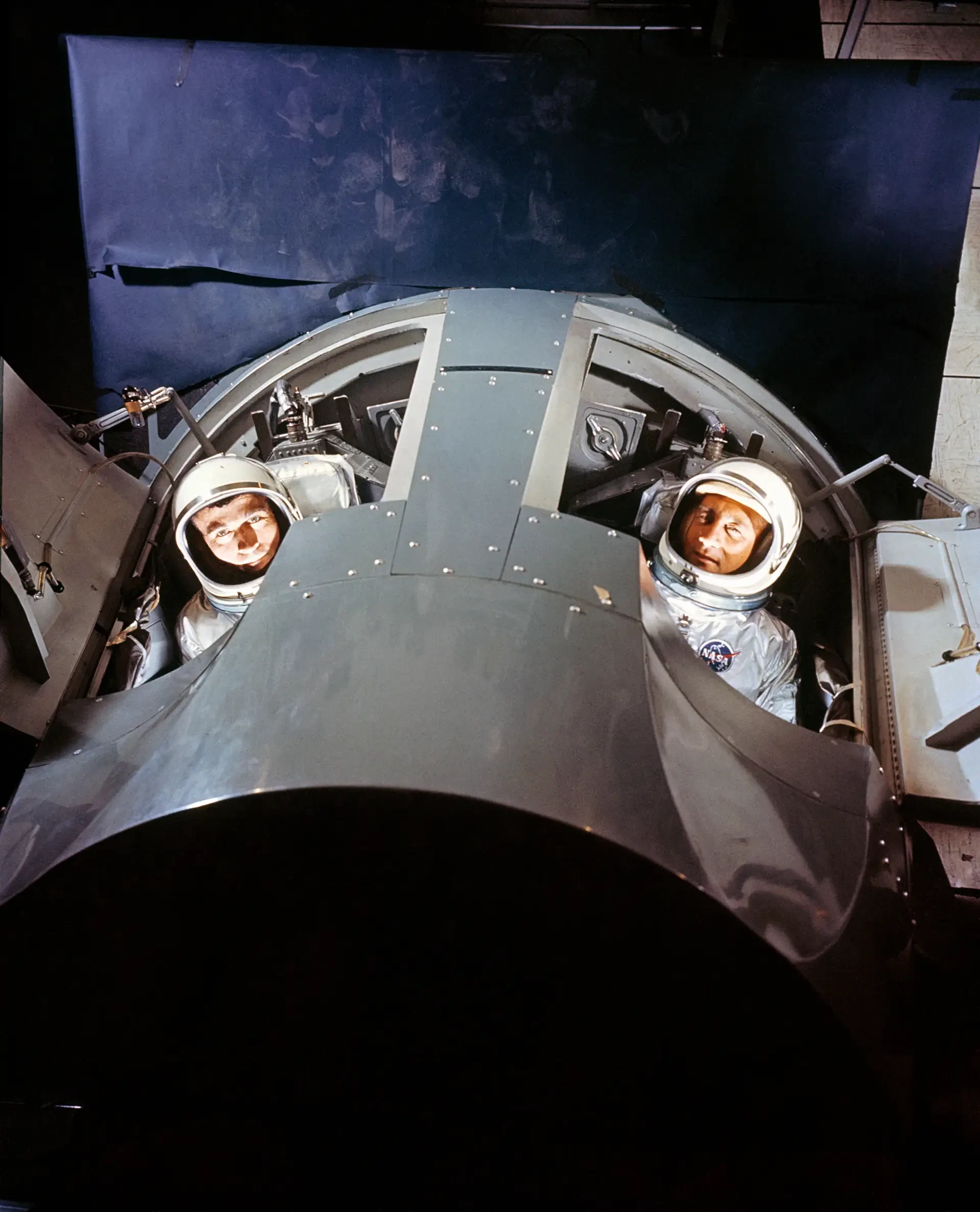
NASA had a vested interest in making simulators work. In the early days of the space race, the Mercury, Gemini and Apollo programmes were built around static and dynamic simulator systems to train not only the astronauts but also the supporting engineers, flight ops controllers and ground crews to familiarise them with the routine operation and - crucially - the emergency handling of the spacecraft in the most challenging and austere of environments. The ability to rehearse system failures and emergencies was critical in preparing crews for real-life contingencies, most famously seen in the Apollo 13 mission, when an oxygen tank explosion crippled the spacecraft some 57 hours into the mission. NASA’s ground teams turned to simulators to develop solutions in real-time, using accurate modelling to generate procedures for power conservation and trajectory correction and developing step-by-step instructions that were relayed to the astronauts to bring them home safely. This near tragedy was turned into a ‘successful failure’, largely thanks to the rigorous training and adaptability enabled by simulator testing. The Apollo 13 mission demonstrated the vital role of simulators in preparing crews for unexpected challenges, enabling engineers and astronauts to develop real-time solutions and highlighted the importance of teamwork between astronauts and Mission Control.
Part 2 examines the modern day utilization of the simulation in aviation.