 HOME
HOME





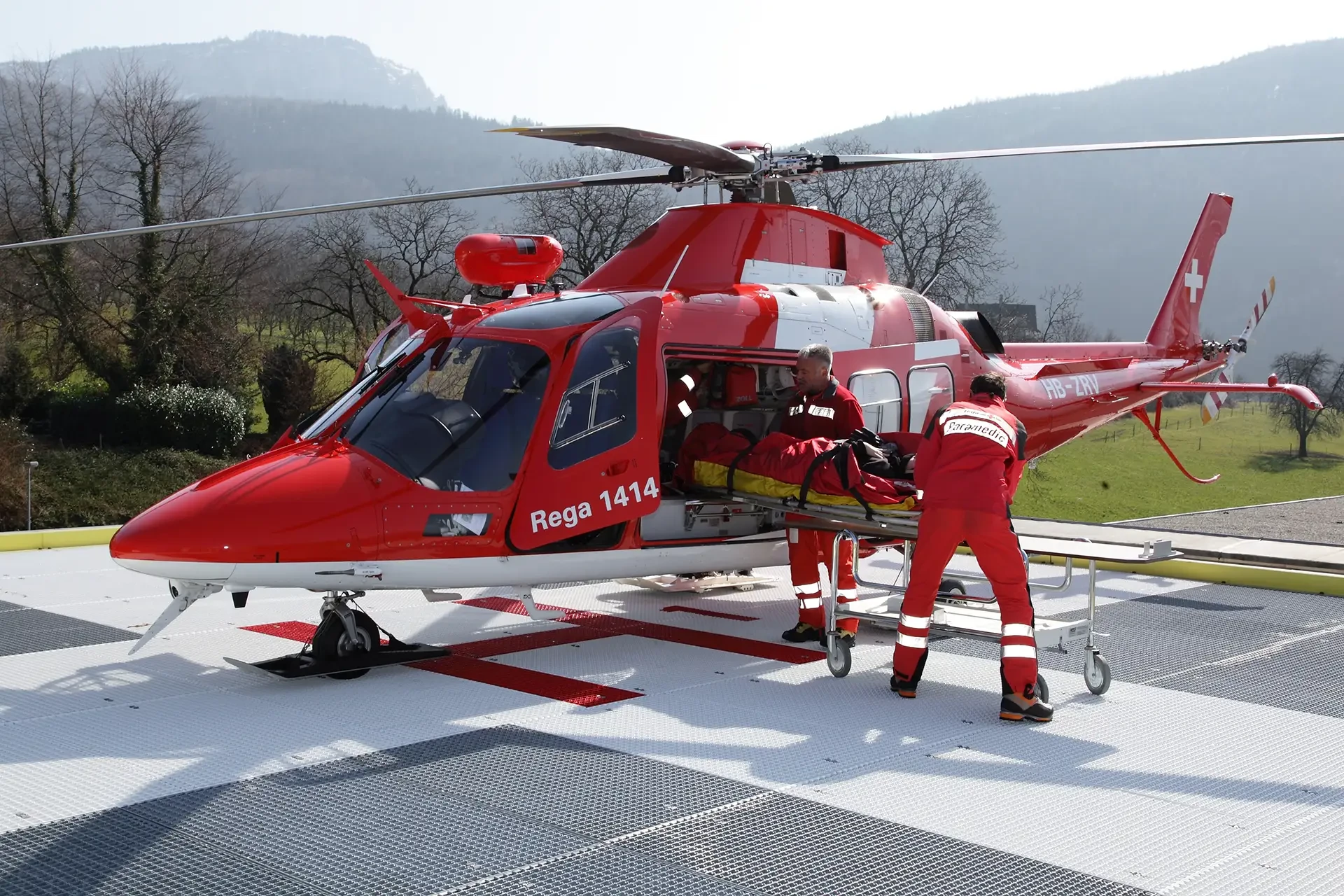
HEMS in Europe is an established and mature business which has enjoyed a significant growth over the past decade and looking set to report further growth and use due to promising technology developments in the near to mid-term. As of 2020, no fewer than 800 helicopters were operated in the emergency medical services (EMS) role across the continent (in both commercial air operator and government agency the fleets), located at an estimated 400 bases and logging more than 300,000 transport missions annually.
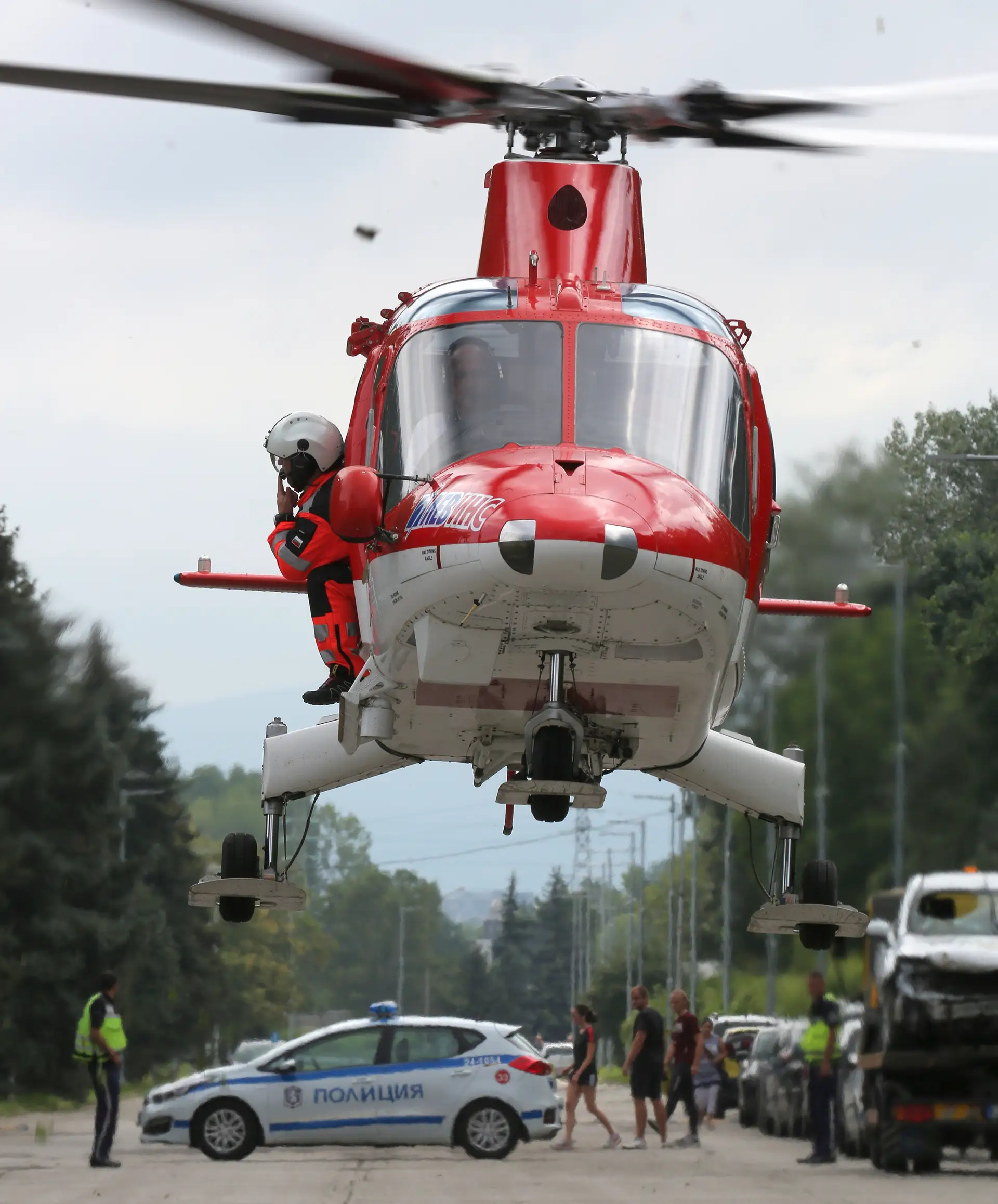
In many emergency cases helicopters are the more effective and safer alternative to ground ambulances, as they can use landing sites near or at the accident scene which can offer open space measuring just the double the main rotor diameter. This way, helicopters enjoy a great freedom of movement to fly and land at confined areas in fields, roads, parks, car parking lots, city squares and any suitable paved or grass-covered spot in urban and rural environments and can bring easily and safely medical teams to urban, rural and mountain accident scenes when road access is difficult or impossible.
The common definition of HEMS operations in the air transport parlance, as currently adopted into the regulatory papers of the European Aviation Safety Agency (EASA) is: A flight by a helicopter operating under a HEMS approval, the purpose of which is to facilitate emergency medical assistance, where immediate and rapid transportation is essential, by carrying: medical personnel, medical supplies (equipment, blood, organs, drugs), or injured persons and other persons directly involved.
Sustainable and efficient HEMS is a key component in most if not all of the high-quality national healthcare systems in Europe and it is taking on ever greater significance thanks to the never-stopping innovation and induction of new aviation and medical technologies that expand the coverage of the critical out-of-hospital emergency care services - while granting 24/7 operational capability of the helicopters, even in bad weather. And from late 2023 or early 2024, updated rules for performing the HEMS operations in the EASA zone are set to facilitate a significant expansion of the scope of the HEMS air transportation rescue services, adding mountain rescue operations that were previously excluded from the original scope of the regulated HEMS.
The principal document regulating the HEMS operations of commercial air operators in the European Union area is Regulation (EU) No 965/2012, laying down technical requirements and administrative procedures related to air operations. It’s Subpart J (SPA.HEMS) covers all the specific requirements that HEMS operators need to meet to get their approvals from the local civil aviation authorities. Some other important requirements pertinent to the HEMS operations are covered in other subparts of the regulation, such as SPA.NVIS and SPA.HHO, regulating the night vision imaging systems and the helicopter hoisting operations respectively
Funding models
There are three principal HEMS funding models adopted in Europe. The government funding is the most widely used and perhaps the
simplest-to-implement scheme, mostly adopted by countries in the southern, central and northern parts of the continent. Italy, Spain,
Norway, Finland, Sweden, France, Poland, Hungary, Slovakia and the Czech Republic are among the states that rely on government funding in
full. This model comes into several variations – for example in Spain and Italy funding is being provided from the public health budget
through regions. Each of the regions conducts tenders to appoint commercial air operators to fly the HEMS missions, while in some other
countries funding comes under a centralized stream, directly from the national health authorities.
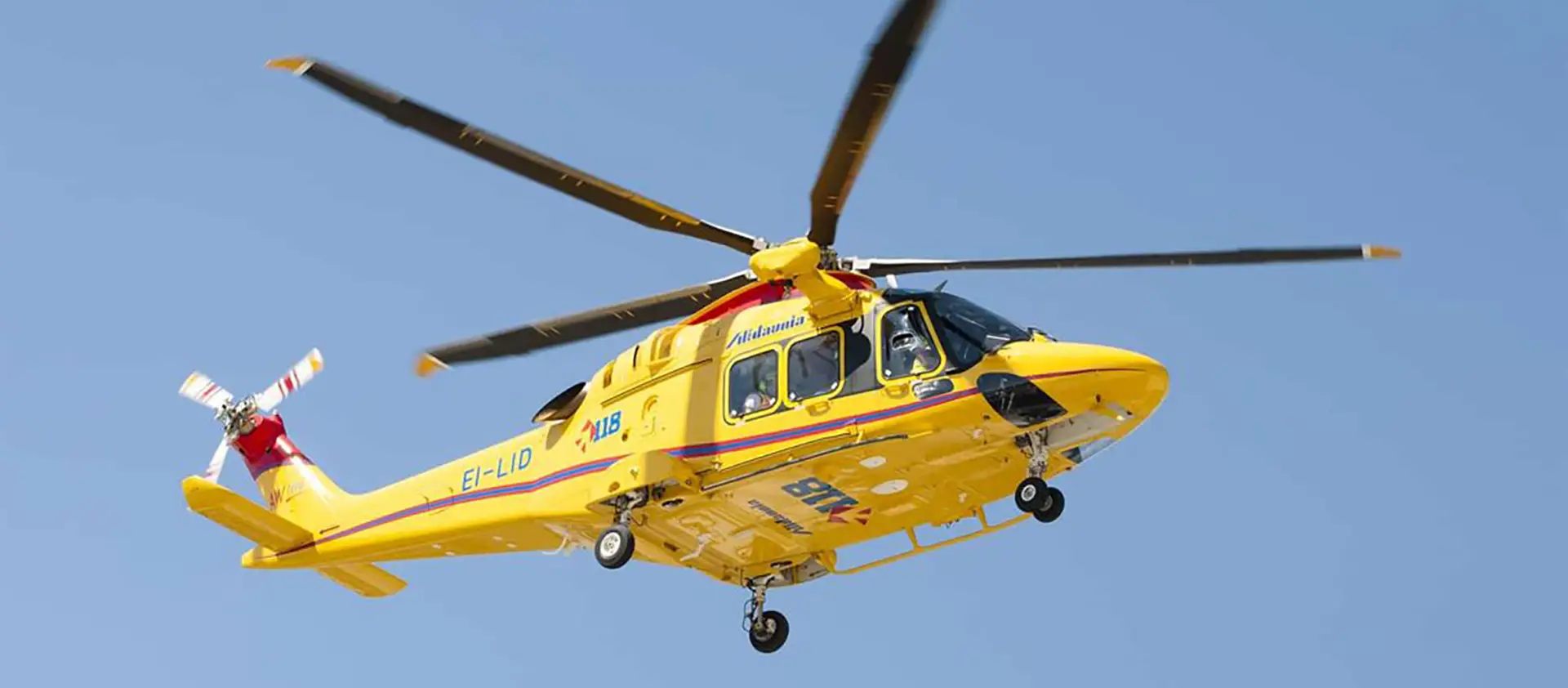
Italy fields a well-developed public-regional HEMS system, which is an integral part of the national EMS system. Each region autonomously
manages its EMS system (118 Service – Health emergency), including ground and air transport capabilities, with the number of HEMS bases set
up depending on the province’s specifics in terms of geography, logistics and population. The country has 20 regions and the health
departments in 15 of these organize public tenders for HEMS. There are 53 HEMS bases across the country (17 operating in the 24-hour mode
and the remaining 36 involved in day-only operations), with the vast majority of these operated by Avincis Aviation Italia, Alidaunia
Elilombarda, Elitaliana and Airgreen, with a total of 55 helicopters on duty alert. Engaged in profit-driven business, operators are holders
of SPA.HEMS approvals and are required to provide the helicopter fleet and its maintenance, flight and technical crews for the HEMS bases
(day-only or 24-hour duty) in addition to the electro-medical equipment onboard the helicopter, installed on retainers in the EMS
compartment. Revenue for operations in Italy is based on a fixed fee for each base and sometimes adding the price of each flight hour flown.
A similar system has also been adopted in Spain, where Avincis
Aviation España is
the main player.
In some countries in the central part of the continent such as Poland, Czech Republic, Slovakia and Hungary, funding for the HEMS is being provided is highly-centralized, directly by the government or the national health authorities. It is channeled to a single non-profit operator with country-wide coverage (in Poland and Hungary), or to profit-making air operators, each managing one or more HEMS bases (this is the case in the Czech Republic and Slovakia). Poland’s LPR (Medical Air Rescue) is a typical representative of these centralized government-owned and government-funded HEMS operators in Europe. It maintains 23 bases, one of which is active in the summer months only and with four of the permanent bases operational on a 24-hour basis. The fleet comprises of 27 H135s and the personnel includes 120 pilots, 100 paramedics and 140 doctors. Total missions are more than 11,000 a year, 88 per cent of which are HEMS flights. The system is financed directly from the state budget, through the Polish Ministry of Health. The LPR annual budget allocated by the state covers both direct and indirect costs, in particular operating costs, personnel costs, various administrative and economic expenses.
While there is no publicly available data on the LPR annual budget, the author was able to find financial information on another European operator, fielding a government-sponsored air operations to provide the HEMS service county-wide. The Hungarian Air Ambulance Nonprofit Ltd maintains seven HEMS bases covering the entire territory of Hungary and operates a fleet of nine H135 helicopters (purchased second-hand from Norway in 2019). It logged 3,910 missions in 2020, accounting for 2,221 flight hours and received government funding of EUR 4.3 million (USD 4.86 million) to run its operations, increasing to EUR 5.4 million (USD 5.67 million) in 2021. The government subsidy to Hungarian Air Ambulance Nonprofit Ltd is granted in monthly installments, spent in accordance with a pre-approved annual business plan, having the only obligation to report the case numbers.
The Czech Republic has a unique HEMS business model, where the government funds a well-developed system consisting of ten HEMS bases (five
of which are maintaining 24-hour operations). One of the bases is managed by the Czech Air Force and another comes under the National
Police air unit while the remaining eight bases are maintained by commercial air operators, holders of SPA.HEMS approvals. In 2018, the
national medical emergency system in the Czech Republic reported 6,275 HEMS missions, with an average price of EUR 4,500 per case, fully
covered by the Ministry of Health budget, and the figures were retained more or less the same in the early 2020s.
Private funding specifics
In turn, the private funding method through non-profit organizations is known as the preferred way of running the HEMS systems in the richest countries on the continent, boasting the best-developed EMS operations such as Germany, Austria, Switzerland and the Netherlands. The HEMS systems in all of these countries rely at the first place on private insurance while in Germany, Netherlands and Austria there are also contributions from public health insurance entities.
Switzerland’s Rega, which fields a very specific funding model, relies on nearly 3.7 million of patrons (donors) providing about 60% of the annual budget, with the rest paid by the insurance companies of the rescued victims and patients transferred between hospitals; there are no government subsidies. Rega operates 14 HEMS bases (in addition to a partner base), distributed in such a way to reach any location in Switzerland within 15 minutes of flight time. The fleet includes 17 helicopters (11 AW109SPs and six H145s) complemented by three ambulance jets. Rega follows the philosophy of brining medical care directly to the point of event and the company’s unique feature is its own national operations center which receives the emergency calls and dispatches the helicopters from the most suitable bases. Its 2022 operating income accounted for CHF 213.2 million (equating to USD 198.28 million at the December 2022 exchange rate), of which 60.2 per cent or CHF 131 million coming from donors. The remaining 39.8 per cent is mainly covered by cost bearers, such as health, accident or travel insurers, in the form of payments for the rescue services provided. Rega’s operational achievements reported in 2022 included transportation of over 14,000 patients and 16,256 missions (organized by its operations center); this figure includes 9,813 primary missions and 3,057 secondary HEMS missions.
Germany is another prominent adopter of the private funding method for its country-wide system, including around 78 bases (including 14 with 24-hour operations). There are two large operators in the country, which are non-profit corporations – ADAC Luftrettung (a subsidiary of ADAC, the German automobile club) and DRF Liftrettung. The third operator is BBK, the country’s federal government civil protection and disaster response authority, with its fleet flown and maintained by the German Federal Police’s aviation unit. ADAC holds about 50% of the German HEMS bases (36), with DRF accounting for 30 to 40 per cent of the base network and the rest is managed by the BBK. The renumeration system adopted is based on contracts awarded by the German states for a period of five to 15 years, at a fixed flight hour rate.
The third funding model to be found in Europe has been adopted in the UK only and relies on private funding through charity. The country is divided into 24 regions (charities) subsisting on donations, and there is no national organization for HEMS. Therefore, each region operates in its own way. The HEMS service, involving 22 organizations, is based mainly on voluntary donations (both charitable and corporate ones), collected through the charities and, for a reduced part (some 10 percent) on National Health Service (NHS) contribution. There are about 45 EMS-tasked helicopters covering England and Wales, operated by civil air operators, covering 80 per cent of the population, flying mainly primary missions (accounting for up to 97 per cent of the total number of missions). The number of missions flown per year depend on the funds available to the charity, and total number for the entire country is about 25,000.
Mission profile
The coordinated and sophisticated EMS systems adopted in Europe include several principal components – emergency phone number, dispatch
(operations) center, helicopter operating bases, communication system and emergency/trauma centers at hospitals. As a rule, HEMS transport
is considered as a complimentary service to ground ambulance, with close operational integration between these two services.

The first of the components, the national emergency phone number (in most European countries it is 112 SOS, and there are also specialized EMS/HEMS numbers in some of the countries) is connected to the emergency dispatch center (run in the most case by the EMS service provider in the country or region). It receives call and decides the appropriate type of response – ground ambulance or helicopter. The decision that a helicopter is necessary for a rescue mission is taken by a medical specialist in the dispatch center by running a protocol to access if a prompt intervention of a medical team by air is necessary and if the weather conditions permit a helicopter flight to the accident scene. In case a helicopter intervention is selected, the nearest HEMS operating base to the accident scene receives the call to activate its assets. The response time at the base - from receiving the call by the dispatch center to the helicopter take-off - is usually between two to ten minutes. The helicopter files to the accident site and lands at the nearest suitable area. The patient receives on-scene medical care and after treatment or stabilization is loaded into the helicopter for a quick transfer to a suitable hospital.
The big benefits derived from the helicopter use for serving emergency cases in Europe, when compared to the ground ambulances (generally known as a more affordable transportation method), comprise the earlier arrival at the accident scene and the faster patient transport to hospital. This, in turn, facilitates a serious reduction in the mortality rates. According to Rega, the maximum time from incident to definitive clinical care shall not exceed 90 minutes. This figure includes an initial 15 minutes for an emergency call from the accident scene, dispatch of the helicopter, take-off and arrival at the scene. The next 15 minutes are needed for diagnostics, initial treatment and transport decision. 30 more minutes are then allocated for transport to a suitable hospital, and another 30 minutes for patient admission at the hospital and clinical diagnostic activities.
The fleet equipment rate is an indicator showing how many helicopters are used to service one million population in a given country. The average for Europe is around one helicopter per 1 million people, but the countries with the highest-quality systems and with prevailing rugged terrain offer, as a rule, much higher coverage. Switzerland, for instance, features fleet equipment rate of 3.1, while Norway has 4.3 and Austria boasts the highest one, accounting for 4.49 helicopter per 1 million people of country’s population. Countries with less developed systems, in turn, offer fleet equipment rates lower than 1 helicopter per 1 million of population, such as Poland (0.7) and UK (0.8), but in most of the cases these are still being able to provide adequate response to emergency calls thanks to the prevailing flat terrain of their territories.
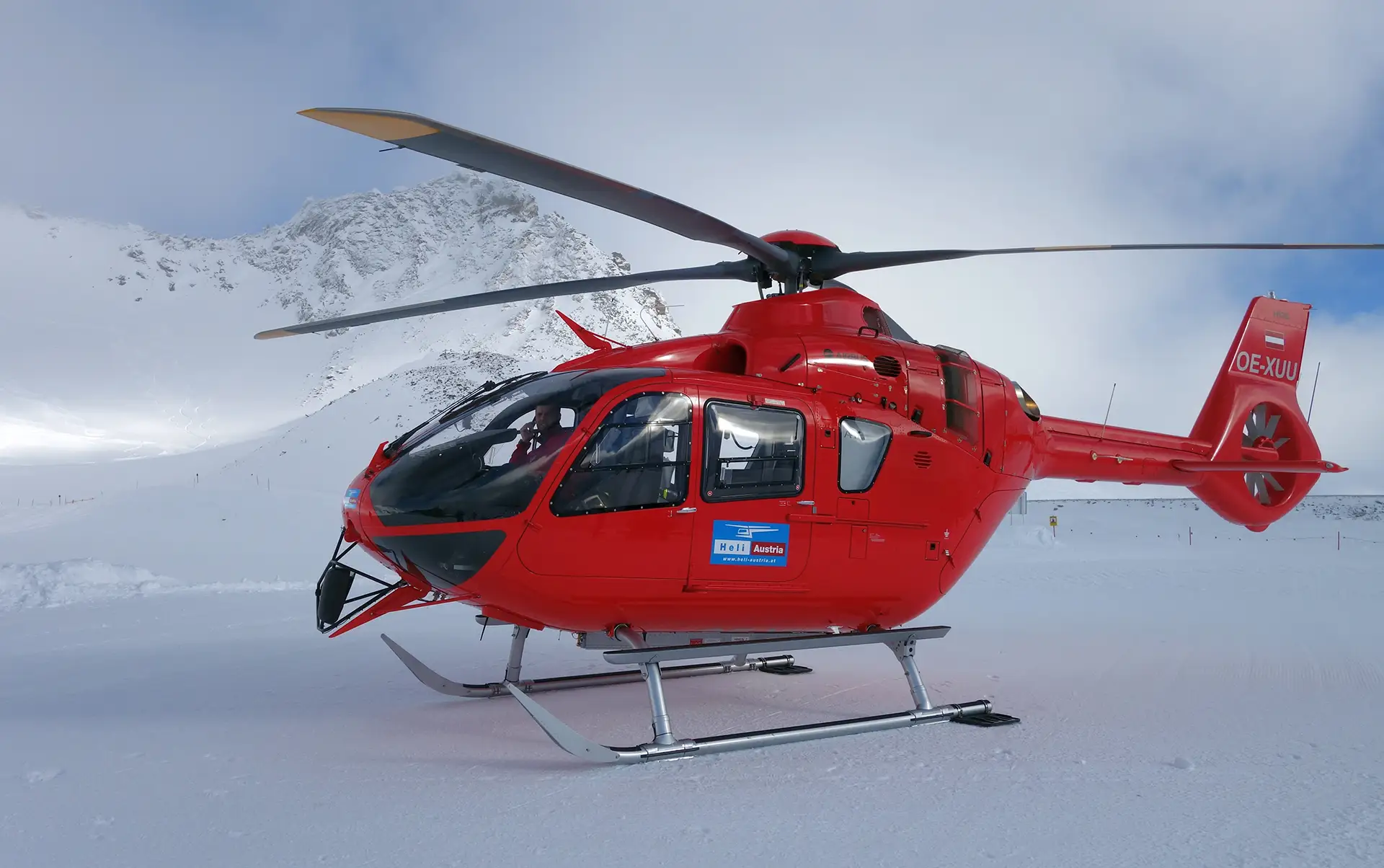
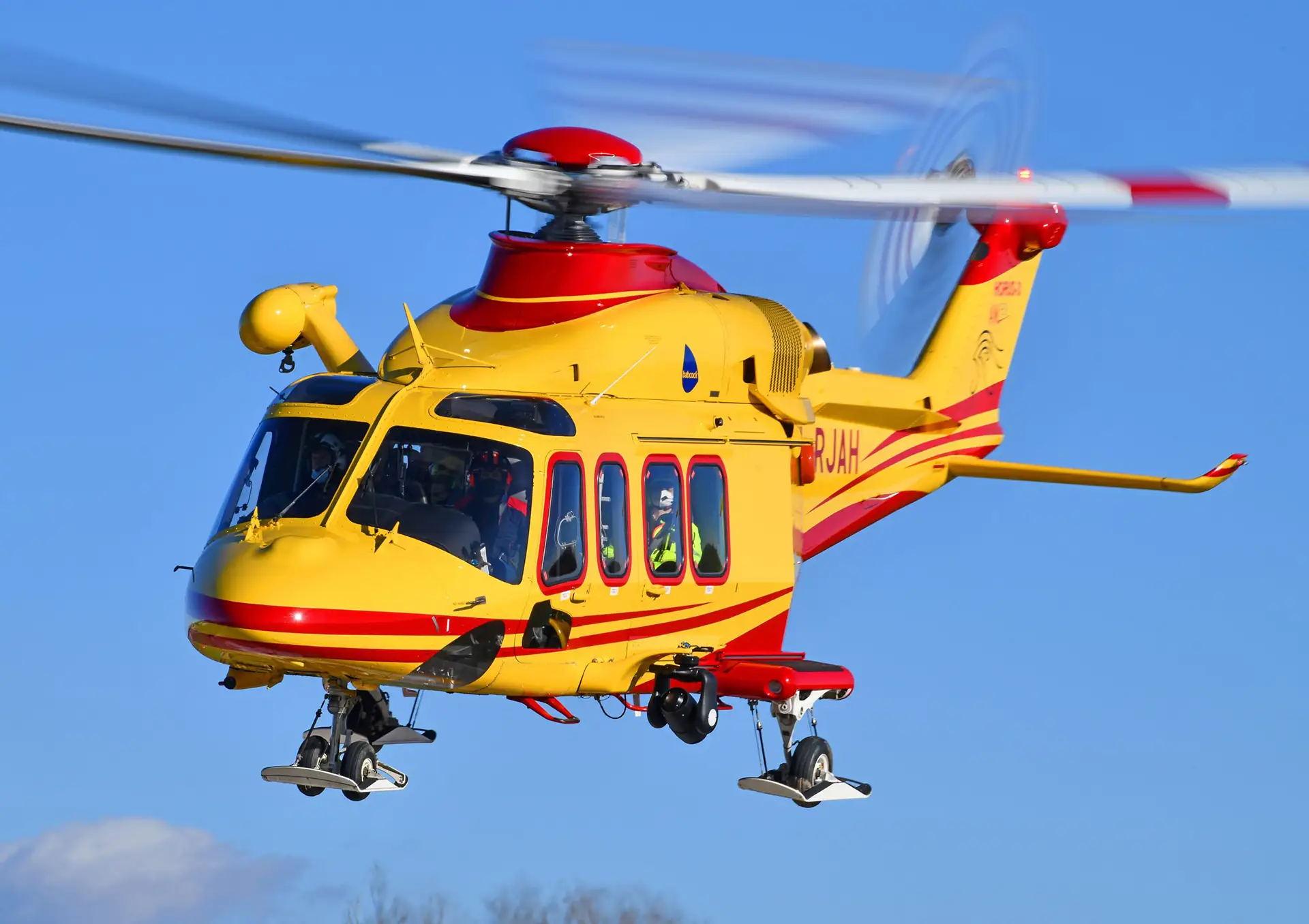
The European HEMS fleets are dominated by light-twin rotorcraft models, such as the Airbus H135 and H145, augmented by Leonardo AW109 and Bell 429 while a few MD Helicopters MD900s are still in use. There is a noticeably increasing share in the recent years of light-intermediate and medium twin-engine rotorcraft such as the Leonardo AW169 and the AW139. The former is in widespread use in the UK, Sweden, Slovenia and Italy and the latter operating in the HEMS role in Italy, Sweden, Norway, and Portugal), while a handful of AS365N2/N3s are still in operation.
Germany is fielding the highest number of EMS-tasked helicopters – no fewer than 120 examples (H135s and H145s) in both air operator and government operation, serving 70-plus bases. Italy’s total feet numbers about 80, a mixture of AW109s, AW139s, AW169s and H145s. France is served by 70 helicopters (mostly H135s, H145s and AW109s), Spain has 50-plus examples and the UK about 45.
Primary and secondary EMS missions
There are two principal types of helicopter missions flown in the emergency medical services business. The primary mission is from the HEMS operating base to the HEMS landing site, to deliver pre-hospital medical care in a timely manner or pick up patients.
The primary HEMS missions (also known as primary scene retrieval), also known as the highest-risk activity in the entire EMS business, feature some variations depending on the capability of using additional rescue equipment such as a hoist. The most common operation, relying on landing at a nearest suitable site next to the patient, does not require any additional rescue equipment onboard the helicopter while the hoist is useful for operations over rugged terrain, with no suitable open and flat area to allow safe landing.
The main specifics of the primary retrievals, which are, is that the rescue mission is not planned and its operating radius is usually
bellow 40nm or maximum 30 minutes of flight, with the main aim to bring medical care to the accident scene as soon as
possible.
The secondary missions involve interhospital transfers and are also known as air ambulance. These missions are planned in advance, with
flight time of up to two hours while patient is treated by a medical team onboard. A variety of the secondary mission is the intense care
transport, where the patient is intensively monitored.
There is another method of patient transport flown on a regular basis is some of the countries, called rendezvous, where a ground ambulance is used to bring the patient from the helicopter landing site to the hospital, or from the accident scene to the helicopter landing side. In the latter case, the rendezvous point is a pre-arranged and pre-surveyed site allowing safe landing of the helicopter to take a patient from a ground ambulance car. The main purpose of the rendezvous method in primary missions is to speed up the patient's access to treatment by reducing the delay in starting treatment comparing to the transportation by a ground ambulance only.
The scope of the European HEMS operations also includes transport of organs and blood, with an increasing number of operators getting such approvals by the local health authorities in their countries.
Regulatory base
Regulation (EU) No 965/2012 sets the rules to which all HEMS operators in the EASA zone shall adhere to in order to receive their SPA.HEMS approval. The first to these says that helicopters shall only be operated for the purpose of HEMS operations if the operator has been approved by the competent authority to operate in Commercial Air Transport (CAT) and hold a CAT Air Operator Certificate (AOC), while also demonstrating to the competent authority compliance with the requirements contained in Subpart J (SPA.HEMS – Helicopter emergency medical service operations).
There is very strict regulation and high safety standards imposed for operations in hostile environment, manly in urban areas/cities, where the surface is inadequate for a safe forced landing, or where there is an unacceptable risk of endangering persons or property on the ground, so use of Category A twin-engine rotorcraft is mandatory across the European Union counties.
Category A (Cat A) with respect to helicopters means a multi-engine helicopter designed with engine and system isolation features specified in the applicable airworthiness codes and capable of operations using take-off and landing data scheduled under a critical engine failure concept that assures adequate designated surface area and adequate performance capability for continued safe flight or safe rejected take-off in the event of engine failure;
SPA.HEMS.125, for example, requires that helicopters conducting operations to/from a final approach and take-off area (FATO) at a hospital that is in a congested hostile environment and that is used as a HEMS operating base, shall be operated in accordance with Performance Class 1 (PC 1). Also, helicopters conducting operations to/from a FATO at a hospital that is located in a congested hostile environment and that is not a HEMS operating base shall be operated in accordance with PC 1, except when the operator holds an approval in accordance with CAT.POL.H.225 (this approval, issued by the local aviation authorities grants the option of use of the so-called Public Interest Sites – landing sites used explosively for operations in the public interest where PC 1 operations are not possible due to size limitations or obstacle environment issues).
Helicopters conducting operations to/from a HEMS operating site (a landing site in proximity to the accident scene where the helicopter can land), located in a hostile environment shall be operated in accordance with PC 2. The HEMS operating site shall be big enough to provide adequate clearance from all obstructions. For night operations, the site shall be illuminated to enable the site and any obstructions to be identified.
PC 1 calls for helicopter ability to land within the rejected take-off distance available or safely continue the flight to an appropriated
landing area. The helicopter performance is defined according to the altitude and temperature conditions, to area of operations (clear
area, helicopter, helipad) and to the take-off weight. The Class of operations is defined considering the performance of the helicopter in
the unlikely event of an engine failure.
PC 2 helicopters, in case of engine failure, can safely continue the flight, except when the failure occurs prior to a defined point after
take-off or after a defined point before landing, in which cases a forced landing may be required.
SPA.HEMS.130, in turn, refers to the crew requirements for this highly demanding and safety-critical job. It requires the operator to establish criteria for the selection of flight crew members for the HEMS task, taking previous experience into account. The minimum experience level for the commander conducting HEMS flights shall not be less than either: (i) 1 000 hours as pilot-in-command/commander of aircraft of which 500 hours are as pilot-in-command/commander on helicopters; or (ii) 1 000 hours as co-pilot in HEMS operations of which 500 hours are as pilot-in-command under supervision and 100 hours pilot-in-command/commander of helicopter. In addition, commanders shall have a minimum of 500 hours’ operating experience in helicopters, gained in operational environment like the intended operation and for pilots engaged in nigh operation it is also required to have logged 20 hours of flight in VMC at night as pilot-in-command/commander.
As regarding helicopter’s medical equipment and its specifics, this aspect of HEMS is regulated by European standard EN13718-2:2015+A1:2020 ‘Medical vehicles and their equipment — Air ambulances’. For the HEMS-class of helicopters, it requires a minimum set of portable electro-medical equipment onboard, including a suction unit, a respirator (together with the relevant oxygen system containing fixed and portable bottles), monitor-defibrillator and two infusion pumps.
Some of the most advanced operators have added much more sophisticated equipment for specialized patient treatment in flight such as ECMO (ExtraCorporeal Membrane Oxygenation – for cardiopulmonary support) and IABP (Intra-Aortic Balloon Pump – for cardiac perfusion).