 HOME
HOME





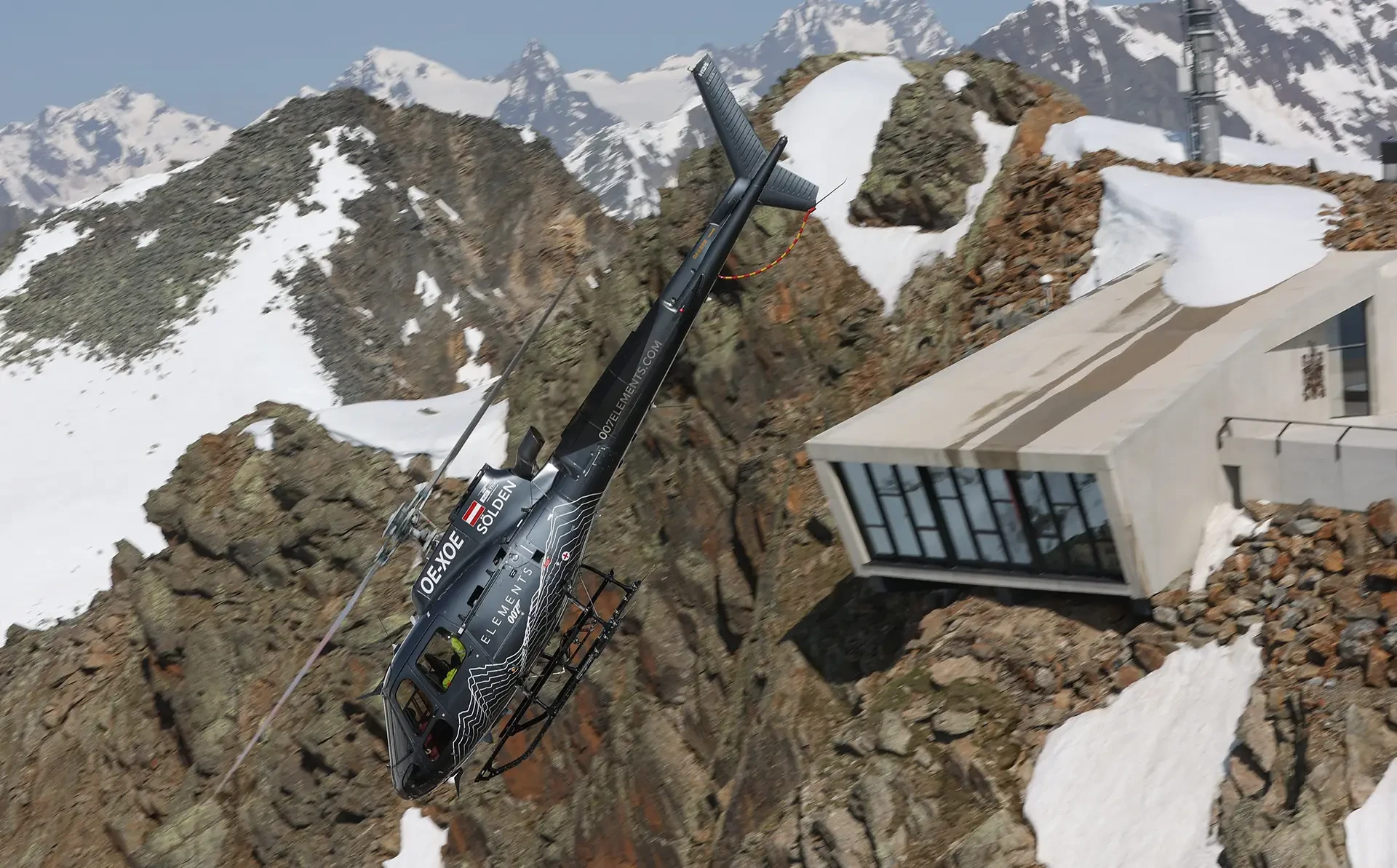
Heli Austria has become one of Europe’s leading helicopter aviation services and is Austria’s largest rotary-wing operator, with a diverse fleet and wide range of services. Roy Knaus spoke to HeliOps’ Ned Dawson about the company’s extensive history, operations and future prospects.
In 2022, Heli Austria ticked over the significant milestone of forty years in business. Knaus Helicopter GmbH was founded in 1982 under the name of Ritter Trade & Aviation Consulting. Originally operating under the AOC of Niki Lauda, with whom founding partner Johann Knaus (Knaus snr.) was friends, the company provided consultancy and pilot’s services until commencing flight services in 1984 with Lauda’s MD 530F as Lauda Air. Knaus snr. was the majority shareholder, originally creating the company with five partners who each had smaller holdings. He was the primary driver of the company and became well known throughout European aviation as the ‘Pope Pilot’, after he flew Pope John Paul II around Austria in 1983, in Swarovski’s Bell 212. He sourced most of the new company’s jobs and worked more than his partners, who he bought out over the following years until he finally acquired 100 percent ownership for the Knaus family in March 1992.
Knaus snr. obtained his own AOC in 1985 and bought his first helicopter, a Hughes 500D. “He started in the 500 series because most of the work he had at that time was powerline inspection, with a fixed contact for about 500 hours per year for Austria’s largest power provider,” explained Roy Knaus, Johann’s son. Within three years of commencing flight operations, steadily increasing business had enabled the fleet to expand to three Hughes/MD 500Ds and in the early days of the company, Knaus snr. was already working on gaining approval for a heliport at St Johann im Pongau, while the company offices were in the next village, with the helicopters parked at nearby farms.
Conflict
When the heliport approval came through however, things were not particularly rosy. Knaus’ partners decided that he had to rent the heliport from them, even though he had done all the work and used his industry contacts to get the approval granted. Then another operator who had tried to buy Knaus’ company started operating the same class helicopters from that heliport and in an attempt to put Knaus out of business, drove average pricing down by around thirty percent. As a result, Knaus snr. built office facilities at his home and moved the helicopters off the heliport again. Knaus jnr. saw the impact of the reduced income from the 500s and looked around for a larger class of helicopter to expand the fleet. “The Lama looked really good, but it was expensive and the Alouette III was quite a lot cheaper,” he recalled. “My father inspected it before we bought it and that probably wasn’t the best idea, because we ended up having to exchange the main rotor blades and do a major inspection on the airframe. It turned out to be an expensive purchase, but the Alouette III worked out well for us because it could seat up to six people, we could do parachute dropping and it had a lot of high-altitude power.”
Although he had worked with his father during holidays and downtime while younger, Roy Knaus completed studies in business administration
and then completed his eight months compulsory service in the Air Force before commencing full-time work in the company. Roy gained his
PPL(H) in California at the age of 17 and then became Austria’s youngest commercial helicopter pilot when he obtained his Austrian CPL(H)
at just 18. Tragically, three years later Knaus snr. was killed and his son Philipp was seriously injured in November 1997 when the
Alouette III Johann was flying suffered mechanical failure after sub-standard third-party maintenance and crashed.
Expansion
After the crash Roy became the sole owner of Knaus Helicopter GmbH, which by that time was trading as Heli Alpin Knaus. The company consisted of five full-time employees and two aircraft at that time; a 500 and a 520N. Roy became convinced that it had to be possible to improve safety sufficiently to operate without accidents but acknowledged that there is a constant conflict between the goal of complete safety and achieving efficiency and profitability. Under his leadership the company steadily grew and expanded into more market segments. “We saw how the Lama outperformed the Alouette III and decided to get a Lama, although it meant dropping to four seats, and a year later we went for a Bell 407,” he advised. In fact, two SA315B Lamas, the Bell 407 and an AB212 were added to the fleet within a couple of years.
The Lama got a lot of work when it arrived as there were numerous cell towers being established in the late 90s and the company experienced continued growth. “The towers got heavier and heavier, until we were getting maxed out on the 407, so we went into the Bell mediums, firstly with the Agusta-Bell 212,” Knaus related. According to Roy, the -3 engines in the AB212 lacked a little performance at altitude and in 2003 a Bell 205B was bought from Canada. Because EASA would not certify it in Europe, it was operated for about two years on the Canadian register and was then sold, although Knaus ironically reported that as soon as it was sold, EASA notified him that it could then be certified in Europe. The 205B was replaced by a B204, with a second following soon after.
Knaus reached an agreement with the heliport owners in 2000, purchasing 50 percent of the property and buying the remaining half two years
later. With the heliport secured, he then approached the HEMS service and proposed crewing and operated a helicopter if they would purchase
it, but they turned it down. “My idea was that it would mean I didn’t lose my crews in the winter, because pilots have a lot of work in the
summer and very little in the winter. It would mean I could give them a week on and a week off, which is much better for managing family
time and finances.” Knaus then approached the MediCopter operator that flew a BK117 throughout the summer and ended up leasing that
company’s aircraft and staff to commence the company’s first HEMS operation in the winter of 2000. “We realized after that first season
that we had to work on our costs because the lease was expensive, and we couldn’t use our own crews and staff.
A year later Knaus Helicopter dry-leased an AS355 Twin-Star from ÖAMTC for the HEMS work, but that came to an end and the following year
Knaus purchased its own dedicated HEMS helicopter. “We were working on expanding at that time and we established a new HEMS base almost
every year,” said Knaus. Air rescue operations started at Karres in Tirol during 2002 and the following year saw the completion of the Knaus
heliport at that base, along with the addition of three more AS355 F1/ F2+ examples. In relatively short order, bases followed at Ebensee in
Upper Austria, Saalbach/Hinterglemm, Hochgurgl and Matrei, with air rescue also commencing from Mayrhofen in 2014 and the bases all operate
machines for both both HEMS and aerial work. Complementing its own five full-time paramedics, Heli Austria hires in doctors and paramedics
as required for the HEMS service and provides all necessary training.
Chapter 11
The early-mid 2000s saw some fiscal difficulty with two accidents that were either uninsured or under-insured. The resulting financial burden led to an impasse with banks demanding more than the company was in a position to pay, so Knaus Helicopter was forced to file for Chapter 11. Fortunately, Chapter 11 let them reach agreement with the banks while still permitting the company to continue operating and successfully trade out of the difficulty. Knaus acknowledged that the situation was a stiff reminder of the necessity to stay on top of such crucial safeguards as hull insurance. “The accident in 2005 with the cable-car was a real drama because there were nine people killed, including six children,” Knaus related. “We did something that was not correct in that we flew over an operating cable-car, but back then everybody did it and it was often the customer who was insisting on it. A lot of the time the customer was the ski-field operator whose cable-car it was anyway, and if you said you couldn’t do it, they’d just call someone else.”
He pointed out that the accident had been a wake-up call for both operators and customers, illustrating how client safety must take precedence over operational preference. The aircraft had just come off a major inspection, but the cargo hook suffered an un-commanded release. Knaus acknowledged the excellent work of the crash investigator who established that the fault lay in the very old hook-release switch that had simply failed due to age and wear. His enquiries with military operators of the SA316B Alouette III had revealed that they had experienced a number of similar un-commanded release incidents due to faults in the same switch. “Now, if a customer wants us to do something that we don’t think is safe, we just have to say no. Since that accident, even though some other operators still do it, we have never flown over a cable-car that is in operation.”
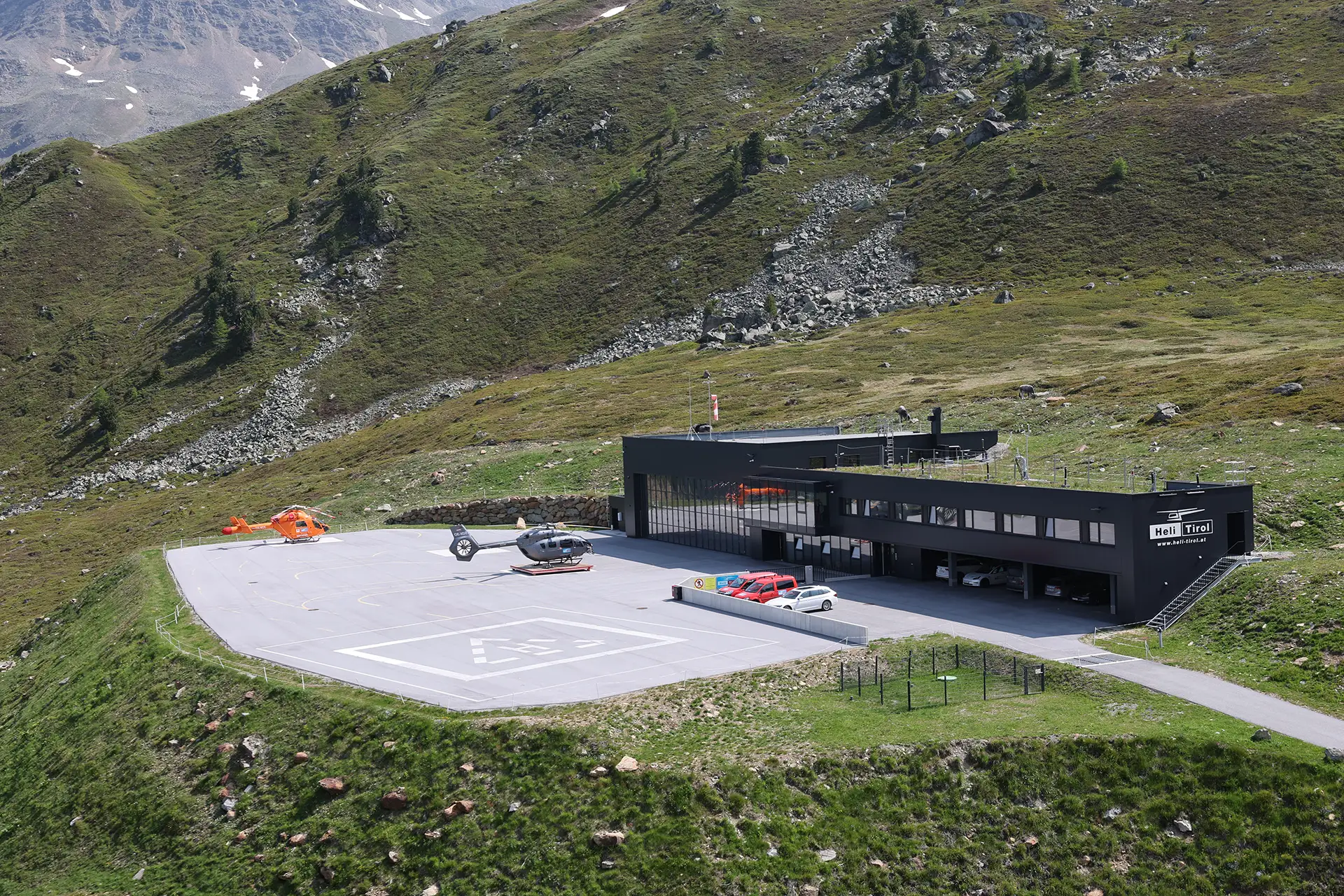
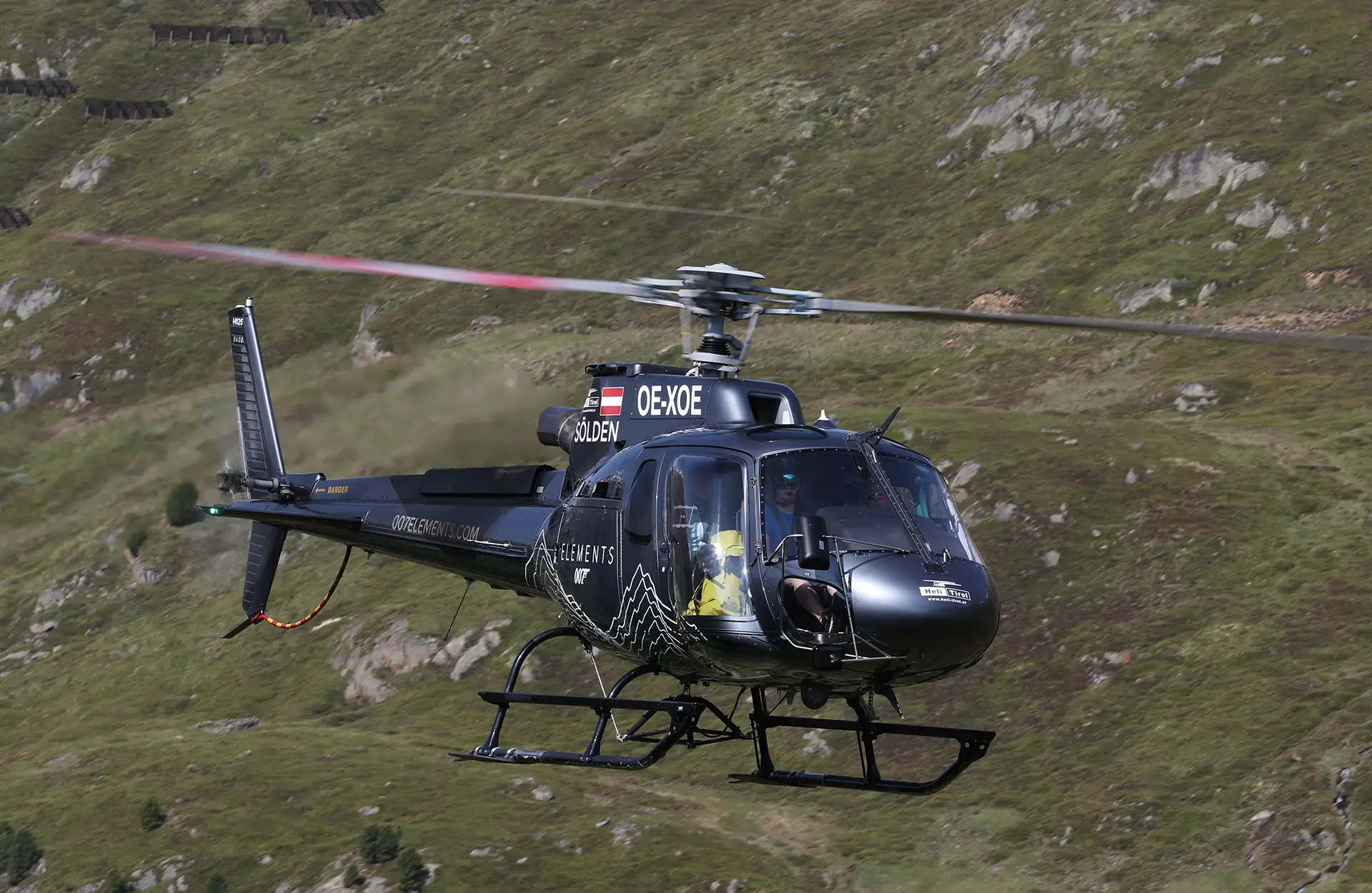
In 2014, construction of a new heliport commenced at the home base and today the company operates eight bases. During 2014-2015 operations were carried out in Italy and in the spring of 2017 Heli Air AG was founded in Switzerland, headquartered in Mollis. A flying academy was established in 2018 in Bad Vöslau and Salzburg, offering extensive training options that include PPL, CPL and flight instructor (H) licenses, night VFR, external load work, mountain flying, NVG training, HEC courses, ATPL theory, helicopter type ratings and standardizations for flight examiners and type rating examiners. Aerial work has always been a key mission for the company and its first AS350-B3 was originally the first of type into Austria, and Knaus bought it with just 25 hours on the clock. “We had had one demo of the B3 from Airbus and we could see it outperformed the 407. It has very strong tail rotor authority and we like the flat cabin floor. The 407 is the fastest thing I’ve flown for parachute dropping, but the B3 has the power to perform at higher weights and is better for aerial work.” A second B3 was bought new and arrived in 2004 after a twelve-month wait.
Heli Austria
“I changed the name to Heli Austria in 2008, because we were growing and growing and doing a lot more in HEMS,” Knaus explained. “I wanted to create a trademark and identity that was not just related to a person or family. There was another company using the Heli Austria name in the 1970s and when they cancelled their business, my father bought the name for 30,000 shillings.” He added that it was obvious that his father had wanted to use the name and it seemed perfect for the company that had grown into a major operator with such wide-ranging services. “Within Austrian aviation the name Knaus was well known, but we were starting to operate in other countries and doing a lot more HEMS, so the name Heli Austria made a lot more sense as a recognizable international trademark and identity, associated with a major organization rather than a person or family,” Knaus elaborated. Heli Tirol was also established as a division of Heli Austria.
The HEMS fleet has evolved with regard to aircraft suitability and the unusual HEMS pricing structure in Austria. HEMS services are paid
for at a specified fixed rate, regardless of the aircraft type used, so it can be difficult or even impossible to make a profit if the
aircraft used are very expensive to obtain and operate. Knaus explained that while the original HEMS operation commenced with the AS355,
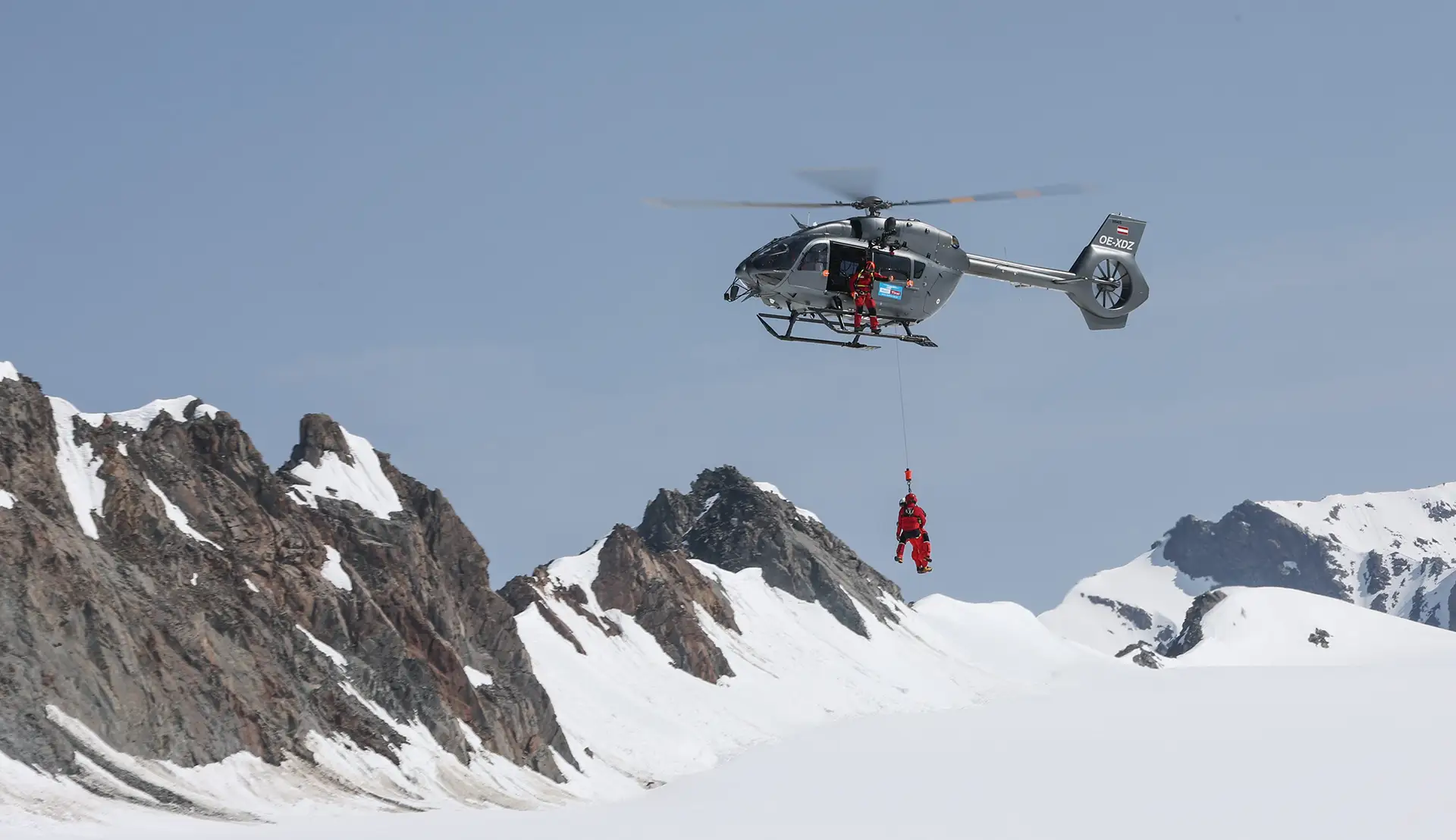
the company moved to the MD900/902 Explorer series and currently operates eight examples of the type, including one that is set up for VIP
transport as well as HEMS, and all are NVG-equipped. “We did buy six new EC135s and operated them for two or three years, but then realized
that the reliability of the MD902 was exceptional so ended up going back to the 902. We have one H145 in HEMS and that aircraft is very
good because it is multi-use, but we cannot afford to run 145s everywhere because of the HEMS payment structure. We may consider adding
another 145 in the future because there are always benefits in having two aircraft of one type,” stated Knaus. The Bell 412 has been used
for HEMS in winter, but the sheer weight of the aircraft makes it unsuitable for summer use, due to the potential for third-party damage
from the downwash, and for similar reasons Knaus prefers the 902 to the 145 for urban use as it is about one tonne lighter.
Balancing Act
He explained that it was a matter of balancing all the variables, including capability, noise signature, cabin volume and floor space
against the purchase and operating costs. The Bell 429 was considered and Knaus said that although it is a superb aircraft and the nicest
pilot’s machine, it was ruled out as its noise signature is noticeably greater than that of the H145. “The 135 is really too small and the
145 is the international HEMS standard right now. Its advantages are its low noise, altitude and single-engine performance, cabin size and
the four-axis autopilot,” Knaus added. From 2014, the Explorer cockpits have been changed to a Garmin avionics suite, and it is now planned
to incorporate Garmin’s G500H TXi touch-screen series. A lithium battery is being investigated to reduce weight and improve performance and
another improvement is the dual cargo hook that is used for HEC recoveries in HEMS operations. The company owns the STC for the dual-hook
setup and is currently working on making it lighter to further improve payload and performance. While all eight Explorers are utilized for
HEMS during the winter, two bases do not operate during the summer so aircraft are available to rotate through maintenance and modification
processes. Parts are an important issue, particularly for such a significant number of airframes and Knaus commented that they will buy
aircraft purely for parts if they can source them at the right price, representing a substantial saving in parts cost.
Fleet Development
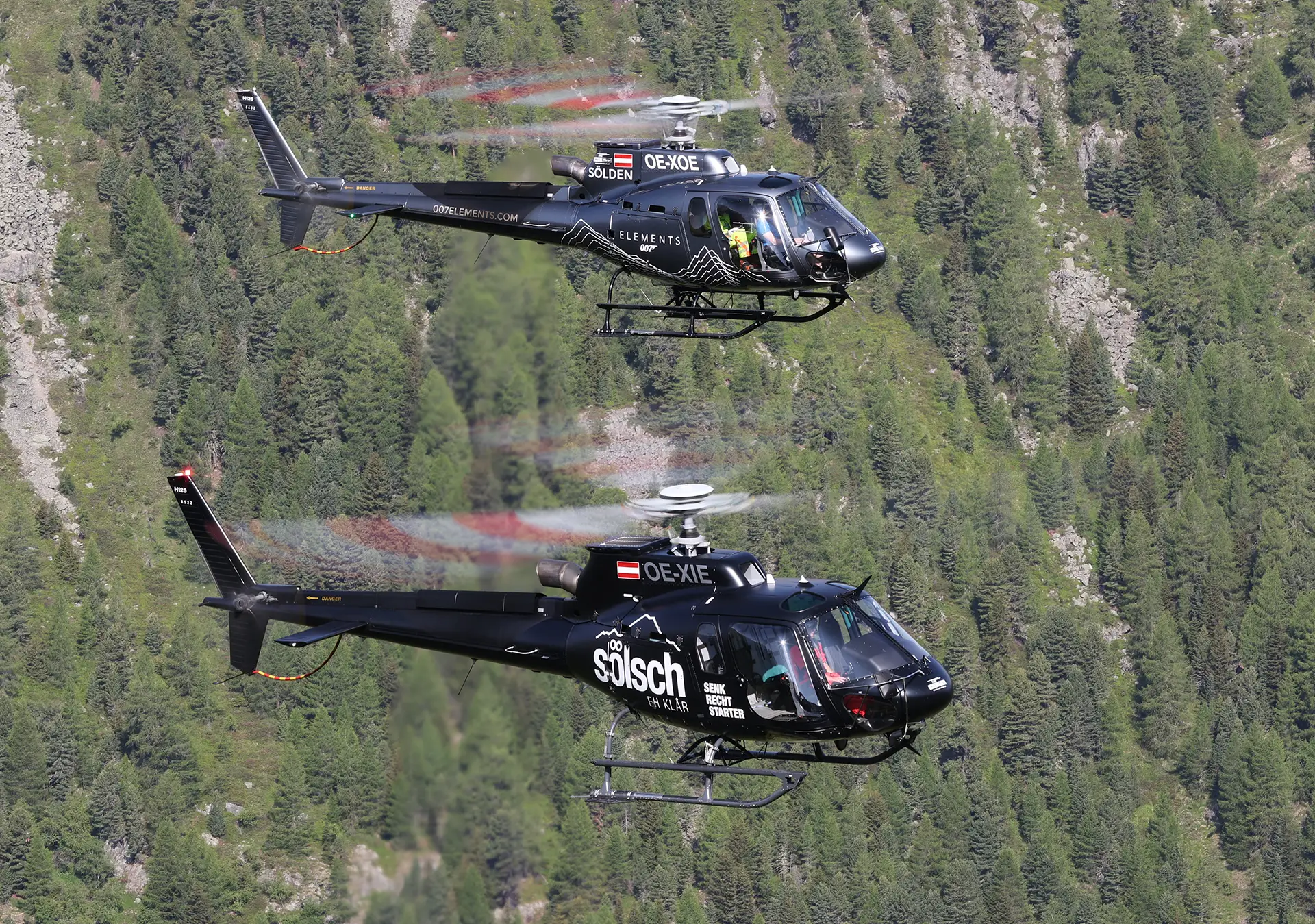
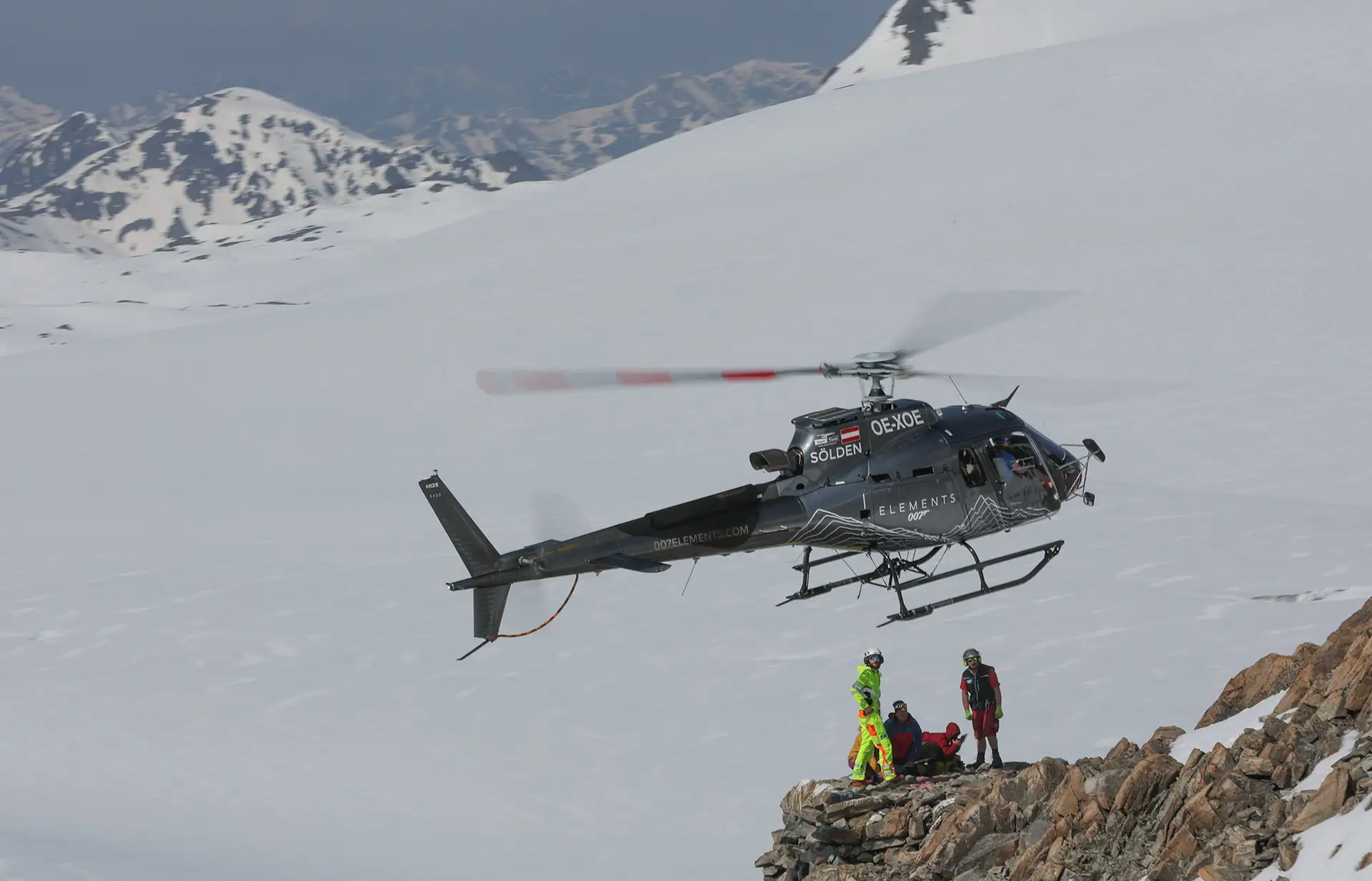
The aerial work fleet consists of around twenty machines. Ten of those are H125s/AS350-B3s, all of which have been upgraded to the same standard with Garmin G500H avionics and identical displays so regardless of the machine or base, the pilots are always operating in a familiar cockpit environment. Commonality is an effective measure to increase safety and Knaus explained that the hook switch for longline operations is fitted to the collective on three Bell 412s, so they match the AS332-L1/L Super Pumas that are used for heavy-lift and firefighting. The Bells are classic and HP models but the first Classic will be modified to HP standard this coming winter. Heli Austria owns six of the big Super Pumas and two further examples that have been sold still operate under the company’s AOC, one of which is operating in Chile. Two L2 model Super Pumas have been acquired and will enter service next year. “Other than the engines, the interchangeability between the L/L1 Super Puma models is very good. They all use the same transmissions, gearboxes and blades. Even the fuel control units, bleed valve and ECUs are the same on all the engines,” Knaus advised. “The main advantage of commonality is safety, but you also gain the benefits of greater reliability and reduced stockholding requirements when you install common, more modern systems.”
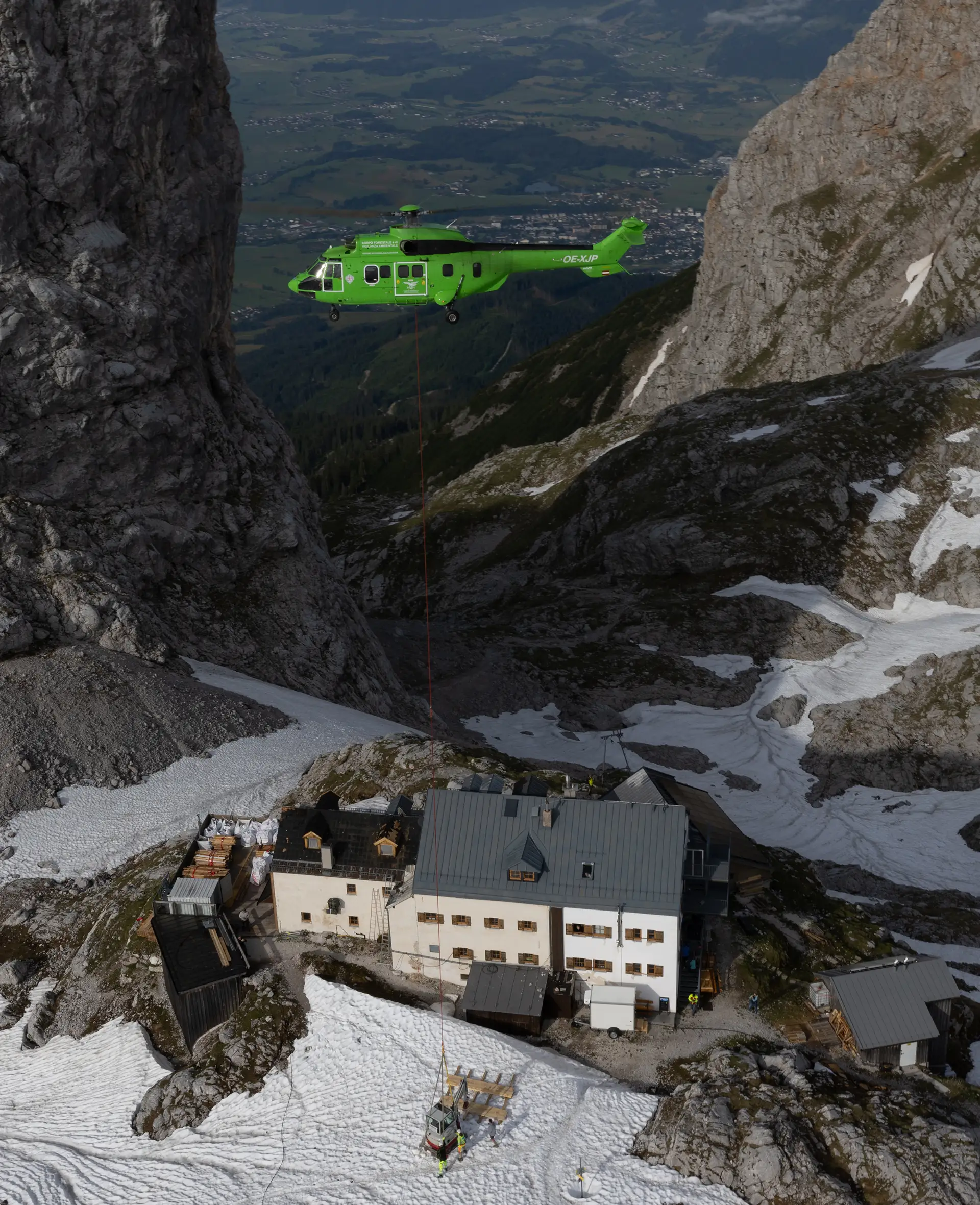
Servicing, supplying and supporting upgrades or new construction for the network of mountain huts is an aerial work staple, but powerline
work still comprises a major proportion of the company’s workload. “A lot of what we do is flying concrete for new powerlines, cable towing
and avalanche protection. The concrete is usually mixed on-site so we fly in the water and the dry cement packs,” Knaus related. The H125
fleet flies a total of around 7,000 hours each year and about fifteen percent of that is on logging. The Super Pumas may be called on when
the logs are large or heavy but Knaus commented that most logging operations were from smaller areas, with loads the H125 is quite capable
of lifting far more efficiently. Austria’s excellent roading network allows access to most locations at moderate to high altitudes, negating
the need for helicopter support, so most of the H125 fleet’s work is conducted between 7,000 and 10,000ft, with occasional jobs up to around
11,500ft. VIP and charter work comprises a small portion of the company’s work and is spread over all bases. The majority of passenger/VIP
flying is generated by heli-skiing in Iceland, with three or four machines flying a total of about 600 hours each year.
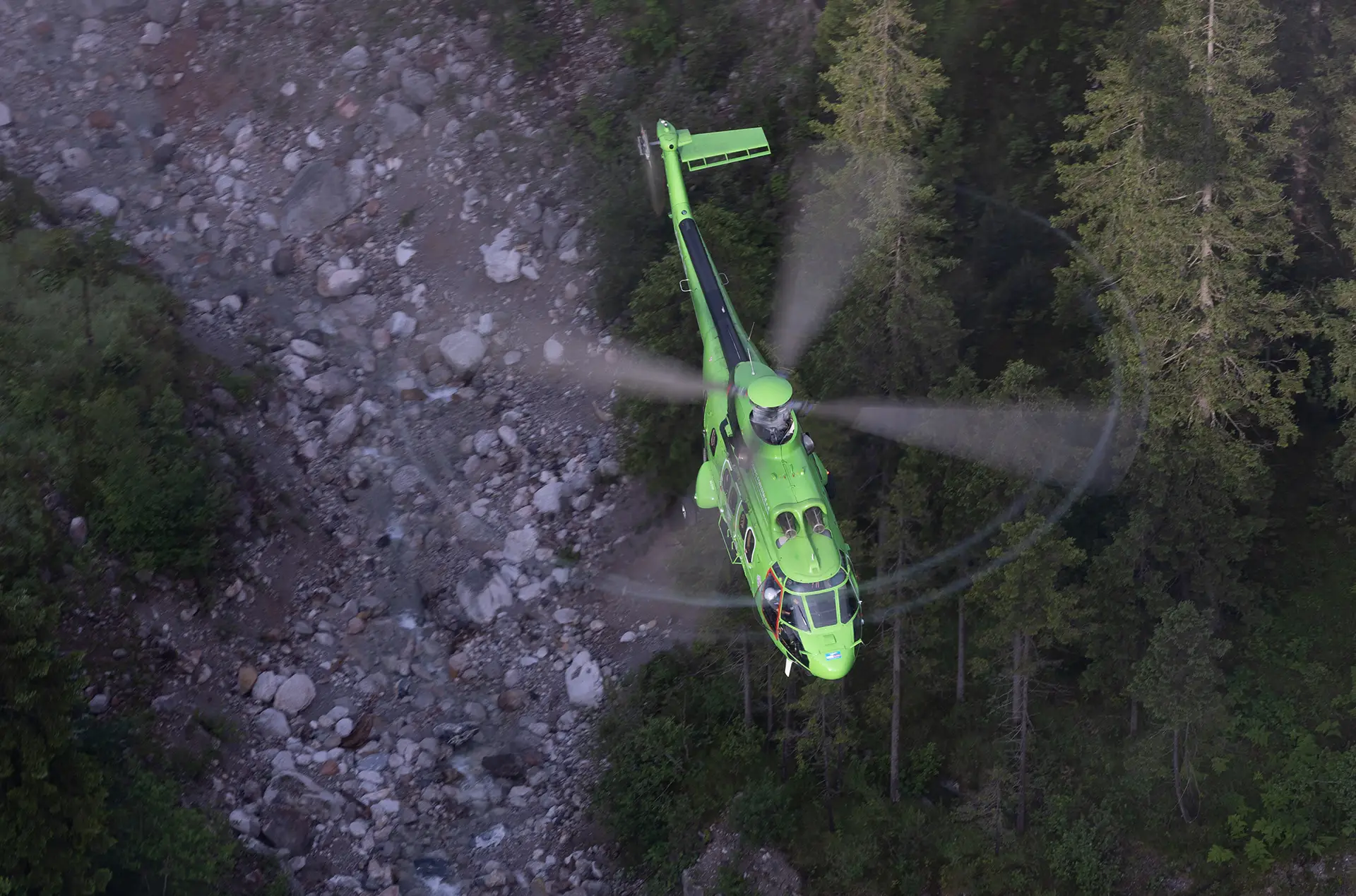
The 412s are required when loads cannot be broken down into sizes and weights that the H1235s can lift, so common jobs are shifting
containers, compressors, avalanche barriers and cellular or powerline tower assemblies. The H125s lift around 1,000kgs at typical
operational altitudes, while the 412s can cope with up to around 1,700kgs and the Super Pumas come into play for anything above those
weights. Heli Austria expanded into heavy-lift with the Super Pumas around seven years ago, when low oil prices made reasonably priced
airframes readily available. Although the company had no firm work commitments for the big machines, Knaus commented, “We took the risk
because we thought we could make it work, having the option of light, medium and heavy machines and now we’re really happy with the
decision. We bought several aircraft and later bought a whole package from Airbus so we have a lot of spares as well.” The diverse fleet
enables the company to offer a complete range of helicopter support service to aerial work clients and Knaus observed that the smaller
machines often generated work for heavier types, and vice-versa.
Firefighting
The H125s and Bell 412s have been used to a limited extent for firefighting, but the addition of the AS332s added a heavy firefighting
capability. Knaus noted that the military is often called first for firefighting response, their Blackhawks offering around 3,000-liter
drops. “That meant we wanted something bigger than that and our Super Pumas carry about 1,000 liters more. We’ve already proved on several
fires that we are more efficient and flying longline is our basic work, so our pilots are highly experienced. Out of that it developed that
we did a lot of firefighting in Germany, we’ve started firefighting in Chile, last year we supplied aircraft to France, and we’ve already
been to Turkey. We’re investing more into firefighting and the next step we want to take is into firefighting at night,” he reported.
The Heli Austria fleet is comprised predominantly of modern aircraft and although Knaus would like to see a more fuel-efficient single-engine version of the Bell 412, no such aircraft are available and provenly reliable type yet exists. He elaborated, “About seven hundred 412s are still flying and if someone converted one hundred to a single-engine version, you’d have a really fuel-efficient helicopter with a massive endurance. It would have about 4,000lbs payload at seven thousand feet, with one hour’s fuel and that would be a good fit for a lot of markets, particularly now the K-Max is out of production.” The only fleet addition that Knaus foresees in the near future is maybe some Pumas, but he does not expect to increase the Puma fleet beyond ten operational aircraft.
The company employs 150 full-time personnel, including about fifty pilots. Forty of them can fly HEMS and Knaus explained that in the busy winter season, many of the aerial work pilots will also fly HEMS as the utility workload reduces. “They enjoy flying HEMS in winter because it is busier, whereas during the summer HEMS work has long duty times but much less flying, so they get to fly more interesting aerial work,” Knaus noted. Only about five pilots work exclusively on HEMS. Very few callouts occur after 10 p.m. and almost all of the HEMS work is conducted day-VFR, with just one base contracted on extended duty into the late evening. Most of the callouts are on-scene, with very few hospital transfers and the current fleetwide HEMS workload is 4,500 to 5,000 callouts per year.
Family Affair, Again
Knaus’s met his partner Saskia Pechtl in 2004, they became a couple and in 2006 she joined the company as an authorized signatory. “We both wanted children, but her work 300 kilometers away would have made things problematic. It made sense to work together in the company as she was already helping me with things like hiring people,” Knaus recalled. The two were married in 2013 and now have two sons, making the company once again truly a family affair. Although the company’s growth has been substantial and consistent for some time, Knaus believes it has reached a point where further expansion is not necessarily desirable. “We are always looking at future projects but are not really pushing for more expansion at the moment because the manpower issue is becoming more and more of a problem. When you start up somewhere else you need more staff, and you can’t always get really good staff. We see ourselves at a good size. We have very good staff and if we go bigger, we could lose staff because their stress would increase if we couldn’t get enough good new people,” he concluded. If you get too big you start to lose contact with your people and your customers. That is not how we want to do business; we want people to be motivated to come into our company and work here.”
Looking after its staff is a key part of Heli Austria’s ethos and in Austria’s high-tax economic environment such added benefits as access to affordable electric cars as part of their employment helps to offset high tax-rate’s disincentive to work longer and harder. Knaus sees recruitment and retention of good staff as one of the greatest challenges faced by not just Heli Austria, but by all operators and also acknowledges aggressive competition and pricing as a constant issue of concern. “On the pilot side, we went into our own flight school so we can grow our own pool of pilots, and we’re trying to train more young people in engineering. When we built the facility in 2015, it was important for us as a company that we presented more visibility to increase people’s awareness that career opportunities like that are available,” he opined. Company facilities and buildings are upgraded, when possible, to maintain the desired standards of comfort and convenience and in Karres, for example, the dated twenty-year-old crew rooms have just been completely replaced. “It’s much easier to fill the duty roster now that the facilities are so much better,” Knaus noted and he acknowledged that the external appearance of attractive, modern facilities has a large bearing on how prospective employees and the public perceive the business
Going forward, Knaus wants the company to continue specializing in niche markets where it can make a positive contribution, and also to expand on its capabilities to offer aircraft improvements and modifications. “At the moment though, there is so much demand for powerline work in Austria and Europe that it will keep us busy for some time. The whole focus of the transition in Europe is more power, so that will be new installations and refurbishment of existing infrastructure and that will mean a lot of work for us.”