 HOME
HOME





A Legacy of Service
Broward Sheriff Fire Rescue’s (BSFR) aviation division has long carried a dual responsibility to its community: emergency medical transport
and specialized search operations. For decades, the unit has primarily operated as an airborne ambulance, delivering critical care on scene
and in-flight when minutes make the difference between life and death. Yet as South Florida’s population has grown, so have the demands
placed on the program.
Broward County’s unique environment, sandwiched between the ocean and the Everglades, requires more than just a helicopter ambulance
service. It demands a fleet capable of more diverse and complex mission profiles that neighboring agencies have helped shoulder in the past.
“Given our terrain, the Everglades to the west and the Atlantic Ocean off our shores, there is also a demand for hoist operations and
wildland firefighting,”
Jonathan Weiers, BSFR’s Director of Air Operations, explained. This recognition laid the foundation for change and would ultimately drive
the transition from the EC135 to the Airbus H145.
 Over
the years, the unit’s role has grown from basic air ambulance operations to becoming one of the region’s most capable rescue organizations.
Each step forward has been shaped by lessons learned in the field, from hurricanes to major accident scenes. BSFR’s crews are not only
first responders but also educators, often guiding other agencies in best practices. These evolving responsibilities set the stage for the
modernization effort that is now central to the unit’s future.
Over
the years, the unit’s role has grown from basic air ambulance operations to becoming one of the region’s most capable rescue organizations.
Each step forward has been shaped by lessons learned in the field, from hurricanes to major accident scenes. BSFR’s crews are not only
first responders but also educators, often guiding other agencies in best practices. These evolving responsibilities set the stage for the
modernization effort that is now central to the unit’s future.
Redefining the Mission
Since its foundation, with two inherited EC135s, BSFR’s air division mission profile was firmly centered on medical operations, with occasional search and medical transfer missions added into the mix. These aircraft reliably performed their roles, but over time, their limitations and age became increasingly apparent. Weight versus fuel load was always a factor, cabin space for patient care was limited, and calls requiring hoist rescues or wildfire air support had to be deferred to agencies in Miami-Dade, the Coast Guard, or other regional partners. Leadership from both Fire Rescue and the Sheriff’s Office recognized that dependence on outside resources not only left capability gaps but also delayed response times when lives were at stake.
In 2018, the fire chief outlined a new vision: build a unit capable of independent multi-role operations. “The helicopter ambulance is
99 percent of our mission, but we’ve always known we eventually needed to be able to provide more than just that,”
Weiers explained. The EC135s would continue serving as interim platforms. Still, the long-term goal was clear: acquire a fleet designed for
hoisting, wildfire response, Search and Rescue (SAR), and advanced medical missions, with crews trained to execute each set safely,
efficiently, and effectively.
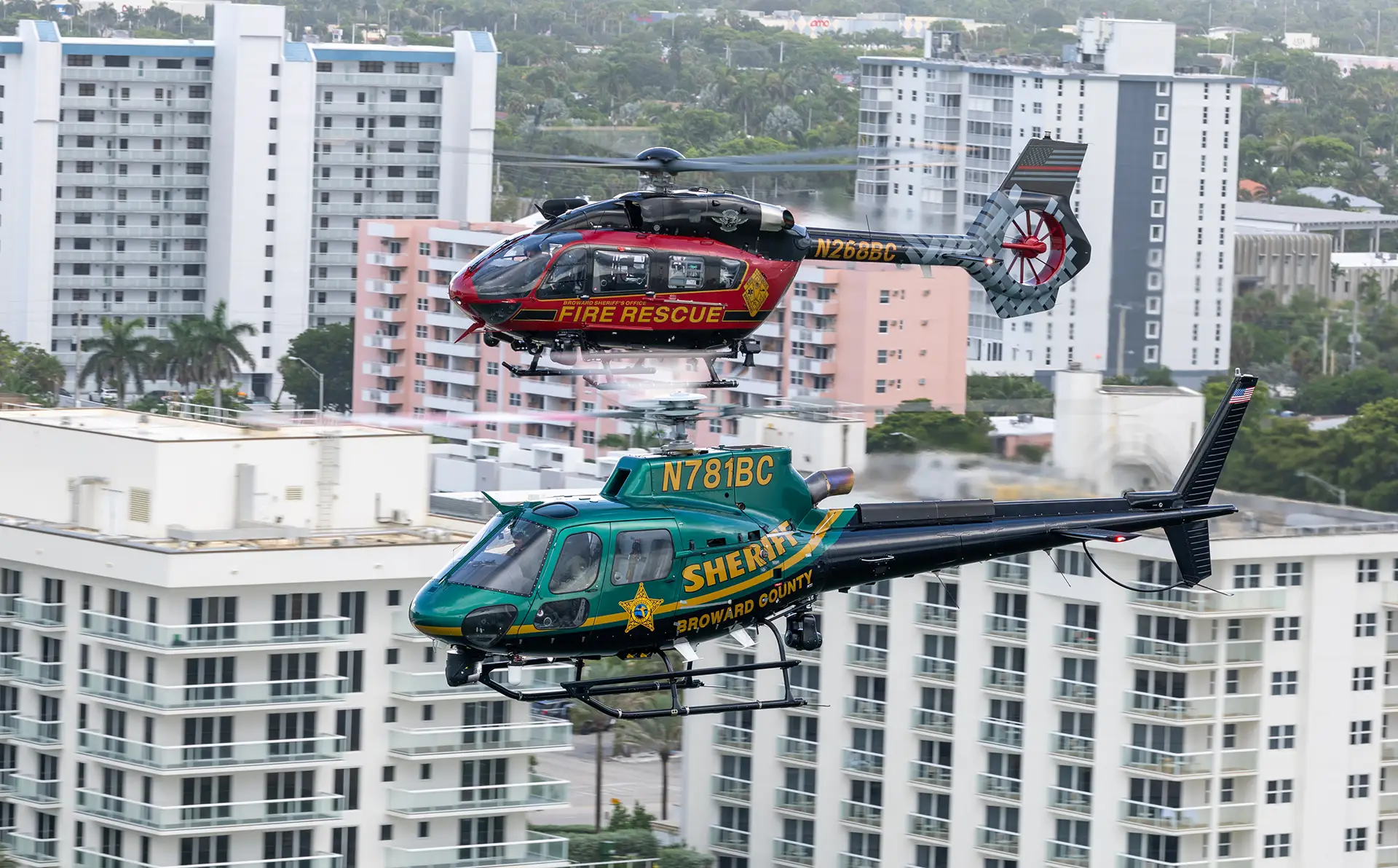
The separation of BSFR’s aviation division from the Sheriff’s airborne law enforcement operations in 2019 was a pivotal step in turning that
vision into reality. Six pilots were hired, and the Part 135 air ambulance certificate transitioned into Fire Rescue’s hands, allowing the
unit to focus entirely on medical and rescue operations instead of balancing EMS with law enforcement surveillance flights. Around-the-clock
operations soon followed, and the unit established itself as a dedicated air rescue provider. “It took about a year to get all the
pilots through the progression and all the crew members trained, but by the end of 2019, we were in service 24/7,”
Weiers recalled.
The early years were not without their challenges. Staffing and proficiency issues, along with organizational shifts, tested the team, but
the vision of modernization, anchored by the promise of new aircraft in the future, remained in sight. The ability to recruit pilots with
extensive military and EMS experience gave the air division a unique mix of skill sets, and the experienced flight paramedic crew members
began developing their own internal training standards, raising the bar across the board, reflecting a commitment to excellence with
standards that often exceed regulatory requirements. Over time, the BSFR aviation division has carved out its identity as a professional,
tightly focused unit that blends technical precision with evidence-based medical expertise.
Lessons From Tragedy
On August 28, 2023, tragedy struck when BSFR’s 1999 model EC135 suffered a catastrophic in-flight fire, forcing the aircraft down in a residential area next to the airport. The accident claimed the life of Battalion Chief Terryson Jackson, a respected flight paramedic, and shook the unit to its core. “It still stings, for sure. It always will for many of us,” Weiers admitted. Though the other crew members survived, the event underscored the limitations of aging airframes and highlighted the urgency of modernization.
In the aftermath of the accident, leadership made it clear that the fleet would be replaced. “We’ve always upheld the highest standards in maintenance, but machines fail. Unfortunately, it took a failure like this to turn the light on for those not in it every single day,” Weiers explained. The tragedy became a catalyst for investment in modernization, convincing county officials and the public that crews deserved the safest and most advanced equipment available. The accident also reinforced the importance of continuous vigilance and training. Crews openly discussed their experiences to ensure knowledge was shared. The event deepened bonds across the organization, uniting their determination to carry forward Jackson’s legacy. In many ways, the tragedy became a defining moment that continues to shape the culture of BSFR’s air division.
The Arrival of the H145 D3
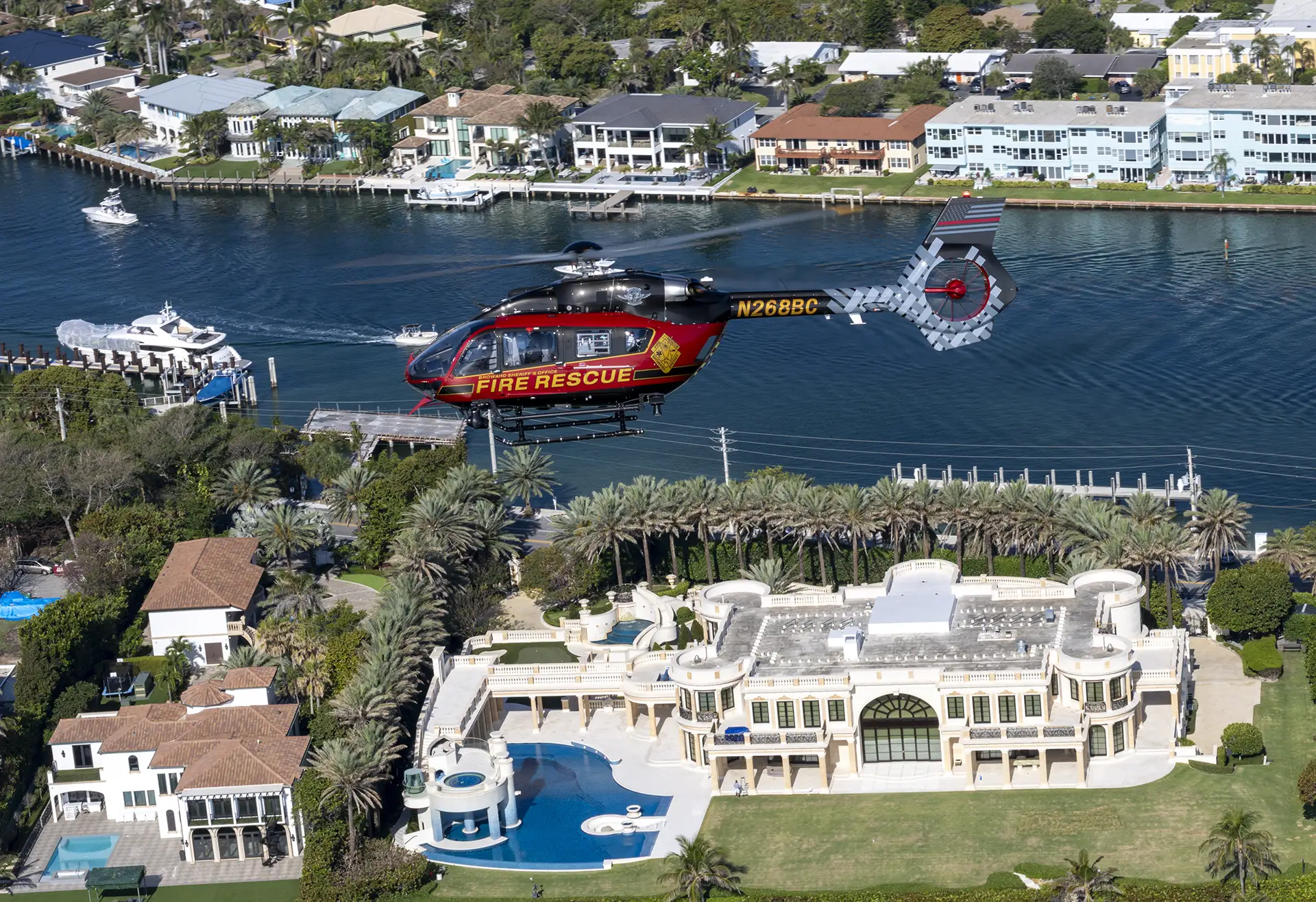
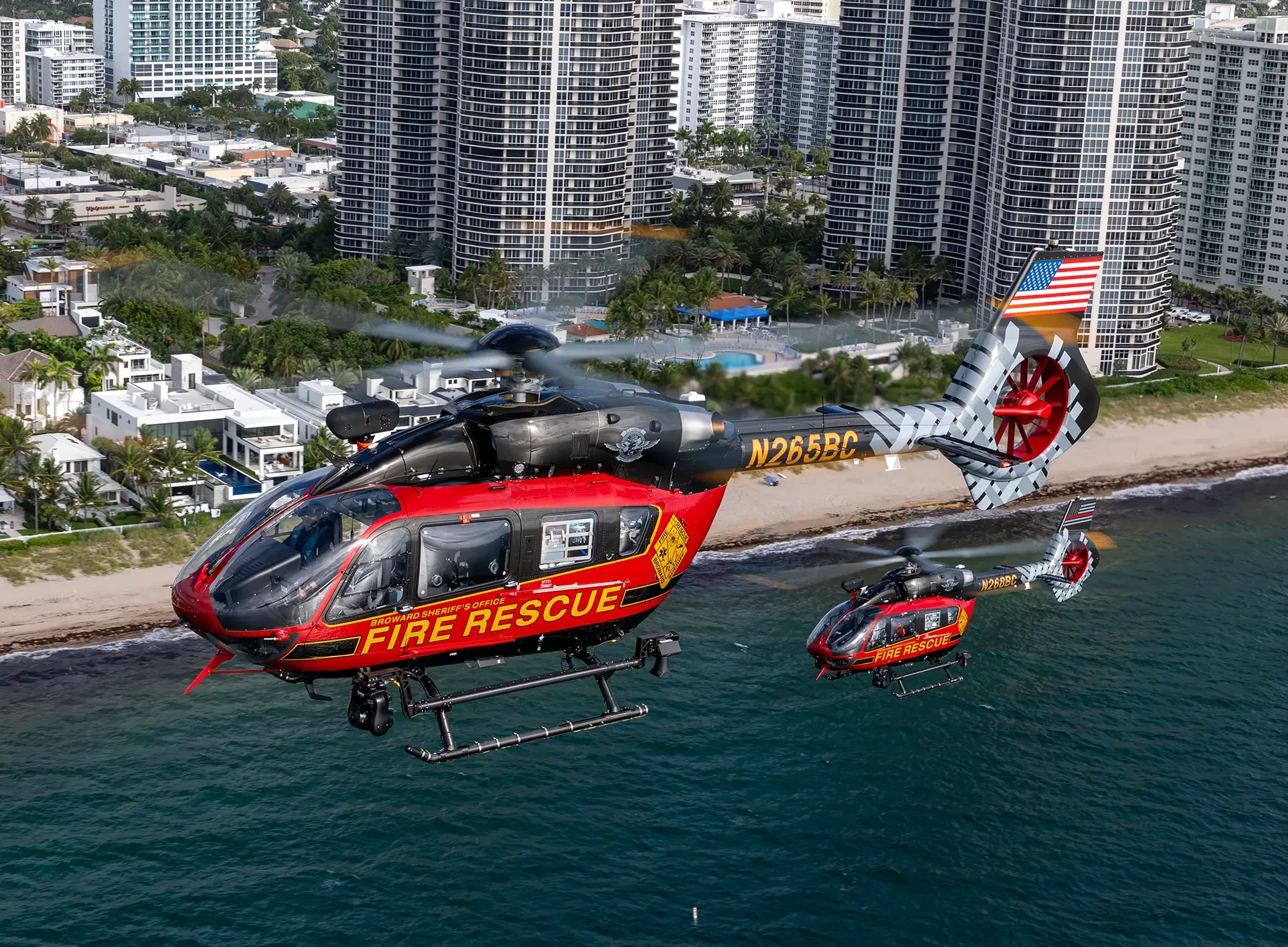
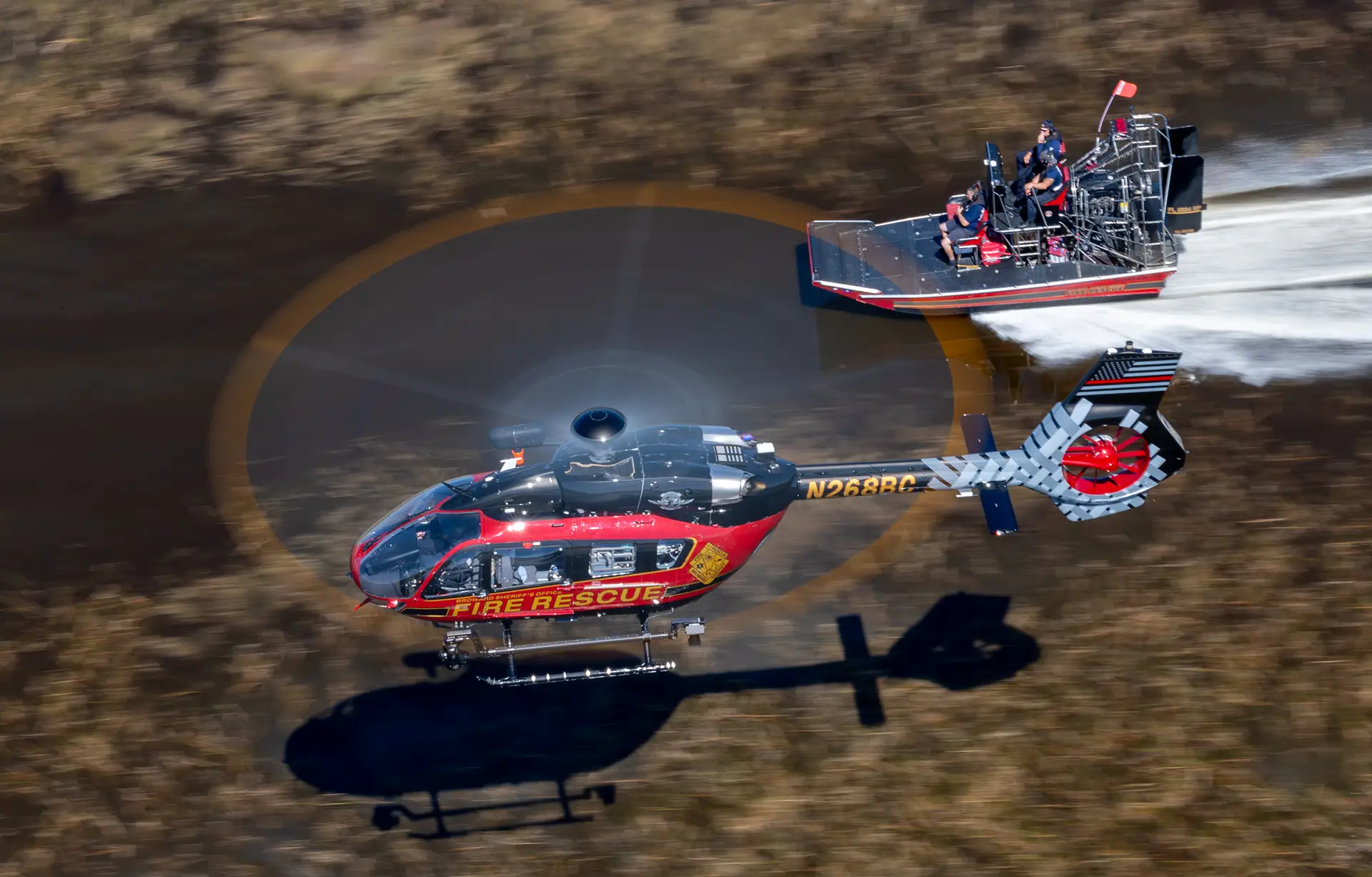
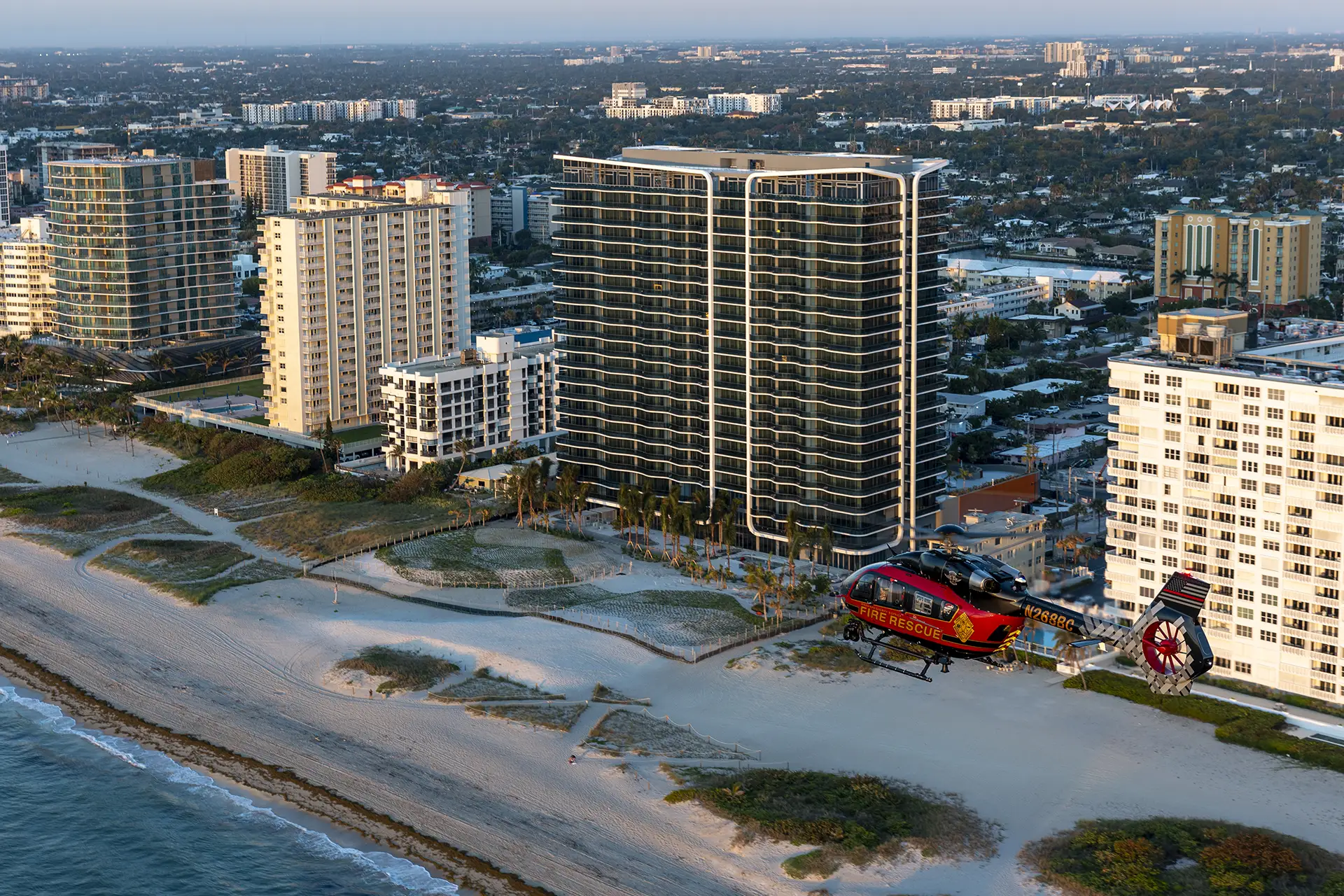
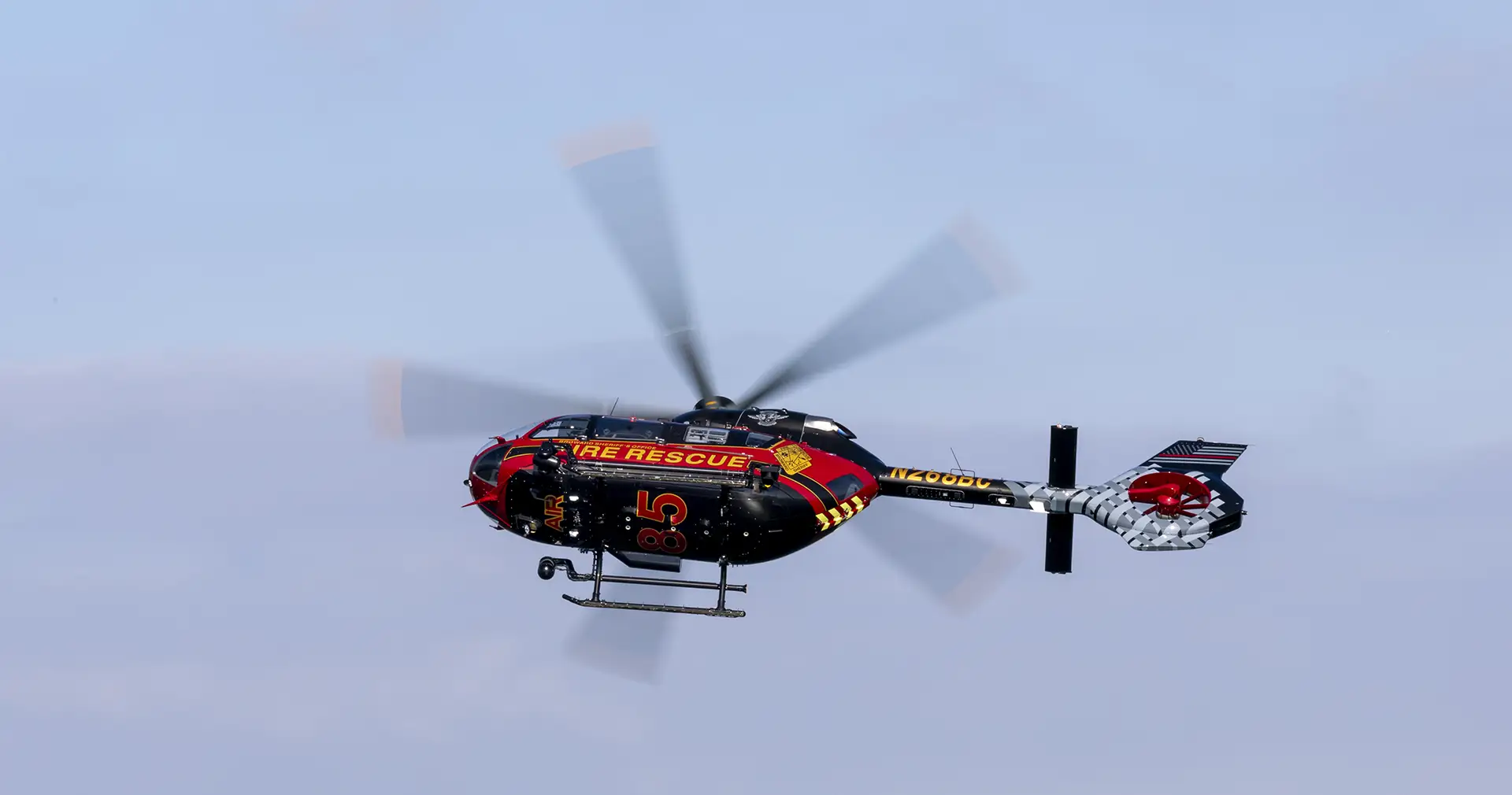
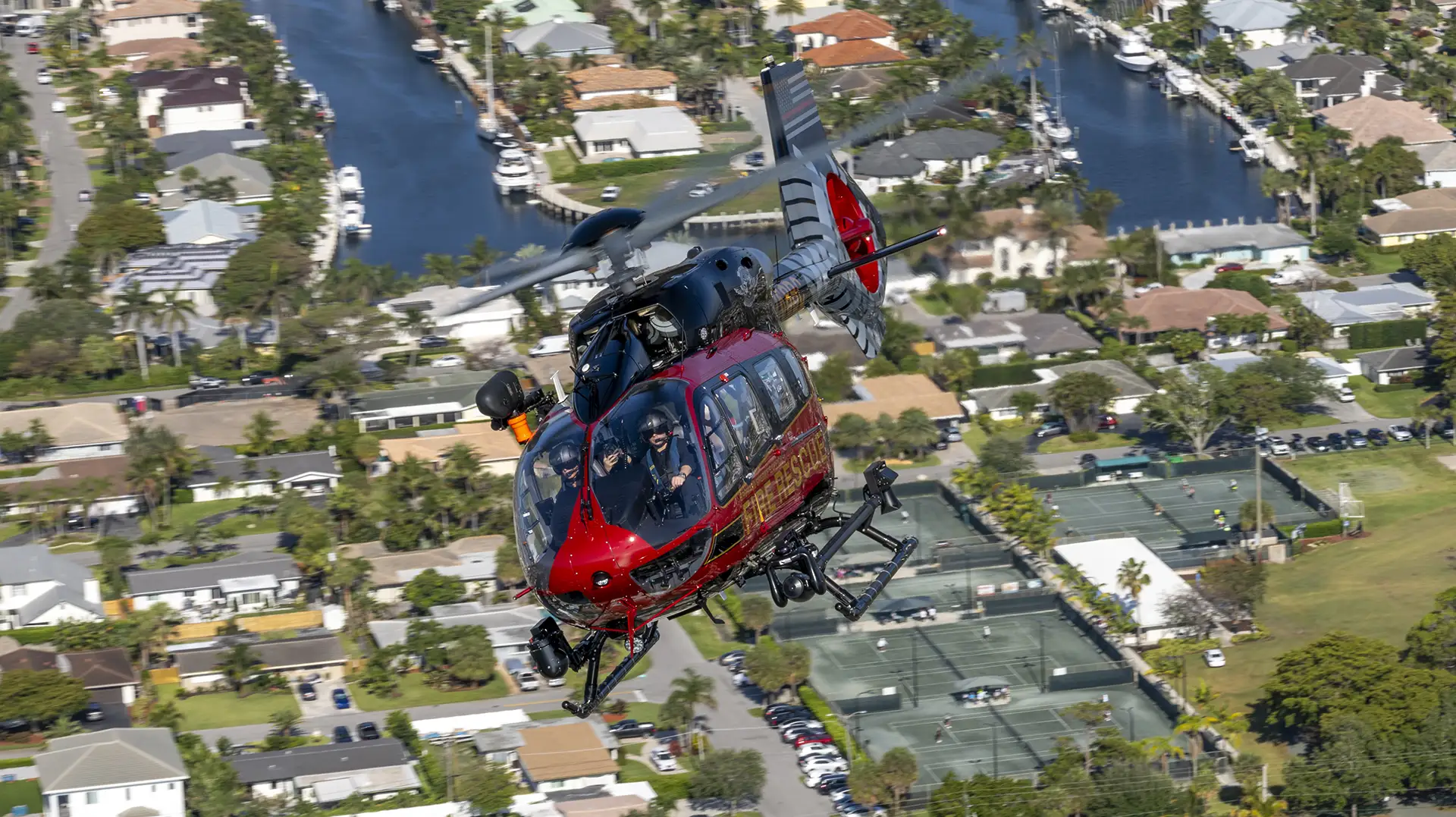
The Airbus H145 D3 represented more than an aircraft purchase. It was the embodiment of years of planning, persistence, and adaptation. With five-blade rotor technology, enhanced power margins, and a larger cabin, the H145 D3 brings capabilities far surpassing those of its EC135s. “Over the years, we had evaluated several kinds of aircraft and had interest in the H145 D2”, Weiers explained. “The D2 is a great bird, but the D3 brings even greater capabilities.” For Weiers and the leadership team, the acquisition process was as critical as the aircraft itself.
Following the accident, Airbus leadership recognized the urgency of Broward’s situation in the aftermath of the 2023 accident. “The president of Airbus reached out personally to ask what they could do to help,” Weiers recalled.
That outreach set in motion an extraordinary development. Two H145 D3s that had originally been destined for the U.S. Army were nearing
completion on the production line and had recently become available. Through coordination between Airbus and Broward County, the helicopters
were acquired utilizing the Defense Logistics Agency’s 1122 program, a program that allows state and local public safety agencies to
purchase military equipment for public safety use.
Working with Airbus, CNC Technologies, and Metro Aviation, the unit was able to spec out the H145 D3s to meet the unique demands of South
Florida operations. “We sat down and really thought through what we needed; everything from cabin layout to avionics integration to how
the aircraft would support missions we’ve never been able to perform before,”
Weiers explained. That process extended to mission equipment, with each aircraft arriving hoist-equipped and fitted with a
Shotover/Churchill Augmented Mapping system, a TrakkaBeam searchlight, and a Wescam sensor package to facilitate search and rescue missions.
The collaboration ensured that every detail was tailored for both the medical mission and the expanded rescue roles now within reach.
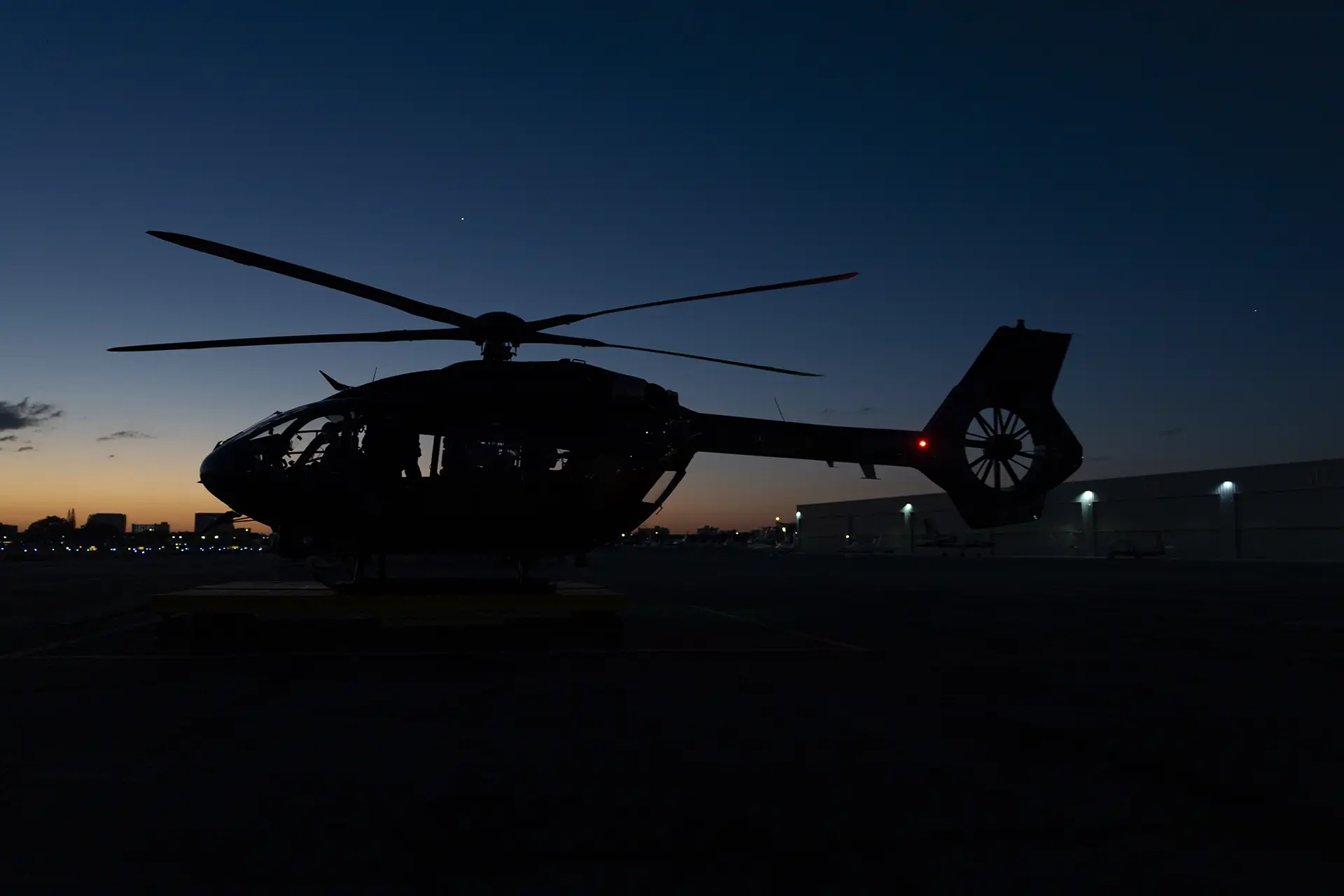
The first D3 was delivered to the county years ahead of the normal production schedule. “We were looking at a normal production wait of
at least two or three years, but suddenly we had two aircraft on the way, with completion and delivery of the first one within nine months,”
Weiers said.
“These state-of-the-art aircraft represent an ongoing effort to provide our first responders with the best possible tools to
protect our community,”
Broward Sheriff, Dr. Gregory Tony said. “Equipping our first responders with the most advanced tools, technology, and training will
continue to be a public safety priority at BSO. Our preparedness ensures we are ready to meet today's challenges while working toward
building a stronger, safer community for the future.”
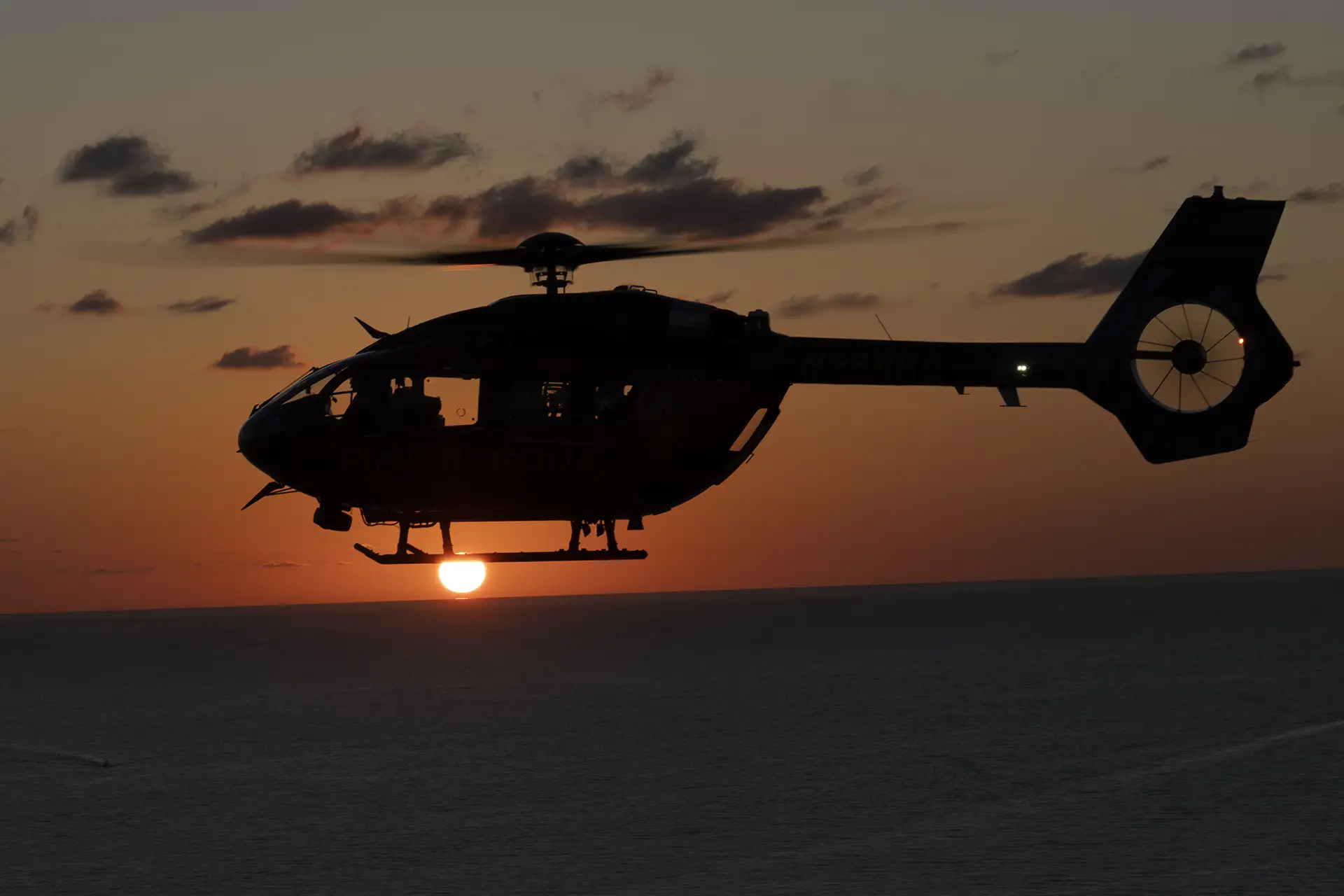
When the first H145 D3 arrived in Broward, it carried more than new technology and capability. Aviation division crews had arranged for the
helicopter to bear the name of Battalion Chief Jackson; the highly respected flight paramedic lost in the 2023 accident. The tribute seal
was unveiled with the delivery, turning the aircraft into both a symbol of modernization and a living memorial. For the crews, seeing
Jackson’s name on the new machine underscored that while progress is essential, the memory of those who helped to define the program remains
at its core.
The first D3’s arrival also became a symbol of progress for the entire department. It showed that modernization is a present reality. Living proof that their needs were understood and prioritized at the highest levels of their organization and the industry. An affirmation of the county’s commitment to its crews and citizens, and a challenge to the unit to rise to meet the new capabilities the aircraft provides.
Pilot Perspectives
Though many of the pilots have only recently finished their first 50 hours on the new aircraft, all of them see the D3 as a significant step
forward in safety and capability. The aircraft’s avionics suite reduces workload in high-stress environments, while performance improvements
expanded options for confined area operations and in the high-heat and humidity conditions common to South Florida. “The new equipment
is much safer in many regards, just like a new car is safer than one from the 1970s,”
Weiers noted. Transition training demands time and focus, as the personnel and equipment are brought to full operational capacity, but the
immediate and future benefits are clear to all.
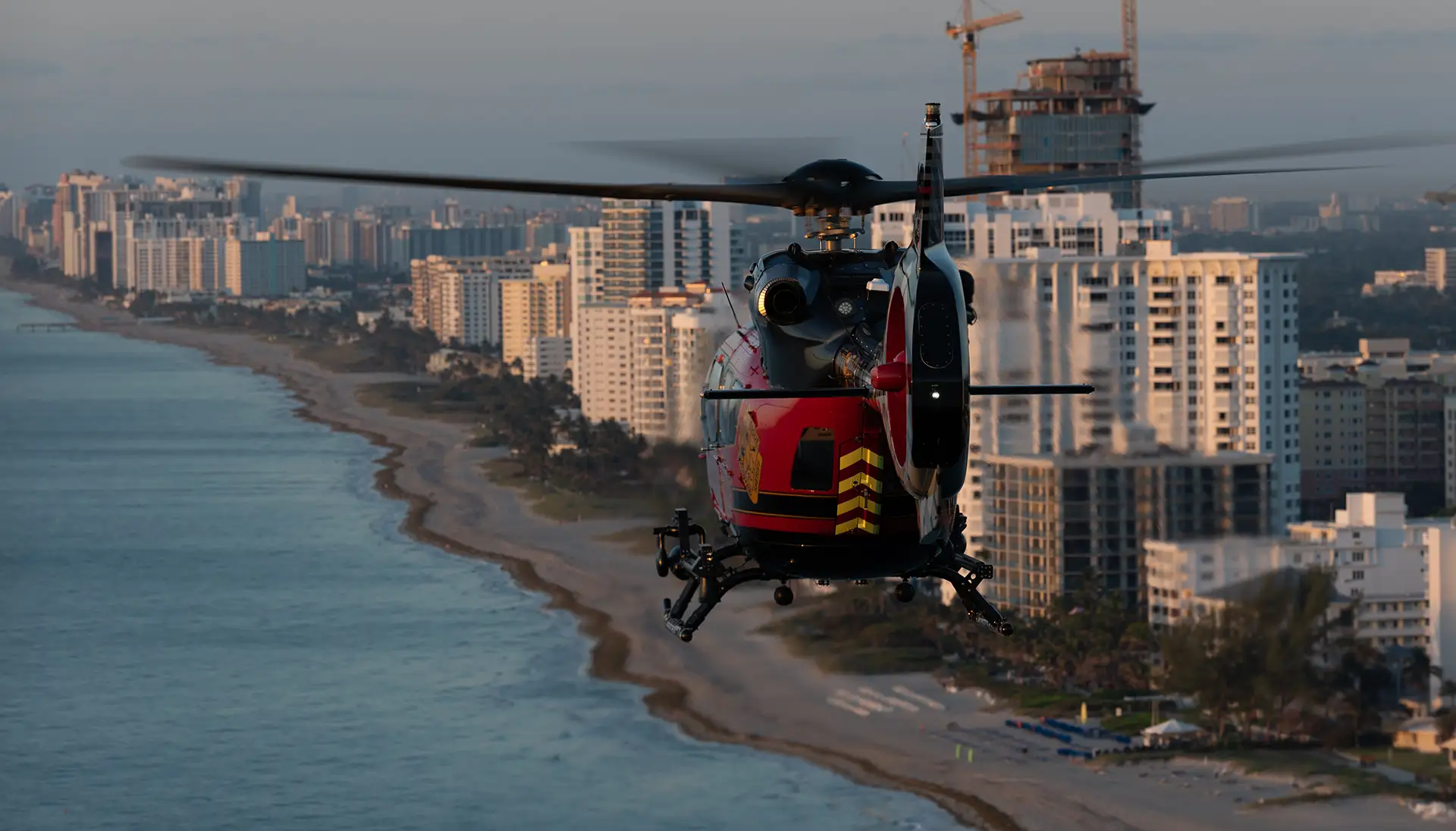
The D3’s systems offer layers of protection that align with the unit’s safety culture and directly enhance cockpit decision-making, enabling
crews to carry out complex missions under strenuous conditions. Another major leap forward for the pilots is the modern all-glass cockpit
and Airbus’ Helionics avionics suite, featuring an advanced four-axis autopilot. The system provides significant improvements in workload
reduction, stability, and safety during demanding missions such as hoisting or confined area landings. “It’s a huge leap in capability,
especially with the autopilot handling much of the stability work so we can focus on the mission at hand,”
Weiers observed.
While the jump from the EC135’s older systems to the D3’s Helionics package is substantial, the transition has been eased by the extensive backgrounds of the pilots in the air unit. Years of experience flying the unit’s somewhat similar EC135s, coupled with decades spent as military aviators, have honed their familiarity and adaptability. This has allowed them to embrace the new systems quickly, maximizing the safety and capability benefits the D3 delivered.
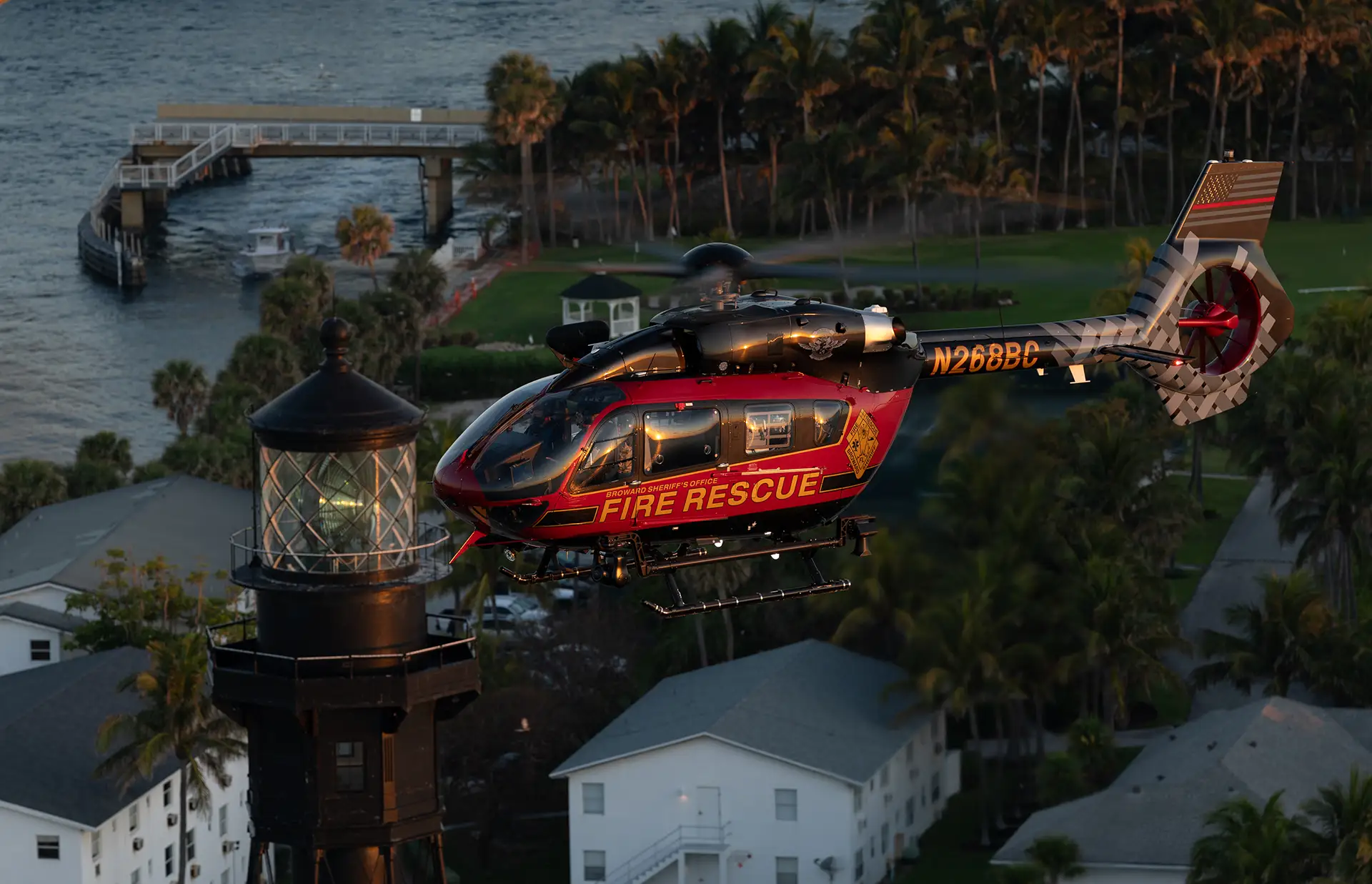
Pilots also note that the D3’s superior power margins allow safer operations in all conditions they encounter on missions, even during
Florida’s extreme summers. The aircraft’s improved stability during hover is particularly valuable for hoist missions over water or tight
urban spaces. Collectively, these enhancements have raised capabilities and confidence levels both in and out of the cockpit.
Medic Perspectives
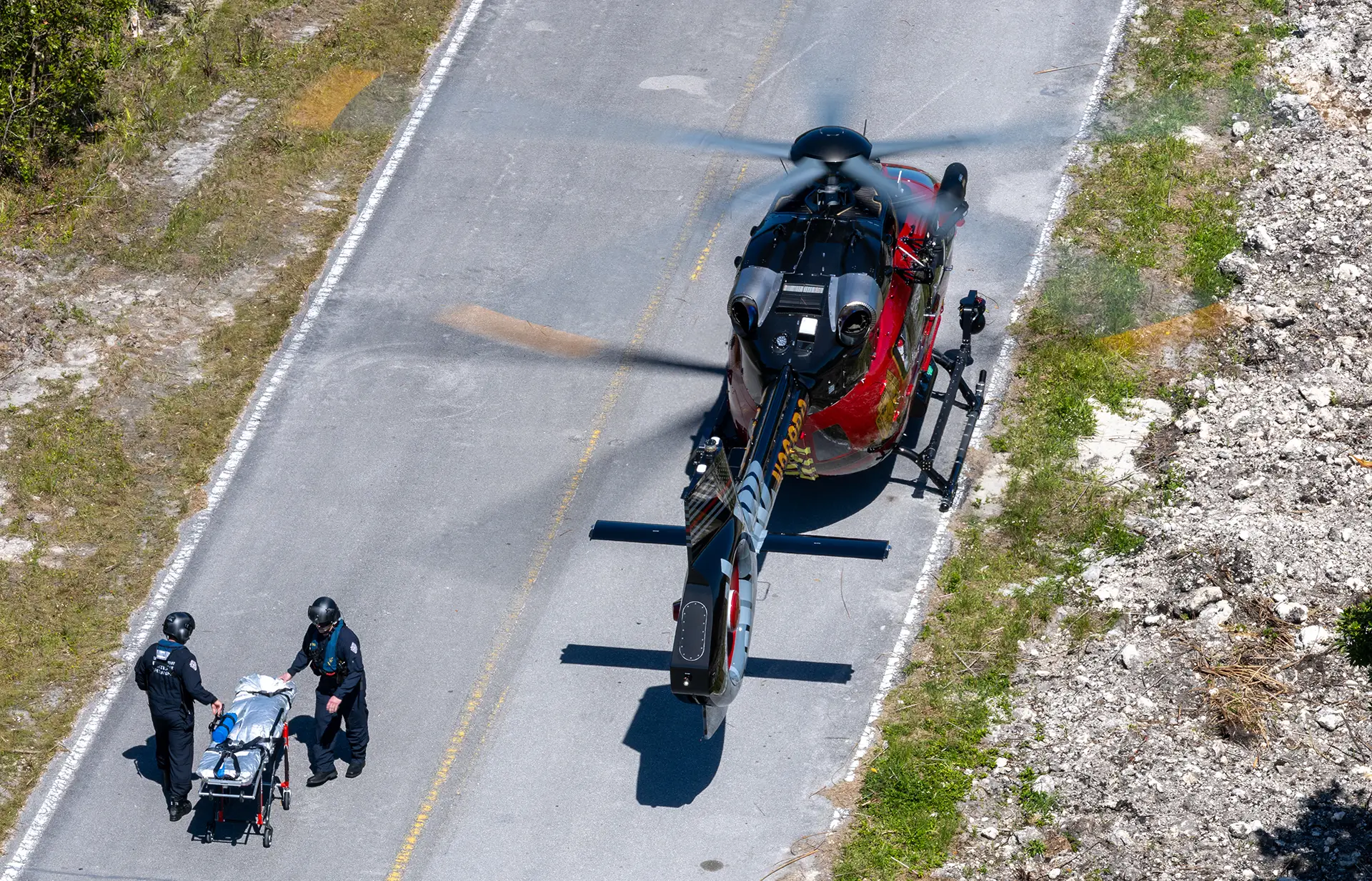
For the flight medics, the shift to the D3 has been transformative. The larger cabin provides space for advanced equipment, better monitor placement, and easier patient access. “The layout reduces stress during critical interventions. We’re no longer fighting against cramped conditions; we can even fit a second patient now,” Flight Medic Domonic Calamita explained. Improved airflow, and climate control, smoother flight characteristics, and even one-handed door operation further reduce fatigue, helping crews stay sharp during demanding missions.
In confined urban or rural landing zones, seconds count, and the ability to stabilize patients quickly directly impacts survival. The D3’s design supports advanced monitoring and treatment systems while maintaining a clear workflow. “It’s a game-changer for us in the back,” Lieutenant Louis Solomon added. The added space allows medics to move around the patient instead of working over each other, a difference that has improved both efficiency and confidence during high-pressure calls.
The ability to carry and operate equipment such as the Zoll monitor, Hamilton T1 ventilator, Glidescope, QinFlow blood warmers, and more, all without compromising access, is critical. These capabilities have proven especially valuable, particularly when paired with the unit’s trail-blazing adoption of whole blood transfusions. “Being able to give whole blood before the patient ever reaches a trauma bay changes the odds in their favor dramatically,” Solomon emphasized. These enhancements bring near hospital-level care directly into the aircraft, greatly elevating patient outcomes, especially in the most severe trauma cases. With improved ergonomics, advanced equipment, and transfusion capability, the D3 is redefining the care that BSFR’s air division flight medics can deliver in-flight, while also opening up the air division to new missions.
Preparing for Expanded Missions
The adoption of the H145 D3 also means preparing for broadening the unit’s mission profiles. Hoist operations, once aspirational, are now
achievable. Firefighting support using Bambi Buckets positions the unit as a direct partner in combating wildland and urban interface fires
in the county and beyond. To support these capabilities, the unit’s training cycles will be intensified. “We’re probably a year out from
being fully mission qualified in hoisting and fire bucket operations,”
Weiers explained, but the air division crews seem rather keen to get things rolling.
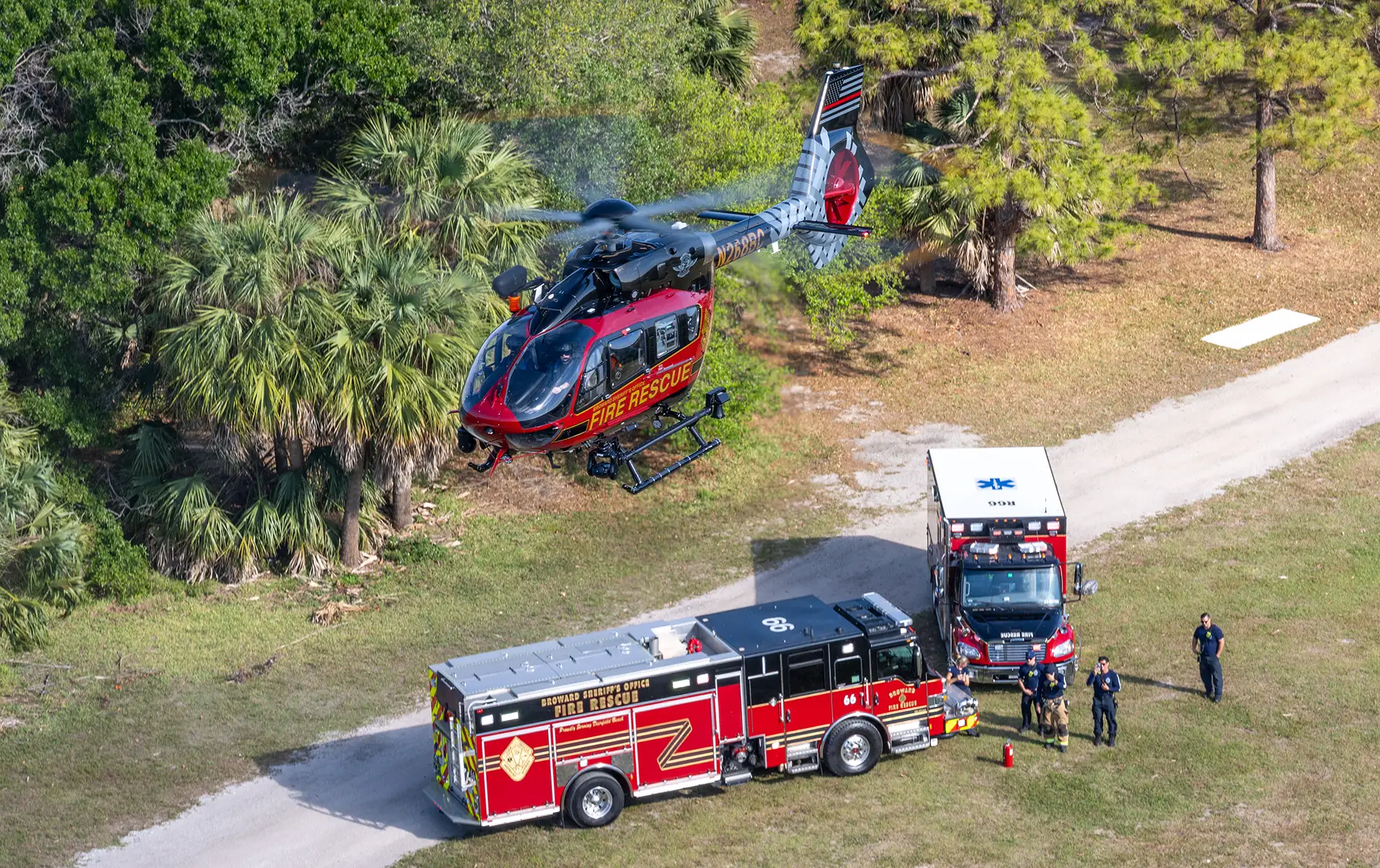
Pilots and medics alike will undergo rigorous instruction in hoisting and bucket procedures with SR3 Concepts and Bluedrop Training and
Simulation. This partnership will equip them with the skills to function as integrated rescue teams. These new missions demand not only
technical proficiency but also some cultural adaptation, expanding the unit’s identity from an airborne ambulance provider to a versatile
aviation resource capable of handling complex emergencies across South Florida’s challenging environments.
Training for hoist operations involves both the precision skill of the pilots and the coordination of medics working as rescue technicians. Crews will train to lower and recover patients from confined spaces, water, or elevated structures, practicing under controlled conditions until the skills become second nature. For wildland firefighting support, pilots will hone their proficiency in external load operations, while medics adapt to new safety protocols and coordinate with ground crews. “It’s not just about flying with a bucket; it’s about integrating with the larger fire response,” Weiers remarked. The challenge lies in expanding mission capability while maintaining the uncompromising medical focus that defines our unit.
BSFR’s air division crews recognize that success will mean blending these skills into seamless operations, where medical, rescue, and
firefighting missions can be performed with equal confidence and safety. Future planning includes cross-training with regional partners to
ensure interoperability during large-scale incidents. In addition, leadership is exploring new mission sets such as disaster response
deployments and offshore rescues. These steps will gradually build a comprehensive capability set, positioning Broward as one of the most
versatile aviation rescue units in the region.
Training From Tragedy
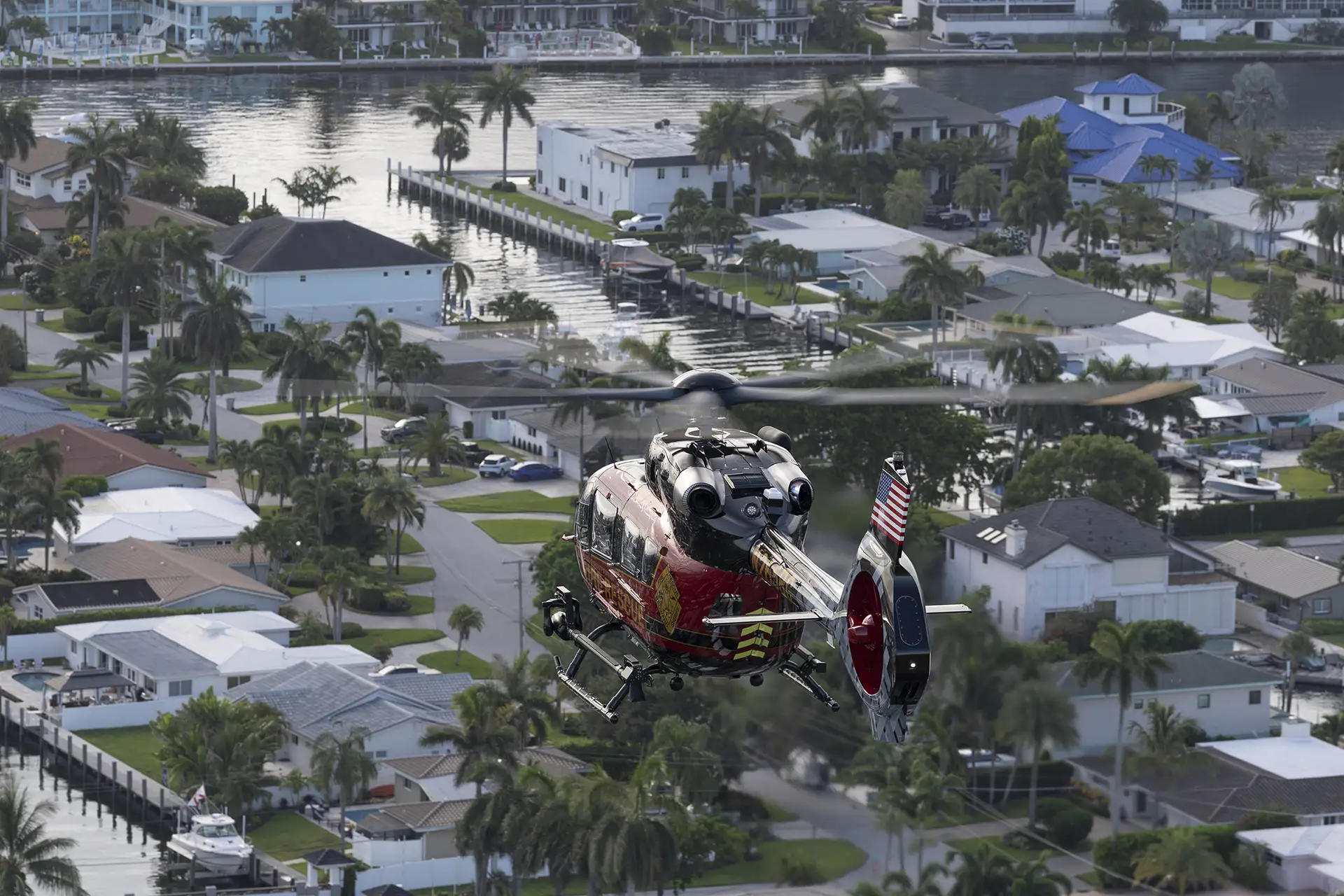
The 2023 accident left indelible lessons. Training programs were restructured to emphasize realism and urgency. Fire-in-flight scenarios, once theoretical, became central to drills. “The time from first indication of the fire to tail boom separation was just a minute and 20 seconds. At 500 feet, that’s not long at all,” Weiers reflected. Crews are now being taught to execute emergency procedures within the 1 to 2 minutes that real incidents reflect, rather than stretching exercises over longer timelines. This shift forced both pilots and medical crews to approach training with heightened focus.
The renewed focus on simulation fidelity has changed how crews prepare for emergencies. Pilots now drill under more stressful and time-compressed conditions. Medics rehearse scenarios where equipment failures occur alongside patient care challenges. These combined drills replicate the complexity of real missions. Training is a vital and living part of operational safety for the air division.
Life on a 24-Hour Shift
Like a fire station with helicopters, the flight medics work 24-hour shifts just like the rest of the firefighters of Broward Fire Rescue,
balancing long stretches of readiness with moments of intense urgency that can occur at any time. Pilots, however, rotate on 12-hour
schedules designed around mandatory rest periods, ensuring that fatigue never compromises flight safety. For the flight medics, the day is a
cycle of preparation, training, and sudden response. One moment may involve equipment checks or simulated drills, the next an urgent call
into the Everglades or an urban landing zone. “It can go from quiet to chaos in seconds,” Calamita remarked.
Downtime is often used for informal cross-training, with medics and pilots reviewing each other’s tasks to better understand roles and build
redundancy. Shared meals and routines at the base reinforce a family-like atmosphere that becomes critical when stress is high. Crews know
lives depend on one another’s competence, making mutual trust the foundation of every mission.
These rhythms continually strengthen camaraderie among the crews, forging bonds through shared responsibility and long hours spent in close quarters. While the accident underscored the fragility of those bonds, it also deepened the crews’ commitment to each other and to the mission they serve.
Though the loss of a colleague changed the unit forever, it also underscores the resilience required in aviation rescue. Crews compartmentalize the grief of loss, continuing to fly because the community depends on them. “We all probably feel invincible until something like this happens,” Weiers admitted. Personal effects left behind serve as quiet reminders of the absent, but the missions continue. Crews are driven forward by the recognition that lives on the ground cannot wait. This culture of resilience is not built on bravado but on discipline and trust. Each mission is then approached with renewed focus on safety, efficiency, and teamwork.
The knowledge that hundreds of thousands of community members depend on their service gives purpose to the sacrifices inherent in the work.
For many, resilience is also expressed in mentorship; passing hard-earned lessons to newer crew members so that the legacy of
professionalism endures. It is also visible in the way crews speak about one another, often emphasizing the shared bond that goes beyond the
cockpit and cabin. Over time, resilience becomes less about recovery and more about sustained excellence in the face of adversity. This
ethos defines the spirit of the aviation division today.
Looking to the Future
With the H145 D3s now forming the backbone of operations and advanced training underway, the BSFR aviation division enters a new chapter
defined by capability, safety, and professionalism. The aircraft’s performance, combined with a team shaped by experience and perseverance,
positions the unit to meet future demands. “Life is a constant learning event,” Weiers reflected. “We take every experience,
even the painful ones, and use them to progress.”