 HOME
HOME





The recently enacted National Park Overflight Rules are an extremely polarizing change to how aerial sightseeing tours are conducted. There are a myriad of stakeholders, each on opposing sides of the issue from air tour operators, to the U.S. National Park Service (NPS), the Federal Aviation Administration (FAA), environmental groups, native peoples, and residents living under the tour flight paths. Since the implementation of the new rules, it has become apparent that the NPS and FAA excluded many of the impacted groups from providing input to the proposed plans. This has raised safety concerns, potential business-ending economic impacts, and reduced public access to the National Parks.
Back in April 2000, the FAA and the NPS were tasked with implementing the National Park Air Tour Management Act of 2000 (Public Law
106-181), which “governs commercial air tours over national parks, and tribal lands within or abutting national parks, and establishes
oversight authority by the Federal Aviation Administration (FAA) of the operators wishing to conduct such tours.” Today, the National Park
Service manages 63 national parks and various other sites for a total of 431 “units’ spread across all 50 states and encompassing more than
85 million acres of land. The act required that the FAA and the NPS would develop Air Tour Management Plans (ATMPs) for more than 20
national parks and culturally sensitive areas where air tour operators would apply to operate within each area’s boundaries.
To assist the government agencies in developing the ATMPs, in March 2001, Congress established the National Parks Overflights Advisory Group to bring stakeholders to the table. Air tour operators, general aviation advocacy groups, native peoples, and environmental groups were asked to participate to express the needs and desires of each group. This input was, in theory, sought to develop comprehensive plans that would deliver a balanced solution to the overflight issue, whether it be noise impacts on park-goers, native lands, or local residents.
For the next decade, there was a lack of progress in developing air tour management plans, and to help speed up the process, the FAA Modernization and Reform Act of 2012 enabled the FAA and NPS to develop voluntary agreements with tour operators in lieu of ATMPs. The act also gave an exemption to parks with less than 50 commercial tour flights annually.
Nearly 20 years after the act of 2000, in February 2019, the Public Employees for Environmental Responsibility (PEER) and the Hawaii
Coalition Malama Pono, HICoP – a non-profit that aims to reduce the impact of helicopter noise on local communities, filed a writ of
mandamus to compel the FAA and the NPS to complete air tour management plans for parks and native lands in the Hawaiian Islands. The local
population was demanding action and were tired of sitting idly by waiting for presentation of the plans.
Fourteen months later, in May 2020, the U.S. Court of Appeals for the District of Columbia Circuit granted the Hawaiian non-profits’ request
forcing the FAA and the NPS to develop a schedule to bring 23 parks into compliance with the mandated ATMPs within two years. The court
approved the government agencies’ plan in November 2020.
ATMPs for 20 parks, memorials, or monuments under the supervision of the NPS were essentially completed by August 2024. During the plans’ preparation process, three of those parks (Everglades National Park, Florida, as well as Olympic and Mount Rainier National Parks in Washington state) were exempted from the ATMP requirement. The last of the ATMPs, the one for Canyon de Chelly National Monument in Apache County, Arizona, has completed the process and is slated to be finalized in December of this year.
Air Tour Restriction or Elimination?
The NPS and FAA have been widely criticized for rushing the ATMP process, using old and irrelevant statistics, and completely ignoring
input from National Parks Overflights Advisory Group. Plans were drafted without input, then presented in public Zoom meetings where
comments were taken through the NPS Planning, Environment, and Public Comment website. When the process of developing a plan gets to this
point, the plans are, essentially, formalized and will not be changed. Any input is “noted” and history has shown that the process
typically moves forward ignoring public concerns.

This rush to regulation is in contrast to the air tour operator industry that has spent years working with NPS to avoid flying above sensitive areas, respecting tribal lands and ceremonies, and altering routes to prevent repeated crossings of residential areas, all with a mind to flight safety. Additionally, in June 2022, PEER called out the FAA and NPS’s failure to comply with the National Environmental Policy Act that required the review of environmental impacts and possible alternatives when forming the ATMPs. To ensure an oversight of this magnitude in developing the ATMPs would be addressed, the non-profit group deemed that a lawsuit against the Federal agencies was necessary.
On Dec. 5, 2023, Mark Schlaefli, president of Rushmore Helicopters, Black Hills Aerial Adventures, and Badger Helicopters, and chair of the board of directors of the industry trade group Vertical Association International (formerly Helicopter Association International), presented a statement to the U.S. House Committee on Natural Resources Subcommittee on Oversight and Investigations at its hearing. Schlaefli, said, “It is our assertion that safety has been fully ignored by the FAA in this process. In all of the documentation that was crafted to justify the ATMP, safety was not mentioned. During the one public meeting that took place over Zoom, questions directed at the FAA and NPS regarding risk assessments and safety were not adequately answered. We believe this is a monumental failure on the part of the FAA and ignores their stated mission, vision and values.
“I…believe that the NPS and the FAA did not, in good faith, perform the required due diligence to determine the true impacts to operators, the public, and the park units’ resources. Engagement with stakeholders could have resulted in a Voluntary Agreement that protects resources while supporting air commerce.”
During the years when the Mount Rushmore ATMP was in development, Schlaefli’s companies worked well with both the FAA and NPS under an
interim operating authority agreement where his companies flew more than 3,900 air tours of Mount Rushmore and 1,300 over Badlands National
Park (2019 figures). The enaction of the Badlands and Mount Rushmore ATMPs forced Schlaefli to seek relief from the Court of Appeals for the
Eighth Circuit, but on June 7, 2024, his legal action was denied. It should be noted that PEER was granted intervenor status, essentially
siding with the FAA and NPS, and joined in the effort to uphold the ban against overflights of both the Badlands and Mount Rushmore National
Parks.
Real-World Impacts
After working to contribute to the ATMP process while the FAA and NPS were mired years of bureaucratic inaction, air tour operators have seen their business models virtually eliminated by government agencies that ignored input from those who would be impacted the most.
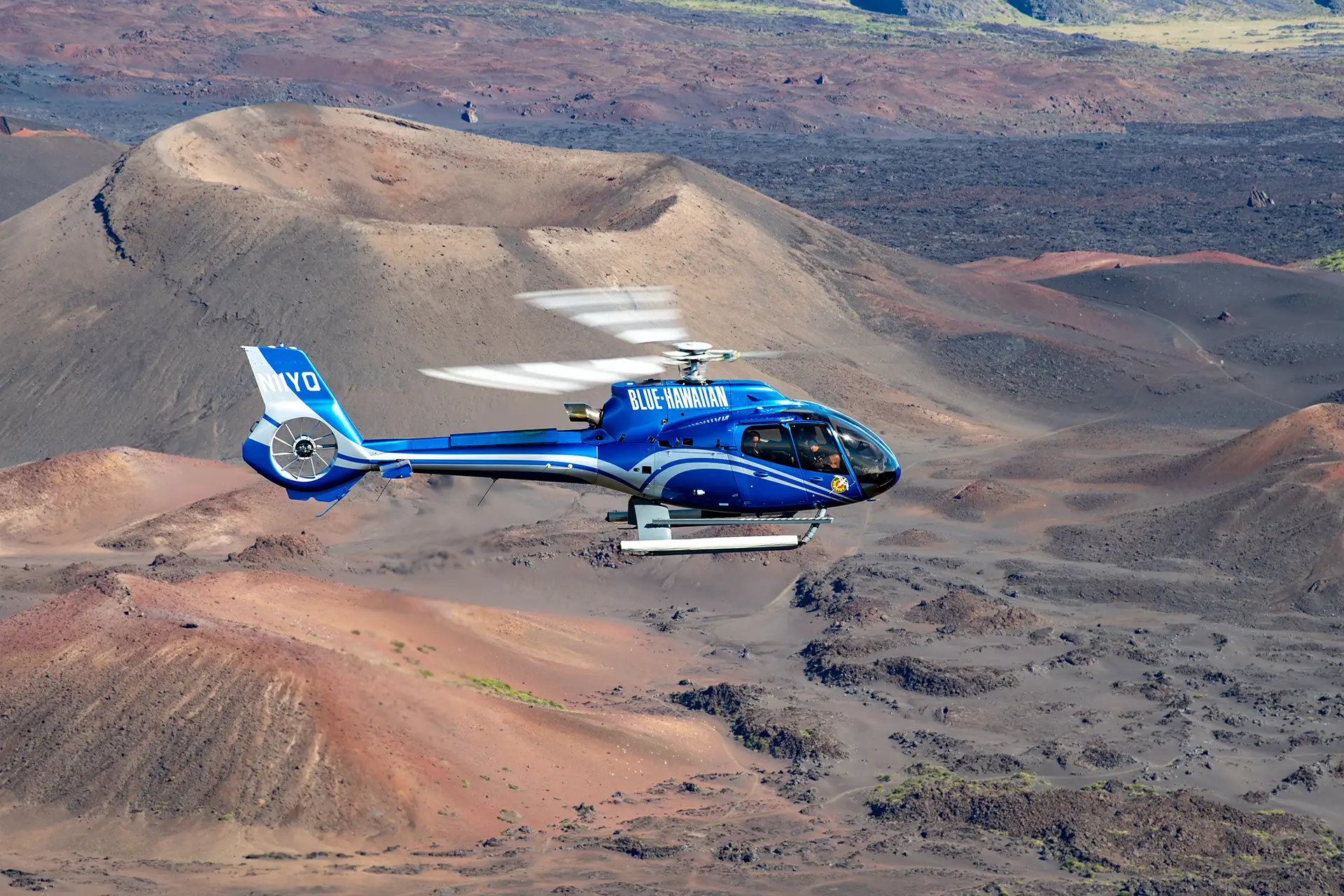
The NPS and FAA Air Tour Management Plans have gutted the air tour industry. For example, air tours of Haleakala on the island of Maui were reduced from 2,900 per year to just 170, thereby eliminating the economic viability of such tours.
In addition to the loss of income, most ATMPs require that air tour operators maintain a horizontal distance of one-half mile from a park’s boundaries and overflights of the park cannot be accomplished at an altitude less than 5,000 feet above ground level. For Schlaefli’s companies, the ATMP’s parameters make aerial sightseeing tours of Mount Rushmore unattractive to tourists.
“The ATMP process was conducted behind closed doors, and has significantly impacted our business by removing over 9,000 flight
authorizations and eliminating a significant part of what we have offered our guests for more than 30 years. While we are doing our best to
continue operating while minimizing impacts to the community, the government’s action has resulted in higher impacts and dramatically
reduced economic opportunity for us and other businesses in surrounding communities,” Schlaefli said.
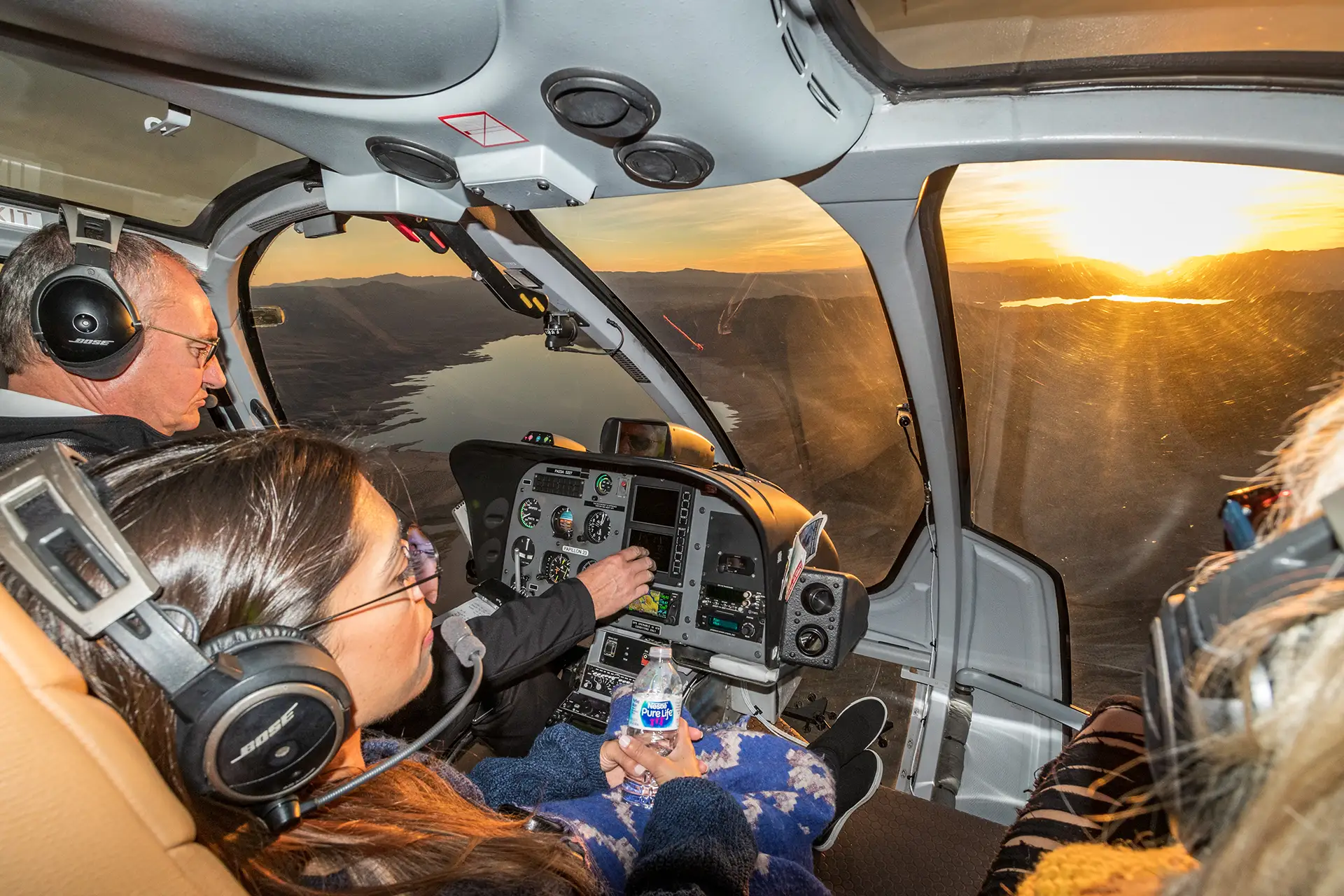
The figure of 9,000 flight operations is no small number when it comes to dollars and cents. Conservatively estimating that each flight grosses $500 in income, multiplied by 9,000 aerial tour opportunities, that number becomes a loss of $4.5 million in potential revenue. The loss of 2,730 Haleakala air tour opportunities is put at $1.365 million. Income losses of these magnitudes affect an operator’s fleet mix–whether to maintain or reduce the number of air- or rotorcraft–insurance costs, as well as staffing levels for air and ground crews, marketing, and operations employees. Numerous air tour operators report that the NPS failed to determine the economic impacts from implementing management plans that virtually eliminates overflights of the 10 most popular parks.
“The removal of my companies represents a $55-million part of the local economy over 10 years and threatens to destroy local institutions that have been in operation since the 1960s… Local economies and suppliers are also affected in a significant way. The town of Keystone, South Dakota, sits at the bottom of the hill on the way to Mt. Rushmore,” Schlaefli said. “My helicopter operations are immediately adjacent to downtown Keystone, and many travel to Keystone for the purpose of utilizing our service. Those travelers tend to stay in Keystone and spend money supporting the local economy.”
There is a solution that will work for all stakeholders – residents, native peoples, National Park guests, as well as air tour operators and those who make a living supporting the tourist industry. Can the FAA and NPS take the initiative to clean-up the mess they’ve made, or will it take more litigation to find common ground?