 HOME
HOME





Since its founding in 1993, this Cairns-based operation has been a fixture in the skies over the diverse terrain of North Queensland in Australia. Over the past few years, they have updated their fleet of Airbus AS350 and EC130 helicopters with five new Bell 407GXi’s.
HeliOps recently visited with Aaron Finn and Nautilus Aviation to see what this change has meant for Nautilus and learn why this fleet refresh was not just about aesthetics or comfort; it was about addressing changing passenger needs, enhancing efficiency, and safely operating in some of the world’s most challenging environments.
Powering the Decision - Why the Bell 407GXi?
Before the pandemic, the company’s fleet primarily served Asian tourist groups, a demographic well-suited to the Airbus fleet. However, post-COVID-19, changing market dynamics and the growing predominance of Western tourists introduced new operational challenges. Increased commercial operations during tourism’s decline and recovery period further emphasized the need for an aircraft capable of accommodating a broader range of mission profiles. These shifting demands exposed the limitations of their aging fleet and necessitated a more adaptable solution.
Finn elaborates on the decision: “We went from having smaller Asian passengers, where we could fit seven and a pilot, to larger Western passengers. This change caused significant payload and center-of-gravity (CoG) issues in the 130s.” The Bell 407GXi emerged as the optimal choice, offering a superior internal payload capacity and enhanced operational specifications. Finn added, “The bigger windows were a huge selling point, providing a better experience for passengers. Plus, the 407GXi’s versatility makes it suitable for both our tourism and commercial roles.”
The decision went beyond passenger capacity and viewing enhancements. The operating environment, characterized by corrosive salt spray, abrasive beach sand, and invasive outback dust, presented recurring maintenance challenges for the Safran engines that powered the previous fleet. The engines, although powerful, were not optimized for such extreme conditions, even when following manufacturer-recommended maintenance protocols.
“Nobody has really operated in the environment we do,” states Finn. “Landing on pontoons with salt spray, beach sand at the cays, and Outback dust, all circulating through the engines and rotors… the standard way of looking after their engines just didn’t cut it.” Based on their experience in operating a pair of older analog 407 helicopters, the Rolls-Royce C47 engines in the new Bell 407GXis looked to provide a robust and attractive alternative.
After reaching a deal on the five new helicopters, Finn and his team worked closely with Bell to proactively develop anti-corrosion strategies based on their hard-earned lessons with the Safran engines. “We are finally able to on the front foot with corrosion,” he remarked. Bell provided extensive training to the company’s maintenance team, ensuring that they could maintain the engines and prevent the issues that had hindered the operations of their previous fleet.
The modular design of the Rolls-Royce C47 engines allows for extensive in-house maintenance, a significant advantage over the previous
powerplants. Additionally, the ready availability of regional support and parts has minimized aircraft downtime. This enhancement in
maintenance capability has ensured that the Bell 407GXis remain available for operations year-round, sustaining Nautilus’ busy schedule. The
benefits of this transition are evident not only in maintenance improvements and aircraft up-time but also in the positive feedback from
passengers who enjoy their time in the 407GXis.
Tourism and Operational Performance at the Reef
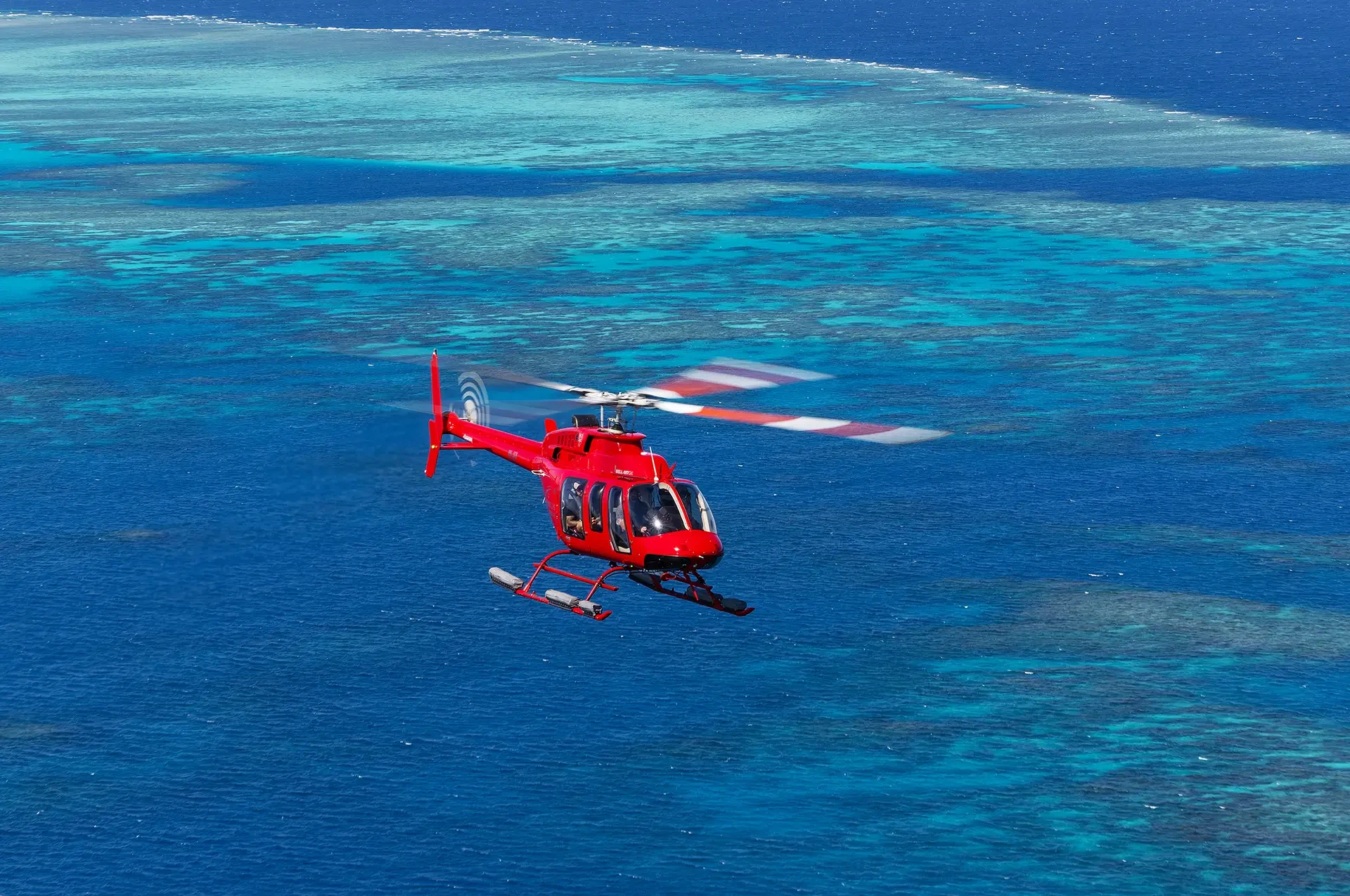
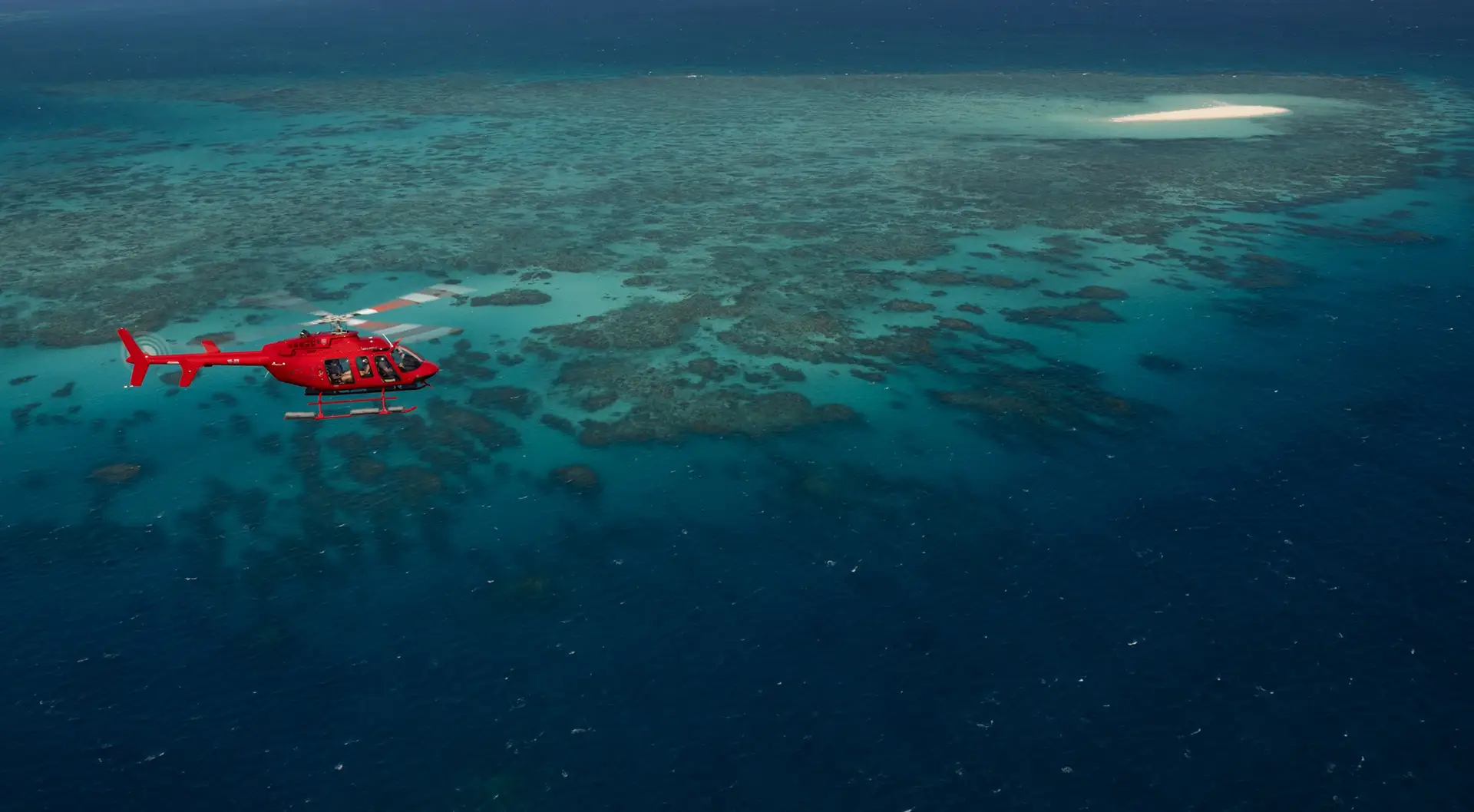
The introduction of the new 407s has brought noticeable improvements to the company’s tourism and operational activities in North Queensland. Equipped with high-visibility windows and a modern, quieter cabin design, these new Bells offer an enhanced passenger experience and continue to demonstrate robust technical performance in challenging environments. From daily operations at five pontoons located at Moore Reef, Agincourt Reef, and Hastings Reef, the Bell 407GXis have proven integral to the company’s capacity to handle a demanding tourism schedule.
Each helicopter typically logs three to four flight hours daily on reef operations, transporting passengers to and from pontoons and conducting scenic tours. The efficiency of the helicopters allows Nautilus to manage high passenger volumes, often up to 60 passengers per day at each pontoon, without compromising safety or performance. The new aircraft have proven a good fit, whether flying scenic flights or ferrying passengers back to mainland bases like Cairns or Port Douglas.
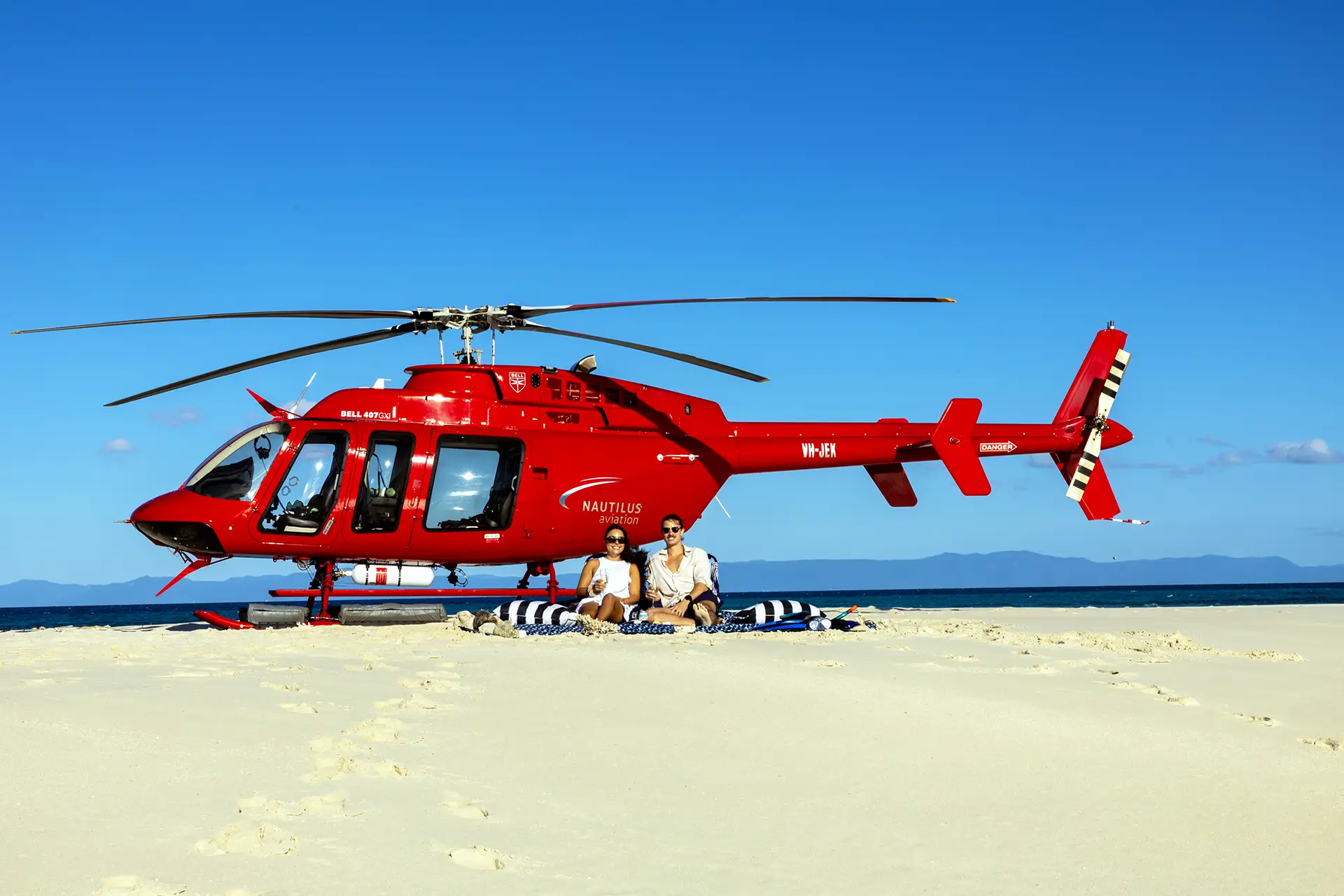
Sand and Spray, Island and Cay Operations
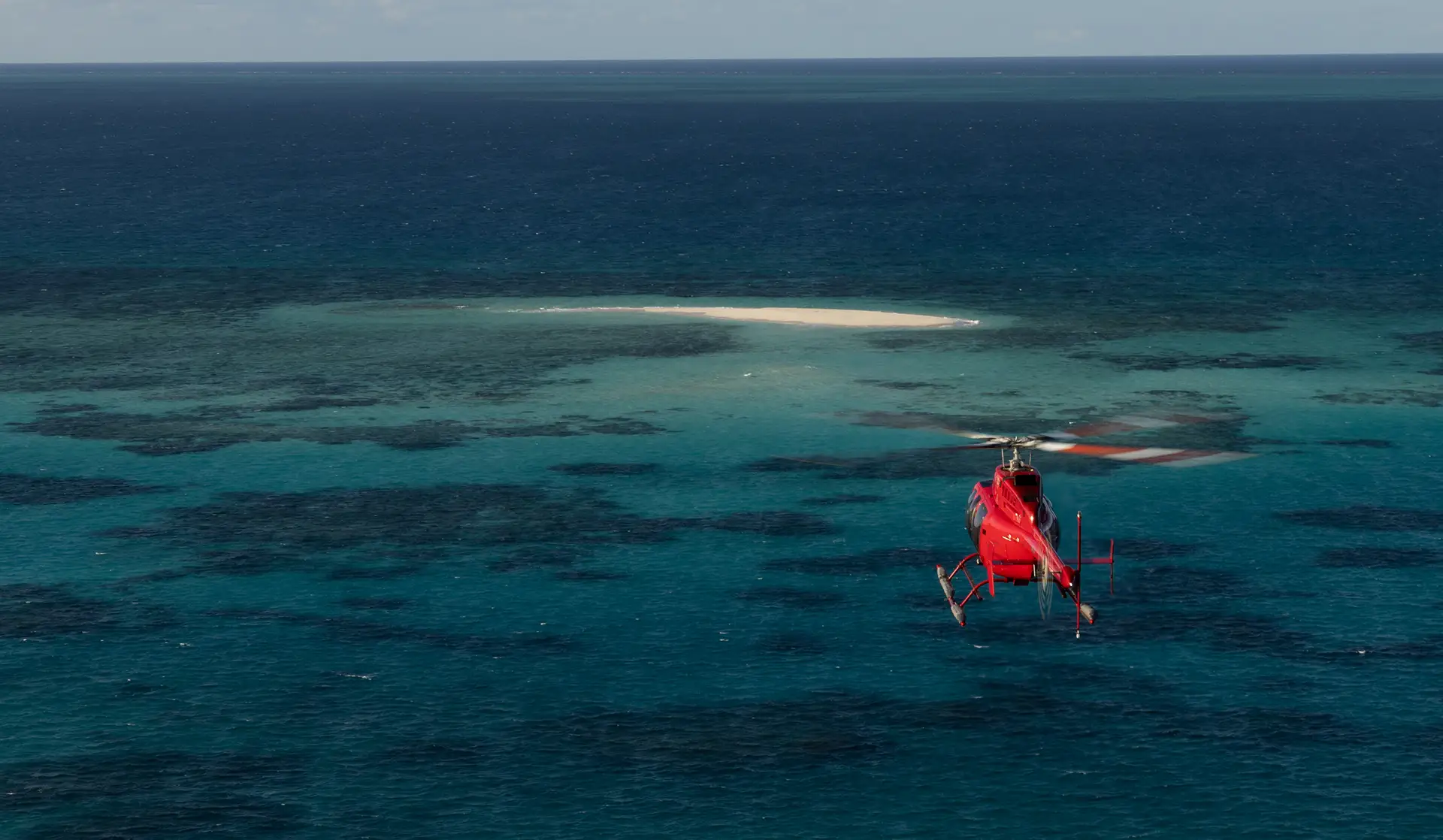
The 407GXi also works well in operations such as landings on the small, remote sandbanks of Vlasoff Cay and Undine Cay. These landing zones are often less than 50 feet across and surrounded by the marine environment, highlighting the technical requirements the aircraft must meet. The company’s 407GXi has floats for operational flexibility and safe overwater operations.
Landing on Vlasoff Cay has become one of the company’s signature experiences. “It’s one of those unique experiences we offer. Imagine being on your own little island with just the reef surrounding you—it's a memory that lasts a lifetime,” Finn says.
These cays, far from the crowded beaches and tourist hubs, are accessible only by helicopter. They offer a degree of unparalleled exclusivity and provide visitors a once-in-a-lifetime opportunity.
While these bespoke operations, such as private tours and event charters, are significant for tourism, they also highlight the technical requirements the helicopters must meet in power, engineering and operational readiness.
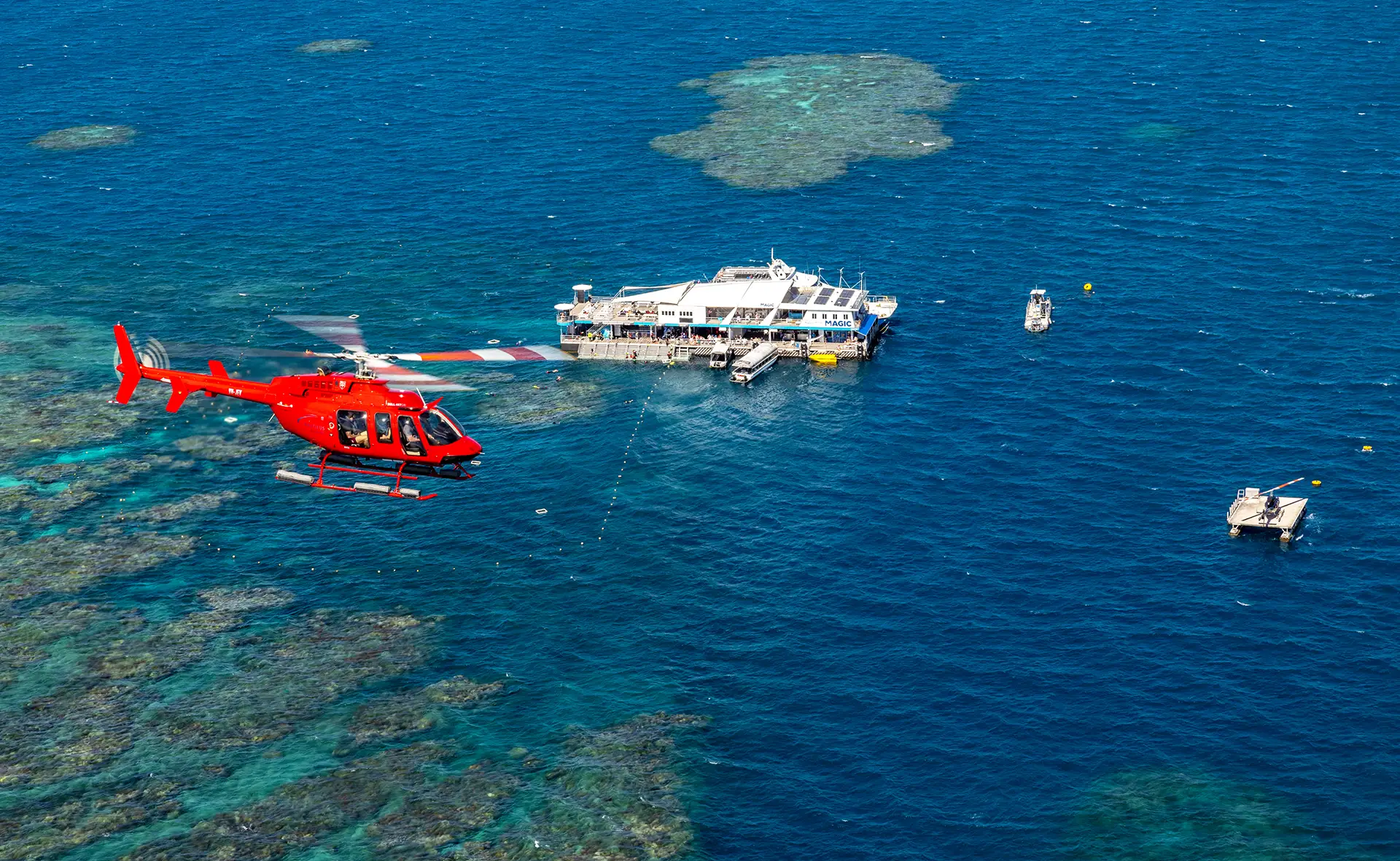
Tourism and Technical Efficiency Integrated
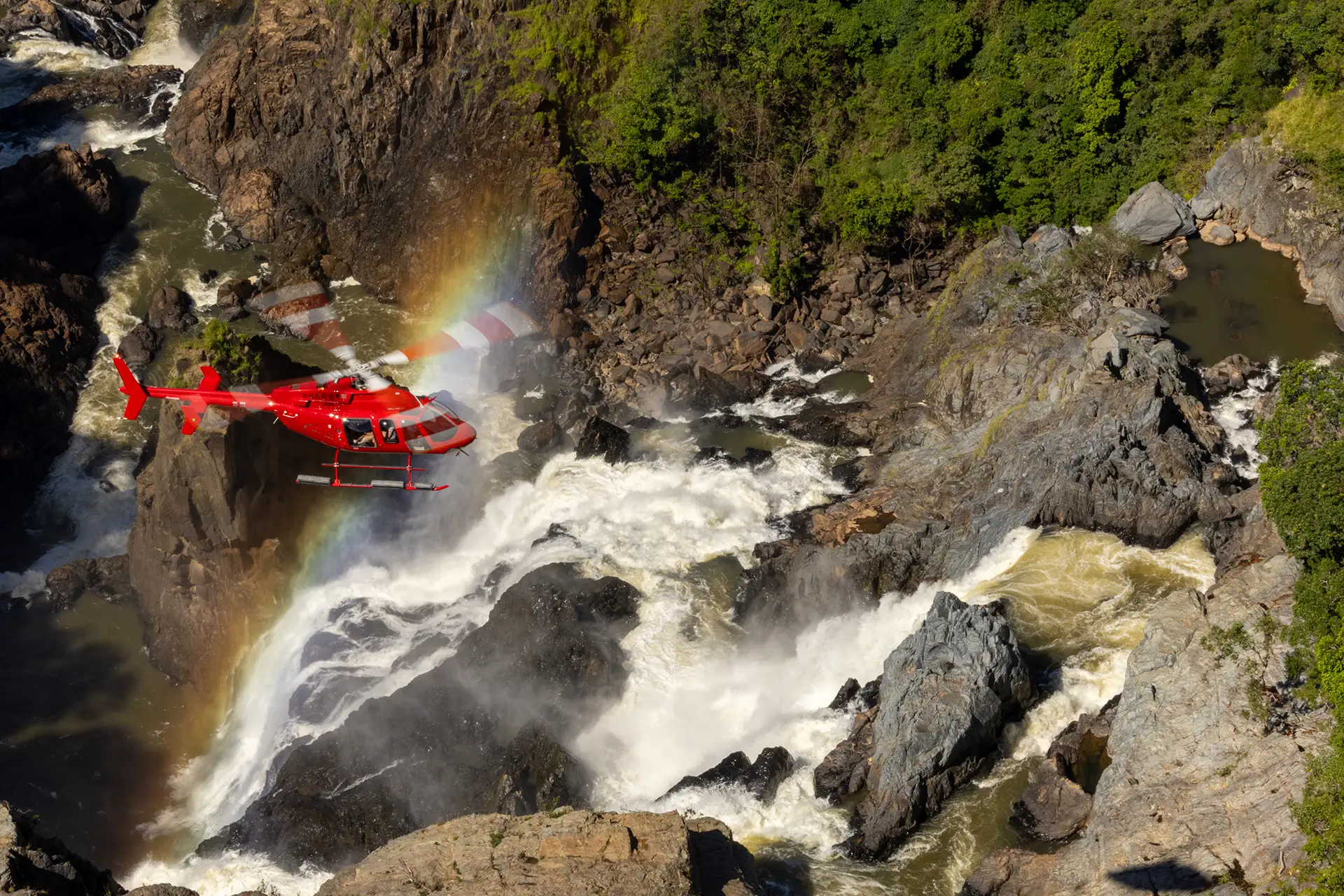
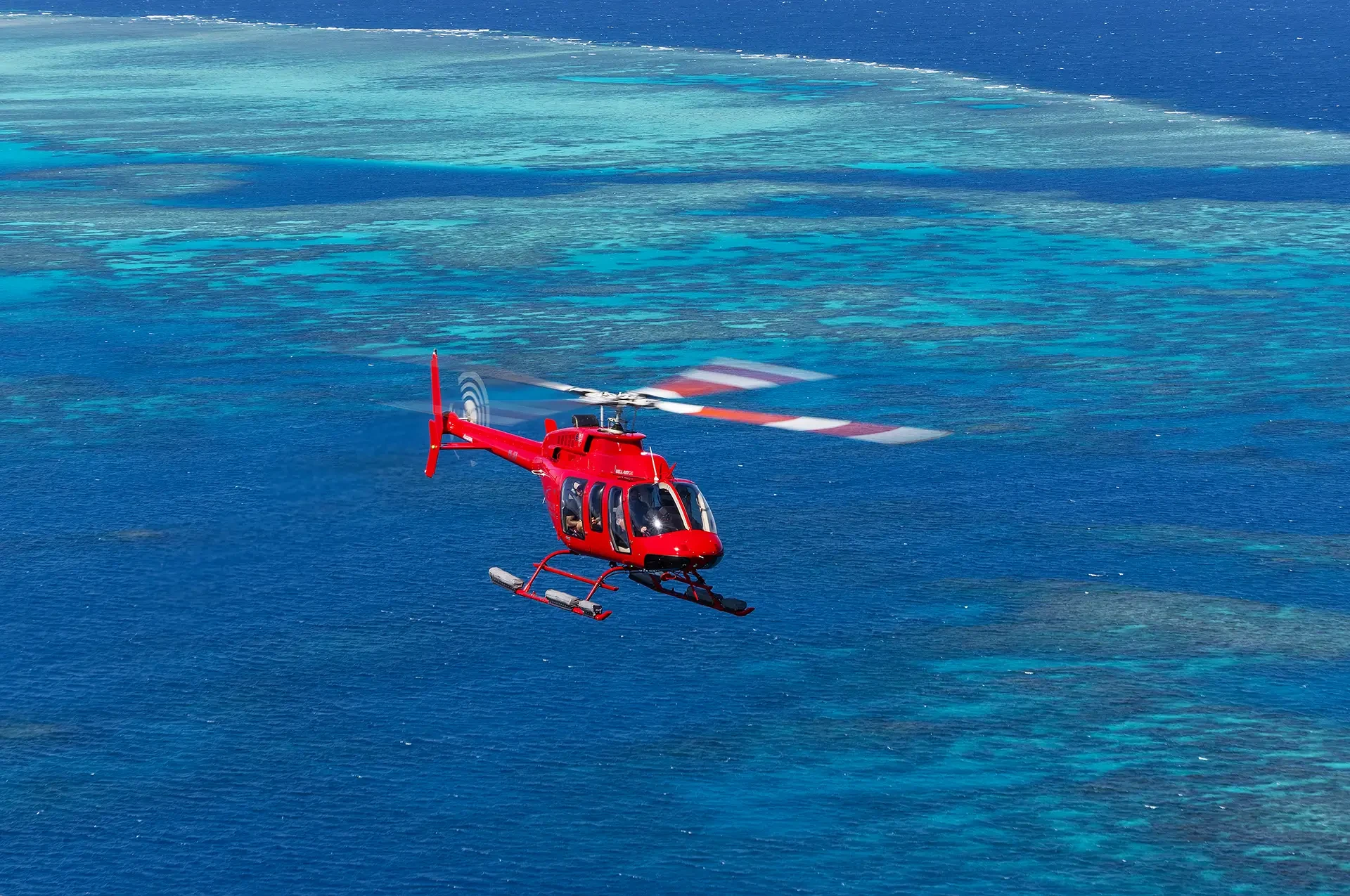
While not as physically demanding on the 407GXi engines and rotors, the other tourism flights highlight the aircraft’s efficiency and flexibility. For instance, in the morning, a pilot may fly one of two of the 45 or 60-minute Reef & Rainforest Scenic Flights. These flights take passengers out over the Great Barrier Reef and then transition back inland to the rainforest-covered Barron Gorge National Park. Passengers experience beautiful aerial perspectives of the park and other complex features, such as the 250-meter Barron Falls and hydroelectric infrastructure along the Barron River.
After landing back in Cairns, the pilot can then find themselves loading passengers and baggage to take out to the dusty, rugged environment
of the Outback for transfers to the Mount Mulligan Lodge. These regular flights through vastly different environments are not only tourist
favorites but also showcase the flexibility and readiness of their new helicopters.
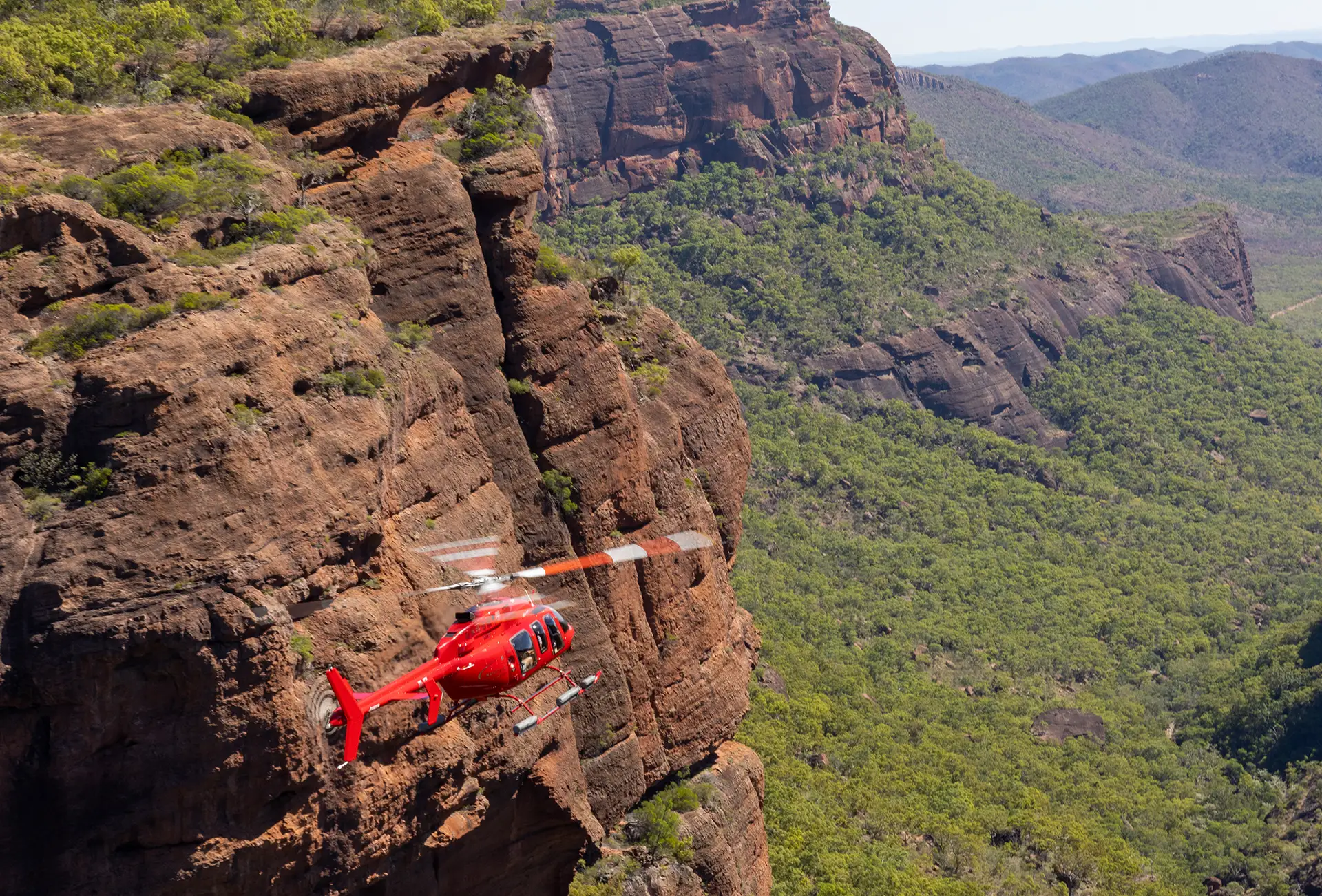
Outback Operations: Mount Mulligan Lodge
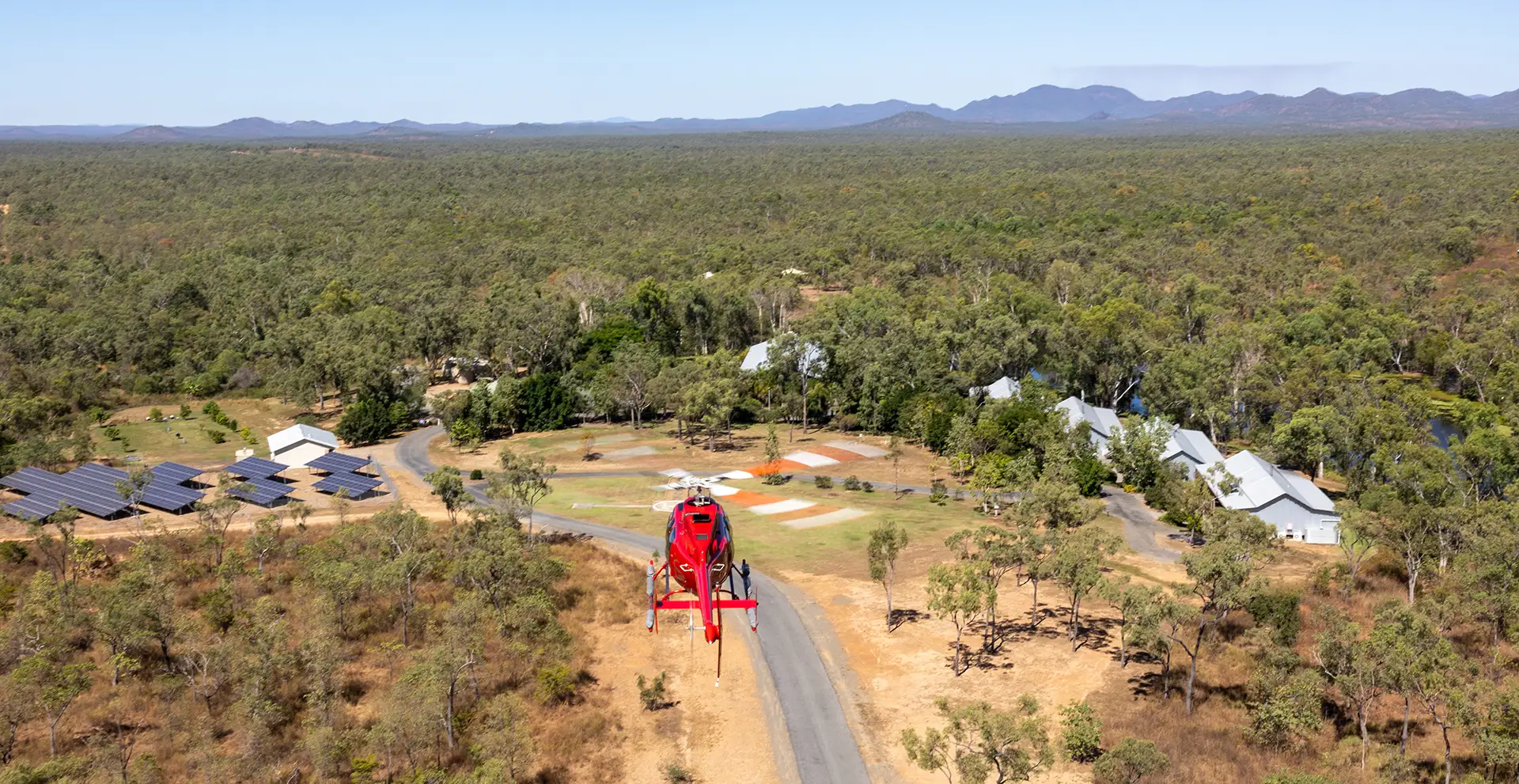
Mount Mulligan Lodge is a self-sufficient, luxury five-star resort nestled in the heart of the Australian Outback that offers guests a unique blend of rugged beauty and high-end comfort.
Helicopter transfers from Cairns to Mount Mulligan take about 30 minutes, flying over diverse and austere landscapes that can only be accessed by air. Although being a far cry from the salt spray and humidity of the reefs and rainforest, the 407s show they are equally at home in the dry, dusty heat of the Outback - whether performing direct passenger transfers or supporting commercial operations.
Equipped with adequate baggage storage and, if required, specialized baskets for external loads, the new Bell accommodates various needs, from soft-sided duffel bags to equipment for remote operations. The lodge’s location and customers’ expectations further emphasize the importance of having an aircraft capable of balancing comfort, performance, and technical reliability in demanding and adverse conditions.
Multirole Capability and Operational Adaptability
While tourism remains a cornerstone of their operations, the Bell 407GXis have proven to be an indispensable asset in all the roles they are asked to fill, even in commercial and emergency response.
With minimal reconfiguration, these helicopters have successfully undertaken infrastructure surveys, long-line operations, fire suppression, and flood relief missions, demonstrating their multirole capability. The inclusion of advanced avionics and superior power margins provides enhanced safety for pilots, particularly those transitioning from older models in the fleet such as the Jet Ranger.
Aaron Finn explained, “We could do a reef flight in the morning, and by the afternoon, switch to infrastructure work or logistical support.” This flexibility has been crucial in maximizing aircraft utilization, allowing the fleet to collectively log nearly 4,000 hours since its introduction in April 2023. The combination of efficient, preventative maintenance protocols, robust design, and versatile mission profiles ensures that their 407GXis are ready to meet the complex and varied demands of their busy operational schedule year-round.
Future Trajectory: Technical Growth and Strategic Expansion
As Finn and Nautilus Aviation look toward the future, the company’s focus remains on technical innovation and operational scalability. Partnerships with the Morris Group and Bell have been integral to its growth, enabling the company to leverage shared resources and expertise to enhance efficiency and expand capabilities. According to Finn, the collaborative structure within the Morris Group fosters synergies across various assets and services, creating opportunities for optimized operations and mutual growth. This strategic alignment has allowed Nautilus to integrate its aviation expertise with the broader objectives of the group.
The company’s partnership with Bell, particularly during the transition to their new 407GXis, underscores the importance of having reliable manufacturer support and technological collaboration from day one. Finn emphasizes the significance of Bell’s role in helping to address operational challenges effectively, stating, “The communication and backup support from Bell have been exceptional, particularly in navigating early-stage hurdles with the new fleet.” The proactive approach from Bell has provided them with the confidence to consider further fleet expansion, depending on operational requirements and market demand of course.
From a technical perspective, the company’s strategy of fleet standardization has allowed them to successfully maximize fleet flexibility whilst maintaining high aircraft availability and minimizing downtime. The Bell 407GXis, with their robust design and ready adaptability, have proven to be a reliable, powerful solution to the company’s diverse operational needs.
Aligning technical advancements with operational goals, Nautilus Aviation’s approach to their missions reflects a commitment to adaptability and forward-thinking. Under Finn’s experienced and thoughtful guidance, the company appears poised to meet future challenges head-on, no matter the task.