 HOME
HOME





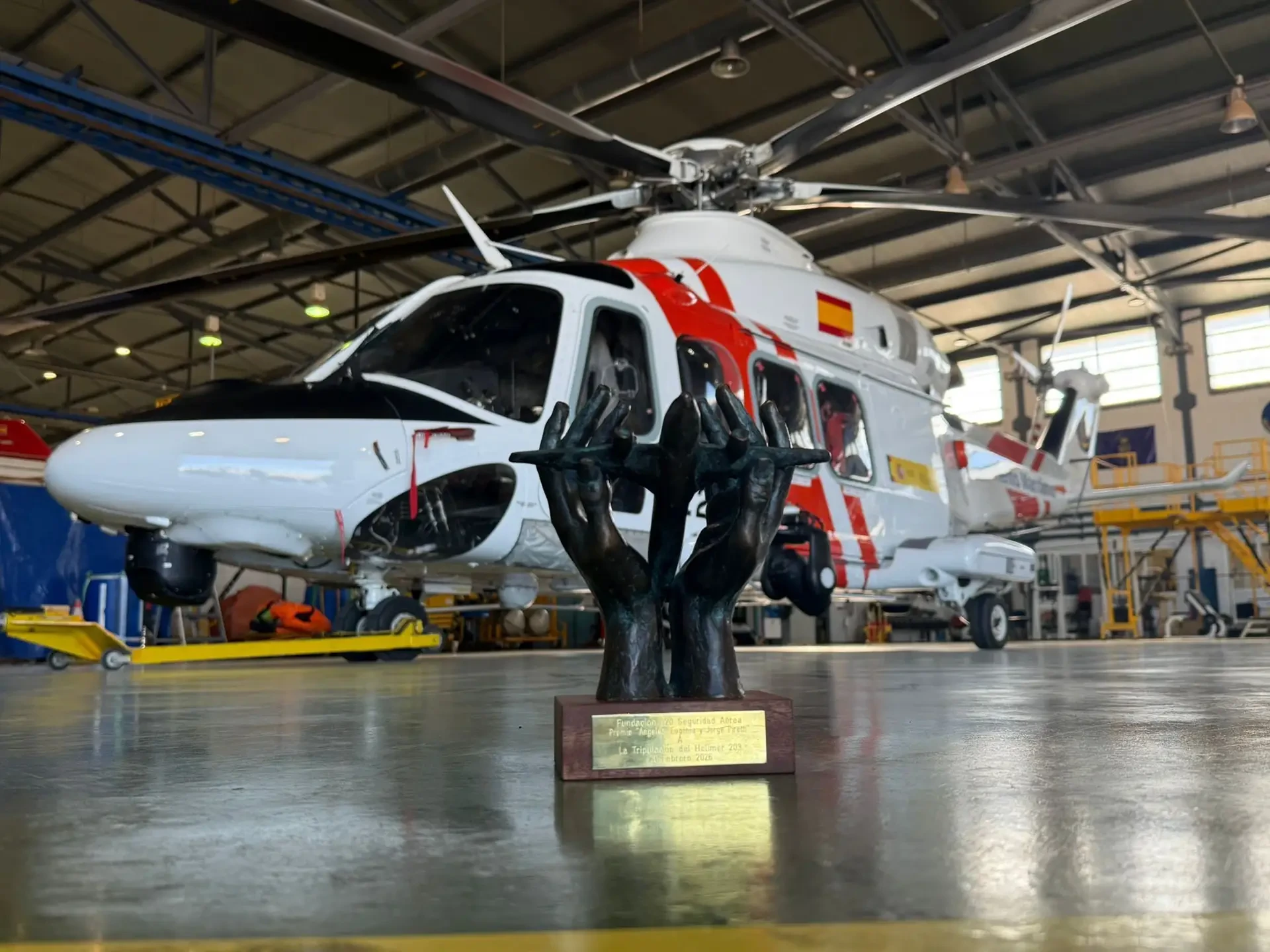
During severe flooding in Valencia caused by Storm DANA in October 2024, DANA, the Spanish SAR helicopter Helimer 203, launched into chaotic, hazardous conditions with limited tasking information and conducted multiple rescues through the night, ultimately saving 11 lives. The events illustrate how successful outcomes in helicopter SAR 'shouts' are rarely the result of luck or heroism alone, but instead reflect years of training, shared experience, crew coordination, and a deeply embedded safety culture. Alex Pollitt highlights the importance of examining and learning from successful missions with the same attention normally given to accidents, recognizing that these moments reveal the human and organizational factors that enable effective SAR operations.
Note:
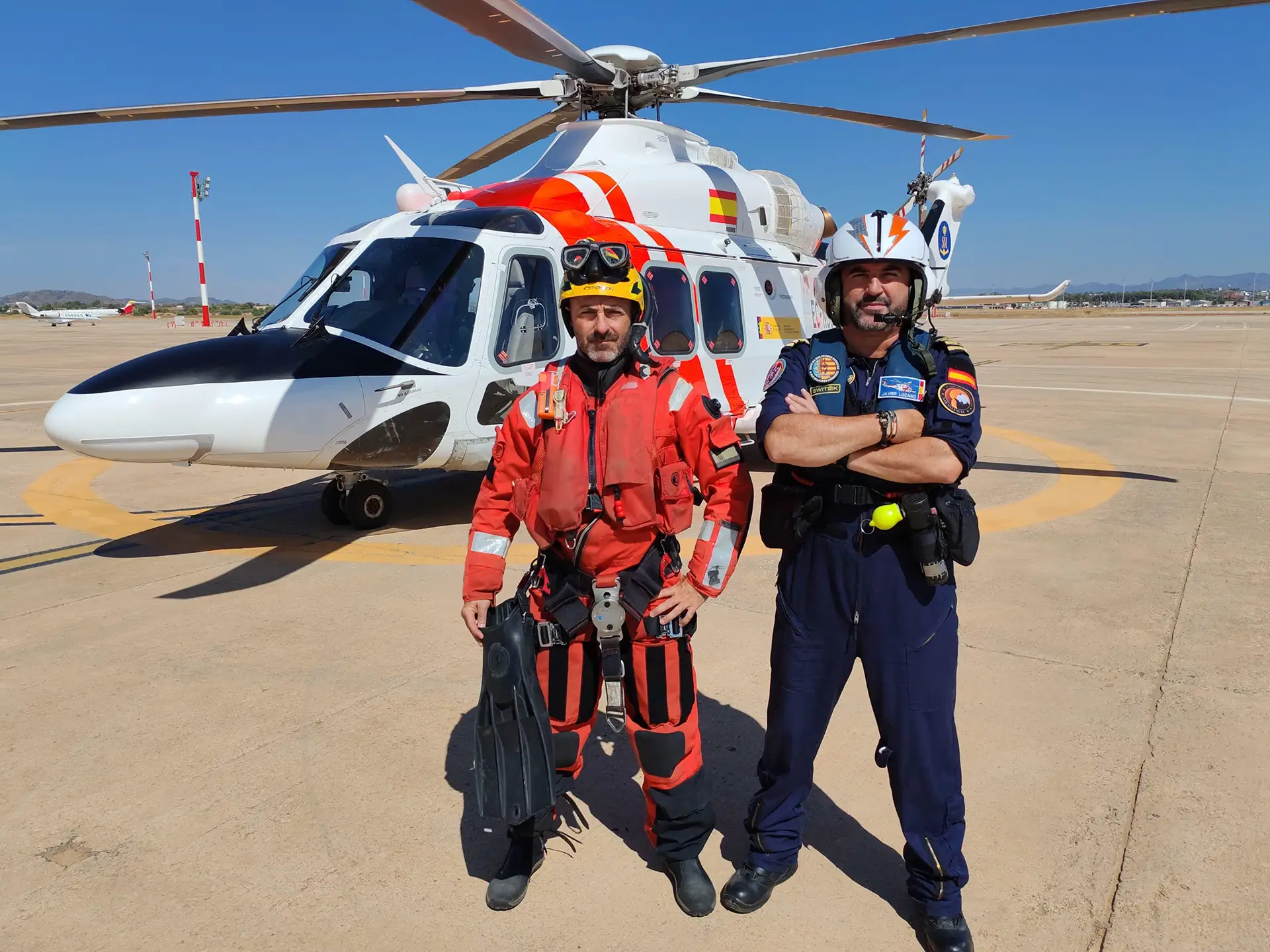
This account is based on personal conversations with Captain Javier Lozano and members of the Helimer 203 crew who flew during the Valencia flooding of October 2024. The author previously served on the SAR team in Valencia and has flown operationally alongside the individuals involved, whom he regards as trusted colleagues and esteemed friends. The events and reflections presented here draw on those first-hand discussions with the crew.
The DANA storm arrives
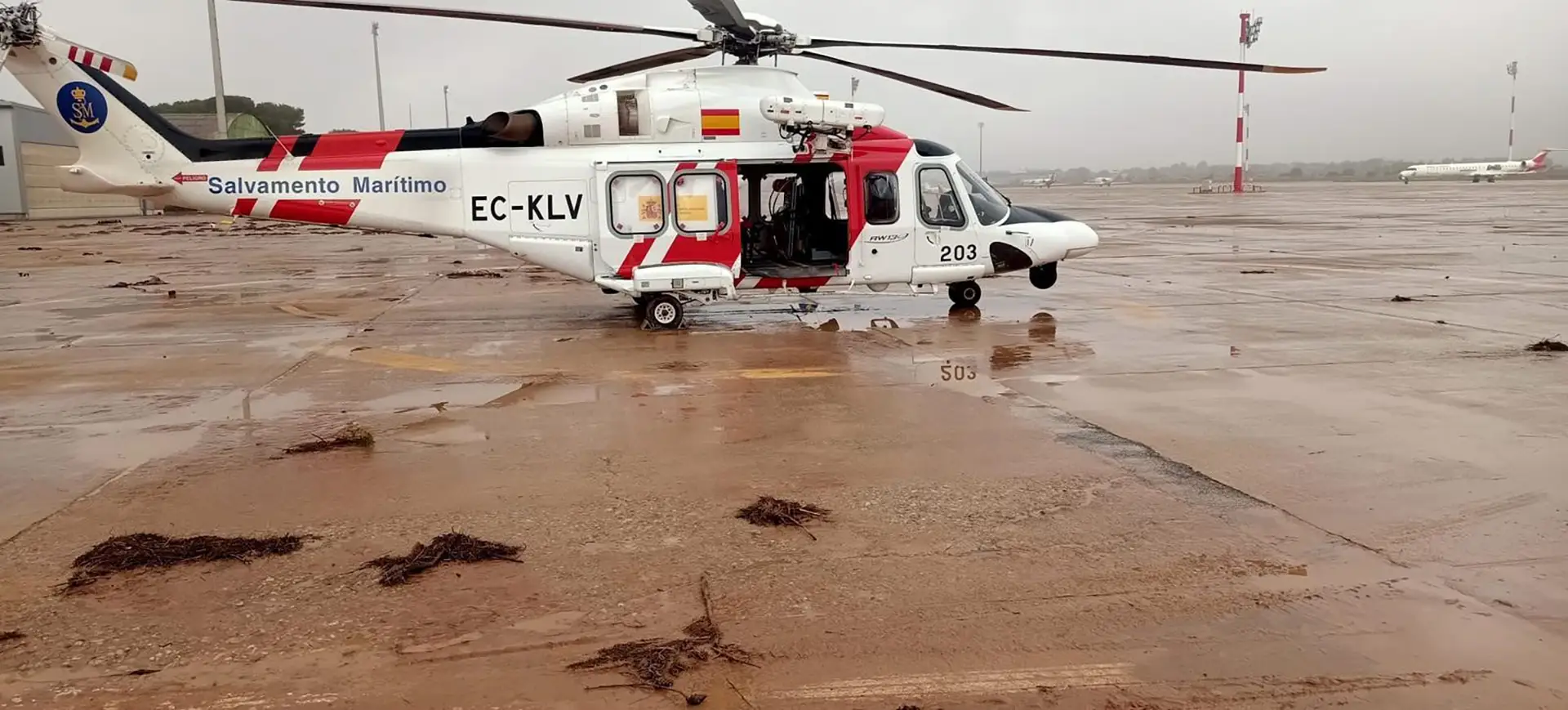
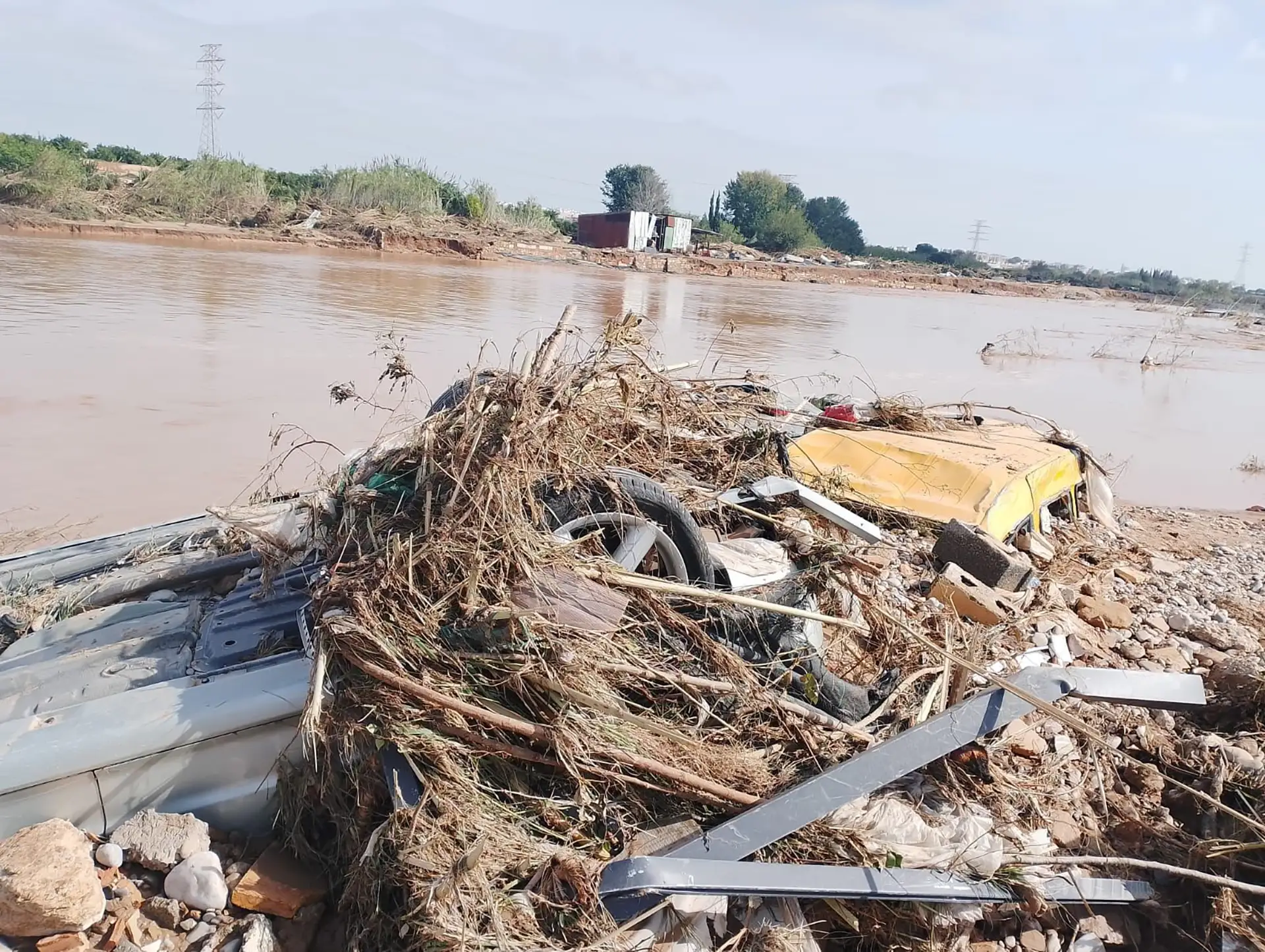
By 22:00 the rain had already been falling for hours, and it was becoming increasingly obvious that it wasn’t going to be an ordinary night. The duty SAR crew, finishing the day watch, listened as it hammered against the hangar roof at Valencia International Airport. The tarmac of the South Apron was awash; sections were already submerged beneath standing water. Night had fallen, and Valencia was being battered by a severe weather system. Later known as DANA for its acronym in Spanish (Depresión Aislada en Niveles Altos), it was driven by an upper-level cold-air depression interacting with copious warm moisture from the Mediterranean Sea. Within hours, the province would record rainfall totals approaching or exceeding a year’s average, triggering flash flooding, widespread destruction, and loss of life.
On base, the scheduled 22:30 handover of the SAR standby to the night duty crew was approaching, but conditions across the city were deteriorating rapidly. Roads were becoming impassable, metro stations were flooding, and members of the incoming crew were struggling to reach the airport.
By 22:30 the duty transfer should have been complete, but the oncoming co-pilot had not yet arrived. The only crew member not local to the base, he was staying at a nearby hotel and leisure complex, where earlier that evening he had entered the cinema to watch a film. But when he emerged over two hours later to attempt the short drive to the airport, floodwater had already filled the subterranean car park, and his vehicle, along with many others, was submerged before he could leave. Just a few hundred meters from the SAR base, urban drainage systems were overwhelmed, and flooding was intensifying. In the surrounding towns and villages, streets became fast-moving channels of brown water sweeping everything before it. Vehicles began to float, and then drift like leaves in a gutter, piling into corners, colliding, and then breaking loose again in the current. As forecasts worsened and the situation deteriorated, numerous emergency calls were reported across the region. Local fire crews and Guardia Civil units were attempting desperate rescues in hazardous conditions, and the first casualties were being called in.
Stranded at the complex and with no vehicle able to reach him, the co-pilot’s situation became clear to the team still on base, and without him, the helicopter could not fly. With the city flooding and no vehicles able to reach him, the outgoing rescue swimmers made an unusual decision: they would go and retrieve their own crewmate on foot.
By shortly after midnight, the first rescue of the night shift - that of their own crew member - was complete, and the team regrouped at their base, where the scale of the unfolding emergency was becoming increasingly apparent. In the early hours of 30 October 2024, Captain Javier Lozano and his team were finally authorized to launch. Amid the growing chaos, the instruction relayed to them was as straightforward as it was imprecise: “Do what you can, where you can.”
Launch into the apocalypse
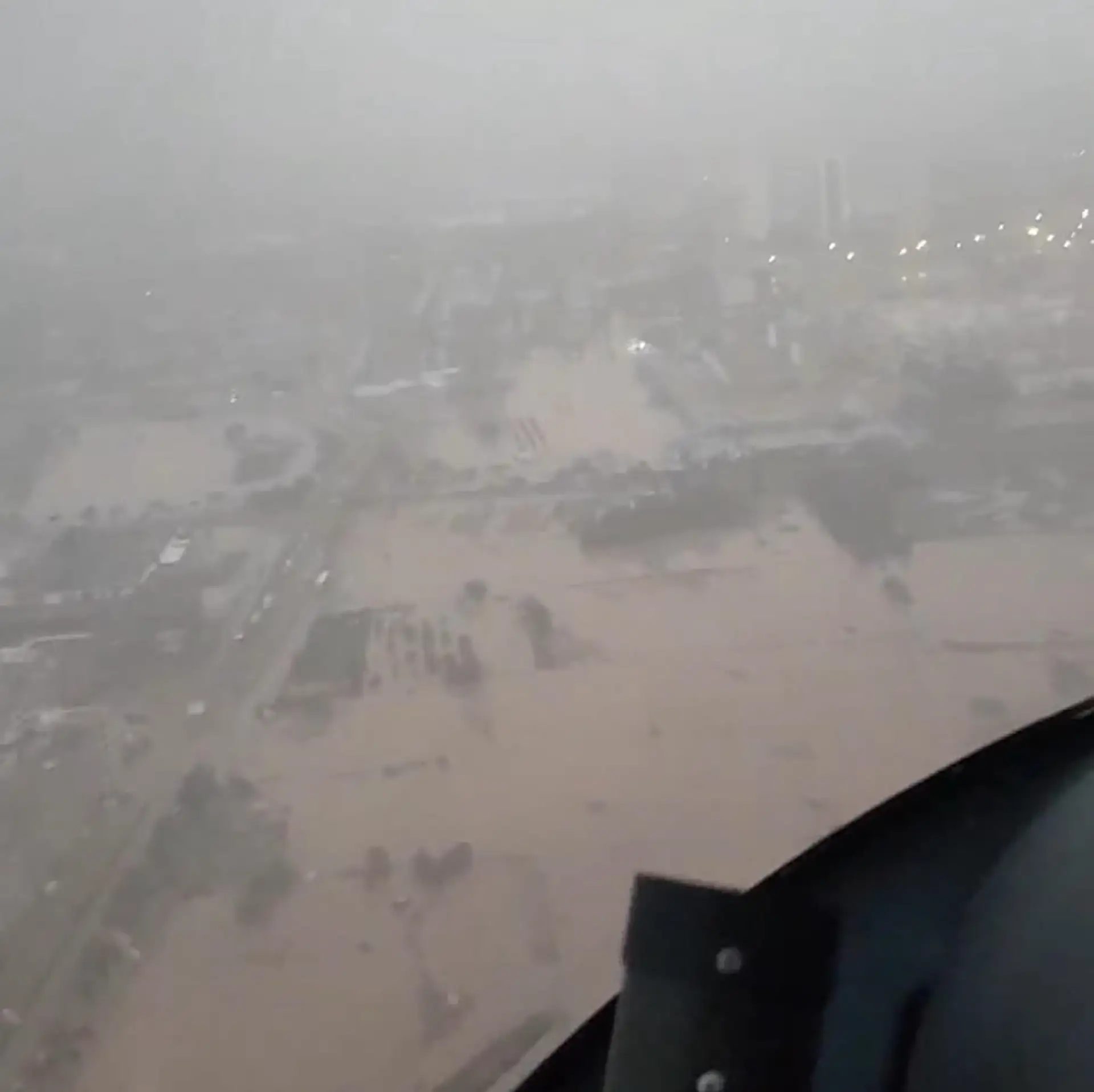
Callsign Helimer 203 took off into uncertainty. With no clear search area or tasking direction, they had to build their own picture of the situation bit by bit and then define their own mission priorities. In such hostile circumstances, which bore little resemblance to their normal offshore operating environment, and without the Night Vision Imaging Systems (NVIS) that are usually standard equipment for this type of low-level night flight overland, the crew faced an urban chaos of tower blocks, power lines, and communications masts all churned up with fast-running water. They were sandwiched in a small, barely workable layer between the unfamiliar risks below and the stormy ceiling of low-scudding clouds and rain above, where unseen obstacles in the poor visibility were a constant threat.
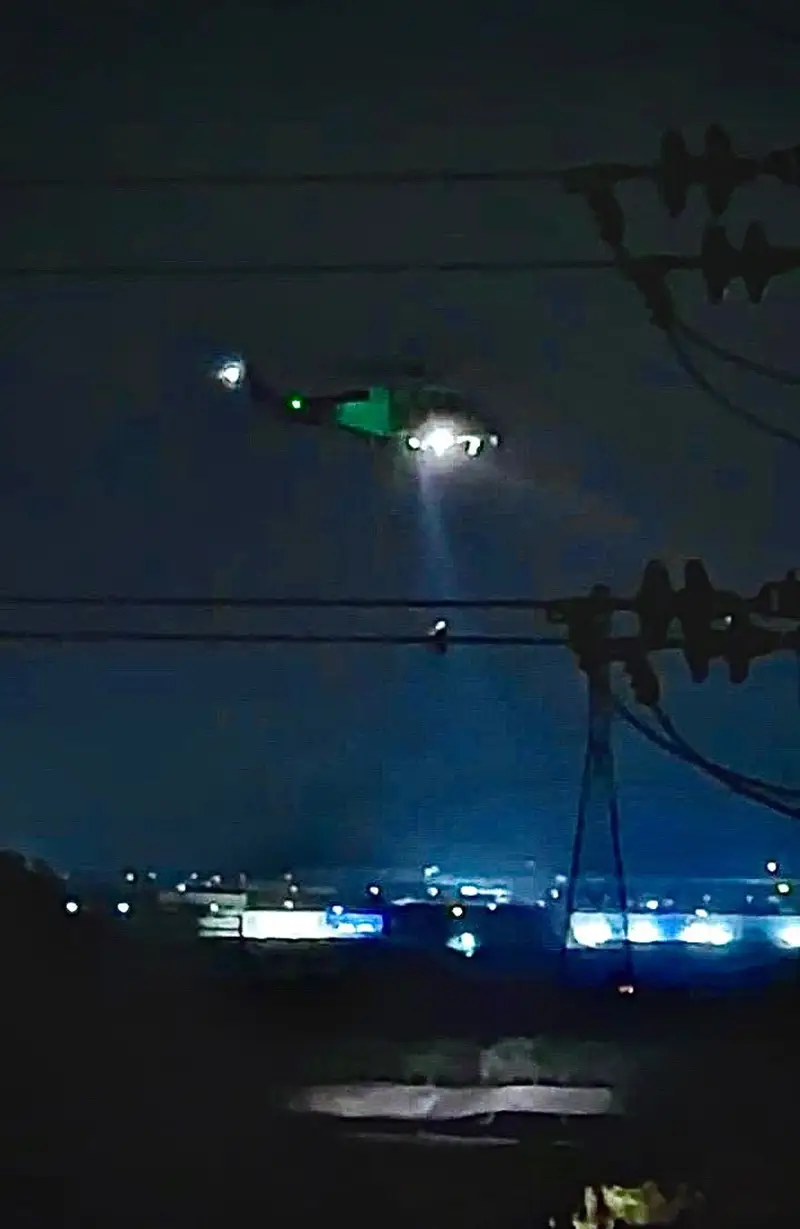
Everywhere they flew, they saw people in distress. “It was like being inside a film,” said Captain Javier Lozano when describing the experience afterward, “no light, no information, and the glow of hundreds of mobile phones signaling for help.” Winch operator Guillermo Peñuelas explained the gravity of that responsibility, saying, “We had to decide who to rescue first by using the FLIR camera to distinguish those who were in imminent danger of their lives from the rest.”
In one of these scenarios, they found four people trapped by rising water under a highway, who were at high risk of being swept away. Working in a confined area surrounded by high-tension power lines, a transcript from the cockpit voice recorder (see box) illustrates both the hazards outside the aircraft and the level of crew coordination required to manage them.
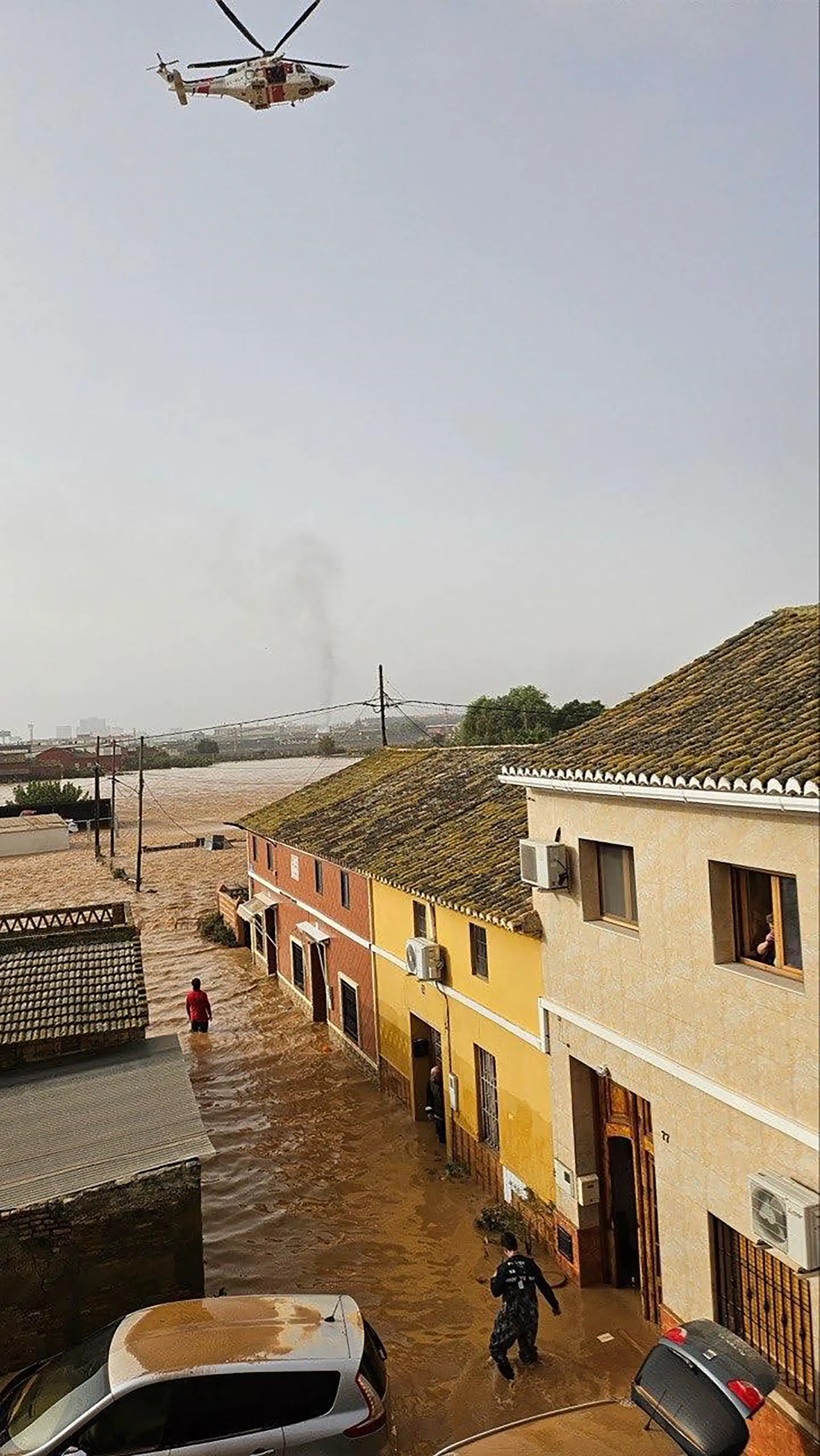
Helimer 203 was the only helicopter in the sky that night. Over twelve hours of duty, the crew saved eleven lives and a pet dog before returning to base with no damage to the aircraft or injury to themselves. In the days that followed, some survivors would speak of having made peace with their fate before help arrived from the darkness above. By any measure, the outcome was unequivocal. Lives had been preserved, risks managed, and the crew returned home safe. For a service that defines itself by the phrase “That others may live,” this alone appears to represent success in its purest form.
Yet what success truly looks like in helicopter SAR is a question rarely examined. Those who devote their professional lives to the role are trained to focus forward on things like readiness, training, and the next tasking. We often concentrate considerable time and effort on dissecting what went wrong and forget to ask why a mission went right. If we are to learn properly from nights such as this, that question deserves closer attention.
The Anatomy of Success
It’s easy in any activity to look to outcomes to define success. We got back safe. Nobody died. Landings equal take-offs. By that measure, returning from a flight where lives were assisted or saved allows us to declare success. But take a deliberate step back, and it becomes clear that success is not defined in those rare, fleeting instances of life-saving or aeronautical challenge. In truth, it is a product of the long-term, consistent application of procedural standards, hard-learned over years of organizational experience, institutional memory, and professional culture. Good operational outcomes are simply the successful harvest of years of preparation.
Being able to do so depends on nurturing the knowledge, skills, attitudes, and culture that are the foundations of performance. Good outcomes are cultivated through constant, repetitive training, where deliberate practice develops confidence and automaticity and builds mental frameworks with which novel operational challenges can be confronted. And it is underpinned by team dynamics forged in the crucible of learning from shared experiences and each other's errors.
If ever there was an illustration of this, the experience of Captain Javier Lozano and his crew on October 29-30, 2024, paints no better picture of how and why. Reflecting afterward on the experience of that night, in his own words, Lozano eloquently and perceptively outlines the depth and breadth of what it takes to manage uncertainty, risk, and human limitation under pressure in the real world.
“Working with rescue helicopters is working on the limits of possibility, in complex, changing, and often hostile scenarios. I remember clearly the sensation of finding myself staring into a scene that could only be described as apocalyptic. But I also remember something even more important: the serenity and the focus inside the aircraft. It was the coming together of a crew with both experience on type and a depth of knowledge given by years of working the area they were flying in, with each and every one of its obstacles. We had been flying together for 18 years. We were coordinated by an almost intuitive understanding of each other and how we worked together, driven by consistently training at night, which -that night - made the difference. We had the certainty that each one of us knew how the other would react. There were instantaneous decisions taken that were proved correct. There was situational awareness. And we showed physical and mental endurance.”
“For those of us who live the experience of aviation from the inside, flight safety isn’t just a discussion about rule or procedures. It’s about people, about trust, and about decisions taken in seconds which could have life-long consequences. Over the years you learn that safety is above all else an attitude. There was a culture of safety in our way of thinking. Thanks to that we were able to carry out rescues in an extremely hostile environment, in a controlled manner which still respected our limitations. And that night during the storm was a reflection of the preparation and experience of a crew who had etched into their DNA a life’s work dedicated to the role of saving others.”
The why of SAR
This story is a lesson in how the sector should learn from its successes, not just its failures. To do so, we need to pay attention to what motivates and drives success with the same analytical precision that we dedicate to unpicking human error and systemic failure after things go wrong. After all, it would be too easy to learn nothing from such a genuine success story.
Eleven lives were saved that night. But the deeper success lay in something less visible: a culture of trust, discipline and shared experience that allowed a crew to function decisively in uncertainty.
To learn nothing from that would be the real failure.
BOX
This is the transcript of the crew communication during one the hoisting rescues that night. Overhead flooded buildings, the rescue swimmer is already deployed on the ground and working to locate the survivors.
| ROLE |
CREW COMMUNICATION |
| WO |
“They’re well behind us. Something like five or six times the distance of the helicopter.” |
| FO |
“Can you see the position (of the survivors) - on the right-hand side, right?” |
| CAPT |
“Yes, yes. I can see them as well.” |
| FO |
“I’ve got good eyes-on now, you’re in a good position” |
| CAPT |
“I’ve got a mess of (high tension) cables, but as I can’t see where they go... it’s going to be a bit…” |
| |
“Look, they’re on top of the roof… they’re there (Name of WO)... on the roof.” |
| WO |
“Two of them. “(Name of RES) where you are, there… we have the cables really close, man.” |
| |
(to CAPT)“Let’s see, (Name of CAPT). Can we put him there, on top of the cables, or not?” |
| CAPT |
“Yes…if not…” |
| WO |
“Ok then. Right three (units).” |
| CAPT |
“Right three. I’m coming one forward as well, ok?” |
| FO |
“You see the line (of cables) don’t you?” |
| CAPT |
“Yes, I have it. I have the cable here.” |
| FO |
“Ok.” |
| WO |
“Right three.” |
| CAPT |
“Right three.” |
| WO |
“We’ve got the cables right there, but we’ve got enough separation.” “Ok. Right one.” |
| CAPT |
“Right one.” |
| WO |
“And right…right two.” |
| CAPT |
“Right two.” |
| WO |
(to RES) “(Name of RES) how many (floors) are you coming up? |
| FO |
“There’s a streetlight...” |
| WO |
(to RES) “How much are you coming up? One? |
| |
“Only one, (Name of CAPT).” |
| FO |
“Yes, look. There’s a streetlight to the left, behind the tail… at about 100 meters.” |
| CAPT |
“Ok. I’m staying here.” |
| FO |
“You’ve got a margin…” |
| CAPT |
“I’m staying here. I’ll stay here. It’s no problem.” |
| WO |
“Ok. Great… Steady. Stay there if you like.” |
| CAPT |
“Staying.” |
| WO |
“Ok then, winching out.” “What height are we at?” |
| CAPT |
“Ok. Winching out.” |
| FO |
“One-seventy.” |
| WO |
“Hook reaching hands of the rescue swimmer” |
| |
“I’m going to need a Back, just half (a unit)” |
| CAPT |
“Back, half?” |
| WO |
“A half… Half (Name of CAPT)”. |
| CAPT |
“Back, half.” |
| |
(To RES via portable radio) “(Name of RES) can you come up? |
| |
“(Name of RES), talk to me!” |
| RES |
(Seen to nod in response) |
| CAPT |
“Ok. Ok. Holding position” |
| WO |
“Winching in.” |
| |
“They’re off the roof.” |
| |
“Ok, get to a more comfortable position if you like, they’re clear.” |
| CAPT |
“Very good then. Moving left… and coming up a touch.” |
| FO |
“One seventy-five.” |
| CAPT |
“Actually, no. I’m staying here… just in case.” |
| |
“Are they coming up in the strop, in the end?” |
| WO |
“No, they’re in the rescue vest.” |
| |
“Ok, they’re reaching the aircraft.” |