 HOME
HOME





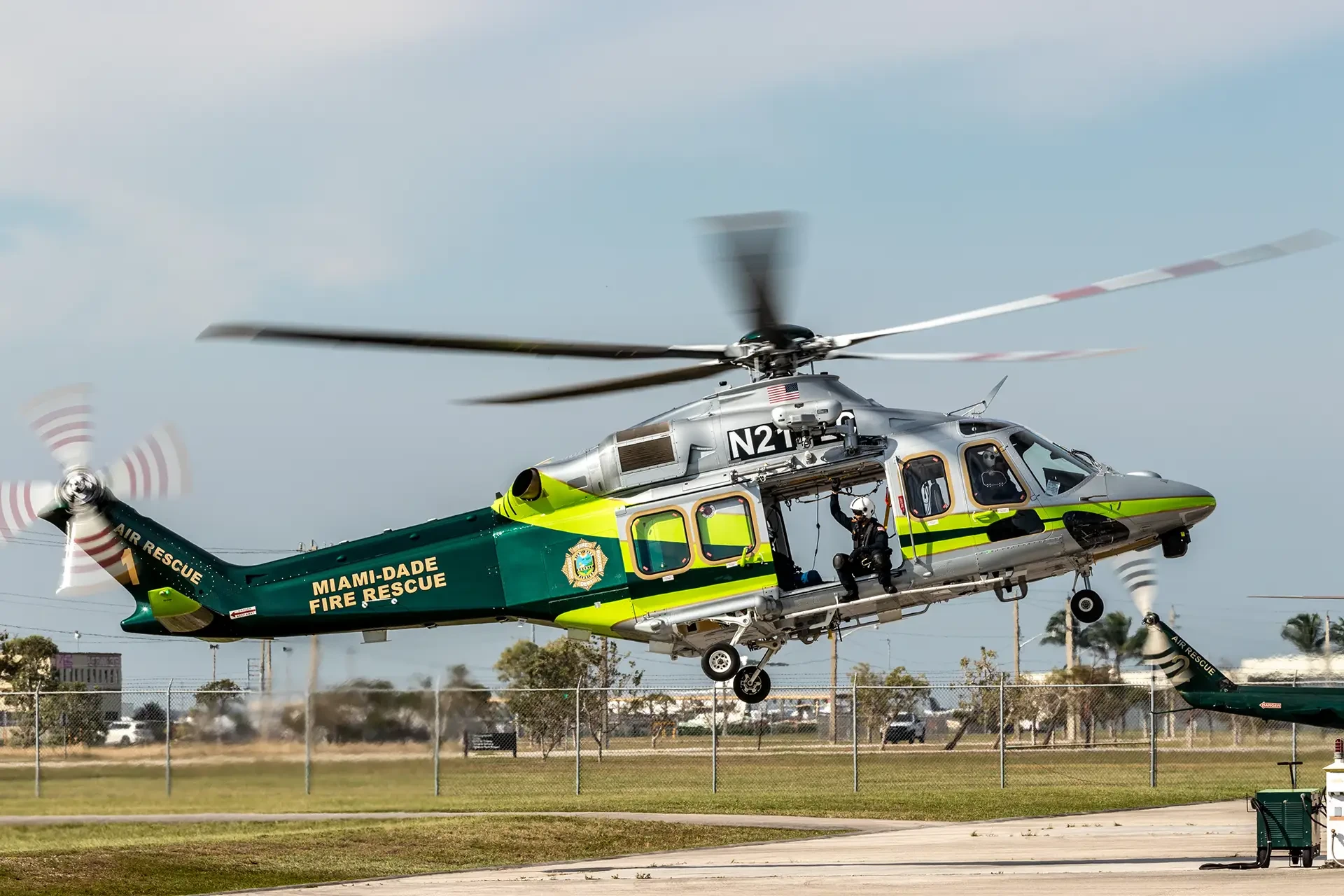
In May 2026, an AW139 helicopter operated by Miami-Dade Fire Rescue made an inadvertent wheels up landing after arriving on scene to respond to a mass casualty event. Experienced crew in an advanced helicopter that has been in service for many years. Alex Pollitt examines the ‘how can this happen’?
It is important to emphasize that the incident is still under investigation, but it appears that the crew ‘forgot’ to lower the undercarriage as they descended into a field site. The AW139 has been operating in the Search and Rescue (SAR) role for some 20 years. In that time, it has been landed by crews with the wheels up inadvertently on at least two occasions. How many times other pilots have come close is impossible to know, but the 'iceberg model' suggests it must be many. Two different crews from two different operators in two different countries, yet the same outcome in very similar circumstances. How can highly trained aircrew operating one of the world’s most sophisticated rescue helicopters make exactly the same mistake? This article investigates the 'why?' and the 'how?' of such incidents by examining the two known unintended wheels-up landings that have taken place on this type and asks if there is something about SAR operations that makes such events more probable, and why the latest incident almost certainly won’t be the last.
I make the case that if one thing is for sure, it's that few pilots simply forget to lower the landing gear.
In August 2016, almost exactly a decade before this year’s Miami incident, another AW139 operated by the Japanese Coast Guard, touched down on a beach with its landing gear still retracted. The helicopter had just conducted two separate hoist recoveries to retrieve two survivors who were stranded in a small cove following a tropical storm. Having just completed a hoist rescue of the second survivor and being close to the shoreline, the crew elected to hover-taxi directly into a landing on the nearby beach, where an ambulance was waiting among bystanders for the move to a local medical facility. By repositioning without transitioning into forward flight, the crew’s normal rhythm and work cycle were disrupted, and as they descended, the landing gear caution illuminated and an aural landing gear warning sounded, but neither prompted the response they were designed to do. The cues were present but unseen or unheard, failing to penetrate a cockpit work cycle whose attention remained focused on the rescue and landing tasks.
Neither of these aircraft landed wheels up because their crews forgot to lower the landing gear. Remembering, or forgetting,
something is a function of memory, and in each case, the crews’ failure to lower the gear had nothing to do with their memory. The landing
gear wasn't forgotten, but it was a victim of attention, or, indeed, lack thereof.
The vulnerability of the attention mechanism in high-task-load environments
Psychologists no longer regard attention as a single mental process, but as a collection of interacting mechanisms that enable us to manage multiple competing demands. In the cockpit, this requires pilots to continually distribute limited attentional resources across numerous tasks, switching between flying the aircraft, monitoring systems, navigating, communicating with crew members and air traffic services, all while maintaining awareness of the external environment. This process of rapid allocation and reallocation of attention is termed selective attention, and it enables the brain to prioritize information considered most relevant to current goals while filtering out less salient cues.
Helicopter rescue is a high task load environment, meaning demand on selective attention is also high and constantly fluctuating. If we look at what both incidents have in common, a mass-casualty event or multiple people in the water means the crew knows that lives are at stake, creating perceived pressure and a cognitive draw on intrinsic attention. Secondly, all crew members are likely to be under heavy workloads simultaneously. Both task load and cognitive load are elevated by either preparing physically and mentally for their role or being already engaged in it. Third, during a confined area landing to an unfamiliar site, obstacles and hazards to the helicopter and the public are salient stimuli. The crew is in a state of high arousal, monitoring these threats. The handling pilot is concurrently focused on the approach profile and flight parameters; monitoring multiple parameters such as rate of descent, radalt height, and landing decision point.
Latent threats also heighten the need to prioritize attention in ways less apparent to a crew. Two pernicious little factors called
‘negative transfer’ and ‘habituation’ are often silently at play in the background. Negative transfer occurs when previously learned
knowledge, skills, or habits interfere with the performance of a new task, causing actions or responses that are appropriate in one context
to be incorrectly applied in another. One pertinent example of this is that many helicopter pilots develop their motor programs and work
cycles on fixed-undercarriage aircraft, meaning the cognitive triggers associated with lowering the landing gear are less deeply ingrained
when they transition to retractable-gear types.
Furthermore, although the AW139 has become a highly capable SAR platform, many of the warning philosophies surrounding the gear were
developed around conventional approach profiles rather than prolonged low-level hovering and maneuvering. This has led to the subsequent
ability to inhibit advisory systems and created habituation for crews accustomed to hearing and canceling aural warnings and deliberately
operating in configurations (such as very low-level, low-speed flight with the landing gear retracted), originally conceived only to be
triggered by undesired configurations.
Some mission demands, or profiles, can also create non-standard scenarios that disrupt normal work cycles, causing proper checklist usage to break down. Investigators in the Japan Coast Guard incident cited this as a factor in which the short hop from the SAR scene to the beach landing interrupted expected flight profiles and routines. Checklists and SOPs are key barriers to prevent crews from falling victim to this kind of occurrence, but their rigorous implementation depends upon crews’ understanding of how and why they work. Implementing a correct checklist philosophy can prevent the checklist itself from becoming susceptible to human factors. For example, when a checklist is run as an ‘action list,’ the crew depends upon it to ‘do the thinking’ and configure the aircraft for them. If instead, pilots proactively configure the aircraft according to situational demands, they remain cognitively engaged in the process. The list then becomes a second, redundant check that the configuration is correct.
Other critical crew Standard Operating Procedures (SOPs)z, such as 'sterile cockpit' and standardized crew callouts, set crew expectations
and routines, against which background missing items are more likely to stand out. They also create triggers for prioritizing attention and
formalized opportunities for intervention. The Crew Resource Management (CRM) culture in an operation - such as an expectation for full
crew monitoring of checks and pilot actions - is also critical to pick up errors between one another in high workload scenarios. Are all
crew members actively involved in monitoring aircraft configuration and checklist compliance? Four brains are theoretically four times
better than one and can often bring synergistic benefits, yet common distractions and shared attentional capture can cause all four crew
members to overlook the same cue simultaneously.
Beyond workload: Is selective attention the Achilles heel of expert performance?
Gear-up landings during SAR operations may be particularly likely because these missions combine high workload, dynamic environments, and non-standard flight profiles. But, although it would be easy to explain why experienced SAR crews can be vulnerable to these events simply in terms of workload, and see them as exceptions to expert performance, a more complete explanation suggests that they occur in part due to a trade-off inherent in human cognition itself. Indeed, the propensity for this kind of procedural omission may represent an unintended consequence of expertise rather than a failure of it. Experts are successful because they are exceptionally skilled at identifying what matters most and filtering out everything that does not. The same cognitive architecture that allows rescue crews to perform effectively under pressure, therefore creates predictable vulnerabilities when routine actions compete with more salient operational demands.
As cognitive psychologist Gary Klein found in his work on firefighters, military commanders, and emergency responders, experts rapidly focus attention on cues that appear most relevant to achieving the mission objective while suppressing less salient information. This process, known as 'Recognition-Primed Decision Making', allows fast and effective action in dynamic environments. Klein suggested that experts rely less on explicit comparison and procedural reasoning than novices. Instead, they recognize patterns and act intuitively based on their experience. This mode of cognition is exceptionally effective in dynamic environments but can lead to the omission of procedural steps when events deviate from established scripts.
Endsley’s work on situation awareness similarly demonstrates that attention is preferentially directed towards elements perceived as
relevant to the immediate task, with lower-priority information filtered out. This filtering process is not evidence of
forgetfulness or carelessness, but part of an adaptive cognitive system optimized for managing threat and uncertainty. The phenomenon is
closely related to what psychologists call 'inattentional blindness'. The classic 'gorilla basketball experiment' by Simons and Chabris,
familiar to many readers from CRM training courses, demonstrates that individuals concentrating on one task can fail to perceive highly
conspicuous events occurring in plain sight. When attention becomes focused, it is necessarily withdrawn from competing information.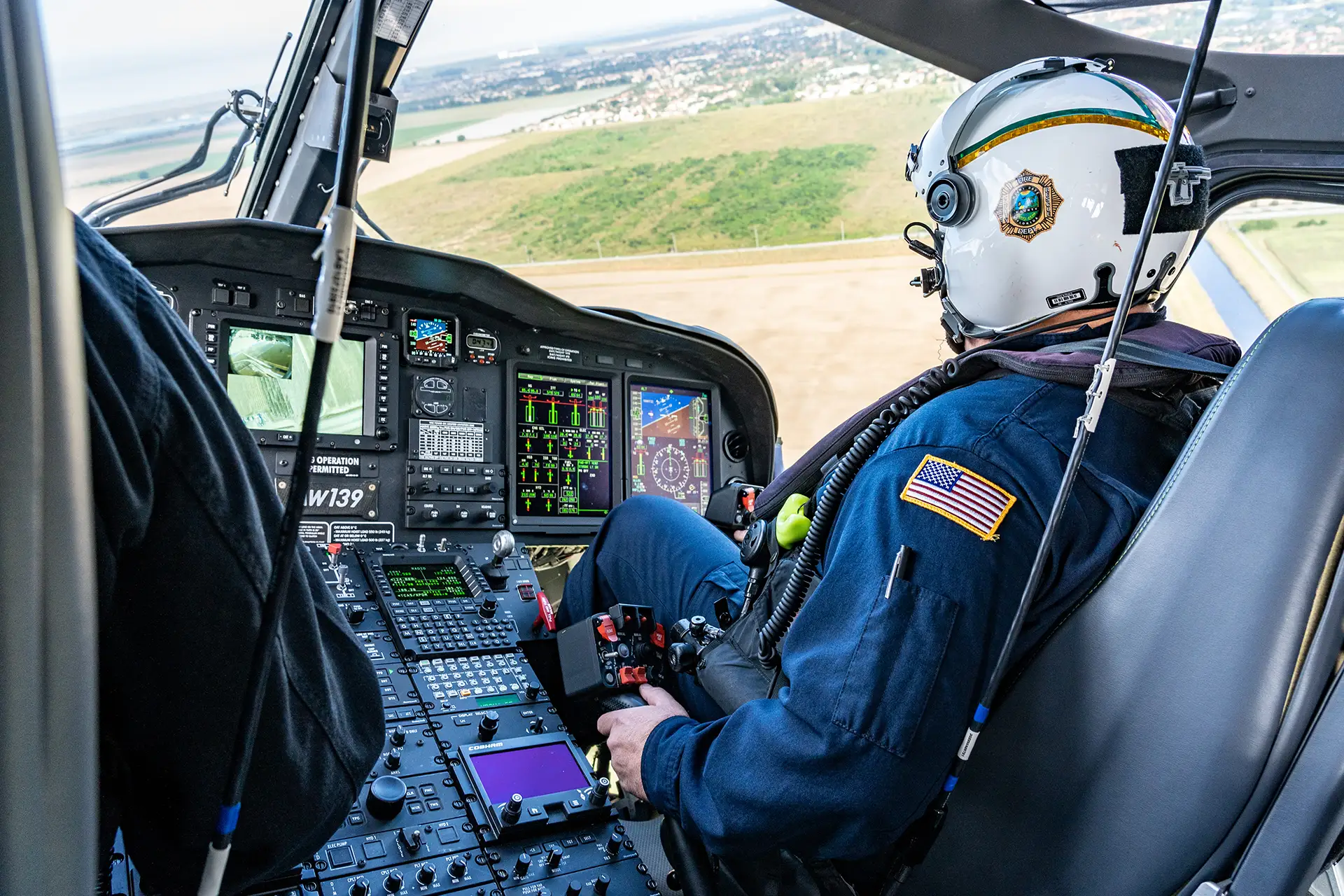
A pilot approaching a confined beach landing with survivors nearby will not devote equal attention to the landing gear indication, the
survivor’s position, terrain and obstacles, crew communications, and the condition of the casualty. Their cognitive resources are finite.
Expert performance, therefore, depends on prioritization. So, in both Miami and Japan, the crew’s attention was focused on the hazards that
mattered most: the cognitive load of decisions to be taken during a life-saving mission; the pressure of multiple casualties and survivors;
the effect of rotor downwash on small vessels, members of the public, and loose items; and finally, a confined landing area replete with
hazards and obstacles. This tendency can be highly adaptive, in which obstacles, survivors, wind conditions, and aircraft positioning
appropriately assume priority over other more routine tasks. However, the very process that enables crews to concentrate on mission-critical
information can simultaneously render fewer salient cues effectively invisible, making it very difficult to assimilate other information,
even when it is directly in front of you.
Thus, attentional mechanisms appear to be heavily implicated in many inadvertent gear-up landings. As the AW139s descended to land in Japan
and Miami, with caution lights illuminated and aural warning sounding, these ‘reminders’ were not forgotten; they were unnoticed. The crew
was focused solely on the salient cues their training and experience had taught them to prioritize. It would be easy to casually attribute
such omissions to poor procedural discipline, inadequate training, or a weak safety culture. However, such explanations are incomplete.
These crews will almost certainly not be the last to make this mistake, precisely because the conditions that give rise to it are deeply
rooted in the limitations and trade-offs inherent in human cognition.
 'Attentional
capture' is a powerful phenomenon, capable of overwhelming even highly trained and procedurally disciplined crews when operational demands
align to conspire against them. Yet this does not diminish the importance of procedures, habits, and non-technical discipline. Because
these vulnerabilities are part of the human condition, robust SOPs, standardized call-outs, checklist discipline, and active crew
monitoring remain the most effective safeguards against losing focus on routine tasks like configuring the aircraft for landing.
'Attentional
capture' is a powerful phenomenon, capable of overwhelming even highly trained and procedurally disciplined crews when operational demands
align to conspire against them. Yet this does not diminish the importance of procedures, habits, and non-technical discipline. Because
these vulnerabilities are part of the human condition, robust SOPs, standardized call-outs, checklist discipline, and active crew
monitoring remain the most effective safeguards against losing focus on routine tasks like configuring the aircraft for landing.
The lesson from Miami and Japan is therefore not simply to remember to lower the landing gear, for memory is a poor defense. The challenge for crews is to develop a sensitivity to those moments when their own attention - or that of a colleague - is susceptible to being drawn elsewhere. In such circumstances, deeply ingrained routines, disciplined crew habits, standardized call-outs, and active monitoring provide the cues and opportunities for recognition and intervention, and remain the strongest protection against one of aviation’s oldest and most embarrassing mishaps.
Don’t ‘forget’ to lower the gear!