 HOME
HOME





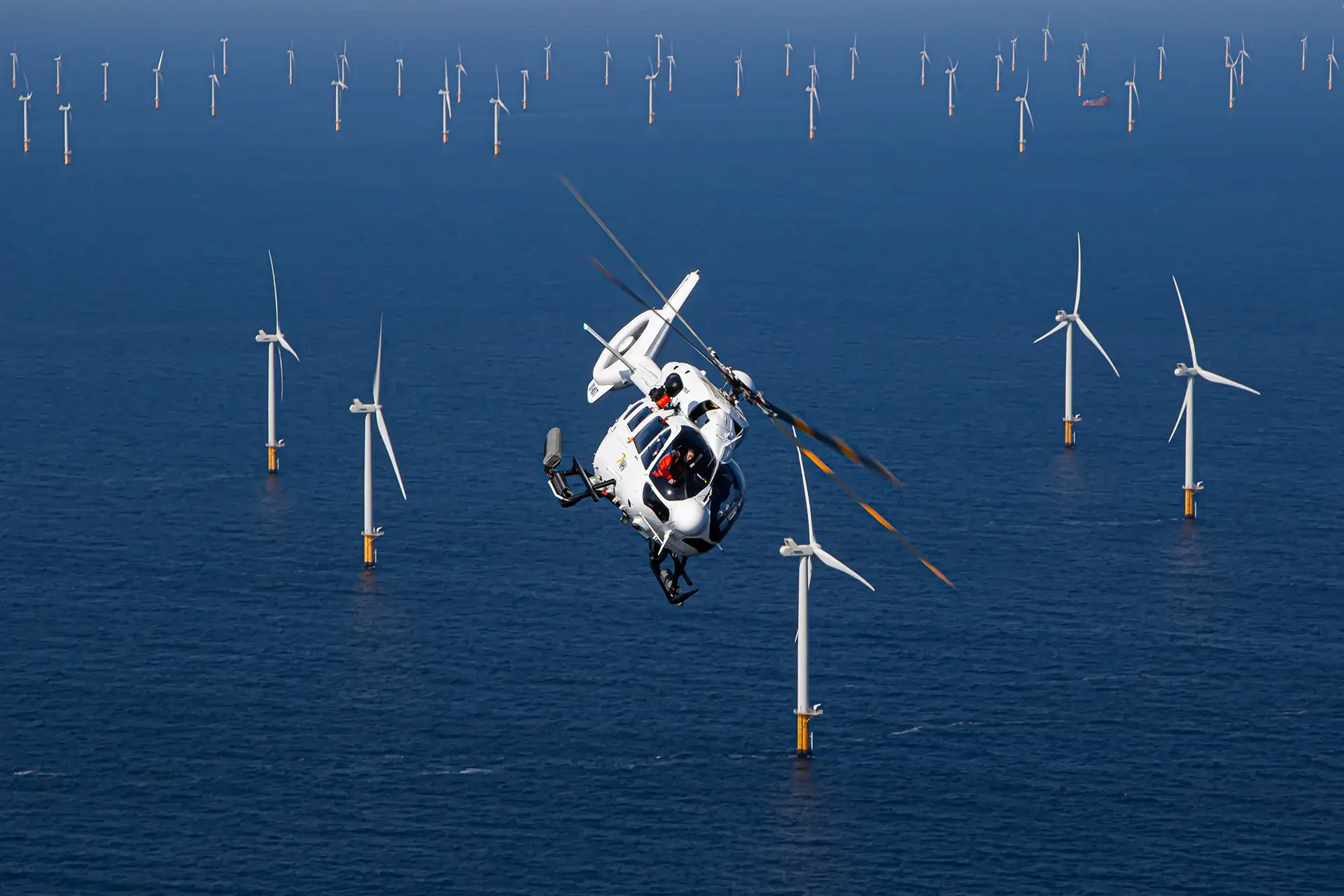
On the face of it, helicopter companies supporting offshore wind operations in Europe should be enjoying something of a boom period and looking forward to yet more growth. Yet this may not be the case. Declan Daly provides an insightful examination of the issues surrounding the helicopter support of offshore wind farms.
Commitments
Across the UK and the EU, commitments are being made to expand the scale of offshore windfarms, both in size and overall number, significantly over the coming years. Ireland, as an example, has made a commitment to provide thirty percent of its power requirements through renewables by 2030. A large part of that 30% will come from existing and planned offshore windfarms on both the east and west coasts. A closer look however, shows that over the last few years, many of the offshore helicopter support operators in the UK have ceased flying and in Germany, Wiking, previously a stalwart of offshore windfarm support filed for bankruptcy in October 2022. Nevertheless, the logic remains that more windfarms will require more helicopters. In many scenarios helicopters are the safest and most environmentally friendly way of bringing engineers and other Offshore Windfarm Companies (OWC) staff to offshore infrastructure. As the industry is set to expand, starting from a good place in terms of safety and sustainability is vital. An assessment of where we are now and where we might like to be in the future is worthwhile.
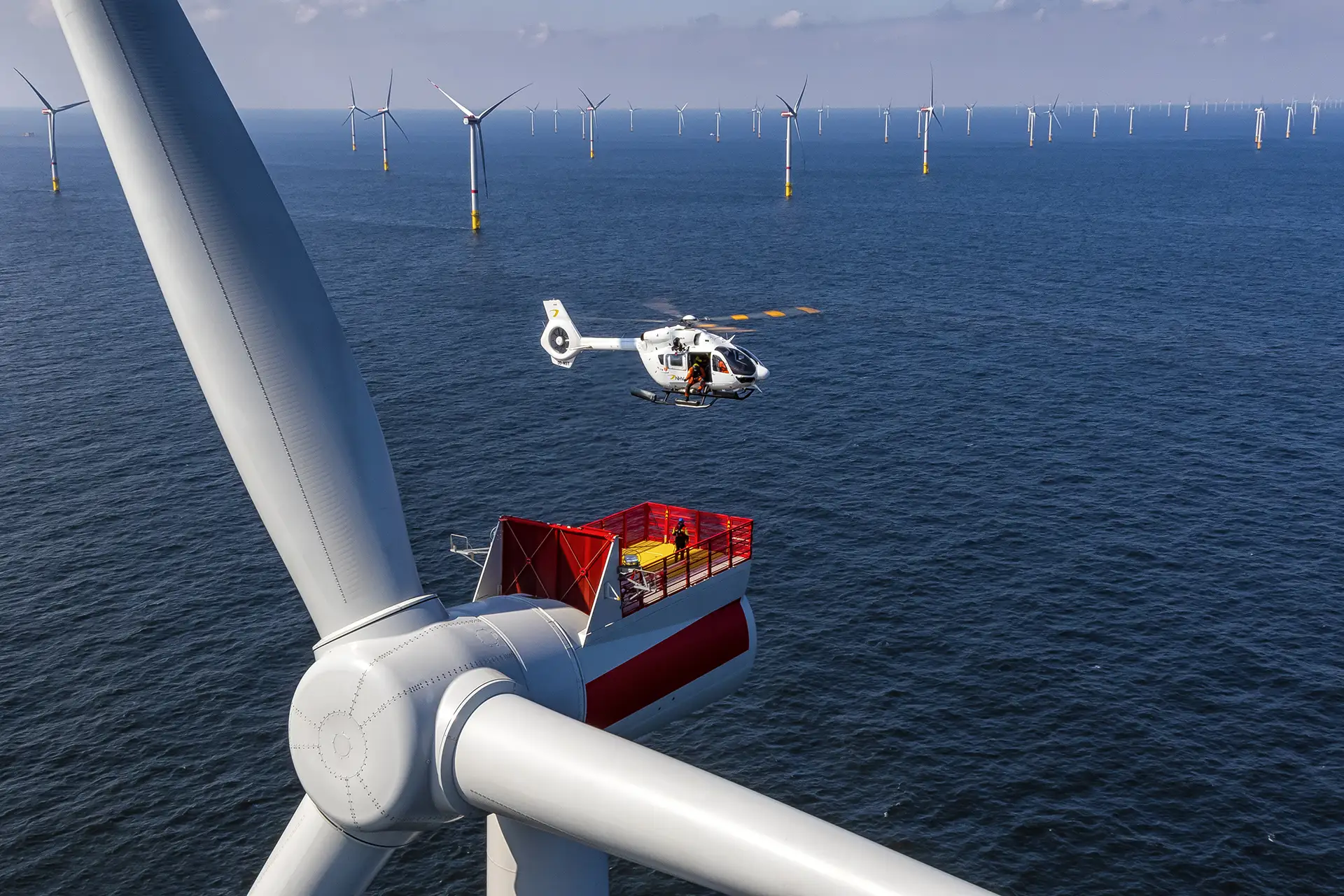
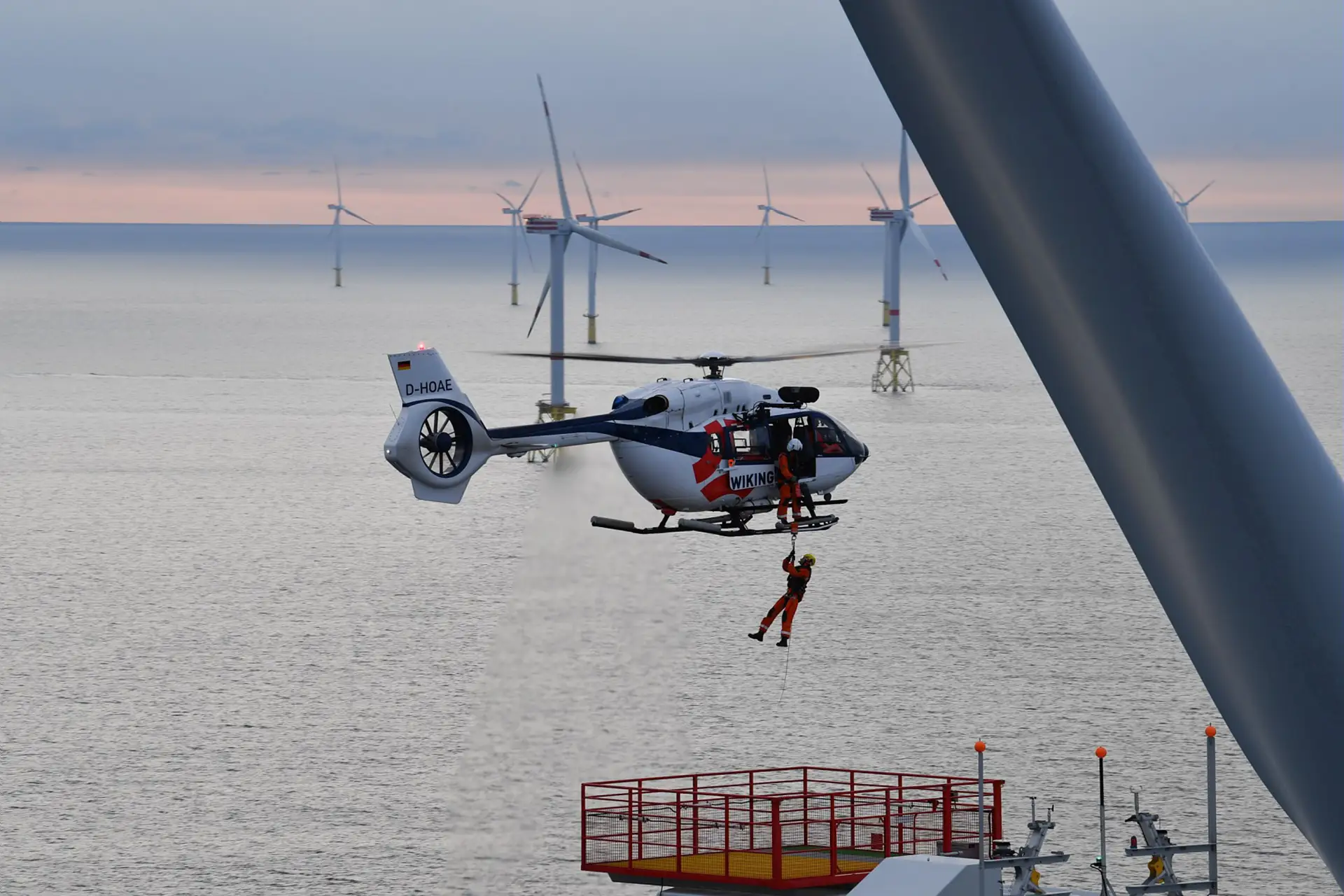
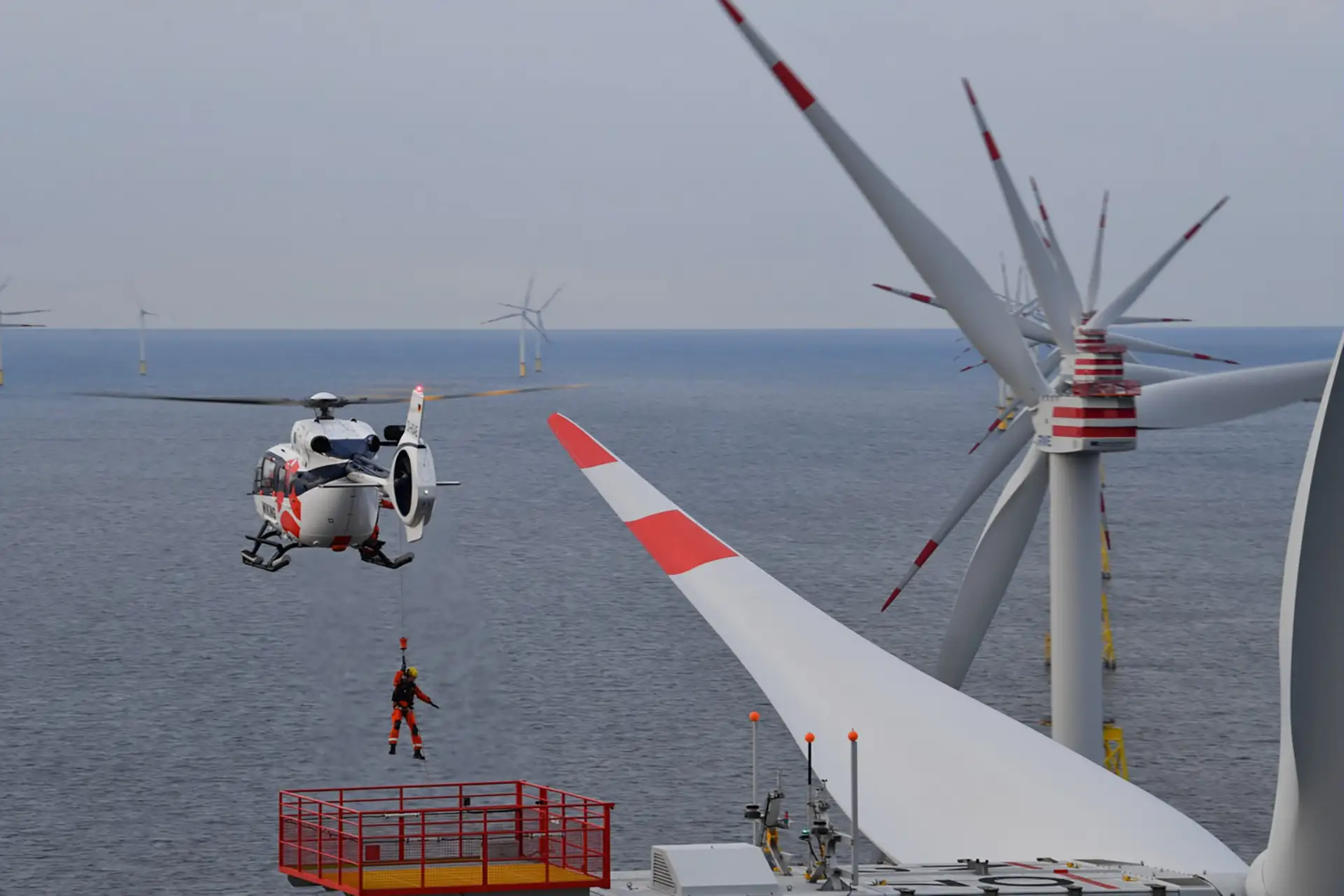
To start with, what exactly are we talking about? OWC support by helicopter operators has been a feature since the earliest days of the offshore windfarm industry. It was realised quite early on that the safest way of carrying out routine maintenance was not to have the engineers trying to mount the base of the windmill from a boat in potentially hazardous sea states, but to place them at the top of the structure using a hoist. These Heli Hoist Ops ( HHO ) flights are a carried out under Human External Cargo ( HEC ) rules in EASA regulated countries, and most western countries will have similarly stringent safety rules in place. These mandate that in the event of an engine failure, the aircraft should be able to maintain a hover for long enough to complete the winch cycle before safely flying away. Use of helicopters allow for unforeseen events and snags with the turbines that provide the income for OWCs to be addressed quickly, allowing the fastest possible return to service. Rob Walger, a technical crewmember who previously worked for Wiking said that ‘my general impression of the jobs we were tasked on and conducted seemed to be all unscheduled work where a turbine had an unexpected issue and most likely a boat was not available. We often had a 145 dedicated to windfarm work and the majority of the tasking was short notice’.
Speed of response to medical emergencies was also important. Wiking typically used EC145s for transfer of technicians to deal with unplanned
maintenance, but preferred to use the bigger and faster AW139 for routine crew transport and for HEMS flights to and from the various types
of offshore infrastructure.
Environmental Impact
It has also been recognised that a helicopter working from shore is more environmentally friendly than a boat at sea, and that choosing this greener option would be in keeping with the overall raison d-etre of OWCs. In short, a helicopter can make better use of weather windows, is less affected by sea conditions and ultimately will burn less fuel over less time in moving engineers from A to B to C than a ship will in completing the same task. It helps that, to date, most of the aircraft involved in OWC work have been more economical small to medium size aircraft with the occasional super medium thrown in. Hence, when aircraft began to leave the market in the UK and Germany last year, it was H145s and AW139s that moved to other operations. As the technology develops to allow windfarms to be built in more challenging environmental locations, the size of the farms plus their distance from shore means that an increase in medium and super medium helicopters is likely. It is in this niche that the OWCs will find themselves in direct competition for resources, namely aircraft and crews, with existing oil and gas businesses. If faced with a choice of which sector to support, OWCs could find that their aviation suppliers will stay with O&G for a very simple reason: stability.
Many of the existing contracts have been running on an ad hoc basis. The helicopters and crews are not retained per se,
but used by OWCs on a day rate basis. This can work to an extent with smaller aircraft, but only for so long as they have sufficient other
aerial work to keep them going. If they don’t, or if the OWCs absorb too much of their capacity without providing enough work to stay
afloat, then the company simply cannot sustain itself. Once larger aircraft come into play, this business model is on very shaky ground. The
total cost of ownership of such aircraft and the requirement for extra personnel in a multi crew structure make it uneconomical to proceed
with anything other than a longer term contract.
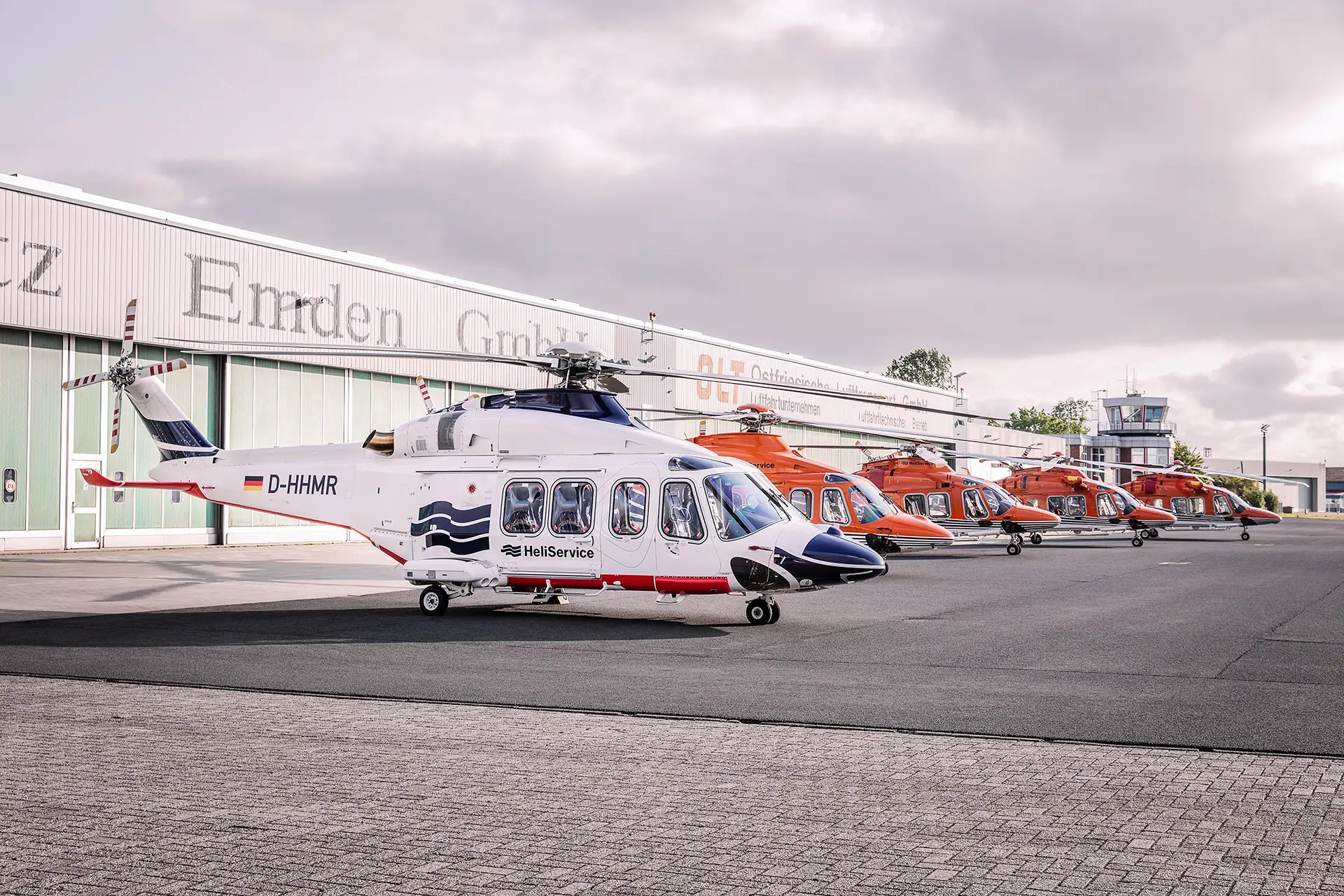
Even the ‘winners’ in this sector see the issues with this model. CEO of Heliservices, Oliver Freiland had this to add:
“Given the nature of any Helicopter Operator in terms being extremely capital intensive:
Helicopter Operators must have long term commitments from their customers in terms of income and contract duration.
The obligations towards the suppliers must be in line with the commitment from customers.
Any other structure will cause enormous difficulties for any helicopter operator and will lead to high cost and in the worst case to problems for the helicopter operator.
Due to the overcapacity in the helicopter in some segments, some operator offered more and more favourable terms to customers not only in pricing but in general contract terms and in the most extreme cases offering ad-hoc rates.
From a business perspective, as a helicopter operator, as outlined above, that is a toxic business; and in no way sustainable.”
One of the other reasons that OWCs have chosen to relinquish helicopter support contracts is to take up the option of crew transfer by
boat. This is curious, as in a 2021 study G+,, the Global Offshore Wind Health and Safety Organisation, put the use of helicopters in such
roles as up to ten times safer overall - with 47% of all serious accidents or incidents occurring on a vessel. It also is less efficient in
terms of the working time available to the engineers being transported; a transfer time of minutes by helicopter is transformed into hours
by boat, a trip which is also much more likely to be constrained by sea states and weather windows. In much of Asia and the US, the
helicopter is the de facto means of transport for reasons of safety, efficiency and economy. So why not in Europe?
Aviation Management
For those accustomed to the aviation side of the business, one possible answer is troubling. John Nugent runs Newcastle Airfield in Wicklow, Ireland. It is closely located to the site of the Arklow II Windfarm which is being developed. It is, as he says, ‘12km from my windsock’. He sees extensive potential for new investment in the helicopter market in Ireland supporting this project, and he naturally feels Newcastle is ideally located to host it. He has however run up against a problem when consulting the OWC involved. They don’t seem to have an air support manager to consult with.
Walger also noted that the ‘company's tasking centre never really understood our capabilities or our limits correctly. I do remember
being informed we were not tasked due to weather but the weather was not a factor for us on this occasion. We had never been consulted as
to if we could complete the tasking within our limits.’
Both G+ and Helioffshore have indicated that OWCs must be ‘intelligent customers’ that know the responsibilities and opportunities that come
with helicopter ops. It seems this is not always the case. If this is indeed a feature of OWCs throughout Europe, then the economic and
environmental efficiencies of helicopter are not being realised, nor are the secondary economic benefits to local communities that accrue
from the expansion of regional airfields to host the helicopter fleets. More critically, if the improvements in safety levels over and above
those available in boat transfers are not being availed of, then the OWCs own staff are at greater risk than is strictly necessary.
Nugent also highlights other future complications that are likely to arise. Newcastle is also home to a UAS ( Unmanned Aerial Systems ) training programme and one of the future uses predicted is as a first response to incidents on windfarms. This is envisaged as offering both a first look at damage requiring maintenance before dispatching people and kit by helicopter, and also a means of deploying first aid equipment like AEDs ( Automated External Defibrillator ) directly to personnel in the nacelles on a pylon if needed quickly and in all levels of visibility or cloud height, where the weather might preclude a helicopter, but a boat would still be too slow. The purpose of use in the first case is obviously the economic and practically utility, in the second it is purely in support of an accompanying medevac procedure for ill or injured personnel. This brings to light a further issue. The provision of an industry SAR aircraft as per oil and gas. According to Nugent, the working plan is simply to contact the Coast Guard and use existing assets. This would be far from the norm in other parts of the energy sector who are seen to be responsible for themselves, be it Industry SAR in oil and gas in the North Sea, or HEMS aircraft in Western Australia sponsored by mining companies. It would also mean that a guaranteed service would not be available if the Coast Guard asset is already dealing with a call from literally everyone else. Whether this would mean a stand down of the OWCs activities until the asset was known to be off task would be down to their own operational risk assessments, actuaries and conscience.
This may seem like an unfair poke at the OWC running the Arklow II project, but when combined with overall picture of reducing use of
helicopters in the Netherlands in favour of boat transfers, the ad hoc contracting practices in the UK, and the seeming intention to rely on
state assets for medevac in Ireland, it paints a picture of OWCs in Europe not being fully aware of the level they should be reaching for in
terms of use of airborne assets. The future picture for helicopter use in offshore windfarm roles includes complex airspace sharing with UAS
and multi role taskings including Heli Hoist Ops ( HHO ) transfers, medevacs and industry SAR. It is not unreasonable to expect that OWCs
will strive for the same level of safety as has become expected in the other side of the energy sector, oil and gas. The practices and
standards there were hard won over many years, it is critical that greener energy providers pay no less heed to the needs of their own
workers and the crews that support them.
What Now?
So, where to for Europe’s OWCs, and indeed, the operators supporting them? A decade ago, people were heralding the OWC sector as a brave new world where smaller aircraft would flit between pylons, while larger aircraft (as a sign of the times, mention was specifically made of the H225) would transport parts and cargo to an ever expanding industry building turbines to the horizon and beyond. Despite the apparently downbeat tone of this article, there are signs that some helicopter operators at least still see hope of this utopian vista becoming a reality.
In October 2023, H135 and H145 helicopters from KN Helicopters and HTM Helicopters trialled the transfer of cargo and crews onto floating
wind turbines in conditions up to sea state six and 50kts of wind off the coast of Bergen in Norway. So long as operators are willing to
invest in this kind of innovative support, one would hope the OWCs will meet them half way and support them too. After all, their future
profitability may depend on it.