 HOME
HOME





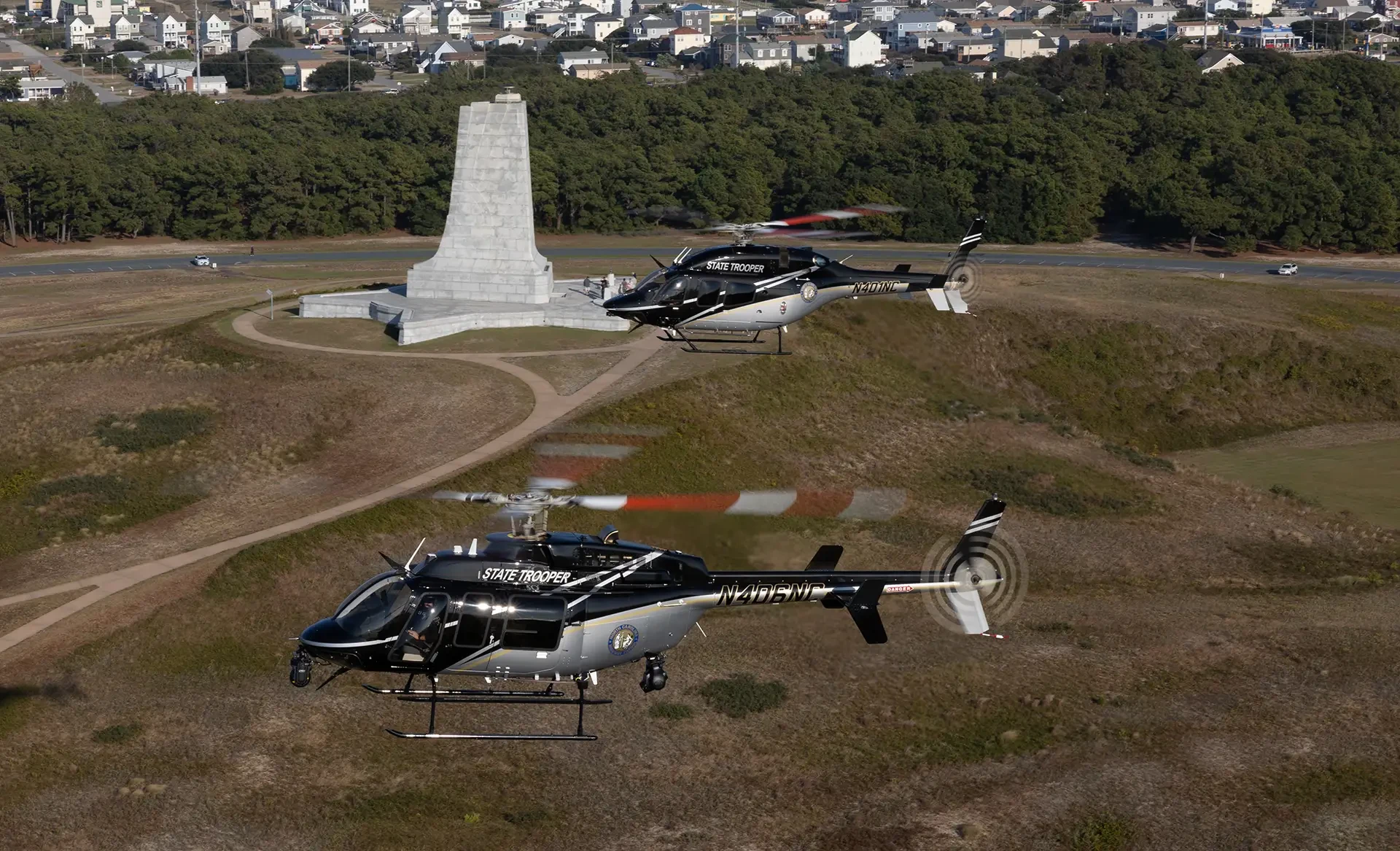
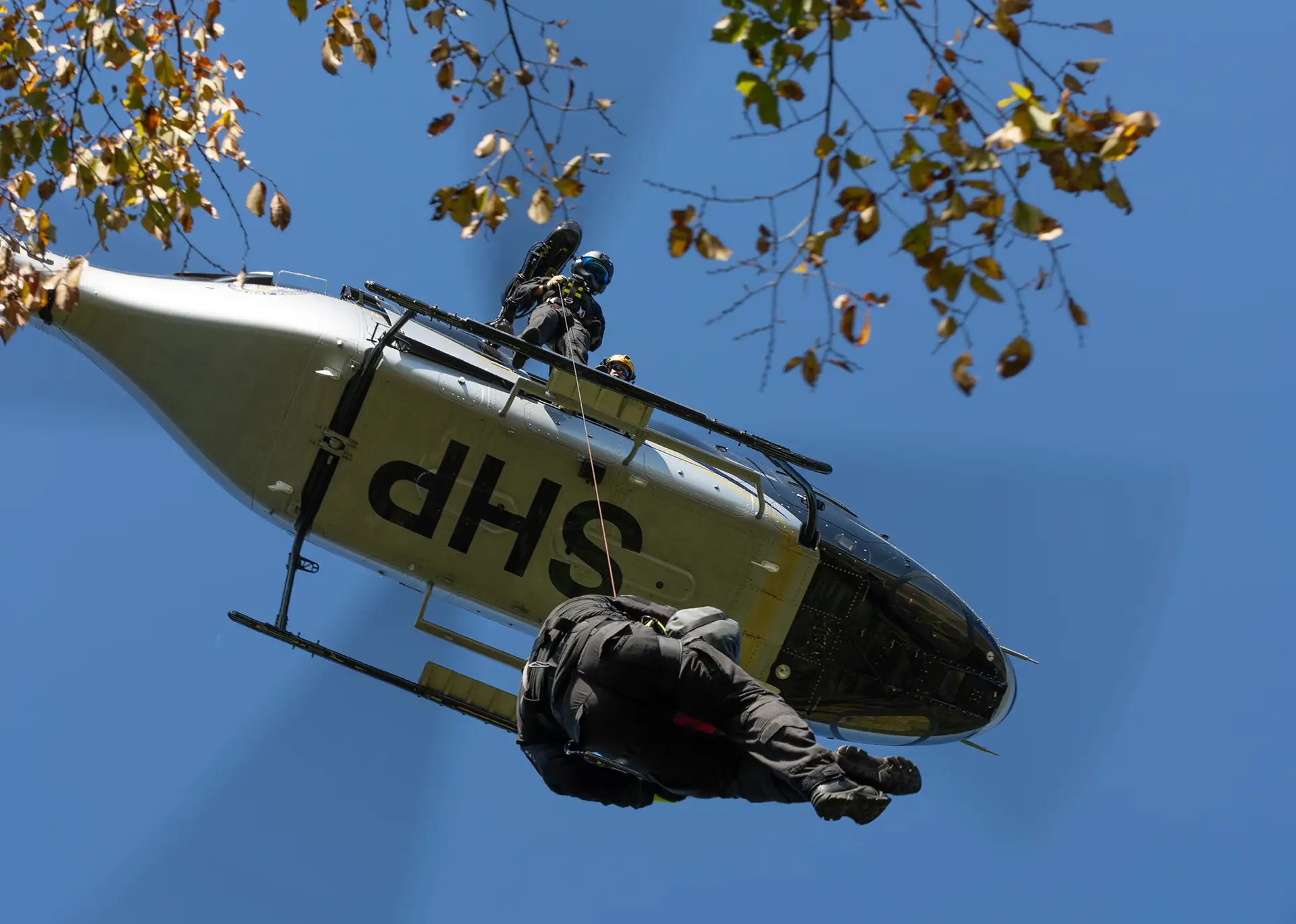
The North Carolina State Highway Patrol’s Aviation Unit has state-wide responsibilities that include the rescue mission, the capabilities of which have been greatly increased with the introduction of a Bell 429, as Sgt Richard Collie discussed with HeliOps.
Early Start
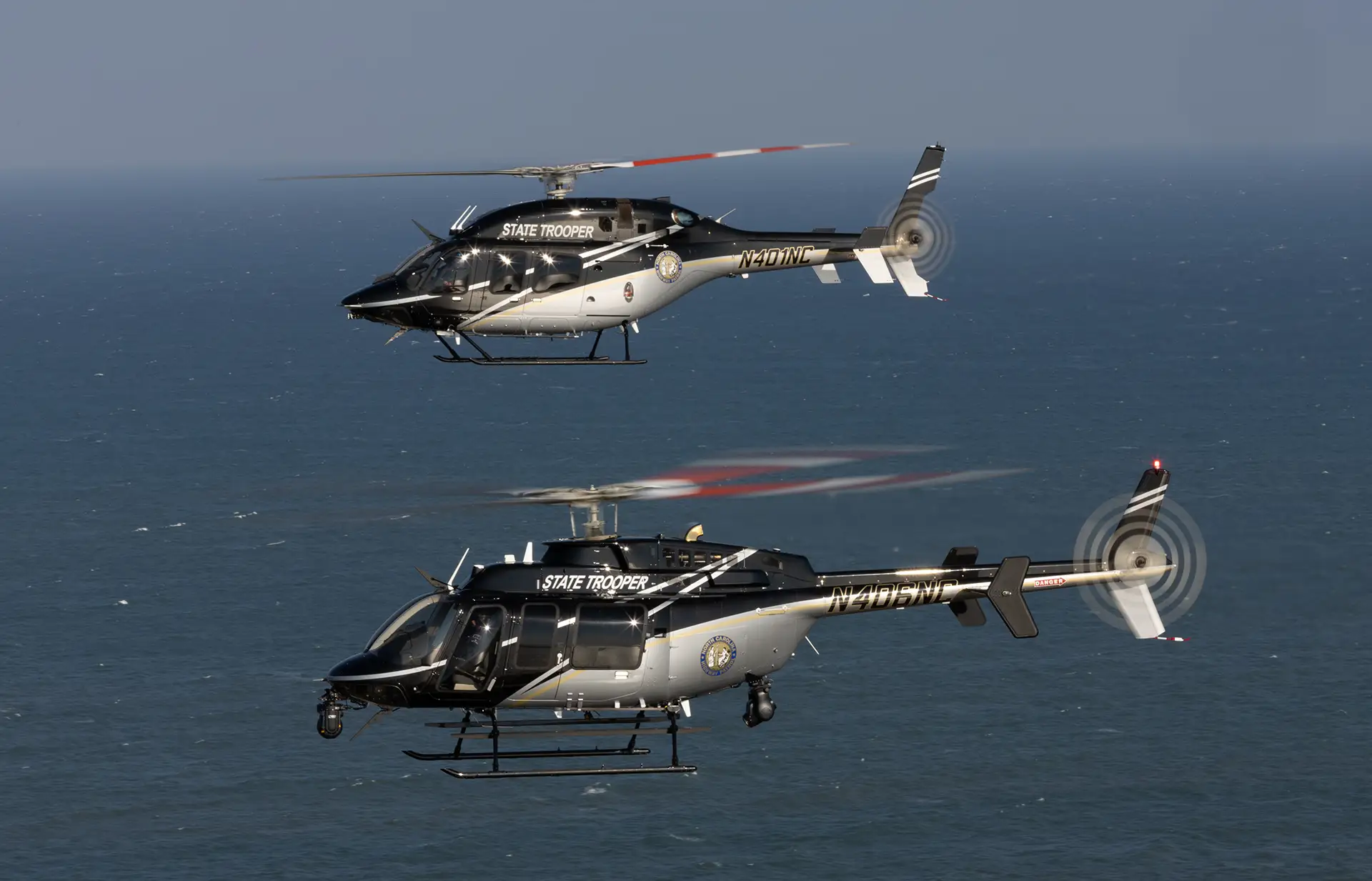
The North Carolina State Highway Patrol (NCSHP) first entered the aviation arena in 1958 with the acquisition of its first fixed-wing asset. Helicopter operations didn’t commence until 1986 when the aviation unit obtained a single Bell 206 JetRanger, but rotary-wing operations and capabilities have expanded significantly over the ensuing years. The unit has operated ex-military Bell UH-1 Hueys and OH-58s but the first truly modern airframe was introduced post-9/11 when the unit’s first Bell 407 arrived. Today, the unit’s fleet comprises four of the single-engine 407s and one twin-engine Bell 429, the latter delivered almost two years ago.
Sgt. Richard Collie is the Air Operations Unit’s Chief Pilot, and he explained that the unit used to often fly search missions to locate injured persons and then the National Guard would come in to carry out the rescues. It then evolved into conducting short-haul HEC (human external cargo) rescue missions for years but never had the capability to carry out hoisting until the arrival of the 429. While the central and eastern parts of the state are flat or rolling country, the terrain in the west is rugged to traverse on foot, steep and rugged with sheer faces and peaks approaching 7,000ft, tall forestry and 200ft waterfalls that make HEC with a 100ft or 125ft line problematic, if not impossible. With hoisting frequently being the only viable option, rescue missions in those areas were therefore commonly conducted by the National Guard with its UH-60 Blackhawks or UH-72 Lakotas (the militarized variant of Airbus’ EC145).
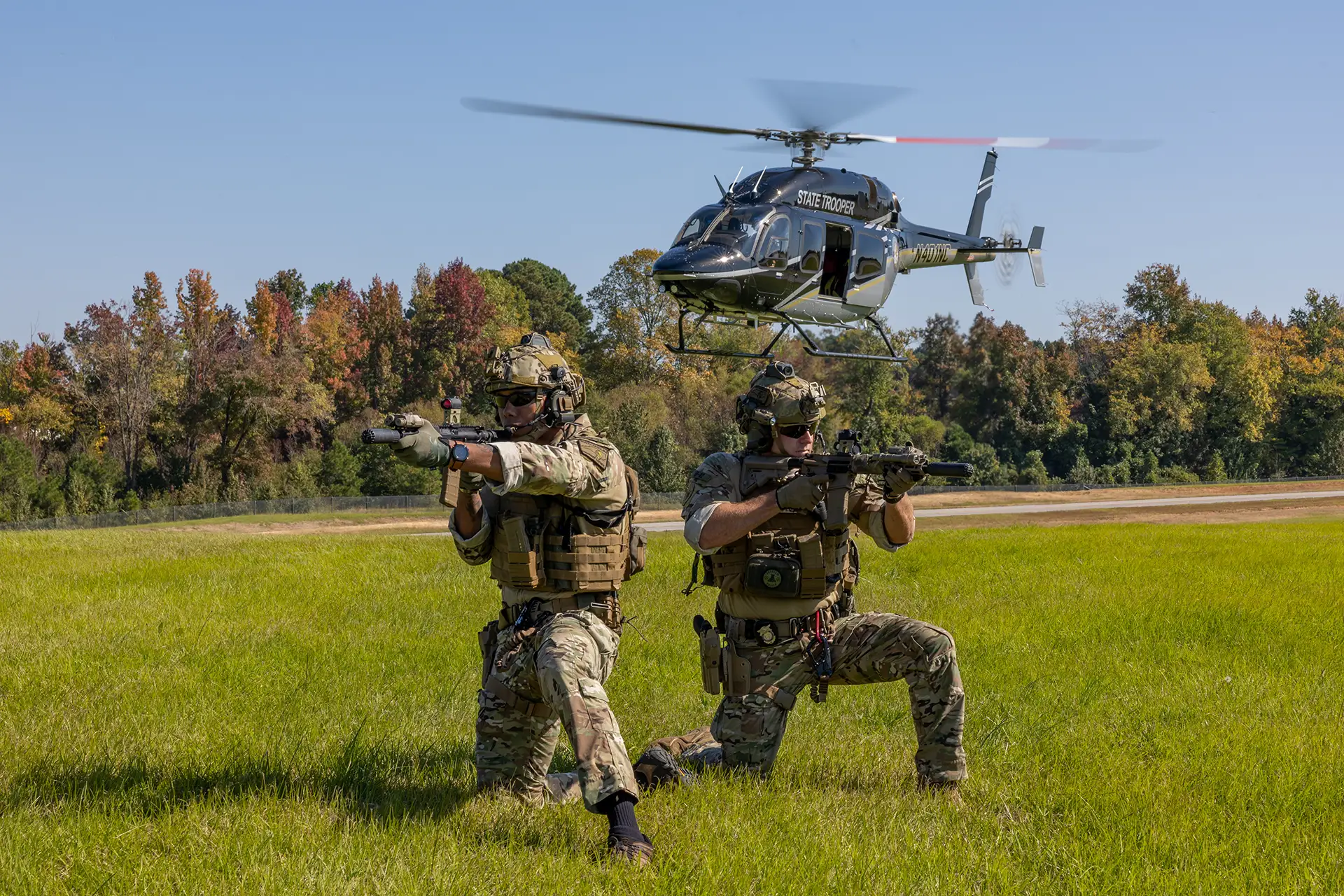
“When I came here 12 years ago, we still had four OH-58s that were flying extensively on counter-drug work with the DEA and our one 407 was the short-haul rescue aircraft. We’re troopers so we’ll always be flying law enforcement, but counter-drug is no longer a major mission role. The OH-58s went when we got the next two 407s and because we have two duty stations, then we had depth of coverage with the 407s,” Collie related. The Aviation Unit’s main station and maintenance base is at Raleigh, with the second duty station about one hour to the west at Salisbury but the unit has now outgrown the existing facilities at the Raleigh base and is working on other basing options for the future. A new base that incorporates some climate control for office facilities, modern maintenance spaces and comfortable crew rooms will be a huge improvement, considering that North Carolina’s summer temperatures from the mid-90s to low 100s are accompanied by very high humidity. Spring and fall are mild, while winters can offer freezing rain and light snowfalls at temperatures in the 20s and 30s.
Challenges
Short haul is very fast because it does not require the longer reset times that hoisting demands, so it enables the rescue of more people
in a shorter timeframe but is best suited for moving them only very short distances. “HEC is ideal for here and out east to the coast,
where it’s more level with wide area flooding and you’re just picking someone up from a bad situation and moving them to a safer location
very close by. Out west though, those distances are further apart because of the terrain and it’s just not practical to take someone three
to five miles on a short-haul line, because of the terrain, crazy winds in the mountains and all sorts of obstacles,” Collie explained.
Night operations are always conducted under NVGs and towers up to 2,000ft plus make a transit altitude of at least 2,000ft common practice.
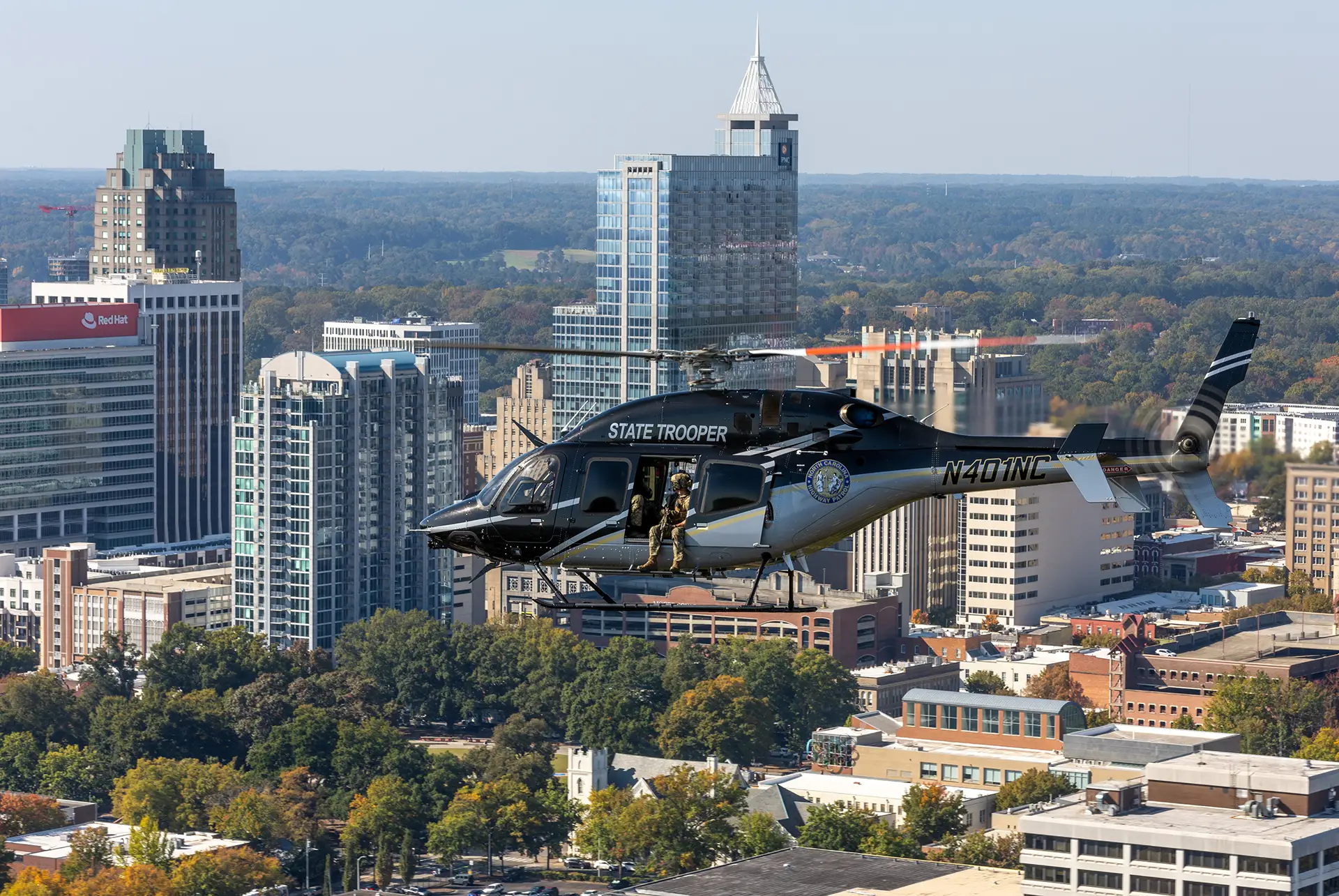
The Patrol always flies a crew that includes pilot and co-pilot to increase safety, with two pairs of eyes looking out for towers, wires and other obstacles and Collie commented that the increasing shift to LED from incandescent lighting on the towers makes them harder to see at night. “It reduces pilot workload immensely, especially when you’re trying to hold position on a short-haul HEC or a hoist operation and there’s someone else to look after the radios and anything else extraneous to the task at hand,” Collie stated. He commented that a unit goal is to get all the co-pilots trained to be hoist operators so that it is feasible to send the rescue tech leader and rescuers all down to the ground if necessary and still have the capability to retrieve them by hoist.
Team Approach
The SHP uses its 407s for routine law enforcement operations as well as the rescue role but pursued the acquisition of a 429 based on it being a primary rescue asset. According to Collie, it was not just the SHP but also the other state agencies that identified the gap in capability that the 429 could bridge. In 2004, North Carolina Emergency Management (EM) and the National Guard started the Helicopter Aquatic Rescue Team (HART) program. EM oversaw the program, the Guard provided UH-60 Blackhawks and aircrew, while the fire departments provided the rescue technicians. When the SHP obtained its first 407, it joined the program in its short-haul capacity and the Guard introduced the Lakota about a year after that. It took time, but all sixteen agencies within the HART program eventually stopped working as separate entities and began working together as a single, unified force and that is the key to the success of the program.
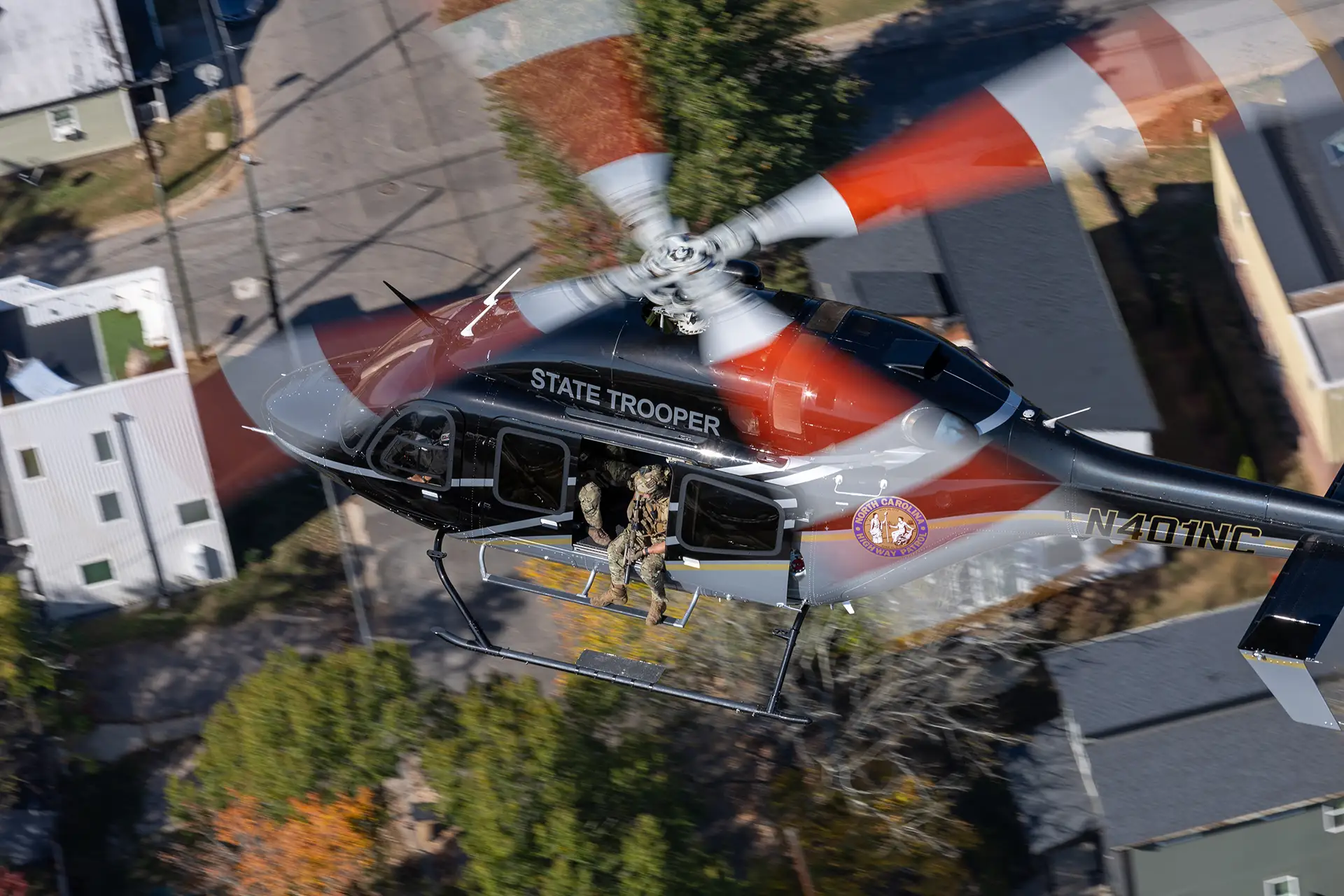
All Patrol pilot applicants must be road troopers with at least three years of experience, because despite the increasing focus on the rescue role, the unit will always fly law enforcement missions. “I always say, ‘We don’t want troopers who want to be pilots; we want aviators who just happen to be troopers’,” quipped Collie. Qualified rescue techs are stationed at their own departments throughout the state so they can be picked up at fueling stops enroute to a callout, meaning that the aircraft does not have to sit on the ground waiting for them to travel to the helipad.
“The reason the HART program is so successful is that it is not just one of us, it’s all of us,” commented Collie. “The 429’s big push for all of us was its ability to go into those areas where the 407 was just not the right tool for the job. The Guard recognizes its personnel limitations and its DoD deployable responsibility, we recognize the capabilities and limitations of the 407 and State EM recognizes the gaps in availability and capability so everyone – including the Department of Public Safety and the different counties – all supported the push for the 429.” The selling point of the 429 was the benefit that its rescue capability added to the HART program and the state legislature approved the new aircraft, funding the $11 million purchase cost out of state appropriations, with an additional recurring yearly operational budget payment. Reflecting the focus on its role as a rescue platform, the 429 remains permanently equipped for rescues, regardless of what mission it is engaged on.
The selection of the 429 as an addition to the SHP fleet was based on a variety of factors. It is a new, modern aircraft with a long life cycle ahead and it offers a high degree of commonality with the 407 fleet when it comes to maintenance and training demands. “The 429 is one of the best platforms for the mission-set that the State Highway Patrol uses, and it is one of the best platforms for what we do on the rescue side in this state.” When the new aircraft was first proposed, the Patrol was aware that the Guard was going to get the Bravo-model Lakota to replace its older Alphas, so Airbus offerings were considered. “We knew about the 429’s 7,500lb limit but everybody here was used to the Bells, all the mechanics had imperial tools and a shift to Airbus would mean acquiring all new tools and introducing a completely different aircraft type, which was the opposite to an attempt to standardize across the board.”
429 for the Future
The Patrol spoke to many operators of the 429 prior to making a recommendation, including Tennessee, New York, Two Bear Air and Arizona DPS. Some were visited and took Patrol personnel on demonstration flights. They were all unanimous in their approval of the type, which has quickly earned a reputation as a tried-and-true platform, and a carefully weighed consideration of the pros and cons led to a firm decision to opt for the twin-engined Bell. Collie recalled how a short-haul mission in a 407 shortly after the 429’s arrival confirmed the wisdom of acquiring a more powerful, hoist-capable aircraft. During a difficult nighttime canyon rescue on the Appalachian Trail that took over three hours in total on NVGs, he encountered conditions that resulted in sinking and mushy pedals while in a tightly confined area, necessitating over-torquing the engine to safeguard the technician on the end of the short-haul line. “That really illustrated to me that the 407 just wasn’t the right tool for that job and the 429 with a hoist would have been ideal.”
Initial training on the 429 was at Bell’s OEM course and after a bidding process, Priority 1 Air Rescue provided subsequent additional training for the hoisting and rescue missions at its own facility. It then spent a week at the Patrol’s facility for daytime inland hoist training, after which the unit spent another three or four weeks practicing before Priority 1 returned for a week of nighttime hoist training. “We’ve already done moving water, open water and the mountainous terrain out in the west, super-confined areas and things like that with the 407s. If you can do that in a short-haul capacity, you can do it with the hoist so once we got the basics, we could move on to training the trainers,” Collie related, adding that HART rescue team leaders joined in on the training to familiarize themselves with the 429’s rear layout and its differences from the UH-60s and UH-72s they were used to.
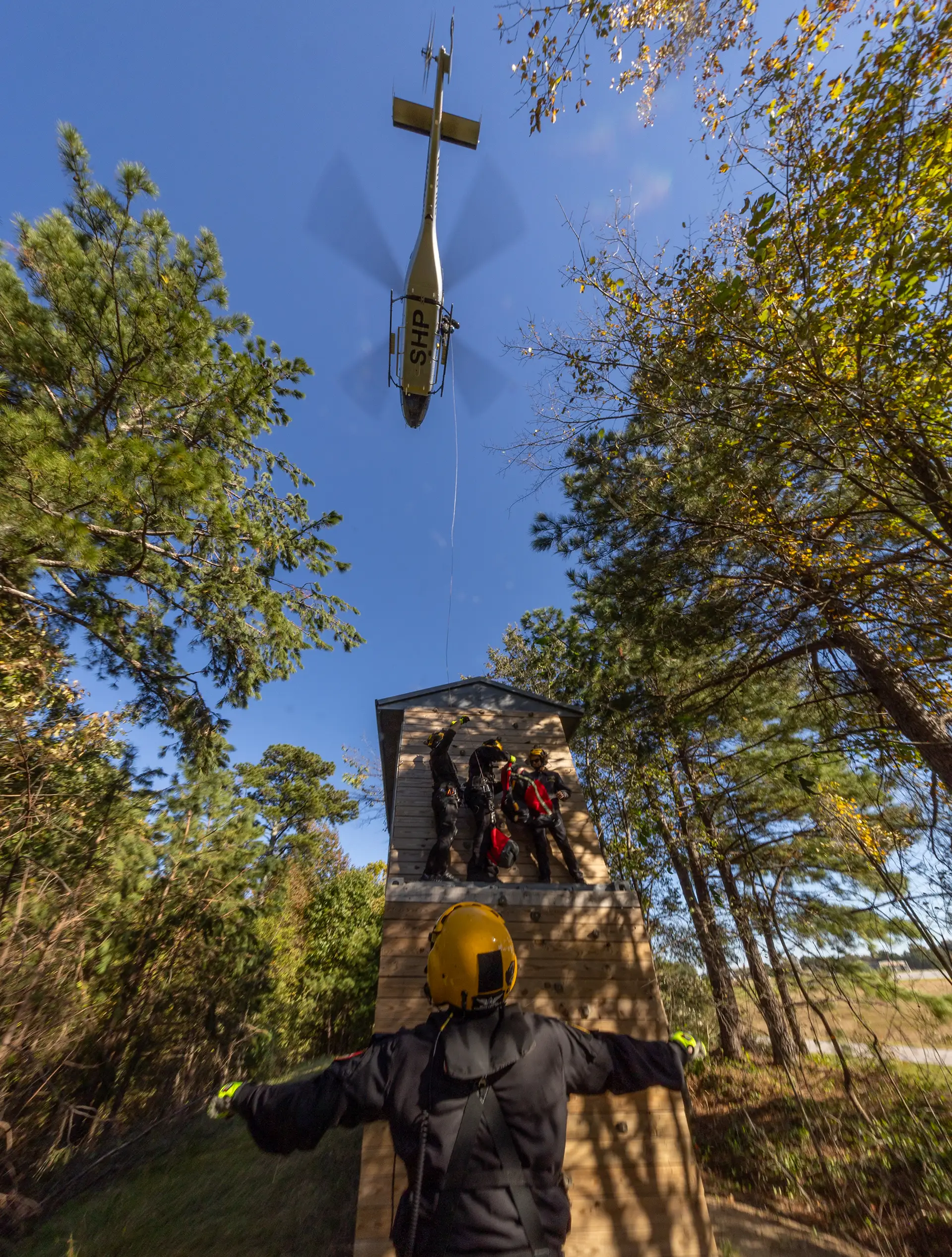
Randy Rowles, of Helicopter Institute Inc. will also be providing 429 training and his first on-site visit to SHP was scheduled for November 2024. Collie explained, “He’s an ex-Bell guy who’s already provided currency and proficiency training for us on the 407s and he is a cost-effective alternative to OEM courses. Bell has fixed offerings they will provide, whereas Randy tells you what he’s going to do and then asks what else you need over and above that so you can target your training for your specific requirements.” When Rowles gets his own 429 and 429 simulator up and running mid-next year, the Patrol personnel will then be able to go to his facility for training.
Although the Guard has significant mission capability with its UH-60 and UH-72, it has issues of aircraft and aircrew availability due to the military demands and rostering of its resources and personnel. Collie added that SHP has been able to carry out blue-sky rescues with the Guard but that the Guard personnel must be put on state active-duty orders and its rescue technicians only work an 8-5 shift, whereas most rescue calls come in well outside those hours. “Then you’ve got a two-hour call out to get them in on their day off, then they’ve got to be activated, and you run through a whole process, but I’ve got 18 hours of coverage through the guys in the Patrol. The 429 is not intended to replace anything, but to bridge that gap because we have an assigned shift and are available to go as soon as that call comes in. We showcased the gap and could demonstrate that we could provide a more cost-effective and readily available asset during blue-sky operations. If a call comes in right now, we’ve got pilots, we’ve got hoist operators, we’ve got technicians and we’ve reduced a two or three hour on-scene time to around 45 minutes to pull and hitch,” he elaborated.
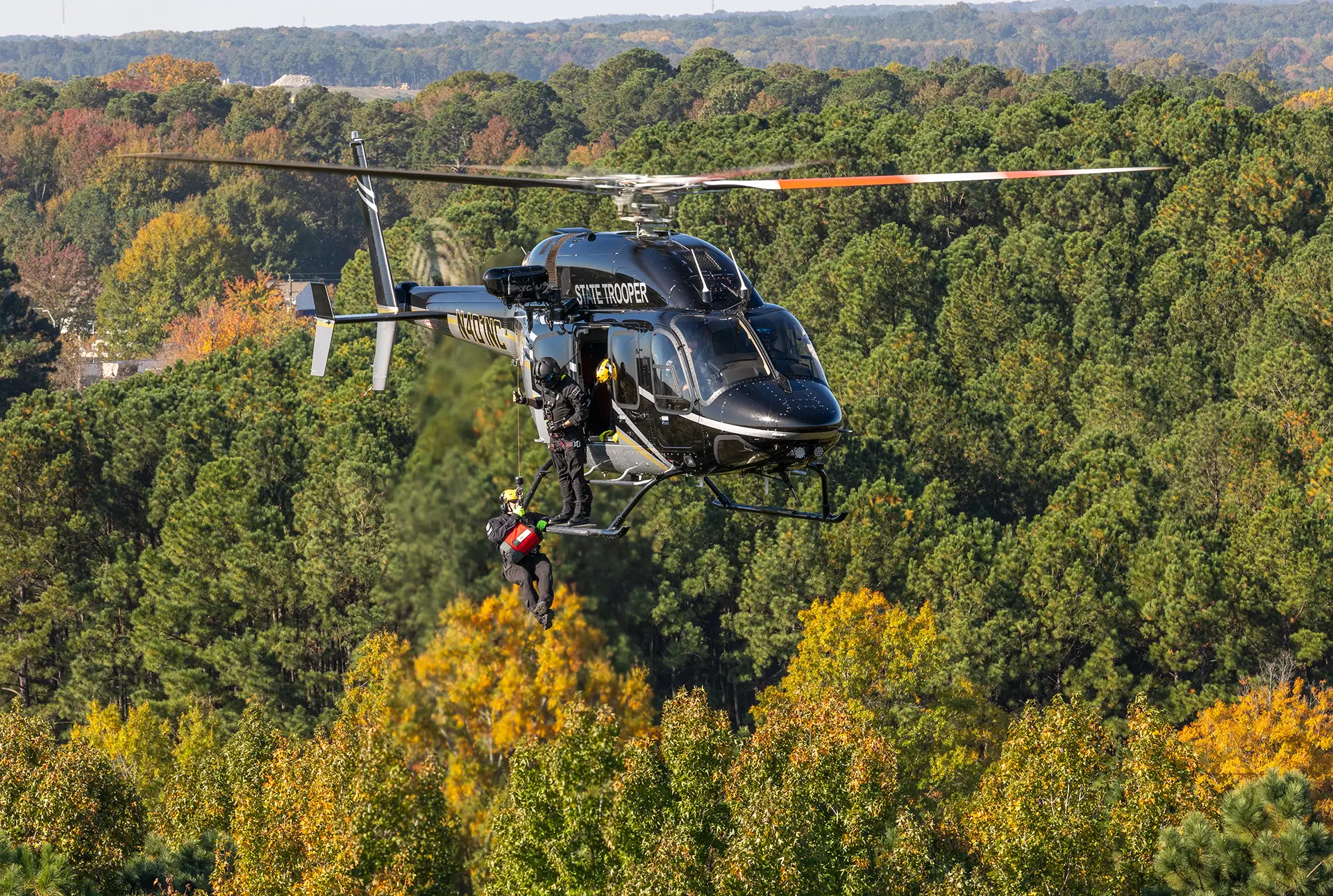
Missions are commonly separated into what are referred to as ‘blue-sky’ and grey-sky’ rescues. “Grey-sky is what we just had with Hurricane Helene and the Guard is always going to be your force multiplier. They bring in a lot of assets from all over the country and they can do a lot because they have a whole lot of green helicopters and resources to pull from,” commented Collie. “A blue-sky rescue might be someone falling a couple of hundred feet down a gorge, the local responding rescuers can’t go and get them because they deem it unsafe, or because we can do it a lot faster. We spin up under the HART program to go get them and that could be a combination of SHP aircrew and aircraft with fire department rescue techs.”
Workload
A typical year sees the unit conducting between eight and 16 blue-sky rescues but the hurricane season in North Carlina usually runs from August to December so during this time there is almost always a SHP crew and aircraft geared up and on standby for a rapid response. The vast majority of the unit’s rescue work therefore comes via the HART program and state emergency management acts as a filter, prioritizing the multitude of incoming requests for rescue resources and then matching and allocating those resources to the demand effectively and efficiently. “If the Patrol were to receive all those incoming requests, they’d be totally swamped and transporting commodities or flying a doctor might not be the best use of the 429’s capabilities, so EM can make that assessment and essentially put them on the ‘B-list’,” Collie advised. “Once we’re activated under HART and have HART technicians with us, they’ll stay with us and go wherever we go until we’re stood down from that grey-sky incident.”
Regardless of the demands of law enforcement work for the unit’s 407s, any rescue call that comes in is treated as a matter of high priority. During the fall, rescue calls are typically in the evenings on weekends, for people tempted by fine weather to venture into the wilds but ill-equipped for the plummeting temperatures after sundown. Rain can often cause surface flooding and high river flows that tempt Kayakers, who are another relatively frequent cause of rescue callouts due to overturning or stranding. Hikers, hunters, other outdoor enthusiasts and children inevitably add further to the SHP unit’s quota of emergency callouts during the warmer seasons, while hurricanes and other natural disasters trigger many more demands for rescues.
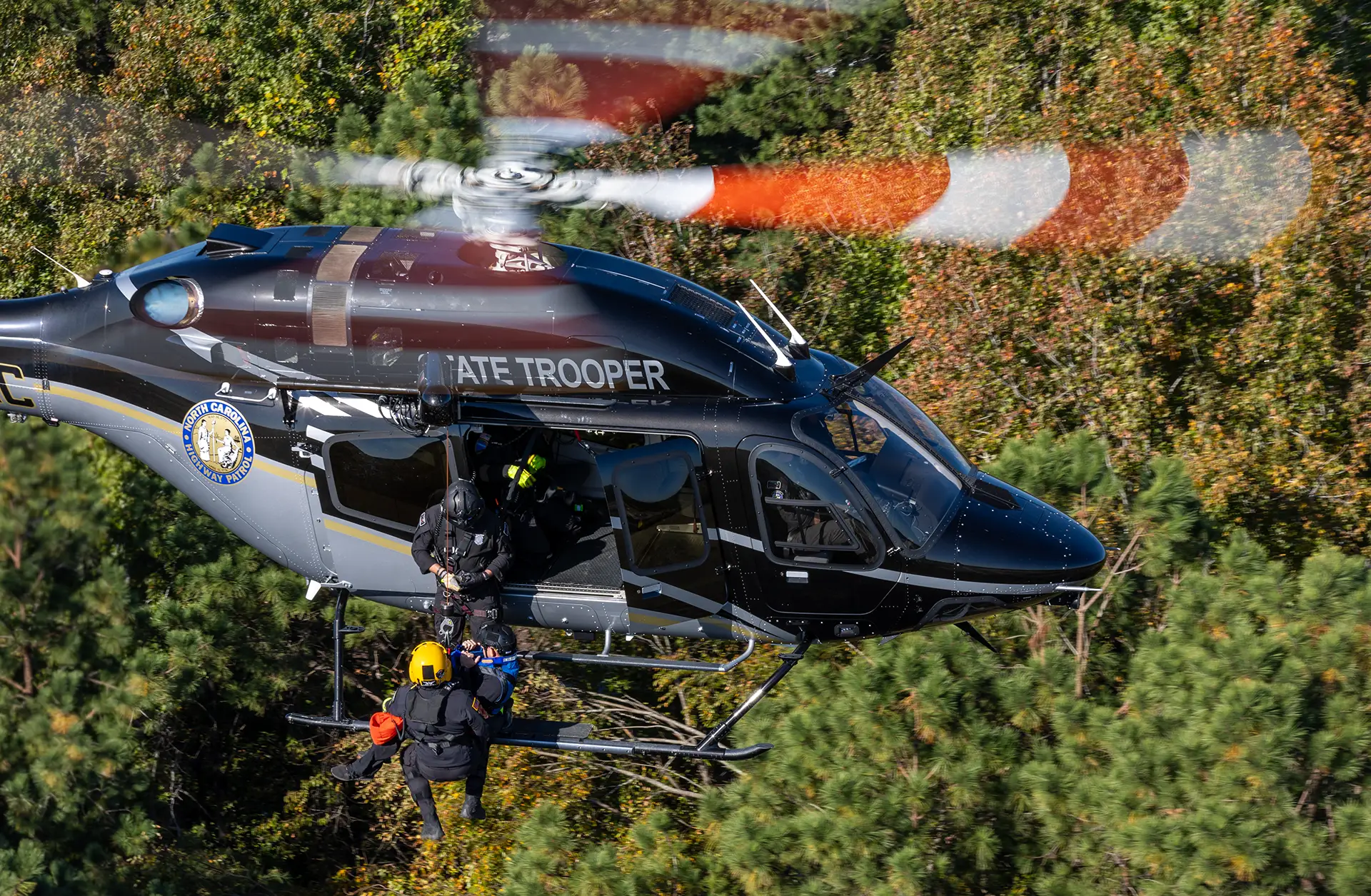
In North Carolina, each of the one hundred counties operates its own emergency management system and the SHP only responds to a rescue or search for the county EM programs if called upon by the relevant county. Under the state EM and HART program however, the patrol is often a first responder. Its many state-wide responsibilities include searching for missing persons, conducting rescues, picking up injured troopers or transporting the commander and made SHP the obvious choice as the operator of the 429. Collie advised though that, despite it being operated by the Patrol and bearing its black and silver livery, it is dedicated as a rescue airframe and carries out very little other law enforcement work. “There are only four or five state agencies with any aerial assets and as far as state-wide helicopter capability, the SHP has proved itself to be a vital and capable partner in state response,” he remarked.
The 429 is based at Raleigh and while Collie acknowledged that it has provided a huge boost to the HART program, he also commented that the addition of a second example would bring an even greater benefit, allowing an aircraft to be based at each of the duty stations. With machines available from two different locations, response time to the incident scene would be reduced for many callouts and coverage would be enhanced, with maintenance and AOG (aircraft on ground) outages still leaving one aircraft available. “The limitation with the patrol’s operation is not the pilots and operators, it’s the fact that we only have one 429. You can’t do anything well with just one; you can do it, but you can’t do it well,” he opined. “We in emergency management want to support all the counties and if you’re going to run from two duty stations and still have sufficient aircraft availability to keep everyone proficient, you need more than one aircraft.”
The technicians train with the aircraft on the HART program for a regularly scheduled minimum of two days every month, in accordance with the HART SOG. “The Guard do that as well, so the UH-60, the UH-72, the 429 and the 407 are all going to do it, whether it’s moving water, still water, mountainous terrain or whatever,” Collie explained. “One reason is inter-operability because we want the green and the black working together seamlessly, so the technicians need to be familiar and comfortable with all the aircraft that they may be required to operate in.” Although piloting demands do not vary greatly between short-haul and hoisting, there are major differences for the crewmembers conning and running the hoist so the patrol also conducts off-schedule training to meet the proficiency and confidence needs of all its pilots and operators.
Future
Looking to the future, there are negative aspects to adding another type to the fleet, such as Bell’s 412. It would necessitate the
addition of more troopers to the aviation unit, it has a much higher operating cost than either the 429 or 407 and would require even more
maintenance training, equipment, personnel and capability. While replacing the 407s with extra 429s would increase safety by transitioning
to a twin-engined fleet and ensuring fleet-wide commonality, the significant purchase and operating cost increase would be a major hurdle.
Adding another one – or preferably two – 429s would, however, provide greatly enhanced coverage and aircraft availability and Collie
commented that a strong argument already exists for at least one more example of the type.
Realistically, Collie believes the unit is ideally set up now for a six-aircraft fleet. Three 407GXIs and three 429s would fulfil all the
unit’s current mission requirements without imposing an inordinate increase in unit personnel and allow for two of each type to be
operational with one of each in maintenance at any given time. It would also eliminate the hodge-podge mix of cockpit fit outs that the
current 407 fleet sports. The 407 is fast, nimble, economical to operate, excellent as a law-enforcement, search and short-haul platform,
relatively quiet and sufficiently powerful for all unit demands. “Where do you go from here? You go up and continue to grow. We’re bringing
in Mike-model Blackhawks, we need another 429. What’s the future in five or six years? I don’t know but maybe we’ll be looking at a 412 to
move more people, maybe the 407s will become a shuttle service and we’ll use 429s like we used to use the 407s. It all depends on what the
future holds,” he reflected.