 HOME
HOME





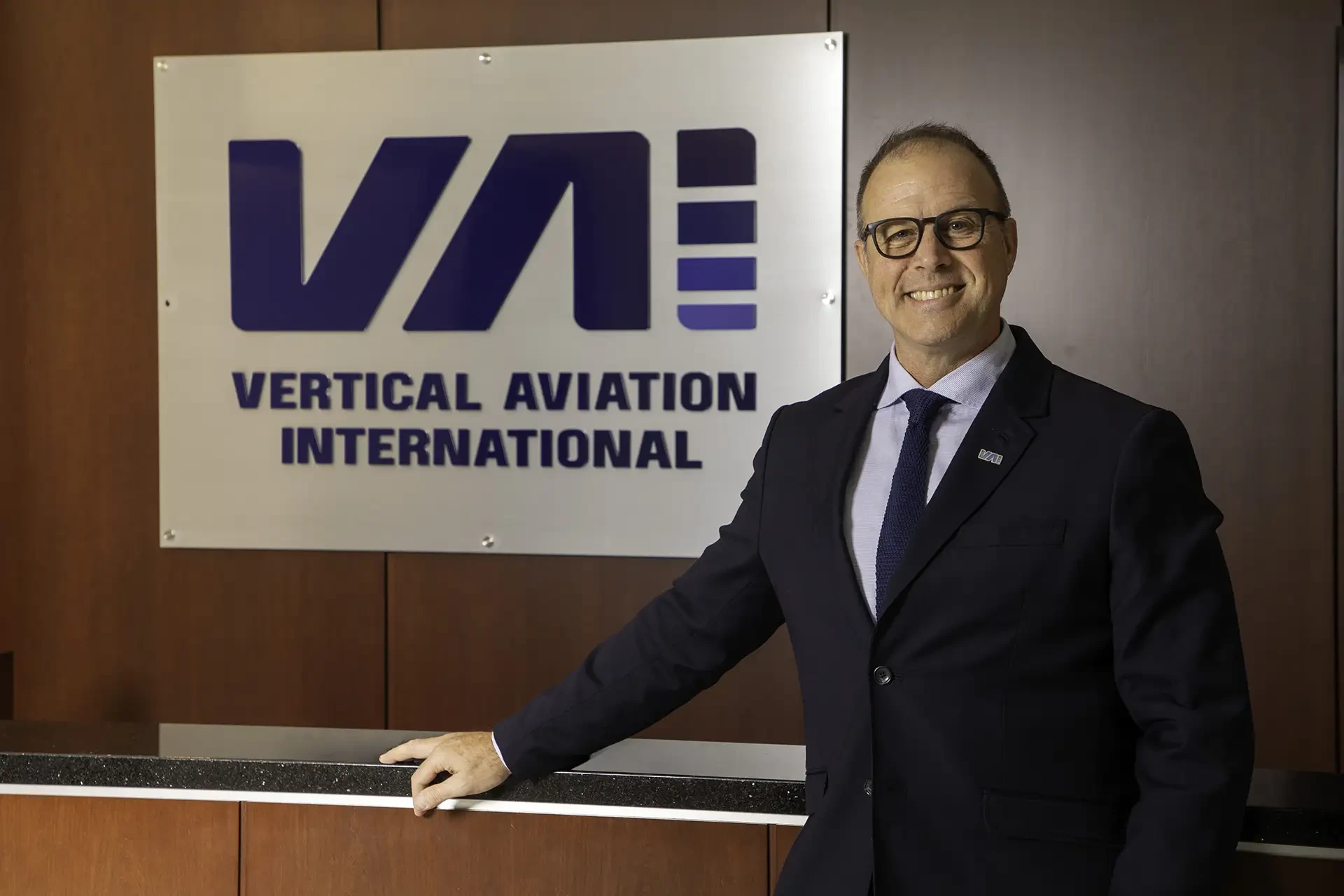
François Lassale’s Five-Year Plan to Build a More Global, Data-Driven Voice for Vertical-lift
François Lassale is not simply leading Vertical Aviation International (VAI) through a name change. Eight months into the role, he is executing a five-year plan to make the association more global, more data-driven, and more useful to operators across the vertical-lift industry.
His work is taking shape as the industry itself is changing. Helicopters are no longer operating in isolation. Drones, Advanced Air Mobility (AAM), electrification, workforce pressure, infrastructure demands, and global regulatory influence are all moving into the airspace that helicopters have occupied for decades.
For Lassale, President and CEO of VAI, that shift is part of what makes the role matter. “To lead a global industry and have a say in how that industry evolves was super exciting for me,” Lassale said.
The opportunity, as he sees it, is not simply to lead a trade association. It is to reposition VAI around the entire vertical-lift industry at a time when the industry needs a stronger voice, better data, and a clearer value proposition. “It’s no longer just the helicopter industry,” Lassale said. “It’s the whole vertical-lift industry.”
Traditional helicopter operators remain the backbone of the industry, but they now share the vertical-lift conversation with unmanned aircraft, new electric platforms, emerging vertiport infrastructure, and aircraft still working to find their commercial roles. Lassale’s view is that VAI should bring those communities together without losing sight of the operators flying the missions today.
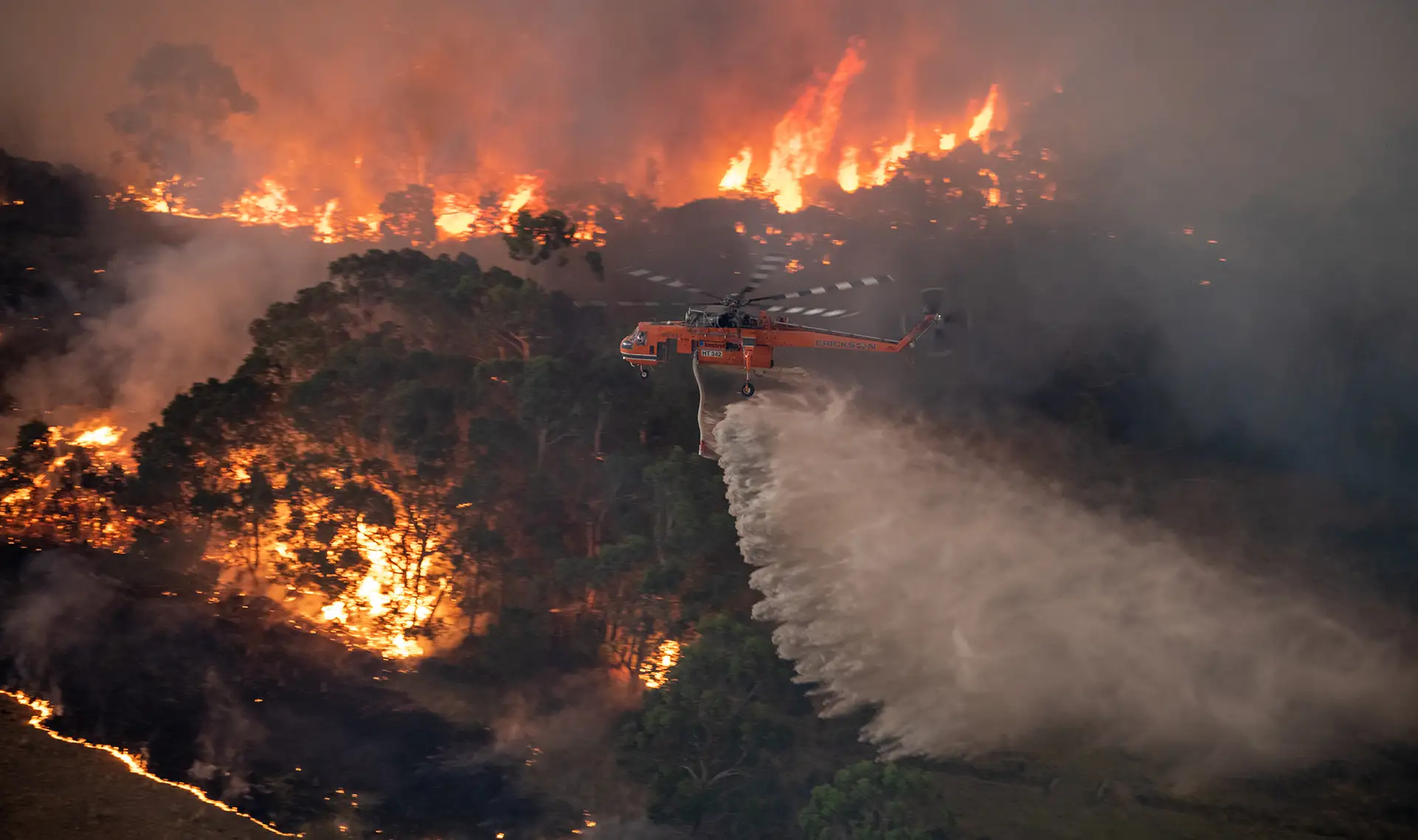
One of the industry’s problems, he explains, is not that it lacks value. It’s that the industry has often been poor at explaining that value to those who need to understand it. “We help keep the lights on,” Lassale said. “How many barrels of oil do we help produce? How many fires do we put out? How many lives do we save? We’re not very good at selling ourselves as an industry.”
That is part of the problem he wants VAI to help solve.
A Broader Mandate
Lassale arrived at VAI with an international background that immediately became part of the conversation. He has worked across different markets, run operations inside and outside the United States, worked with both the United States Air Force and served in the Royal Air Force, and lived the reality that vertical-lift does not look the same in every country.
That raised understandable questions from members. VAI has deep roots in the United States, and U.S. members wanted to know whether an international CEO would shift attention away from the domestic agenda.
Lassale’s answer is direct: the domestic agenda is not being diluted. In his view, VAI’s influence in Washington, with the Federal Aviation Administration (FAA), and through the broader U.S. aviation system remains critical because what happens there often affects the rest of the world. “We’re going to double down on the domestic agenda,” Lassale said. “Why? Because the influence we have here at FAA will filter to the four corners of the world.”
The international push is not intended to replace domestic advocacy. It is meant to extend it. Lassale wants VAI to build the structure to carry advocacy, training, data, and safety work beyond the United States in a way that makes the organization more useful to operators across all regions.
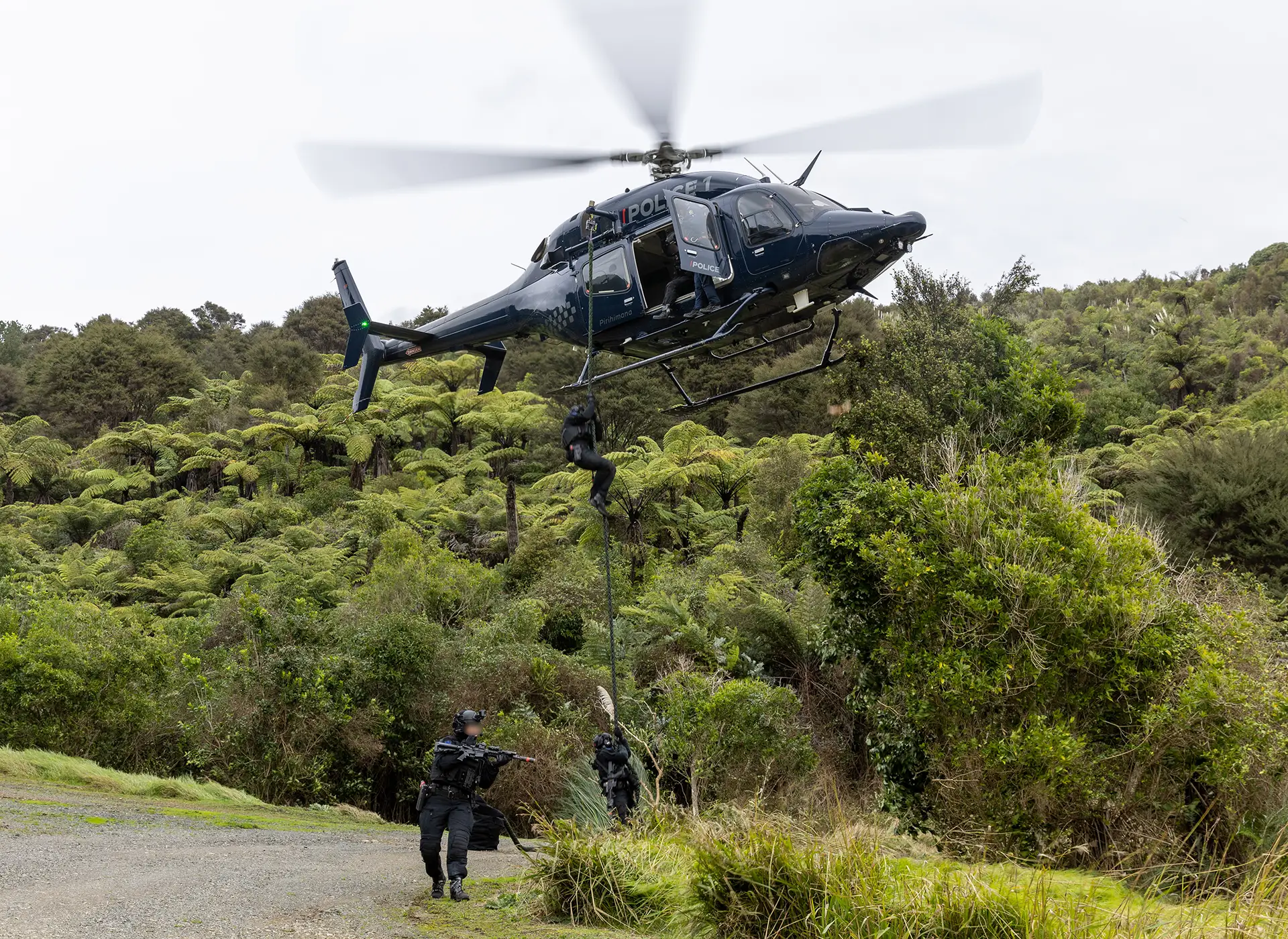
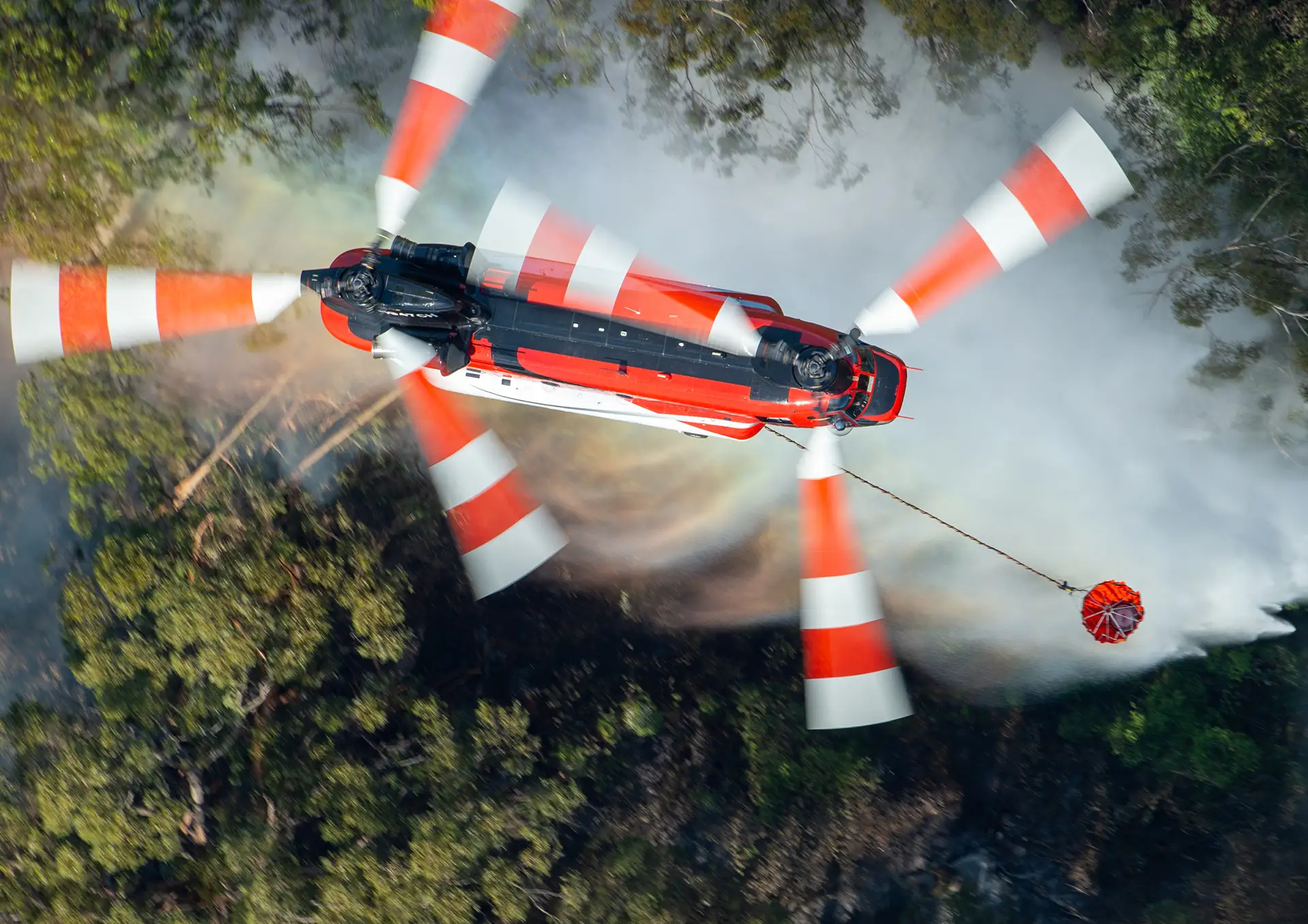
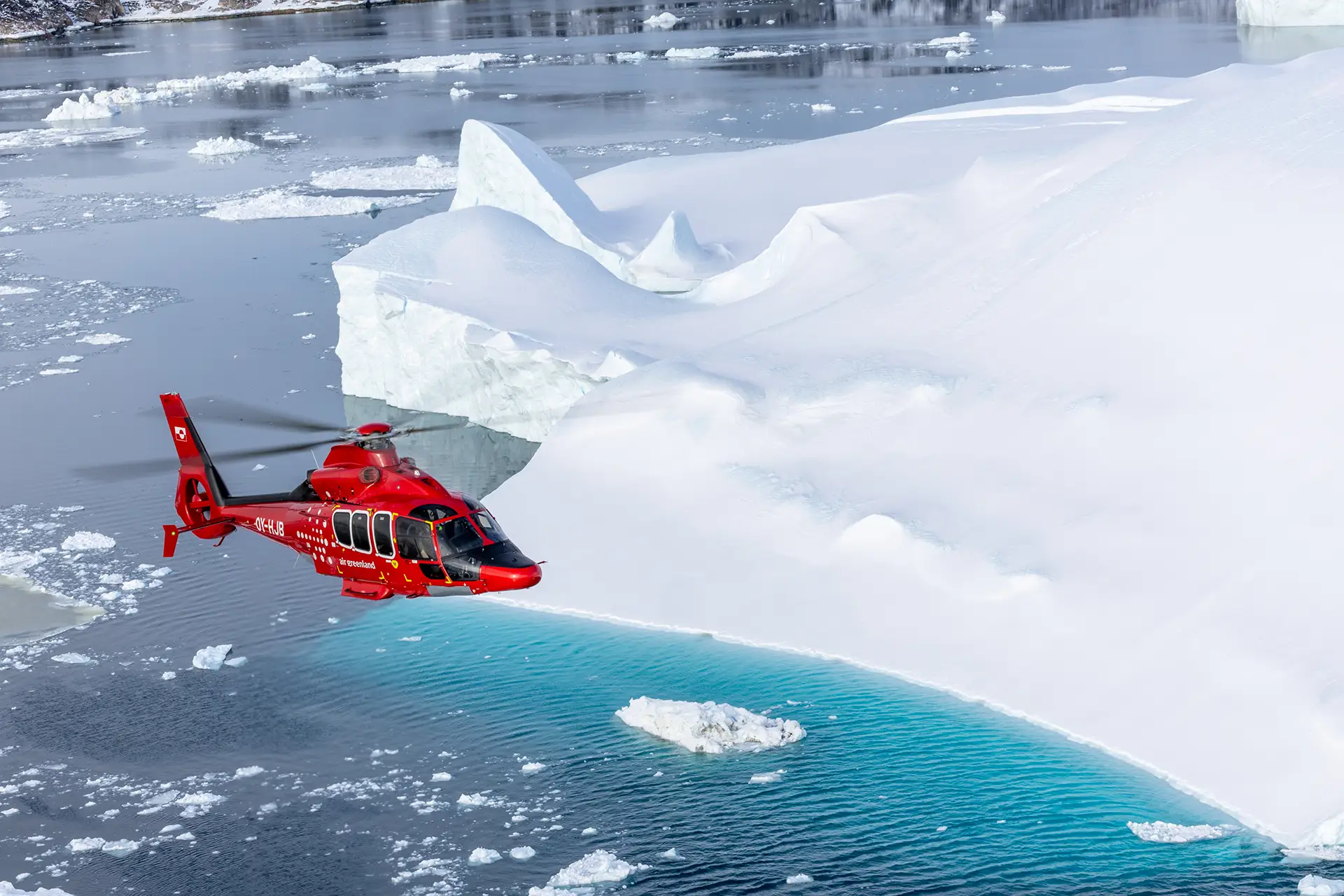
That includes markets such as Australia and New Zealand, where helicopters and other vertical-lift aircraft are essential daily tools for Helicopter Emergency Medical Services (HEMS), firefighting, offshore support, onshore utility work, long-line operations, mustering, and remote-area access.
Lassale sees those regions as particularly central to the industry’s future, not peripheral to it. “Australia and New Zealand are not on the periphery of this market,” Lassale said. “They form a very, very important part of the vertical-lift industry.”
In Australia, distance, mission scope, firefighting, medical transport, offshore work, and remote operations create a strong use case for vertical-lift. In New Zealand, helicopter use per capita is among the highest in the world. These are not markets that need to be convinced that vertical-lift matters. They already live it.
For VAI, the question is how to become useful to the operators, customers, associations, and regulatory agencies in those regions.
Turning Strategy Into a Five-Year Plan
Before VAI could move outward effectively, it first needed to be organized internally. The board had already identified five broad strategic initiatives: safety, advocacy, business operations support, workforce development, and integration of new technologies. Lassale’s task was to convert those priorities into a five-year plan, then align the organization around the people, departments, and skill sets needed to deliver it. “What I had to do is convert that into a five-year plan, so we knew what we were going to do year on year,” Lassale said.
That work is already shaping the organization. Each department now has defined goals and a clear direction. Membership, workforce development, education, government affairs, regulatory affairs, conventions and events, business development, finance, and support functions all serve the same broader plan.
Part of that realignment involved difficult staffing decisions. Lassale describes the changes as intentional, deliberate, and driven by the skill sets VAI needs to execute the strategy, not as a judgment on individual performance. Some long-time staff members exited the organization, and Lassale says those transitions were handled carefully and compassionately. “Those people were very well looked after and taken care of,” he said. “It was done compassionately, and that’s an important note to me.”

The aim is not simply to be smaller. It is to be more focused, with the right people in the right roles and new positions created for the association’s next phase. “It’s about having the right people with the right qualifications and skill set, in the right place, doing the right job,” Lassale said. “The goal is to have a lean, slick team.”
This realignment to operate as a leaner organization also aims to deliver more practical value to members. Over the coming years, the organization’s goals feed into a broader year-five target: membership growth, stronger shows and events, international membership development, AAM integration, safety, data, and workforce development.
For operators, the test will not be VAI’s internal structure. It will be whether the association can provide the practical tools, stronger advocacy, better safety resources, useful data, and reasons for members to see VAI as essential rather than optional.
Data as a Working Tool
Among Lassale’s priorities, data is central. Advocacy based only on opinion has limited weight. Advocacy backed by credible data changes the conversation. “If I walk into a politician’s office, or the FAA, or a customer’s office, and say, this is the opinion of François, I’m laughed out the door,” Lassale said. “If I walk in and I have data in my hand, the conversations are completely different.”
That principle sits behind one of VAI’s most significant planned shifts. Lassale wants the organization to build data-sharing and information-sharing systems that support safety and strengthen advocacy. The goal is not to collect data for its own sake. It is to convert information into outcomes: standard operating procedures, recommended practices, safety improvements, regulatory arguments, and business support for operators.
He is realistic about the difficulty. Operators are cautious about sharing data. Lawyers are often more cautious. Data can carry commercial, operational, and legal sensitivity. Lassale knows that convincing operators to share it will not be simple. “It’s never an easy task,” he said. “But from my own experience in the offshore world, I know how powerful adding the data to the conversation is. So I know it works.”
His answer is selective, protected sharing through VAI as a non-commercial, nonprofit industry body. Operators would help create the rules, and those contributing data would receive access to the output. Lassale describes it as a “pay to play” model in the sense that those who contribute to the pool should benefit from the results.
“It’s not about collecting all the data and figuring out how to use it,” Lassale said. “It’s about using VAI’s industry advisory councils to figure out what questions we want to answer, then finding the data we need to deliver an outcome that enhances safety on the frontline.”
The initial focus for VAI’s data initiative is the air medical community because many HEMS operators fly modern, digitally equipped twin-engine aircraft. That makes data capture more realistic than in some utility or legacy aircraft operations where digital recording is limited or nonexistent.
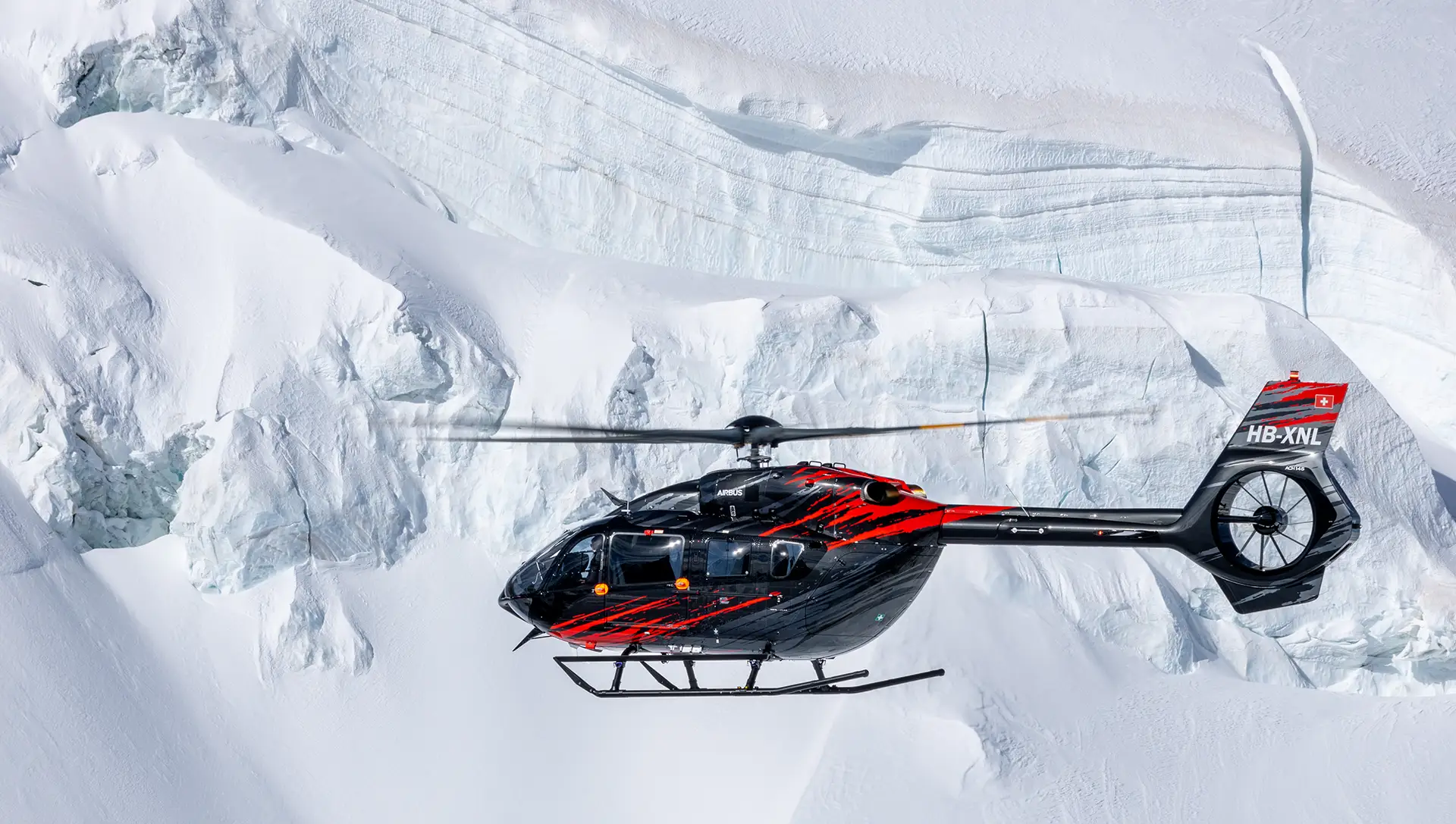
The scope starts narrow and focused because, as Lassale puts it, “you can’t boil the ocean.” He wants VAI to identify priority aircraft types and operator groups where the data set can become meaningful quickly. The Airbus H145 and Leonardo AW139 are obvious candidates because of their large presence in HEMS, offshore, and public-service operations across several countries.
The logic is simple: a single operator’s fleet may not produce enough data to reveal weak signals early. A global fleet data set can. “Imagine you plug into a global fleet of data,” Lassale said. “The data set’s much richer, which means you’ll see the leading indicators or the weak signals way before they arrive.”
That is where the value becomes tangible to an operator.
Lassale describes an information-sharing model where operators can anonymously share problems, lessons learned, close calls, and corrective actions. An operator dealing with a specific aircraft issue could search the platform, find related experiences, see how others worldwide addressed the problem, and avoid repeating the same mistake.
The goal is to give members value even when VAI staff are not directly involved. “I want to make sure that our members are getting value from VAI even while we’re asleep in bed,” Lassale said.
For operators, that turns VAI from an association that publishes, hosts, and advocates into a working resource for frontline decisions. It is the same practical model Lassale wants to apply as new technologies enter the vertical-lift ecosystem.
Integrating New Technology Without Losing the Plot
The integration of new technology is another major priority for Lassale, but to him, it is not a replacement story. AAM, drones, and electrification are not arriving to replace helicopters. They are simply moving into the same operating environment, shaped by low-altitude routes, landing sites, community acceptance, weather, noise, safety, and airspace access. “We are not sure what the future will look like 100% because a lot of things are still evolving in the space,” Lassale said. “But it’s not a dystopian future.”
That evolution is exactly why Lassale believes VAI needs to be involved. In the United States, he sees the current administration and the FAA pushing hard to establish leadership in AAM. VAI supports that direction, but Lassale sees the association’s role as making sure integration is practical, safe, and informed by the operators already working in that environment.
The airline world may be attractive to new entrants chasing large commercial orders, but airlines do not operate the way helicopters do. Helicopter operators already understand the realities of point-to-point vertical-lift operations: landing in constrained sites, managing public noise concerns, preserving routes and heliports, working around weather, and operating in airspace where time and mission urgency often matter. “Where we can help is the whole ecosystem,” Lassale said.
For VAI, that means bringing traditional helicopter experience into the future vertical-lift conversation. The association is not trying to slow down new technology. It is trying to make sure the industry does not rush past the practical lessons helicopter operators have already learned.
This is also an area where Lassale believes VAI can punch above its weight. It may not have the financial influence of larger aviation sectors, but it has operational credibility, regulatory relationships, and members who understand the airspace and infrastructure these new technologies are entering. That gives VAI a stronger advocacy voice, not only in Washington, but in the local and international markets where vertical-lift is already essential.
International Presence Providing Local Value
For Lassale, international growth is not about putting VAI branding on a map. It is about being present in regions where vertical-lift is already essential, like Australia and New Zealand, and finding practical ways to support the operators, associations, and authorities doing the work locally.
That is why showing up matters. VAI’s first international show in Bali is intended as a grassroots event for the region, bringing operators together through workshops, education, and industry development. Lassale sees the same approach extending into Africa, the Middle East, Latin America, and other regions where local operators may face different levels of maturity, infrastructure, regulatory pressure, and customer understanding. “It’s about showing up, showing face, being here, being present, being part of the community,” Lassale said.
The approach is being built around partnership. VAI can advocate in Washington, work through the International Civil Aviation Organization (ICAO), and collaborate with the European Helicopter Association in Brussels. But Lassale is clear that VAI cannot, and should not, try to advocate inside every country on its own. The more useful role is to support regional associations, operators, and communities with data, training, safety resources, and a stronger narrative they can use locally.
In Australia and New Zealand, that might mean helping local members walk into meetings with the Civil Aviation Safety Authority (CASA), the Civil Aviation Authority of New Zealand (CAA), or government offices with better data and a clearer argument for what the industry needs. “We arm them with the right data, with the right narrative,” Lassale said. “Then what we’re doing is we’re helping the local communities.”
Lassale does not see VAI’s international strategy as a takeover of local markets or associations. He describes it as collaboration: showing up, listening, partnering where local structures already exist, and helping operators advocate more effectively in their own environments. “This is not world domination,” Lassale said. “This is VAI actually working and collaborating with our constituents internationally.”
For local operators, the value will be access to tools and information that help them operate more safely, train better, share information, and explain their value to customers, regulators, and insurers, without adding another layer of bureaucracy. For VAI, it is a way to turn global reach into practical industry influence, strengthening local voices rather than replacing them.
This same logic applies to one of the industry’s most urgent shared problems, the workforce. Whether the operator is flying HEMS in Australia, long-line missions in New Zealand, utility work in North America, or offshore support in Northern Europe, the question is increasingly the same: who will fly, maintain, manage, and lead these operations in the next decade?
The Workforce Cliff
Lassale sees workforce development as one of the most serious long-term challenges facing the vertical-lift industry. The average maintenance engineer is getting older, the pipeline is not filling quickly enough, and the helicopter sector is competing for talent with airlines, defense, and AAM companies that often offer higher pay or clearer career paths. The risk is that rotorcraft becomes a training pipeline for everyone else. “In 10 years, our industry is going to stare off a workforce cliff,” Lassale said.
This problem cannot be solved by a single operator or association alone. Lassale envisions VAI playing a leading role in bringing the vertical-lift community together around a more rigorous scholarship and development effort, including pathways into underserved communities where young people may be interested in aviation but lack practical access to training.
The issue, as he sees it, is not that the industry lacks goodwill. It is that the support is too fragmented to move the needle at scale. Companies and individuals are donating money toward scholarships, but those efforts are often spread across separate programs, regions, and priorities. “Right now it’s fractured and split across the whole industry,” Lassale said, describing donations of “$5,000 here, $10,000, $20,000 there” that remain scattered rather than concentrated into a larger training effort.
For Lassale, a more coordinated scholarship model or training and education plan could do more than help a handful of individuals. It could help build a pipeline into the industry, especially for young people who might otherwise never see aviation as reachable.
The argument is both social and operational. Flight training, maintenance training, and aviation education are expensive. Many young people who could become pilots, engineers, maintainers, dispatchers, operations specialists, or future leaders never get near the industry because the pathway is either invisible or unaffordable.
Lassale sees an opportunity to change that. “Imagine reaching into those underserved communities around the world and saying, ‘We can provide meaningful opportunities for you,’” he said.
In Lassale’s view, that investment also creates loyalty. If the industry helps someone enter aviation, supports their development, and gives them a meaningful path inside vertical-lift, it has a better chance of keeping that person in the sector. That matters when airlines and emerging aviation companies are competing aggressively for the same pilots, engineers, technical, and logistical talent.
The workforce discussion also connects directly to the industry’s broader value problem. Vertical-lift performs critical work: emergency medical transport, offshore support, firefighting, utility construction, powerline work, search and rescue, disaster response, and access to remote communities. Yet the industry has often failed to explain that value clearly enough to customers, governments, students, and even its own future workforce.
If young people only see airlines as the aspirational path, the helicopter and vertical-lift sector will continue losing people it helped train. “We don’t want to be seen as the training pipeline to the airline world,” Lassale said.
That makes workforce development more than just a recruiting issue. It is tied to how the industry presents itself, how it funds training, how it builds loyalty, and how it proves its value to the people it wants to attract. It also connects directly to safety. A sector that cannot attract, train, and retain skilled people will struggle to maintain the standards it needs, and for Lassale, those standards are central to the industry and VAI’s credibility.

Safety as Credibility
“I always say safety is the currency of our credibility,” Lassale said. “Whether you manufacture them, fly them, operate them, maintain them, or train people on them, we all benefit from a safer industry.” That philosophy supports advocacy, customer confidence, workforce development, international expansion, and the industry’s ability to defend itself when accidents put helicopters in the public spotlight.
For Lassale, safety cannot be treated as an operator-only issue. Everyone involved, from customers to regulators, manufacturers, maintainers, trainers, operators, and insurers, all influence the safety environment. In some markets, the problem is not only unsafe operators. It is customers who do not understand what safe operations should look like or cost, or what standards they should require of the companies they hire.
For years, much of the industry’s safety messaging has focused on telling operators what they should do. Lassale wants to broaden that conversation. If customers continue choosing the lowest-cost option without understanding operational risk, operators face commercial pressure to cut margins in the very areas that support safe operations: training, equipment, oversight, and experience. “We need to start talking to the customers also,” Lassale said.
That thinking also sits behind VAI’s work on safety standards. Lassale notes that the helicopter industry currently has 22 different standards across sectors and regions around the world. For operators, insurers, regulators, and customers, that creates complexity. For VAI, it creates an opportunity to clarify where the global industry already agrees, where standards overlap, where they contradict each other, and where genuine gaps remain.
The goal is not to add another standard to the pile. Lassale is more interested in identifying the standards and recommended practices VAI can credibly support for specific types of work. Mustering, long-line, offshore, HEMS, training, utility, and other sectors do not all operate the same way, but all benefit from clearer expectations around what good practice looks like.
The point is not to encroach upon the organizations that already develop and audit standards. It is to help the industry move closer to practical standardization by using data to show where guidance is strong, where it is inconsistent, and where operators and customers need clearer direction. From there, VAI can work with customers, end users, insurance companies, and operators to say, in effect: this is where the industry believes you need to be.
For operators, that matters because it gives them a clearer framework to point to when customers ask why safety costs what it costs. For customers and insurers, it creates a better way to understand what they should expect from a responsible operator. For regulators, it provides a more organized industry position.
It also gives VAI a stronger basis for advocacy. The argument becomes less about opinion and more about data-backed standards, practical recommendations, and a safer industry for all. This is where Lassale’s broader vision for the association begins to come together: a leaner association built to support operators, inform customers, and give the vertical-lift industry a stronger voice.
A Leaner Association With a Broader Role
Eight months into the role, Lassale describes himself as energized by the work. “I think I was made for this job,” he said. “Each day, I look forward to getting up and going to work.”
That energy is tied to the scale of the task. Lassale has helped lead industry change before, particularly in the offshore sector, where coordinated safety work, data, standards, and frontline engagement helped move an operating community forward. He sees a similar opportunity at VAI. “That’s what attracted me to this role,” Lassale said. “Going out and playing a part in shifting a whole industry.”
For Lassale, the appeal is practical: helping people on the front line improve the industry through safety, business support, training, advocacy, and information sharing. “Being part of an organization whose sole purpose is to do good. How cool is that?” Lassale said.
The strategy is not built around personality. It is built around usefulness. Lassale wants VAI to become a leaner, more focused association that operators rely on because it helps them make better decisions, advocate more effectively, and prepare for the pressures already reshaping the sector. “Our members should be saying, it’s so much easier to be in business because we’re a member of VAI,” Lassale said.
The remainder of the five-year plan will test whether that ambition can become a practical tool for the industry as it faces new technologies, workforce pressure, safety scrutiny, fragmented standards, and international operating demands. But for Lassale, the industry is more connected than it often realizes. “It doesn’t matter where you are in the world, operating helicopters or AAM or drones,” he said. “We’re all more alike than we are different.”
That observation guides the direction Lassale wants to take VAI: not away from helicopters, not away from the United States, and not toward global recognition for its own sake, but toward a more globally connected industry, with the data, safety, credibility, and voice to represent vertical-lift properly.