 HOME
HOME





After seemingly decades of gentle evolution, with modest consumer-led upgrades to established products the norm, and new aircraft a relative rarity, Robinson Helicopter Company (RHC) is now becoming something of an innovation house. Under the energetic and inspirational leadership of David Smith, and with some shrewd recruitment, partnerships and Mergers and Acquisition (M&A) activity, RHC is rapidly reconfiguring itself to be 'future ready' in terms of its offerings and its approach to product development and support.
The terms 'Artificial Intelligence' (AI), 'Automation' and 'Uncrewed Aerial System' (UAS) are 'hot buttons' across aviation, in both civil
and military sectors. There is a growing expectation that we can extract more from our platforms, delivering true 24-hour effects,
without the concomitant need to employ, train and keep current an increased number of (ever scarcer and more expensive) pilots and
maintainers. RHC has been developing unmanned versions of their piston R44 and turbine R66 for several years, appreciating that
at the lower end of the performance, cost, and size scale, removing a pilot and the interfaces they need to operate the aircraft
(crashworthy seat, instruments, controls etc) has a disproportionately large impact upon disposable payload and lift capability, enabling
their products to, in some cases, punch well above their price point.
RHC has been proactive in seeking out partners for this journey. They understand that building the hardware and interfaces 'in house' in their almost entirely US-sourced vertical manufacturing and integration facility is a sensible and pragmatic approach, enabling them to control risk and costs. However, in the market place, there will be other companies for whom autonomy, automation and AI (and, crucially, those are all very different technologies and concepts) are core business. Rather than invest to 'reinvent the wheel', RHC has instead partnered with such concerns, leveraging their existing programs to best effect.
Where partnerships have not been the optimum solution, RHC has not been shy to venture into the M&A space. The acquisition of Ascent AeroSystems by RHC in early 2024 was a totemic moment. At the time, commentators suggested that it was RHC either jumping on the UAS bandwagon, wary of the Fear of Missing Out (FOMO) in the uncrewed space, or perhaps the start of a bold new direction for the company, under David Smith who had recently been appointed.
It now, to me at least, seems the latter.
On the eve of Verticon 2026 in Atlanta, the annual 'gathering of the tribes' for the global helicopter industry, I was able to discuss all matters RHC with David Smith. The advance (embargoed) Press Releases surrounding the full product range suggest that David and his team are going to have a busy show. For me there was just the one topic I wanted to use my valuable time with David discussing, and, as I mentioned that I wanted to focus on 'Robinson Unmanned' (RU), his response was a kind of 'I've been expecting you Mr Bond' smile.
First and foremost, I asked him about the choice of name. While the industry set off on this journey using 'unmanned' as a common descriptor, Political Correctness has seen the term evolve slowly into 'uncrewed'. David was unequivocal - the use of unmanned was deliberate. There is 'heritage' in the term unmanned, and 'uncrewed' suggests that there's not a person on or in the loop. In some case, there won't be, but in others there will a human somewhere controlling events, even if by touchscreen or mouse rather than cyclic and collective. Unless a UAS is designed to operate autonomously - for example, 'here's a task, go do it within these boundaries' - then I prefer unmanned (in the historic sense of a contraction of 'mankind' rather than a gender) or 'Remote Piloted'.
David wanted to get across his vision that we're on the cusp of 'a new era of aviation'. When I asked what he meant by that he replied with another perfect soundbite:
'We're entering the 'era of both', where we’ll have better informed humans being supported by unmanned amplifiers, with seamless integration between the two'.
He's fully behind the concept of farmers, firefighters and law enforcement all being able to operate more effectively by having blended
fleets of conventional helicopters and remote flown and autonomous UAS. The Manned Unmanned Teaming (MUM-T) protocols will need to be
robust to do so, but the ability of a small number of humans to exploit large numbers of air systems is compelling. When combined
with better helicopter handling qualities and autopilots, the 'human on the loop' will be able to better correlate the information being
provided by their network of distributed sensors, and to plan and execute the most effective mission strategy - whether that's securing a
border or critical infrastructure site, detecting and knocking down wildfires, conducting SAR ops or simply ensuring that fragile crops are
watered or sprayed in good time.
Smith also acknowledged that much of the technology has clear 'dual use' potential between military and civil applications. As he noted, the world is full of Toyota Land Cruisers, with essentially the same truck performing a multitude of roles from family transport, ambulance, and humanitarian aid all the way to being the first choice for insurgencies seeking to effect 'regime change on a budget'. In the military, such adapted vehicles are often called 'technicals' and I've seen them fitted with everything from machine guns to MANPADS. For RHC, the argument is just the same. If a military wants a cheap and reliable way of moving small payloads of critical cargo the 'last tactical mile', why risk a Chinook or UH-60 and crew?
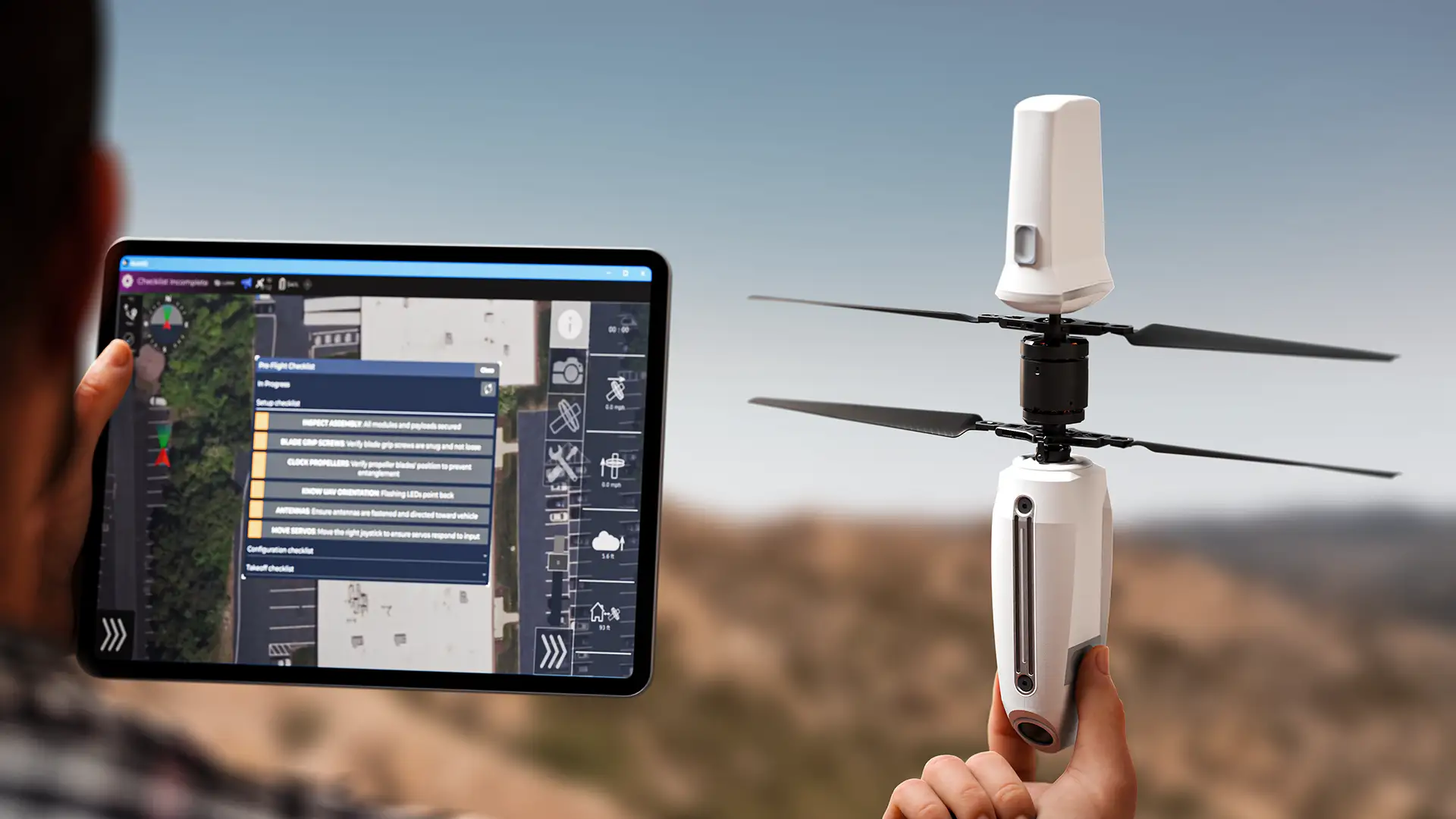
Of interest to me was the different partnering arrangements that RU are employing. At the 'bottom end', the Group 1 and 2 UAS, RU effectively has no partner. That's the core business of Ascent AeroSystems, which it seems will be wholly absorbed into the RU Business Unit - and that is entirely consistent with the appointment of Ascent's current President, Paul Fermo, to do the same job for RU.
Moving up the scale to Group 3 UAS, the unmanned version of the piston- engined R44 will be supported by Rotor Technologies 'RPX' autonomy suite. Rotor Technologies will offer you an aftermarket retrofit of their system onto a R44, which they name the R550, but with RU you can now buy a factory fresh package from the OEM.
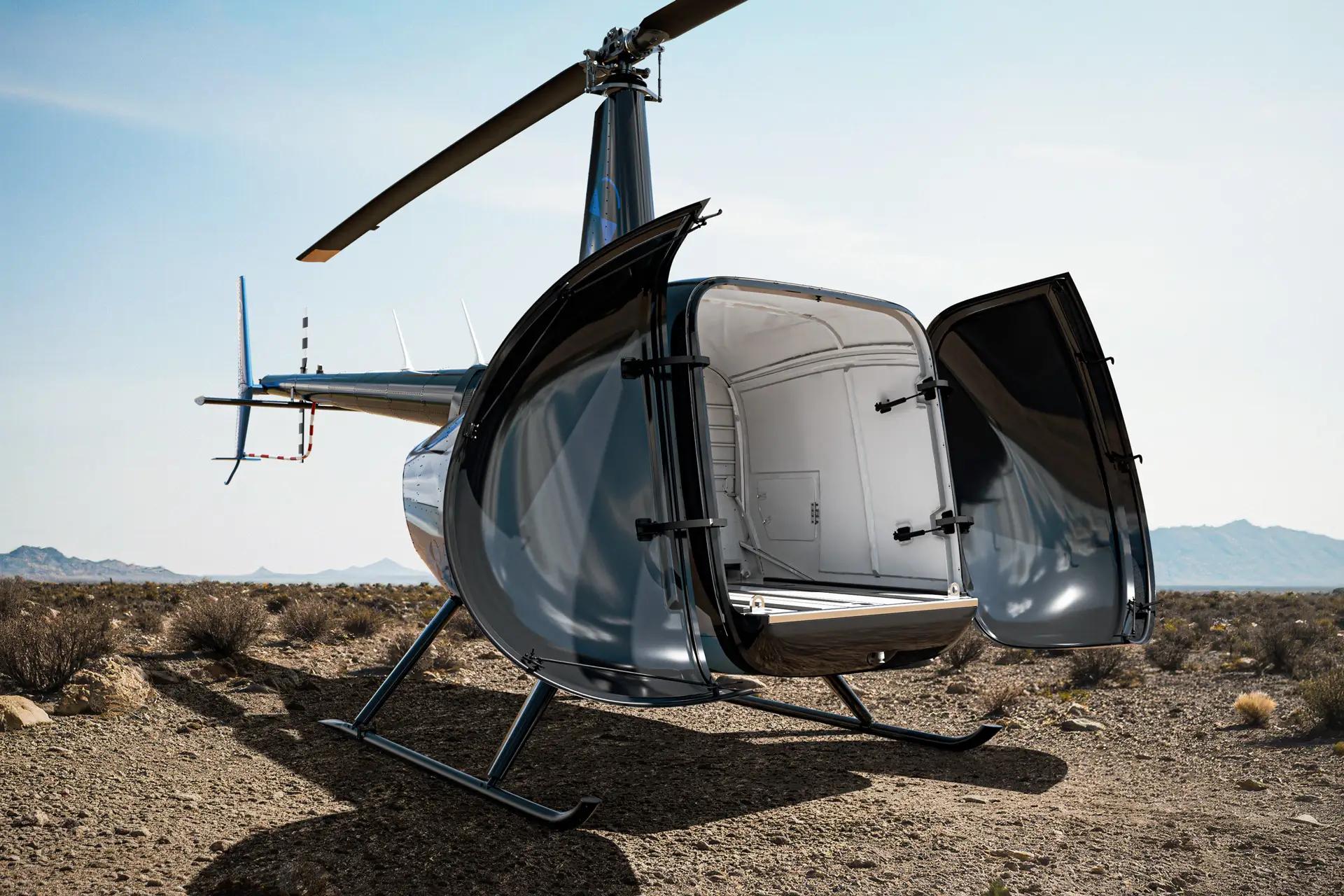
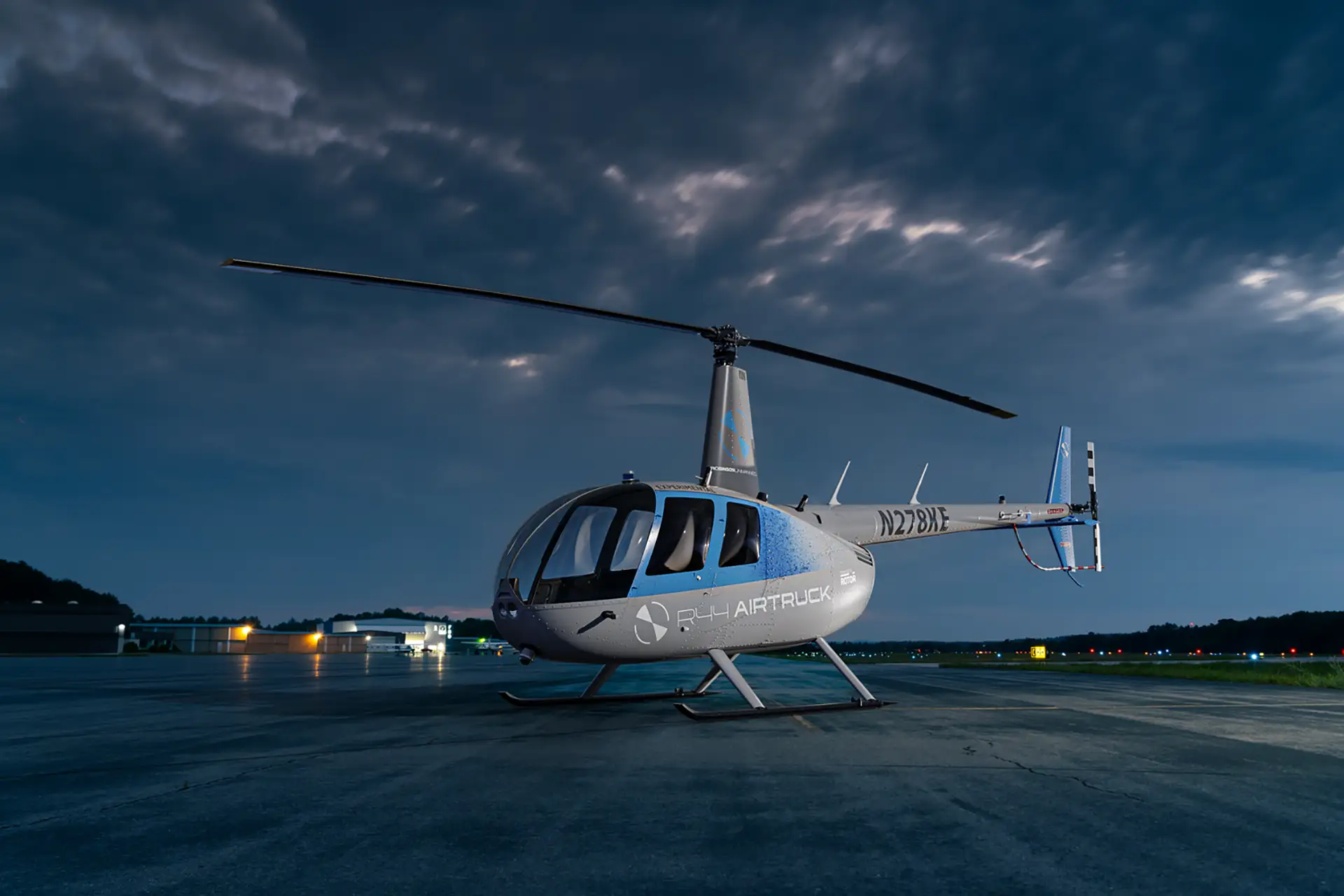
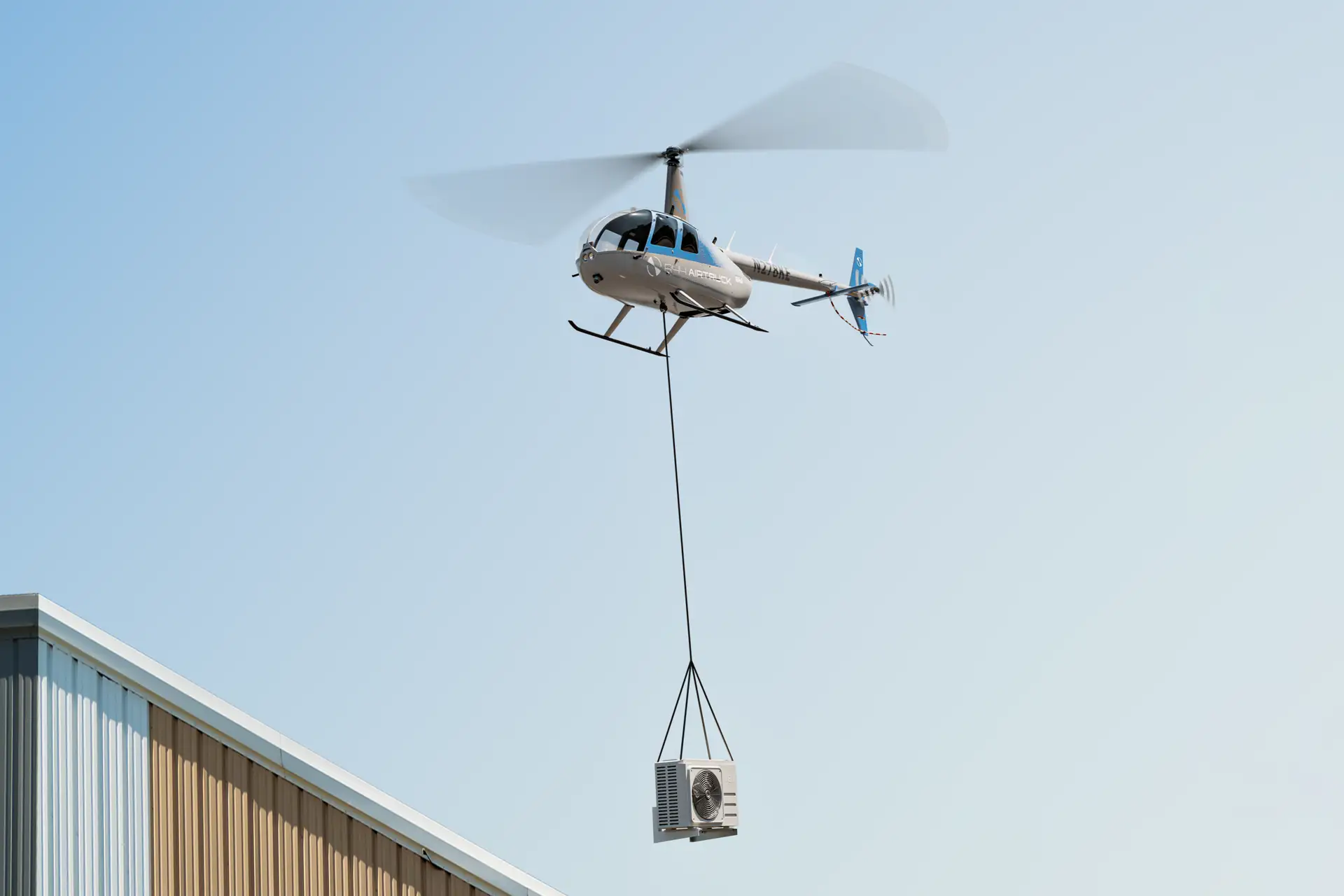
Initially, there will be two versions of the R44 available, as per Rotor's website. The R44 AIRTRUCK Airtruck is marketed as a heavy
lift UAV for construction, disaster relief and cargo transport applications. Smith also acknowledges the suitability for the Air
Attack mission, using the 500Kg useful load to drop water or haul a sensor aloft for Situational Awareness. There's also, clear
potential for para-republic and military use for persistent surveillance and the resupply of units in the field.
As the name suggests, the R44- SPRAYHAWK is aimed at the agricultural market. With its hopper / tank and spray bar, the aircraft can carry over 400 litres of seed, fertiliser or pest control agent. Removing the onboard pilot enables the Sprayhawk to carry more payload and work around the clock - which given the time criticality of many crops, may prove the difference between an average and a good harvest.
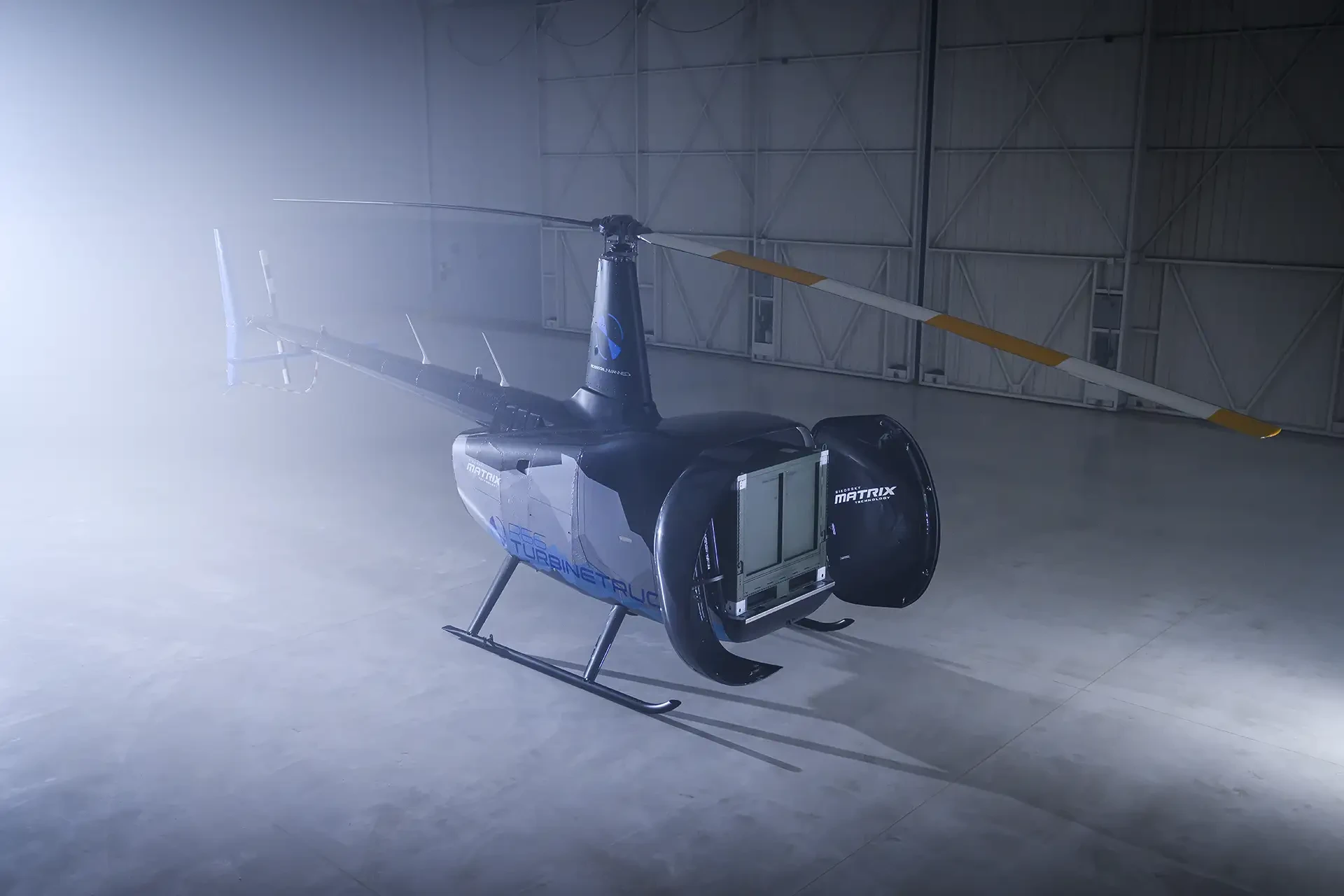
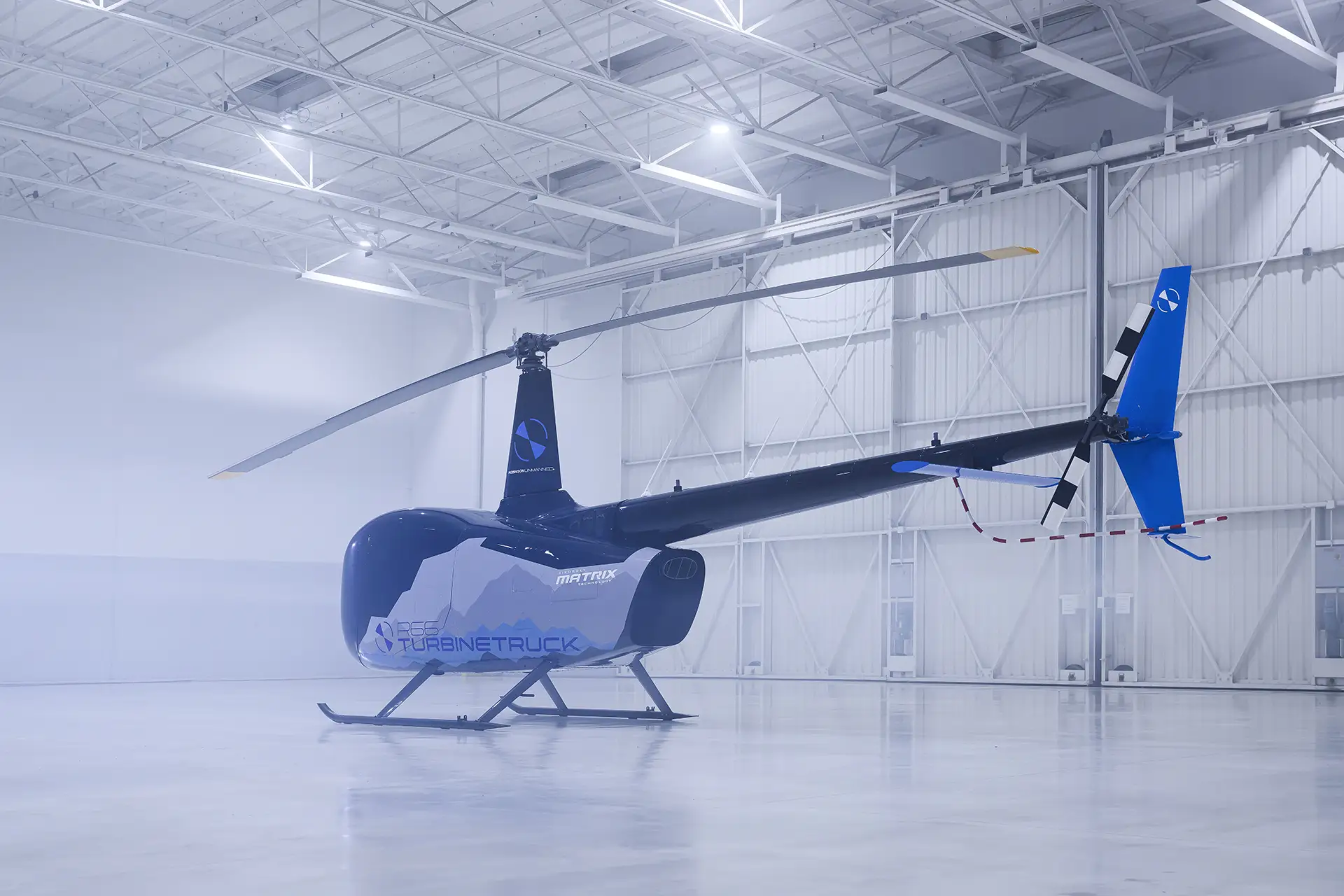
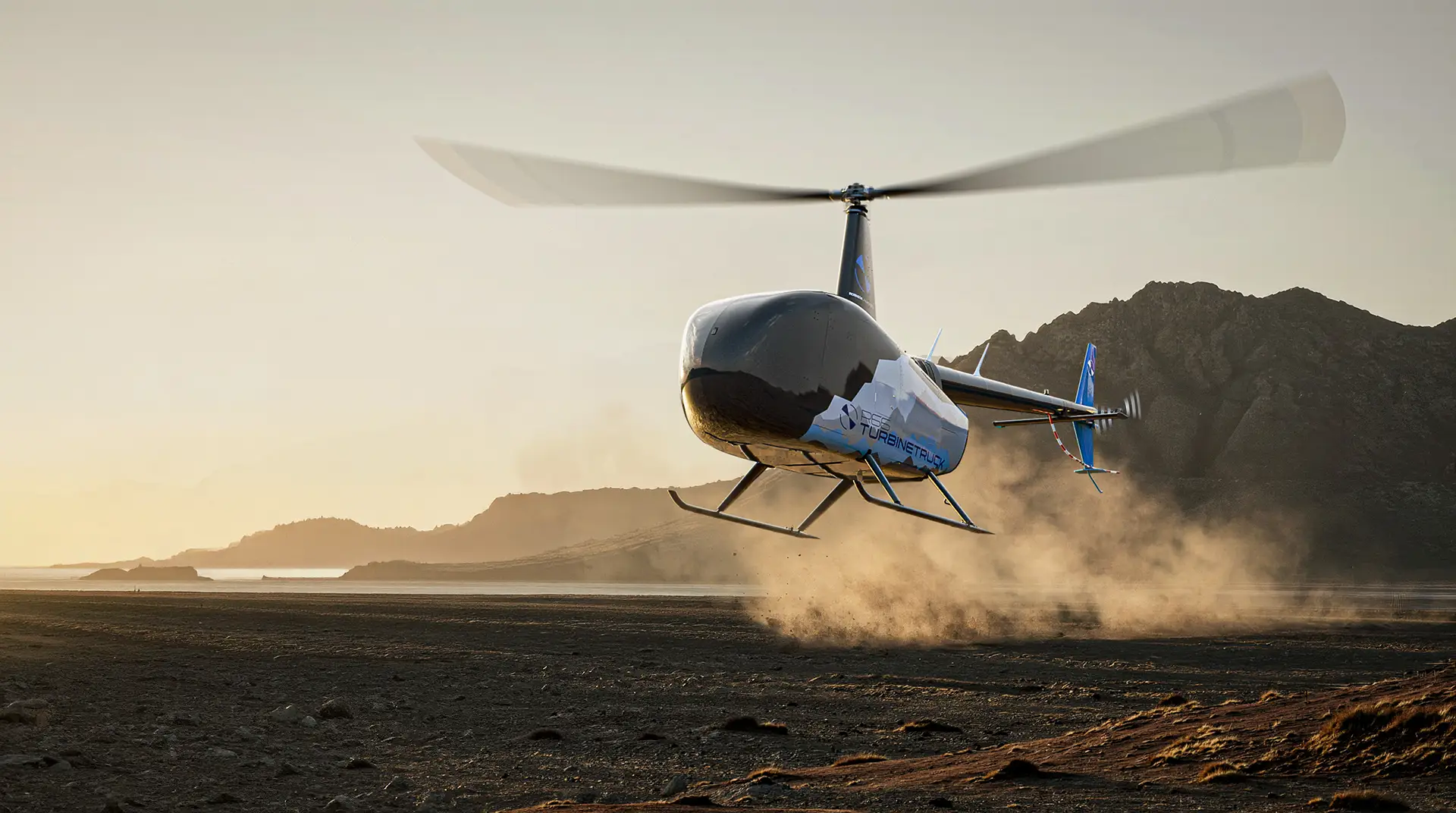
Interestingly, when stepping up the Group 4 UAS, based upon the more muscular R66 Turbine, RU has opted to partner with Lockheed-Martin Sikorsky. At a stroke, the fact that RHC is confident to partner with such an industrial leviathan tells you how far the company has come since the early days of the R22, as does the fact that Sikorsky is happy to partner with RHC. Named the R66 TURBINETRUCK , the aircraft will leverage Sikorsky's investment in its 'Matrix' autonomy system, which has been flying and maturing nicely over recent years on the UH-60 Black Hawk and now underpins the recently unveiled 'U-HAWK' concept - which, in some respects could now be viewed as a 'big brother'. The TURBINETRUCK is designed explicitly with defence logistics in mind, offering a flexible and affordable unmanned logistics connector for austere locations - as well as potential use as an ISR asset with sensors, a carriage and delivery platform for Launched Effects and even weaponisation potential.
As so often, our conversation then turned to a series of 'so what’s?' The intangible second and third order effects that might be created by RU's product line.
Firstly, and a subject very close to David's heart, increased autonomy can 'bleed' back into the manned domain as well. The opportunity for a human to hand control, and an element of decision making, to an autonomy-based control system in the event of incapacitation, disorientation or inadvertent IMC is a powerful consideration. Many R44s and R66s are owned by individuals who fly with their (non-rated) friends and families. Some form of autoland or external control over-ride capability is now seen an increasingly attractive option for the safety conscious.
David confirmed that the new R88, with its greater performance and cabin size compared to the R66, is already being designed with autonomy in mind. As a conventional helicopter, RHC is positioning the R88 as a light twin with single engine acquisition and running costs - and the same could be said of programs such as the USMC's Aerial Logistics Connector (ALC). While an unmanned R88 is unlikely to arrive in time for the initial contract award, expected sometime this year, future tranches could certainly see RU challenging for part of the program with the R88.
Perhaps most interesting is the fact that the RU modifications are designed to be fitted to existing airframes, as well as new builds.
This is a potentially powerful strategy. In several NATO studies that I've worked on, we've discussed the concept of 'Optionally Manned Rotorcraft' (OMRs, similar in employment to the CQ-24A K-Max helicopters that were deployed to Afghanistan to support the USMC between 2011-2014). In theatre they were flown almost exclusively unmanned, but, if needed (such as transits across civil airspace) they could be flown by a pilot onboard. Our thinking in NATO has centred around the maintenance profile and risk appetite of OMRs vice purely manned platforms. One of our key conclusions was that, on operations, taking perfectly serviceable platforms off the line for an inspection period based upon calendar, hours or cycle metrics was wasteful. Not only are the aircraft not available for, perhaps, several days or weeks, but single use spares (such as seals and screws) are used up, fluids often drained, and sometimes disturbing working subsystems to get to a part or component that is due for swapping out can create additional problems during re-assembly and flight test.
Our proposal was twofold. First, trust the HUMS and prognostic tools to guide supervisors as to what really needed replacing (and when) and, secondly, when a point was reached where it was deemed inadvisable to fly the aircraft with crew or passengers, declare the aircraft as no longer 'man rated' but, crucially, still available to commanders as an 'unmanned only' asset. In wartime, the platform could now be considered as sliding down the 'attritibility scale' from 'expect to get the aircraft back' to something more like 'would like to complete 3-5 missions before hull loss is acceptable. At the end of the surge period, a decision could be made about the relative merits and costs of replacing enough components to consider the tail number as 'man rated' again.
All of which chimes with RHC and the new RU business. The Robinson family of helicopters have a well understood overhaul profile and useful working life. However, even when notionally 'life ex', the aircraft remains inherently airworthy. As David explained, this is a real opportunity for the company. Potentially, they can offer owners of older aircraft approaching their design life a generous trade-in allowance against a new machine - with the opportunity, of course, to 'upsell' from within the R44 range to a higher specification model or even migrate to the R66. As David explained, the cabin shells are relatively cheap to construct, so can be discarded, but several of the (expensive) rotable items (blades, engines, transmissions) and airframe systems can be salvaged, refurbished and then combined with a bespoke UAS cabin shell and RPX autonomy suite to create a 'new' R44 SPRAYHAWK or AIRTRUCK. It makes economic and environmental sense, and for a company like RHC which prides itself on its Vertical Integration processes, relatively low risk.
I'm certainly looking forward to visiting the RHC stand at Verticon, to discuss this and other programs with the team. The launch of
Robinson Unmanned marks a bold new step for the company, entirely in keeping with its philosophy over the past couple of years. As
the company itself concludes;
"At Robinson Unmanned our primary mission is to expand customer capability through mass deployment of unmanned vertical lift'
From the hand deployable HELIUS nano-UAS to the R66 TurbinetruckTURBINETRUCK, and with the promise of an unmanned R88 to come, it's hard to argue that RHUC and RU are not capable of delivering on such a bold vision.