 HOME
HOME





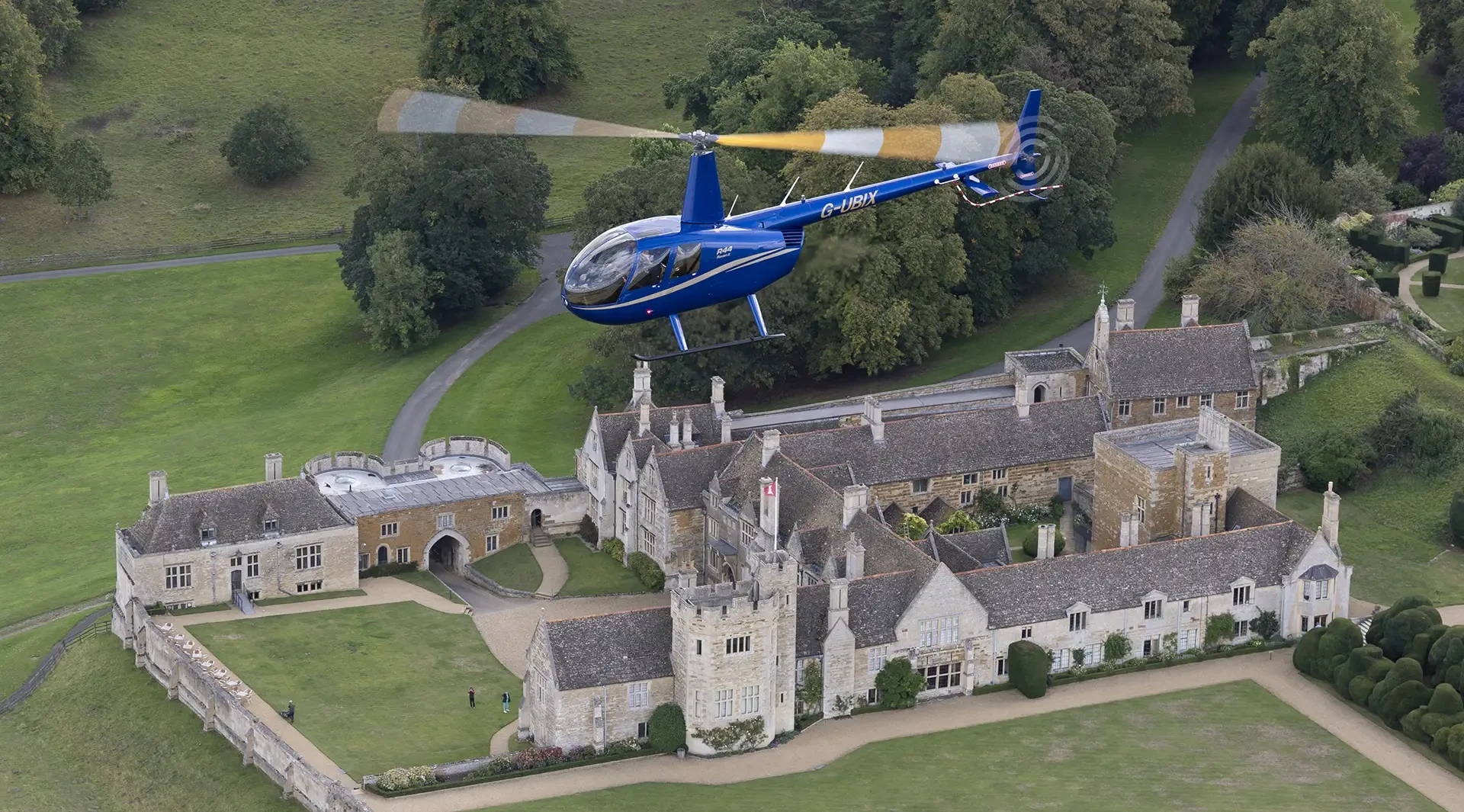
Just a few years after establishing Sloane Helicopters, founder David George recognized the immense potential of the new Robinson R22 and obtained the exclusive UK and Ireland distributorship for Robinson helicopters in 1976. That foresight has made Sloane’s the longest continuous supporter of Robinson Helicopters and their first R22 (SN 0018) was delivered to the UK in 1979, and they have sold 520 new Robinson helicopters to date.
Early Days
David George had learned to fly in a Brantly and flown several other helicopter types by the time he acquired his first machine, an
Agusta-Bell 47J, in 1972. Starting in the 1970s, Sloane was the sole UK distributor for Hughes Helicopters, and David George was a regular
visitor to Los Angeles. Here he learned of Frank Robinson’s plans to build a revolutionary small and relatively affordable helicopter
ideally suited for personal use. Robinson had a proven track record in engineering and design, having worked for many years for some of the
world’s leading helicopter manufacturers, and the first flight of his R22 occurred in August 1975.
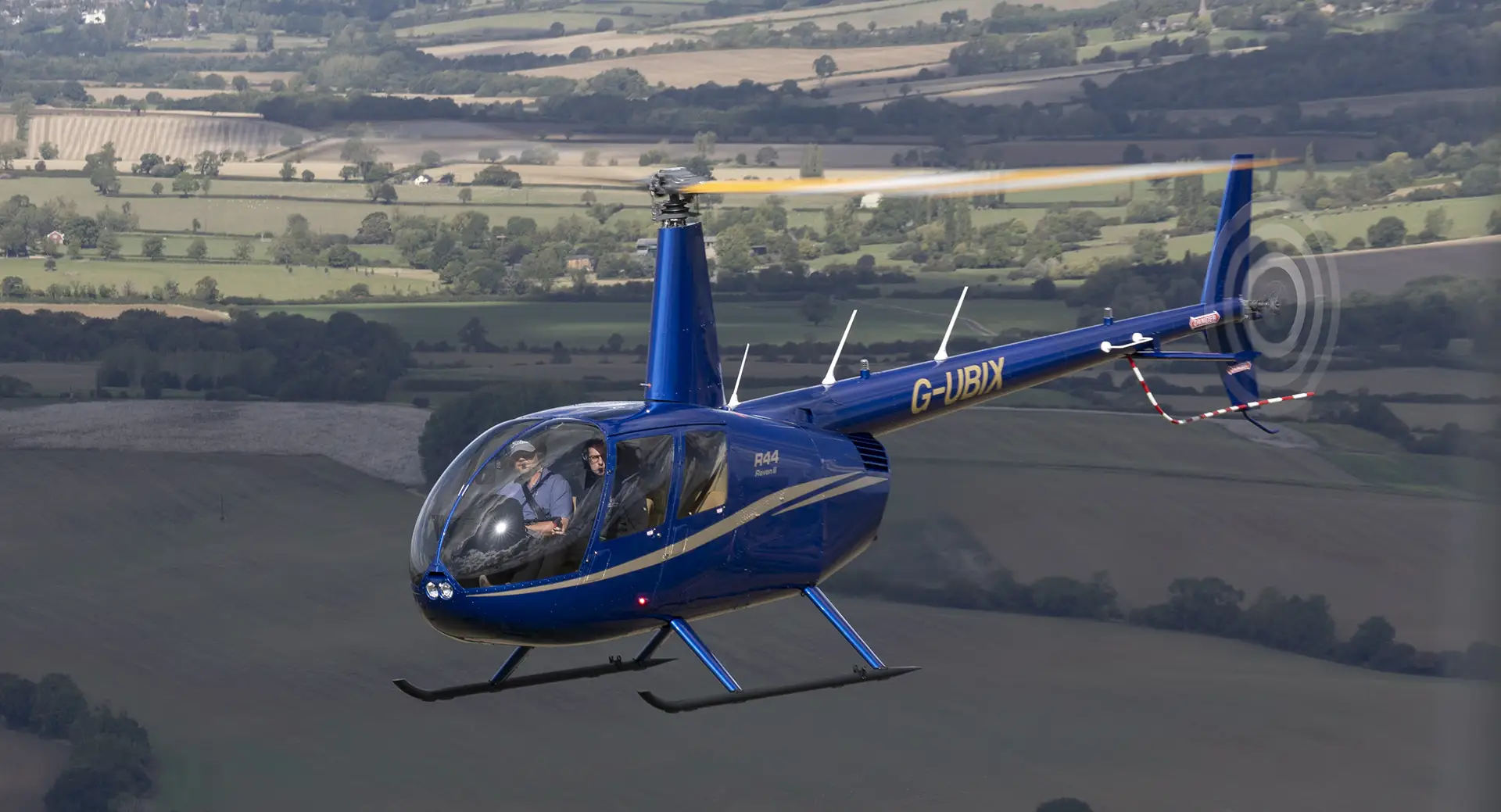
When David George met Frank Robinson in the early 70s, Frank was assembling the prototype R22 at his home in Palos Verdes, and many of the
parts were manufactured by his partner, Gus Le Fiell, at Gus’ workshop in Hawaii. Robinson was a tail-rotor expert, and it is reported that
he had to amend his original design because the manufactured tail-rotor required baking, and the blade radius was constrained by the size of
the domestic oven in Robinson’s kitchen. Robinson ideally wanted an additional three inches on the R22’s blade, so when the R44 came out in
1994, the fact that manufacturing was no longer limited to Robinson’s home meant the larger machine could receive the longer blades Frank
originally designed.
Unintended Trainer
Although Robinson never envisioned the R22 as a training platform, the type quickly established itself as the mainstay of most training fleets thanks to its simplicity, reliability, and low operating costs. Although Robinson did much of the original test flying himself, he recognized the need for a more competent, experienced pilot to conduct the more demanding, extreme developmental test flying. He engaged Bob Golden, a highly experienced test pilot, to perform all the test flying required for FAA Certification, supported by Tim Tucker.
Early R22 production units had issues with certain components, most of which were easily resolved. The most serious problem was the
catastrophic delamination of a main rotor blade in May 1980, which caused all R22s to be grounded. The problem was rectified, but not before
Robinson’s bankers threatened to withdraw their support. Frank called an emergency dealer meeting asking for support, and both Sloane and
Heliflite (the Robinson dealer for Australia) placed block orders for new R22s accompanied by deposits, which satisfied the bankers. Their
support saved Robinson and ensured its continued viability. Production of the R22 was restarted, with Sloane going on to sell a record 68
new R22s in 1988, and s/n 1000 was delivered to Sloane in 1989.
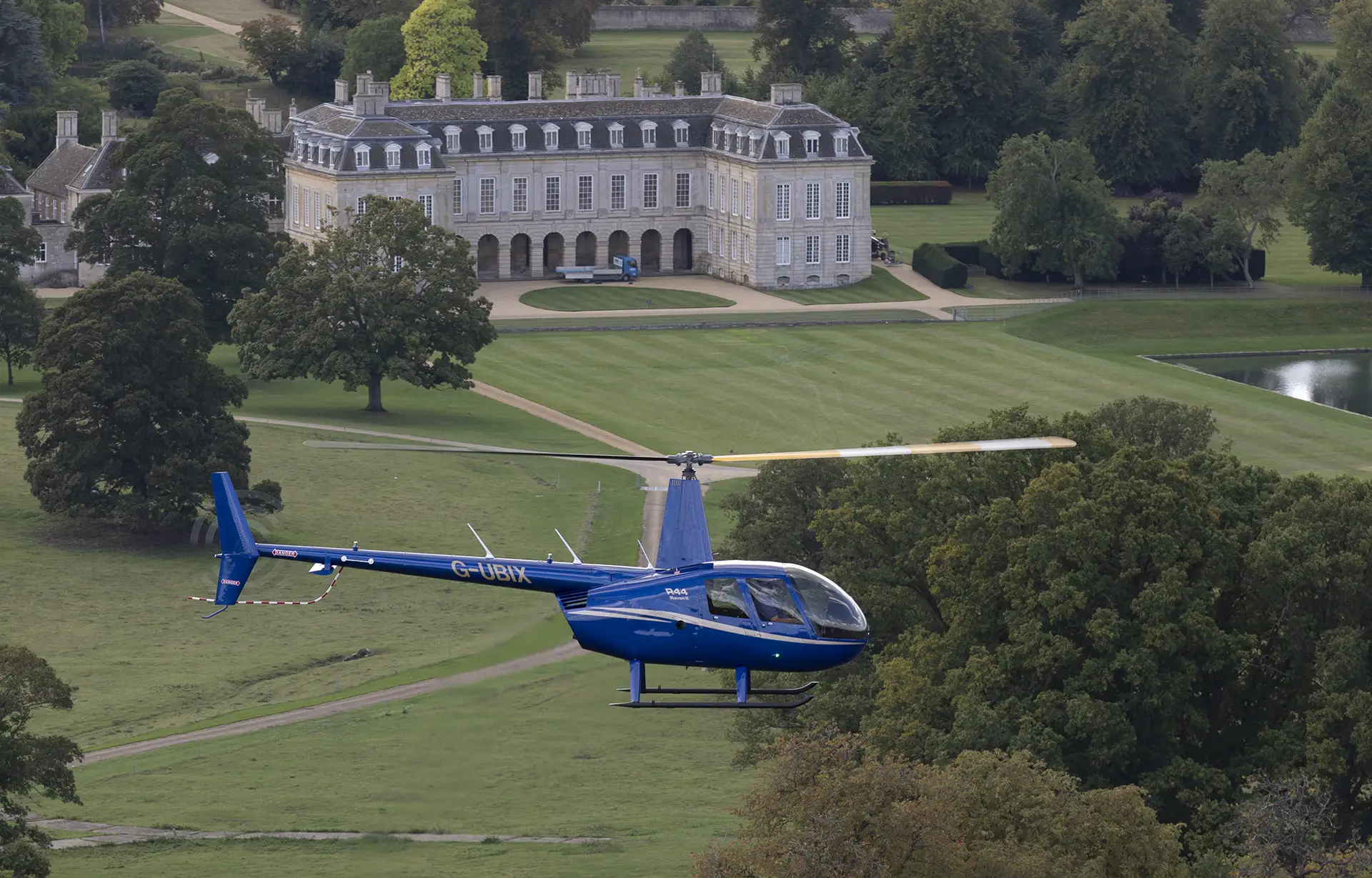
George George, David’s son and Sloane’s Managing Director, reported, “I understand that the situation with the blades was fixed relatively
quickly, but the biggest delay was in convincing the market that the problem was resolved. There was a similar situation in New Zealand a
few years ago, where there was extensive discussion about Robinsons and mast-bumping, which has been addressed by both improvements to the
airframe with the newly introduced symmetrical horizontal stabilizer and a renewed focus on pilot training to ensure the aircraft is
operated inside the envelope.” George Jnr also added that the installation of 4K-resolution, high-frame-rate cameras will enable effective
post-crash analysis to determine whether the likely cause of a crash is pilot input or another factor.
He also made the point that, if there are ten times as many Robinsons flying as other helicopter types, it is statistically expected that they will be involved in about ten times as many crashes; a fact that many casual observers may not appreciate. “Effective pilot training is also vital to safety. If you strike turbulence, it is crucial that you as pilot take account of the conditions and slow down, staying within the specified operating envelope, especially when the aircraft is light. And you don’t go nap-of-the-earth flying or doing low-g pushovers because you think it’s cool. As with any aircraft, it’s important that pilots fly in accordance with the operating handbook. If these aircraft were dangerous or risky, I would not fly them myself nor put my family in them, but I do so regularly, and I certainly wouldn’t sell them.”
Market Changes
Although David had identified the Robinsons as the future of light helicopters, for a decade after Sloane’s appointment as a Robinson
distributor, production and delivery limitations kept Sloane primarily a Hughes dealership and service center. The company acted as
distributor of both Hughes and Robinsons up until 1995, at which time it added the UK and Ireland exclusive distributorship for Leonardo
helicopters and withdrew from the Hughes business.
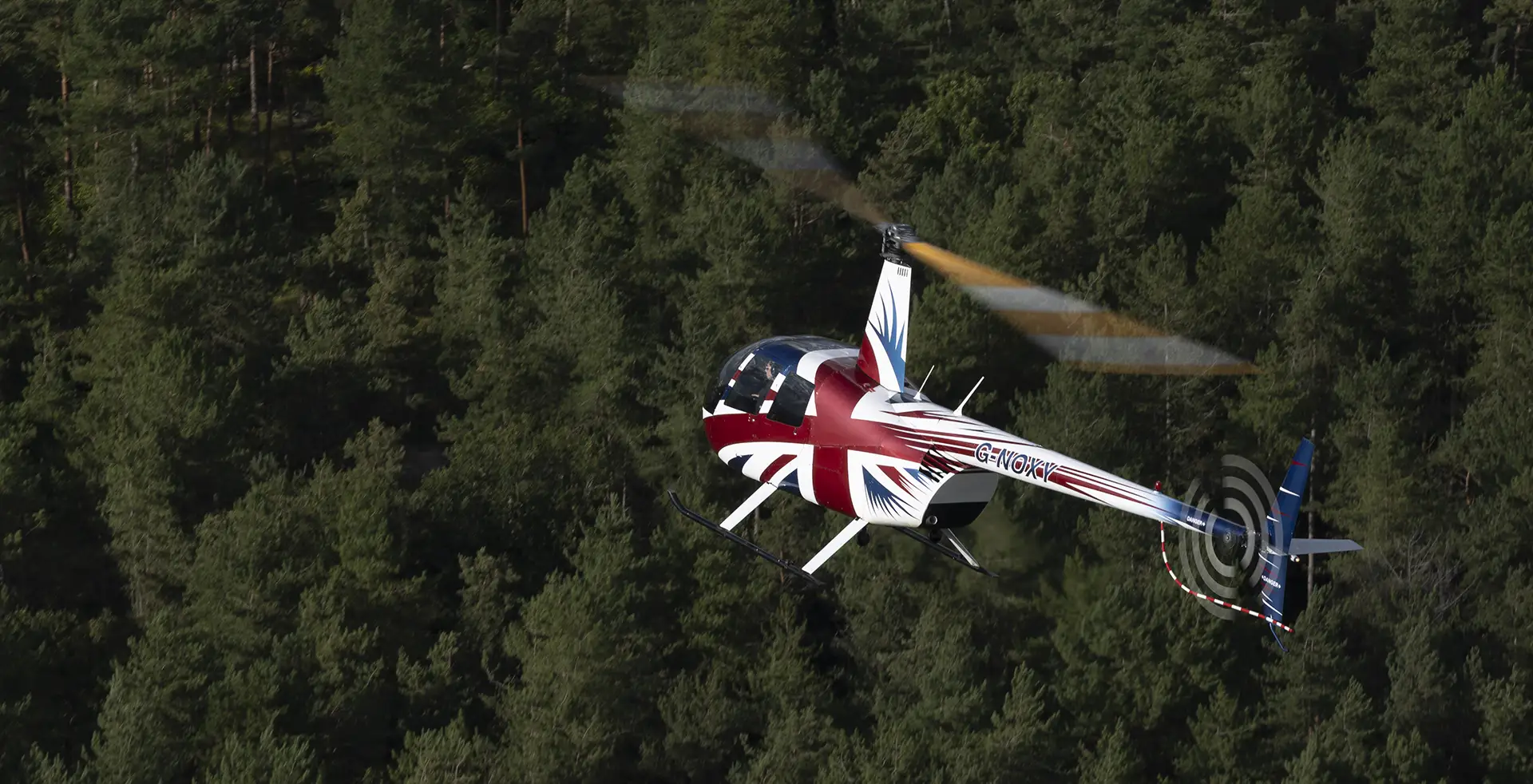
According to George Jnr, the Robinson market in the UK really kicked into gear in the late-80s. “By that time, the Robinson, and it was only
the R22 at that time, was firmly established as the private pilot’s machine of choice,” he remarked. Despite the limitations of the
airframe, it was used in an impressive variety of special-mission types; for instance, the London Metropolitan Police Force had an
exceptionally heavy R22 that they kitted out with speakers and blue lights. Back then, there wasn’t a wealth of light twins options around,
so you used what you could get, and the Robinson was affordable and versatile.”
Robinson sales in the UK plateaued in the mid-2000s, as by then there were a large number of machines in the country and prospective owners
therefore had the choice of buying new or, in greater numbers, buying pre-owned and overhauled as-new examples, which somewhat saturated
the market. “By that time, other dealership/service centers had been established, and with that came a disincentive to invest greatly in
marketing the brand, as Sloane could do all the work and carry the expense, but the customer would then go out and price all the
dealerships against each other to get the lowest price,” he related. “There was a certain price point that we would not go below for
practical reasons, and so we lost sales to competitors. That drove prices down, which also meant that those dealerships that sold less
profitably on minimum margins were unwilling or unable to offer high levels of customer support and after-sales service.”
 The
market is finite, however, so increasing the number of dealerships does not necessarily mean increased sales; in fact, the disincentive to
engage in expensive marketing might have resulted in sales declining. To combat this, Sloane is now partnering with companies such as
Ferrari and Jaguar, as high-net-worth individuals who are buying expensive cars are frequently good prospects for a personal helicopter.
“There’s a significant overlap between petrol-heads on the ground with four wheels and rotor-heads, so we’re working with partners to offer
free trial flights for those vehicle purchasers,” George Jnr. explained. “We see that as a new marketing push, and for the last year or so,
we’ve had a new dedicated Robinson sales guy who is ex-luxury vehicle sales. He’s going through his contacts to get it rolling.” As this
tactic gains traction, George Jnr. expects to see it boost Robinson’s sales over the next few years.
The
market is finite, however, so increasing the number of dealerships does not necessarily mean increased sales; in fact, the disincentive to
engage in expensive marketing might have resulted in sales declining. To combat this, Sloane is now partnering with companies such as
Ferrari and Jaguar, as high-net-worth individuals who are buying expensive cars are frequently good prospects for a personal helicopter.
“There’s a significant overlap between petrol-heads on the ground with four wheels and rotor-heads, so we’re working with partners to offer
free trial flights for those vehicle purchasers,” George Jnr. explained. “We see that as a new marketing push, and for the last year or so,
we’ve had a new dedicated Robinson sales guy who is ex-luxury vehicle sales. He’s going through his contacts to get it rolling.” As this
tactic gains traction, George Jnr. expects to see it boost Robinson’s sales over the next few years.
UK Fleet
According to George Jnr, between the UK and Ireland, there are currently 33 of the turbine-powered R66s, 179 R44s and 87 R22s. There are
currently three Robinson dealerships in the UK, but of these, not one has delivered a brand-new R22 since 2007, as an overhauled example
costs around two-thirds of the 300,000 pounds sterling cost of a new machine. It is understood that Robinson, as part of their broader push
on product improvements, is continuing the evolution and development of the R22, so, as and when future upgrades to the airframe and
performance are instituted, he envisages orders for the smallest model to start coming in again.
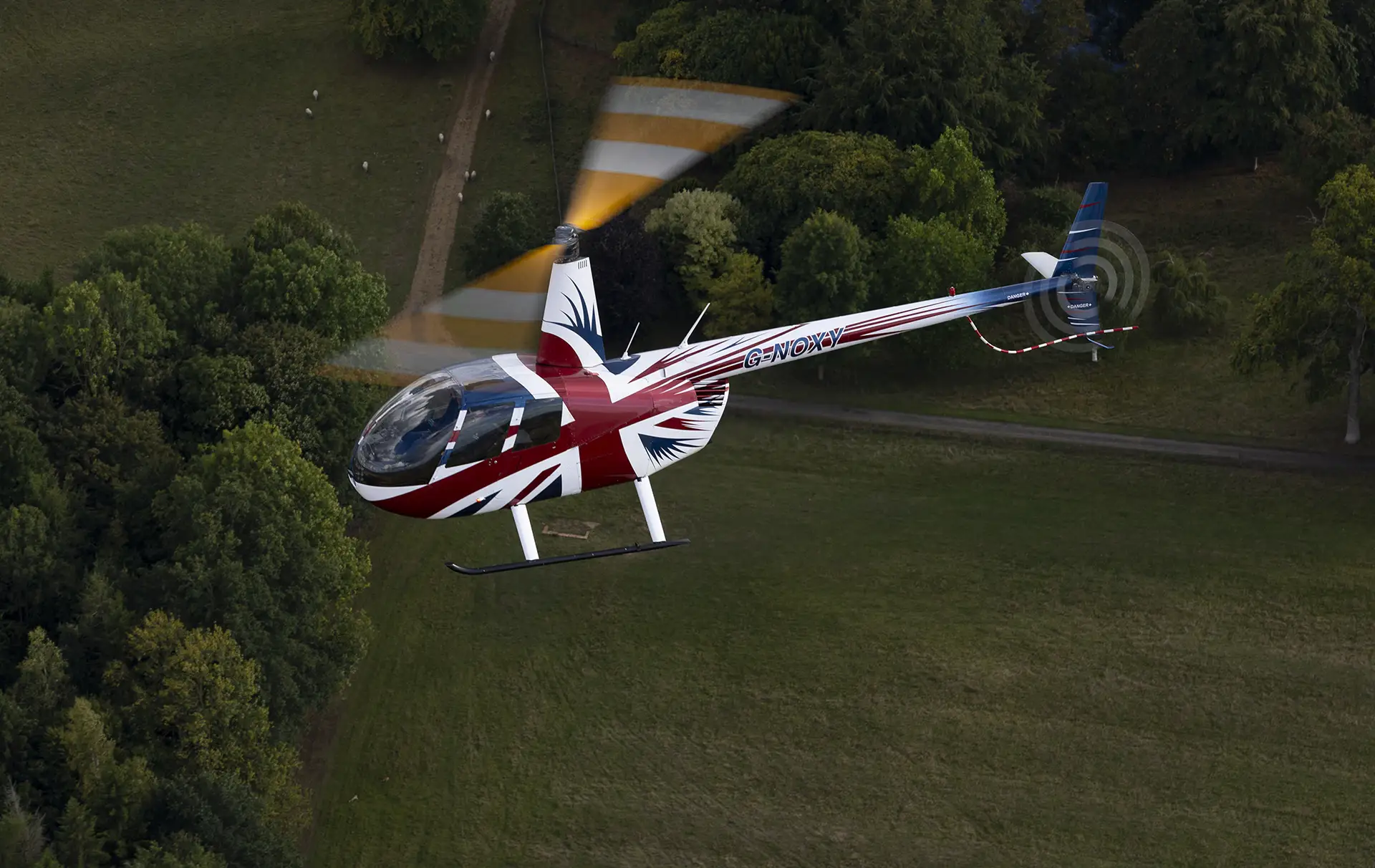
The R66 has gained traction not only for commercial use but also in the private owners’ market, and George noted that the recently announced
life extensions for several major components will be a real boon for private owners. The R66 can fly up to 2,200 hours over 12 years before
overhaul, but if an owner flies only 1,800 hours in that period, the machine must still be overhauled, and the owner effectively loses 400
hours of unused component life. Component life extensions would therefore mitigate that situation for many pilots flying relatively few
hours annually. “Although there are currently production delays for the R66’s engine, it is a remarkably reliable powerplant, and it has
recorded close to two million flight hours without a single in-flight failure, with the exception of fuel starvation,” George stated. “In
particular, the Nigerian Air Force uses them for flight training, and they fly the socks off them with no issues at all, so it’s clear to
see why the R66 platform is such a strong contender for the U.S. Army's Flight School Next training program.”
Next Gen
On the surface, the current higher-spec NxG Robinson models look very similar to the legacy versions, but George stressed that, on closer
inspection, they offer significant enhancements. “Whilst the powerplant and performance are the same, there are lots of changes that might
look minor individually, but taken together mark a step forward. This is across the board, from improved ergonomics and trim, to the
integration of the new glass avionics suite and the newly certified Garmin autopilot; they’re all operational aids that reduce pilot
workload. So, you’re sitting in a more comfortable aircraft with a higher, better-shaped and supportive seat and higher-quality trim and
fittings, with an easier-to-operate user interface.”
Enhancements and new models require certification, and George explained that a bilateral treaty between the FAA and the UK’s CAA allows them
to bypass EASA certification, which has historically been problematic and extremely lengthy.
When asked about his view of the UK market for Robinson’s forthcoming R88, with its four-axis autopilot and modern, configurable interior,
George noted that commercial use in the UK would be limited by its single-engine configuration. “Most UK commercial operations require a
twin, apart from longlining and firefighting, and there’s not much longlining in the UK,” he admitted. “But it’s an attractive aircraft,
with a compelling price point. It has a proven Arriel powerplant, which comes with a ‘serenity plan’, akin to power-by-the-hour coverage,
for the first two thousand hours, which no other OEM does as a standard inclusion for the list price.
When listening to George, it becomes clear that many common perceptions of Robinson helicopters are not only outdated but often completely incorrect, and the Robinson brand will remain a significant force in several market segments and expand into others, as product development and support continue unabated.