 HOME
HOME





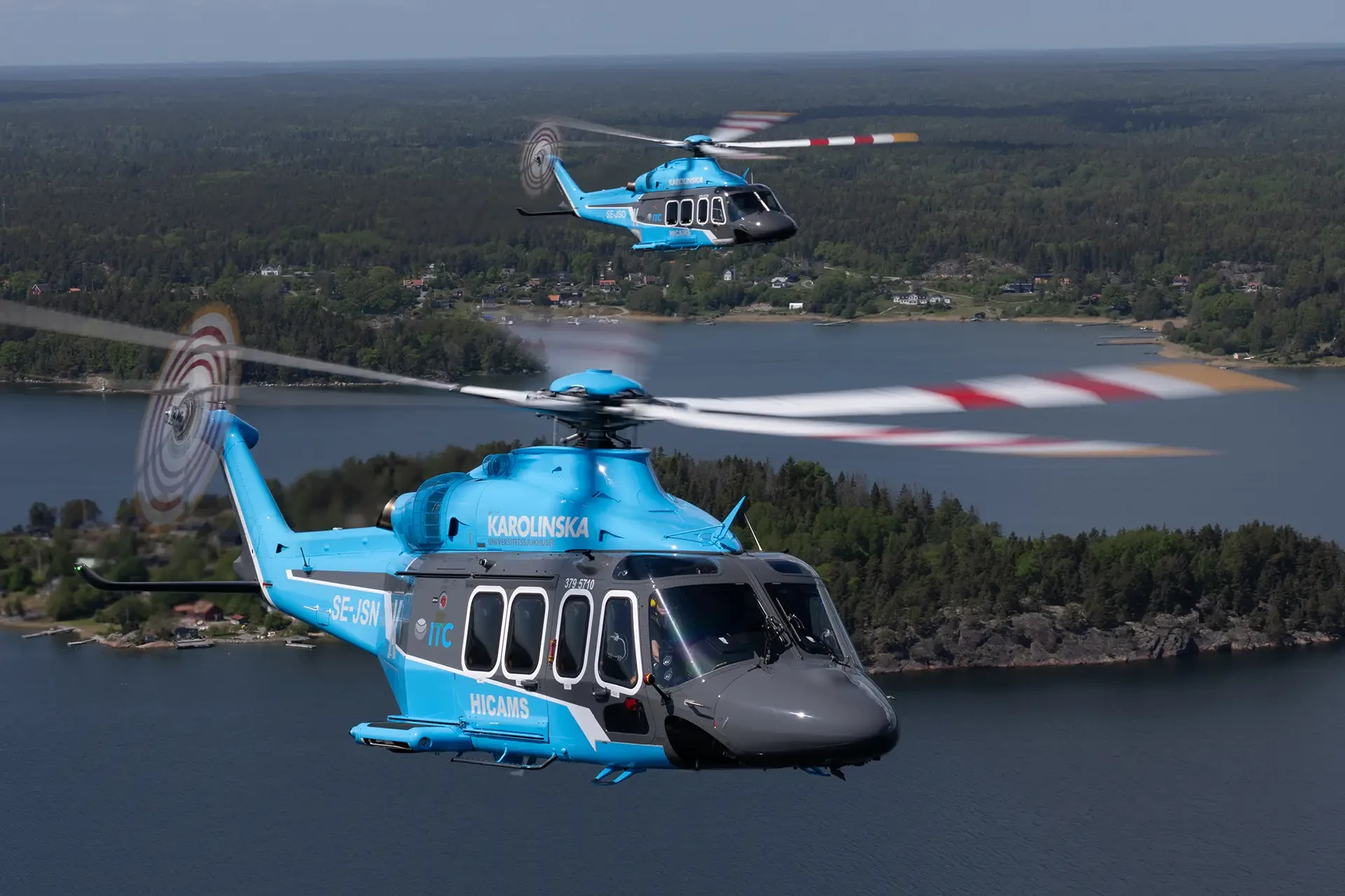
Karolinska University Hospital has long been recognized for its pioneering work in critical care medicine. Based in Stockholm, its facilities house some of the most advanced intensive care treatments in Europe. Yet in 2022, after shortages in helicopter transport availability during the COVID-19 pandemic, the hospital realized it needed a better solution for inter-hospital transfers. Critically ill patients in remote facilities often faced long waits for advanced care, and Karolinska sought to change that. The solution was to create a dedicated helicopter program, designed not only for transport but also as a true extension of its Intensive Care Unit (ICU).
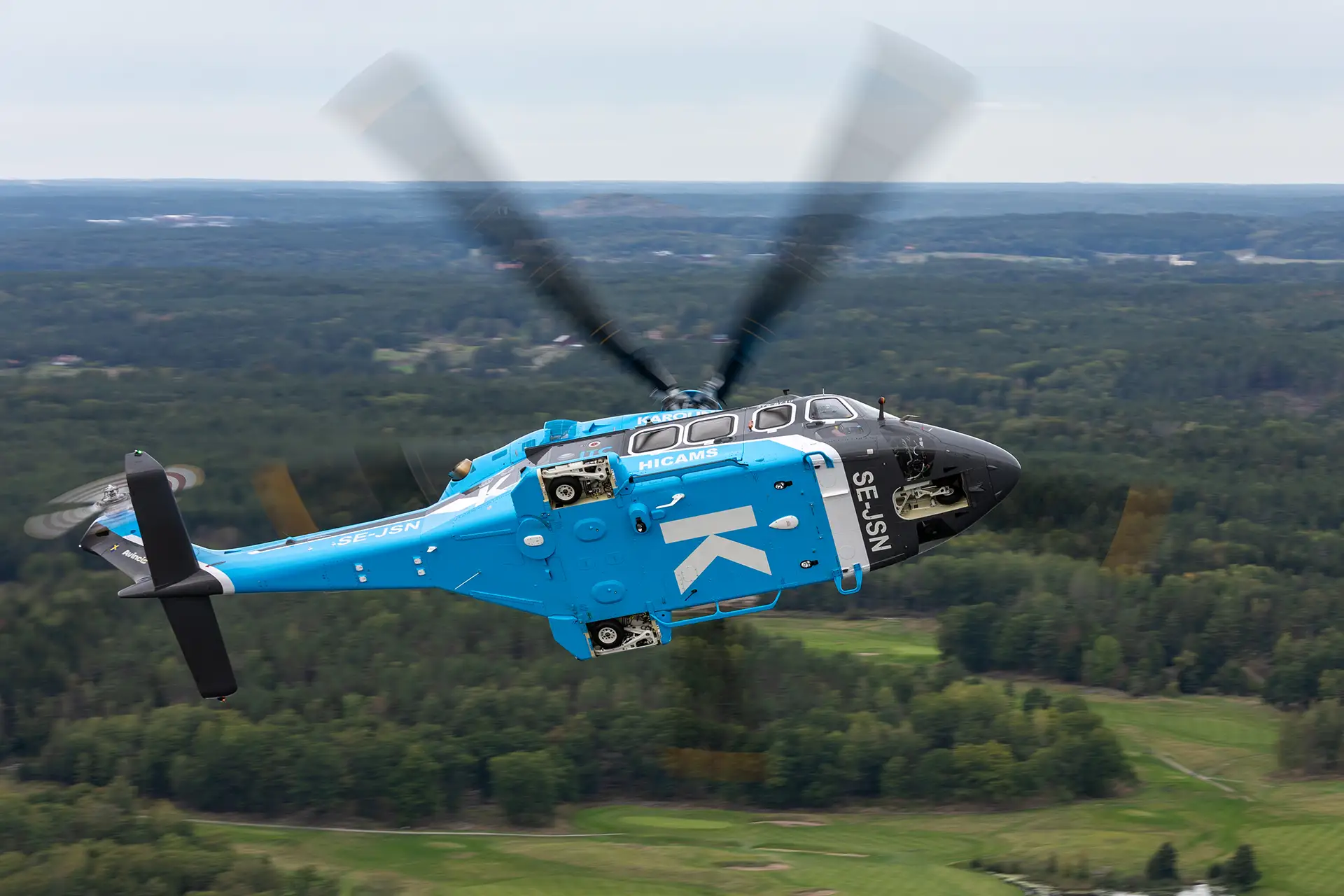
Now, with the arrival of its second Leonardo AW139, that vision has taken flight. More than just another aircraft, it represents a carefully designed platform capable of delivering advanced intensive care in the air, across borders, day or night, and under the harshest conditions northern Europe can present.
Building a Program Around the Patient
At the heart of the program lies a simple but uncompromising principle: what is best for the patient? Karolinska’s leaders rethought every aspect of critical care transport, asking how they could most effectively retrieve intensive care patients from remote hospitals and deliver them safely to Stockholm for higher-level treatment. The conclusion was clear. Transport alone wasn’t enough; advanced care needed to begin minutes after the team touched down at the referring facility.
As Lars Falk, Karolinska’s Medical Director, explained: “We are not just transporting a patient, we are transporting the ICU itself. The patient enters our care system the moment we arrive at the remote facility, not the moment we admit the patient into our hospital in Stockholm.”
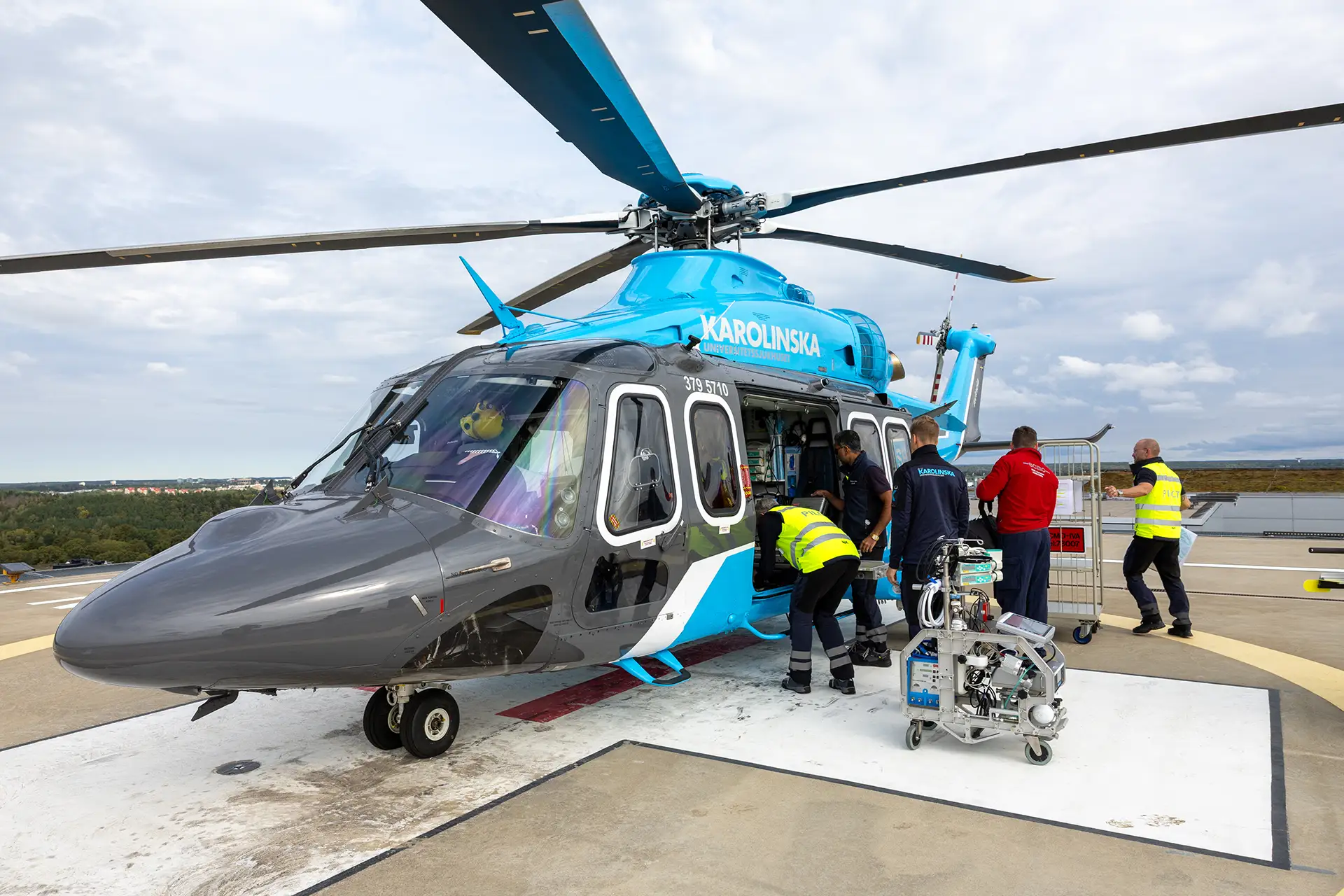
From the beginning, Falk insisted that the program be built around patient needs, not aircraft availability. “You don’t start with a helicopter; you start with the patient’s needs, otherwise patients die,” he said. That philosophy shaped every design choice, ensuring that patients receive a higher tier of treatment within minutes of the team’s arrival. “When we reach them with our helicopter, it needs to be a higher level of care than what they’ve got there, the team needs to bring with it a higher level of care than the referring hospital could provide.”
This approach marked a fundamental departure from traditional Helicopter Emergency Medical Services (HEMS), which typically focuses on pre-hospital care, rapid retrieval, and transport to a medical center. Karolinska was designed instead to bring advanced treatments such as ventilation, ECMO, and neonatal intensive care, directly to the referring hospital. With four specialist medical teams, the program ensures that highly trained clinicians can deliver intensive care at any stage of a mission.
Equally vital to this philosophy is availability. “If the helicopter isn’t there when you need it, patients will die. Availability equals survival,” Falk stressed. The program would only make sense if it could deliver availability greater than 90%, ideally close to 99% of the time. That goal, lofty as it sounds, became the standard around which everything else was built.
Created through a hospital-led tender in 2022, Karolinska is a partnership where Avincis supplies the aircraft, maintenance, and pilots, while Karolinska provides the clinicians and medical devices. What began as a break-even concept has already expanded, growing from three to four medical teams as the helicopter proved its value. Today, the program averages between 500 and 600 flights annually. Missions often require up to eight hours away from base, including up to three hours of flight time, serving a reach that extends across Scandinavia and into the Baltic states, and with the new AW139’s long-range tanks, missions can now be pushed further into northern Europe.
Why the AW139
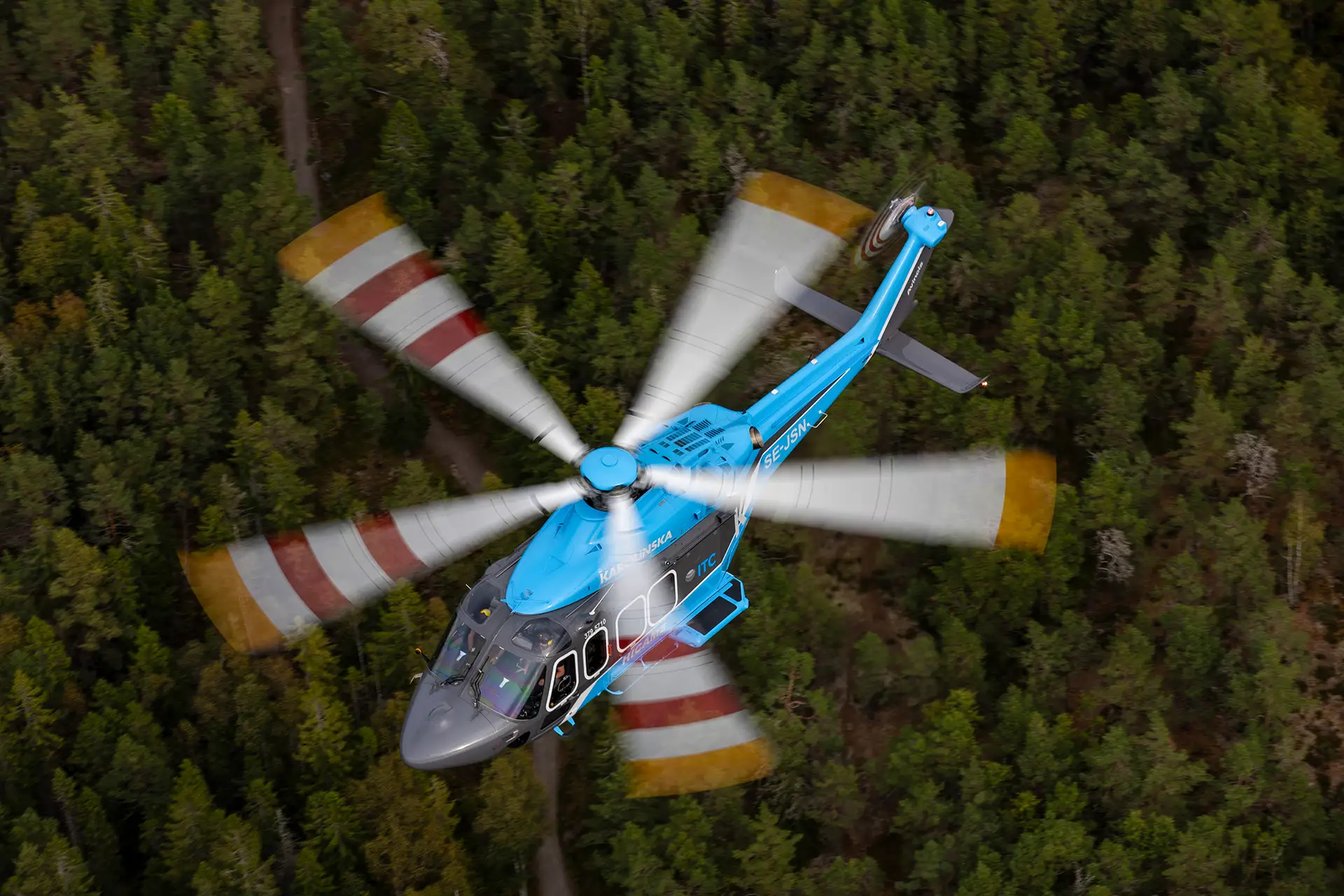
Today, Karolinska operates two AW139s within the program. The first aircraft introduced lacked the Full Ice Protection System (FIPS) and the extended-range fuel tank, making it lighter and more suited for summer operations, where icing is less of a factor and three-plus hours of endurance is less critical. That helicopter is now retained as a backup and seasonal platform. The newer AW139, equipped with both FIPS and long-range tanks, is heavier and serves as the primary aircraft during the demanding winter months when weight is less of a factor, providing the all-weather and extended endurance capabilities required to maintain availability in Scandinavia’s harshest conditions.
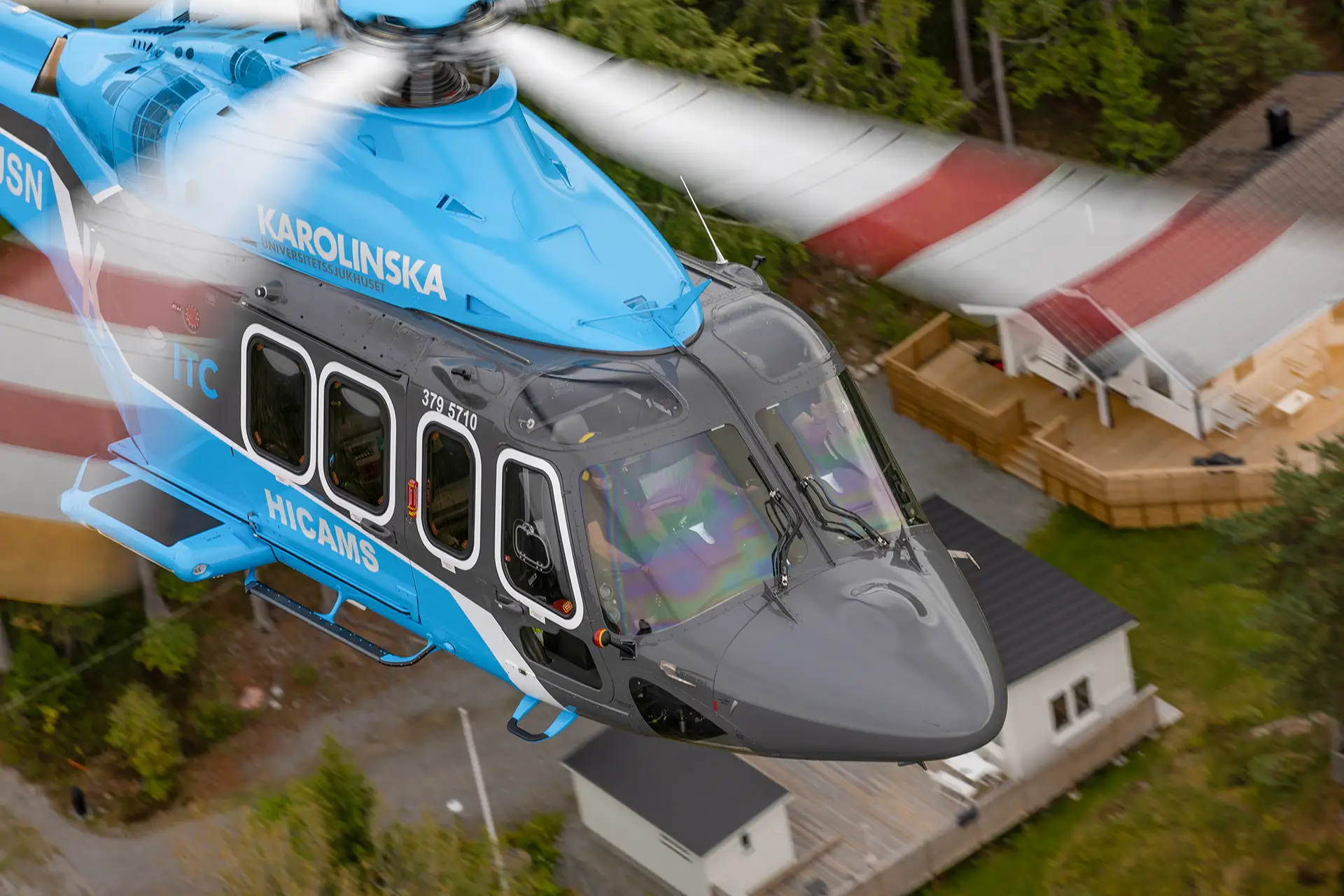
The choice of aircraft was deliberate. When evaluating options, Karolinska prioritized speed, range, cabin space, and reliability in the harsh Nordic climate. The Leonardo AW139 met those criteria well. With its optimal cruise speed of 140 knots, the aircraft provides a crucial time and endurance advantage over other platforms. Equipped with a Full Ice Protection System (FIPS), it can safely fly in conditions that would ground most helicopters. “In the winter months, if you don’t have FIPS, you are simply not available,” explained Mattias Lind, Karolinska’s Senior Pilot. “And for us, availability is everything. If we cannot say yes to a mission because of weather, then we have failed our promise.”
Other aircraft were examined and, in some cases, used before the AW139 was selected. The AW169 was tested but proved too small, with a narrow cabin and limited range. Even more significantly, it lacked the onboard electrical capacity to power ECMO (Extracorporeal Membrane Oxygenation) and other ICU equipment continuously, with only about 500 watts available, far from enough to support Karolinska’s mission. The H160 was also considered, but again, cabin space and system limitations made it unsuitable. Earlier, SAR and military helicopters were occasionally called into service to provide these transfers with Karolinska, but their interiors were not designed for critical care, and their power supplies could not sustain advanced ICU systems in flight. The AW139 addressed these issues by combining the space, payload, and onboard power necessary to run ICU-level equipment without compromise. In Falk’s words, “We needed a helicopter that could handle both the patients and the systems we bring with us. The AW139 was the first that truly fits that need.”
Putting an ICU Inside the Aircraft
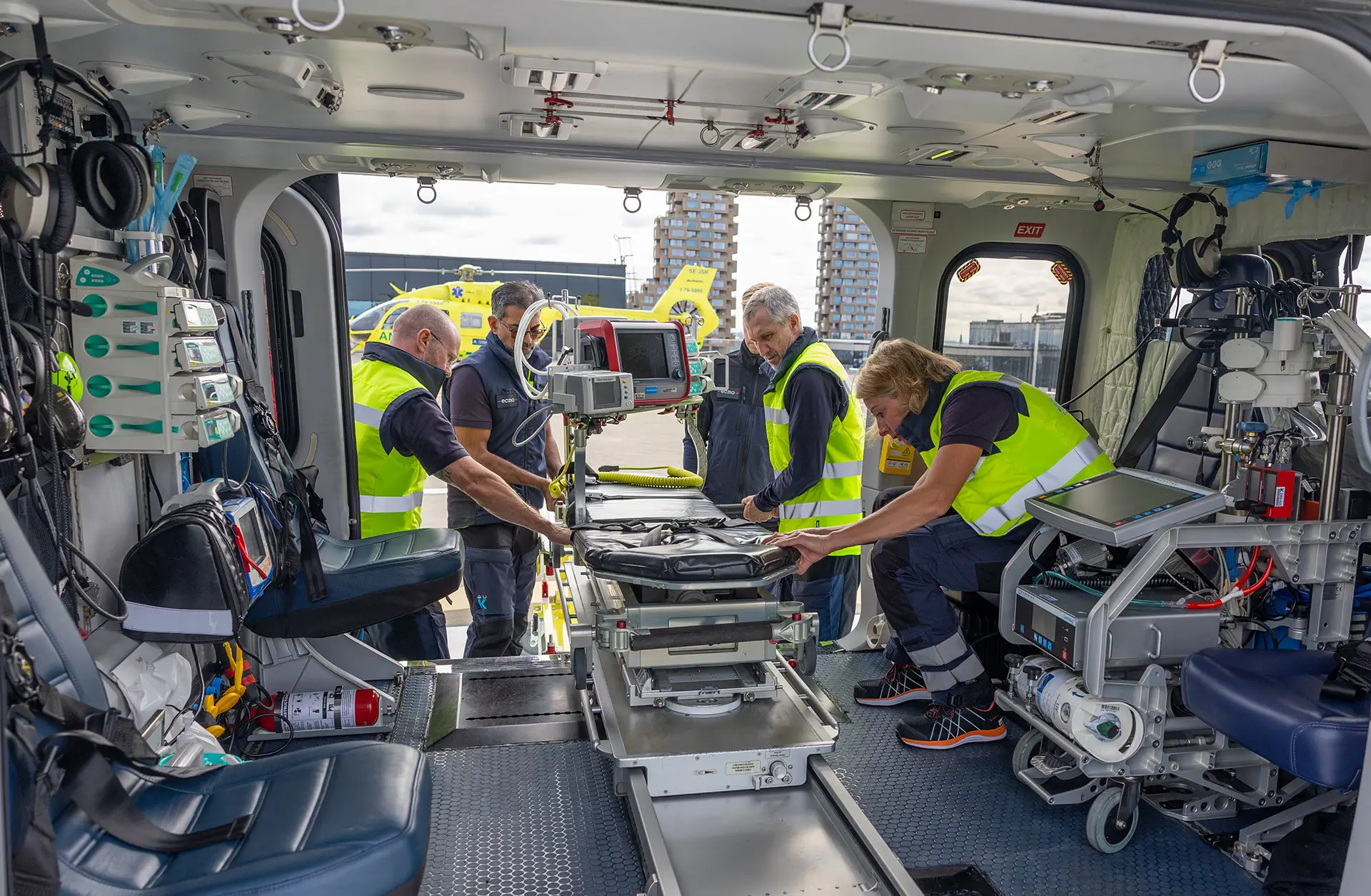
Fitting the AW139 to Karolinska’s demanding standards required more than a standard HEMS interior. From the outset, it became clear that a conventional air ambulance setup would not support the hospital’s ambitions, and a more transport-based interior was settled upon, with the core medical equipment elements installed onboard as needed. This means that in addition to the patient, stretcher, and clinicians, there are also carts loaded with specialized medical equipment that are brought onboard and strapped down throughout the cabin area.
A better solution is currently in development: a dedicated Utility Base (UB) stretcher designed specifically for Karolinska. This system will house nearly 4,000 liters of oxygen, alongside batteries, an inverter, and twin medical air compressors—resources that normally must be brought onboard in addition to the stretcher.
The UB has been engineered to work with a modular stretcher system compatible with Nordic standards, an MSB rotating plate to support airway procedures, and a certified ECMO trolly/cart designed to lock into the floor. Further, the UB will have the ability to interface with the most found connection systems used in airmed globally. Although not yet in operational use, the project highlights how far Karolinska is willing to go to align program capability with patient care and clinical need. “You cannot run ECMO without oxygen, power, and an air supply built into the system. The UB is being designed to give us exactly that, and make our transfers easier, more reliable, and more efficient.” Falk explained.
For now, existing cabin configurations enable high-level intensive care. However, once the UB is fully certified and installed, it is expected to significantly enhance the medical team’s ability to deliver ICU care effectively during airborne transfers, not just inside the AW139, but also in other types of aircraft.
Pioneers in Mobile ECMO
Karolinska has established itself as a pioneer in ECMO treatments, as well as in ECMO transfers. In a nutshell, the ECMO machine provides oxygenation of the patient’s blood supply while the blood is outside the patient, similar to how a dialysis machine cleans the patient’s blood while it is outside of their body.
The hospital first began ECMO treatments in 1987 and launched mobile ECMO in 1997, refining the process over the decades. Few hospitals worldwide have attempted helicopter ECMO transfers with the same level of consistency and high degree of success. As Falk emphasized, “It’s not just about transporting a patient who is already on ECMO. It’s about going to a hospital that cannot provide it, initiating ECMO on-site, and then safely managing the patient in the air.”
On average, Karolinska flies ECMO missions nearly twice per week. These missions require a level of capability far beyond conventional patient retrieval and transport, even by ICU standards. The ECMO team arrives by helicopter and begins the procedure. Cannulation and ECMO initiation are brief, but the team typically spends three to four hours on site stabilizing the patient and preparing for transport.
ECMO demands continuous oxygen supply, power, heating, and precise monitoring; it is an environment where even small interruptions can prove fatal within 60 seconds. Over the years, Karolinska’s clinicians have become masters at this complex, lifesaving procedure. Fixed-wing platforms remain essential for longer-range or international missions, but they come with delays and multiple patient reloads through airports and ambulances. The AW139, by contrast, can land hospital-to-hospital and deliver patients to our ICU within minutes. “The indication for ECMO is death, because if you don’t get it, you will be dead within 24 hours. The whole purpose is to prevent that,” Falk said.
The Teams and Their Missions
Karolinska’s helicopter program relies on four specialist teams, each with distinct roles and carefully selected personnel. Roughly 100 clinicians participate across all teams, chosen not only for clinical excellence but also for their ability to work independently in high-stakes environments. Falk notes that these team members are some of the best doctors and nurses at one of the world’s top-ranked hospitals.
ECMO Team: Handles the most complex cases, including initiating ECMO at referring hospitals and managing patients during flight. Typically, three to four members make up the crew: an ECMO physician, an ECMO nurse, and an ECMO surgeon. Surgeons are highly experienced—pediatric, cardiothoracic, or vascular—and rotate ECMO duty, dedicating about 25% of their clinical time to the service.
Neonatal Team: Specializes in newborn transfers, providing incubators, specialized monitoring, and the expertise needed to stabilize premature and critically ill infants. These missions usually require two-member teams, often a physician and a nurse with neonatal intensive care training.
Pediatric Team: Focuses on children requiring advanced ICU care, often for severe infections, complex surgical follow-ups, or severe traumas. Like the neonatal teams, they generally deploy as a two-member crew.
General ICU Team: Covers a wide spectrum of adult critical care, ensuring advanced treatment is available for patients with respiratory failure, sepsis, or other intensive care needs. These teams also tend to consist of two members, a physician and a nurse with ICU specialization.
This multi-team structure ensures that the program can respond to a wide variety of cases without compromising expertise. All teams train regularly in simulation and transport scenarios, and new additions undergo trial periods before becoming permanent. Each group shares the overarching goal of delivering ICU-level care wherever it is needed.
Mission Activation: From Call to Flight
When a mission request comes in, the process moves quickly. Hospitals contact Karolinska’s coordination center, while clinicians assess the patient’s condition. Meanwhile, the flight crews assess the location, distance, and weather. When the mission is accepted, the specialized team is activated and the AW139 is prepared. “The first question is always: can we help? If the answer is yes, we go,” stated Lind.
Falk tied this philosophy to the hospital’s operational benchmark: “You should be able to have the patient under a higher level of treatment within four hours… That includes the transport and the team arriving and starting the care.” This “golden four hours” is a clinical and operational anchor, ensuring patients are treated with higher-tier care as soon as possible.
Typical ECMO missions last six to seven hours, though other critical care transfers are often completed in less time. The helicopter’s range allows flexibility; pilots described easily switching from a planned flight to Gothenburg to a new destination 400 kilometers further to the north without worrying about fuel issues. Once an ECMO patient is “on circuit,” they are considered stable, allowing the helicopter to be re-tasked if a more urgent case arises before flying the patient back to Stockholm.
Different From Typical HEMS
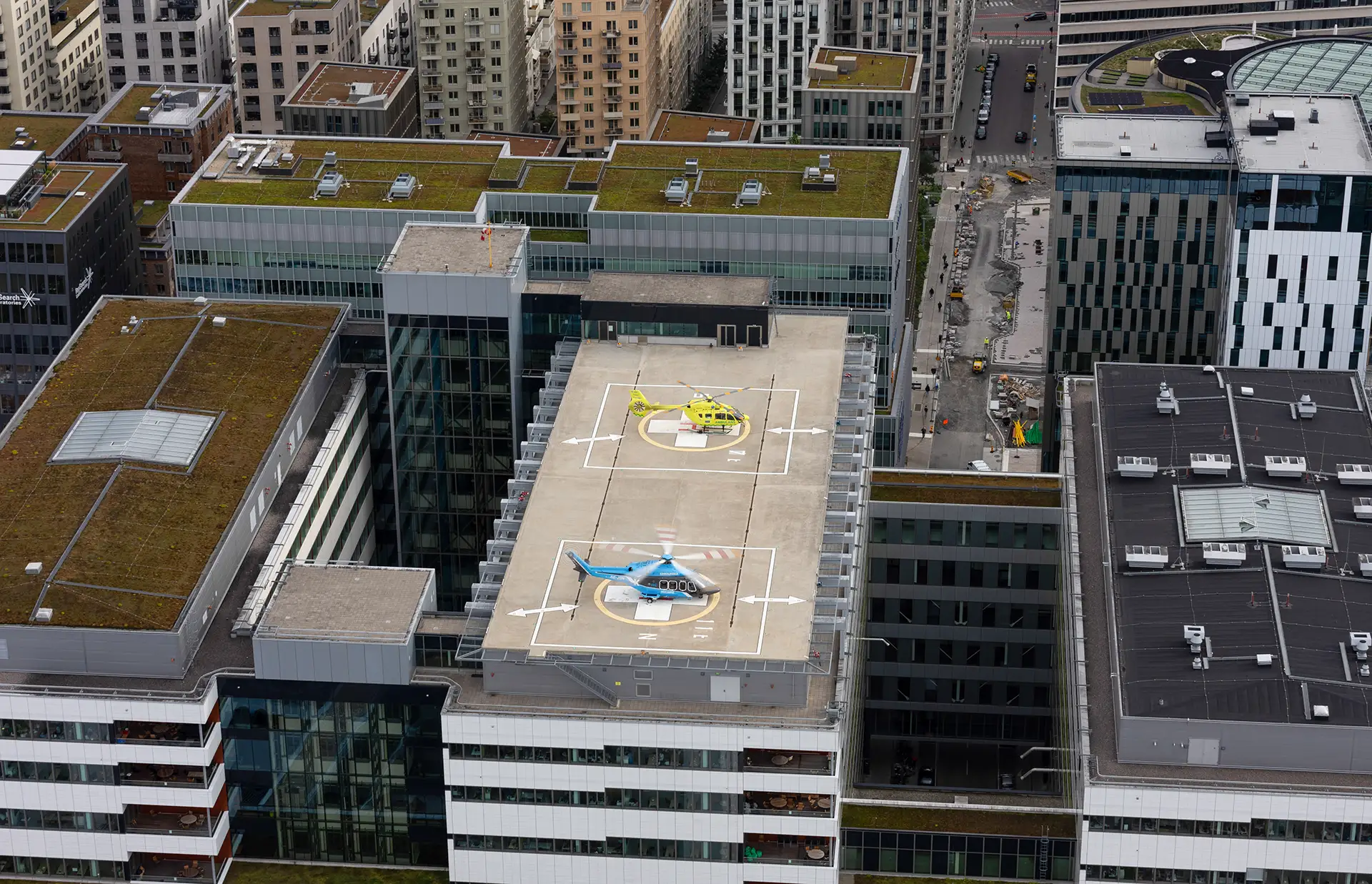
Karolinska’s missions differ significantly from conventional HEMS operations. Most HEMS helicopters operate from smaller bases, picking up patients from around the countryside often without full instrument procedures, limiting their ability to fly in poor weather or low visibility. Karolinska, by contrast, flies primarily from hospital helipads or major airports equipped with full ILS approaches and advanced IFR procedures. This allows them to launch and recover missions in conditions that would keep typical HEMS aircraft grounded. “We can operate to minimums,” explained Lind. “That makes a huge difference, especially in winter. It means we can say yes when others have to say no.”
Combining IFR flying with their AW139’s FIPS system gives Karolinska a unique advantage in maintaining the availability that truly defines the program. This availability, combined with their capabilities, also means that during poor weather, Karolinska is often called upon by other hospital networks to transport critical care patients between facilities that are not even part of Karolinska, because they are the only helicopter that is available when the need arises.
Always Saying Yes
While the helicopter is the preferred method of transport, it is only one part of Karolinska’s critical care triad. Alongside the AW139 fleet, the hospital also fields fixed-wing aircraft; flying ICUs in their own right, and specially equipped mobile ICU ground units. This layered system ensures that transport is always possible, even when weather or operational restrictions prevent helicopters from flying. Each mode carries the same principle: ICU-level care begins the moment the team arrives. As Falk noted, “We can always say yes to transport.”
The success of their ability to always respond is measured not in sorties but in survival. Since the program’s launch, Karolinska has documented a clear increase in patient survival rates. By bringing ECMO, neonatal, and pediatric expertise directly to the bedside—even in remote areas—the teams have raised outcomes across patient groups. “What we see is that patients who might not have survived the transfer in earlier years now do,” Falk explained. “By starting ICU-level treatment earlier and sustaining it throughout transport, we’ve raised survival significantly.”
Training and Operations
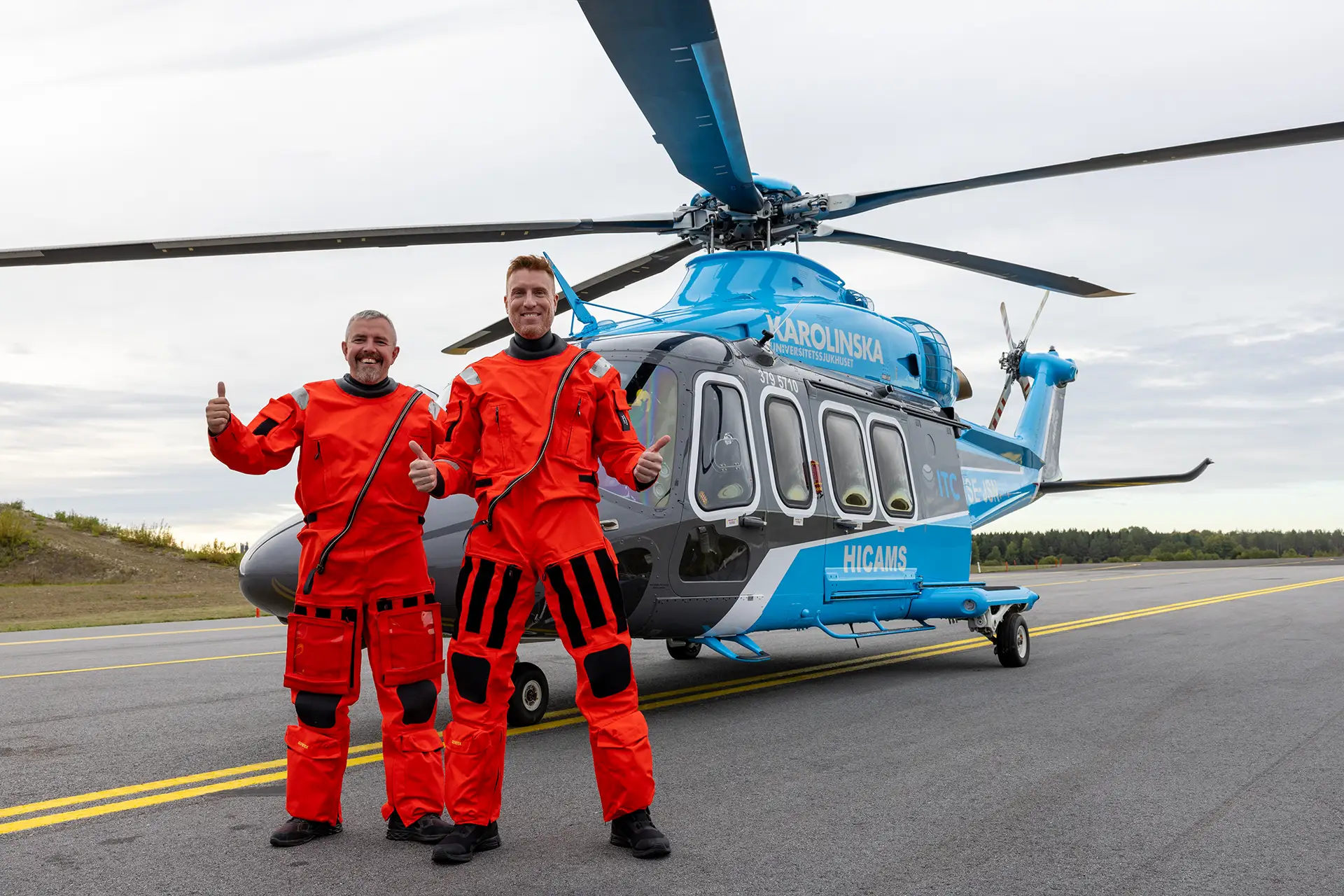
Pilots and crews must be as capable as the aircraft itself. The aviation team assigned to Karolinska’s program consists of nine pilots: six captains and three copilots. Seven pilots manage the core roster, while two additional pilots float to cover training, leave, and absences. The captains are highly experienced, with none having fewer than 6,000 flight hours, and most have between 6,000 and 10,000 hours. This ensures that every mission is flown by a deeply seasoned crew with extensive IFR flying experience. Because there are more captains than copilots, it is common for flights to be operated by two captains, maintaining a consistently high level of experience in the cockpit. Copilots typically spend at least six months in the role before progressing toward command when openings for captain positions are available.
While the flying may not be considered as exciting or varied as traditional HEMS operations, pilot duty rotations are designed to balance workload and recovery. According to Pilot Perang Fasai, who recently joined the program after some years flying S-92s in support of offshore oil and gas operations, “Many of the pilots enjoy the feeling of making a difference in people’s lives while also being able to have more time to spend with their own families.” Karolinska’s pilots generally serve seven days on duty, followed by two weeks off, providing time to recover from missions that can last eight hours or more away from base. The roster is further shaped around simulator training and personal balance, reflecting the program’s focus on availability, as well as long-term operational stability.
Training is equally demanding. Twice a year, the flight teams conduct recurrent training in full-motion simulators. Most of this takes place at Coptersafety in Finland, where crews log ten hours per pair in each session, covering IFR, emergency procedures, and complex mission profiles. A new AW139 simulator located in the Faroe Islands is also being evaluated as a secondary training venue by the program.
The emphasis on recurrent training reflects the realities of Karolinska’s Scandinavian operations. Winter brings with it low light, heavy icing, and demanding IFR conditions. Though the crews have Night Vision Goggles (NVGs) and are familiar with using them, the NVGs are used sparingly, as most missions rely on robust IFR procedures.
Meeting the Challenge
Winter is where the AW139 proves its worth. As infections rise, distances stretch, and weather deteriorates, most operators see a dramatic decline in the availability of their helicopters. For Karolinska, it becomes their busiest time of year. With its speed, FIPS, and IFR capability, the AW139 enables teams to stay on task when others are grounded. Missions that once would have been cancelled can now be flown safely, ensuring patients receive advanced care within the critical window rather than waiting hours longer.
Every operational decision is measured against that standard. Availability is the cornerstone; speed and equipment matter, but only insofar as they guarantee that advanced care begins the moment the team arrives. “It’s not about flying faster just to get somewhere sooner,” Falk explained. “It’s about making sure that during those four hours, the patient is already receiving the care they need. That changes outcomes.”
The AW139’s endurance and reliability also extend Karolinska’s reach far beyond Sweden. Missions have carried teams into Finland, Norway, and the Baltic states, strengthening cross-border cooperation. The program has even been tasked with medevacs from Ukraine, which are handled by their fixed-wing aircraft. As Falk put it, “We don’t think in terms of national borders. If a patient needs care and we can provide it, we go. Wherever they need us.”
A Model for the Future
Although the program has only been in existence for a few years, Air Karolinska is already being viewed as a model for future hospital-led air operations. By focusing on availability, advanced care, and the timely transport between care facilities, it has created a system that raises the standard for medical aviation and has even paved the way for a new niche in medical air operations.
For patients, where it matters most in Falk’s eyes, the impact is direct and profound. Where once a transfer might have meant hours of waiting for availability or weather to clear, now the ICU comes to them. For the hospital, the aircraft represents not just a tool, but a strategic extension of its mission, expanding its care radius and furthering its innovative healthcare legacy. “Every time we land,” Falk reflected, “we bring the hospital with us. That’s the difference, and our AW139, Pilots and Medical Teams are what make it possible.”