 HOME
HOME





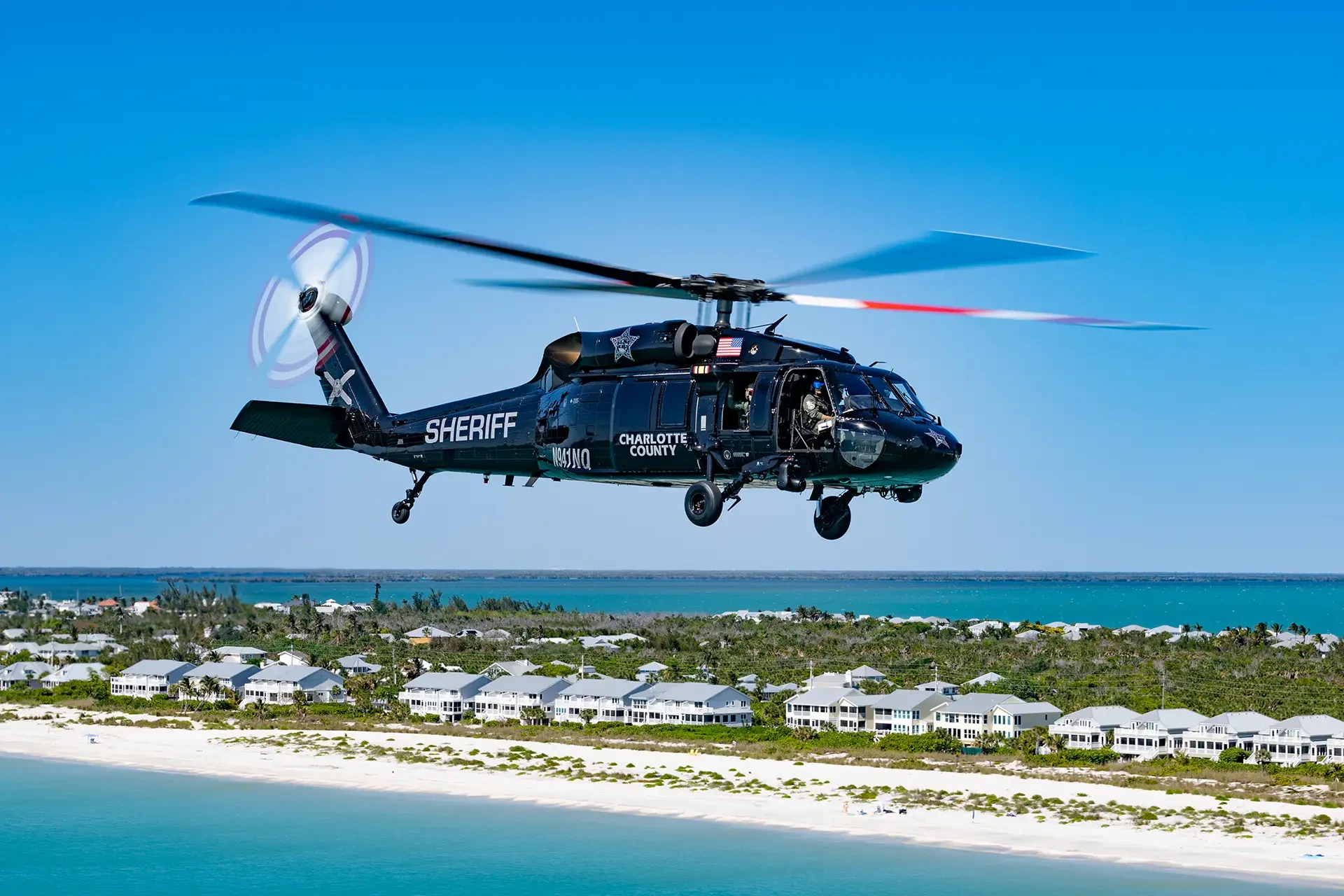
Missions, Math, and Public Safety: Inside Charlotte County Sheriff’s Office Black Hawk Program
In this two-part feature, HeliOps explores Charlotte County’s Black Hawk program including how it came to be, the public’s acceptance and early results. Any lingering questions over the usefulness or necessity of the Charlotte County Sheriff’s Office (CCSO) Black Hawk nearly vanished the first time the aircraft responded to a fire with homes in its path.
A fast-moving fire was pushing dangerously close to houses, property, animals, and a lone bobcat operator. For the crew above, it was no longer a training flight; it was the type of incident that quickly demonstrates whether or not a helicopter is a useful public-safety tool for the mission.
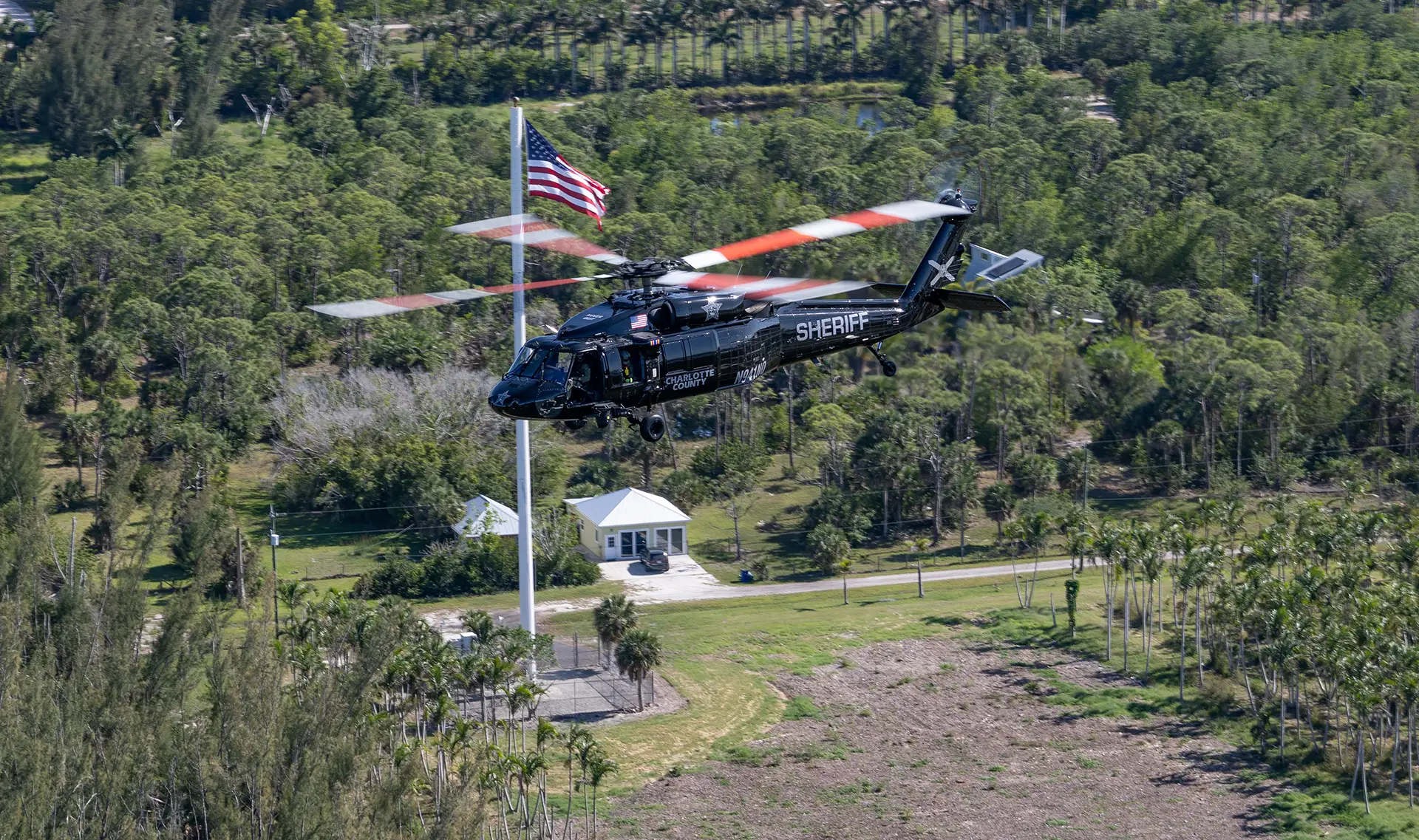
With fewer than 40 hours on the aircraft since CCSO’s Aviation Unit had taken delivery, the Black Hawk was using its 900-gallon Kawak bucket to attack the brushfire. Over the next hour and a half, the crew delivered about 45,000 gallons of water onto the fire. Each drop represented nearly three times the amount of water carried by the unit’s Huey bucket and roughly six times the amount carried by its AStar.
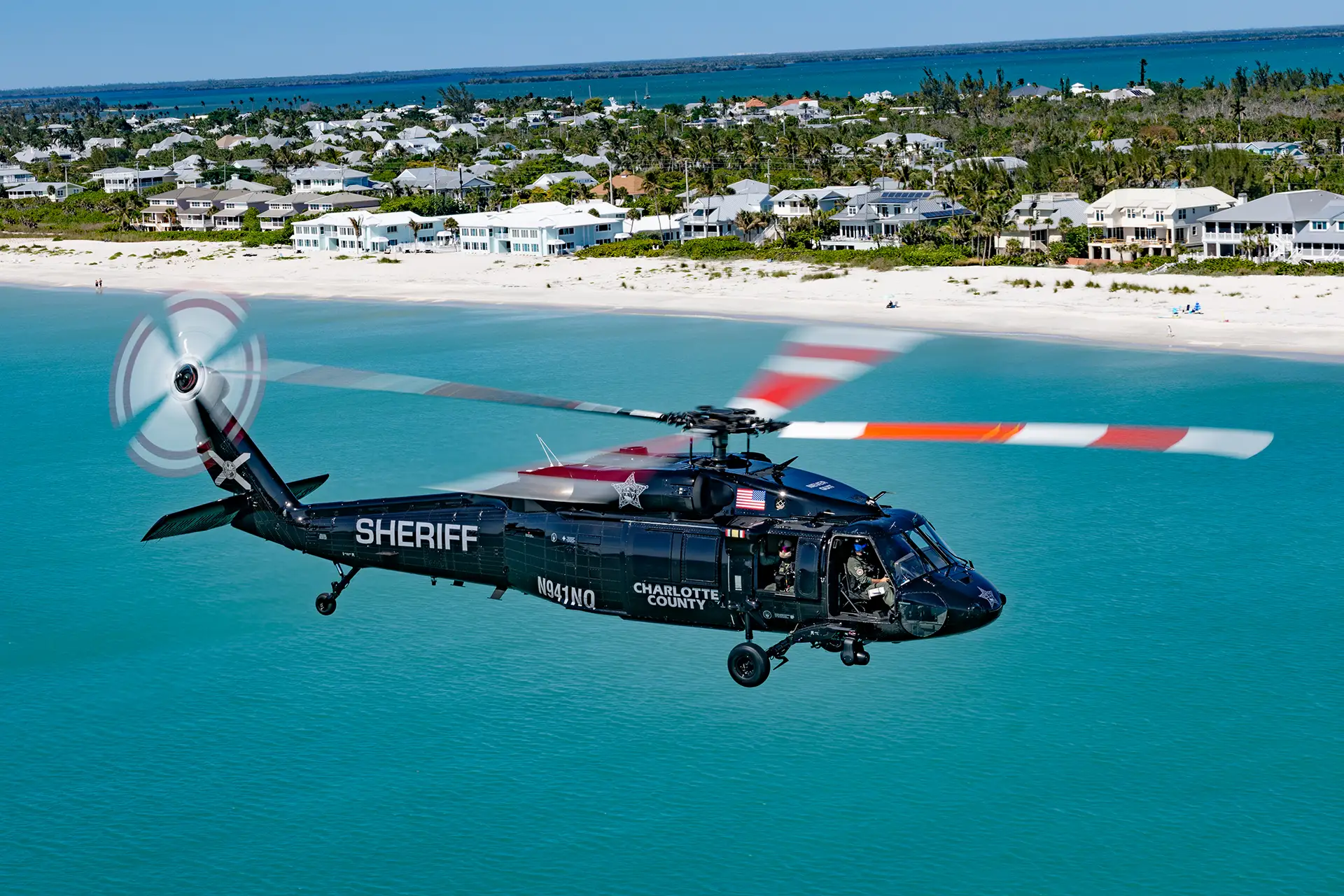
Shane Engelauf, Chief Pilot for CCSO’s Aviation Unit, explained, “When you think about dropping the equivalent of a fire truck’s capacity of water in every drop, you significantly improve your ability to stop a fire that’s going to burn somebody’s house down.”
For Engelauf and the rest of the aviation unit, that first firefighting mission became the clearest answer to the question that had followed their new aircraft from the moment the idea was first raised: Why would Charlotte County Sheriff’s Office need a Black Hawk?
More Than a Patrol Helicopter
The CCSO Aviation Unit was looking for a new helicopter, but it was never looking for a simple patrol replacement. The agency already operates AStars, and those aircraft remain well-suited to the daily law enforcement work that defines much of public-safety aviation: patrol, search support, surveillance, overwatch, and rapid response. The county is also increasingly utilizing unmanned aircraft systems to absorb some of the smaller or more localized tasks that once would have required a helicopter. This combination changed the fleet conversation for CCSO entirely. If drones could handle some smaller missions, and their existing aircraft could continue doing what they already did well, their next aircraft needed to expand the unit’s envelope rather than just duplicate existing capabilities.
“The Black Hawk is great for a lot of things,” Engelauf said, “but it’s not the best patrol helicopter.” An assessment that highlights the logic behind the fleet decision. Charlotte County was not trying to make a Black Hawk do every job. It was looking for an aircraft capable of supporting the critical missions its smaller airframes could not fully meet.
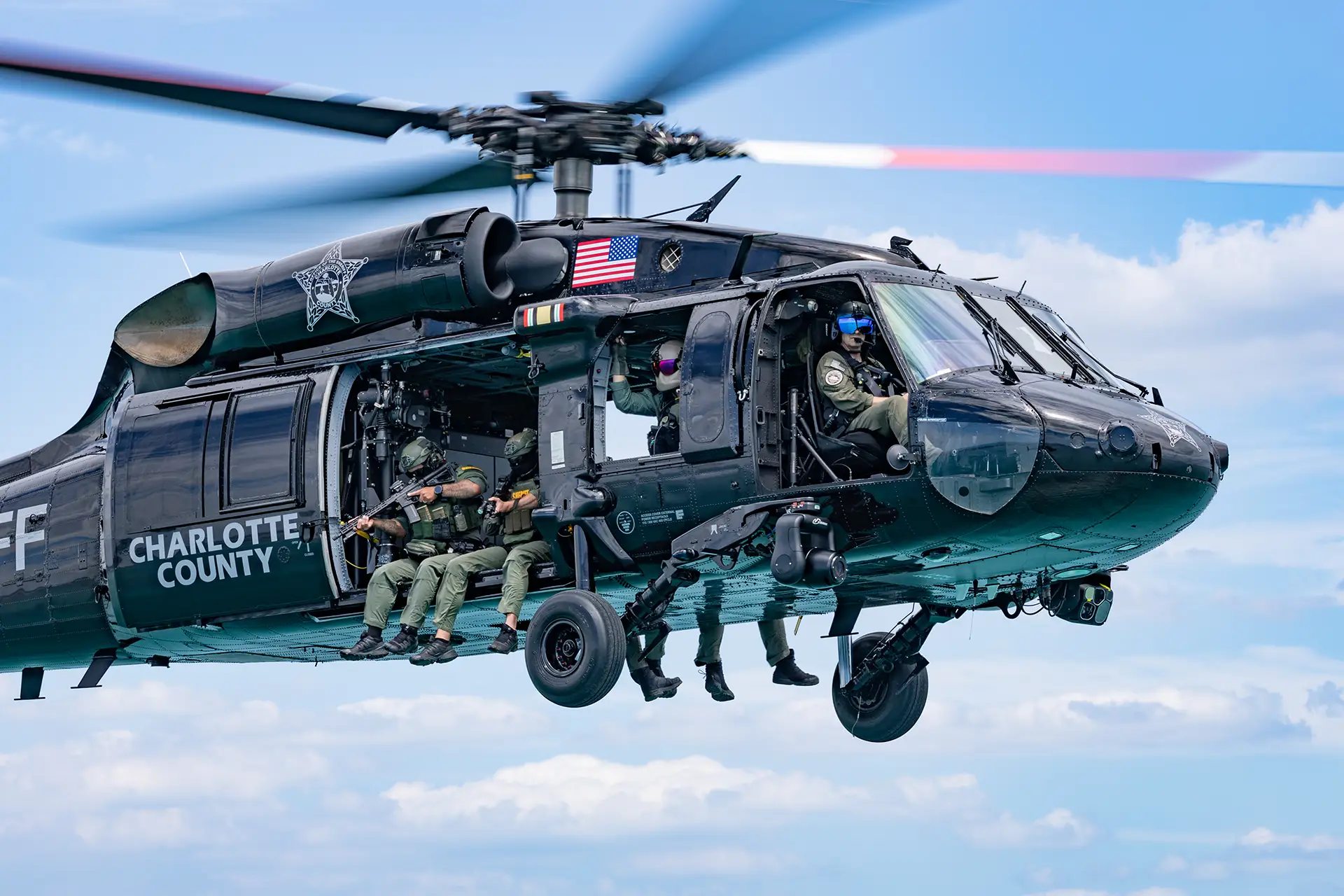
As Charlotte County grew, so did the requirements placed on the CCSO Aviation Unit. They needed to augment their AStars and Huey with a platform capable of supporting law enforcement, firefighting, mosquito control, offshore rescue, hoist operations, water rescue, hurricane response, tactical team movement, and countywide mutual aid.
“Our agency does a lot of different stuff,” Engelauf said. “We do law enforcement, we do hoist rescues, mosquito control, and fight fires as well. So, we had to find an aircraft that could accommodate all of those missions and more.”
Studying the Alternatives
The evaluation did not begin with a foregone conclusion. CCSO looked seriously at the typical civil options, including light and medium twins from Bell, Airbus, and Leonardo, all with well-established law-enforcement pedigrees. “We brought in all the light twins: Leonardo, Bell, Airbus,” Engelauf said. “We brought everybody in to see what everybody else in the space was using.”
Each aircraft brought its own combination of speed, modern avionics, support, and proven law enforcement suitability. Bell 429s, for example, were already proving effective for nearby agencies, and for many agencies, civil twins are exactly the right tools, and Engelauf was careful not to dismiss those platforms.
However, Charlotte County’s mission set was much broader. A light twin could be a capable patrol and rescue aircraft, but heavy-lift, firefighting, and mosquito control were very different problems. In fact, mosquito control alone changed the math, making CCSO lean toward the larger airframes. A larger aircraft could reduce the number of trips needed to complete a mission, compressing time, fuel, and crew workload into a more efficient package.
“If you’re able to do four trips instead of 14 trips,” Engelauf said, “now the numbers start to work much better.” The same logic carried over into fire suppression, offshore rescue, and disaster response. Larger civil twins could offer greater capability, but the financial realities of acquisition costs, outfitting, support, and long-term operating expenses quickly became significant factors.
Initially, the idea of a Black Hawk entered the conversation almost reluctantly. Engelauf first raised it as a possibility, not a final recommendation. As one might imagine, his chain of command’s initial reaction was predictable, something along the lines of: "Get out of my office.”
Such a response was not surprising. For many people, an aircraft’s reputation arrives before the facts do. But after studying the numbers further, Engelauf believed the only way to evaluate it fairly against the alternatives was to set aside the emotional reaction.
“Just take Black Hawk off the name,” he said. “Let’s just look at the numbers.”
From there, the H-60 entered the same disciplined comparison as every other aircraft under consideration. Engelauf and the command staff laid out the specifications across the board, from smaller civil twins to the Black Hawk, and presented all options to the Sheriff. The questions that followed were practical: fuel range, useful load, passenger capacity, mission capability, future parts support, long-term maintenance, and cost projections. Looking at the numbers, it was clear that the Black Hawk was no longer the outlier. It was the platform that made the most sense for CCSO’s broad program.
When the Sheriff presented the aircraft options to the County Board of Commissioners, all aircraft proposals were presented one by one, saving the Black Hawk for last. The 429 and 412 had been among the leading contenders, but the final proposal was hard to ignore: a fully outfitted civil twin would come at a substantial cost for one aircraft alone. With the H-60, they could craft a complete aviation program, including solutions for training, tooling, and sustainment, for less than the cost of most competing airframes.
That distinction mattered, as it was not about adding a Black Hawk to the ramp; it was about giving Charlotte County a public-safety aviation program that could support the county’s entire mission set long term, at a cost and capability level that made sense.
That framing changed the conversation. Rather than pushing the aircraft toward a longer funding path, the County Board of Commissioners unanimously backed funding the program immediately. The Sheriff was then given the green light to move forward with building and fielding CCSO’s Black Hawk program.
Purchasing a Program, Not Just an Aircraft
Putting the Black Hawk’s raw capability aside, one of the strongest arguments for selecting the H-60 was the opportunity for CCSO to acquire the aircraft, mission equipment, tooling, training, support equipment, and the long-term parts depth needed to operate it properly for years to come.
Through the Black Hawk Exchange and Sales Team (BEST) Program, Charlotte County could build that foundation around two flyable Black Hawks for less than the aircraft-only purchase price of some civil twin alternatives, further separating the ‘Hawk from the other options CCSO had studied.
Equally important, CCSO would not be stepping completely into the unknown. The primary H-60 they were considering had already been identified and would come from Brunner Aviation, the same company that would be supporting the unit’s major maintenance needs going forward. That gave Engelauf and his command staff a clear picture of what they were buying, who had maintained it, and how it would be supported after delivery.
The aircraft had a notable service history. It began its life as a United States Army UH-60, with service tied to Panama, then Iraq, and Afghanistan. Later, it served with the California National Guard as a medevac aircraft, including another deployment to Afghanistan, before leaving military service and entering the BEST Program, where it was acquired by Bruner and overhauled.
While its history gave the aircraft character, its condition made it practical. Rather than purchasing an auctioned aircraft facing immediate inspection or component concerns, the unit would receive a ‘Hawk that had already been through significant maintenance and had years of usable life remaining in key components.
“It was fresh out of maintenance,” Engelauf said. “The engines were low time, the transmission was low time… it had everything needed to make the purchase good long term.”
The depth of the program package that CCSO was able to create was significant. Their primary UH-60 arrived with upgraded 701D engines, a recently completed Phase Maintenance Inspection III (PMI II), and more than 2,000 hours remaining on major components.
CCSO also acquired high-visibility main and tail rotor blades, a complete tool kit, blade-fold equipment, FlightSafety pilot training, maintenance tracking, blade-balancing support, and the systems needed to manage the aircraft as a long-term public-safety platform rather than a one-off acquisition.
A second flyable UH-60, also with more than 2,000 hours remaining on its major parts, was obtained at auction to support the program as a parts and component resource. This second aircraft strengthened the unit’s program further. Instead of relying entirely on new parts purchases, CCSO now has access to major components, blades, engines, and assemblies that allow maintenance to be managed proactively rather than reactively.
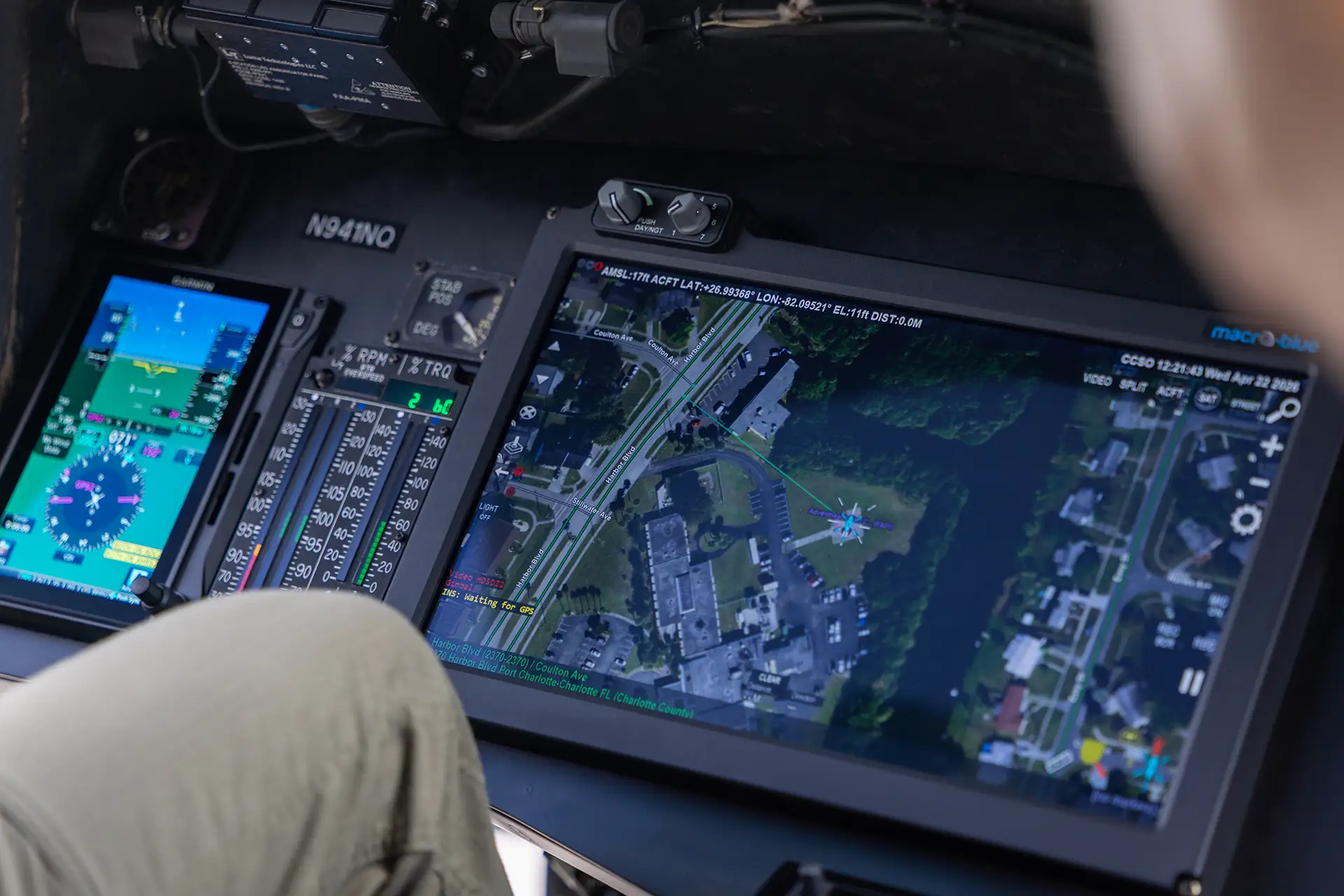
“For seven and a half million dollars, we have two flyable Black Hawks,” Engelauf said, noting that one is fully mission-equipped with a hoist, Forward Looking Infrared (FLIR), Trakka searchlight, two Tactical Flight Officer (TFO) stations, mapping systems, a 900-gallon fire bucket, and a Robertson auxiliary fuel cell. The second aircraft gives the unit component answers for many of its planned maintenance needs over the next decade.
By contrast, a fully equipped civil twin could cost significantly more than CCSO’s entire Black Hawk program without even approaching the same level of heavy-lift capability, spares, mission equipment, and operational flexibility. Engelauf was clear about the program’s reality: twin-engine aircraft cost more, larger aircraft cost more, and H-60 maintenance requires planning. From the start, Charlotte County has accounted for that.
Ten months after receiving purchase authorization, CCSO had not simply received a Black Hawk helicopter. It had taken delivery of a fully mission-equipped H-60 program, complete with aircraft, spares, training, tooling, tracking, rescue equipment, firefighting capability, communications, mapping, and the practical public-use modifications needed to make the aircraft work for Charlotte County
Pilot Peter Serendensky was a US Army Black Hawk Instructor pilot at Fort Rucker and brings a wealth of knowledge and contacts to the program.
Pilot Jonathan Bautista is the senior pilot in the Sheriff's office and holds a type rating in Black Hawks with over 5000 flying hours… and prior to that, he was a Marine Corps crew chief in CH46's, giving him a unique perspective as a pilot.
DFC Crew Chef Joseph Mills had a 20-year career as a firefighter-rescue specialist prior to building out the rescue program for the Astar UH-1 and UH-60.
Casey Kloer, Maintenance Test Pilot with the CCSO Aviation Unit, brought prior military experience as a U.S. Army H-60 maintainer, crew chief, and aircrew instructor. Avionics Specialist Logan Fields also worked with the platform during his time in the United States Navy. Together, their experience gave CCSO internal, firsthand knowledge on both the maintenance and operations sides of the aircraft.
“That’s another reason we felt comfortable getting into the 60,” Kloer said. “I was a prior 60 guy, our avionics guy, Logan Fields, was also a 60 guy in the Navy. We have a lot of experience with the platform.”
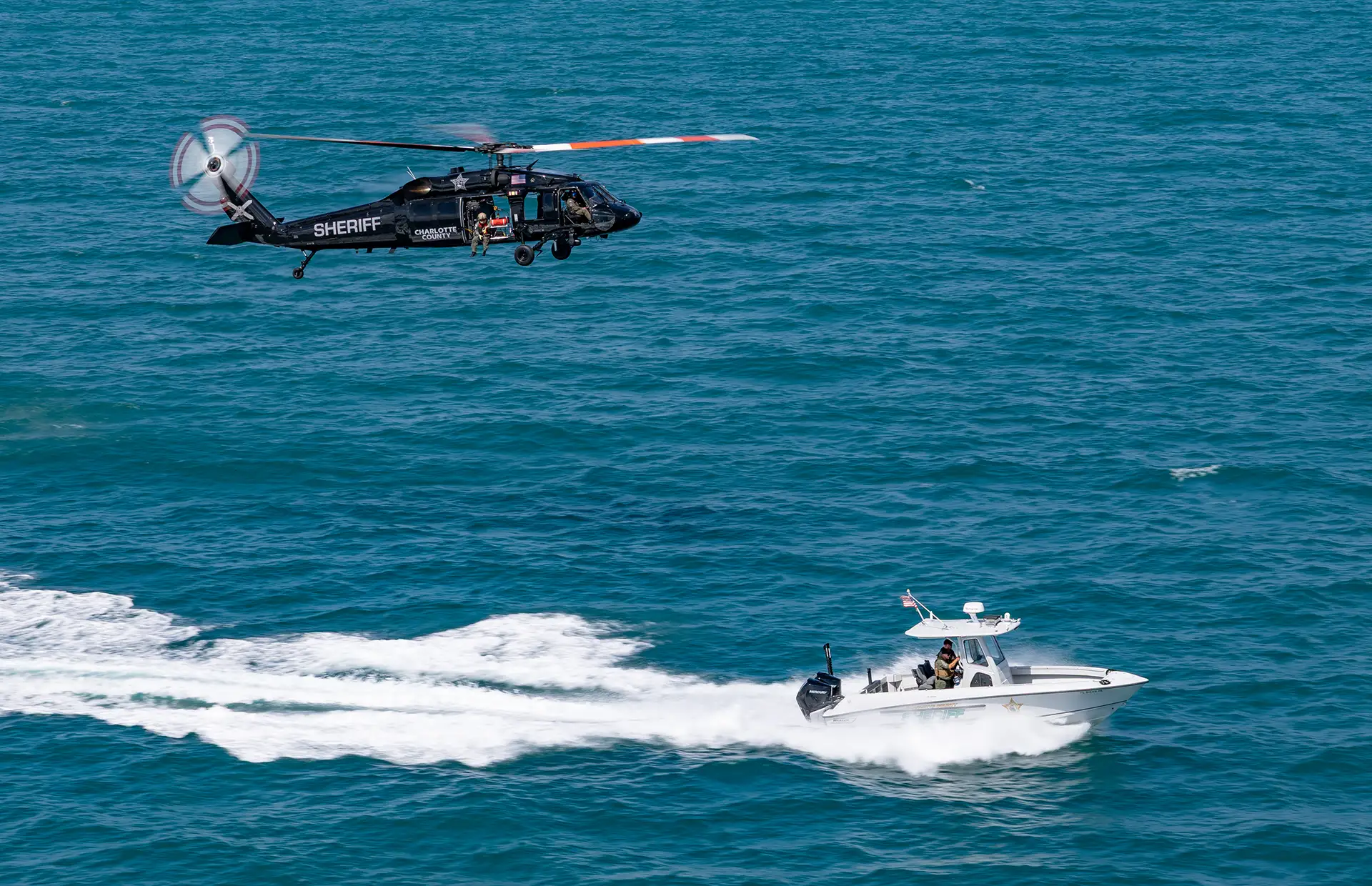
Kloer’s varied roles with CCSO also reflect the realities of a small public-safety aviation unit. Today, he works across maintenance, rescue swimming, hoist operations, Crew Chief duties, Second-in-Command (SIC) responsibilities, and pilot development.
“When it’s a small, tight-knit unit, you kind of have to be good at everything,” Kloer said. This multi-hatted structure is also part of the program’s strength. The Black Hawk is a large aircraft, but the unit is compact. Maintenance, aircrew coordination, hoist work, fire operations, rescue, budgeting, and pilot development duties all overlap within the unit.
In Kloer’s experience, the first reaction of many to hearing about a county-operated Black Hawk is often that it must be unaffordable or impossible for a small unit to maintain. “There’s no way you could afford it. There’s no way you could maintain it,” Kloer said, describing the common reaction. “At the end of the day, it’s honestly not hard. I think it’s more of a psychological hurdle.”
That does not mean that risks disappear. The aircraft is larger, the program is more complex, and the public nature of law enforcement aviation makes any mistakes highly visible. But the risks change when the aircraft is matched to the right mission, supported by the right parts strategy, and operated by people who understand the platform. CCSO’s planning gave the program a strong foundation, and it was tested almost immediately, while the crew was still bringing the Hawk into full operational rhythm.