 HOME
HOME





.webp)
Military aircraft divestment has traditionally imposed a high additional cost on US coffers. Since 2013, however, a program to repurpose ex-military aircraft for use by federal agencies or civil operators has transformed that disposal into an income-generating process.
BEST Job
The Black Hawk Exchange and Sales Team (BEST) program has been operating since 2013, and its program lead (PL) is an experienced US military veteran highly skilled in military asset acquisition, management, and disposal. The team boasts five personnel whom the PL describes as experts in their fields, each exceptionally skilled in the various disciplines required to control a program facing complex financial, accounting, regulatory, and logistical challenges. The program has developed strong, ongoing relationships with a number of companies involved in the various processes necessary to transition a military aircraft into civil or federal service, and the PL stressed that the process is a combined effort that extends far beyond the BEST team.
Unlike the previous Cargo Helicopter Alternate Procurement Strategy (CHAPS) program, which typically returns divested assets to the OEM as ‘trade-ins’ for a partial payment on new aircraft, the BEST team also takes aircraft that are old, obsolete, or simply due for replacement by newer models and coordinates their relocation, equipment removal as necessary, refurbishment and resale to qualified federal, state or civil customers.
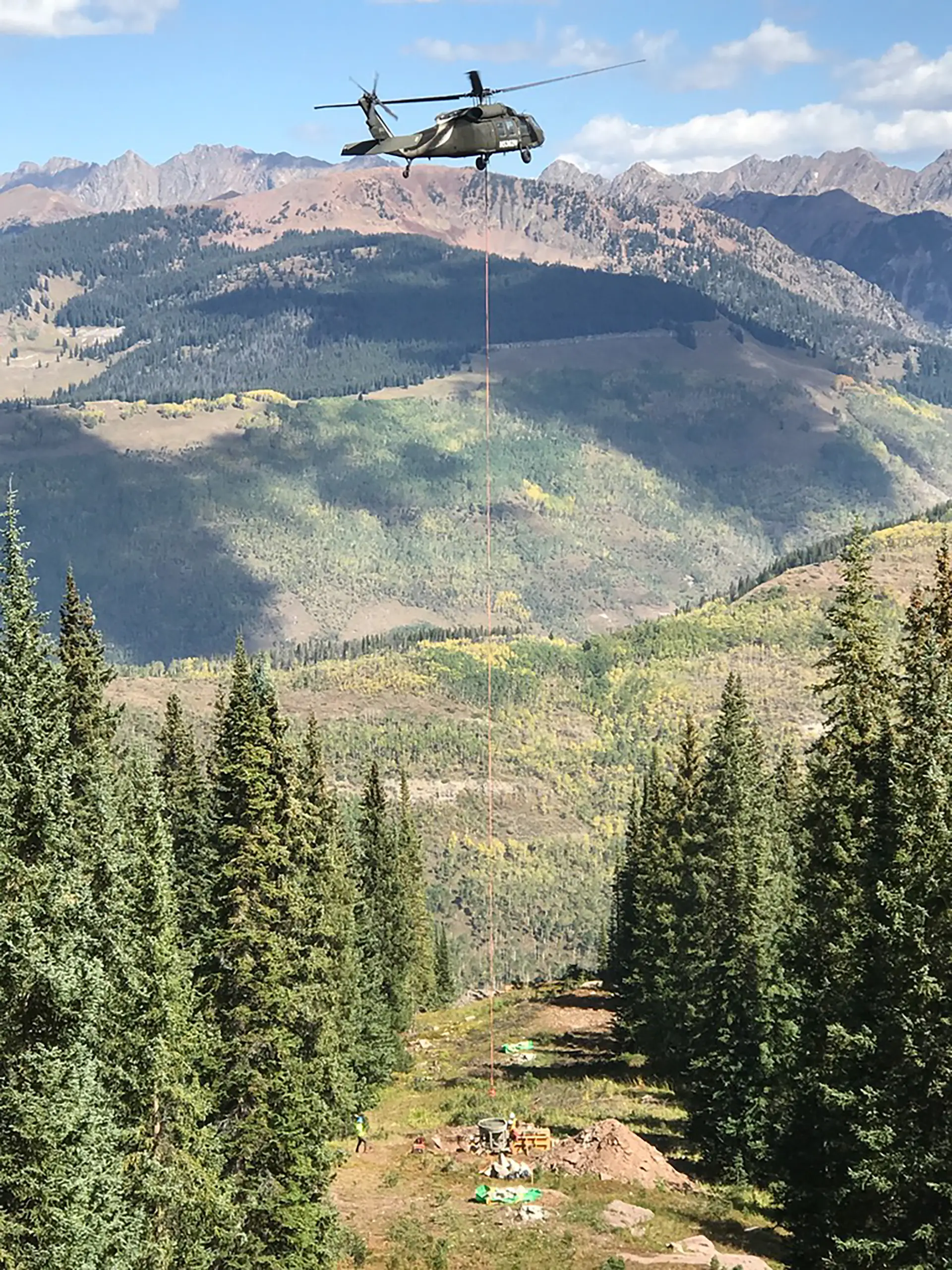
Not only do the divestment programs provide an efficient, controlled method of aircraft disposal, but they also generate a significant financial benefit. The BEST program’s PL reported that prior to the establishment of such programs, every Black Hawk that came up for disposal went through the hands of an external organization for destruction, incurring a cost of around a quarter of a million US dollars per airframe. Most of those destroyed aircraft were fully airworthy, and the BEST program therefore saves that cost on each aircraft and generates significant income from aircraft that are sold. The PL estimated a net gain in excess of a billion US dollars since the program’s inception, commenting, “By law, we’re supposed to do whatever provides the maximum value back to the taxpayer.”
De-militarization
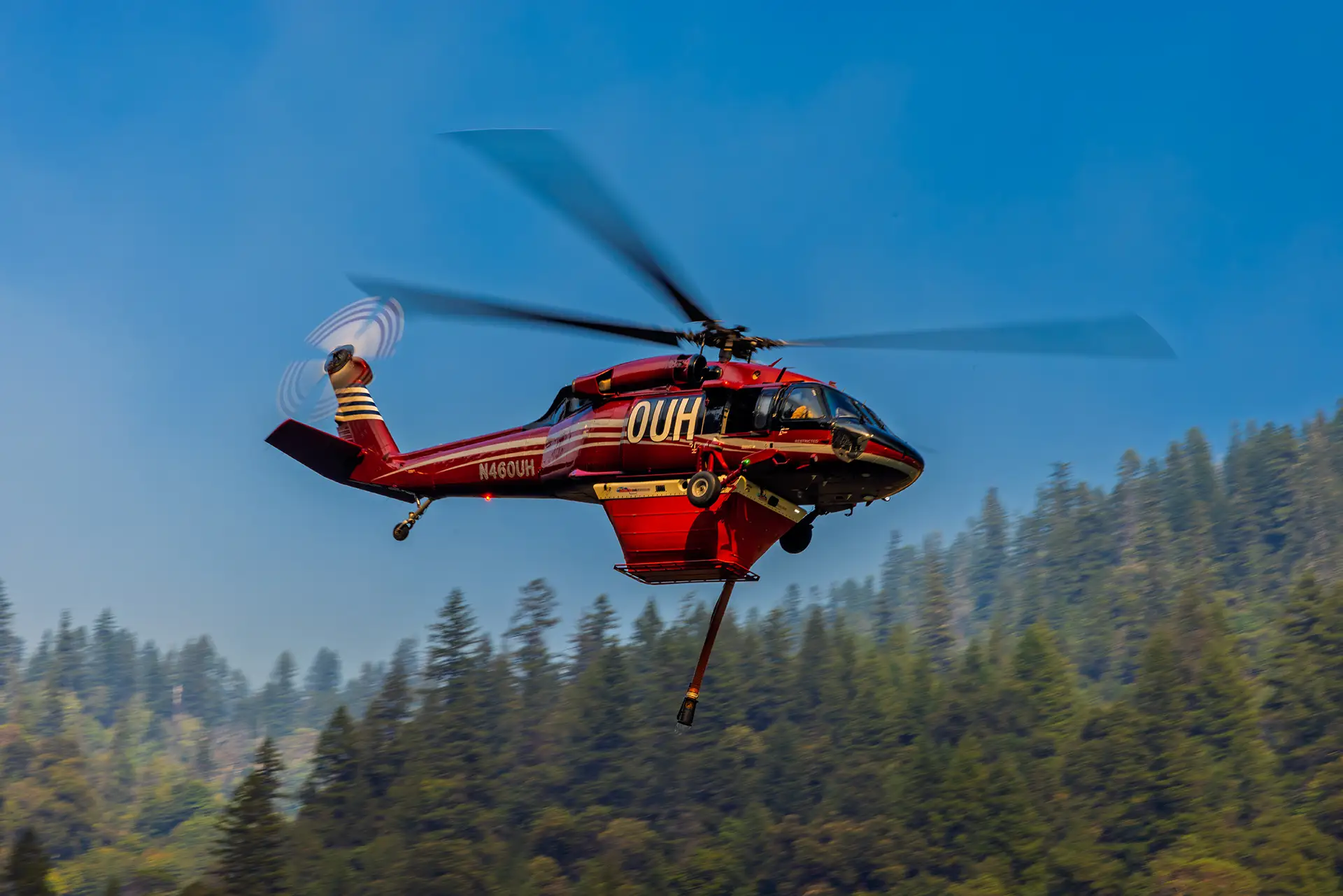
Normal de-militarization of an aircraft requires following a detailed specification for the destruction of various items, including chopping up the rotor blades, drilling the transmission, removing engine lubricants, and running the engines until they are destroyed. The BEST program has to obtain a de-militarization waiver through multiple agencies to avoid that mandated destruction, and the PL commented that the team obtains great satisfaction from seeing the ex-military aircraft being subsequently used to protect life, property, and wildlife in civilian or governmental hands, worldwide.
The BEST PL explained that recent changes have impacted the two differing methods of the Department of War (DoW) military aircraft and asset divestment. The US General Services Administration (GSA) processes non-excess items, while excess items are disposed of through the Defense Logistics Agency (DLA) after GSA screening. BEST deals with the GSA for disposal of non-excess items and does not get involved with the divestment of excess items.
The processes for asset disposal are required to comply with executive orders, some of which then progress through the legislature and become public laws, taking priority over outdated regulations and policies. A significant number of aircraft have entered the federal and civil fleets through the GSA and DLA programs during the past decade, although very few have transitioned to civil firefighting use under the bipartisan Aerial Firefighting Enhancement Act of 2025, the most recent public law currently in force relating to excess military asset disposal.
According to the PL, there are currently two documents in force that affect the number of aircraft to be divested. They are based on
current technological changes related to flying and fighting, with particular regard to UAS (unmanned aircraft systems). “The Army
Transition Initiative (ATI) and Army Structure Memorandum (ARSTRUC) documents are designed to transition the force to future goals, which
include reducing overstructure while optimizing lethality and particularly identify the Army Reserves as losing all rotary-wing assets,” he
explained. “The quantity identified is 600-plus aircraft – including 91 AH-64D Apaches – but predominantly UH-60Ls and some CH-47F
Chinooks.” He added that all UH-60Ls are to be removed from medevac service and replaced with the modernized HH-60M variant, adding
significantly to the number of UH-60s for disposal.
“The ARSTRUC looks at the overarching fleet of approximately 2,000 Blackhawks that covers everything from a brand-new UH-60M that just came off the production line, to a legacy 1980s UH-60L model. The intent is to divest as much of the legacy fleet as possible or anything that’s beyond economical repair and that’s what you’re seeing with the Apache fleet; divesting the legacy AH-64D models to a pure fleet of modernized AH-64Es. With the CH-47F Block-1 Chinooks, there are multiyear I and multiyear II versions, and there are plans to divest several of the multiyear I models,” the PL outlined. The documents reported a total of around seventy Chinooks for expected divestment, and the PL foresees single-digit numbers to be processed in the near future.
Future
Having said that, he also stressed that he hesitates to discuss the future, as it is heavily dependent on external factors, such as the
outbreak of armed conflict or other unexpected changes in military requirements. “We don’t make the divestment decisions and there are a
number of caveats to any predictions for future throughput. However, over ten years we have developed a good understanding of how it
fluctuates, based upon the end of the long war we had, what went on during the war, and events like that. We’ve moved well over a hundred
aircraft in a year and as little as forty during the pandemic, so things do fluctuate a lot.”
.webp)
He advised that there are currently more than 700 Lima-model UH-60s to be disposed of, while some may join the ninety-plus anomalous UH-60-Victor model fleet. The Victor is essentially a legacy Lima aircraft fitted with a new Northrop-Grumman cockpit that is a facsimile of the Mike model, so a pilot familiar with the Mike can easily fly a Victor. They will likely remain in service until all Limas have been disposed of. The key advantage of the Victor is that its government-owned cockpit and flight-control computer can be upgraded and modified in-house under the MOSA (Modular Open Systems Approach) without having to go through the OEM to approve and certify the changes.
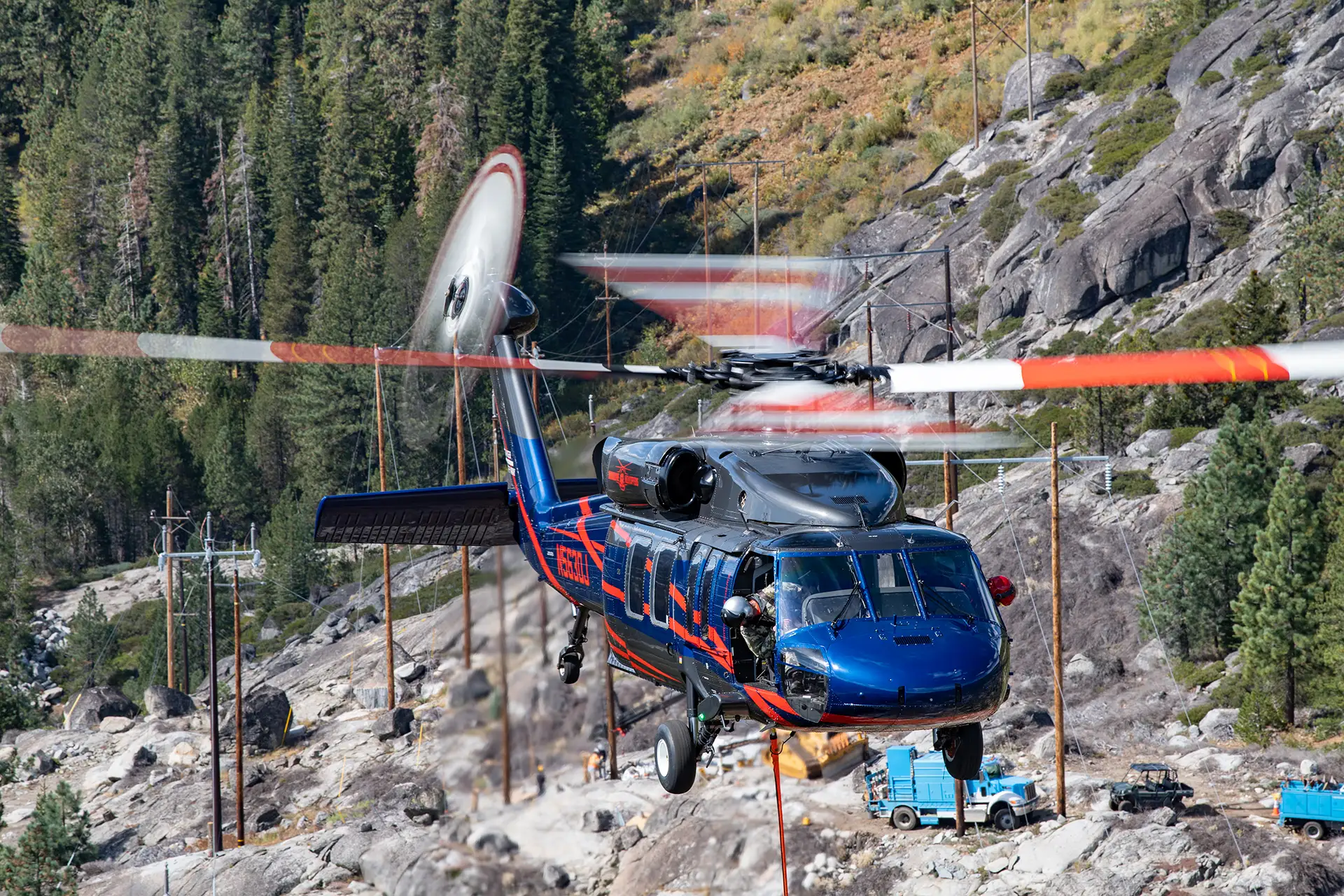
According to the PL, every time an aircraft reaches 17-25 years old or technical obsolescence, it comes his way. “Our job is like laundry, in that it’s never done,” he quipped. He advised that for that reason, there already is a program in place for the current UH-60M versions as the first of the -Mikes was delivered in 2006, much like the CH-47F. That means that the first of the latest-technology in-service models could be entering the BEST program and subsequently turning up in civilian hands in the reasonably near future. Fortunately, neither the Black Hawk nor the Chinook is a US Munitions List item and is exportable under the US Department of Commerce Bureau of Industry and Security (BIS) for specific commercial or dual-use modifications or parts. Although the team has not yet sold a UH-60 directly into Australia, a significant number of the divested aircraft have nevertheless ended up there, predominantly used to fight the severe annual wildfires.
The primary catalyst for the BEST program was the 1995 importation and introduction to the civil market of ex-foreign S-70 examples by private companies. The BEST team met with those companies that had successfully introduced the type once they were FAA certified and operating, and the PL stated that the civil operators were completely free, open, and generous with their information. “What we did is we took that information and leveraged it to create a program that would provide a new owner with the required assets to obtain a type-rating for the aircraft that didn’t exist before, and to establish the market for the UH-60A when we started pushing them out in 2013,” he recalled.
Military Certification
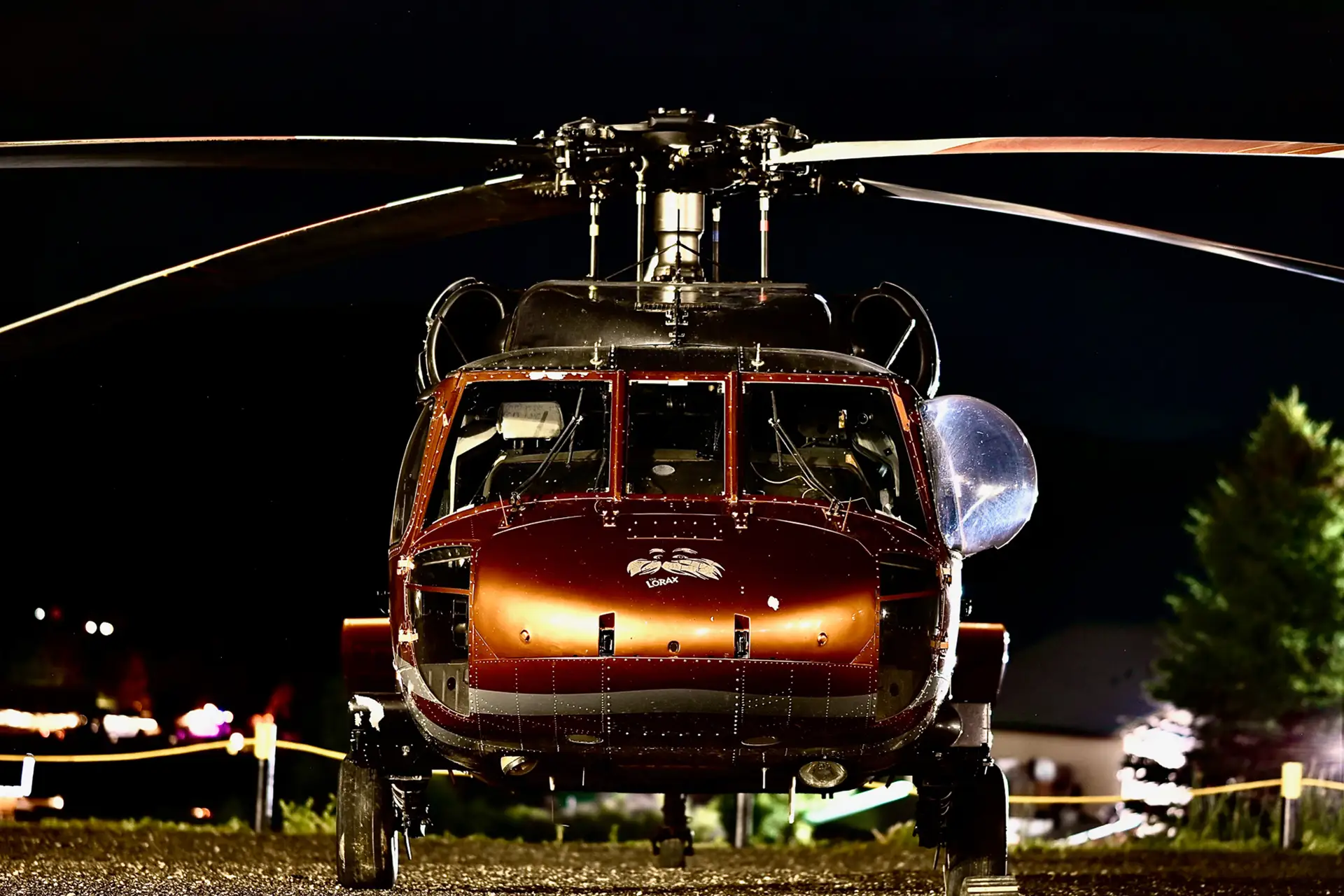
Commenting on the worldwide tendency of aviation safety authorities to limit the civil use of the ex-military types in restricted category operations, the PL pointed out that such features as the crashworthy fuel system were standard on the Black Hawk long before the FAA required such items on standard category aircraft, and it far exceeds the safety standards of civil aircraft that fly in the standard category, carrying passengers for hire. He commented, “The beauty of the project itself is that in 1978, the US Army decided to move away from the single-engine, skid-equipped utility aircraft and by 2016 had the safety of a fleet equipped with fully crashworthy systems, redundant controls, and twin-engines, primarily because of safety,” he opined. “If you look at the safety record and crashworthiness of the Black Hawk in particular; it is designed to go into combat where you know you’re going to get shot, hit and there’s a good chance you’re going to go down. It’s therefore over-engineered far beyond the normal type of safety requirements, which is why a civilian aircraft would have an incredibly tough time trying to fulfill its types of mission.”
The 674 Black Hawks currently in the civil market all fly with GE Aerospace’s (GE) commercial T700 series of engines. The engine is not a military derivative version but a purely commercial engine bought by the military from GE. They are identical to the T-701D engines in the AH-64D Apache, and the PL noted that the program was therefore viable to offer the Apache engines on the civil market as replacement powerplants for the civil Black Hawk fleet. He commented that with new AH-64Es being built, the divested -Ds will be broken down for parts, as there is a high proportion of parts commonality between the -D and -E versions with some selected airframes slated for museums.
.webp)
Back when the first UH-60As entered the civil market in 2014, a number of companies wanted to offer modernized glass cockpits for the type and most accepted the PL’s recommendation to buy ex-military examples on which to develop their designs before offering them to the civil market. The PL added that his team is still regularly asked about the best options for firefighting tanks or cockpits for divested Blackhawks. “We won’t recommend any particular company or offering,” he advised. “The market will determine what works best and those offerings will end up with a strong market share. Some have fallen by the wayside and others have proliferated.” The innovation reflected by civil companies with this type is significant. Expanded capability, sustainability, and effectiveness are being demonstrated, including optionally piloted vehicle (OPV) capability by multiple companies.
Throughput
The BEST team’s throughput is currently accelerating, and the PL reported that they recently processed 40 Black Hawks in one recent month, whereas just 65 were put through in the entire previous year. “Things are moving faster and the quality of the aircraft is higher; now they’re all flyable and good to go. Back in 2013, we were originally getting rid of the oldest, tired ‘hangar queen’ examples but now we’re essentially getting them fully flightworthy and capable, straight off the flightline; frontline aircraft that go to us and out the door to the operator,” he remarked.
He added that it reflected credit on the supporting organization that exists to make the program possible and explained, “It requires Army flight crews to fly the aircraft from point-A to point-B and get them to our consolidation location.” The restriction on Army Reserve flight hours and current budget restrictions create a challenge for the team, with Reserve aircraft up for divestment but remaining on station with no crews available to deliver them. “That means we’ll end up having to truck them or sell them on site, which is a challenge and something we have done in the past. We do have a consolidation facility contract that covers transportation, storage and maintenance of the aircraft. How we go about that is determined by our fiscal responsibility to do it in the way that’s best for the taxpayer.”
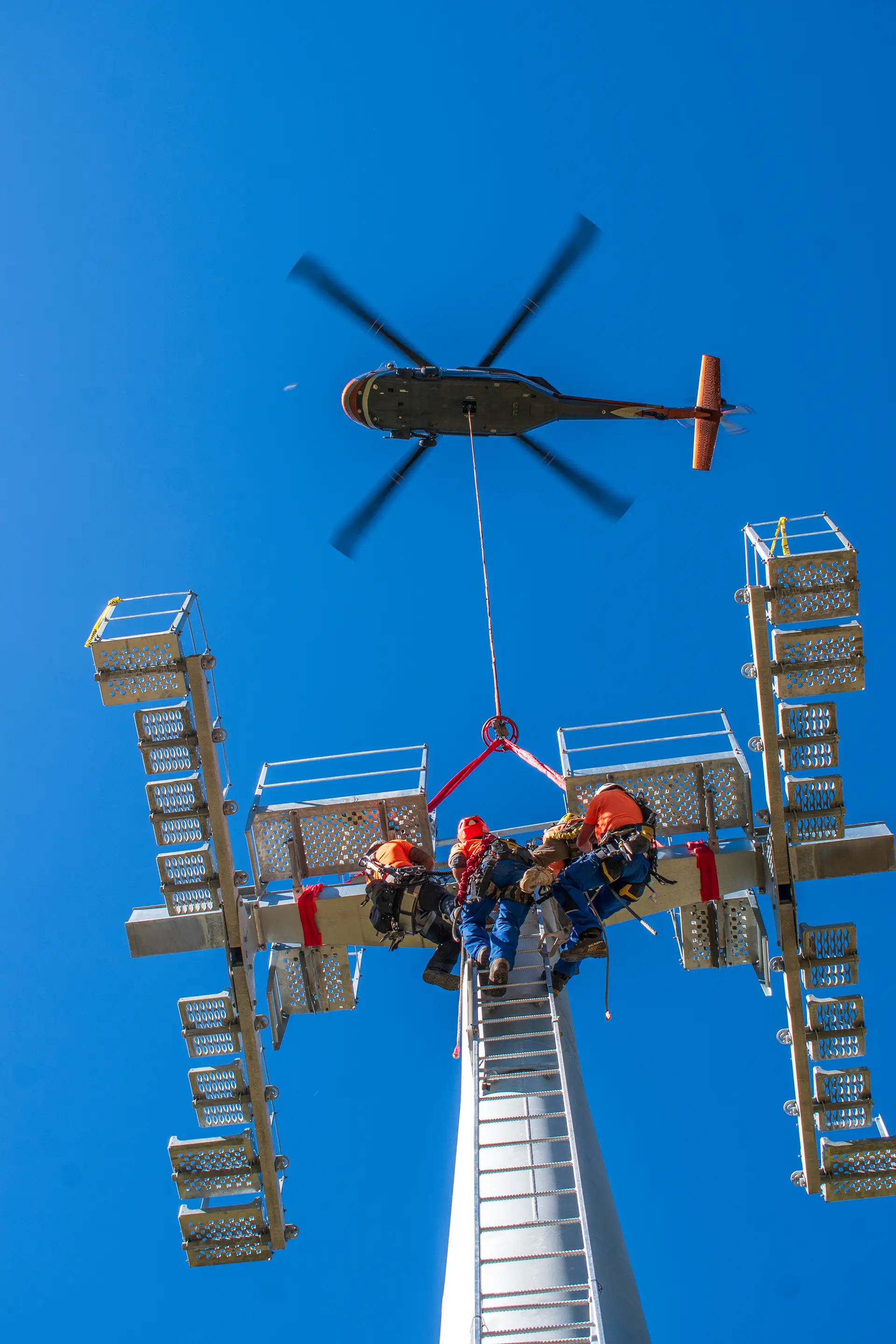
Trucking has become more feasible over time, and the PL reported that at the program’s commencement, there was only one company with a single trailer type capable of transporting an aircraft of Black Hawk or Chinook size. Now there are at least three companies that can reliably move aircraft of that size and keep them in decent configurations. “We do whatever is best fiscally and meets the mission requirement,” he stated.
Looking ahead, later variants of the Black Hawk and the Chinook present a slightly more challenging prospect for civil operators, due to
the newer technology that they are equipped with. For example, the UH-60M and CH-47F are both fitted with the Rockwell-Collins CAAS (common
avionics architecture system) cockpit that was conceived as a purely military cockpit design to be incorporated into various types.
Subsequently, however, Sikorsky elected to introduce the CAAS cockpit on its S-70I and S-70M civilian variants of the UH-60 series, so the
CAAS cockpit is therefore now also a civilian offering, making CAAS maintenance and repair viable for current-generation ex-military
aircraft entering the civil market.
.webp)
The PL compares the Black Hawk to a Ford F150, a common utility vehicle that virtually everyone needs at some point. However, he describes the Chinook as a much more specialized offering; the Kenworth truck is a heavy transporter but much less common. Nevertheless, the thirty-one CH-47Ds that have previously gone through the process and moved into the civil sector initially changed hands for $2.6 million, subsequently increasing to around $4.6 million, and now you can’t obtain one because they are all engaged non-stop in productive work. “Parts supply is also tight, so at this point, there is a pent-up market for Chinooks,” he pointed out. He said the market price for the CH-47F will be determined when the divested examples become available.
Awareness
Alongside rotary-wing divestments, BEST also disposes of fixed-wing assets, and the PL reported that the program sold C-23 Sherpas to fund SOCOM’s C-27 support, and a significant number of various Beech KingAir models have been processed, with more to come as the Army continues to dispense with its turboprop intelligence gathering aircraft and transitions to jet-powered types. He explained that the US Defense Department has an acquisition organization designed to acquire new technology and systems and to introduce and sustain them in the military. However, there has been much less focus on divestment or disposal, which has essentially been an afterthought, despite the ‘cradle-to-grave’ requirement for military assets.
The PL commented that there are many instances of lost opportunities regarding divested aircraft assets outside the Army, largely due to a lack of general awareness of the BEST program and its capabilities. “Our team has spent a lot of time and effort determining the best way of doing things and we know what we’re doing. We’re now at the point where the Army provides the aircraft to our team, we do our process and the Army gets the money back, and they depend on our team to execute the divestment efficiently, legally while minimizing risk and eliminating entities that detract from return on investment.”
While the program works under the US Army for aircraft disposal, it could also carry out the same function for other branches of the US
military, making equally significant fiscal gains for the Marines, Navy and Air Force if they elected to take advantage of the team’s
capabilities. For example, the Air Force has divested all its MH-60G Pave Hawks as it shifts to the new Whiskey model, and the retired Gs
are currently sitting in boneyards. “My organization is in a position to support those folks if they want to bring us on board under
contract,” advised the PL, who pointed out that the many federal agencies and operators could also utilize the team to dispose of obsolete,
redundant, or superseded aircraft on a one-off basis, benefitting from its expertise and the complex logistical and accounting support
network that underpins its operation.
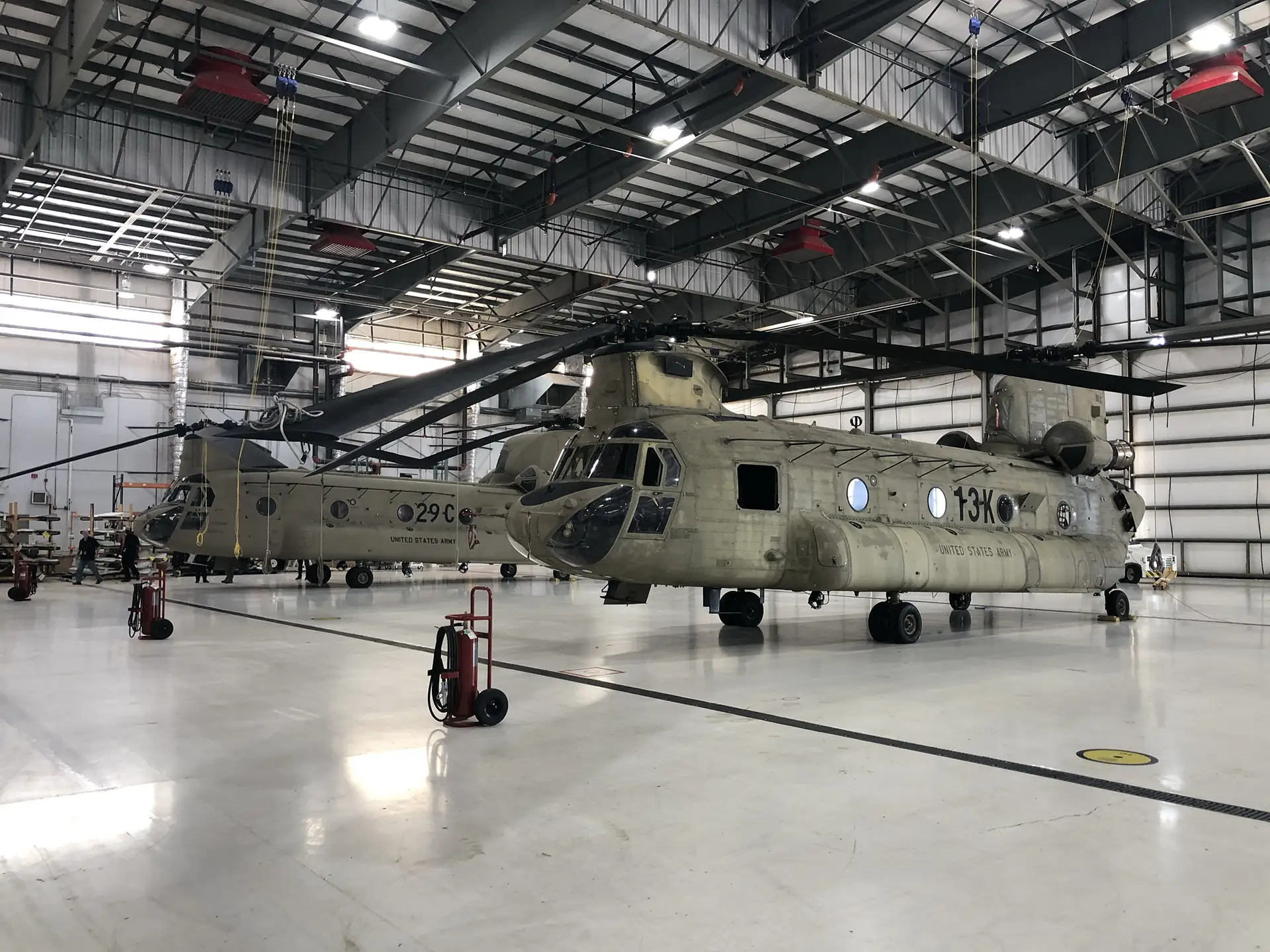
Not only does the BEST program generate significant fiscal benefit for the US military, it also ensures that many capable, fully airworthy ex-military aircraft enter the civil sector and remain in useful service, instead of ending up on the scrapheap. It can only be hoped that the rest of the US military and US federal agencies eventually follow the Army’s lead and utilize the program or something like it to maximize return on their fleets, with the divested aircraft adding significant capability and modernization to civilian aviation.