 HOME
HOME




Richard Butterworth is a highly experienced aviator with a background that includes almost nine years as a helicopter pilot and instructor in the Australian military. He was an instructor, examiner and maintenance test pilot on the Army’s Armed Reconnaissance Helicopter, followed by civilian service with Babcock as senior pilot, instructor, examiner and flight training manager. For the last eight years, he has been with Kestrel Aviation, where he is Head of Flight Operations and Chief Pilot. In the following article, adapted from his recent Rotortech presentation, he summarizes his thoughts on aeronautical decision-making.
Firstly, let me state that I am not a human factors expert. I’m not tertiary qualified in that department; however, I’ve got some experience making decisions, as we all have. I read somewhere recently that the average human makes around 35,000 decisions a day, and that’s for everything, from the most minor everyday things. There is a military aspect to my background; I spent fourteen years in and out of uniform in various roles, including flying Hueys and gunships and flying and instructing on the Tiger, which is also about to be retired. Then I moved into civilian flying with Australian helicopters, which morphed into Babcock Mission Critical Services, occupying several operational, training, and middle-management roles in law enforcement, HEMS, and firefighting. For the last seven or eight years, I’ve been with Kestrel Aviation, culminating in the Chief Pilot’s role in July 2023.
Each of us comes at decision-making from our background, varied experiences, and different skill sets. it is shaped and molded to fit our
unique, complex operational and regulatory environment. The thrust of this discussion is nothing revolutionary or controversial but is to
generate conversation as we enter a very interesting paradigm where A.I. is increasingly encroaching into our space. We’ve got automation to
deal with, for sure, but now we’re going to have A.I. We can’t ignore that there has been an increasing number of fatal accidents in the
domestic helicopter industry recently, where the decision-making was identified as a contributing factor, compelling us as an industry to
ask ‘why?’.
 Some
of those are still under investigation by the ATSB, so I’m not going to talk about them in specifics but will discuss other case studies
and use myself as the fallibility case; looking at my decision-making. To begin with, let’s look at a marine accident in which a ship
collided with a bridge in Baltimore, Maryland and brought down the entire structure. I chose this incident because the parallels with our
industry are striking. We have a highly regulated, schedule-driven, dynamic and, at times a pressure cooker situation with the potential
for catastrophic consequences. As the vessel approached the bridge at 1:24 a.m., the lights seemed to go out and then came back on again.
They went out again at 1:26, and at 1:27, the crew radioed that the ship had lost power. At 1:28, it collided with a bridge support after
veering slightly off course to the right. The radio call gave local emergency services just enough time to stop all traffic from crossing
the bridge, but the accident is an excellent example of the time and space to make and implement effective decisions being inexorably
funneled.
Some
of those are still under investigation by the ATSB, so I’m not going to talk about them in specifics but will discuss other case studies
and use myself as the fallibility case; looking at my decision-making. To begin with, let’s look at a marine accident in which a ship
collided with a bridge in Baltimore, Maryland and brought down the entire structure. I chose this incident because the parallels with our
industry are striking. We have a highly regulated, schedule-driven, dynamic and, at times a pressure cooker situation with the potential
for catastrophic consequences. As the vessel approached the bridge at 1:24 a.m., the lights seemed to go out and then came back on again.
They went out again at 1:26, and at 1:27, the crew radioed that the ship had lost power. At 1:28, it collided with a bridge support after
veering slightly off course to the right. The radio call gave local emergency services just enough time to stop all traffic from crossing
the bridge, but the accident is an excellent example of the time and space to make and implement effective decisions being inexorably
funneled.
 In
the simplest terms, decision-making is the act of choosing from alternative options under uncertain conditions. We consider alternative
courses of action, judge, decide and act. Now, that’s generally a recurring loop that is a function of the consequences of the decision and
of the time and space available. Aeronautical decision-making is more a systems-based approach than a mental process of decision-making. We
see many examples of that mechanical method of decision-making in CASA’s human factors suite. There’s the British Airways DODAR acronym,
where we diagnose, look at the options, decide, assign tasks and review. This is all about getting into that mechanical model on the flight
deck and sharing with the crew; however, in general aviation, we’re usually on our own and seldom have the luxury of sharing this
information, so we tend more towards the military style of decision-making with their OODA loop, which is to observe, orientate, decide and
act. You’re filtering information, applying it to context, deciding, and acting. It’s fast-working and ready for new information to be
integrated and processed.
In
the simplest terms, decision-making is the act of choosing from alternative options under uncertain conditions. We consider alternative
courses of action, judge, decide and act. Now, that’s generally a recurring loop that is a function of the consequences of the decision and
of the time and space available. Aeronautical decision-making is more a systems-based approach than a mental process of decision-making. We
see many examples of that mechanical method of decision-making in CASA’s human factors suite. There’s the British Airways DODAR acronym,
where we diagnose, look at the options, decide, assign tasks and review. This is all about getting into that mechanical model on the flight
deck and sharing with the crew; however, in general aviation, we’re usually on our own and seldom have the luxury of sharing this
information, so we tend more towards the military style of decision-making with their OODA loop, which is to observe, orientate, decide and
act. You’re filtering information, applying it to context, deciding, and acting. It’s fast-working and ready for new information to be
integrated and processed.
All of this while we aviate, navigate and communicate, aiming to achieve your task objectives while mitigating risk. We’re working in an established framework where decisions have already been made well upstream of the user in terms of the regulatory framework under which we operate. That dictates what experience, qualifications and medical standards I need, what weather minima I can work to, and what fuel reserves I may need. That has all been worked out for us, and we have to work within those constraints while considering what the flight manual prescribes, coupled with operational procedures and task objectives. At some point in their careers, everybody has seen examples of transgressions against and through these mitigations and controls. It’s important because it narrows our available time and space to make effective decisions.
An example from my time in the military as a very junior pilot, is when I was sitting at number three in formation, in teeming rain, and we’d already passed our minimum fuel limit for takeoff. We departed anyway, and, of course, we struck adverse weather enroute. The whole formation breaks up, everyone’s doing precautionary landings and we spend the night on a farm. There are inherent beliefs that the OEM creates more performance than is prescribed in the flight manual, there are numerous examples of pushing into weather, pushing on when fatigued, all culminating in terms like mission-itis or task-itis where we just push on that little bit further.
Now we’re introducing more and more technology, particularly smart technology that’s about to make judgements for us in A.I. New technology in aviation isn’t a new thing. The Concord introduced lots of new technology and to deal with it, they put more people on the flight deck. In general aviation, we’re getting more technological tools to work with but fewer people, and we’re generally working on our own. Are we paying enough attention in our CRM training to the performance capabilities and limitations of the devices? Pilots of yesteryear who came through a system without AFCS (automatic flight control system) understand intrinsically what an AFCS is doing. They instinctively understand the muscles and sensors of the systems for stability augmentation, attitude retention and flight director modes so they can engage and disengage seamlessly with that system. This is important because they have the skill-sets and experience to question the system.
With modern systems and aids like the Oz Runways traffic light system for weather, we run the risk of normalised deviation, which is inherent in repetitive systems. Experienced pilots know what weather they can safely fly in and how to interpret the available weather information and forecasts. When someone solely uses the traffic light system for a weather decision, which works several times in succession, its use can become the norm, eroding our safety buffers. Just look at navigation augmentation. From a situational awareness perspective, it’s never been easier to conduct IFR or VFR navigation with a big screen showing an aircraft icon that tells you exactly where you are and a magenta line telling you where you’re going. However, what do we compromise for that luxury? We’ve stopped doing the work cycles that we started with all those years ago. Using a map, determining positions, estimating distances and speeds, assessing enroute weather conditions, safe forced landing areas, all of which keep us in the decision-making loop. Now I’m sitting there all comfortable being given that information. My alert levels are low, so when I get a fright and have to intervene, I bounce from behind the performance curve to the front end, in either case, not optimising my performance.
Once we start to rely on automation to begin bending and breaking these mitigation controls that were in place for us, we start to narrow our time and space. That is crucial because our power to make and implement an effective decision rests only within the available time and space. To be effective at decision-making, you have to understand your own capabilities and limitations. Some people are excellent in the ‘clutch’, at quickly assessing a situation and making quality decisions under pressure. Others like me, however, are not great in the clutch and I prefer time to analyze, to consider possibilities and to plan for foreseeable eventualities. Understanding yourself and owning those traits is critical to optimize your decision-making.
Decision-making is only one element of the entire suite of human factors. It’s affected by teamwork, communication, proficiency and
skill-sets, and our individual performance limitations and capabilities. There are two types of decision-making processes. There is
intuitive or naturalistic, and there is analytical. The intuitive/naturalistic processes are serial-based responses, typically applied to
repetitive, familiar tasks and situations in the cockpit. They tend to be instinctive, but one of the pitfalls of instinctive decisions is
that they are prone to error. Analytical decision-making is for unfamiliar tasks and activities where you can take your time.
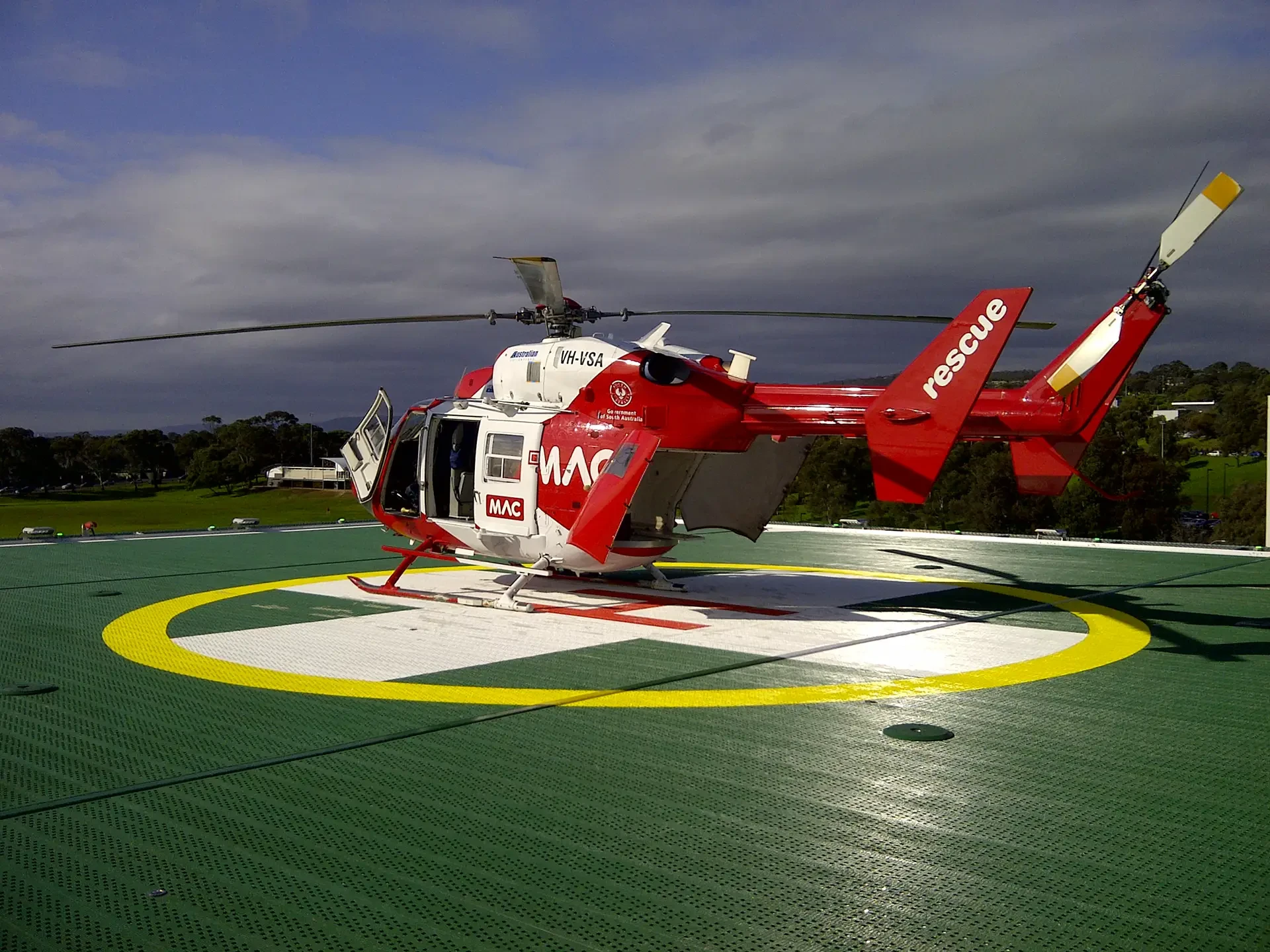
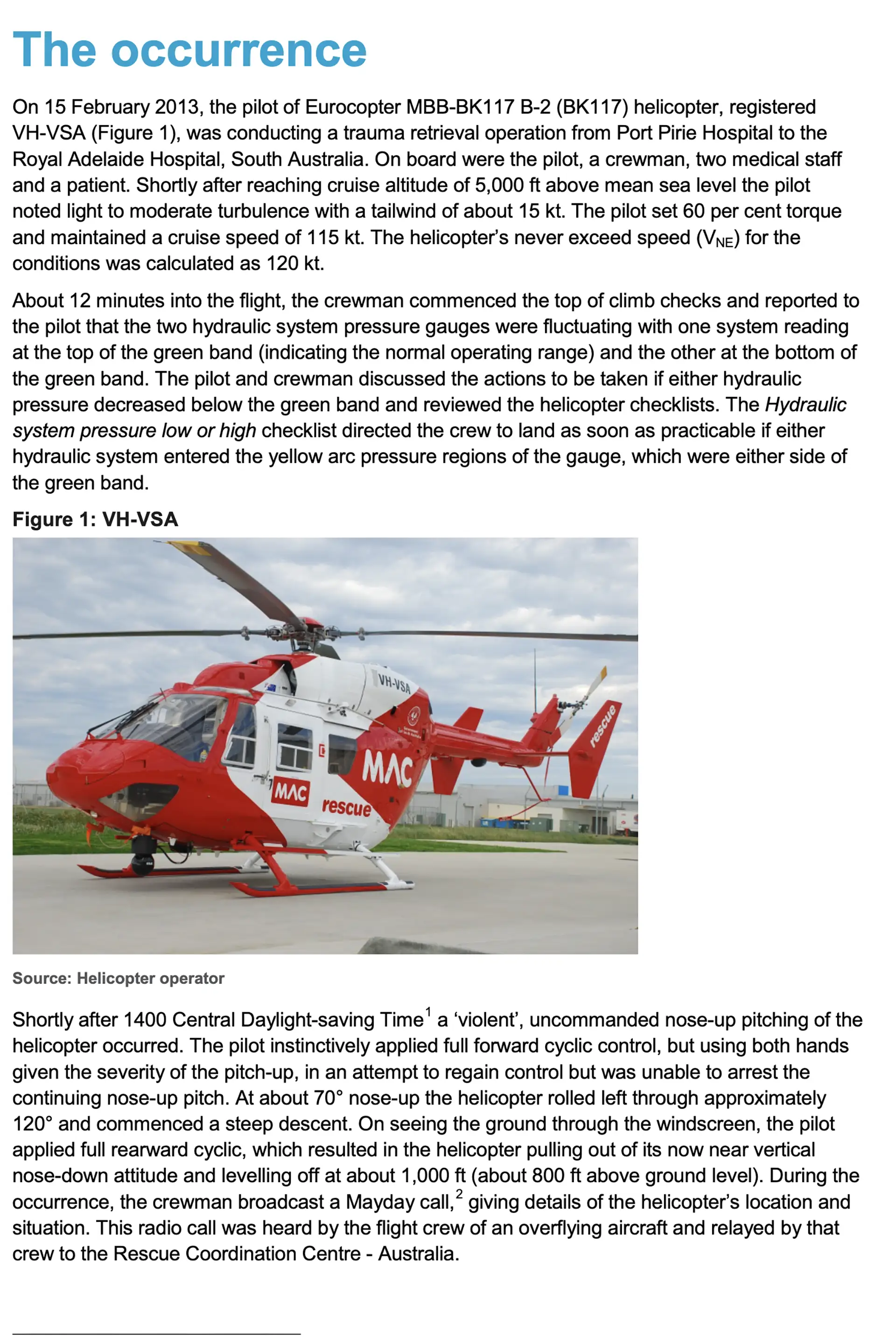
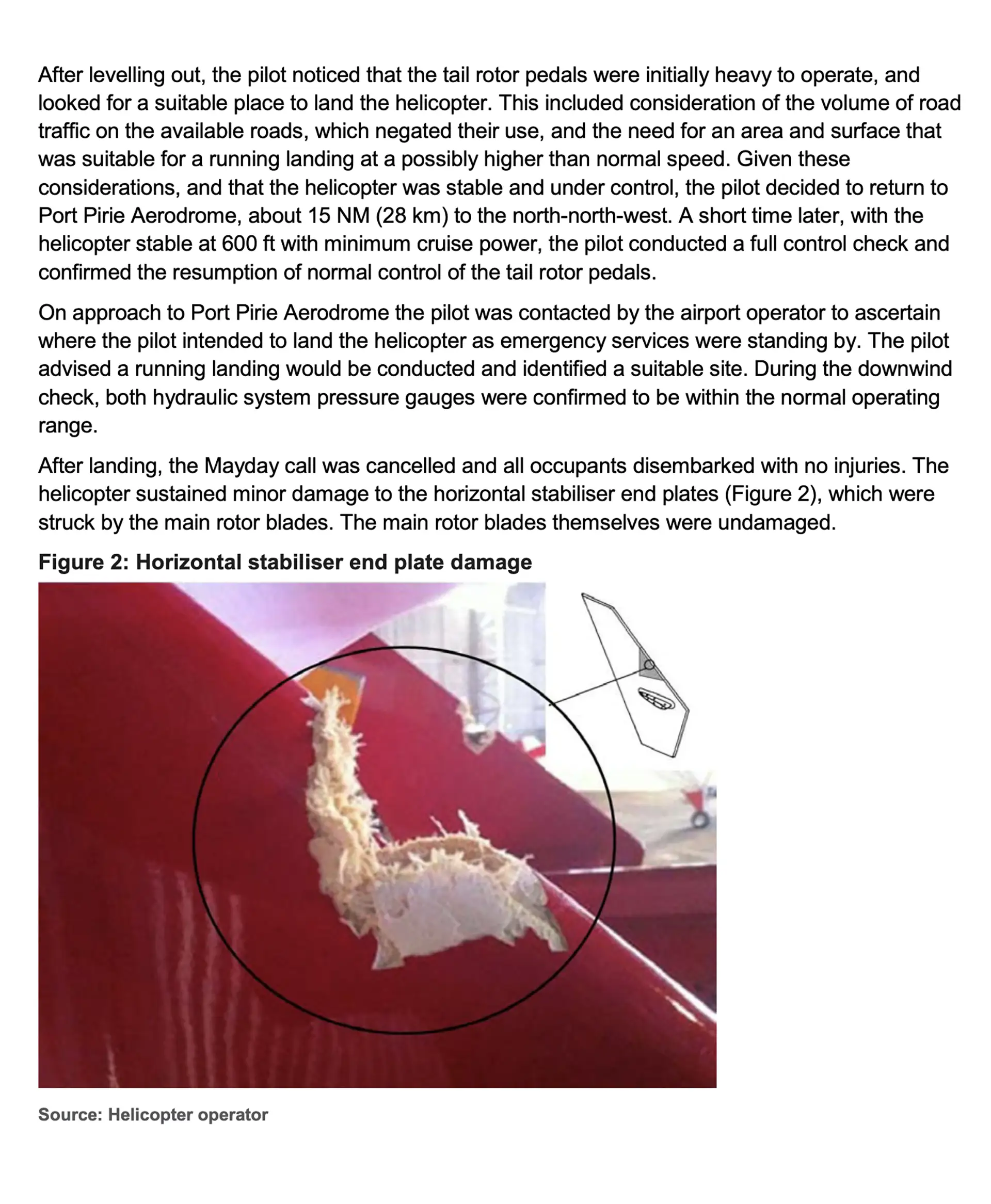
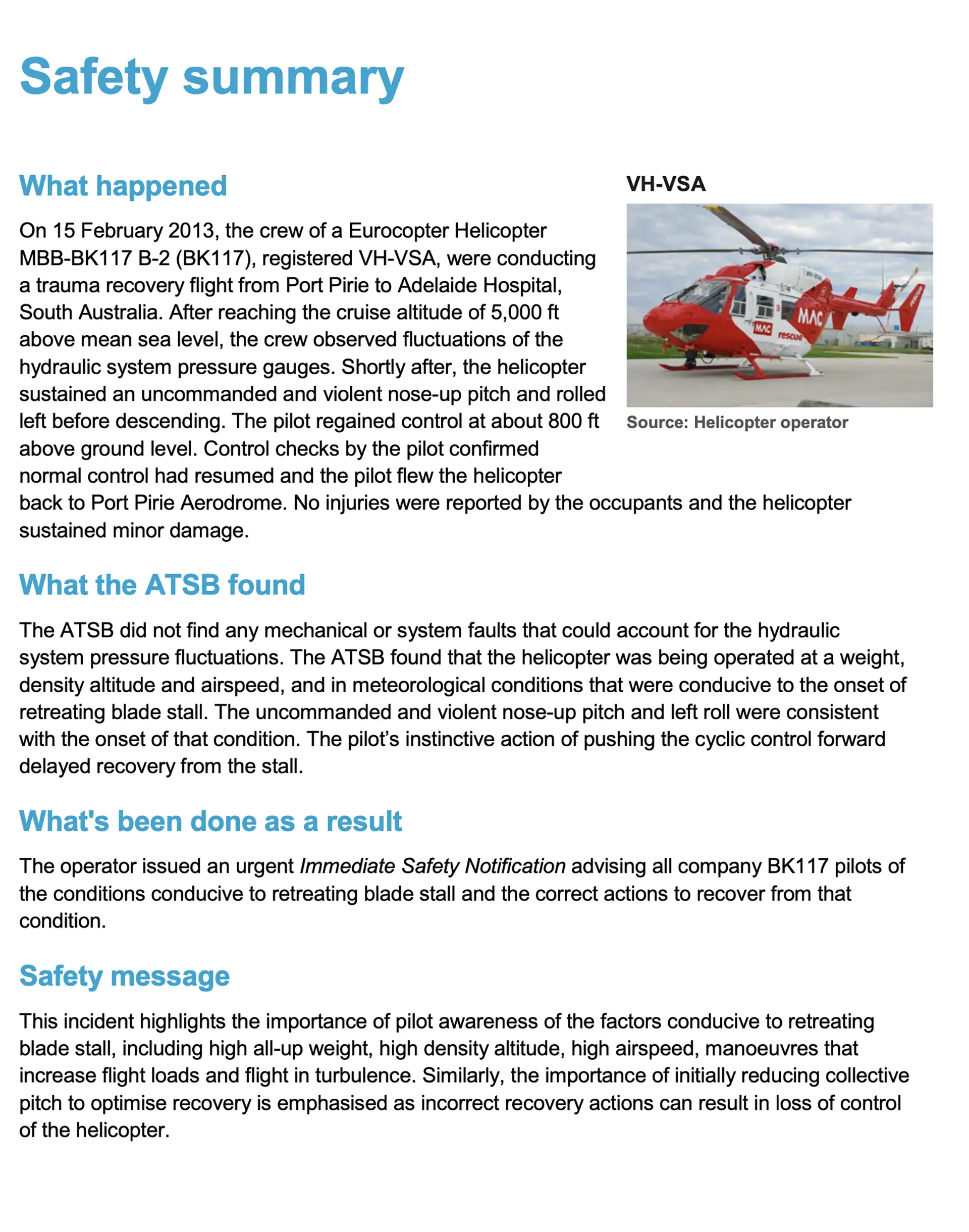
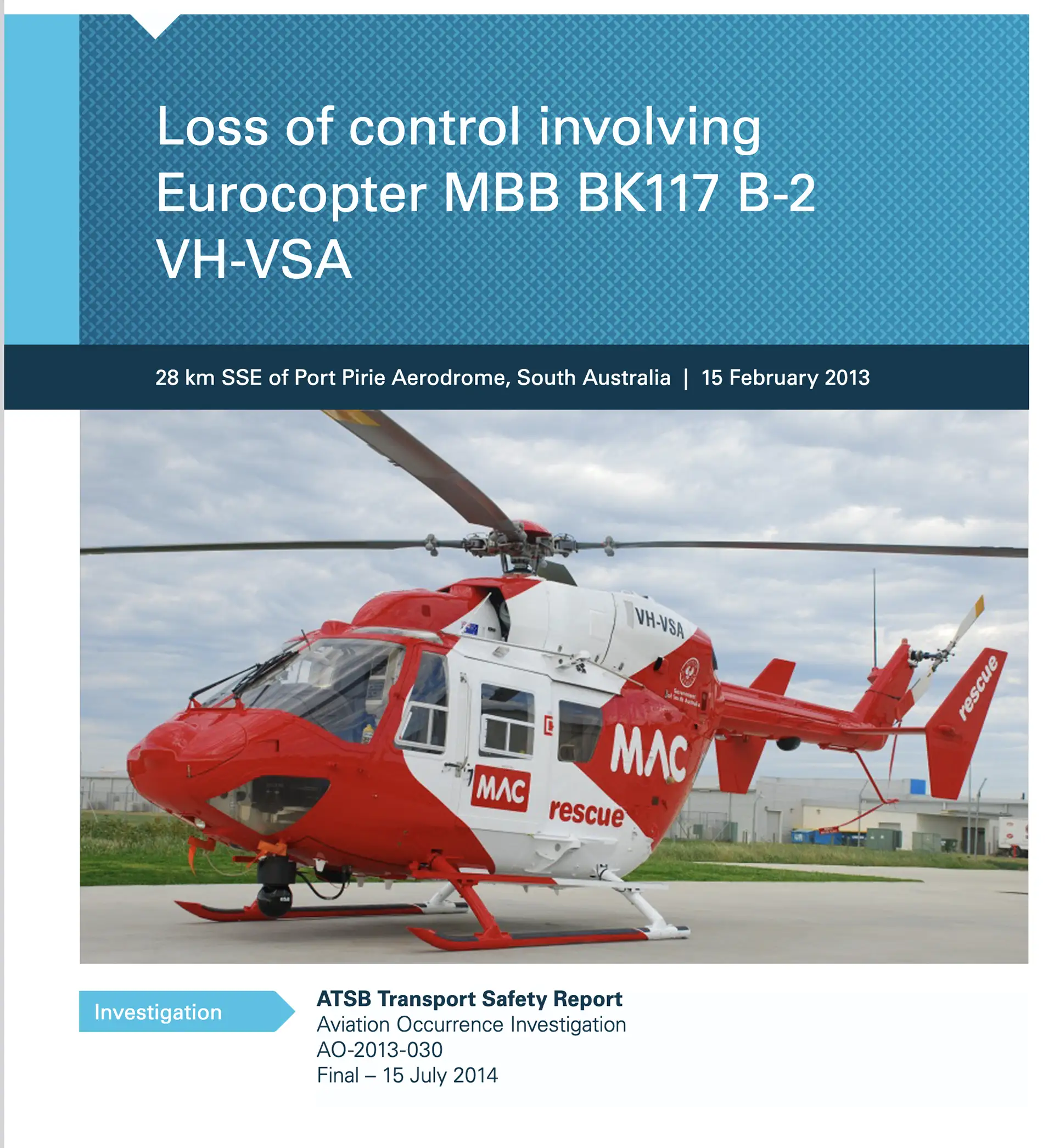
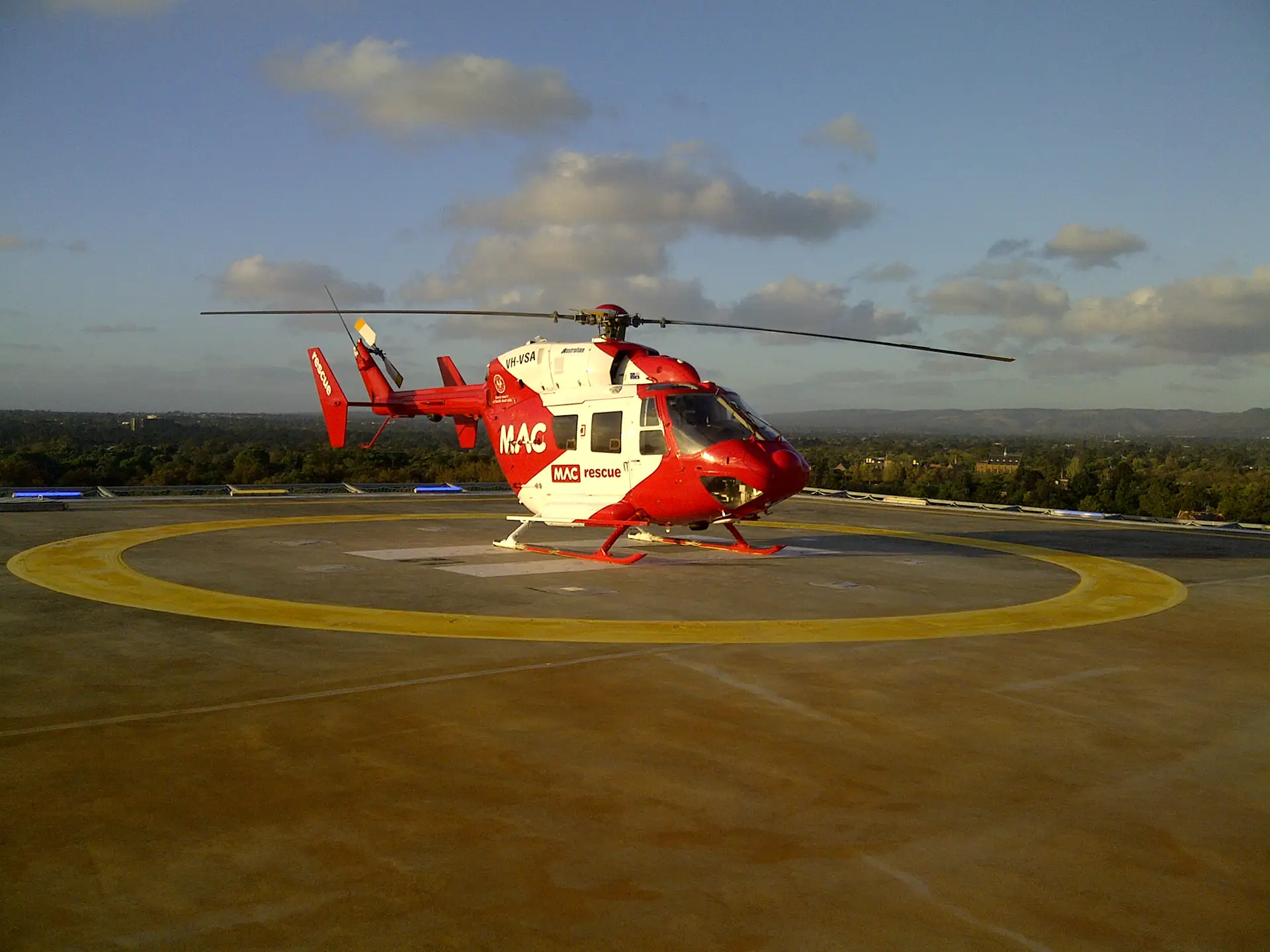
A good case study is a 2013 incident where a medevac helicopter was recovering 85 or 90 miles back to the Royal Adelaide Hospital in South
Australia and had a significant departure from controlled flight. The ATSB found no evidence of mechanical or system fault but determined
that the helicopter was being operated at a weight, density altitude, airspeed and in meteorological conditions conducive to the onset of
retreating blade stall. The violent and un-commanded pitch up and roll left were consistent with the onset of that condition, and the
pilot’s instinctive action of pushing the cyclic control forward delayed recovery from the stall. I can talk about this because the aircraft
captain was me. It was a BK117, and we were at max’ all-up-weight on takeoff, with two pilots, a doctor, a nurse and an intubated patient on
board. We entered the cruise at 5,000ft and noted a minor hydraulic anomaly. At that point the aircraft pitched up – I’d say it was close to
the vertical – and then it rolled on its back and dived towards the ground. We recovered the aircraft, but there were about ten seconds of,
shall we say, ‘extreme concern’.
Now, there are some interesting lessons about decision-making from this incident. As the aircraft pitched up towards the sun, I pushed full forward on the cyclic. This was an instinctive reaction that exacerbated the stall. The aircraft rolled to the left, and again instinctively, I added full right cyclic and brushed the back of my hand over the ICS panel. Of course, the controls didn’t do anything because we were no longer flying, but this turned every radio and navaid to full volume so now, I’ve got all this noise and static in my ears. The recovery was hampered by poor communication, using shouted commands and hand signals, but we managed to recover and made it back safely to the ground with no one injured.
Going over the decisions, we didn’t need to be at max’ weight. We’d fueled up to the kilo to give us IFR reserves and a little extra, but it was a VFR day. That’s an example of normalized decision-making that added unnecessary risk – we always operated IFR. I decided to sit at 6kts below Vne, which could be argued to be an insufficient buffer because we went through some turbulence, and it spiked. Then we get to the initial actions when the aircraft pitched up and I made the wrong decision to push the cyclic fully forward, trying to push it through the instrument panel when the correct action is to ‘calmly’ lower the collective. That was an intuitive decision and incorrect, but I have no doubt I would initially do precisely the same thing again in the simulator tomorrow because it’s the automatic, subconscious action developed over years of controlling normal deviations in aircraft movement.
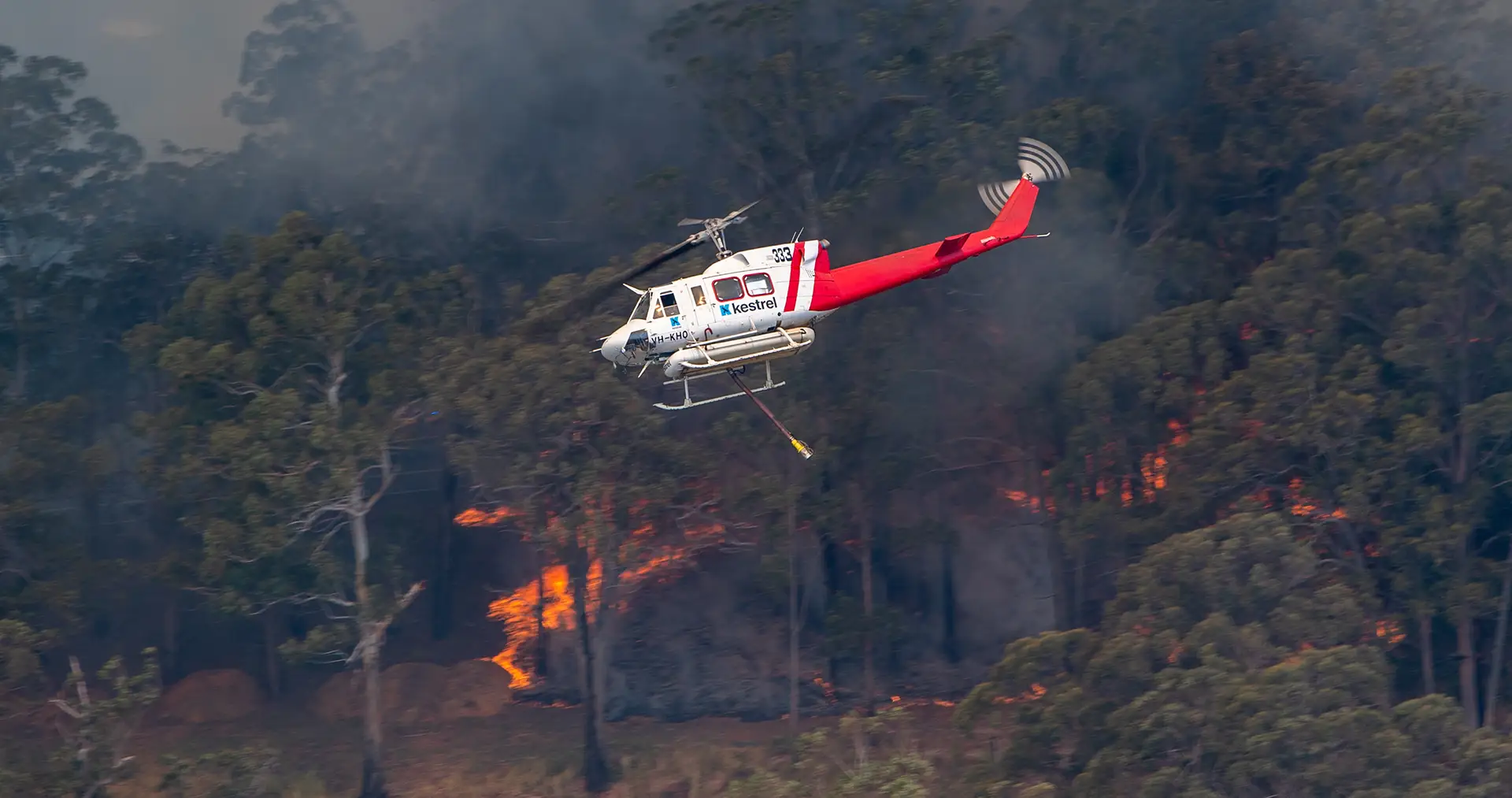
Barriers to effective decision-making were communication and anxiety. Not only were we trying to regain control of the aircraft, but we had the passengers and a patient in the rear, and we had to consider their safety and needs. Overall, my takeaway from this incident is to expect the unexpected. The two occasions that I’ve made a distress call when I thought my life was in imminent danger have had nothing to do with the flight manual, even though we spend hundreds of hours studying it and all the failures it details. Other than this incident, I had a part of a blade fail in a Huey in Bougainville and what do you do about that in a single-engine helicopter? Enter auto! Sets you up pretty well for most non-nominal situations. So, expect the unexpected and realize that experience isn’t always the answer.
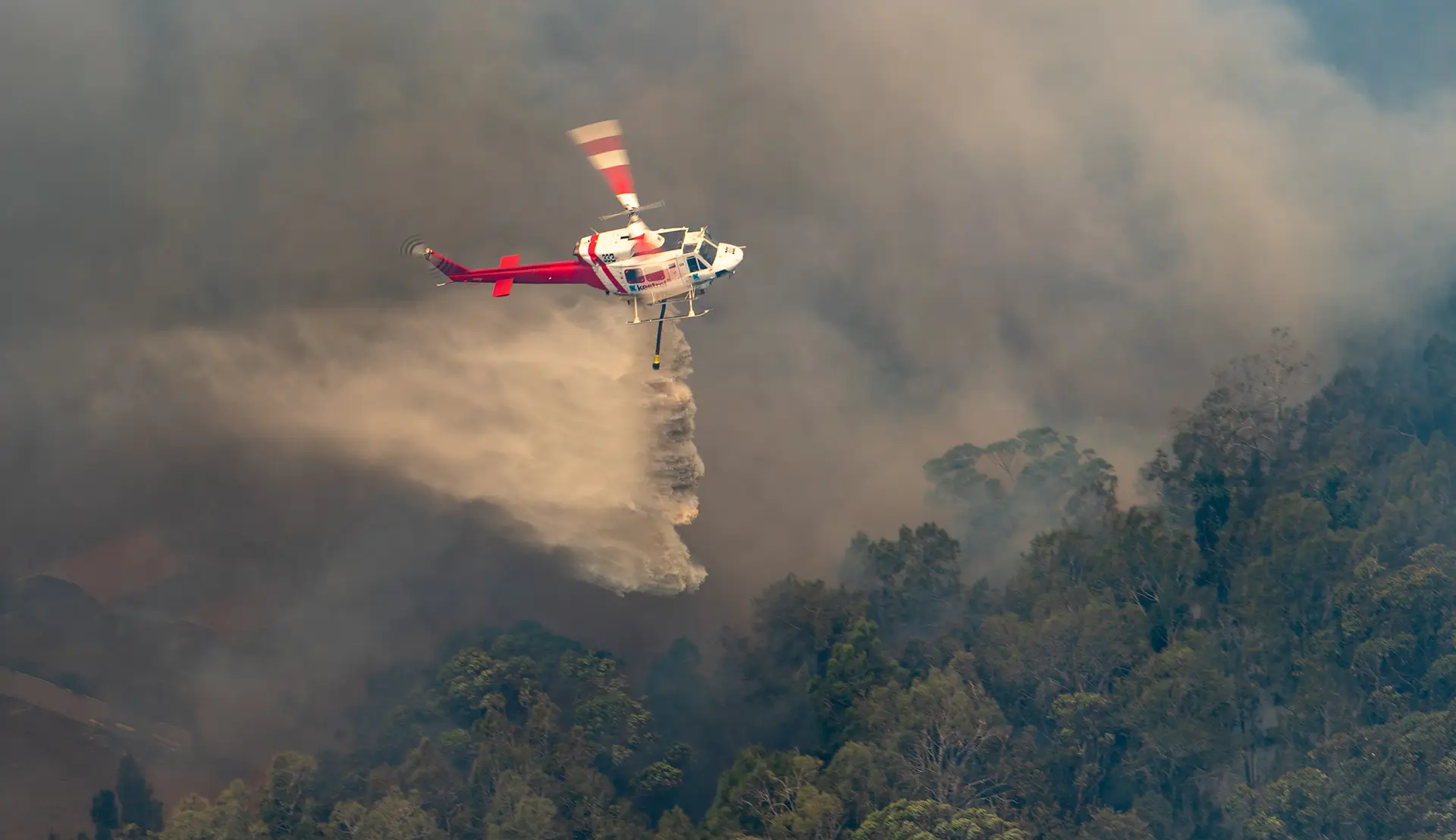
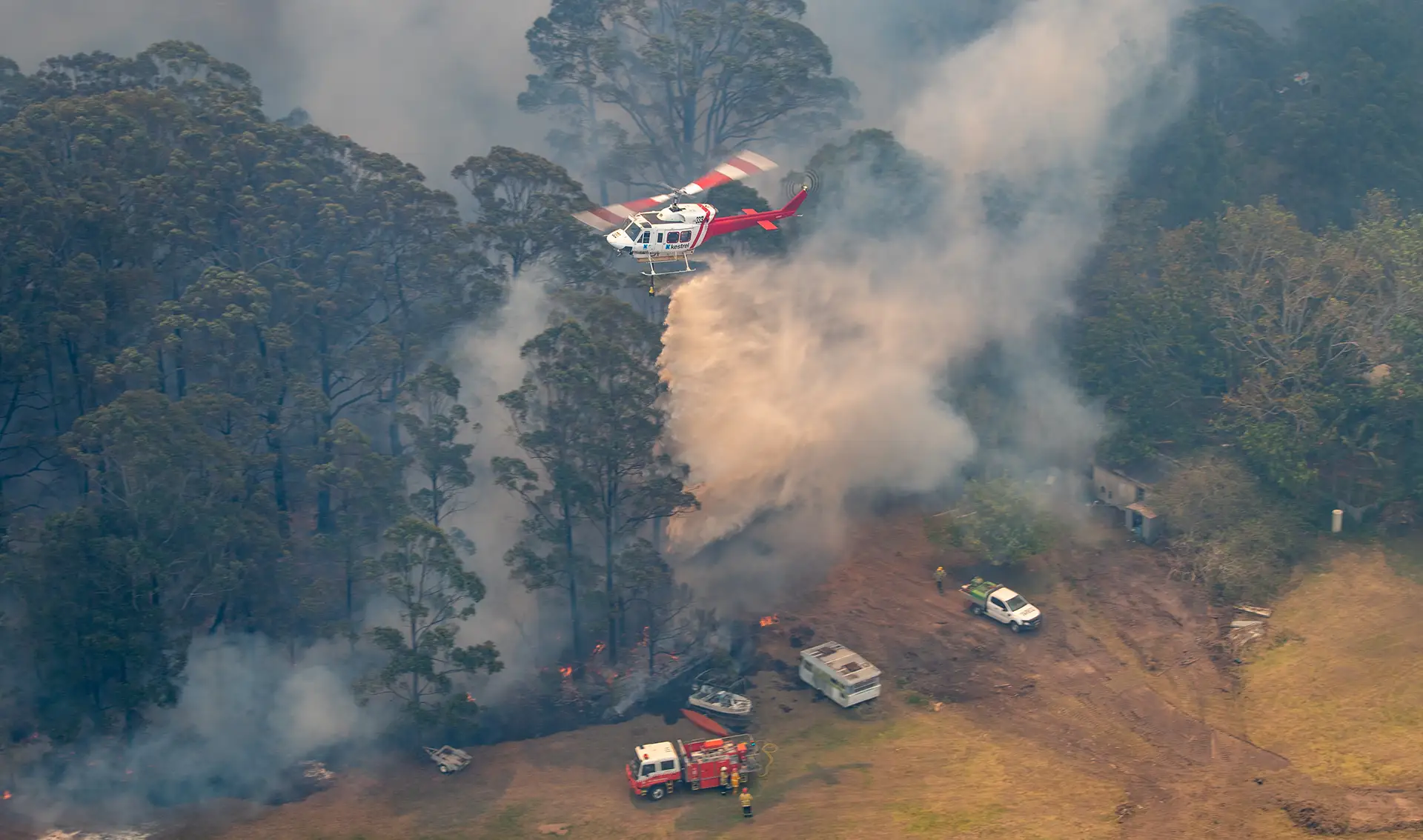
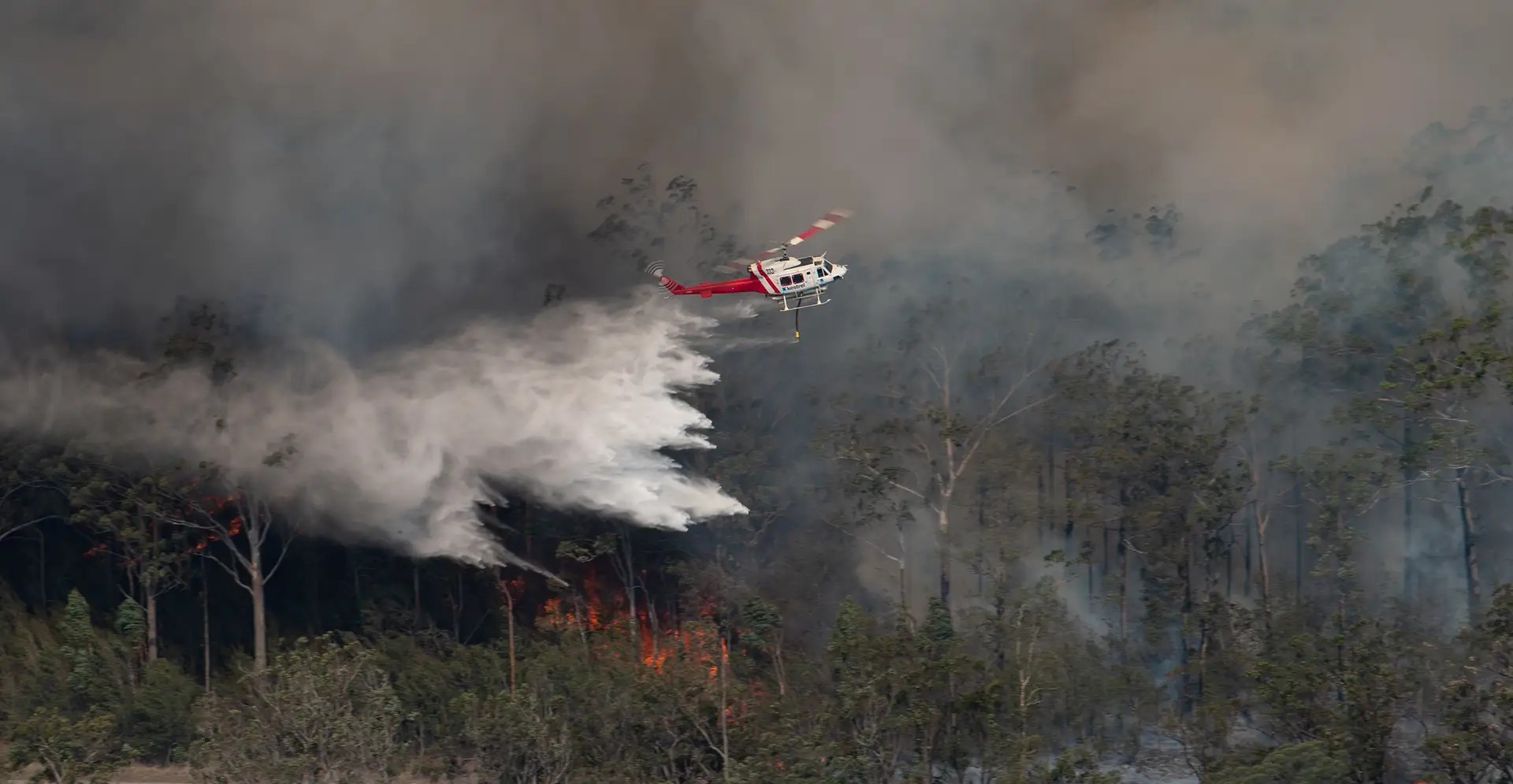
Several weeks ago, I was sent to a fire and was asked to just cool it down and attend to any active flame around the edges. Remember that I’d had seven years of my mentor telling me never to do downwind suppression drops. While surveying the site, I noticed this little pocket of flame in a steep rocky gorge, and it continued to develop as time passed. I thought I’d better deal with it as it kept developing, but its location made it almost impossible to do an upwind drop with the tanked machine I was flying. I planned to attempt it after the wind started to die down, dropping downwind with a light fuel load and a planned escape route. I made several drops, but despite the attempts, I failed to drop accurately. Finally, while climbing away after an unsuccessful attempt, I noticed everything around this fire was already black. I’d just been trying to achieve something that had absolutely no effect on the eventual impact of the fire. So why did I go against years of training by my mentor? Pride and ego, two significant players in our game, had funneled and channeled my thinking, fixating on a small target that had no relevance.
None of what I’ve said is new, but we need to address why we are seeing a recent increase in decision-making related incidents. Is
technology's rise reducing our capacity to make effective decisions in a given time and space? Is it reduced experience across the board? Is
all the expertise aging, and we’re getting this fear and gap with technology? Is it regulation? Is it organizations focusing on being
audit-ready and compliant instead of fostering and mentoring the development of their people? Is it a perception that a robust safety
culture and people filling all the key positions make an operation safe? It is none of those and could be all of those. It’s nothing in
isolation but we are indeed in a situation where we need to discuss it.
Decision-making for the next generation is changing. When I was going through school I had to work for a decision. I had to go through the encyclopedia (if I had one), look up what I wanted, research it and draw my conclusions. For today’s emerging generation, those decisions are given to them, and it goes back to my comments about navigational augmentation, giving us answers and reducing our readiness to determine them ourselves. It’s up to us to recognize that these issues are real, and they’re only going to become stronger and more influential.
Humans generally have the luxury of being able to stop, to pause and observe situations before determining the best cause of action. In the maritime and aviation worlds, we don’t have that luxury. We can’t just hit the pause button, and even if we decide to turn around, we’ve still got to move forward to complete a turn. An operational inertia exists. That means we must prevent ourselves and our people from getting to the point where there’s no other alternative but continuing towards a hazardous situation without the skill sets to manage the outcome. It comes down to us as an industry, as seasoned aviators and engineers, starting to recognize and identify in our less experienced colleagues the hazards, stressors and pressures that they face every day and starting to alleviate those by providing alternate solutions. There has to be a cultural shift on an industry-wide level, not just an organizational one. Culture, being ideas and behaviors moulded for a common mindset. That is what we need as an industry going forward, because it’s so much more powerful than simply adding more regulation and yet more imposed procedures.