 HOME
HOME





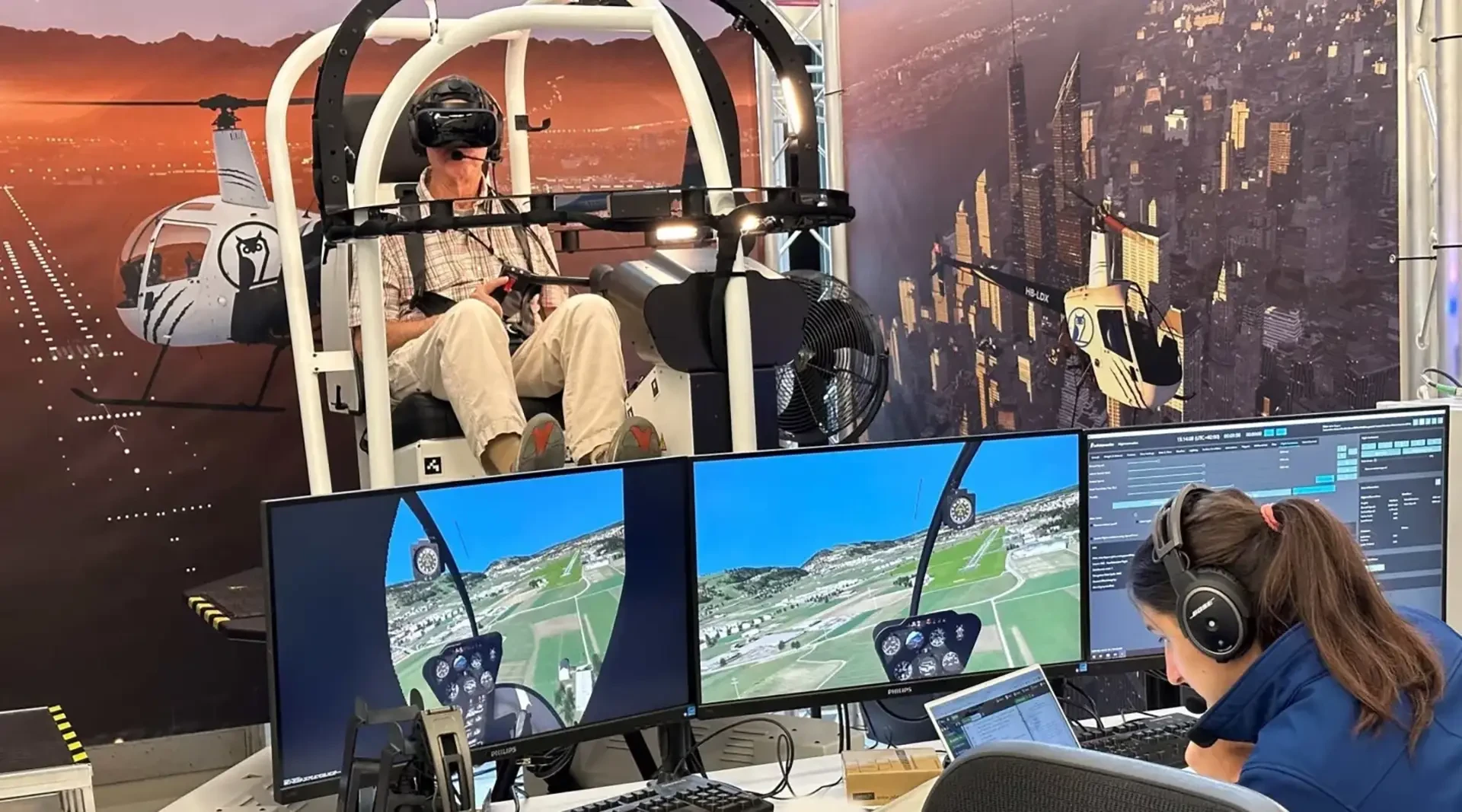
For decades, helicopter training has centred around massive, exquisitely engineered full flight simulators. But technology is disrupting, and Jonnie Rockingham-Smith looks at what’s real today, what’s coming next, and how regulators are - slowly - reshaping the rulebook.
Full flight simulators (FFSs) are the gold standard and priced accordingly. But a quiet revolution is underway at the lighter end of the spectrum. Virtual-reality (VR) trainers and compact flight training devices (FTDs) now deliver surprising levels of fidelity and accreditation, at a fraction of the footprint and price.
From ‘nice-to-have’ to credible training
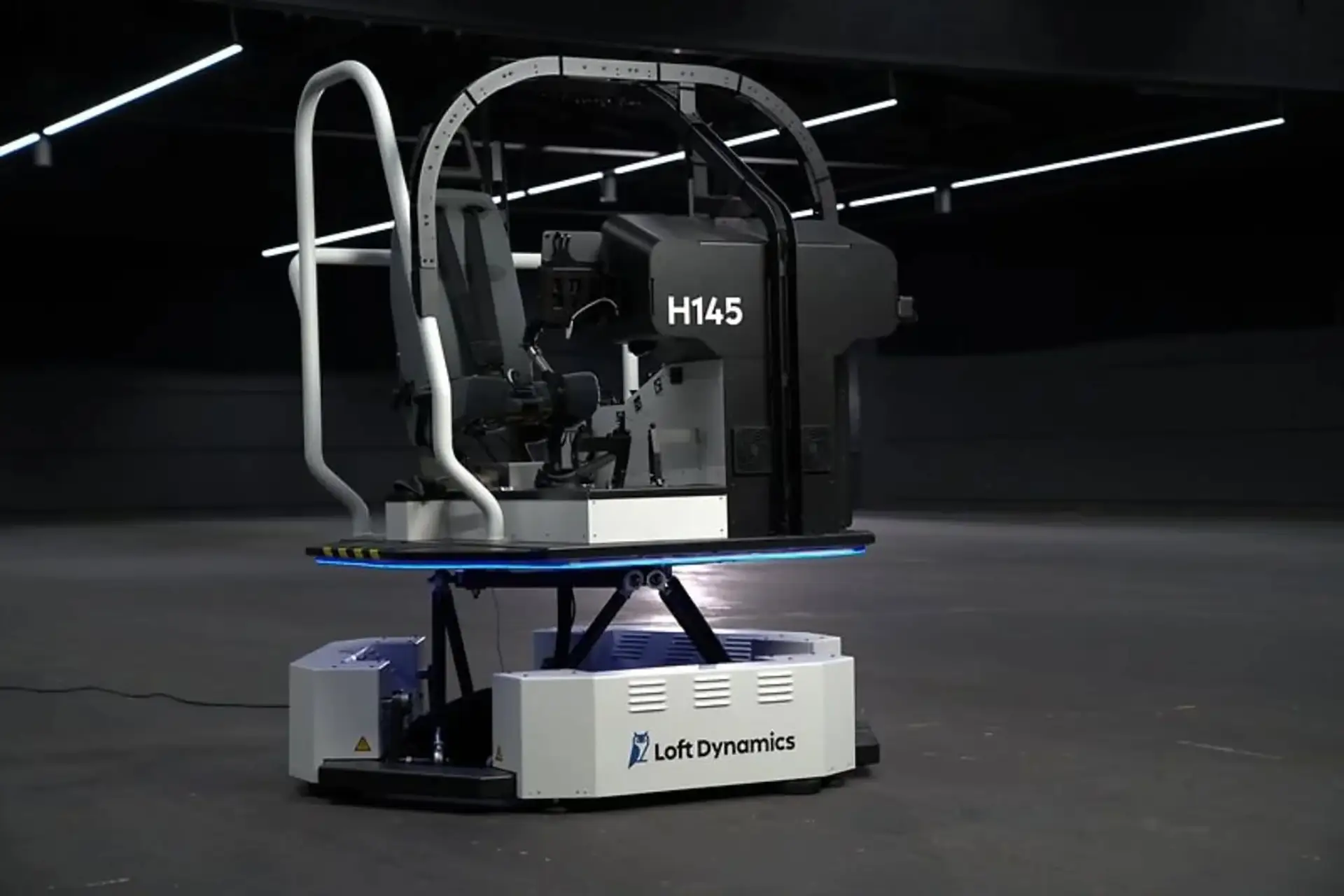
The breakthrough moment for lightweight helicopter sims was not technical; it was regulatory. In July 2024, the Federal Aviation Administration (FAA) qualified Loft Dynamics’ Airbus-approved H125 VR helicopter simulator for pilot training credit under Title 14 of the Code of Federal Regulations Part 60 (Flight Simulation Training Device Initial and Continuing Qualification and Use). This allowed U.S. operators to log credit towards ratings and complex scenarios such as engine failures, pinnacle operations and sling-load work on an approved VR FTD. Having seen it in action at Verticon in Dallas, Texas, earlier this year, I can attest to its impressive credentials – I cut my rotary teeth flying the Eurocopter AS350, an earlier version of the H125. My lasting memory of Loft’s simulator experience was one of complete immersion; the novelty of wearing a headset and seeing computer-generated hands matching my every move in the cockpit felt second-nature in a matter of a few minutes.
Over the pond, the European Union Aviation Safety Agency (EASA) is increasingly working in tandem with the FAA. In 2024 the two organisations pledged to work together to meet the challenges of a fast-changing and evolving industry:
“The aviation industry is in the fastest period of change since commercial flights began. New technologies are urgently needed to make the industry more sustainable. Other innovations, for example in artificial intelligence, are emerging rapidly and we have a generational change in the workforce,” said Florian Guillermet, Executive Director of EASA. “It is more important than ever that international aviation regulators work together to accompany the changes and ensure safety needs are always met.”
At EASA, the Certification Specification for Flight Simulation Training Devices (Helicopters) (CS-FSTD(H)) framework has long governed how helicopter devices are qualified—FFS Levels A–D, FTD Levels 1–3, and so on. Loft Dynamics has leaned into that framework; a change from EASA in Flight Crew Licensing regulations has removed the requirement for Full Flight Simulators to be prioritised over FTDs or the live aircraft for training, skill tests and proficiency checks for non-complex helicopters. With various offerings from the Robinson R22 to Airbus H125 and H145, Loft has been keen to highlight that training and checking credits move the VR experience from ‘adjunct’ to ‘integral’.
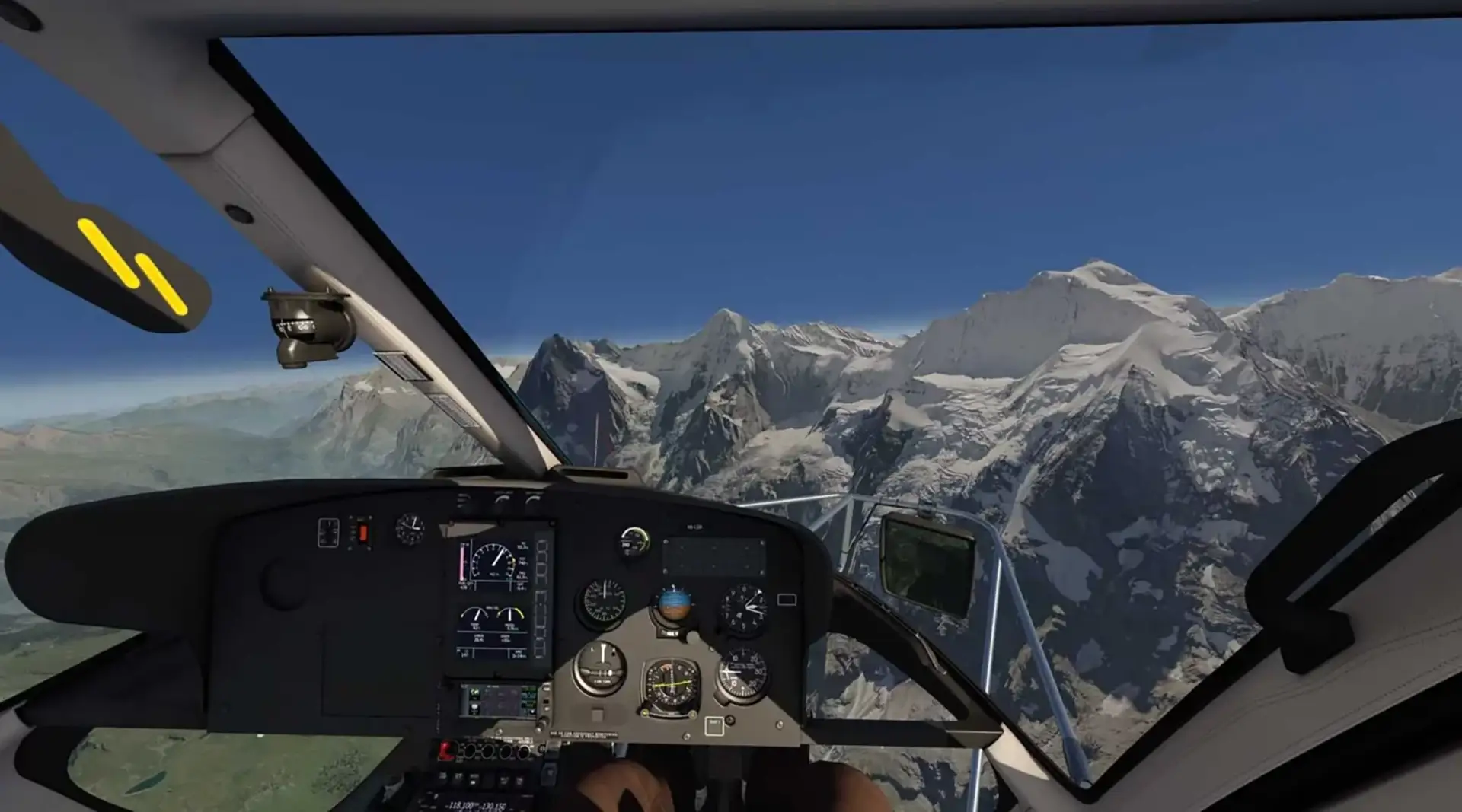
The other headline in 2025: Leonardo’s Virtual Extended Reality (VxR) system secured FAA Level 7 status, the highest level of FAA qualification for a Flight Training Device and a first for a VR-based helicopter trainer at that level. This has confirmed that compact VR devices can now meet some of the most stringent FTD criteria. For an industry that is increasingly hungry for throughput, quality and cost-efficiency, that’s a bit of a watershed moment.
Why lighter wins
Cost and access
Full-motion, dome-visual FFSs deliver excellent fidelity, but they tie up large buildings, infrastructure, prime-time booking slots and come with six-figure annual maintenance. VR-driven FTDs, by contrast, fit into modest rooms, can be turned quickly between sessions, and are, relatively, cheap enough to purchase in multiples for even modest training organisations. This supports distributed fleets; at bases, hospitals, offshore crew hubs, etc, so crews train where they work rather than flying to a centre. The result is that the utilisation versus demand curve inverts - instead of queuing for rare FFS hours, pilots can add short, frequent hops in ‘dead time’, improving currency.
Scenario density
Another win for the VR setup is the ease and flexibility of scenario authoring. Instructors can utilise local mountain summit pinnacle sites, bespoke confined areas, wire corridors, snow recirculation, or offshore decks with precise wind, turbulence, and lighting to reflect specific or unique training objectives. Police, medical teams and offshore crews, for example, can rehearse mission-specific profiles repeatedly until muscle memory sticks. Loft Dynamics and Leonardo are not alone in emphasizing realistic mission sets, ranging from powerline inspections to law-enforcement scenarios to rig work, that are hard to schedule in real life and risky to ‘practice’ live. Whilst such things are available in larger FFS, ‘freeplay’ scenarios are usually much harder and more costly to develop, manage and approve.
Motion and embodiment
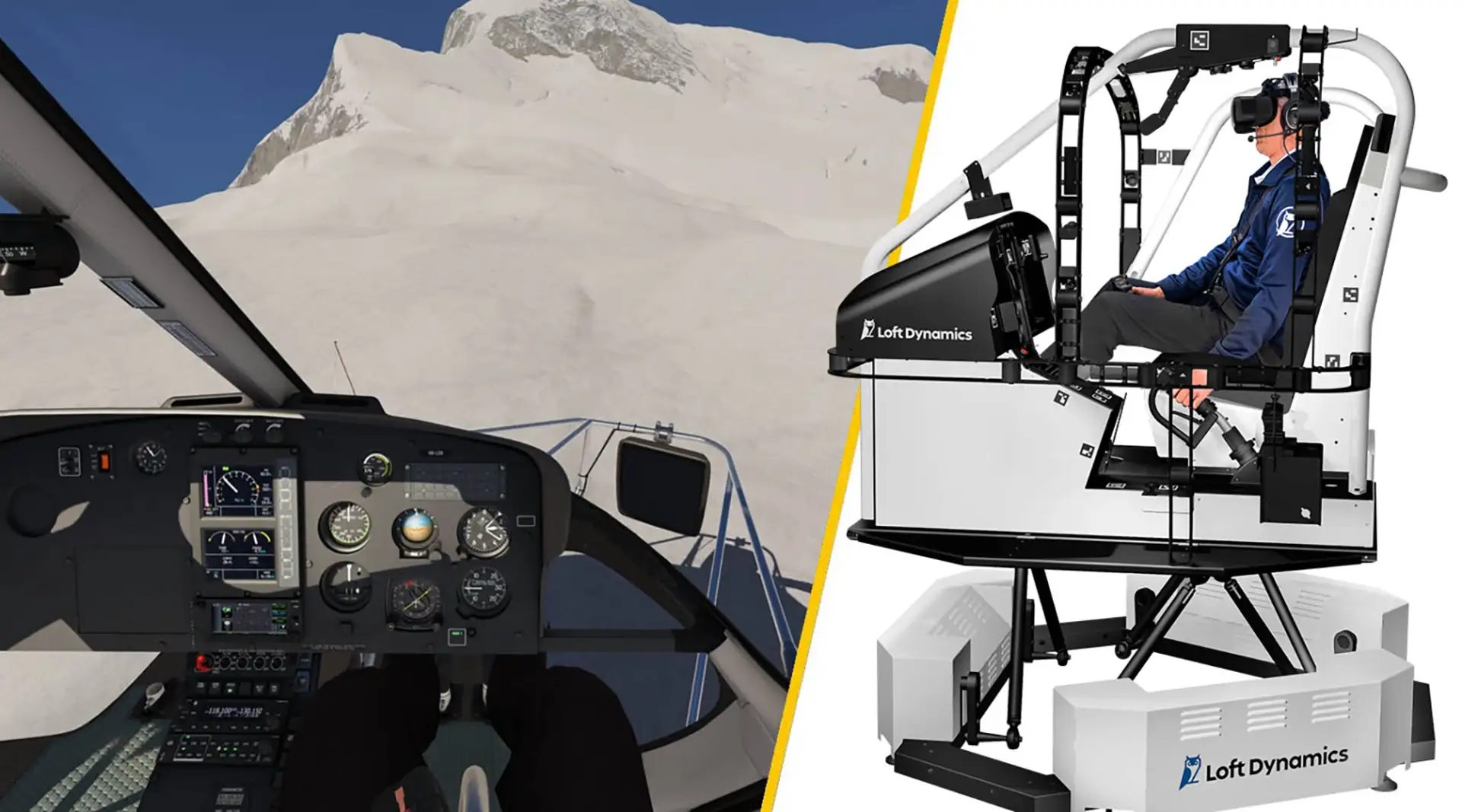
There are some of a more sceptical disposition that worry that VR without a substantial motion base can’t teach ‘seat-of-the-pants’ flying, but the newer compact platforms combine high-rate electric motion, tight head-tracking latency and accurate control loading with quick motion-onset to fool the body. The trick is not a brute-force sustained motion range; it’s cueing the vestibular system convincingly in the right frequency bands and synchronising those cues with high-fidelity visuals and control forces. Modern, lightweight rigs running electric motors instead of more traditional heavy hydraulics are now capable of reacting in just a few milliseconds – well within codified tolerances published in the regulations. This reaction time, called the ‘transport delay’, must be kept as low as possible to avoid pilot nausea. That said, if the rig motion occurs before the visual scene changes, that makes motion sickness even worse!
Data gathering
Sims double as sensors. Every switch flip, every torque spike, every rotor RPM excursion becomes data for after-action review and fleetwide insights. It is only relatively recently that the importance of capturing these metrics has been truly realised. As more devices become accredited, operators can use statistical power by tying training analytics to safety metrics (for example, first-line check pass rates, stabilised approaches, energy state management). That loop was harder to close when only a handful of FFS hours existed per pilot per year. A quick look at steamcharts.com, which tracks users on Digital Combat Simulator (DCS, one of many online flight simulators) states ‘peak player’ numbers well in excess of 1,000 per day, with an all-time high of 3,328. That’s a staggering amount of data points for the developers to fine-tune their product. The quantity of this data supports the concept and utility of the ‘digital twin’, where a computer model tracks usage and predicts component wear and failure across the lifecycle of the aircraft. Airbus, Boeing, NASA, Rolls Royce and GE Aviation to name but a few all use digital twins and the overall trend is moving from R&D applications into operations.
The rulebook is catching up - slowly
Regulators are evolving, but large frameworks move cautiously by design. FAA Part 60 still governs how devices are initially and continuously qualified; new tech must be mapped onto those criteria or accommodated by targeted policy. EASA’s CS-FSTD(H) remains the reference in Europe; however, EASA, in their document Opinion No. 01/2025, has proposed consolidating and modernizing FTD standards in line with the International Civil Aviation Organization (ICAO) Document 9625 (Manual of Criteria for the Qualification of Flight Simulation Training Devices). This is, in essence, a function-and-performance approach—an important shift that explicitly aims to reduce duplicity and integrate aeroplane, helicopter, eVTOL and tiltrotor concepts for FTDs into a unified document. This evolution matters for VR and mixed-reality (MR) trainers because they don’t fit neatly into old, hardware-driven categories. The ICAO 9625 philosophy focuses on what training function is achieved and how well, versus how the device is physically constructed. EASA suggests that aligning with 9625 will open the door to flexibility and novel device architectures without the need for constant ad-hoc exemptions.
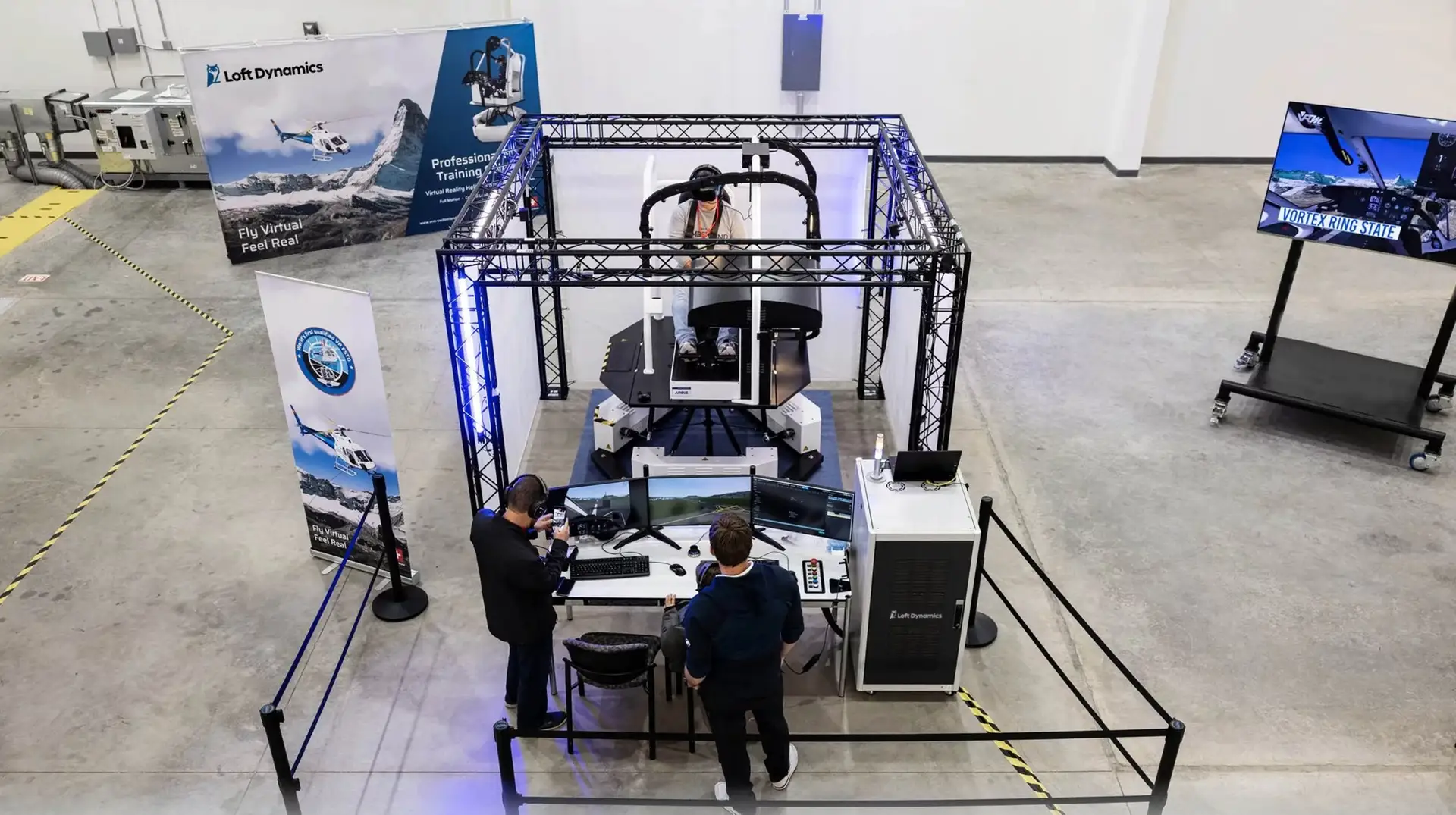
Even so, industry consensus is that rulemaking lags the pace of headset, rendering and tracking improvements. That lag has created a temporary patchwork where VR devices secure accreditation device-by-device (as with Loft Dynamics’ VR FTDs and Leonardo’s VxR Level 7), while the broader, harmonised categories are still being refined.
What you can credibly train today
Type conversions and checking. With accredited devices, operators can move chunks of type rating, line checks and emergency-procedure training into VR, preserving scarce aircraft/FFS time for edge cases or multi-crew coordination.
Mission-specific profiles. HEMS/air ambulance NVG departures, mountain approaches with wind shear, offshore deck work in marginal conditions, wire crossings in haze—it’s now practical to rehearse these repeatedly, including the “abort points” and CRM comms timing, without the safety trade-offs of real-world practice.
Emergency handling and energy management. Autorotations, tail-rotor failures, FADEC issues and hot-and-high performance planning are ideal for lightweight sims because you can repeat them safely, swiftly, and with instrumentation overlays that make the 'energy story' obvious to students.
IFR refreshers in VFR fleets. For operators with IFR-capable helicopters but VFR-heavy schedules, VR devices enable low-overhead ‘currency sprints’ that keep scan discipline and procedures sharp.
The near future: five shifts to watch
- Function-based qualification becomes mainstream. Expect EASA’s 9625-alignment work to crystallise into a single, more flexible standard that recognises what the device does for training outcomes rather than how large its motion base is. That should in turn reduce some of the challenges of qualifying innovative devices and accelerate international harmonisation.
- Hardware cycles every 18–24 months. Unlike a FFS, VR/MR devices benefit from consumer use and feedback. Resolution and field-of-view improve; passthrough latency drops; mixed-reality compositing gets cleaner. Whilst maintaining the flight models and environments, operators can ‘refresh’ the visual stack without having to re-engineering the entire simulator.
- Tighter OEM-sim ties. Leonardo’s VxR highlights the value of OEM data, especially for edge-of-the-envelope and failure modes. Expect more OEM/device vendor partnerships to spread across popular types (H125/H145 today; AW169/AW139 and medium twins next), yielding richer aerodynamic and systems models.
- Scenario libraries and marketplaces. The hardest part of training isn’t rendering pixels—it’s curating relevant scenarios. Vendors will package validated scenario sets (for example, ‘Alpine Winter HEMS’, ‘Gulf Deck Operations’, ‘Urban NVG’) with performance standards and debrief analytics, making it easier for operators to align sim time with SOPs and training criteria.
- Data-driven personalisation. With consistent device telemetry, operators can build pilot ‘skill fingerprints’ and target the gaps; degraded visual environments, hot-and-high, mountains, upset recoveries etc. Expect personal ‘dashboards’ that correlate sim proficiency with line-check outcomes and integration with engineering milestones and aircraft HUMS events.
What this means for military and civilian operators
Military training: Will continue to need large-envelope, high-stress environments - multi-ship formation, embarked operations, degraded visual environments and weapons employment - where dome visuals and large motion platforms shine. But squadrons can offload a surprising number of training events to VR for tactics rehearsal, instrument procedures, emergency drills, and crew coordination. The benefit is throughput- many more short, distributed sessions between major events, not to mention the potential to take a training device with them on deployments for continuation training and, potentially, even mission rehearsal.
Civilian operators: HEMS, offshore, utility, law enforcement and tourism all live on tight margins and unpredictable schedules. Lightweight VR FTDs placed near the line (in a base office, a quiet corner, a police hangar) turn downtime into deliberate practice. The ability to spin up a 30-minute NVG approach refresh before night duty or rehearse a bespoke rooftop landing procedure with a new crew pairing is a powerful safety lever.
Practical adoption playbook
- Start with the syllabus. Map your training objectives to a function-based plan: what manoeuvres and decision points does the sim need to cover? Then choose the device that meets those functions.
- Buy for fidelity where it matters. Control force feel, latency and visual stability matter more than raw pixel count. Evaluate autorotation cues, hover stability, and upset recovery fidelity. Use EASA/FAA objective tolerances (e.g., FTD Level 3) as your comparator.
- Plan for accreditation early. Work with vendors who have recent, type-specific qualifications and a track record with your regulator. For example, both Loft Dynamics and Leonardo provide concrete examples of VR systems earning significant credit in both EASA and FAA contexts; leverage their documentation trail.
- Design for iteration. Assume you’ll refresh headsets and graphics processors every 18-24 months and negotiate upgrade paths that preserve your qualification status.
- Instrument your training. Capture performance metrics and debrief with data- especially for approaches, inadvertent IMC recoveries and energy state management. Over time, align sim metrics with safety outcomes.
Bottom line
Lightweight VR simulators are no longer experimental toys. With FAA and EASA qualifications now in hand for multiple systems - including Loft Dynamics’ VR FTDs and Leonardo’s VxR—they have crossed the credibility chasm. They won’t replace (yet) top-end FFSs for wide-envelope test, certification, or complex multi-crew mission sets, but for the everyday work of building, assessing, and sustaining helicopter skills, they deliver a compelling mix of access, fidelity, and cost. The future looks less like a handful of cathedral-scale simulators and more like networks of nimble, accredited VR devices quietly raising proficiency across the fleet, sortie by sortie.