 HOME
HOME





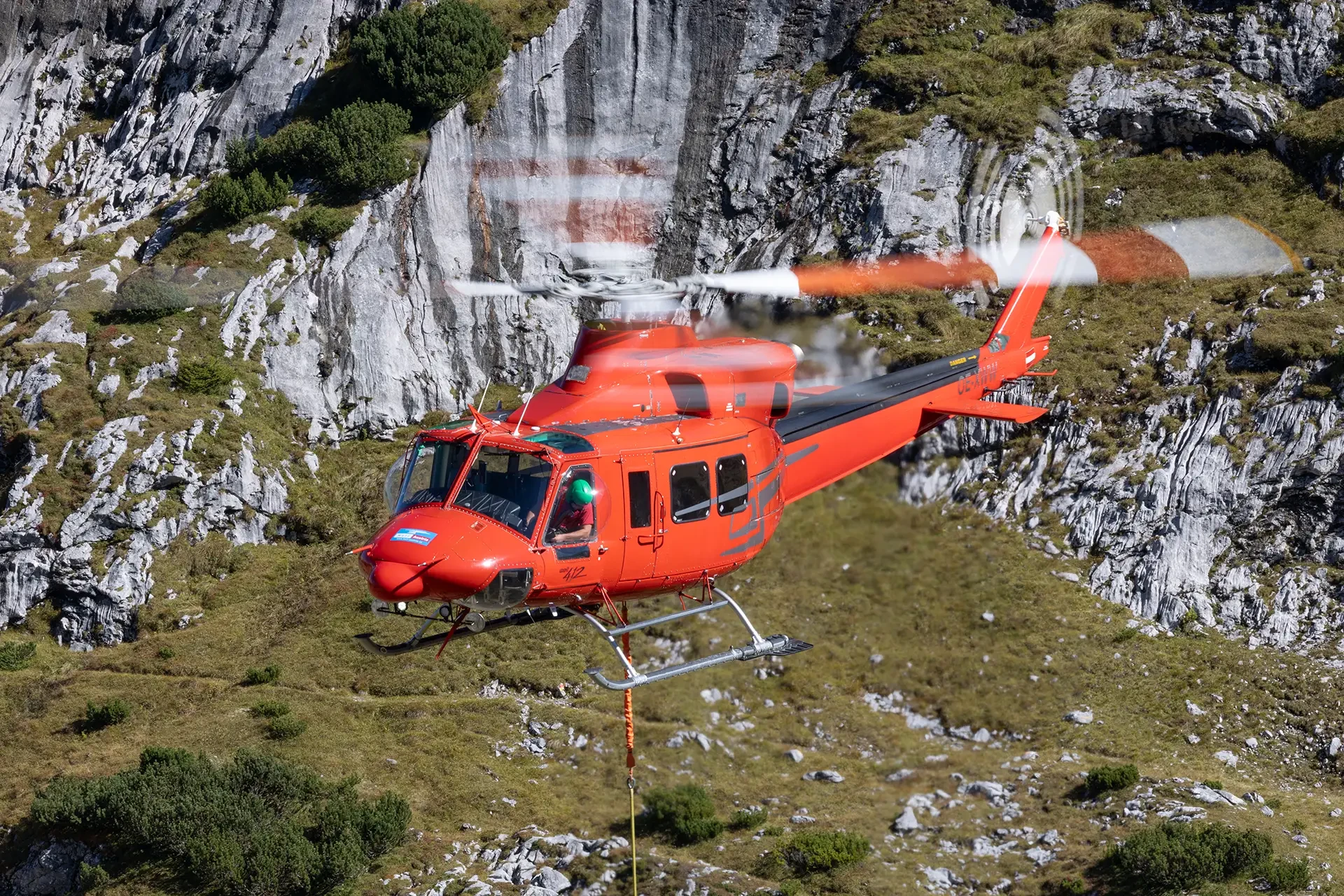
Heli Austria GmbH has taken a pragmatic path to modernization. Rather than purchasing new helicopters, the company has invested in upgrading its existing Bell 412 fleet by turning classic airframes into high-performing Bell 412HP equivalents. The conversion, completed in cooperation with Bell Textron, replaces the drivetrain and key components to deliver a 13 percent power increase, a larger torque margin, and significant operational gains without the multimillion-dollar expense of new aircraft.
For CEO Roy Knaus, the decision was about engineering logic as much as economics. “When we did the math,” he said, “buying new simply didn’t make sense. The upgrade gives us modern performance and keeps the aircraft we already know inside and out.”
The Case for Modernization
At a time when many operators replace older helicopters with factory-fresh models, Heli Austria has taken a different approach. The company’s Bell 412s had proven reliable in high-altitude construction, firefighting, and utility work across the Austrian Alps. These airframes have decades of service behind them but are still structurally sound. Rather than retire them, Knaus saw an opportunity to extend their value. While new 412EPXs now list at more than US$16 million, Bell’s approved HP conversion kit costs roughly US$1.2 million, plus installation. “For that,” Knaus explained, “you get the full drivetrain improvement and a significant power increase. From a long-term return-on-investment point of view, it’s the much better move.”
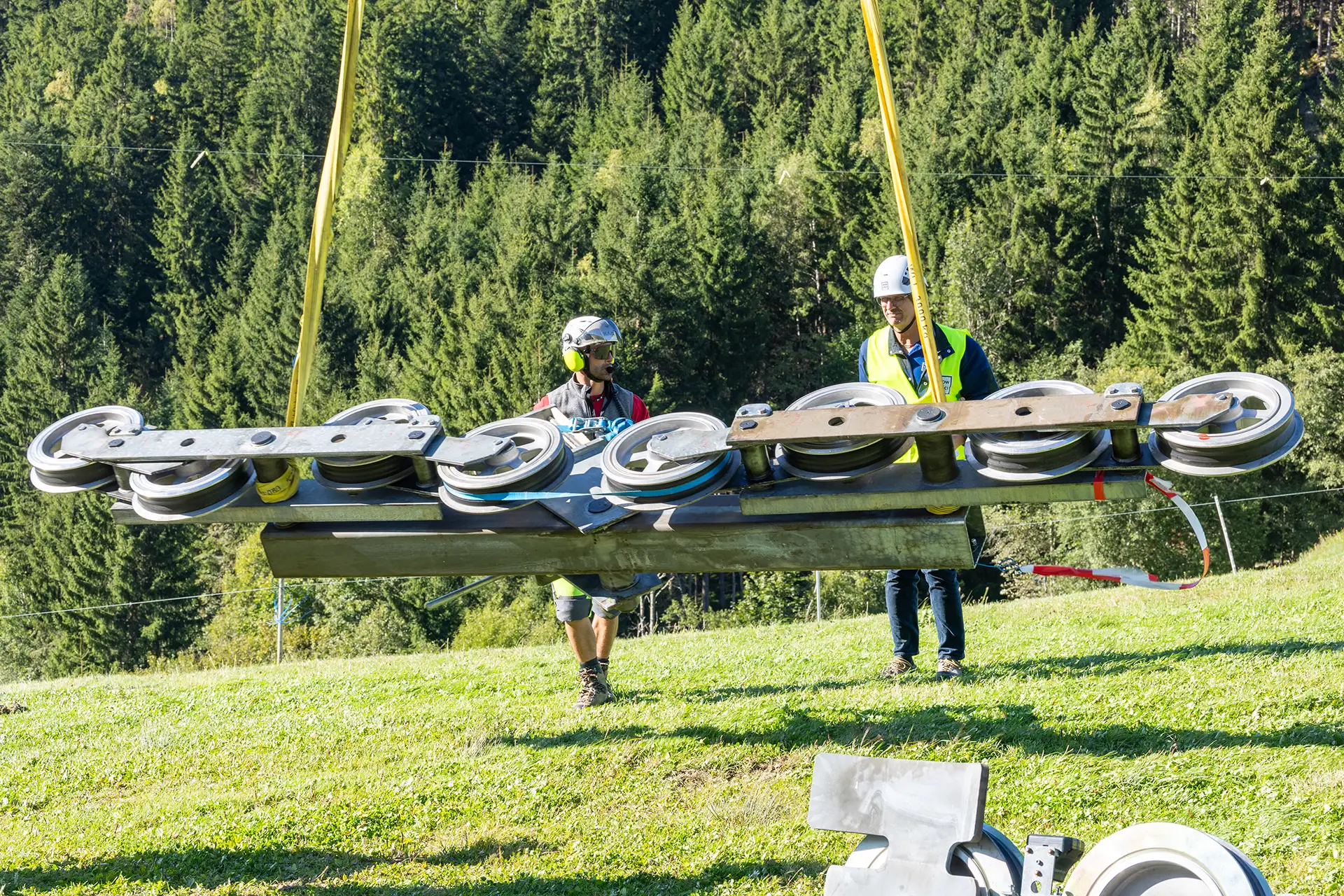
The economics alone were compelling, but the operational logic was equally important. Heli Austria’s medium fleet spends most of its time performing mountain sling-load missions, moving materials, prefabricated components, or powerline sections, often between 3,000 and 7,000 feet in variable temperatures. At those altitudes, torque margin is critical. The +13 percent increase in horsepower translates to roughly 600lbs of additional external-lift capacity in the conditions Heli Austria faces daily. “Most of our Bell medium work happens below 6,000 feet,” Knaus said. “Having that extra torque margin gives you flexibility in the mountains and a safety buffer when the temperature rises.”
That margin isn’t only about payload. It also means the aircraft can sustain performance longer into each duty cycle, especially as density altitude climbs. At high gross weights, a few percentage points of torque can mean the difference between holding a hover or having to offload. The upgrade keeps the aircraft comfortably inside its power envelope under conditions that would have pushed a classic 412 to its limits.
Engineering the Upgrade
The conversion from the classic 412 to HP specification centers on the drivetrain. The kit introduces a new transmission, tail-rotor driveshaft, and mast-torque system, along with modified 42- and 90-degree gearboxes. The updated components draw from the later Bell 214 lineage, a design known for durability under sustained high-torque operation.
The most visible change is the new transmission assembly, which now matches the torque capability of the HP and EP series. The internal gearing and lubrication systems have been upgraded to manage increased thermal loads and provide other maintenance benefits, thereby reducing lifecycle costs for operators who routinely operate aircraft in demanding utility roles.
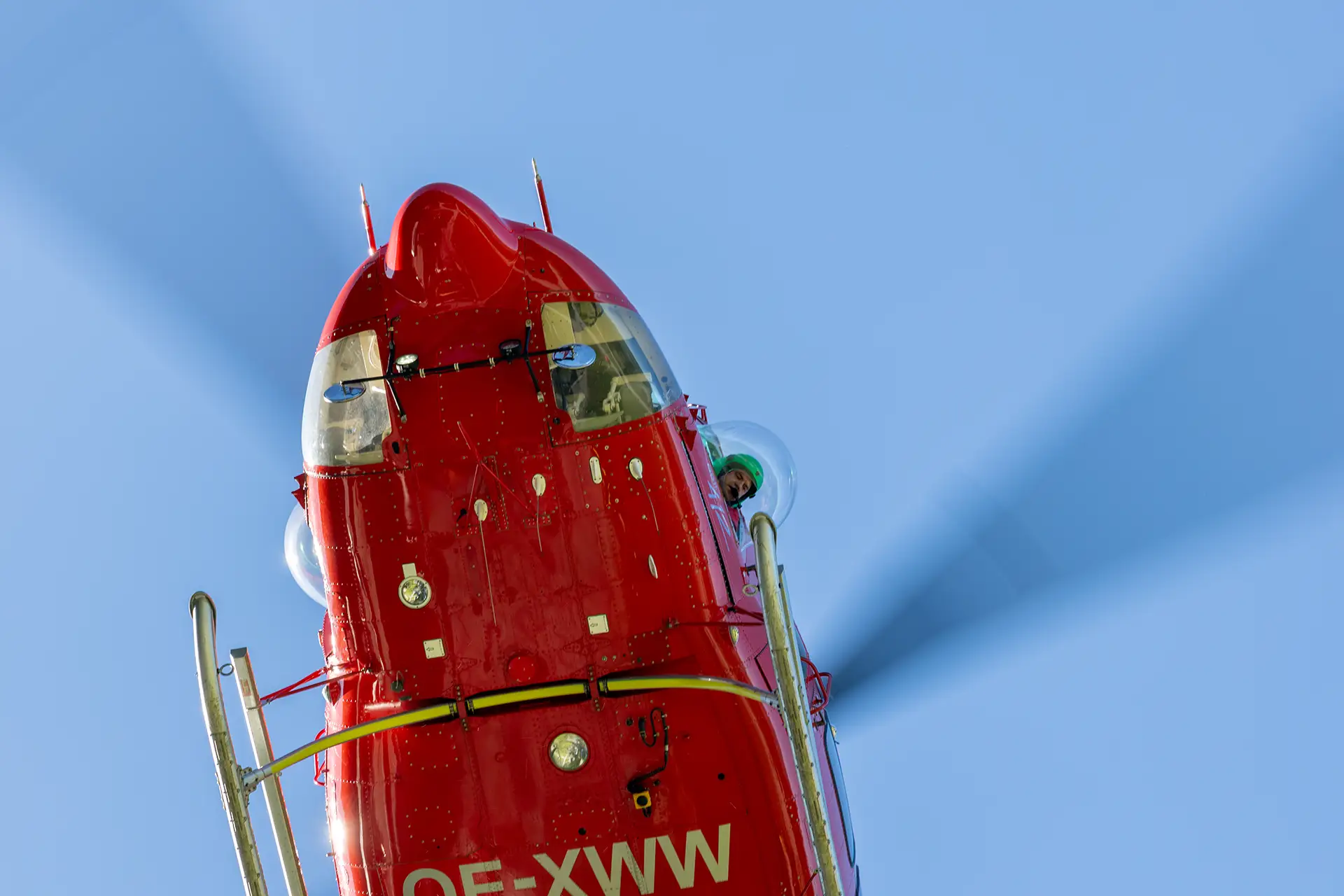
A new mast-torque indication and warning system adds another layer of safety. Earlier classics provided only analog warnings when 100% was exceeded; the upgrade introduces an electrical monitoring circuit that gives pilots a visual warning when approaching torque limits. For long-line operations, where attention is divided between the load and the instruments, that feedback is valuable.
The tail-rotor drive system also benefits from reduced maintenance requirements. The new shaft and coupling arrangement uses the 214-style spline system, which tolerates higher dynamic loads and eliminates recurring inspection items found on older assemblies.
“The modification itself isn’t rocket science,” said Knaus. “But verifying the structure to handle the extra torque is something only Bell could do.” Each airframe was stress-checked before modification to confirm its structural suitability. In Heli Austria’s case, previous reinforcements, such as newer tail booms and lift beams installed years earlier, made certification straightforward.
Heli Austria’s long-standing philosophy of keeping aircraft light also pays dividends. Decades of operational refinement have stripped unnecessary wiring, outdated systems, and redundant mission equipment from each airframe. “The older 412s are lighter than new builds,” Knaus said. “Even after the upgrade, we’re still below the empty weight of a factory EPX. That translates directly to payload and fuel flexibility.”
Certification and Process
The project began in coordination with Bell Textron engineers under an official service instruction. Heli Austria’s maintenance division performed the physical conversion at its St. Johann im Pongau base, while Bell provided engineering oversight and post-installation verification. The entire mechanical modification took less than three weeks once the components arrived, a testament to both preparation and the inherent modularity of the 412 platform. “We had everything planned down to the last fastener,” Knaus noted. “The Bell representatives came for the final checks and sign-offs. It was a smooth process.”
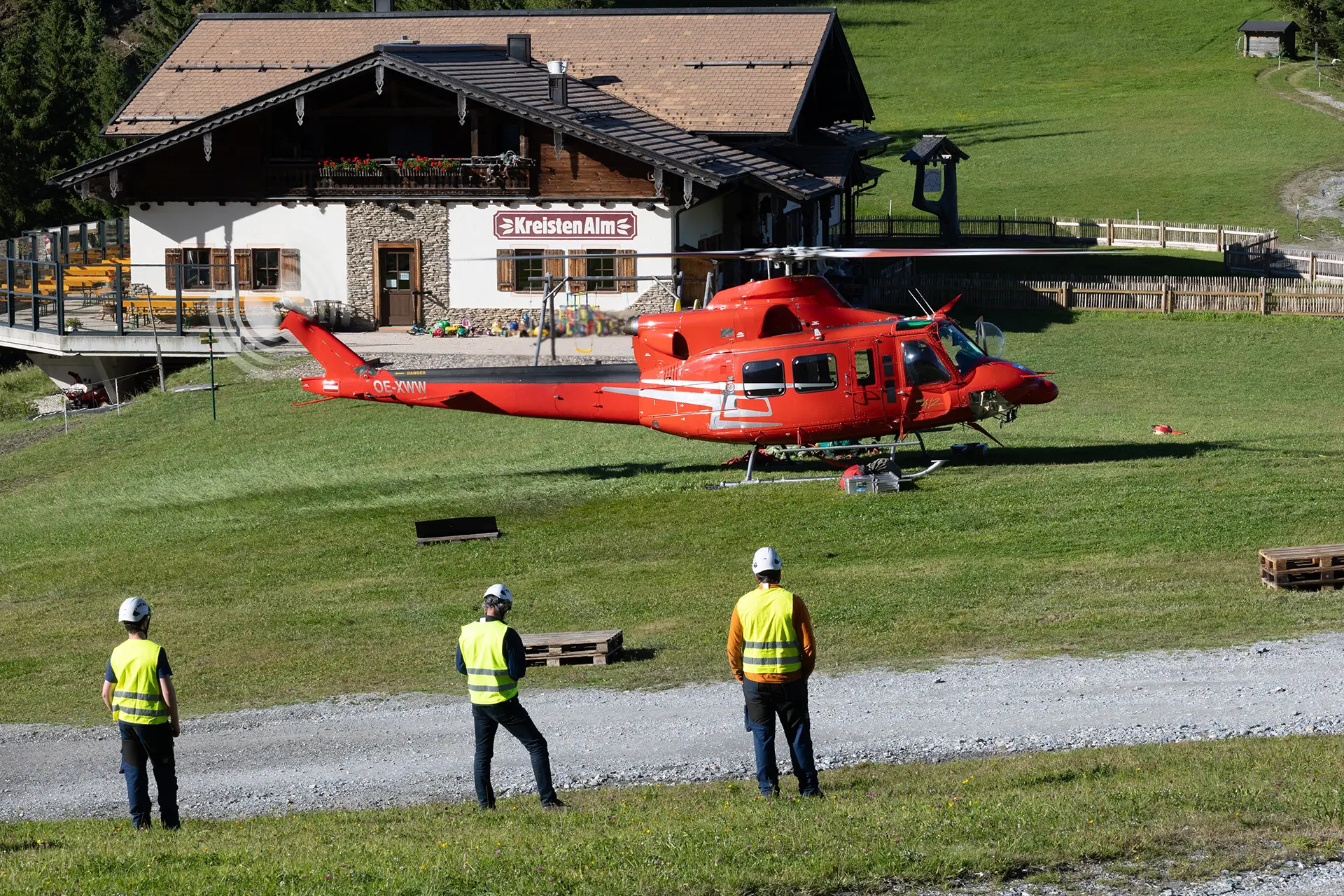
Because this was the first aircraft worldwide to undergo the conversion, the certification process unfolded in stages. The FAA issued provisional approval, allowing limited operation while the agency revised the 412’s type certificate data sheet. EASA certification is still pending but expected soon.
For now, Heli Austria operates under an interim authorization valid for eight months, which is sufficient for the company’s mountain construction season. “The important thing is that Bell is supporting legacy aircraft,” Knaus said. “They didn’t have to. They could have focused entirely on selling new helicopters. But they invested manpower and engineering time into keeping older airframes relevant, and that deserves recognition.”
Encouraged by the results, Heli Austria immediately ordered a second kit, scheduled for installation this winter. Lessons learned from the prototype are expected to shorten the next conversion cycle further, potentially reducing the downtime to just over two weeks.
Performance in the Field
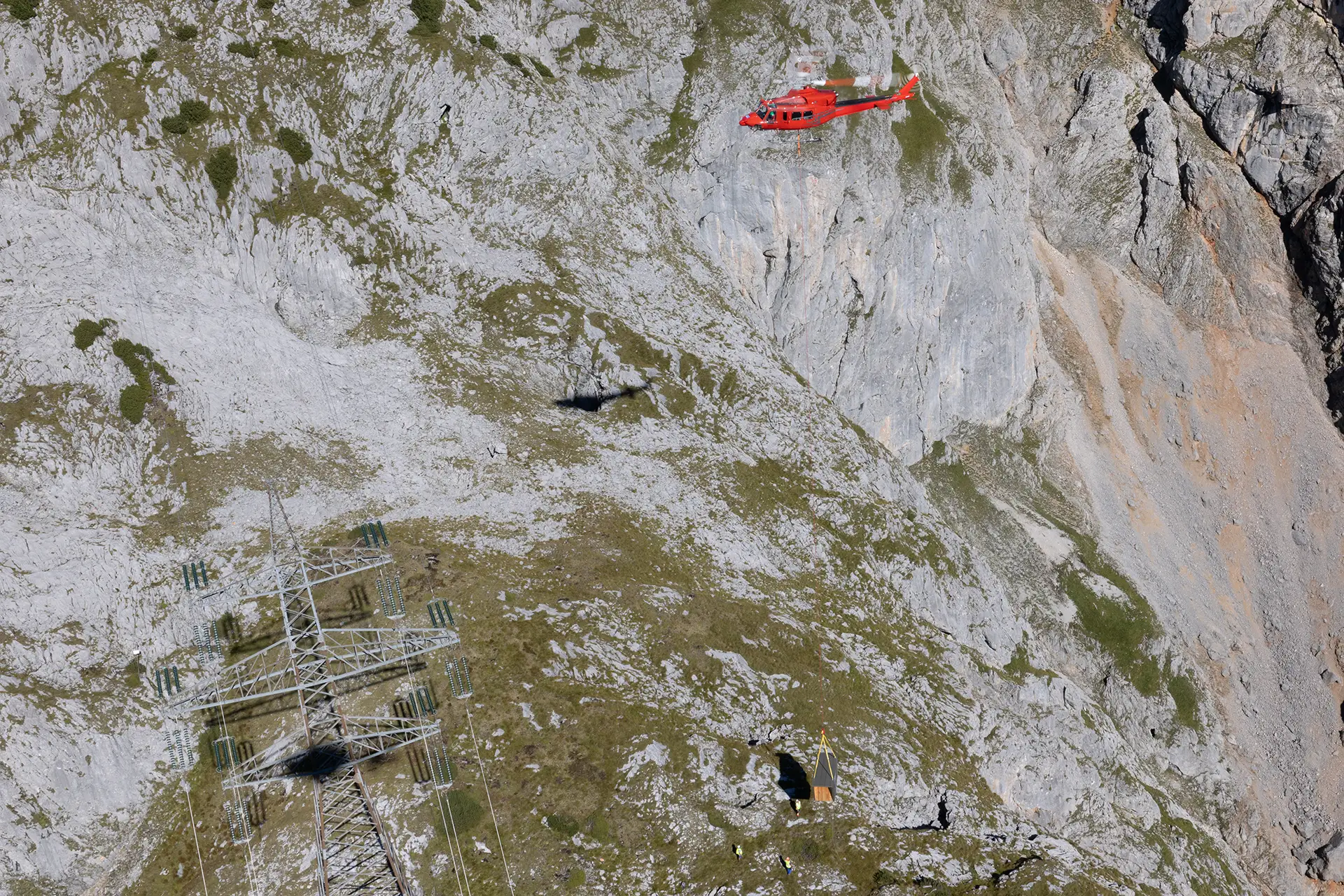
The first upgraded Bell 412 went to work almost immediately, supporting a complex powerline decommissioning project in the Austrian Alps. The mission involved dismantling sections of a 220 kV transmission line built in the 1950s and removing towers and cabling across steep ridgelines up to 7,500 feet above sea level. Operations were coordinated with civil authorities, environmental agencies, and the power company, with strict seasonal restrictions to protect wildlife. “We were only allowed to work from July/August through to Oct/Nov,” Knaus said. “Outside those months, it’s too snowy.”
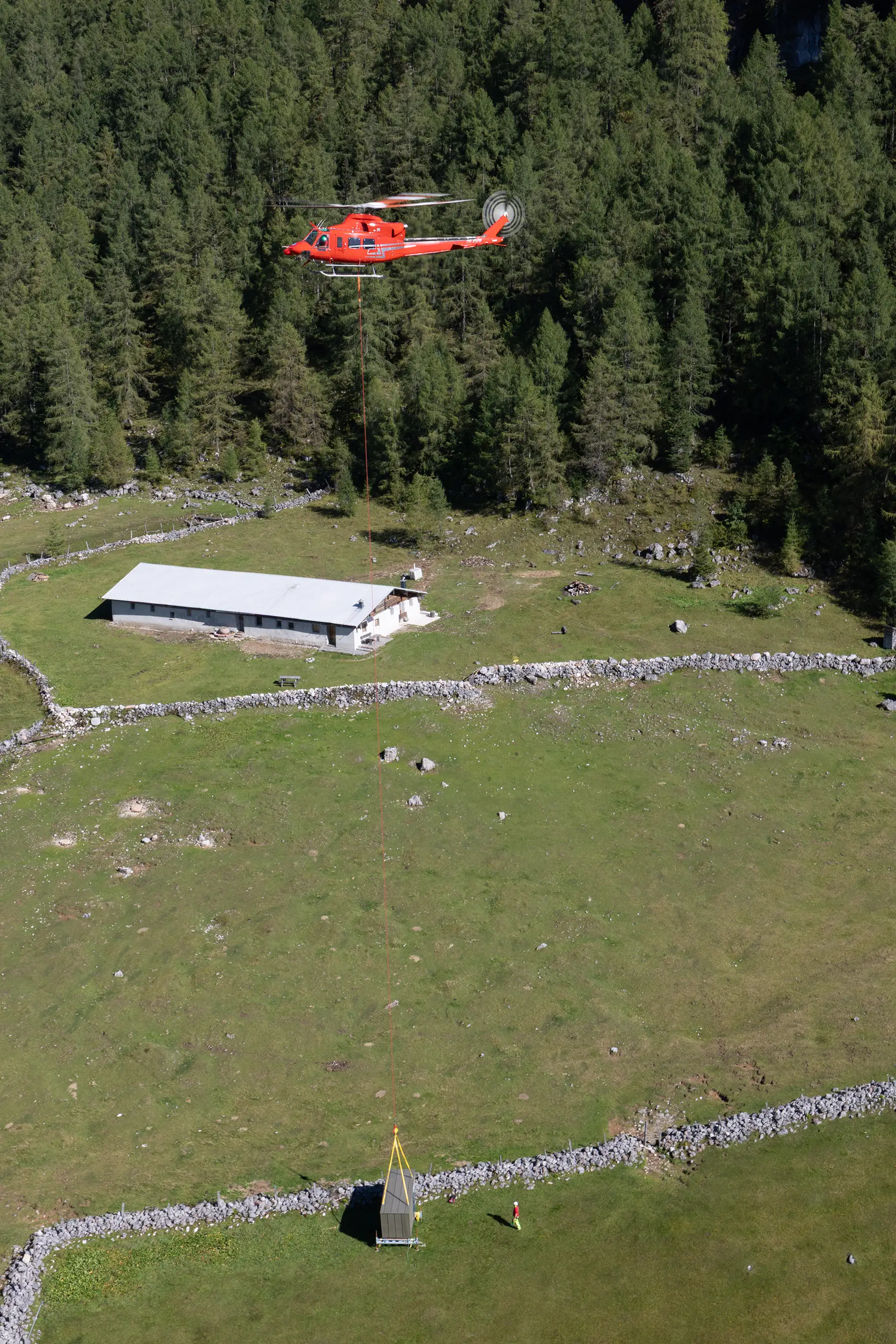
During operations, the 412 typically carries 3,000 to 4,000-pound loads, including preassembled tower sections, cable reels, and huts used by construction crews. The 412’s combination of payload, power, and stability made it the natural choice for this type of work. “At 6,000 feet and 10 degrees Celsius, the upgraded aircraft still has plenty of torque margin,” Knaus explained. “That’s where you really feel the +13 percent drivetrain.”
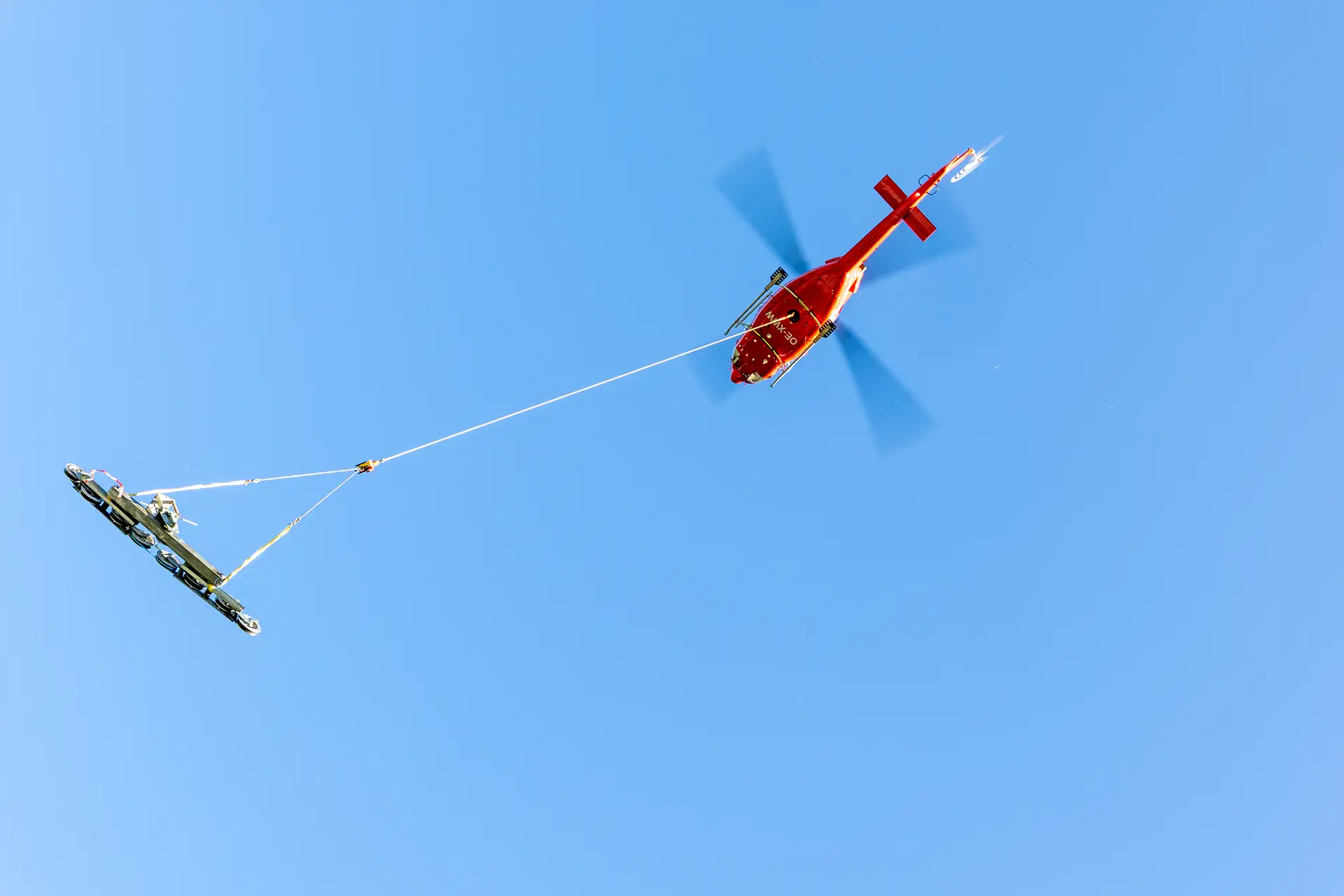
Each mission follows a precise choreography. Ground crews prepare the load site while the pilot maintains a stable hover using a 150-foot longline. A flight engineer monitors hook-up and load balance through the bubble door. Once airborne, the aircraft climbs along a pre-briefed corridor, often with cables or tower sections trailing hundreds of meters below. “You need to know your reference points,” Knaus said. “With that much line out, being five feet low or high makes a big difference.”
Weather is always a factor. The Alps can shift from calm to gusty within minutes, and powerline corridors amplify turbulence. The added power margin allows the pilot to respond instantly to wind shear or downdrafts without exceeding torque.
Noise reduction has also been a tangible benefit. The four-blade rotor generates a smoother acoustic footprint than the old two-bladed 212s, helping Heli Austria operate closer to populated valleys and tourist regions. “It’s not a small thing,” Knaus said. “Noise limits are part of every permit now. The 412 lets us do the same work without the same restrictions.”
Fuel consumption rises slightly due to increased available power, but the trade-off is greater efficiency. With more lift per rotation, total flight time per project is reduced, lowering cumulative fuel burn. “The aircraft can do more in each sortie,” said Knaus. “In total, it’s still an efficient helicopter, and that’s why we’re doing the second conversion.”
Fleet Integration and Modernization
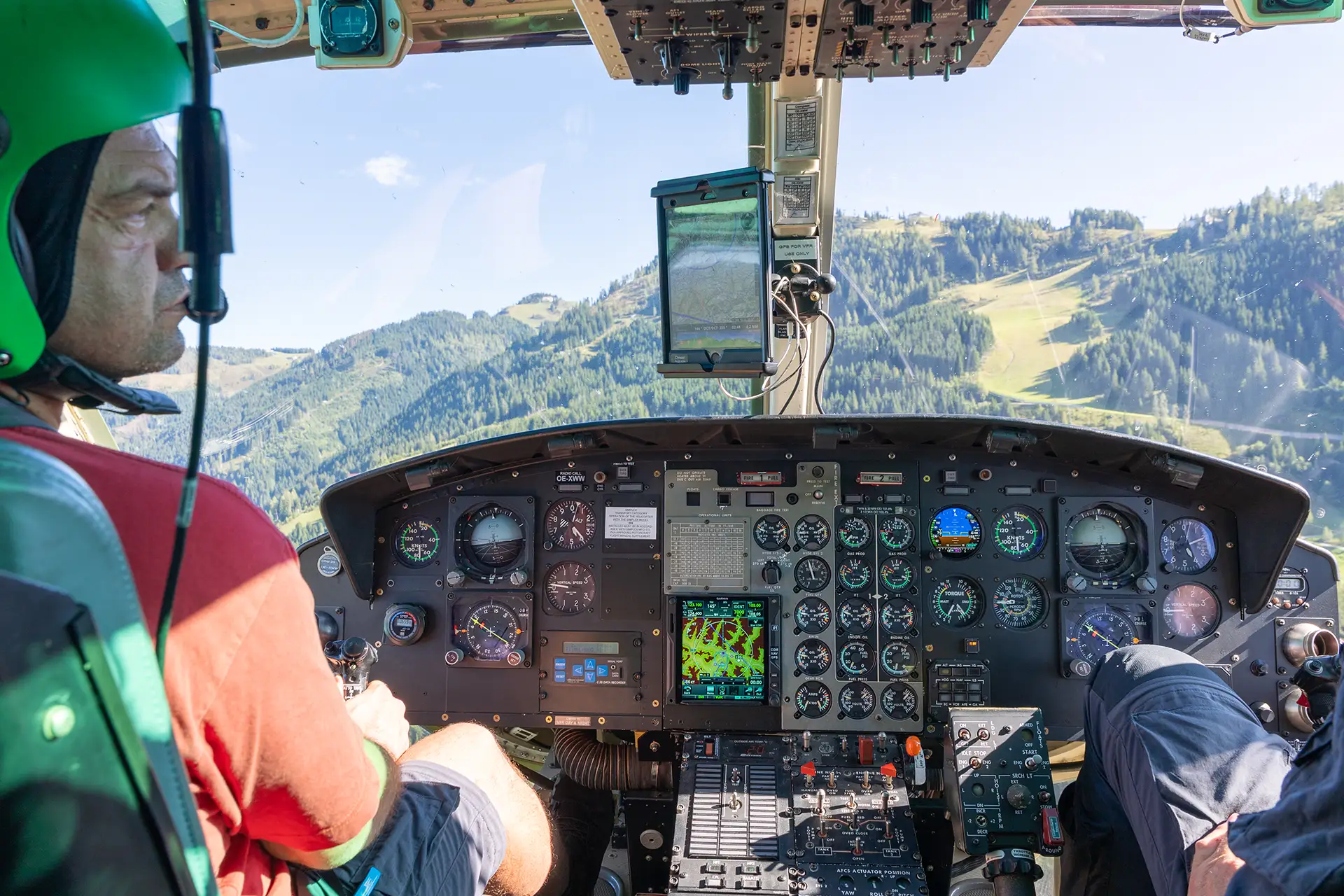
Heli Austria’s modernization philosophy extends beyond power plants. The company is standardizing its avionics across the fleet, choosing Garmin systems for their reliability and cross-type familiarity. Its Super Puma cockpit upgrade, using the G500H TXi suite with dual PFDs and integrated engine monitoring, will serve as the model for the 412s. “We want all our crews to see the same displays, whether they’re in an H125, a Super Puma, or a Bell 412,” said Knaus. “It improves safety, reduces training time, and simplifies maintenance.”
Upcoming upgrades will include lithium-ion batteries, which reduce weight by approximately 20 kilograms compared to legacy lead-acid units. Combined with the removal of the tail-boom baggage compartment, a modification that saves an additional 50 pounds, the changes further enhance performance. “Every kilogram you save increases your flexibility,” Knaus explained. “For us, that often means longer endurance or the ability to carry extra fuel into remote sites.”
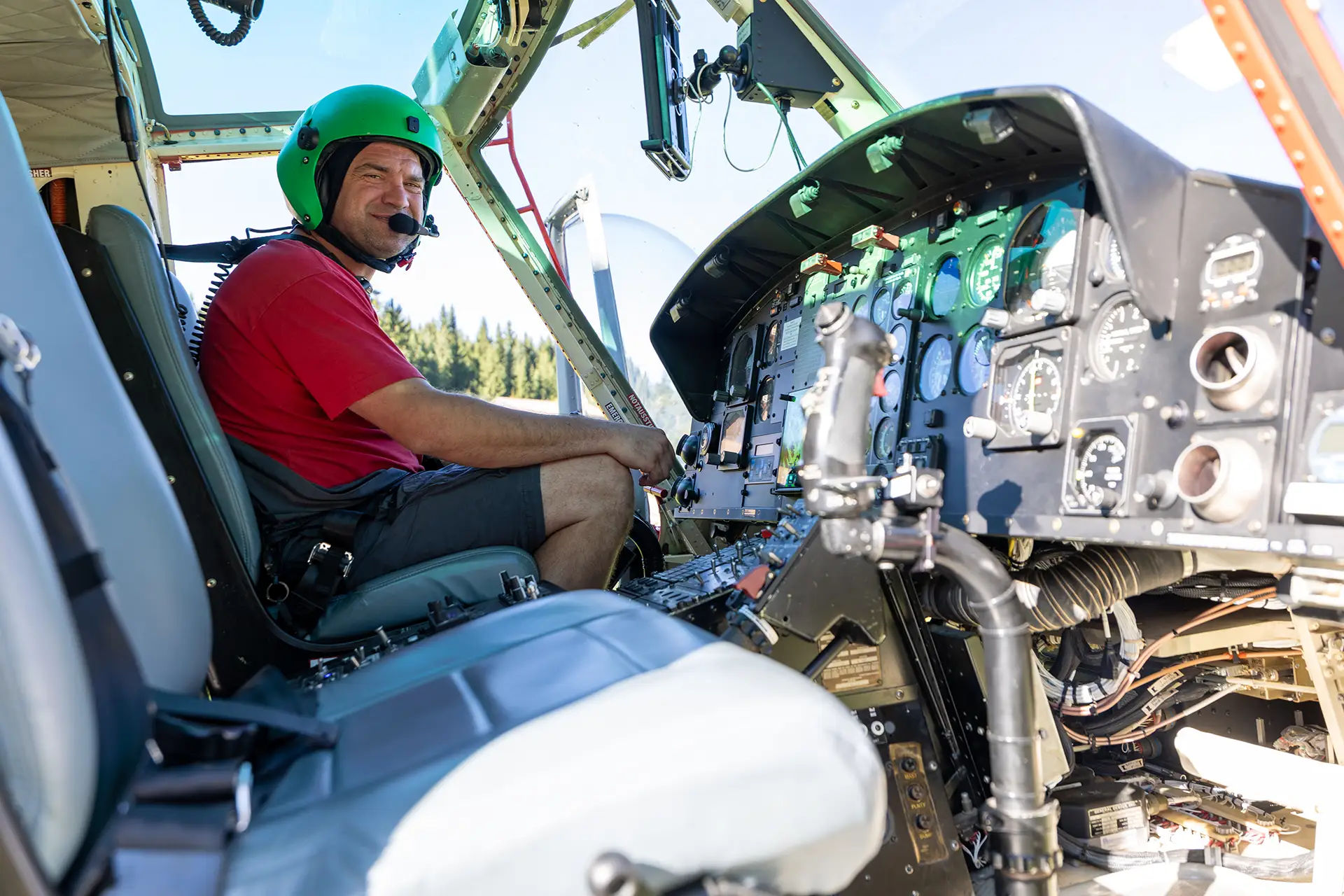
Crew configuration has also evolved. Their 412 is set up for left-seat pilot operation with a one-off approval, right-hand bubble door from Switzerland. “Flying left-seat with a right-hand bubble door gives you excellent reference,” said Knaus. The bubble door, originally designed by Air Zermatt, remains a unique piece of equipment in Heli Austria’s fleet.
When asked about replicating the door on their second 412, Roy explained “It's not possible because Pilatus claims they cannot reproduce the door using the existing plans.” He has considered asking other manufacturers to make the door, but concluded it would be too expensive, and there's no significant market demand for a right-hand bubble door.
Positioning in the European Market
Heli Austria’s initiative arrives at a time when many European operators face a similar dilemma: aging medium-lift fleets and limited access to affordable replacements. The 412, once ubiquitous in firefighting and construction roles, remains a mainstay but suffers from rising support costs as components age.
Bell’s willingness to support a drivetrain modernization program signals a renewed focus on utility operators outside the offshore sector. By allowing incremental upgrades rather than full replacements, Bell preserves the platform’s relevance while ensuring continued parts demand. “The 412 is still one of the most versatile mediums ever built,” said Knaus, noting that the four-bladed main rotor system performs better in high and hot conditions than the 212. “This upgrade keeps it competitive against the H215 or even modern twin-engine types that cost double to operate.”
From a maintenance perspective, the HP kit aligns the aircraft with parts compatibility, simplifying inventory and logistics. For operators managing mixed fleets, that consistency can reduce both downtime and administrative overhead.
Legacy Support and Long-Term Value
Heli Austria’s investment reflects a broader philosophy: improve what works rather than replace it unnecessarily. The 412 platform, descended from the UH-1H Huey, has proven adaptable for over six decades. Each variant; 212, HP, EP, EPI, and now EPX, has introduced incremental improvements, and this upgrade extends that evolution to older airframes still capable of years of service.
By offering the HP upgrade, Bell has effectively created a bridge between the early generations and current production models, giving
operators like Heli Austria access to modern performance without prohibitive capital costs. “It’s good to see Bell putting effort into
the legacy fleet,”
Knaus said. “They’ve created a realistic upgrade path for operators like us, not just for government or offshore customers.”
The
upgrade’s success seems to be drawing attention from other operators as well, with mentions of growing interest from utility and
firefighting customers seeking the same balance of performance and cost. As EASA finalizes certification, Knaus expects to hear of other
conversions.
Heli Austria’s experience with earlier Bell mediums, 205B, 212, 212HP, and 412 has given the company a unique understanding of what works in the mountains. By standardizing its 412s under the HP configuration, the company ensures consistent, enhanced performance. In practical terms, that means fewer surprises for customers. “Very often the client just sees a helicopter,” Knaus said. “They don’t understand why one lifts more than another. This way, all our 412s perform the same; it keeps things simple.”
Looking Ahead
The next step in Heli Austria’s modernization program is already underway. The first upgraded Bell 412 has completed its proving period and entered full operational service, while a second airframe is scheduled for conversion this winter. Once finished, the company will have two HP-spec aircraft in the fleet, both sharing identical cockpit layouts, drivetrain standards, and performance charts.
A third 412, an older Agusta-Bell-built airframe, remains part of Heli Austria’s inventory but is unlikely to undergo the HP conversion. “We don’t see the market for a third at this stage,” Knaus said. “The current two will cover our main missions perfectly.”
“This AB412 was built 1992 and already is an AB412HP and we will put it to service in 2026, but probably use it as backup without buying the twinpac for it,” explained Knaus. “We do actually have a third Bell 412, which is an original 412HP, MSN36057, built in 1991. It has the modification of the 9 fuel tank system, but is still 140 lbs heavier than the upgraded 412HP MSN33082.”
“The three original Bell 412s (33019, 33082, 36057) will be fine for our European ops. The AB412HP will increase in value as it is not possible to import older aircraft without crash resistant fuel systems that are compliant with newer regulations although it never was a problem on the 412s.” Knaus added.
Still, his thoughts quickly turn to what could come next. “If Bell would ever build a single-engine 412, I’d buy five of them straight away!” he added. “A single-engine 412 with a semi-glass cockpit would be the ideal utility helicopter, simple, powerful, and efficient.” This idea captures the practical mindset behind Heli Austria’s modernization effort: forward-looking yet grounded in operational reality. The company invests where performance and reliability intersect.
For Heli Austria and Knaus, the upgraded 412HP represents more than just a technical improvement; it’s a statement about efficiency and longevity. “We have more than 25 years of experience in our mediums,” he said. “It’s the best-performing medium we’ve ever had, and now it’s ready for the next 25 years.”