 HOME
HOME





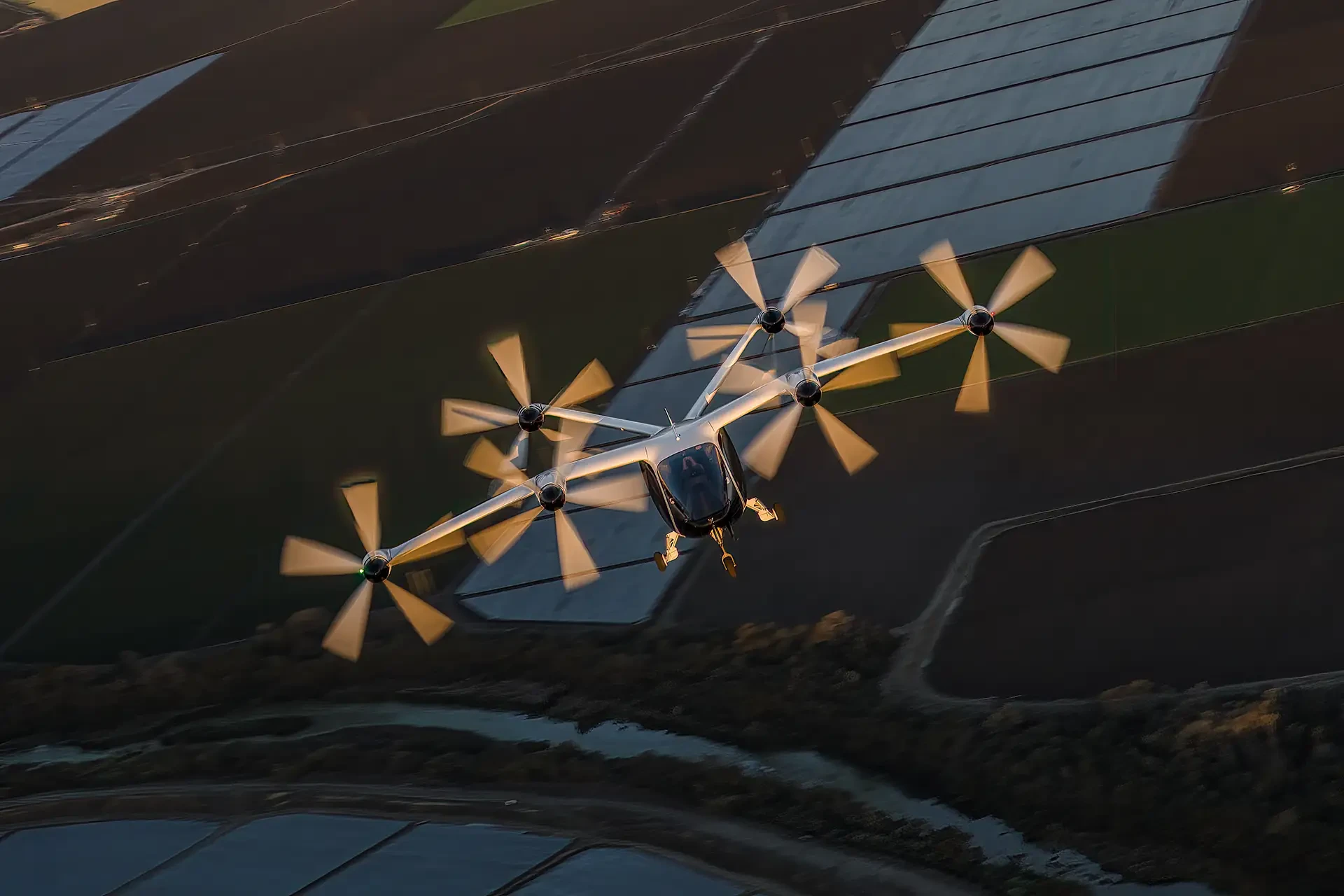
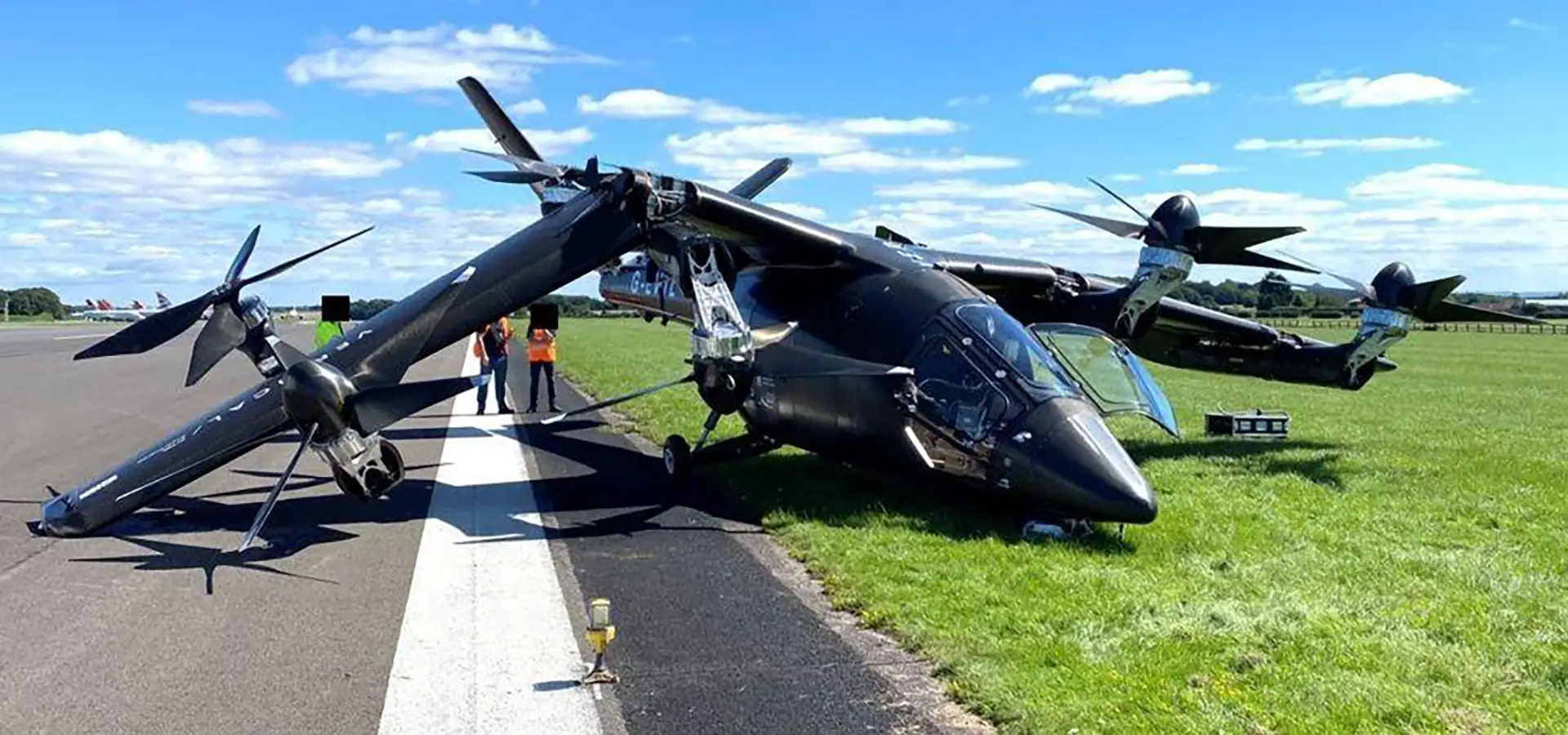
The mishap that occurred to the Vertical VX4 eVTOL prototype last year brought back into focus the hazards associated with developing novel and innovative technology. Aviation can be deeply unforgiving of technical failure or operator error, and, perhaps, vertical flight is in some ways the toughest regime - well, perhaps save hypersonic and exo-atmospheric operations. Paul Kennard examines why it is so important to test and test thoroughly.
Unforgiving
Vertical lift platforms, if operating outside the ground cushion in the hover or at low speed, are vulnerable to catastrophic accidents in the event of a control, powerplant, or structural failure. For powered lift designs, such as the Harrier family and the F-35, the loss of the powerplant in the hover, unless close to the ground, will inevitably lead to the loss of the airframe - and the crew have only a small window to make good their escape before the inescapable force of gravity accelerates the rapidly descending aircraft outside of survivable ejection seat parameters. More conventional vertical lift aircraft using rotor systems are equally as intolerant to certain failures. Whilst a loss of power can be mitigated by autorotation, the loss of a major control surface, such as a rotor blade, usually cannot, with current technology at least (although blade 'morphing' and ever more sophisticated Flight Control Systems offer the hope of containing such failures in the future). There is no 'Martin Baker Letdown' option for most helicopter crews, although for high altitude testing, parachutes can be worn - and they helped to save the lives of a UK Merlin trials crew who bailed out of their developmental prototype aircraft after a flight control malfunction at medium altitude in 1995. The careful balance of forces that rotorcraft rely on for safe flight can be swiftly broken, and the resulting increase in torsional loading and stress will often result in an inflight break-up of the aircraft.
Understanding these limits is a fundamental part of the Development and Test (D&T) cycle, and once a design is declared fundamentally safe from a design and flight characteristics perspective, further work, often labelled 'Operational Test' can begin to ensure that the aircraft is both what was specified in terms of performance and, crucially, what was needed by the original requirements. In Systems Engineering terms we call this Verification and Validation (V&V). We Verify that what we have built meets the specification that was signed off on, and the Validation effort is to confirm that we've actually designed and built what was needed - in short has the effort expended answered the 'exam question' (often termed the Concept of Operation (Con Ops)) that was posed in the first place? The ConOps and final validation of the output are the top left and top right-hand points respectively of the classic Systems Engineering 'V-Diagram'. From the ConOps, requirements are devolved, and the system architecture developed by system and sub system levels - all of which feed the detailed design of the product. This forms the basic 'left hand side' of the 'V', with an implementation/build process at the 'bottom'. The right-hand side of the diagram is the Project Test phase, often scheduled via a process called the Integrated Test, Evaluation and Acceptance Plan (ITEAP). This sees sub systems testing, full system testing, integrations testing and finally (for an air platform) flight testing. The steps are methodical, and the process a continuum of iteration until the final configuration can be tested in an operational scenario to finally validate that the requirement has been satisfied.
Flight Test Plan
The flight test plan for a new design will incrementally increase the complexity, and therefore risk, of testing. At the initial phases, of Developmental Test (DT), the profiles will be flown exclusively by Experimental Test Pilots (TPs / XPs) with support, where deemed necessary and safe, from Flight Test Engineers (FTEs) who follow a similar course at once of the accredited Test Pilot Schools (TPS), such as ETPS at Boscombe Down in the UK, NTPS at Patuxent River NAS, USAF TPS at Edwards AFB or EPNER in Istres, France. The western 'Big Four' TPS have equivalents in Russia and India, and have also been joined by industrial providers, such as the National TPS at Mojave, USA, and International TPS in London, Ontario, Canada. The 'pull' for the civil TPS comes from a simple matter of capacity and costs at the 'Big Four', and a desire from some nations to maintain independence from US. UK or French government supplied training.
Once the aircraft or modification has completed DT, it's the turn of the Operational Test & Evaluation (OT&E) Evaluator Pilots (EPs) and Evaluator Aircrew (EAs) to take ownership of the Test Plan and drive it up into the top right corner of the 'V' by assessing if the capability is both fit for purpose and answers the exam question. This is critical work, not only to enable contract payments to be made, but also ensuring that the End User is not exposed to a platform or capability that is not suitable for the role envisaged. EPs and EAs are the 'gatekeepers' for the end user / front line. Often, the TPs/XPs and FTEs employed during DT are not familiar with the user's role or needs - they may well come from a different background or type before attending TPS. They apply standard DT techniques, such as the Bedford Workload and Cooper-Harper Handling Qualities scales, to reach objective conclusions about the equipment under test. As such they may not see the nuances that the EP/EA will, who remain much closer to the 'day to day' - and which is why both sides of the T&E team are important.
When I was running OT&E programs, wherever possible, I'd get my EPs and EAs involved as early as possible. For the UK's Chinook Mk4,5 and 6 programs we stood up a formal 'Combined Test Team' (CTT) to try to catch Front Line Issues early in the Test Program. There was a sliding scale of involvement for my team, starting at ground assessment, observation sorties once we were happy, followed by co-pilot sorties towards the end of the DT phase. Once complete, the roles reversed, and my team became the prime effort, with the TPs supporting. The CTT 'caught' a number of issues that were easily and cheaply fixed before final certification, as well as a few that took longer - but we got them early enough that in most cases the schedule and cost impacts were minimised, and certainly a lot less than if we'd conducted the testing sequentially.
Back to the VX-4.
As with the entire eVTOL industry, is firmly still in the 'Development Test' phase. Vertical should, I think, be commended for their open and honest reporting of both the incident itself, and of their causal findings - even if they have subsequently ruffled a few feathers in their supply chain, and broader industry, by electing to take the manufacturer of the propeller blamed for the accident to court for damages. The eVTOL industry is trying to sweep away decades of internal and jet combustion powerplants, and their inevitable environmental impact (pollution and noise...), with a quieter and 'cleaner' alternative.
But it’s not just 'eco-altruism'.
Vertical is in business and engaged in a stiff competition with any number of rivals, all keen to secure a lodgement in the promised global market for Urban Air Mobility (UAM) and other eVTOL roles. Whilst Vertical acknowledge that aspects of their findings are commercially sensitive, they have been candid in many aspects of the accident sequence. Whilst a cynic might suggest they are merely trying to 'get ahead of the narrative', Vertical's release of data is in stark contrast to their competitor, Joby, who's 2022 loss of their prototype was, for nearly two years, merely described as a 'component failure'. The publication of the NTSB's report in February 2024 revealed that Joby's accident was also due to the separation of a propeller blade during testing considered 'beyond the typical operating envelope'. Joby brushed off concerns expressed by some with a statement to the effect that accidents in pushing boundaries in flight test are not uncommon, and that conducting such tests is necessary to determine actual aircraft performance and structural limits to better inform final design specification and support airworthiness certification requirements.
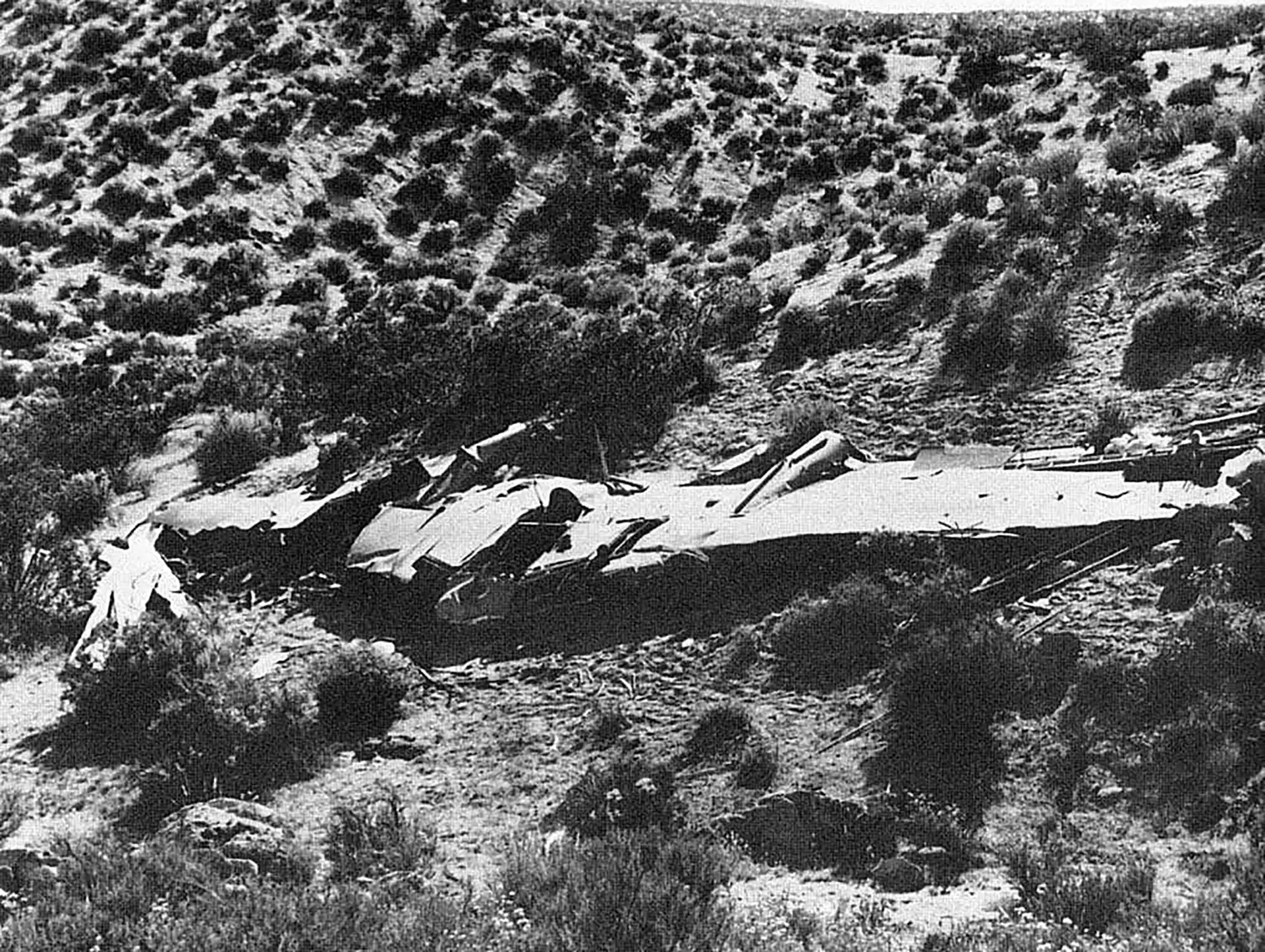
Vertical's public disclosure notes that the VX-4 was engaged in a test point with one engine shut down for the purpose of scaling the
battery packs and clearing test points before untethered manned flights. As the aircraft was transitioning from the hover, with a
propeller on the port wing stopped, a blade detached from the starboard inner rotor hub - a design that Vertical had already replaced for
future iterations - and although the aircraft automatically spooled up the 'feathered' port propellor and rolled off the power on the
starboard inner engine, the blade separation caused a structural failure of an engine support pylon. In turn, this failure had an
unexpected impact upon the power control buss' interface with the other starboard engines, resulting in a low power mode, roll and rapid
descent. The wing structure was badly damaged on impact, but the cockpit/passenger compartment and fuel cells remained intact.
Unpicking
There's much to unpick about 'why and how we test' from this incident.
The flight was being conducted as part of a comprehensive and well-structured test program, with the aircraft operating in uncrewed mode for this particular test point. The ability to test novel designs and technologies without exposing a TP or FTE to the inherent risk is a relatively recent phenomenon.
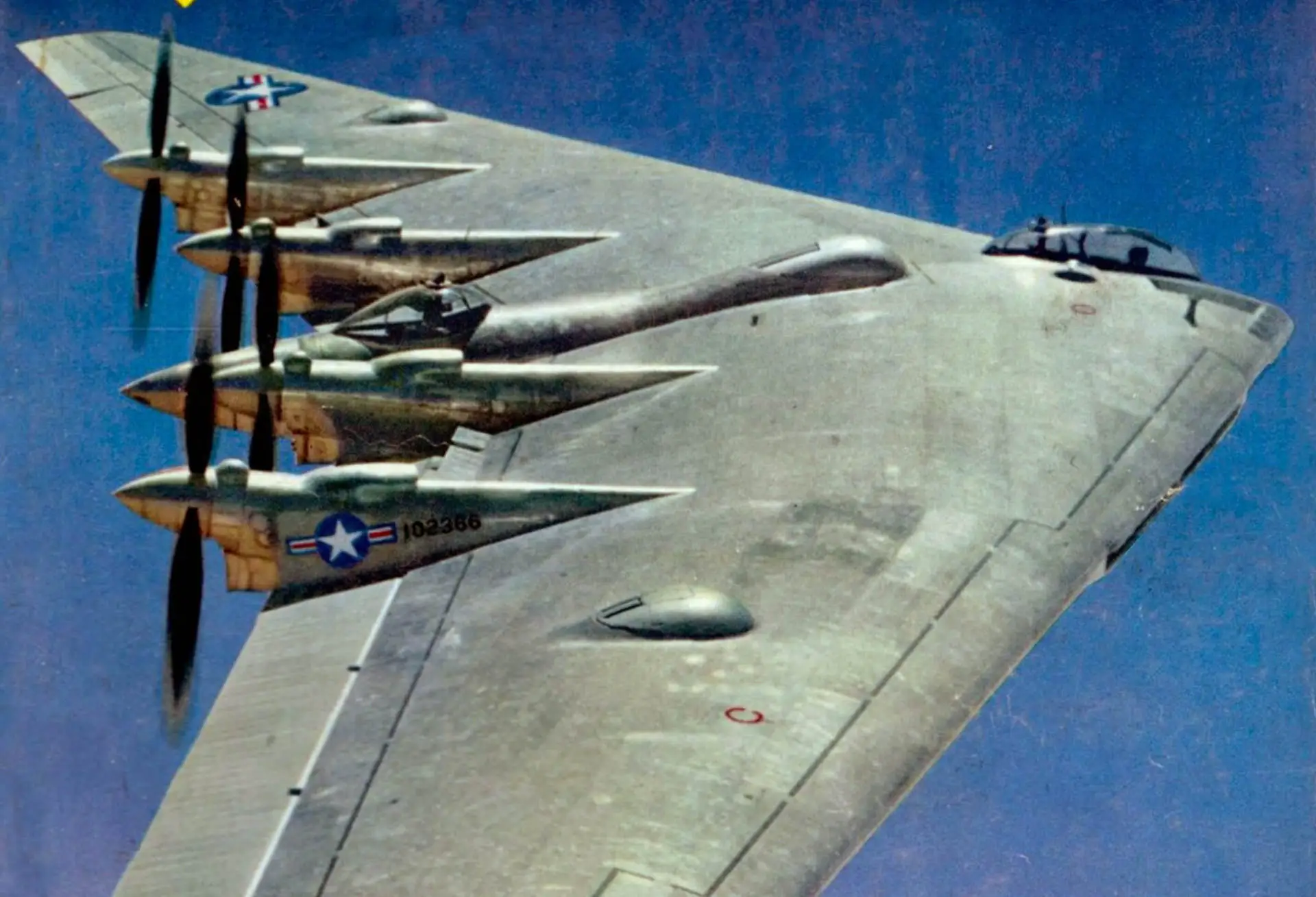
In the early days of aviation, fatalities and injuries to the designers, builders and flyers (as they were often the same person...) of new designs were not uncommon. The first aircraft accident fatality, a Lt Selfridge of the US Army, was killed in an accident involving a Wright Brothers aircraft in 1908. The '1908 Military Flyer' prototype was being flown by Orville Wright himself (who survived but was seriously injured), and, in an odd symmetry to the accidents discussed above, the crash was caused by the failure of a propeller, which split under load, sending fragments through the bracing wires supporting the tail structure resulting into a nosedive into the ground. The spiritual 'home' of Test Flying, Edwards Air Force Base, is itself named after Capt. Glen Edwards who was killed testing the Northrop YB-49 'Flying Wing' in 1948, while, famously, several of the street names on base are used to honour TPs lost 'pushing the envelope'. The immediate post war period was especially brutal; the massive strides in aviation taken during the Second World War had been at pace, and with significant risk attached due to the exigencies of the conflict. Jet engines, rocket motors, swept wings were all infant technologies - but ones deemed hugely important in the rapidly chilling Cold War. 'Faster, higher, further...' was the mantra of the 1950s zeitgeist, and the sense of inevitable and regular loss was captured graphically in Tom Wolfe's book (and subsequent film) 'The Right Stuff'. There was a 'war' on, survival depended on being able to field new technologies quicker than the 'enemy', and that came with concomitant risks, to both man and machine.
Risk Aversion Factor
With both the Joby and Vertical mishaps, only pride and machinery has been 'hurt' - and this encourages industry to work quicker as the
Risk to Life (RtL) is contained for the test crew and can be largely ameliorated for third parties by careful flight planning.
Perhaps the epitome of this rapid development cycle is Space X. Nothing could be starker than to compare the differing approaches of 'Big
Government' (NASA) and 'Big Tech' (Space X) to developing and fielding their heavy lift boosters. NASA seem to be like a Lilliputian
giant, constantly straining against multiple restrictions and constraints - having to satisfy the demands of The Hill, the 'traditional'
industrial base, public opinion and a hungry media. Therefore, progress is often painfully slow due to risk aversion and a need to
spend resource in selected Congressional districts to maintain a fragile funding consensus. It's a very different approach to the
'Space Race' of the 1960s, when, galvanised by the global stand-off between competing ideologies and the futuristic vision of a slain
President, NASA did the seemingly impossible - sending humans from the Earth to The Moon from a near standing start in less than a
decade. It took huge sums of money, of course, but also massive acceptance of risk - including 'all up testing' of major components
(flying whole sections of experimental systems concurrently as opposed to sequentially - in effect, testing in parallel rather than
series). Ironically, this approach to Test is why SpaceX are now surging ahead in the civil booster market - by mass production and
flying, accepting that every time a launcher fails lessons are learned, and then imparting those incremental improvements at pace.
By being 'born optionally manned' with advanced digital autopilots and autonomous systems, eVTOLs can be tested rapidly with minimal RtL,
and without huge concerns over crew duty time, fatigue or aircrew availability. The only limits to the pace of technical development
and progress are the depth of the pockets of the investors and the confidence of the regulators. If, like Elon Musk, your pockets are
indeed deep enough to keep going then you will invariably make swift progress - learning more information each time you experience a 'rapid
unscheduled disassembly' in Space X terms, or as most people would term it, a crash or explosion.
Crashing Through
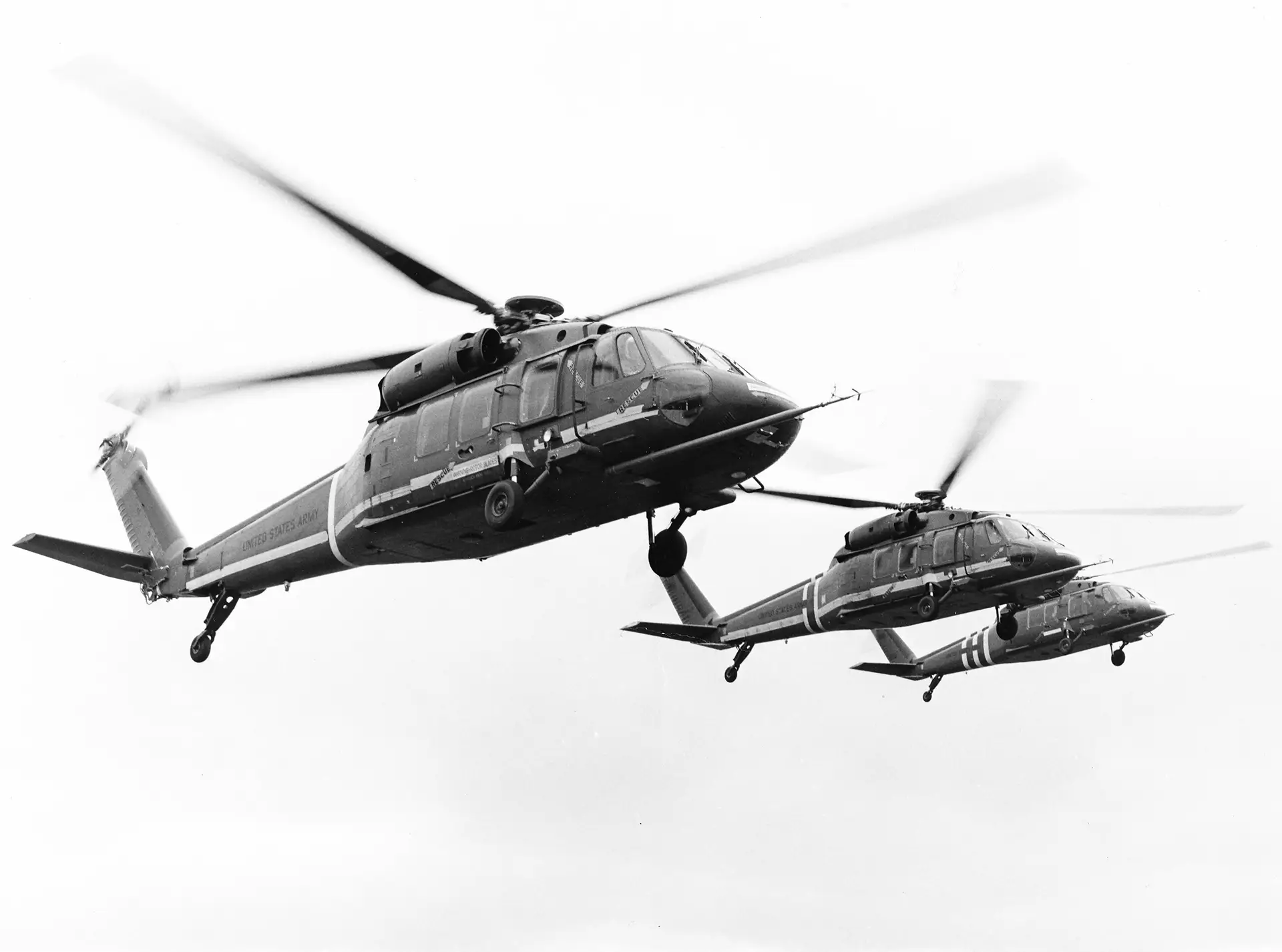
Sometimes a 'good' crash can actually boost confidence in a design; during the Utility Tactical Transport Aircraft System (UTTAS)
competition 'fly-off', a US Army pilot flying a YUH-60 Black Hawk prototype was forced to conduct an emergency night landing after the onset
of severe vibration due to a partial detachment of rotor blade skin. With little time to pick a spot, what appeared under the
'white light' landing lamp as a flat field was in fact a small, wooded area covered with low hanging mist. The aircraft, with 17 on board,
thrashed away at a number of trees before alighting, upright, on the ground - the only minor casualty being a soldier who banged his head
during the emergency egress. It was an incident that many Army observers thought may have proven fatal in a UH-1, yet within 3 days
with some new tail / main rotor blades fitted, the YUH-60 flew itself out. It was one of several reasons that Sikorsky believe they won the
highly lucrative contract, and 5000+ Black Hawks later it doesn't seem to have done the aircraft any harm.
The 'how’s' and 'whys' of flight test have been established by over 100 years of powered aviation. As evinced by the road names at
Edwards AFB, that progress has often come at the expense of significant blood and treasure. It's good to see the likes of Vertical,
Joby and Space X all following established process, employing test professionals to oversee their programs and accepting that, in test and
innovation, in the words of Elon Musk, 'failure is an option'.
The Journey in Important
However, while many in those companies opening up these new frontiers of flight are attuned to the need to both innovate and iterate, in a cycle of 'develop, test, develop, test' there are others who, perhaps, are more seduced by the prize than the journey. Aviation is not an industry that is used to the IT and Telecommunications-style product investment and monetisation lifecycle. Progress can sometimes be measured in years, if not decades, rather than months. Many of the most innovative companies leading the eVTOL marketplace are funded by Venture Capitalists, Hedge Funds or billionaire backers. These are funding channels that are used to seeing a rapid Return on Investment (RoI) as their money is used to make more money; if the product is late to market or development stalls at a technical or regulatory hurdle, they may well seek to withdraw their funding.
Vertical is lucky that their founder, self-made millionaire and entrepreneur, Stephen Fitzpatrick, was in a position to plough a further $50m into the company at the start of 2024 to stave off a near-term cash shortfall - a bold move considering that Vertical's share price is less than half what it was a year earlier. Joby has a pool of investors, split between companies and high net worth individuals, and has so far raised over $600m in capital as a result of multiple funding rounds. German eVTOL start up, Velocopter, only narrowly avoided bankruptcy this year with its investors adding extra liquidity after formal warnings of insolvency.
This is a genuine issue.
There is also the small matter that the market projections for a global eVTOL fleet is currently way in excess of the production capacity
being established - therefore, there is a distinct advantage to getting to the market first. The combination of RoI demands an
uncertain market size and vacillation from regulators are toxic to start ups.
The temptation will be there to cut corners to save costs and times. History suggests that cutting many corners in aviation is often not a smart move in the longer term, masking issues and potentially increasing the risks to test and, indeed, routine flying. There is also a risk that if some eVTOL companies rush for the market too quickly they will have very public incidents and accidents - and these can very easily taint the whole industry as being 'guilty by association'. We are seeing similar trends with Electric car batteries and autonomous driving modes. The public, it seems, is not yet fully ready to place their unquestioning trust in this new transport technology.
A proper flight test program, conducted by qualified and respected people, financed by individuals and organisations not just after a 'quick buck', is exactly what the eVTOL industry needs to win that all important public trust and keep their investors onside.
Perhaps there's no better reason for 'why we test'.