 HOME
HOME





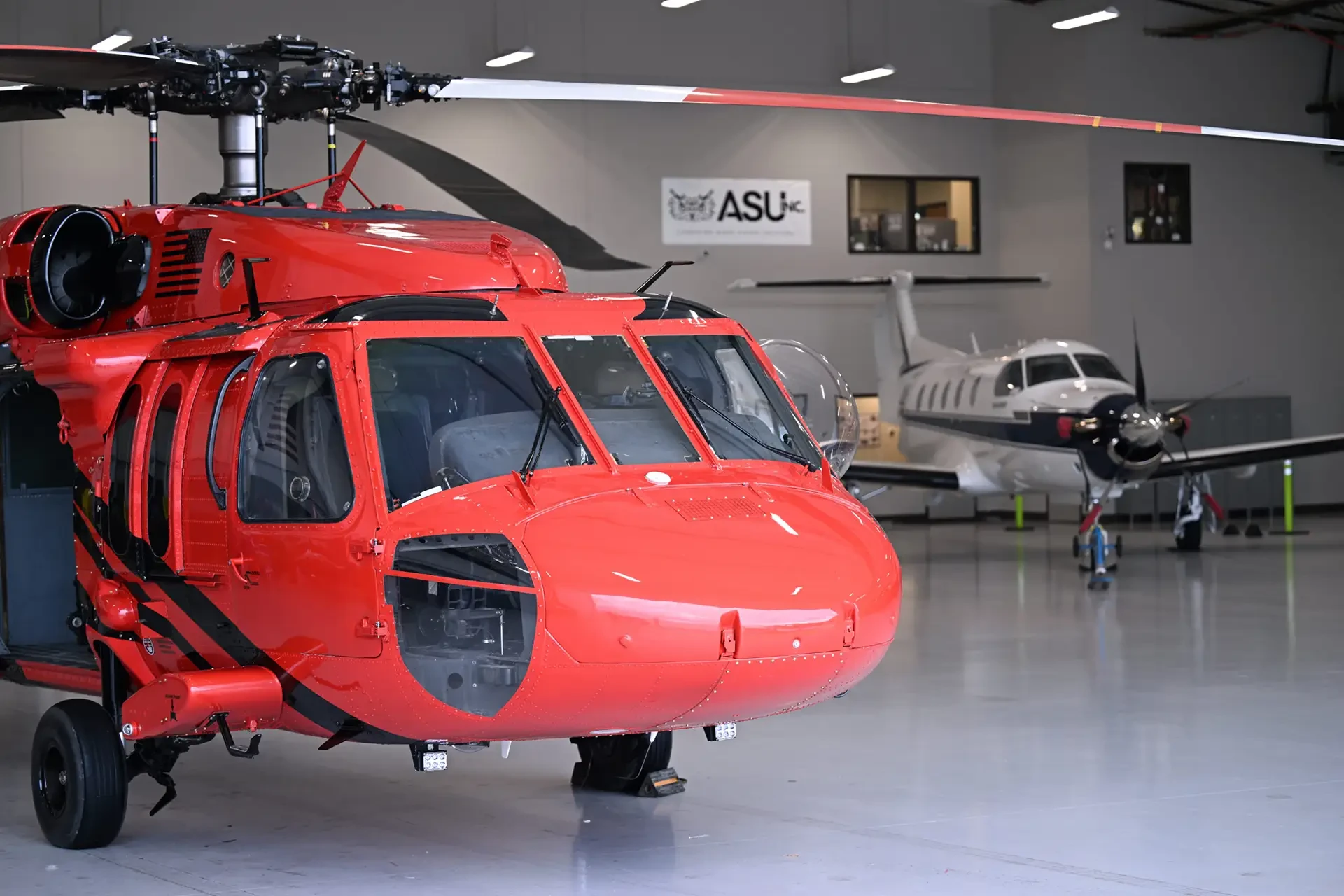
Aviation Specialties Unlimited has recently completed a Night Vision Imaging System (NVIS) modification on a UH‑60L Black Hawk. As a result, the aircraft now supports safe and reliable NVG operations. This upgrade significantly expands mission capability for low‑light and nighttime environments.
ASU received the former military UH‑60L at its Boise, Idaho facility for modification. The aircraft operates in the FAA Restricted Category and is approved for agricultural, forestry, wildlife conservation, and external load missions.
However, to safely operate at night with NVGs, the helicopter required a comprehensive cockpit and lighting upgrade. Therefore, ASU’s team began a full NVIS conversion to meet civil mission needs. NVIS compatible cockpit lighting ensures clear visibility and safe NVG operations during low light missions.
ASU’s Part 145 Repair Station installation team performed detailed cockpit and aircraft lighting modifications. The goal was to achieve full night and NVG operational capability while maintaining clear visibility in all conditions.
First, the team identified non‑NVG‑compatible light sources throughout the cockpit and cabin. Next, they upgraded instruments and displays with NVG‑compatible LED lighting. In addition, they applied optical filtering where needed to prevent glare and NVG interference.
Supplemental lighting was also installed to ensure proper illumination levels. As a result, pilots can clearly read instruments and system alerts without degrading night vision performance.
At the same time, ASU’s Certification team managed all FAA requirements for the modification. This approach helped streamline the project and reduce downtime.
Certification tasks included STC compliance, weight and balance supplements, flight manual supplements, and Instructions for Continued Airworthiness. Consequently, the aircraft returned to service fully compliant and mission ready.
This upgrade directly enhances civil aerial firefighting capability. Fire suppression missions often extend into twilight or nighttime hours. In these conditions, visibility, terrain awareness, and crew focus are essential. The aircraft was configured with fully NVIS compatible cockpit lighting. Instrument backlighting and annunciation were tuned for clear readability without glare. This balance supports safe NVG use in smoke‑degraded and complex terrain environments.
In addition, the improved lighting environment reduces crew fatigue during long missions. As a result, pilots can maintain efficiency and awareness across extended operations.
Upon completion, the UH‑60L gained expanded mission flexibility and improved operational safety. The NVIS modification allows smoother transitions between day and night operations. It also enables faster response during time‑critical firefighting events.
Ultimately, this upgrade reinforces the aircraft’s role as a reliable platform for modern civil firefighting missions. Crews remain informed, effective, and mission‑ready, even in the most challenging low‑light conditions.
Through this UH‑60 NVIS modification, ASU demonstrated its depth of experience in cockpit lighting, avionics integration, and FAA certification. Whether supporting firefighting, utility, or special mission operations, ASU continues to deliver solutions that enhance safety, capability, plus performance day and night.