 HOME
HOME





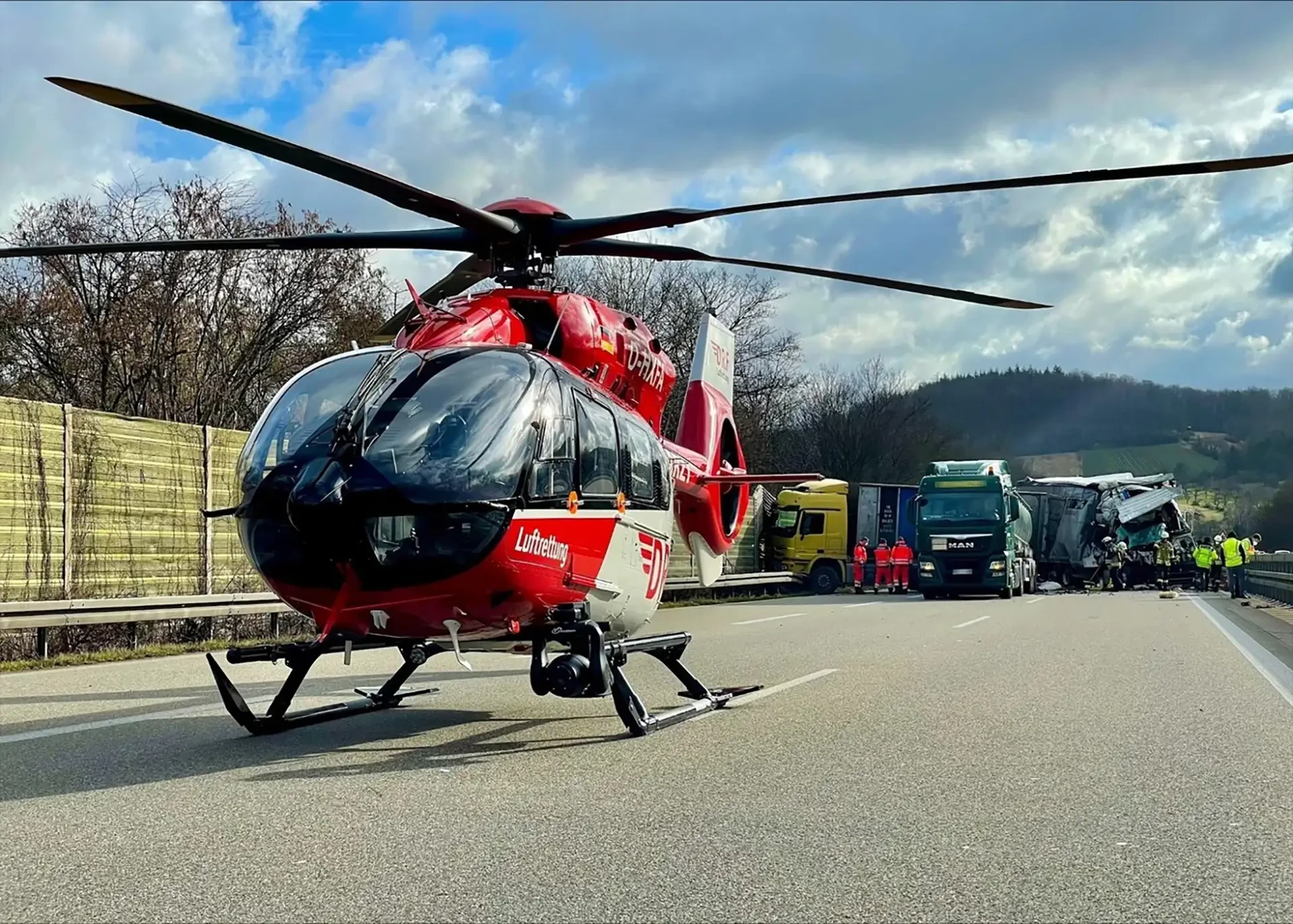
The non-profit rescue service organizations ADAC Air Rescue, DRF Air Rescue, and Johanniter Air Rescue are warning in a joint press release of serious consequences for the emergency medical care of millions of people. This warning stems from the current draft bill for the law to stabilize contribution rates in statutory health insurance. The three rescue service organizations warn that if the planned cost-cutting measures by the Federal Ministry of Health (BMG) are passed in their current form, the financial foundation of air rescue in Germany will be gradually eroded, and the very existence of rapid air assistance will be threatened.
Air rescue organizations are particularly critical of the draft's proposed reliance on the basic wage rate. While this reflects wage trends in the overall economy, it does not capture the true costs of a highly regulated, safety-critical, and continuously maintained infrastructure like air rescue: The safe operation of aircraft requires a large number of highly qualified professionals. Pilots and medical personnel, such as paramedics and emergency physicians, meet the highest qualification standards and must possess years of experience. Competitive compensation is therefore essential to ensure adequate staffing for air rescue operations.
ADAC Air Rescue, DRF Air Rescue, and Johanniter Air Rescue agree: While the basic wage rate is a fundamental pillar of contribution stability, the draft legislation does not adequately address the specific needs of air rescue services. Air rescue is an indispensable component of emergency medical services, and calculations and contracts in this essential area of emergency rescue are designed for the long term. Helicopters are subject to a depreciation period of approximately 20 years. A cap on unspecified basic wage rates undermines financial continuity and jeopardizes economic planning security.
In this context, the three organizations are particularly critical of the planned additional one percent reduction in the permissible cost increase below the basic wage rate for the years 2027 to 2029. They argue that even limiting the increase to the basic wage rate is insufficient to ensure adequate funding – a further reduction would make the economic viability of air rescue impossible.
The planned cuts in air ambulance services are completely disproportionate to the immense damage they cause to emergency medical care, the organizations explained. In reality, a well-functioning air ambulance service is the difference between life and death. It also makes a significant contribution to the national economy: rapid pre-hospital care leads to reduced follow-up costs and often to a faster return to work.
The proposed regulations are also in blatant contradiction to the goals of the planned emergency care reform, according to the organizations: Under these funding conditions, efficient and comprehensive air rescue services, a crucial pillar of emergency care, can no longer be guaranteed. This is all the more serious because the ongoing and anticipated changes in the hospital landscape will simultaneously increase the need for so-called secondary transfers between hospitals – often carried out using intensive care transport helicopters.
ADAC Air Rescue, DRF Air Rescue, and Johanniter Air Rescue are therefore urgently calling for an amendment to the draft legislation. The special role and specific requirements of emergency air rescue must be taken into account in the law to ensure the continued provision of services to the population. Therefore, an exception clause must be created for the planned amendments to Sections 71 and 133 of the German Social Code, Book V (SGB V), so that future unforeseen and uncontrollable cost increases, such as the current rise in fuel prices due to international crises, can be offset in air rescue services.
Civilian air rescue services in Germany are predominantly provided by non-profit organizations. This distinguishes air rescue from many other areas of healthcare provision. Last year, the three air rescue organizations were called out to a total of approximately 90,000 emergency missions.