 HOME
HOME





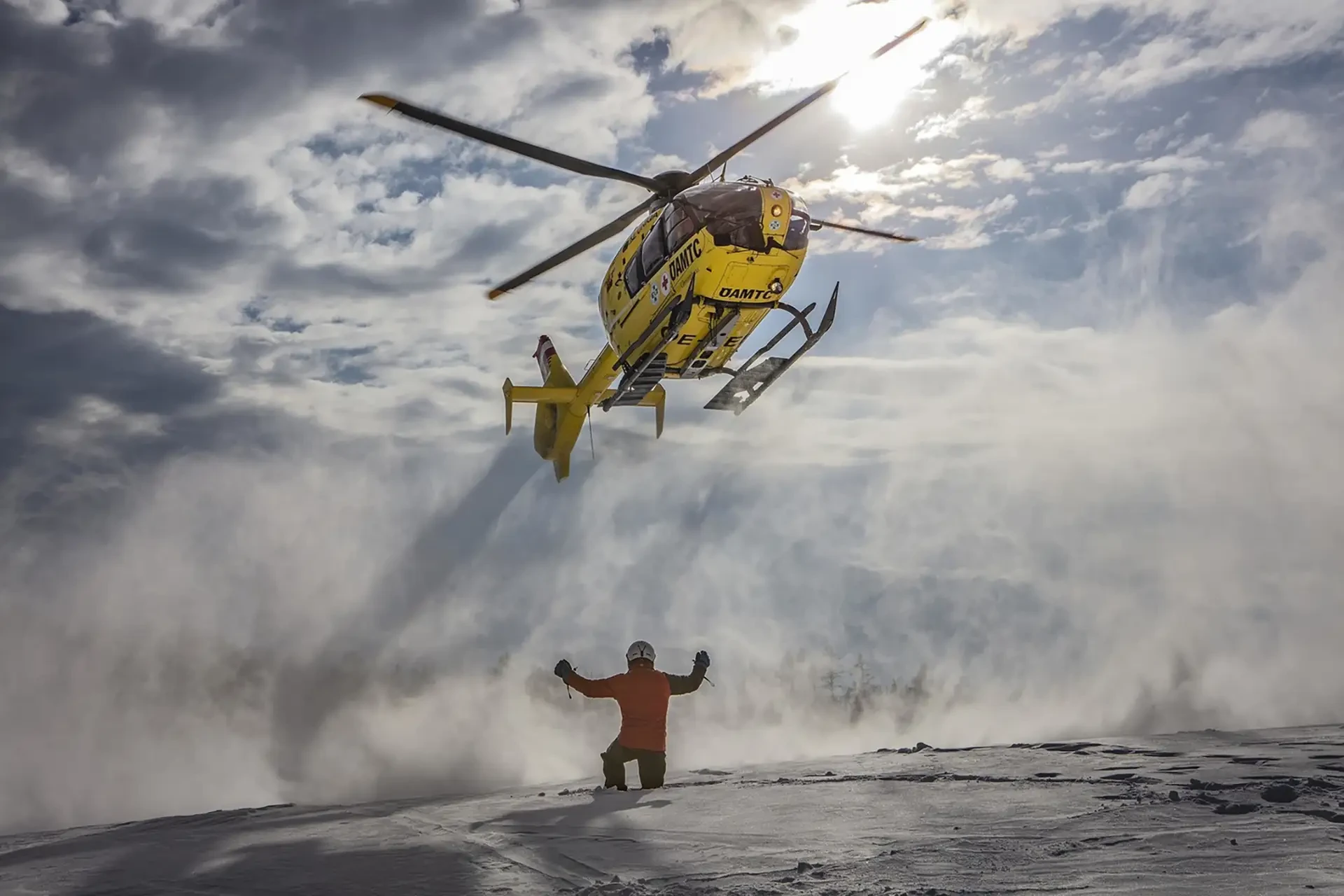
In 2025, the crews of the ÖAMTC air rescue service were called out to 21,650 missions – that was an average of around 59 missions per day. The Christophorus crews provided assistance by air an average of 59 times a day.
"Only together with our partner organizations on site was and is it possible for us to help so many patients and to fulfill our role as part of the critical infrastructure. These figures demonstrate once again how important a dense network of bases and highly trained teams, both in the air and on the ground, are for medical care in Austria. Our crews are deployed daily where every minute counts." said Marco Trefanitz, Managing Director of ÖAMTC Air Rescue.
As in previous years, the ÖAMTC air ambulance helicopters were called out to a wide variety of missions in 2025 – from acute medical emergencies and accidents of all kinds to natural disasters. Once again, the most frequent reason for deployment (10,159 times, representing 47 percent of all missions) was for internal medicine and neurological emergencies. "Especially in these time-critical situations, the helicopter's speed advantage plays a crucial role and demonstrates how indispensable comprehensive air ambulance services are in modern medicine. Rapid transport to a specialized hospital can not only be life-saving but also leads, in most cases, to a significantly more favorable prognosis for the patient's further treatment," said Trefanitz. Other frequent reasons for deployment included accidents during leisure time and in the home (12 percent) as well as sports and leisure accidents in alpine areas (also 12 percent). Traffic accidents accounted for only 8 percent of the deployments of an ÖAMTC air ambulance helicopter.
Four seasonally operated bases supplement the ÖAMTC air rescue network during the winter season: Alpin 1 (Patergassen), Alpin 2 (Sölden), Alpin 5 (Hintertux) and Alpin Heli 6 (Zell am See) were called out to a total of 1,796 missions in 2025. Here, too, the helicopter demonstrated its advantage, as the operational areas are located in snowy, mountainous regions that can be reached much more quickly by air.
The vision of ÖAMTC Air Rescue is to save lives anytime, anywhere, regardless of the weather. "We are consistently pursuing this goal – for example, in 2025 we equipped one of our helicopters, Christophorus 14 in Niederöblarn, with a rescue winch for the first time. This allows us to conduct rescue operations in difficult-to-access terrain at night," explains Trefanitz. Currently, this is still a pilot project, and the experience gained will be incorporated into the evaluation of future operational possibilities. "Above all, we want to add another important piece to the puzzle of nighttime emergency care," says Trefanitz.
A crucial factor in determining whether an emergency medical helicopter can take off or must remain grounded is the weather. Technical aids now exist to help overcome this, such as the fog penetration procedure developed in Klagenfurt (Christophorus 11) and now also used in Graz (Christophorus 12). A particularly promising option – independent of ground infrastructure – for eliminating fog as a hindrance is PinS (Point in Space), a satellite-based instrument flight procedure that enables flights through predefined, obstacle-free "corridors." "Here, we are working together with our partners, the federal states, on the rapid development and expansion of existing PinS corridors into a network covering critical points in Austria – essentially 'highways in the air' with defined exits to hospitals or landing sites," summarizes Trefanitz.
In conclusion, the managing director of ÖAMTC Air Rescue states: "The fact that we were able to help so many people again in 2025 is the result of extensive training and perfectly coordinated teams – both in the air and on the ground. On site, our crews work hand in hand with partner organizations – because saving lives is and always will be teamwork."